
Heating and Cooling Curve Heating Curve l l
- Slides: 10
Heating and Cooling Curve
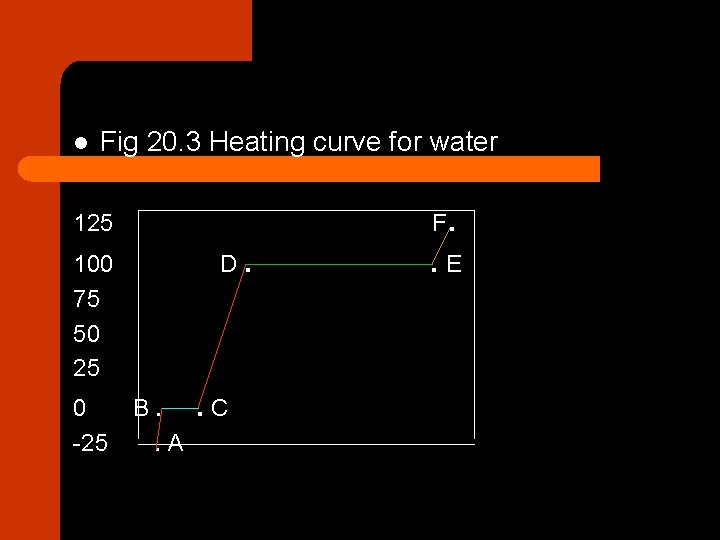
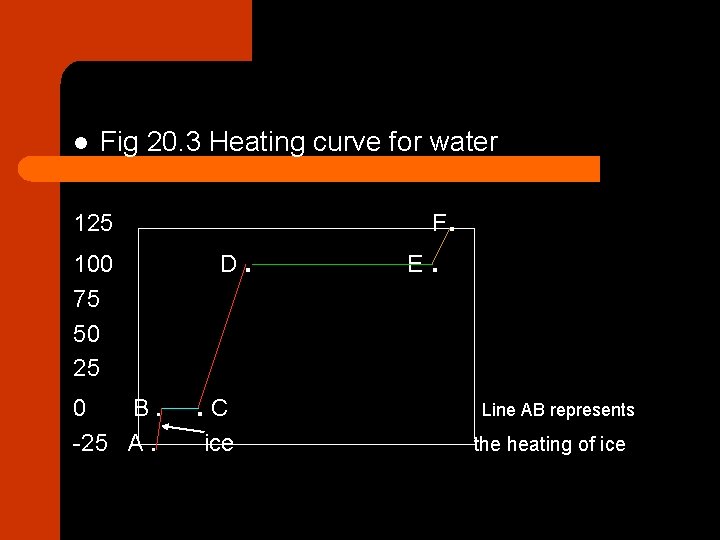
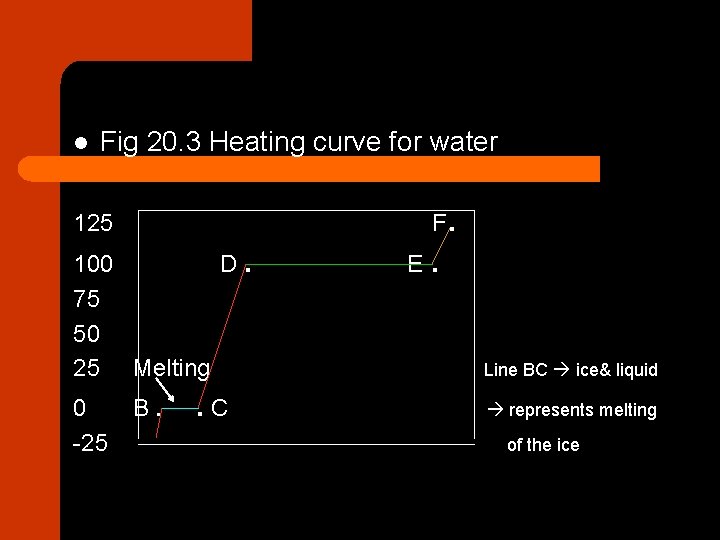
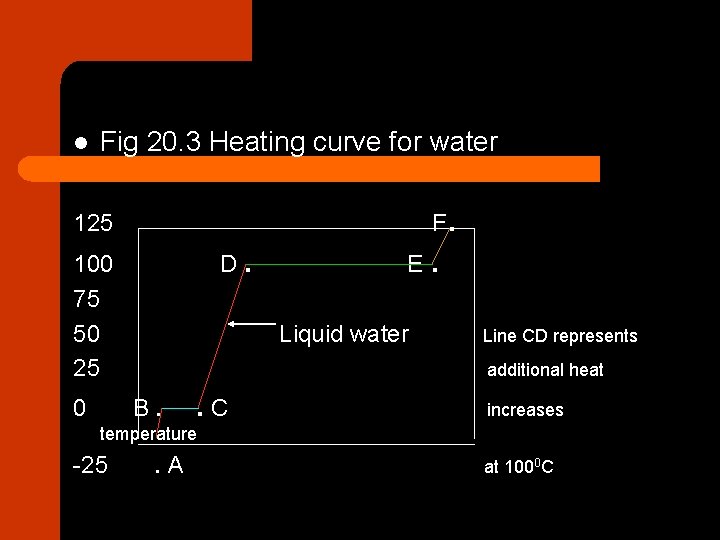
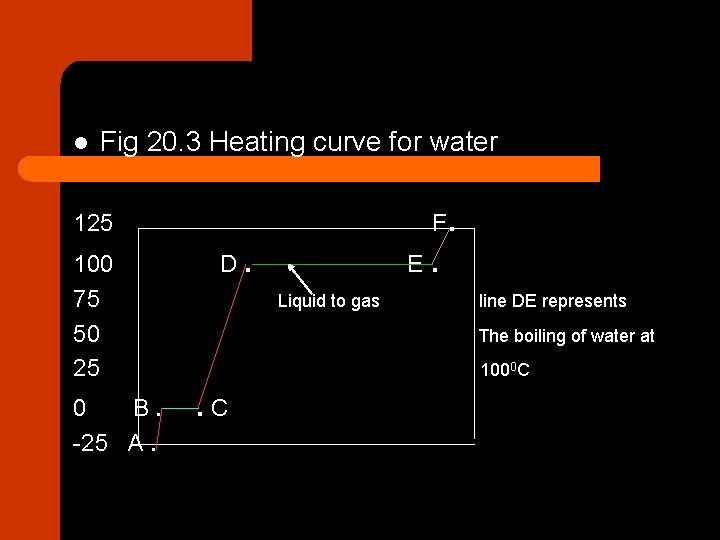
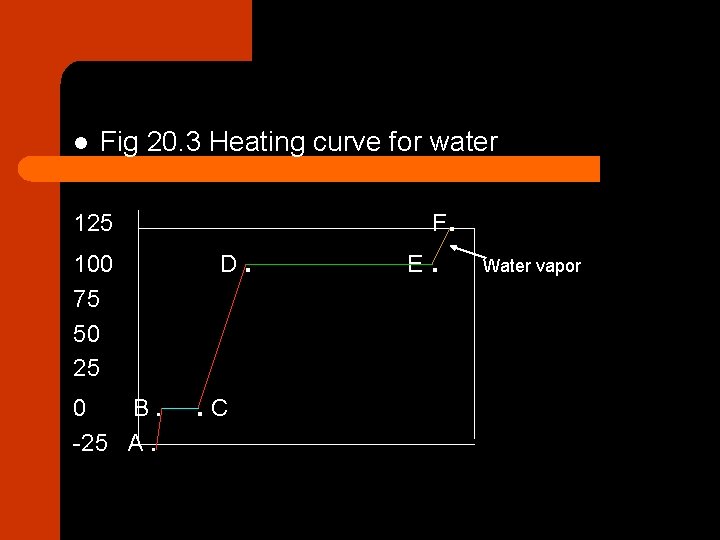
Heating Curve l l l Is a graph of heat added versus temperature Is useful in describing the change in temperature and the amount of heat in a substance as it undergoes a phase change. See Figure 20. 3 for the heating curve for ice at -25 0 C to steam at 1250 C
l Fig 20. 3 Heating curve for water F. 125 100 75 50 25 0 -25 D. B. . C. A . E
l Fig 20. 3 Heating curve for water F. 125 100 75 50 25 0 B. -25 A. D. . C ice E. Line AB represents the heating of ice
l Fig 20. 3 Heating curve for water F. 125 100 D. 75 50 25 Melting 0 -25 B. . C E. Line BC ice& liquid represents melting of the ice
l Fig 20. 3 Heating curve for water F. 125 D. 100 75 50 25 0 E. Liquid water Line CD represents additional heat B. . C increases temperature -25 . A at 1000 C
l Fig 20. 3 Heating curve for water F. 125 100 75 50 25 0 B. -25 A. D. E. Liquid to gas line DE represents The boiling of water at 1000 C . C
l Fig 20. 3 Heating curve for water F. 125 100 75 50 25 0 B. -25 A. D. . C E. Water vapor
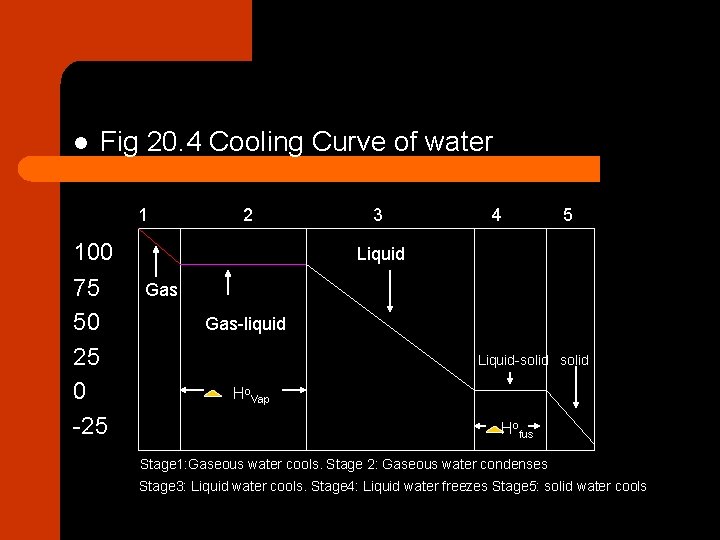
Cooling Curve l l Describes the change in temperature and the amount of heat during the cooling process The slope of the curve is decreasing when heat is removed from the material
l Fig 20. 4 Cooling Curve of water 1 100 75 50 25 0 -25 2 3 4 5 Liquid Gas-liquid Liquid-solid Ho. Vap Hofus Stage 1: Gaseous water cools. Stage 2: Gaseous water condenses Stage 3: Liquid water cools. Stage 4: Liquid water freezes Stage 5: solid water cools