
Heat Treatment Considerations Before After Ole Dosland Director
Heat Treatment Considerations Before – After Ole Dosland Director of Technical Training & E-Learning 1
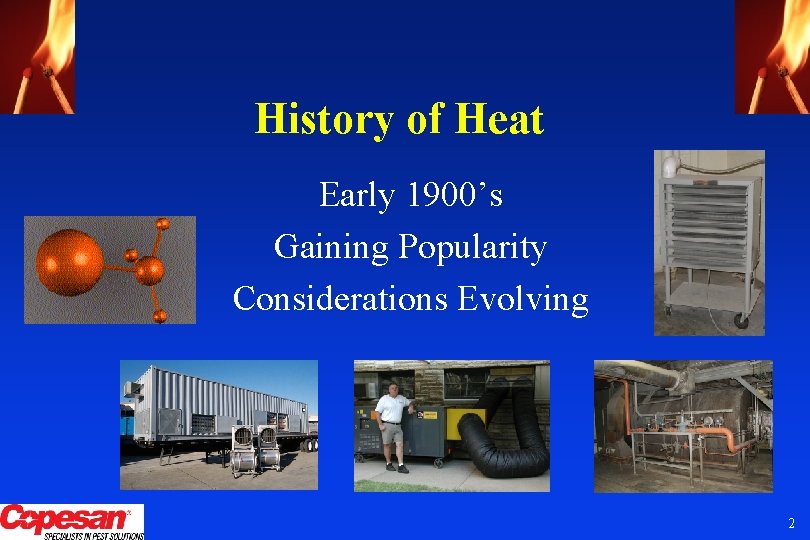
History of Heat Early 1900’s Gaining Popularity Considerations Evolving 2

Temperature Insect Response Zone Temperature Insect Response Lethal 120°F to 140°F 110°F to 115°F 95°F to 100°F 75°F to 90°F 65°F to 70°F 55°F to 60°F 35°F to 45°F -5°F to 10°F -20°F to -10°F Death in minutes Death in hours Development stops Maximum development Development slows Development stops Death in weeks Most S. P. I’s die Death in minutes, insects freeze Sub-optimum Optimum Sub-optimum Lethal 3
Heat Treatment F 120°F. to 140°F. Target Zone F Lower Humidity Likely – As temperature increases, humidity decreases. F Lethal Target Zone for Insects 4
Heat Sterilization F 160°F +++++ F Quicker Insect Kill F Microbial Reduction F Harder on Equipment & Structures 5
Heat Treatment Duration F When temperature reaches 125°F. + for 2 hours, the mission has been accomplished. – Ambient, internal or external ? ? ? » Wherever the insect is at. F Typical structural heat treatment duration – Set up & heat up (8 – 12 hours) – Hold temperature (24 – 36 hours) – Cool down (< 8 – 12 hours) 6
Heat Treatment Duration F When temperature reaches 125°F. + for 2 hours, the mission has been accomplished. – Ambient, internal or external ? ? ? » Wherever the insect is at. F Typical equipment heat treatment duration – Set up & heat up (4 - 6 hours) – Hold temperature (8 - 16 hours) – Cool down (< 4 - 6 hours) 7
Heat Treatment Duration F When temperature reaches 125°F. + for 2 hours, the mission has been accomplished. – Wherever the insect is at. – Time is not as important as the temperature. F Inside the walls F Inside the equipment F Inside the bins Know your temperatures. 8
Heat Treatment Considerations Before F Planning Team – determine “what” to heat with “what”, and “when” monitored by “who” – start a couple of months prior to a heat up – identify concerns for investigation & action » check with suppliers l get answers, make sure, do small tests conduct progress meetings 9
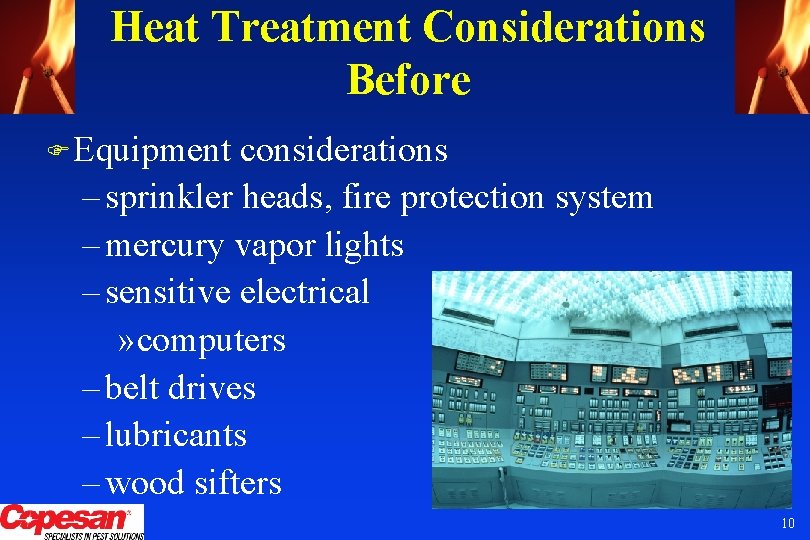
Heat Treatment Considerations Before F Equipment considerations – sprinkler heads, fire protection system – mercury vapor lights – sensitive electrical » computers – belt drives – lubricants – wood sifters 10
Heat Treatment Considerations Before F Removal of certain items – aerosol cans /pressured cylinders – fire extinguishers – sensitive ingredients, vitamins – packaging materials – sensitive electronics 11
Heat Treatment Considerations Before F Remove most food products “The performance characteristic of the food will likely change when exposed to these temperatures and time. Wheat does not mill as well. Flour does not bake as well and we know what happens to chocolate. ” F Things do dry out 12
Heat Treatment Considerations Before F Preparation immediate to a heat up – cleaning – seal building – insecticide residual application – placing air circulators and heaters – placing thermometers and hygrometers – placing insect test cages – placard warning on entry doors 13
Heat Treatment Considerations During F Monitoring during a heat treatment – Buddy system - pairs » Keep an eye on the place AND each other – Data collection » Temperature and Humidity l Remote minimizes time in the heat » Insect mortality 14
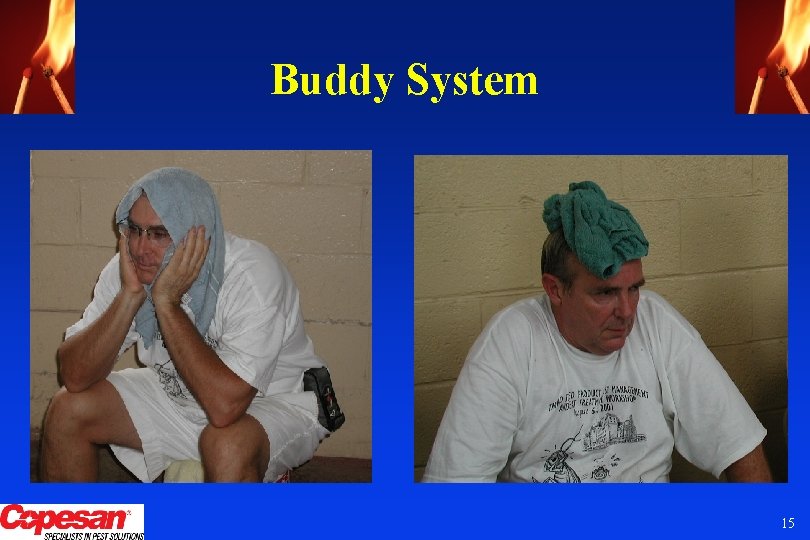
Buddy System 15
Heat Treatment Considerations During F Worker Safety Provisions – clothing, no metal » buttons, glasses, etc. – established routes with flashlights – rest area with first aid, emergency phone numbers – cool vests available for emergencies F Monitoring, adjusting heaters, fans and reporting activities are necessary 16
Heat Treatment Considerations After F Cool down F Collection of monitoring equipment F Operational start up – Process flush out … insect fragments may be high F Look for Document for Future Reference – plastic material sagging – leaks – lubricants, seals – peeling of old paint – dead insect accumulations lead to unknown sources 17
Resources F Internal F Outside Services – “Think Outside The Box” 18
Heat Treatment Considerations F Rule of the “E’s” – 1. Experiment and Learn – 2. Become Effective and Efficacious – 3. Become Efficient and Economical 19
WARNING HEAT STRESS AREA 20
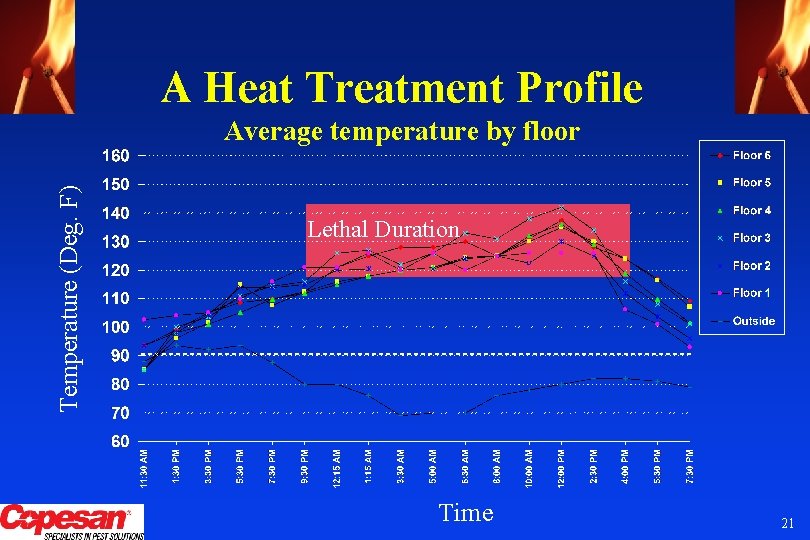
A Heat Treatment Profile Temperature (Deg. F) Average temperature by floor Lethal Duration Time 21
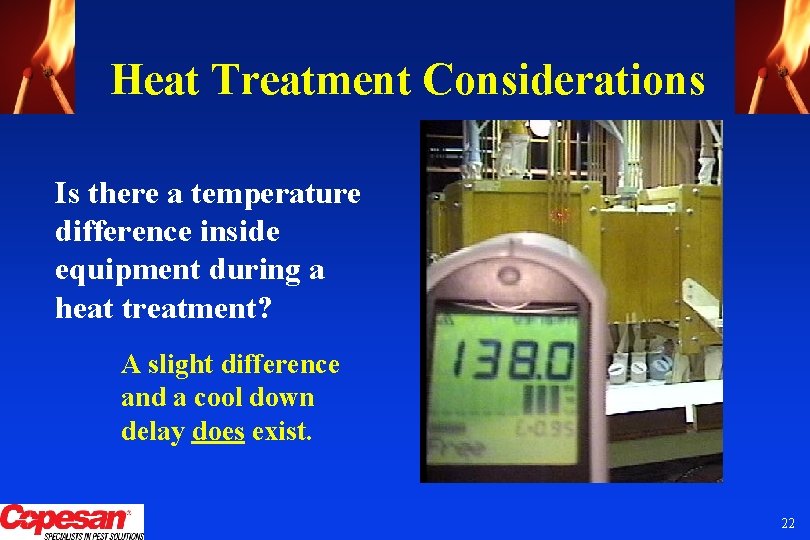
Heat Treatment Considerations Is there a temperature difference inside equipment during a heat treatment? A slight difference and a cool down delay does exist. 22
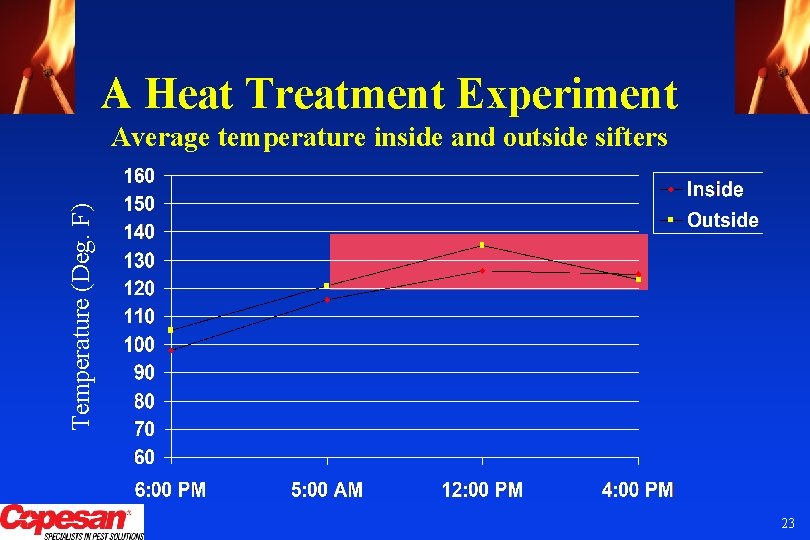
A Heat Treatment Experiment Temperature (Deg. F) Average temperature inside and outside sifters 23
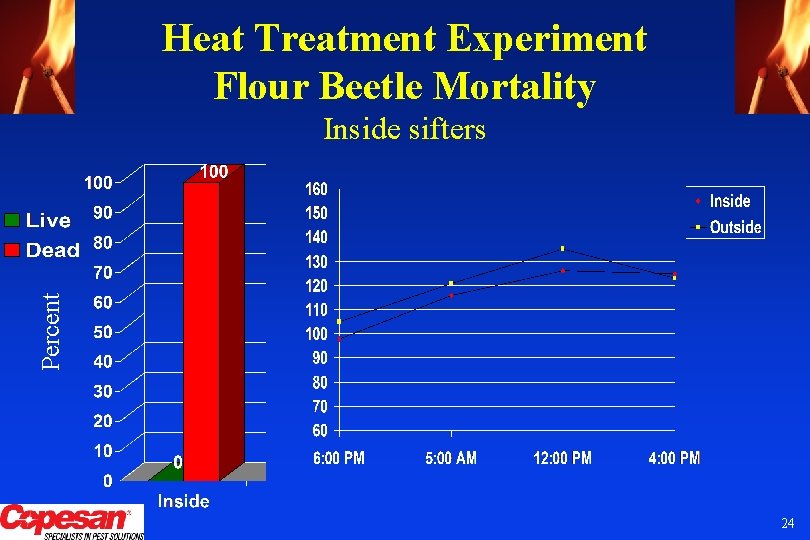
Heat Treatment Experiment Flour Beetle Mortality Percent Inside sifters 24
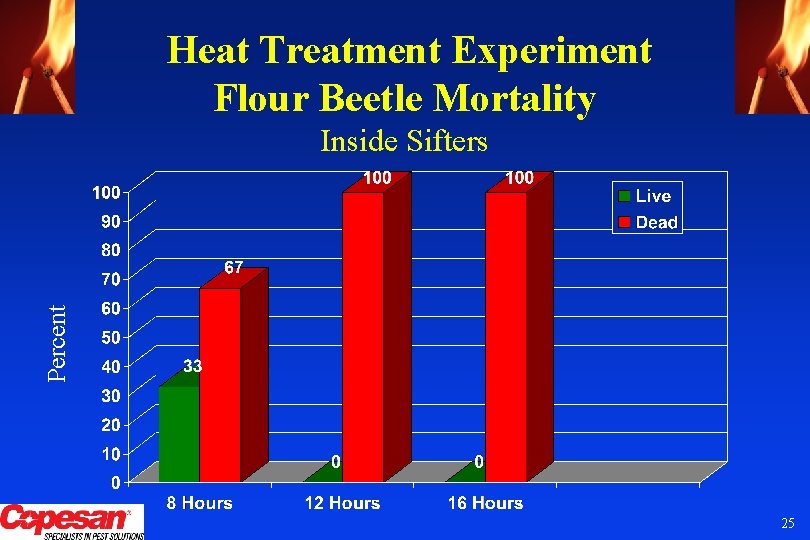
Heat Treatment Experiment Flour Beetle Mortality Percent Inside Sifters 25
Heat Treatment Considerations Summary F Heat is Effective! F Heat Supports IPM! F Heat is a Back to Future Concept! F Be Prepared! F Better Than Some Alternatives = 26
Information or Knowledge F Information Overload? F One Must Make Some Knowledge Out Of The Information – Or be overloaded 27

Yes, Thank You Are We Done Yet? 28
- Slides: 28