
Heat Treatment Analysis using the Heat Treatment Calculator

- Slides: 28
Heat Treatment Analysis using the Heat Treatment Calculator (H. T. C) Sham Kashyap Computing and Information Sciences Kansas State University
Overview l l l Introduction Equations Graphical Analysis Issues Other Applications Discussion
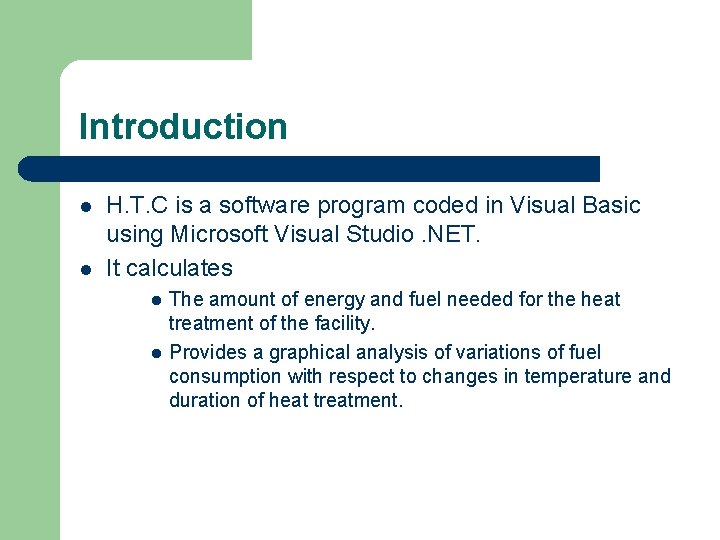
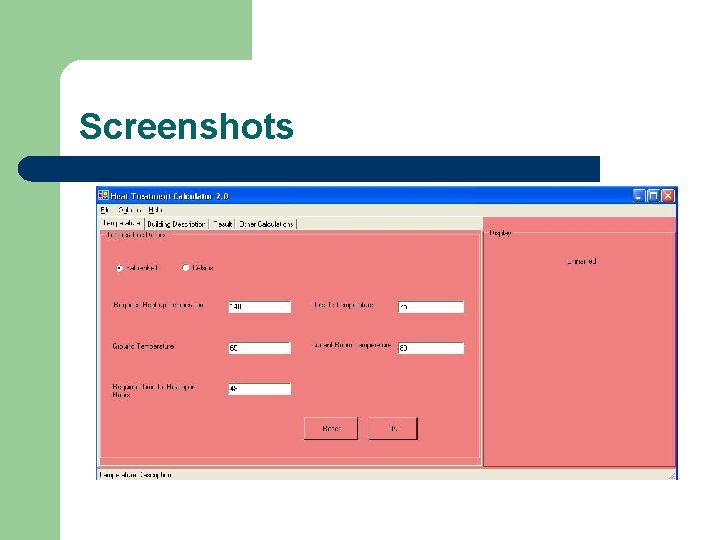
Introduction l l H. T. C is a software program coded in Visual Basic using Microsoft Visual Studio. NET. It calculates l l The amount of energy and fuel needed for the heat treatment of the facility. Provides a graphical analysis of variations of fuel consumption with respect to changes in temperature and duration of heat treatment.
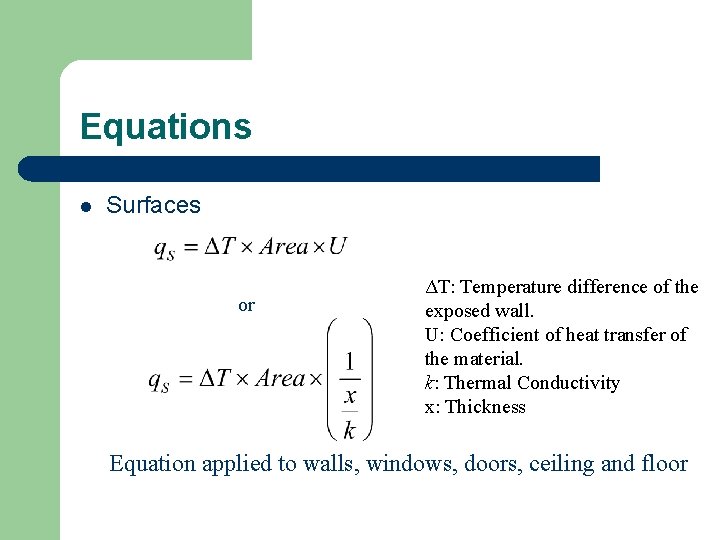
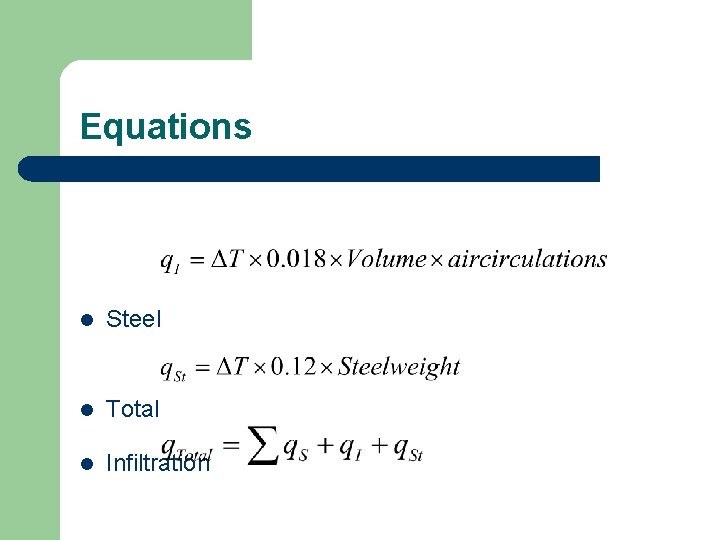
Equations l Surfaces or ΔT: Temperature difference of the exposed wall. U: Coefficient of heat transfer of the material. k: Thermal Conductivity x: Thickness Equation applied to walls, windows, doors, ceiling and floor
Equations l Steel l Total l Infiltration
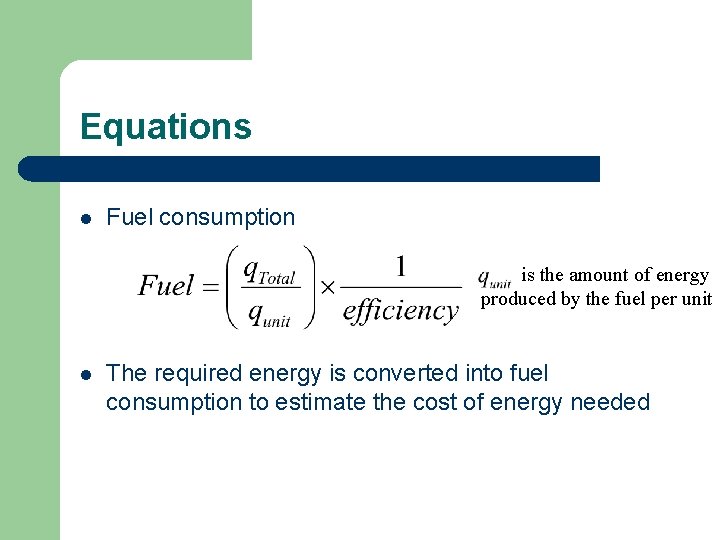
Equations l Fuel consumption is the amount of energy produced by the fuel per unit l The required energy is converted into fuel consumption to estimate the cost of energy needed
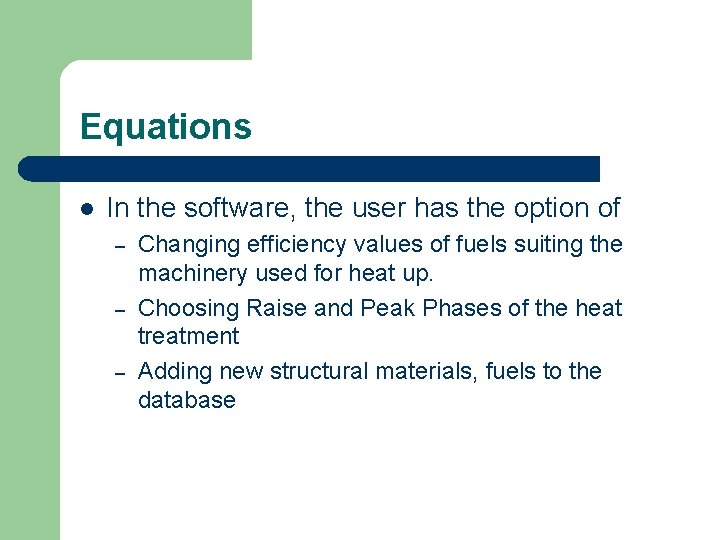
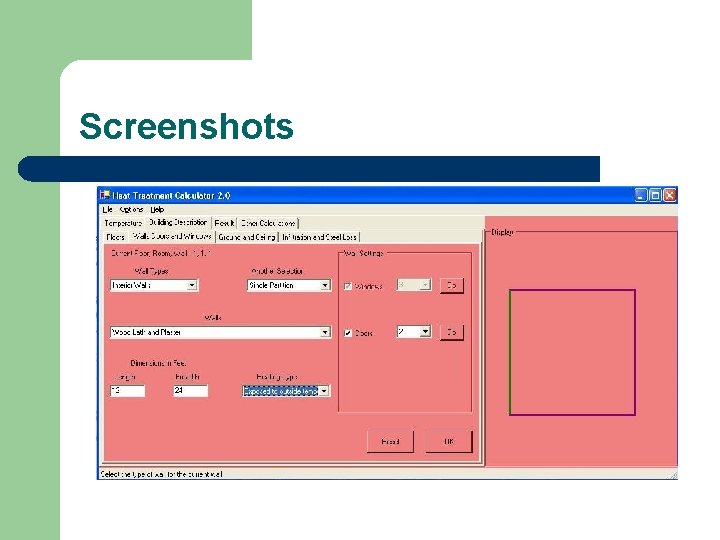
Equations l In the software, the user has the option of – – – Changing efficiency values of fuels suiting the machinery used for heat up. Choosing Raise and Peak Phases of the heat treatment Adding new structural materials, fuels to the database
Graphical Analysis using HTC l l l It can be used to predict the effects of a particular variation in heat treatment setting. In this sense, it is a tool to virtually compare two heat treatments on a building with different temperature and fuel settings. In this presentation, we take up an example and run the various analysis tools.
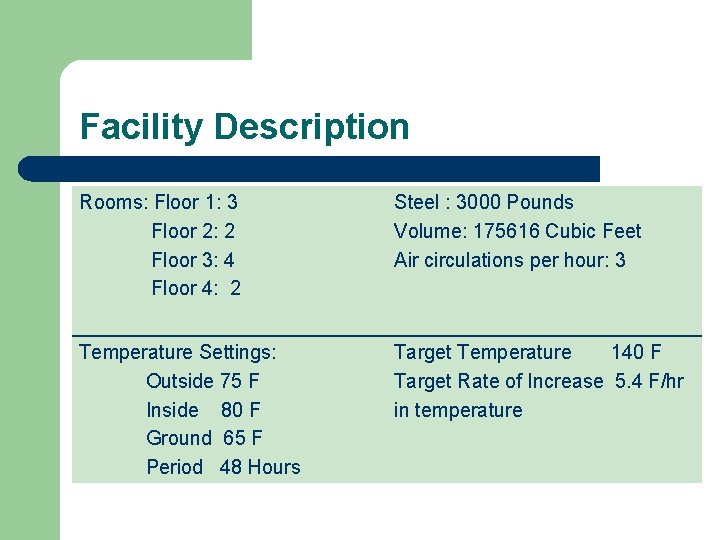
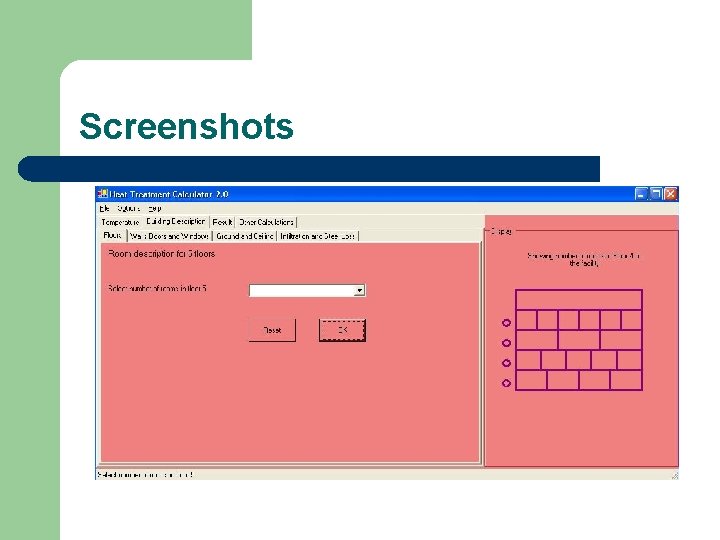
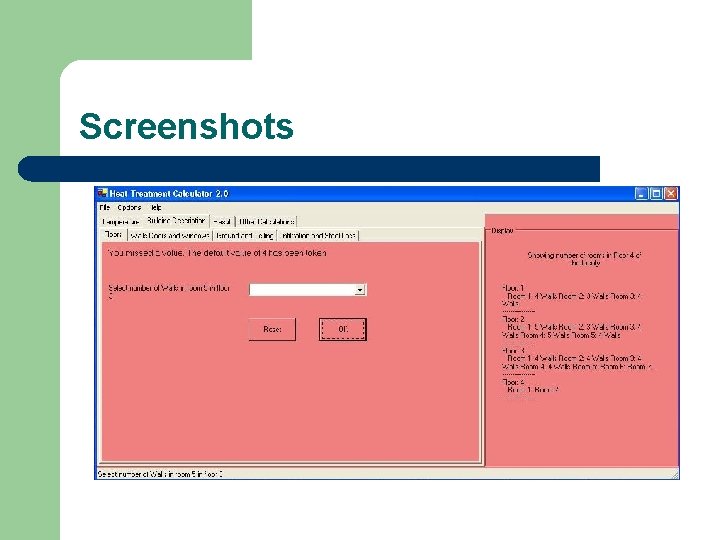
Facility Description Rooms: Floor 1: 3 Floor 2: 2 Floor 3: 4 Floor 4: 2 Steel : 3000 Pounds Volume: 175616 Cubic Feet Air circulations per hour: 3 Temperature Settings: Outside 75 F Inside 80 F Ground 65 F Period 48 Hours Target Temperature 140 F Target Rate of Increase 5. 4 F/hr in temperature
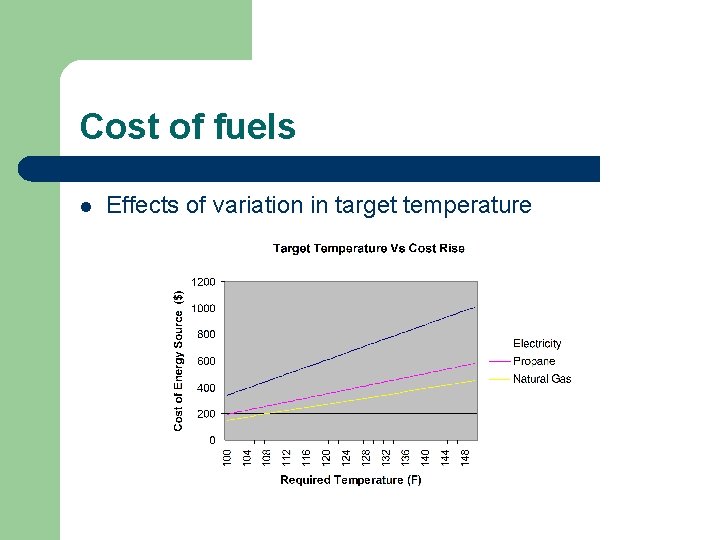
Cost of fuels l Effects of variation in target temperature
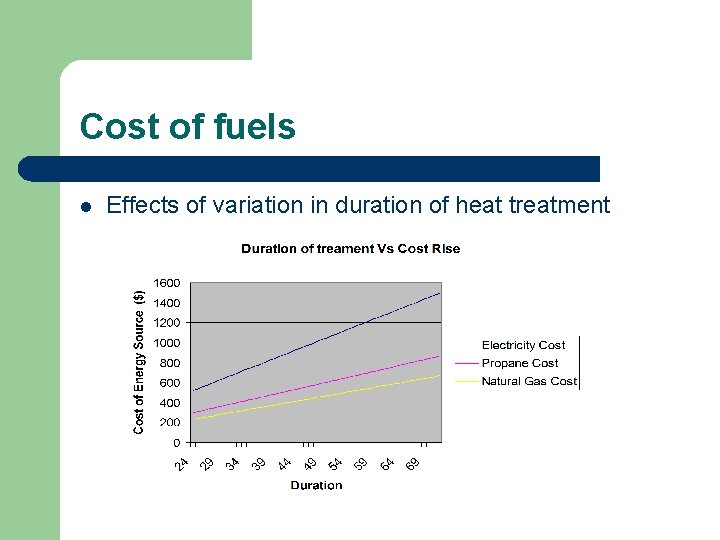
Cost of fuels l Effects of variation in duration of heat treatment
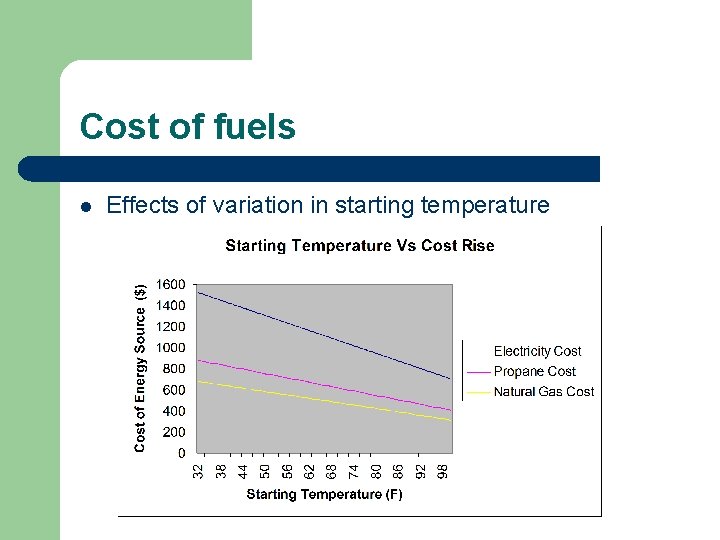
Cost of fuels l Effects of variation in starting temperature
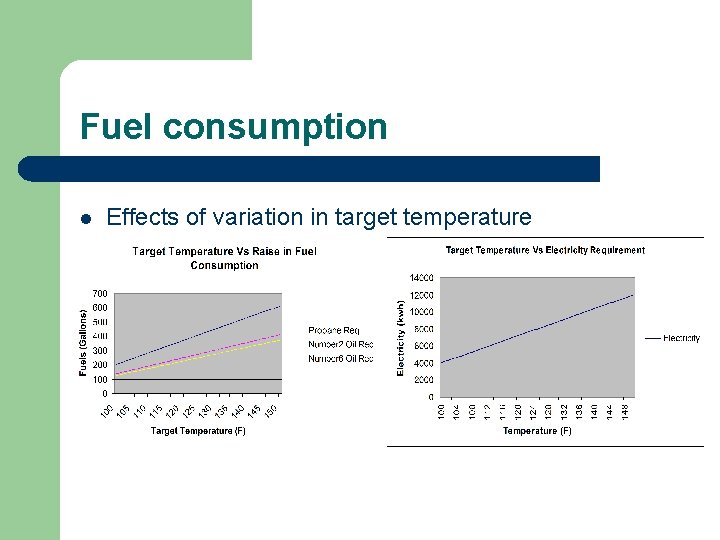
Fuel consumption l Effects of variation in target temperature
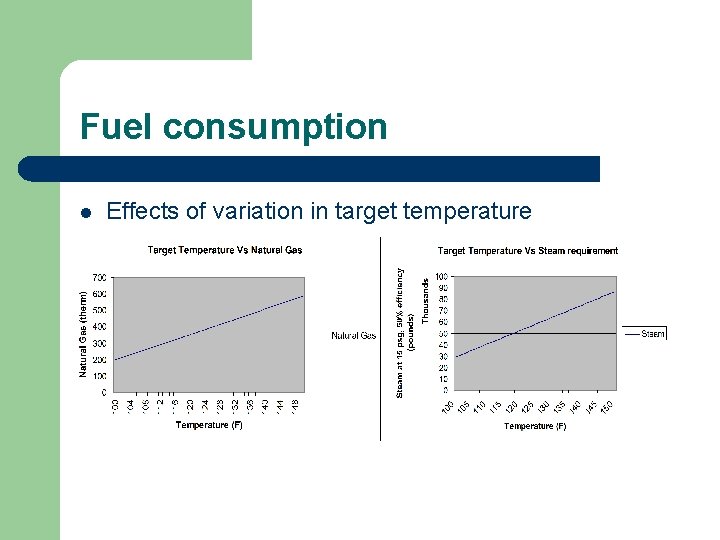
Fuel consumption l Effects of variation in target temperature
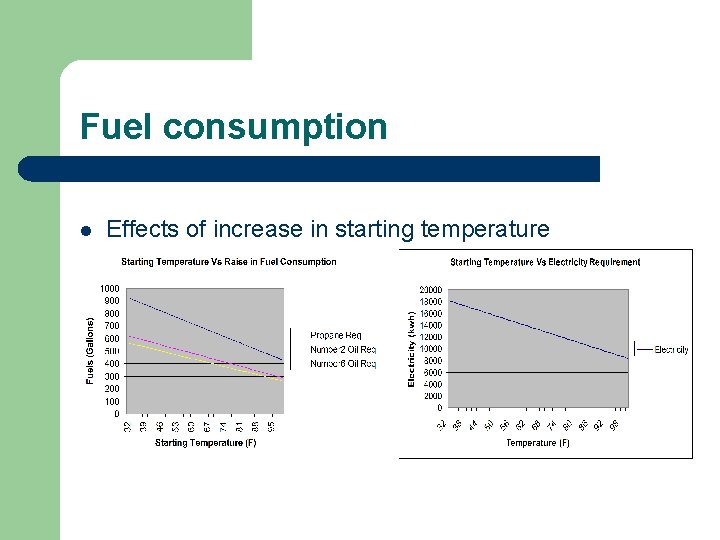
Fuel consumption l Effects of increase in starting temperature
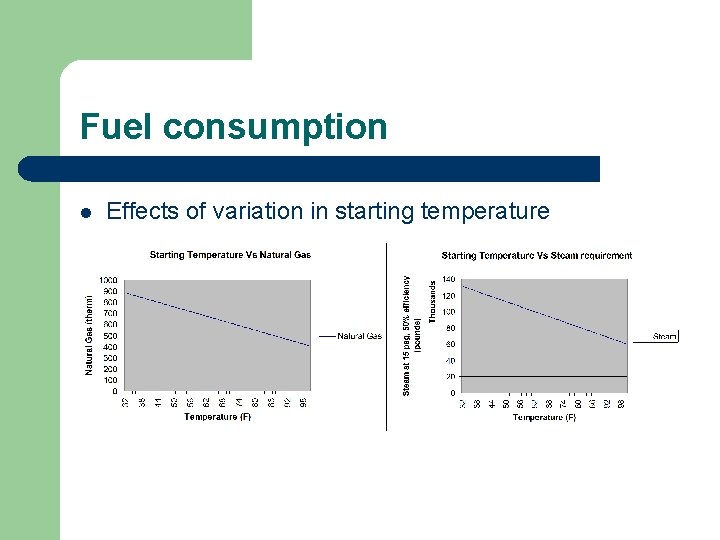
Fuel consumption l Effects of variation in starting temperature
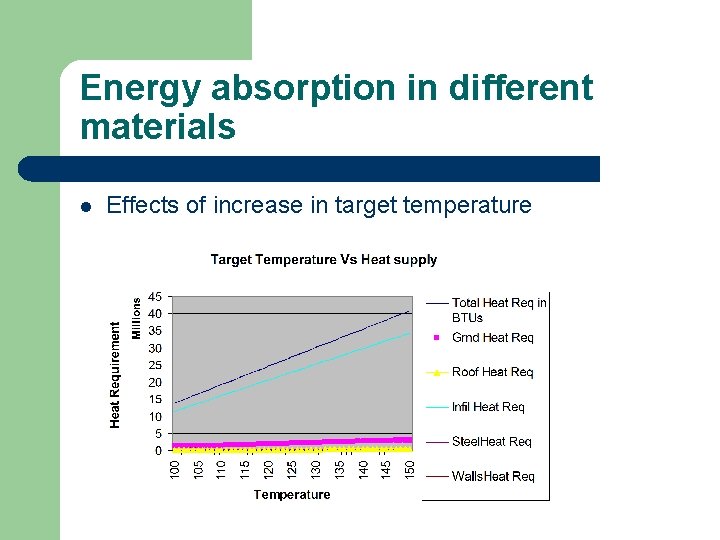
Energy absorption in different materials l Effects of increase in target temperature
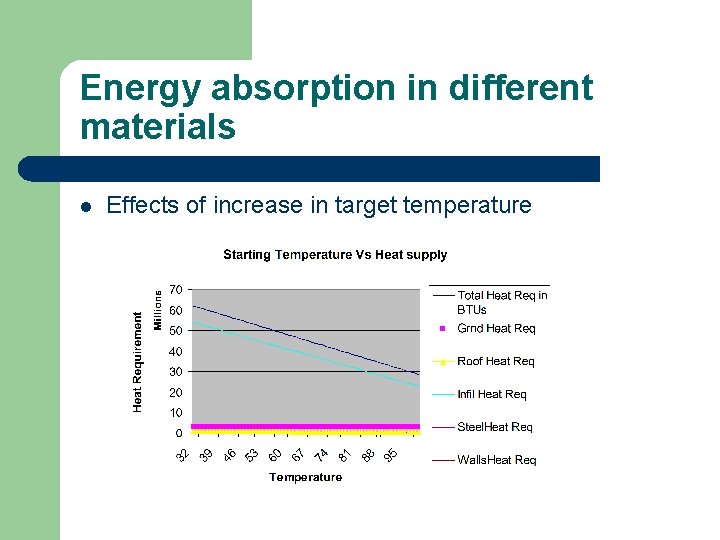
Energy absorption in different materials l Effects of increase in target temperature
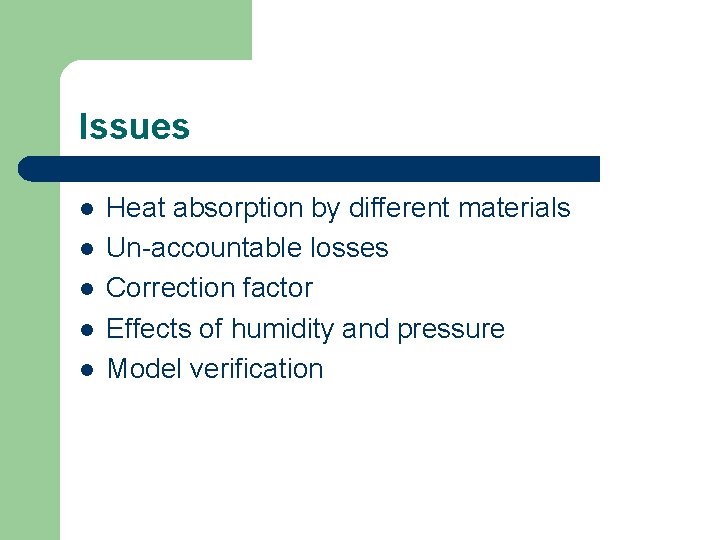
Issues l l l Heat absorption by different materials Un-accountable losses Correction factor Effects of humidity and pressure Model verification
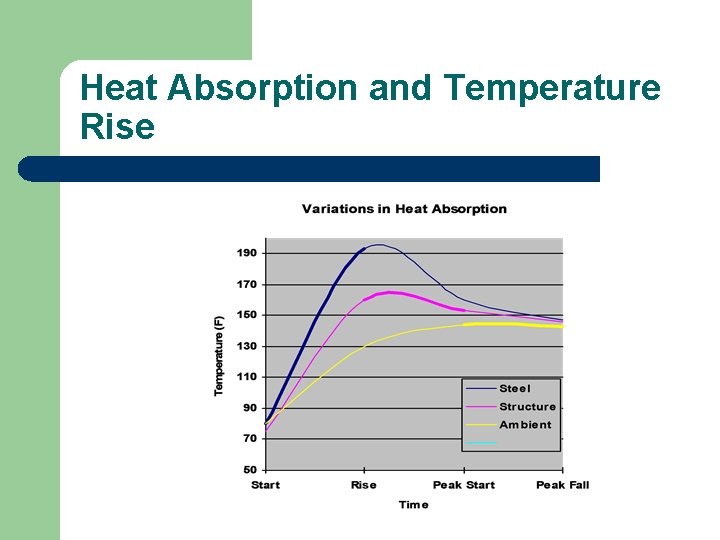
Heat Absorption and Temperature Rise
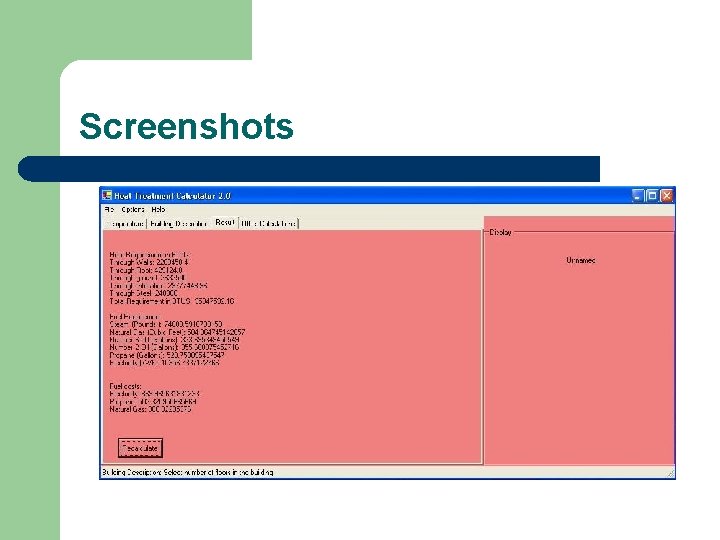
Screenshots
Screenshots
Screenshots
Screenshots
Screenshots
Other Applications l l l How to reach a trade off between amount of fuel used, target temperature, peak temperature duration. If using multiple sources of energy, how to share energy requirement. Insect Mortality.
References 1. 2. 3. William H. Severns, Julian R. Fellows, “Heating, Ventilating and Air Conditioning Fundamentals” Second Edition, John Wiley & Sons, Inc 1949. Burgess H. Jennings, “The Thermal Environment” Harper & Row, 1978. Thomas J. Imholte, ”A guide to the Sanitary Design of Food Plamsts and Food Plam Equipment, Engineering for Food Safety and Sanitaion “ Second Edition
Discussion