
Heat Transfer Part 2 24 February 2021 Learning
Heat Transfer Part 2 24 February 2021

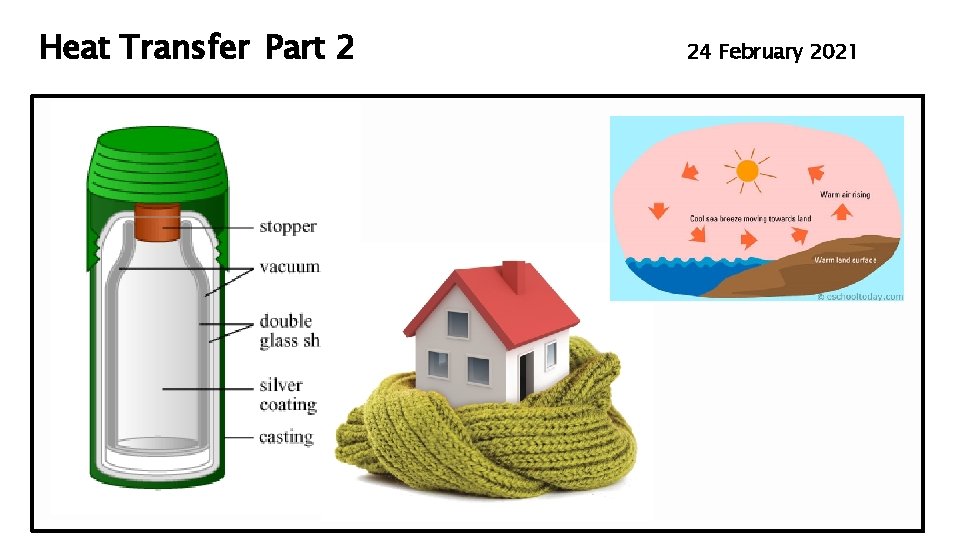
Learning objectives 9. Explain principles of heat transfer in everyday life including vacuum (thermos) flask, land sea breezes, double glazing, insulation and ventilation of houses.
Key words: • Transmitting • Reflecting • Absorbing • Surface area • Colour • Radiation • Heat transfer
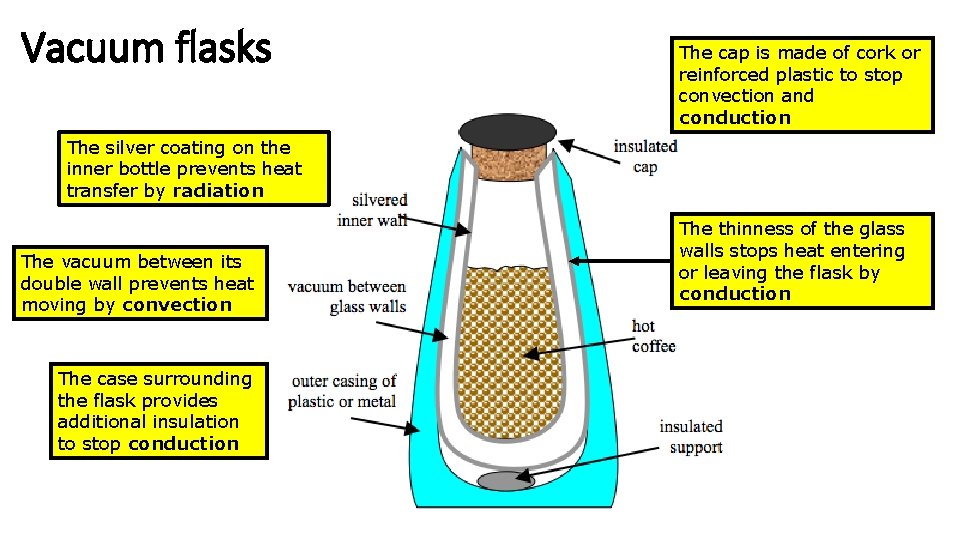
Vacuum flasks The cap is made of cork or reinforced plastic to stop convection and conduction The silver coating on the inner bottle prevents heat transfer by radiation The vacuum between its double wall prevents heat moving by convection The case surrounding the flask provides additional insulation to stop conduction The thinness of the glass walls stops heat entering or leaving the flask by conduction
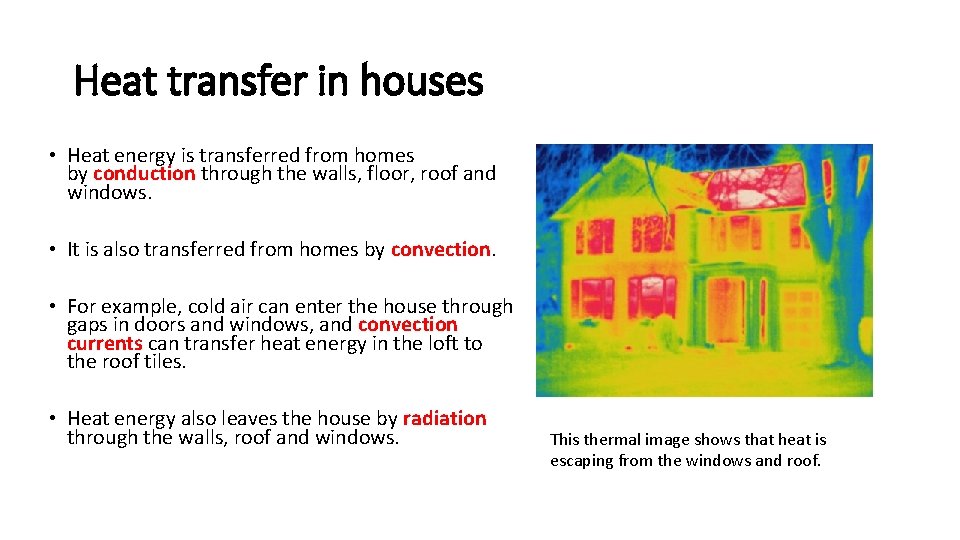
Heat transfer in houses • Heat energy is transferred from homes by conduction through the walls, floor, roof and windows. • It is also transferred from homes by convection. • For example, cold air can enter the house through gaps in doors and windows, and convection currents can transfer heat energy in the loft to the roof tiles. • Heat energy also leaves the house by radiation through the walls, roof and windows. This thermal image shows that heat is escaping from the windows and roof.
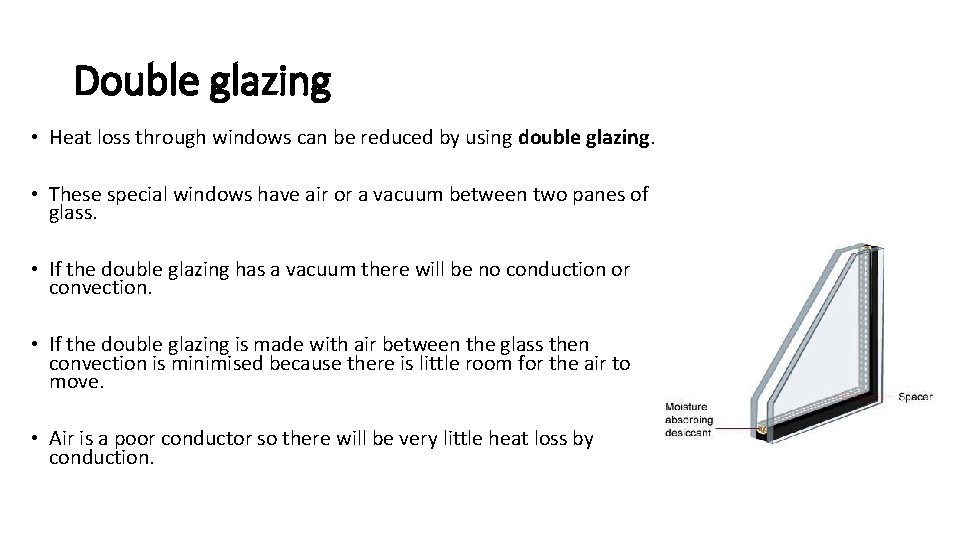
Double glazing • Heat loss through windows can be reduced by using double glazing. • These special windows have air or a vacuum between two panes of glass. • If the double glazing has a vacuum there will be no conduction or convection. • If the double glazing is made with air between the glass then convection is minimised because there is little room for the air to move. • Air is a poor conductor so there will be very little heat loss by conduction.
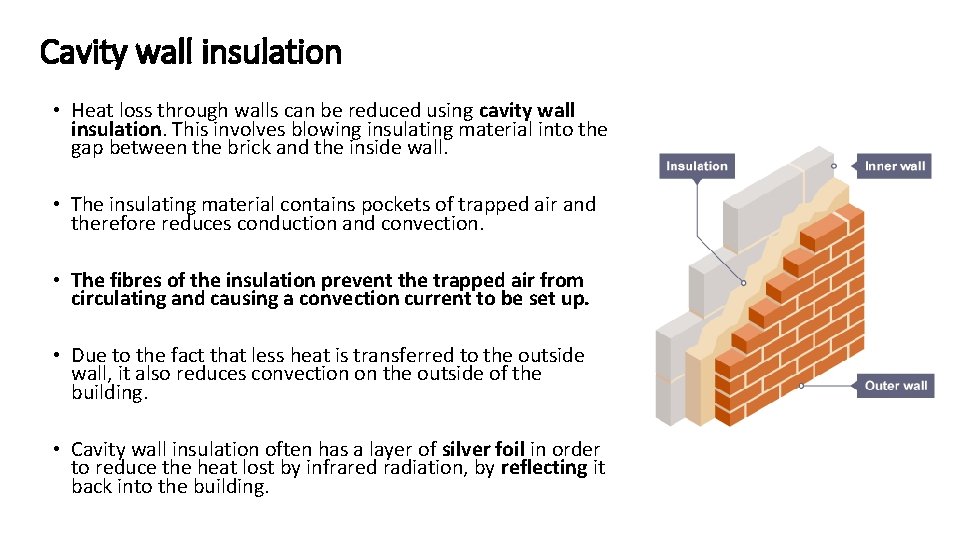
Cavity wall insulation • Heat loss through walls can be reduced using cavity wall insulation. This involves blowing insulating material into the gap between the brick and the inside wall. • The insulating material contains pockets of trapped air and therefore reduces conduction and convection. • The fibres of the insulation prevent the trapped air from circulating and causing a convection current to be set up. • Due to the fact that less heat is transferred to the outside wall, it also reduces convection on the outside of the building. • Cavity wall insulation often has a layer of silver foil in order to reduce the heat lost by infrared radiation, by reflecting it back into the building.
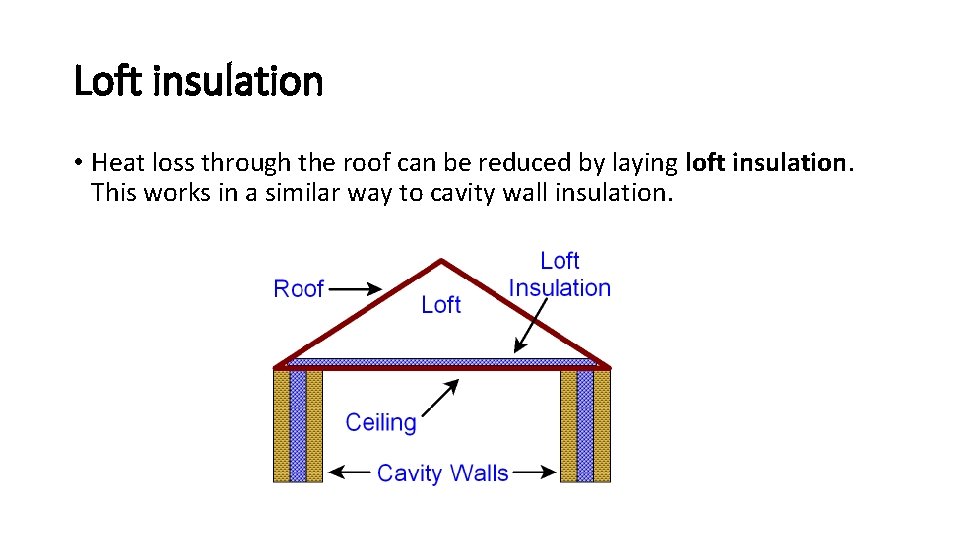
Loft insulation • Heat loss through the roof can be reduced by laying loft insulation. This works in a similar way to cavity wall insulation.
- Slides: 8