
Heat Transfer in TwoDimensions Thermal Bridges in Construction
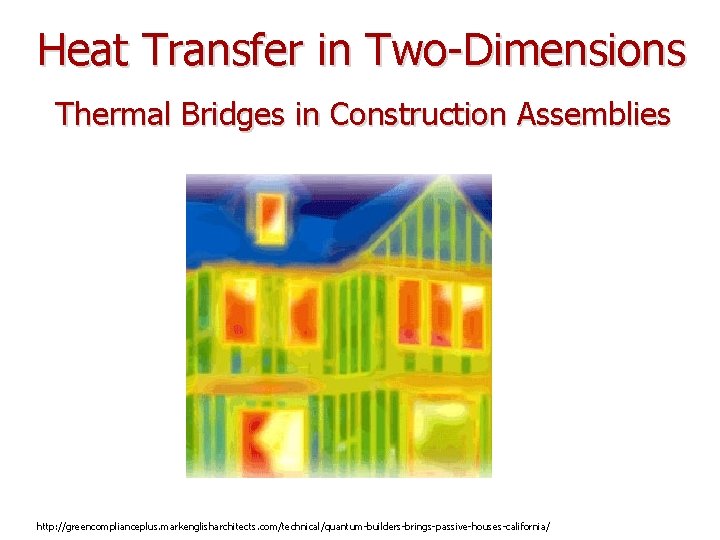
Heat Transfer in Two-Dimensions Thermal Bridges in Construction Assemblies http: //greencomplianceplus. markenglisharchitects. com/technical/quantum-builders-brings-passive-houses-california/
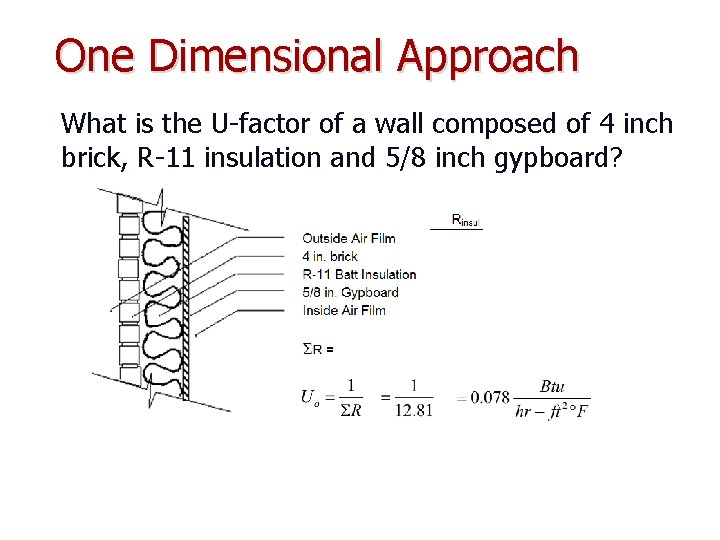
One Dimensional Approach What is the U-factor of a wall composed of 4 inch brick, R-11 insulation and 5/8 inch gypboard?
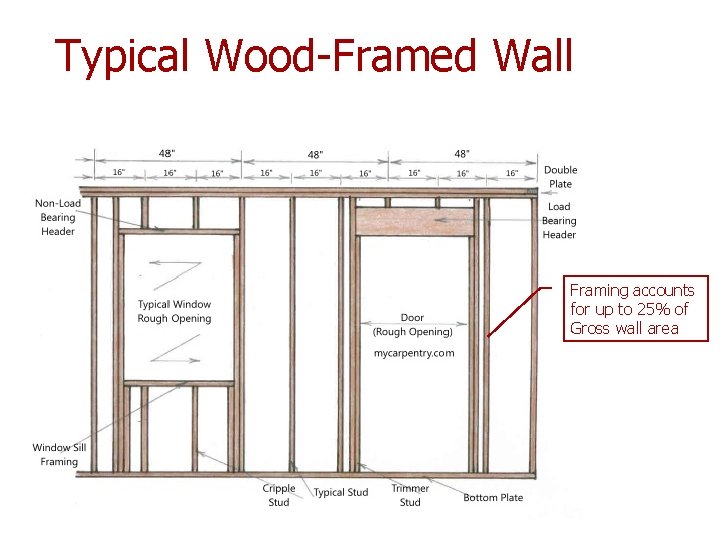
Typical Wood-Framed Wall Framing accounts for up to 25% of Gross wall area
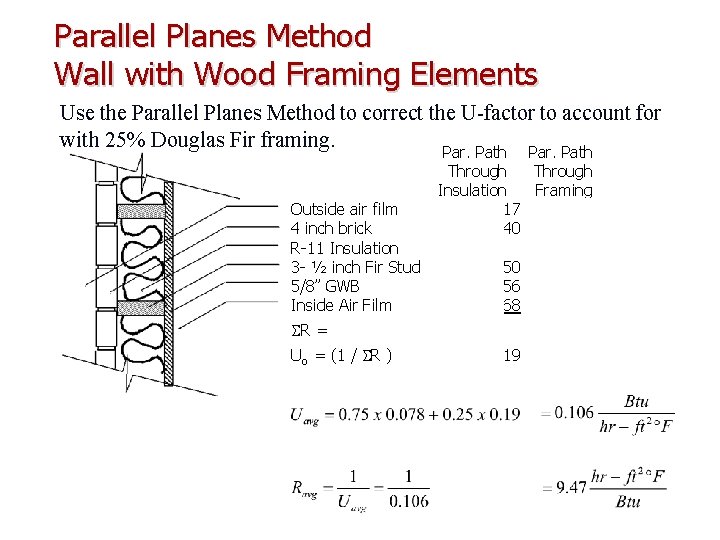
Parallel Planes Method Wall with Wood Framing Elements Use the Parallel Planes Method to correct the U-factor to account for with 25% Douglas Fir framing. Par. Path Outside air film 4 inch brick R-11 Insulation 3 - ½ inch Fir Stud 5/8” GWB Inside Air Film Through Insulation Framing 0. 17 0. 40 11. 0 3. 50 0. 56 0. 68 R = 12. 81 Uo = (1 / R ) 0. 0780. 19 5. 31
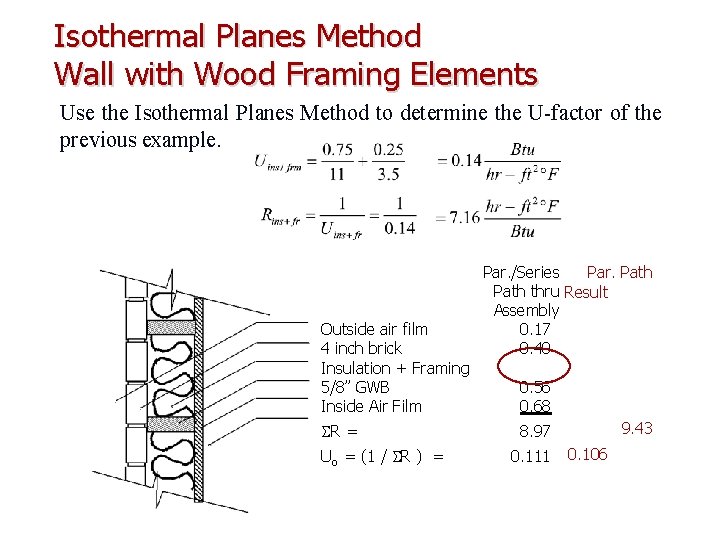
Isothermal Planes Method Wall with Wood Framing Elements Use the Isothermal Planes Method to determine the U-factor of the previous example. Par. /Series Par. Path thru Result Assembly Outside air film 0. 17 4 inch brick 0. 40 Insulation + Framing 7. 16 5/8” GWB 0. 56 Inside Air Film 0. 68 9. 43 R = 8. 97 Uo = (1 / R ) = 0. 111 0. 106
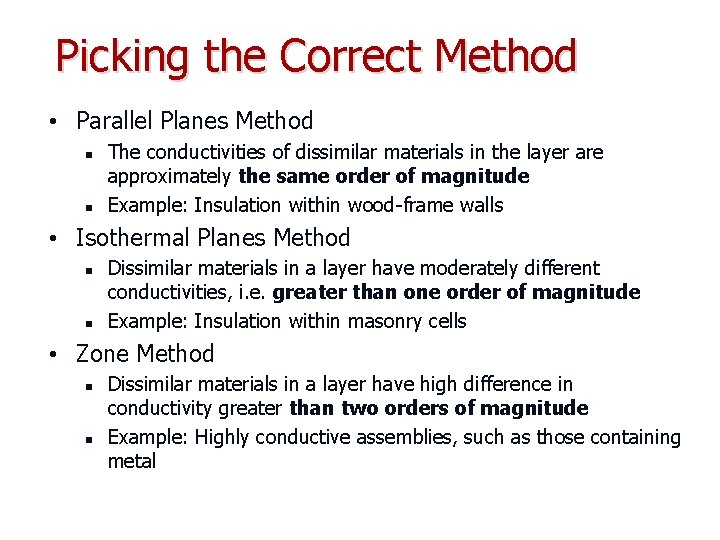
Picking the Correct Method • Parallel Planes Method n n The conductivities of dissimilar materials in the layer are approximately the same order of magnitude Example: Insulation within wood-frame walls • Isothermal Planes Method n n Dissimilar materials in a layer have moderately different conductivities, i. e. greater than one order of magnitude Example: Insulation within masonry cells • Zone Method n n Dissimilar materials in a layer have high difference in conductivity greater than two orders of magnitude Example: Highly conductive assemblies, such as those containing metal
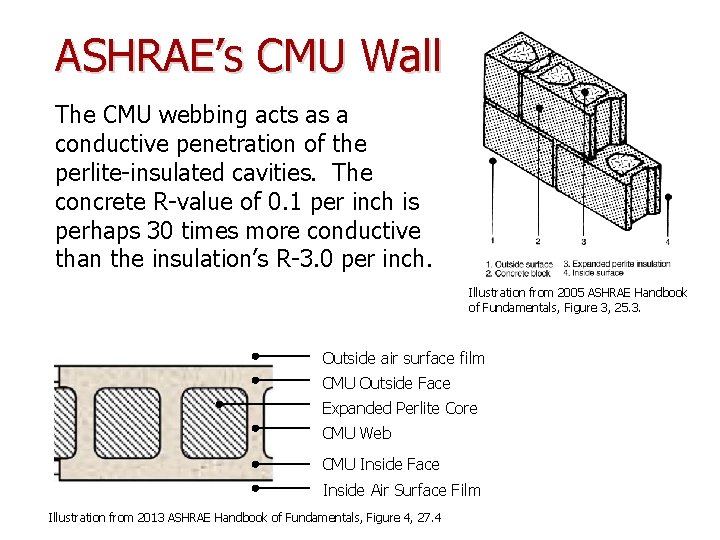
ASHRAE’s CMU Wall The CMU webbing acts as a conductive penetration of the perlite-insulated cavities. The concrete R-value of 0. 1 per inch is perhaps 30 times more conductive than the insulation’s R-3. 0 per inch. Illustration from 2005 ASHRAE Handbook of Fundamentals, Figure 3, 25. 3. Outside air surface film CMU Outside Face Expanded Perlite Core CMU Web CMU Inside Face Inside Air Surface Film Illustration from 2013 ASHRAE Handbook of Fundamentals, Figure 4, 27. 4
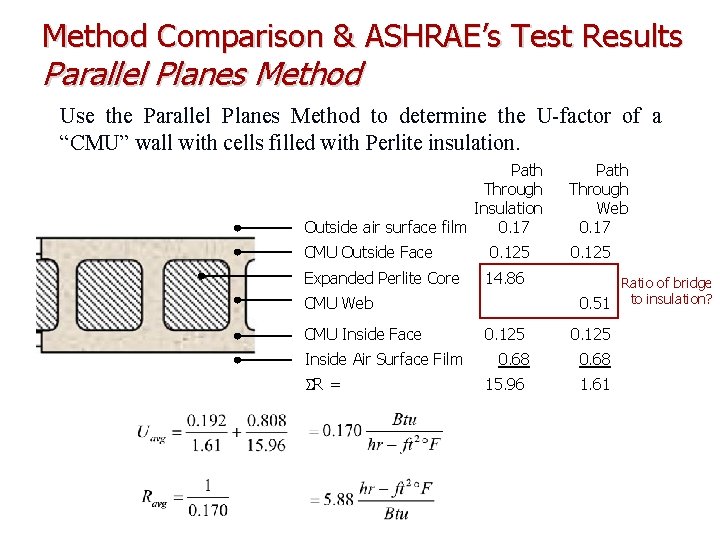
Method Comparison & ASHRAE’s Test Results Parallel Planes Method Use the Parallel Planes Method to determine the U-factor of a “CMU” wall with cells filled with Perlite insulation. Path Through Insulation Outside air surface film 0. 17 Path Through Web 0. 17 CMU Outside Face 0. 125 Expanded Perlite Core 0. 125 14. 86 CMU Web CMU Inside Face Inside Air Surface Film R = 0. 125 0. 68 15. 96 Ratio of bridge 0. 51 to insulation? 0. 125 0. 68 1. 61
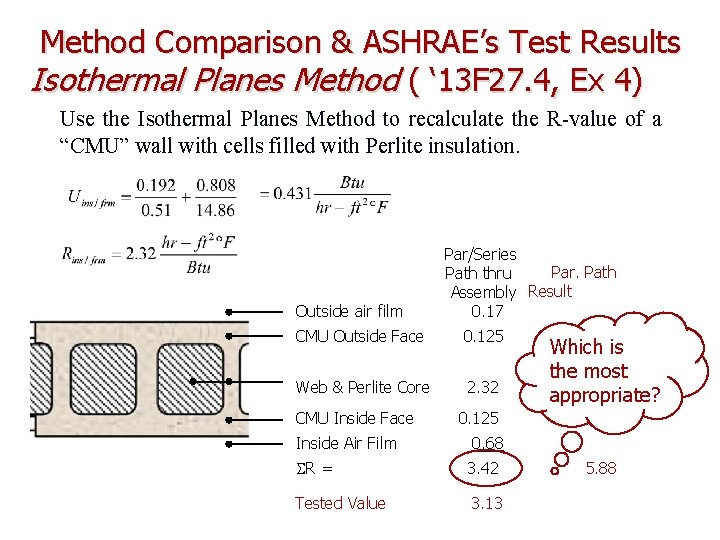
Method Comparison & ASHRAE’s Test Results Isothermal Planes Method ( ‘ 13 F 27. 4, Ex 4) Use the Isothermal Planes Method to recalculate the R-value of a “CMU” wall with cells filled with Perlite insulation. Outside air film Par/Series Par. Path thru Assembly Result 0. 17 CMU Outside Face 0. 125 Web & Perlite Core 2. 32 CMU Inside Face Inside Air Film Which is the most appropriate? 0. 125 0. 68 R = 3. 42 Tested Value 3. 13 5. 88
Selecting your Method Parallel heat flow analysis results in a U-factor that is lower than the actual. If there is no layer of high lateral thermal conductance, use a value closer to the parallel calculation. Combined series-parallel analysis results in a Ufactor that is higher than actual. Generally, if the construction contains a layer in which lateral heat conduction is somewhat high compared to heat flux through the wall, a value closer to the series-parallel calculation should be used. The zone method is recommended for assemblies with large differences in material thermal conductivities (e. g. assemblies using metal structural elements), ASHRAE 2015 HOF 27. 4 -27. 5
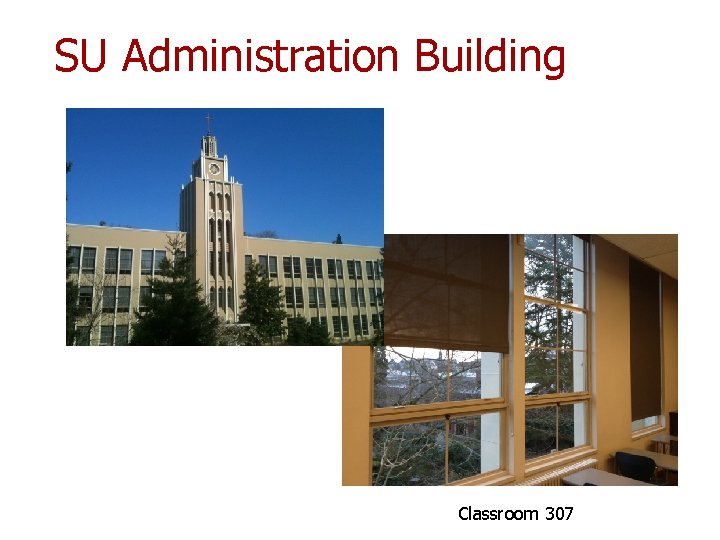
SU Administration Building Classroom 307
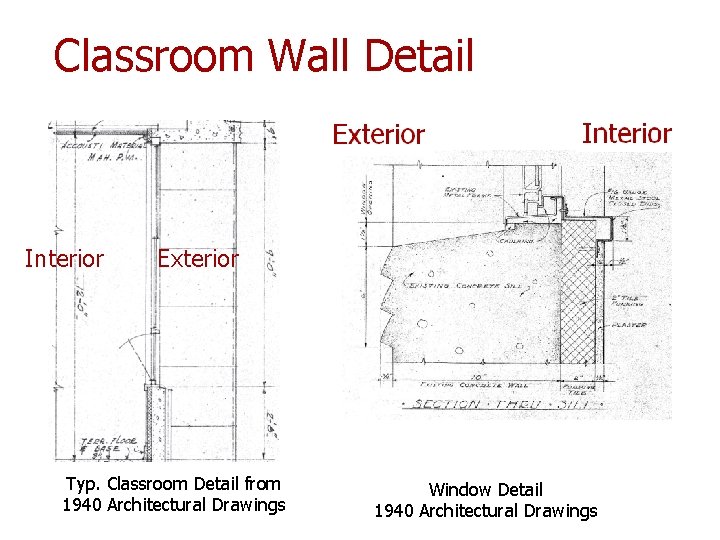
Classroom Wall Detail Interior Exterior Typ. Classroom Detail from 1940 Architectural Drawings Window Detail 1940 Architectural Drawings
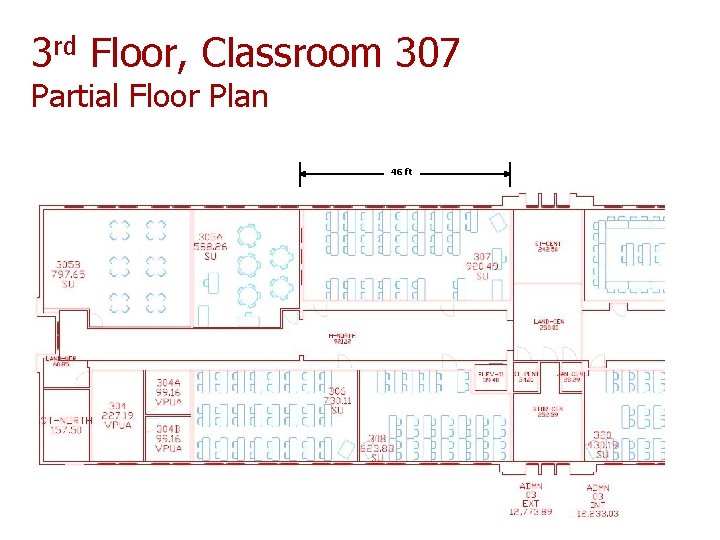
3 rd Floor, Classroom 307 Partial Floor Plan 46 ft
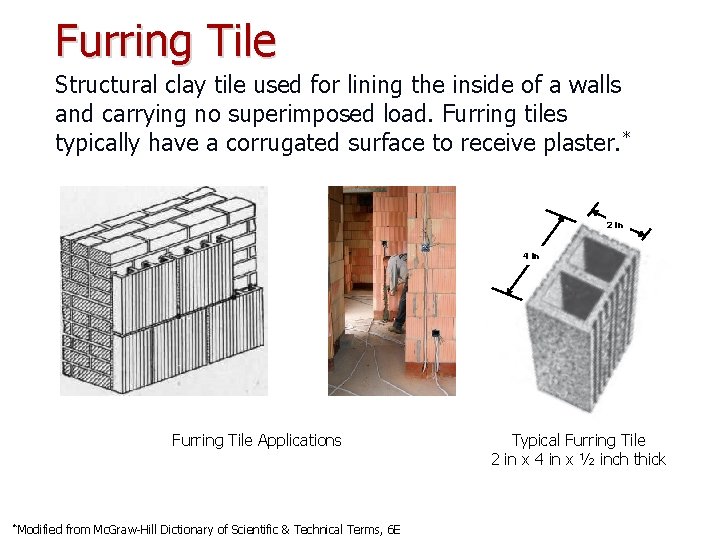
Furring Tile Structural clay tile used for lining the inside of a walls and carrying no superimposed load. Furring tiles typically have a corrugated surface to receive plaster. * 2 in 4 in Furring Tile Applications *Modified from Mc. Graw-Hill Dictionary of Scientific & Technical Terms, 6 E Typical Furring Tile 2 in x 4 in x ½ inch thick
Problem It has occurred to campus planners that opportunities exist to improve thermal performance of these walls and reduce the campus carbon footprint. Their directive for the ME Department is as follows: Using the appropriate methodology, determine the Classroom 307 wall heat loss reduction that will result if the air gaps in the tile furring are filled with expanded perlite insulation.
- Slides: 15