
HEAT TRANSFER IN THE ATMOSPHERE CHAPTER 19 WHAT


- Slides: 17
HEAT TRANSFER IN THE ATMOSPHERE CHAPTER 19
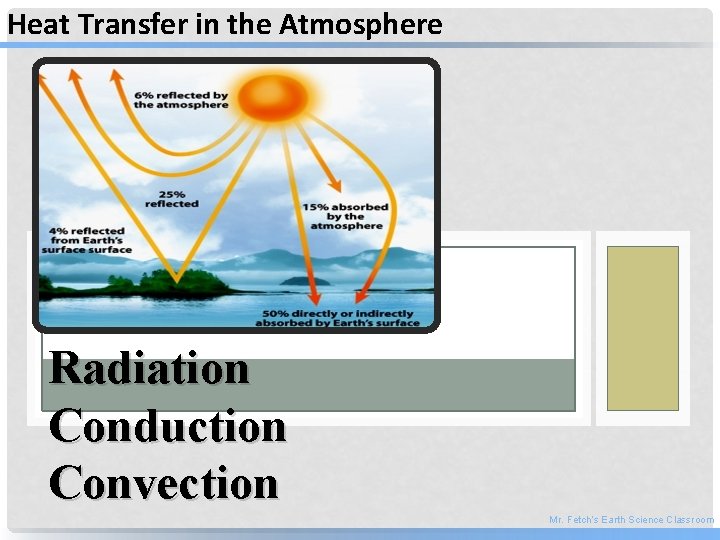
WHAT IS THE ATMOSPHERE? • Earth’s atmosphere is heated by the transfer of energy from the sun. • Some heat comes from the absorption of the sun’s rays by gases of the atmosphere while some enters indirectly as the surface absorbs solar energy and gives it off as heat.
WHAT IS THE ATMOSPHERE? • The layer of gases surrounding the Earth is called the atmosphere. • Its job is to protect Earth’s surface from the sun’s radiation and helps to regulate the temperature of Earth’s surface. • The most abundant elements in the air are nitrogen, oxygen, and argon, while the most abundant compounds are carbon dioxide and water vapor.
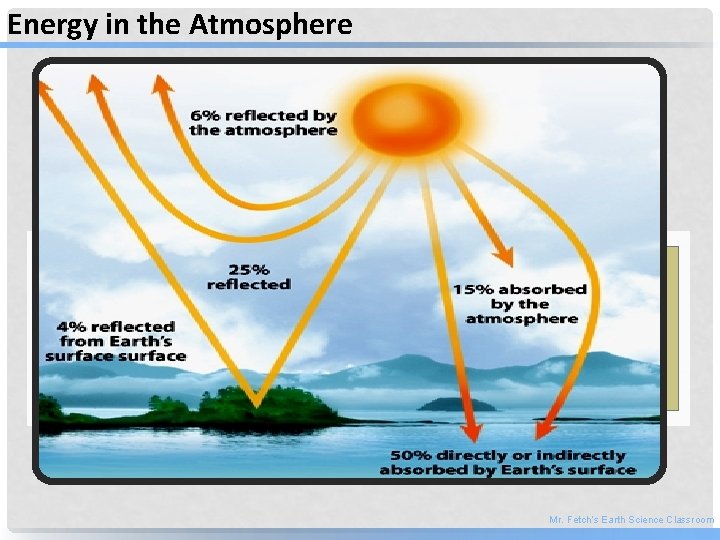
Energy in the Atmosphere Mr. Fetch’s Earth Science Classroom
Heat Transfer in the Atmosphere Radiation Conduction Convection Mr. Fetch’s Earth Science Classroom
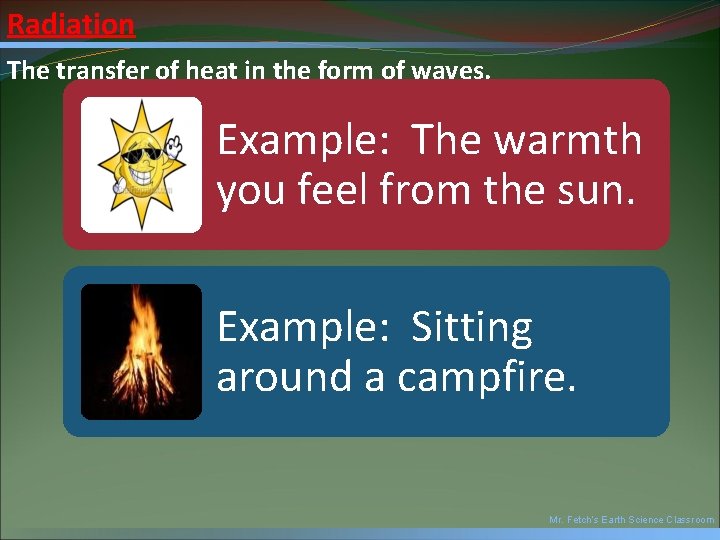
Radiation The transfer of heat in the form of waves. Example: The warmth you feel from the sun. Example: Sitting around a campfire. Mr. Fetch’s Earth Science Classroom
RADIATION All energy that the Earth receives from the sun travels through space as waves, which is called radiation. As solar radiation passes through the atmosphere, most waves that have wavelengths shorter than visible light are absorbed by gases. Waves that have longer wavelengths can reach the lower atmosphere, where carbon dioxide and water vapor may absorb them.
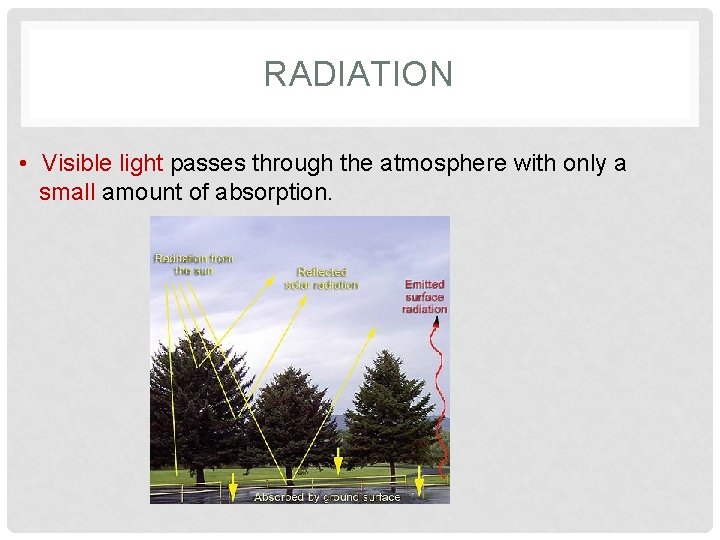
RADIATION • Visible light passes through the atmosphere with only a small amount of absorption.
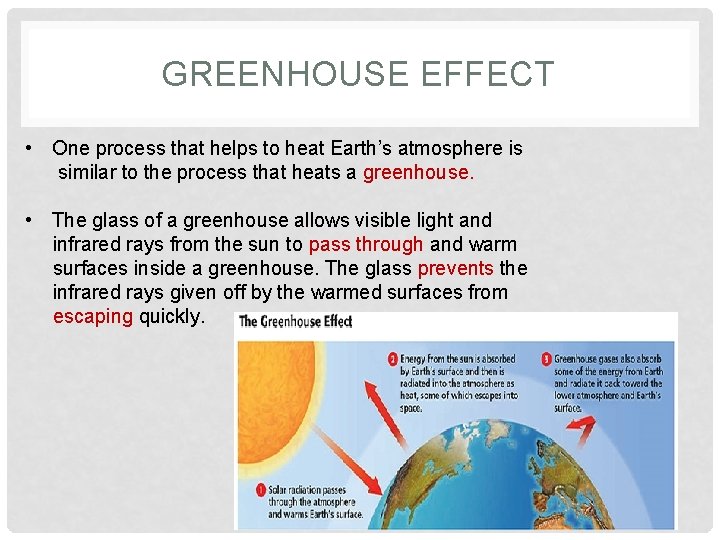
GREENHOUSE EFFECT • One process that helps to heat Earth’s atmosphere is similar to the process that heats a greenhouse. • The glass of a greenhouse allows visible light and infrared rays from the sun to pass through and warm surfaces inside a greenhouse. The glass prevents the infrared rays given off by the warmed surfaces from escaping quickly.
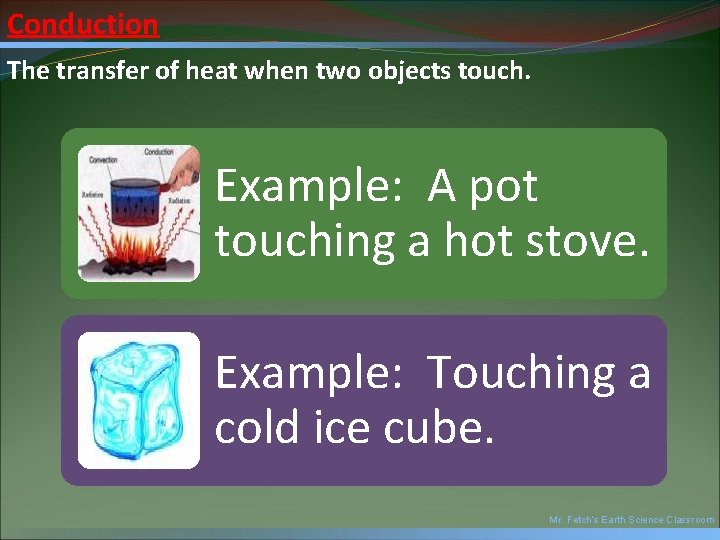
Conduction The transfer of heat when two objects touch. Example: A pot touching a hot stove. Example: Touching a cold ice cube. Mr. Fetch’s Earth Science Classroom
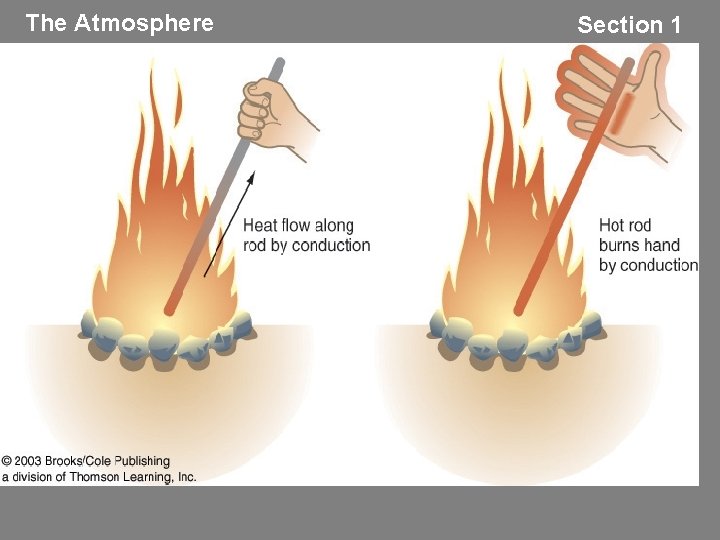
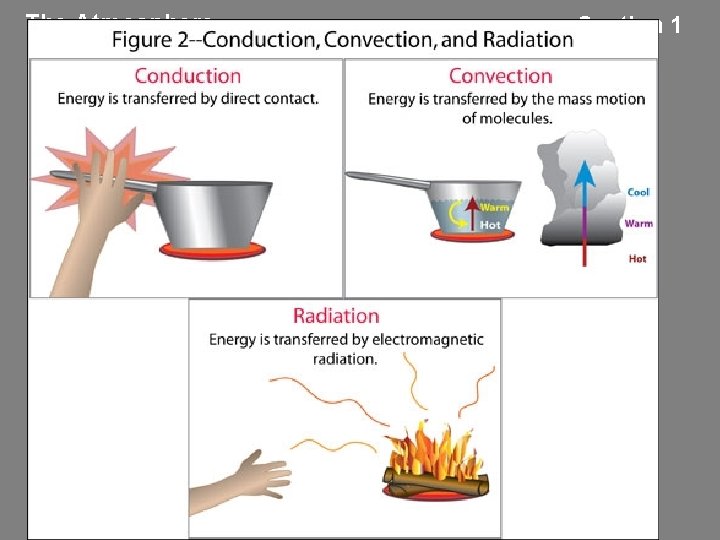
CONDUCTION • The transfer of energy as heat from one substance to another by direct contact is called conduction. • Solids have molecules that are close together, so they’re relatively good at conducting heat. • Molecules of air are far apart, so air is a poor conductor.
The Atmosphere Section 1
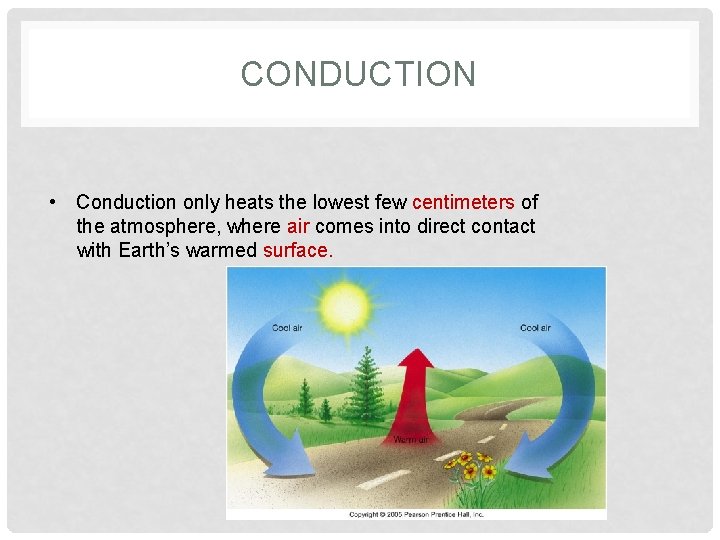
CONDUCTION • Conduction only heats the lowest few centimeters of the atmosphere, where air comes into direct contact with Earth’s warmed surface.
Convection The transfer of heat through liquids or gasses. - Warm air rising - Cold air sinking Example: Heating up water on a stove Example: Heating a room in your house Mr. Fetch’s Earth Science Classroom
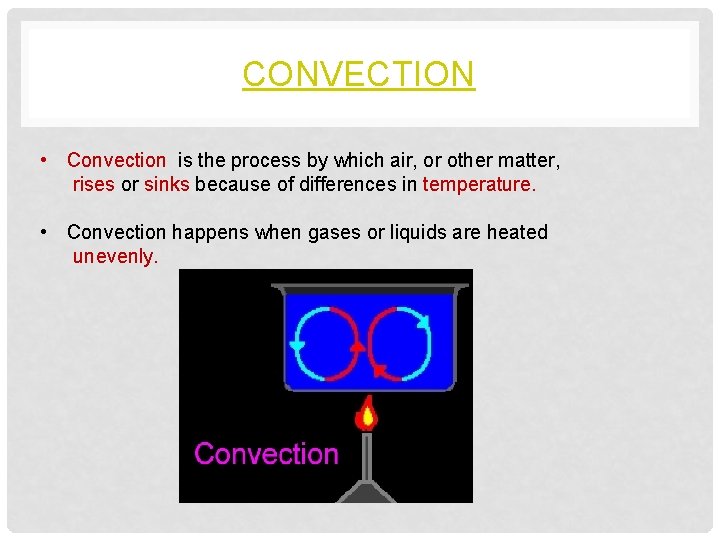
CONVECTION • Convection is the process by which air, or other matter, rises or sinks because of differences in temperature. • Convection happens when gases or liquids are heated unevenly.
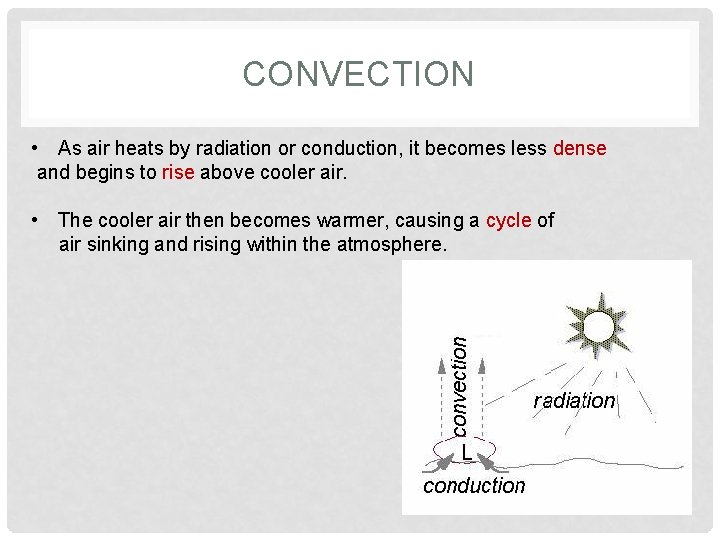
CONVECTION • As air heats by radiation or conduction, it becomes less dense and begins to rise above cooler air. • The cooler air then becomes warmer, causing a cycle of air sinking and rising within the atmosphere.
The Atmosphere Section 1