
Heat Transfer in Canned LiquidParticle Mixtures Subjected To
Heat Transfer in Canned Liquid/Particle Mixtures Subjected To Axial Agitation Thermal Processing Mritunjay Dwivedi & H. S. Ramaswamy Department of Food Science and Agricultural Chemistry Mc. Gill University July 15 , 2008 CSBE Conference

Introduction Thermal Processing Ø Most efficient method of food preservation Ø Principles of thermal processing: v. Safety and shelf stability v. Reduce the number of microorganisms of public health concern v. Create an environment to suppress the growth of spoilage microorganisms
Introduction ØToday the Consumer demands more than safe and self stable product v High Quality ØProcessors demand technology which v Convenience in end is use ØMore efficient ØCost effective Ø in nature ØHigh HTSTspeed process is designed to meet the aforementioned processors and consumers demand v. Minimizing the severity of heat treatment v. Promoting product quality
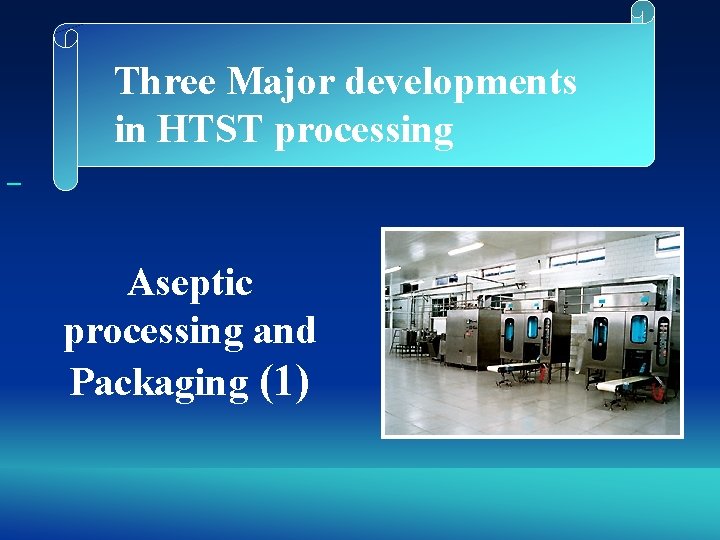
Three Major developments in HTST processing Aseptic processing and Packaging (1)
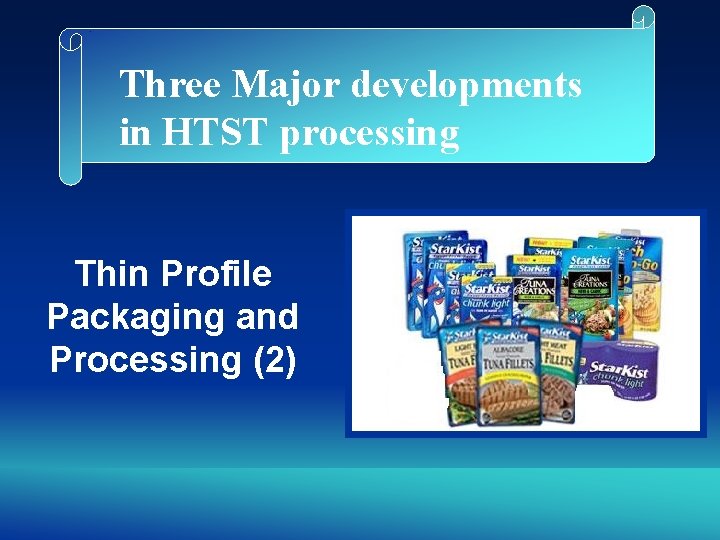
Three Major developments in HTST processing Thin Profile Packaging and Processing (2)
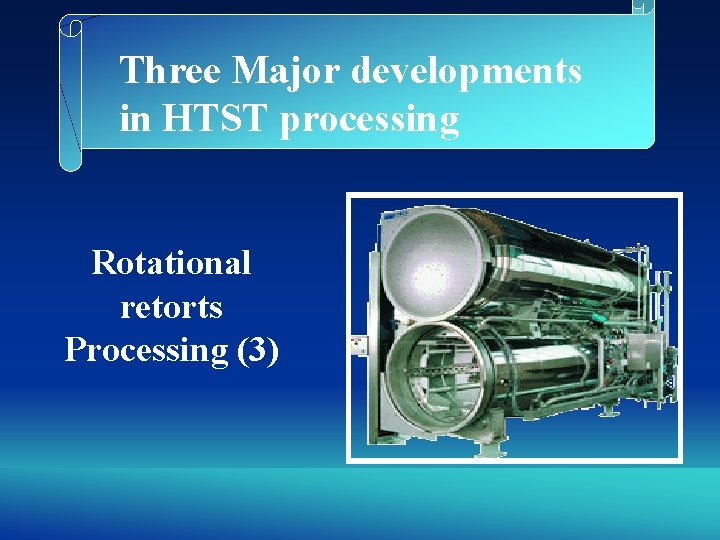
Three Major developments in HTST processing Rotational retorts Processing (3)
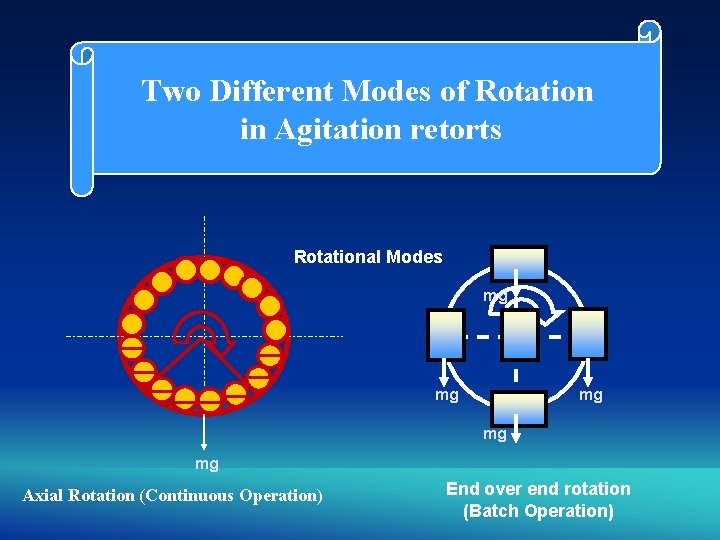
Two Different Modes of Rotation in Agitation retorts Rotational Modes mg mg mg Axial Rotation (Continuous Operation) End over end rotation (Batch Operation)
Several Studies Conducted in End Over End Agitation Processing But very little information is available on axial agitation processing
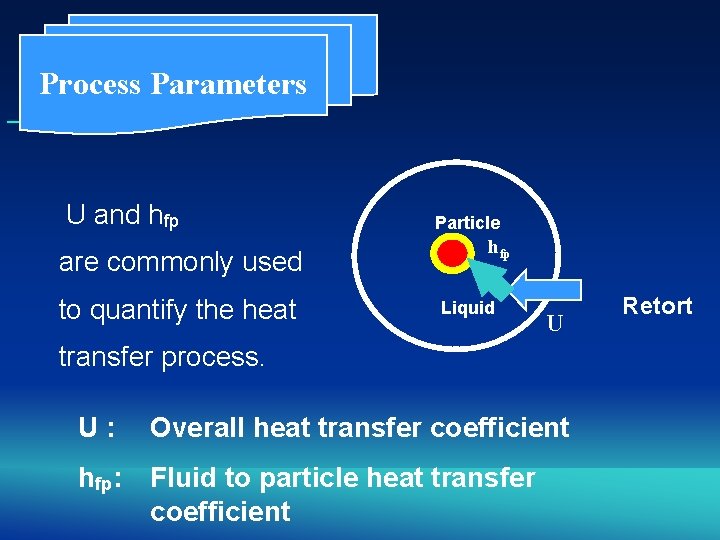
Process Parameters U and hfp are commonly used to quantify the heat Particle hfp Liquid U transfer process. U: Overall heat transfer coefficient hfp: Fluid to particle heat transfer coefficient Retort
ØHeat transfer in free axial agitation is it difficult ØAttaching temperature sensors v Collection of data ØKnowledge of U and hfp is important in predicting the particle center lethality
Overall Objective The overall objective of this presentation is to carry out a detailed evaluation of heat transfer to canned particulate fluids under rotary processing
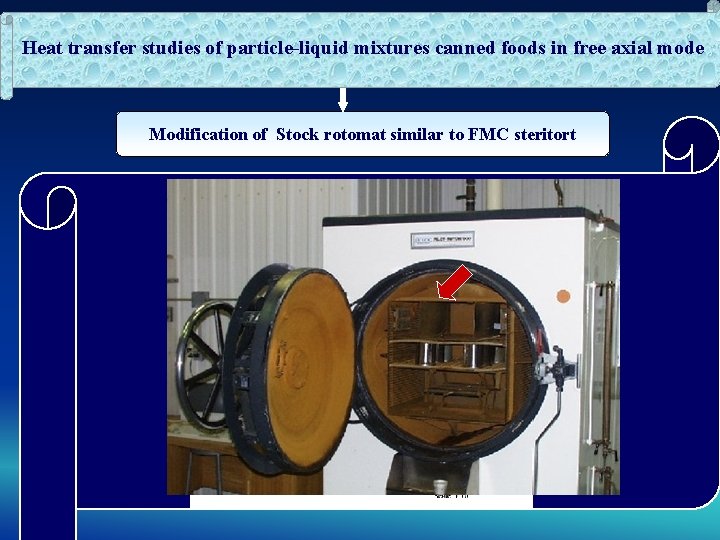
Heat transfer studies of particle-liquid mixtures canned foods in free axial mode Modification of Stock rotomat similar to FMC steritort
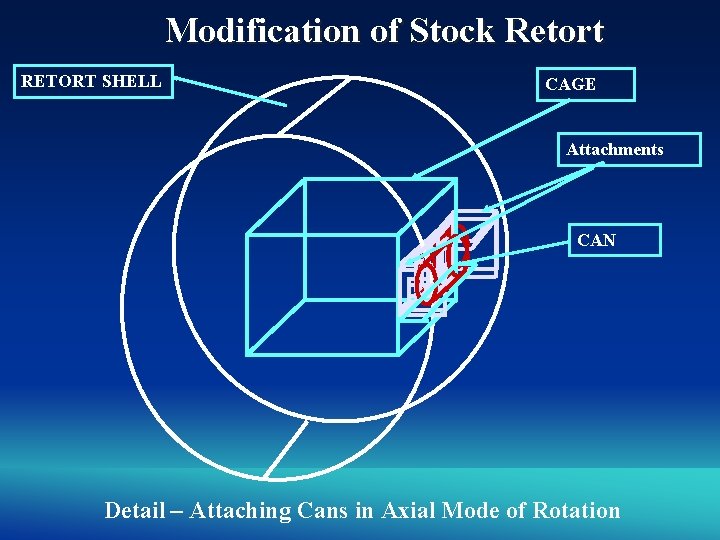
Modification of Stock Retort RETORT SHELL CAGE Attachments CAN Detail – Attaching Cans in Axial Mode of Rotation
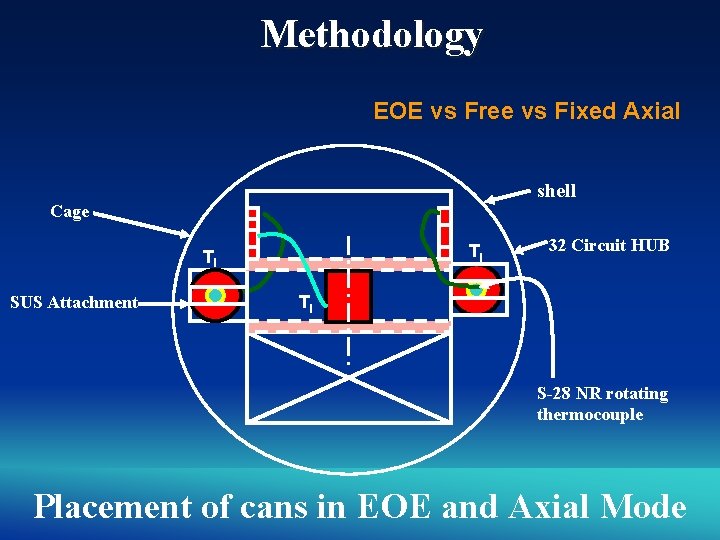
Methodology EOE vs Free vs Fixed Axial shell Cage Tl Tl SUS Attachment 32 Circuit HUB Tl S-28 NR rotating thermocouple Placement of cans in EOE and Axial Mode
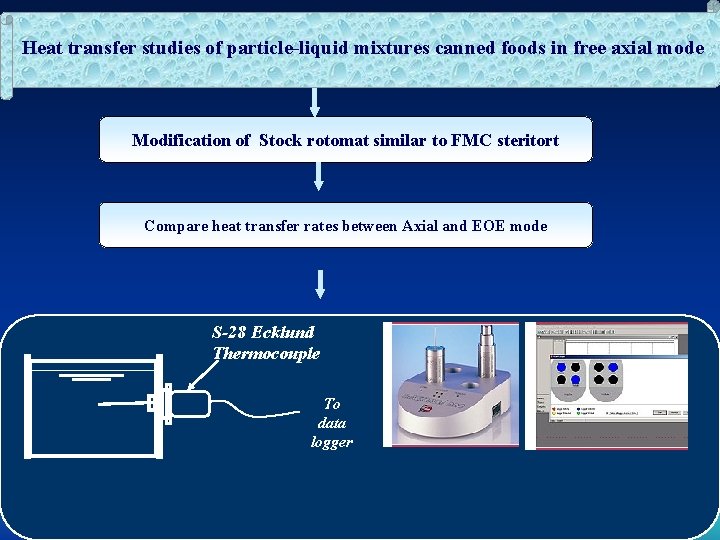
Heat transfer studies of particle-liquid mixtures canned foods in free axial mode Modification of Stock rotomat similar to FMC steritort Compare heat transfer rates between Axial and EOE mode S-28 Ecklund Thermocouple To data logger
Results and Discussions Development of a suitable methodology to measure convective heat transfer coefficients in free axial mode
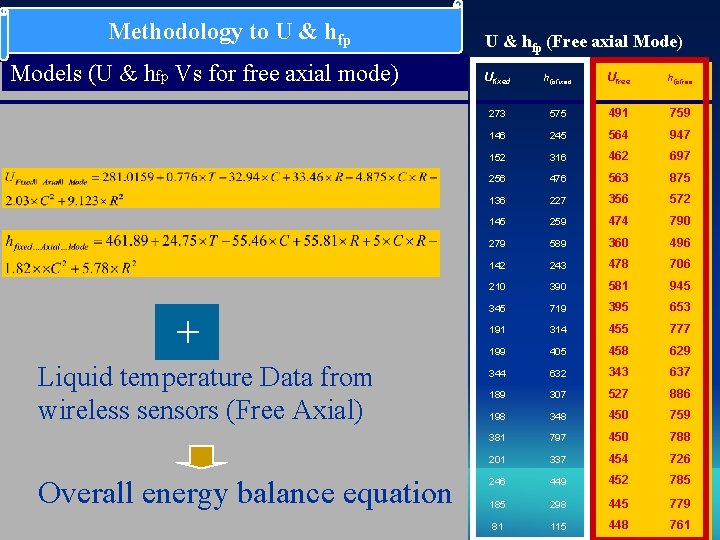
Methodology to U & hfp Models (U & hfp Vs for free axial mode) + Liquid temperature Data from wireless sensors (Free Axial) Overall energy balance equation U & hfp (Free axial Mode) Ufixed hfpfixed Ufree hfpfree 273 575 491 759 146 245 564 947 152 316 462 697 256 476 563 875 136 227 356 572 145 259 474 790 279 589 360 496 142 243 478 706 210 390 581 945 345 719 395 653 191 314 455 777 199 405 458 629 344 632 343 637 189 307 527 886 198 348 450 759 381 797 450 788 201 337 454 726 246 449 452 785 185 298 445 779 81 115 448 761
Results and Discussions Evaluation of the effects of system parameters on heat transfer coefficients with Newtonian fluids during axial rotation
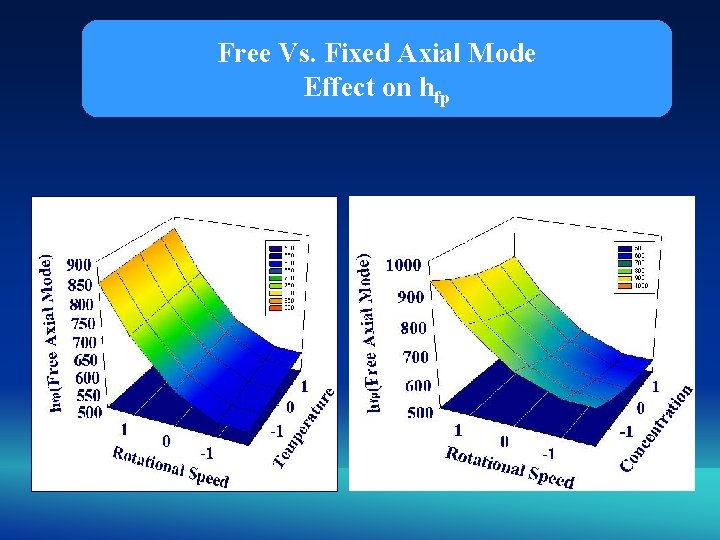
Free Vs. Fixed Axial Mode Effect on hfp
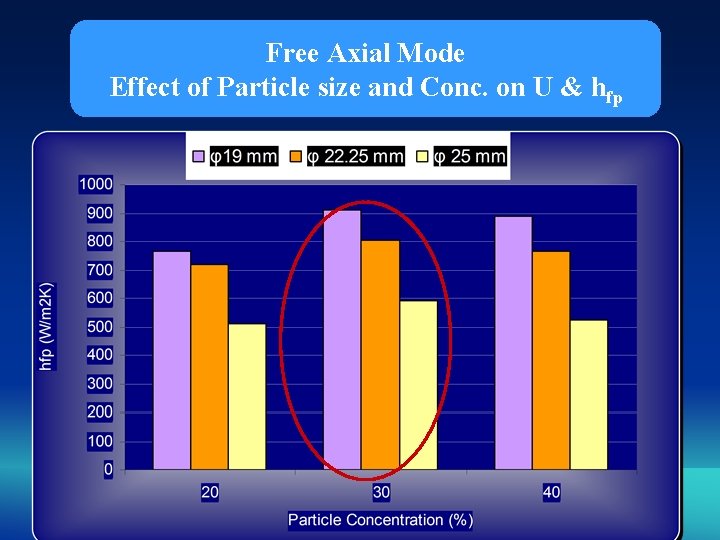
Free Axial Mode Effect of Particle size and Conc. on U & hfp
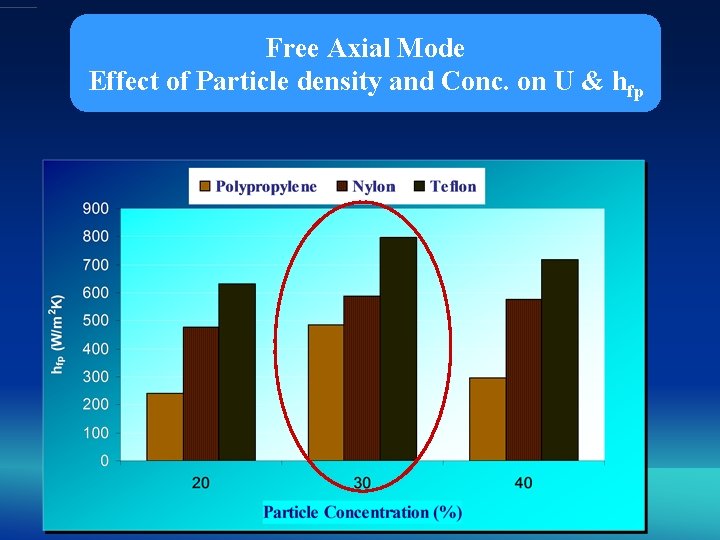
Free Axial Mode Effect of Particle density and Conc. on U & hfp
Results and Discussions Dimensionless correlations for convective heat transfer to canned liquid particulate mixture subjected to axial and end-over-end rotations under natural and forced convection
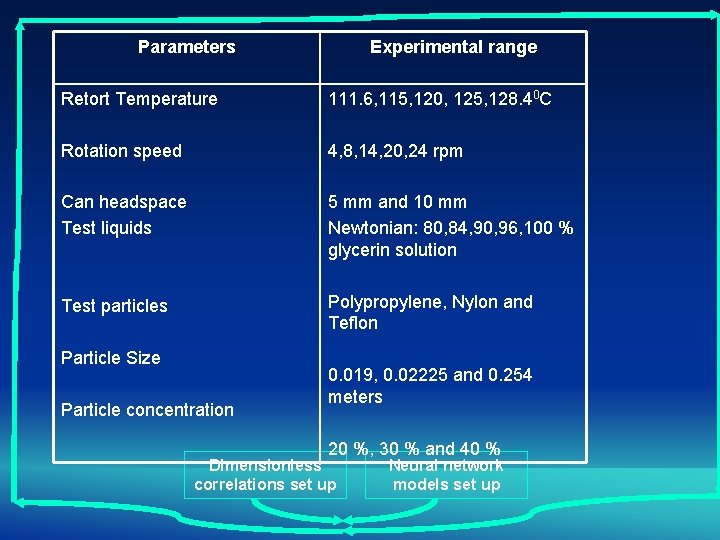
Parameters Experimental range Retort Temperature 111. 6, 115, 120, 125, 128. 40 C Rotation speed 4, 8, 14, 20, 24 rpm Can headspace Test liquids 5 mm and 10 mm Newtonian: 80, 84, 90, 96, 100 % glycerin solution Test particles Polypropylene, Nylon and Teflon Particle Size Particle concentration 0. 019, 0. 02225 and 0. 254 meters 20 %, 30 % and 40 % Dimensionless correlations set up Neural network models set up
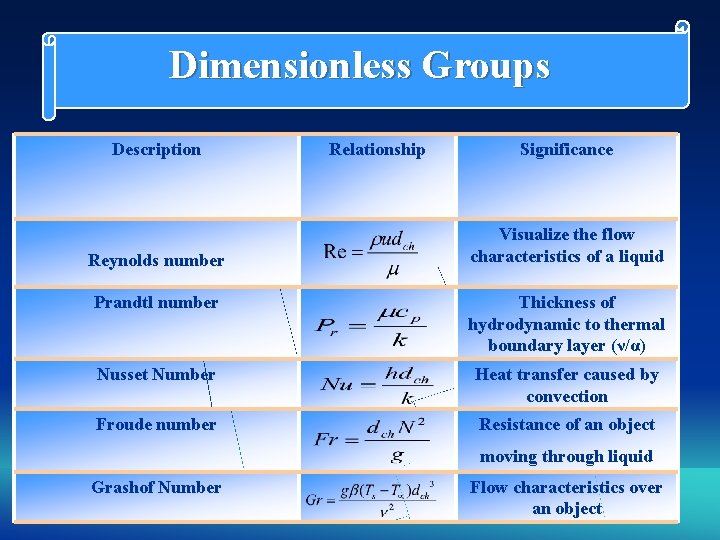
Dimensionless Groups Description Reynolds number Relationship Significance Visualize the flow characteristics of a liquid Prandtl number Thickness of hydrodynamic to thermal boundary layer (ν/α) Nusset Number Heat transfer caused by convection Froude number Resistance of an object moving through liquid Grashof Number Flow characteristics over an object
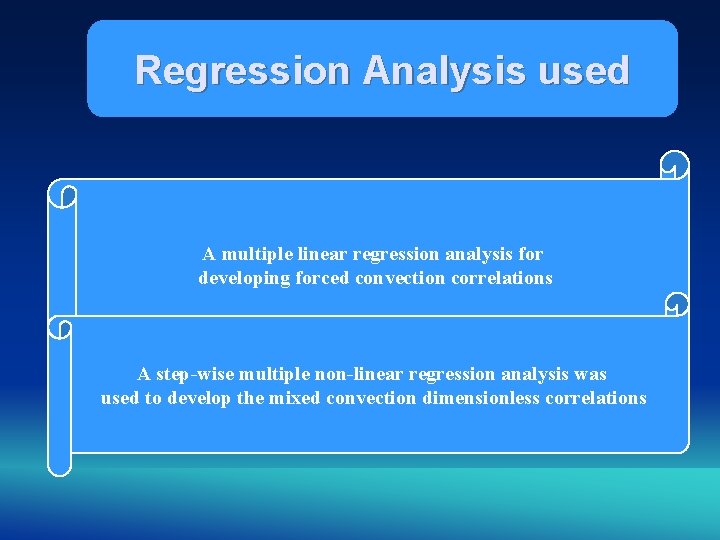
Regression Analysis used A multiple linear regression analysis for developing forced convection correlations A step-wise multiple non-linear regression analysis was used to develop the mixed convection dimensionless correlations
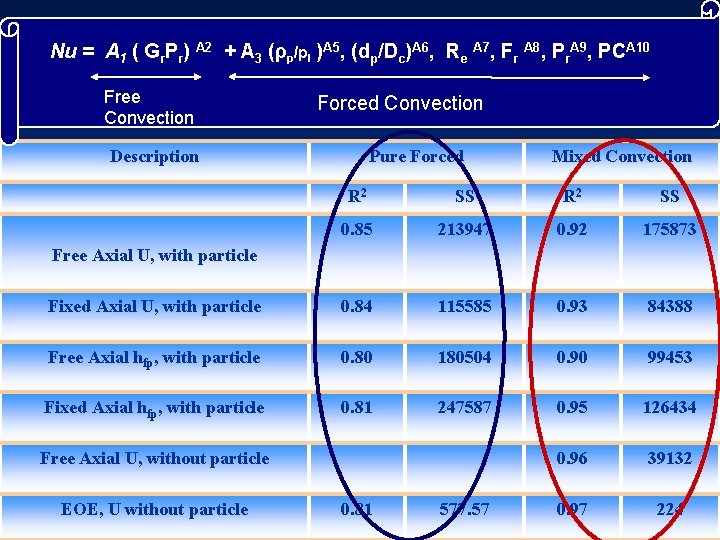
Nu = A 1 ( Gr. Pr) A 2 + A 3 (ρp/pl )A 5, (dp/Dc)A 6, Re A 7, Fr A 8, Pr. A 9, PCA 10 Free Convection Forced Convection Description Pure Forced Mixed Convection R 2 SS 0. 85 213947 0. 92 175873 Fixed Axial U, with particle 0. 84 115585 0. 93 84388 Free Axial hfp, with particle 0. 80 180504 0. 90 99453 Fixed Axial hfp, with particle 0. 81 247587 0. 95 126434 0. 96 39132 0. 97 224 Free Axial U, with particle Free Axial U, without particle EOE, U without particle 0. 81 577. 57
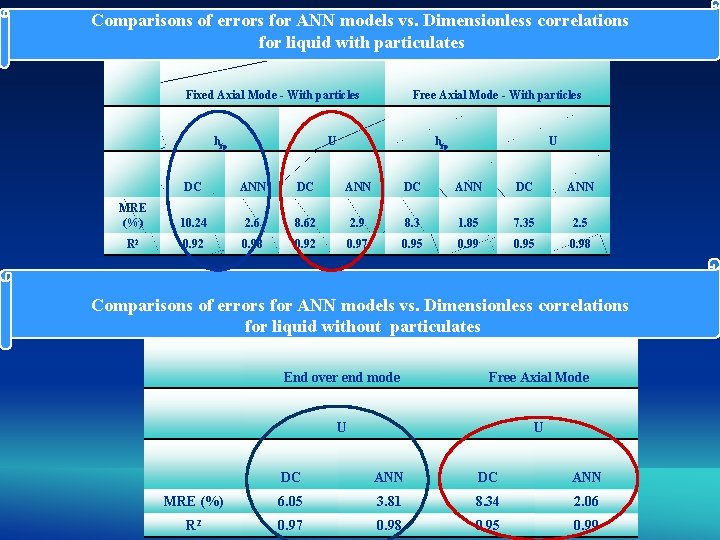
Comparisons of errors for ANN models vs. Dimensionless correlations for liquid with particulates Fixed Axial Mode - With particles hfp Free Axial Mode - With particles U hfp U DC ANN MRE (%) 10. 24 2. 6 8. 62 2. 9 8. 3 1. 85 7. 35 2. 5 R 2 0. 98 0. 92 0. 97 0. 95 0. 99 0. 95 0. 98 Comparisons of errors for ANN models vs. Dimensionless correlations for liquid without particulates End over end mode Free Axial Mode U U DC ANN MRE (%) 6. 05 3. 81 8. 34 2. 06 R 2 0. 97 0. 98 0. 95 0. 99
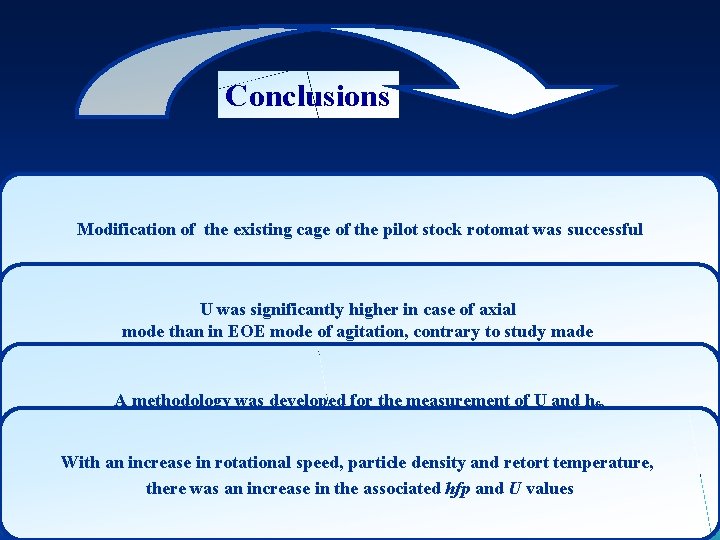
Conclusions Modification of the existing cage of the pilot stock rotomat was successful U was significantly higher in case of axial mode than in EOE mode of agitation, contrary to study made by Naveh and Kopleman (1980) A methodology was developed for the measurement of U and hfp subjected to free axial agitation. With an increase in rotational speed, particle density and retort temperature, there was an increase in the associated hfp and U values
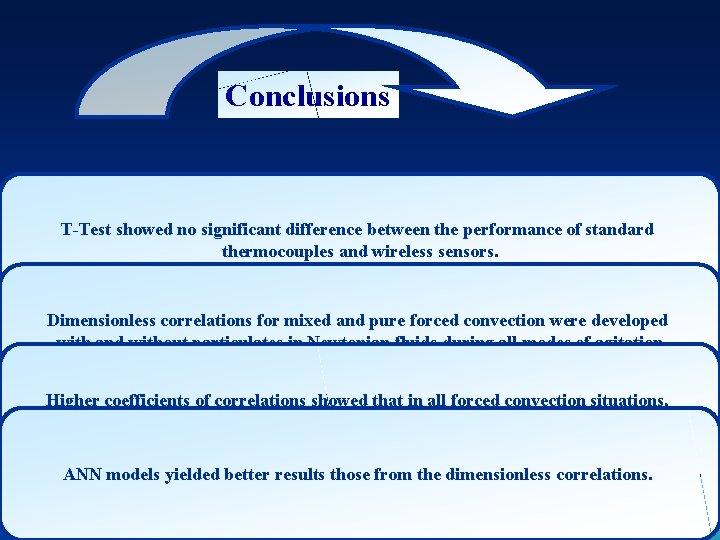
Conclusions T-Test showed no significant difference between the performance of standard thermocouples and wireless sensors. Dimensionless correlations for mixed and pure forced convection were developed with and without particulates in Newtonian fluids during all modes of agitation Higher coefficients of correlations showed that in all forced convection situations, the natural convection phenomenon continues to operate because of buoyant forces. ANN models yielded better results those from the dimensionless correlations.

Thank You
- Slides: 30