
Heat Transfer Equipment Some Industrial Applications Teo Chee


- Slides: 28
Heat Transfer Equipment Some Industrial Applications Teo Chee Seng 17 Feb 2015
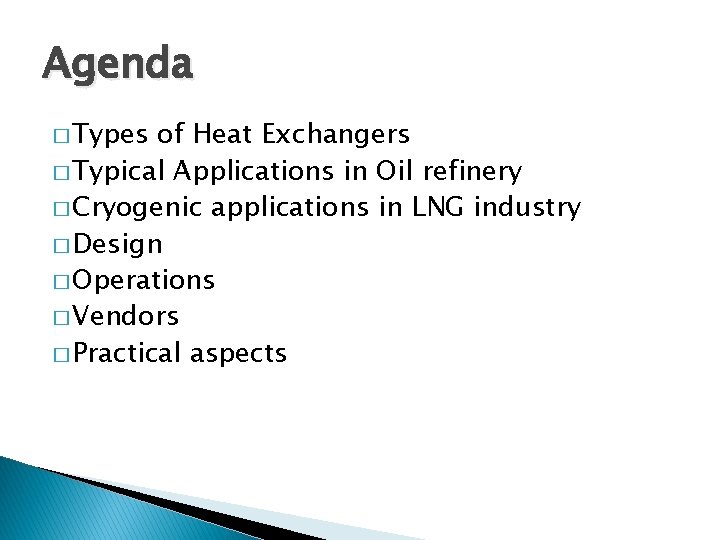
Agenda � Types of Heat Exchangers � Typical Applications in Oil refinery � Cryogenic applications in LNG industry � Design � Operations � Vendors � Practical aspects
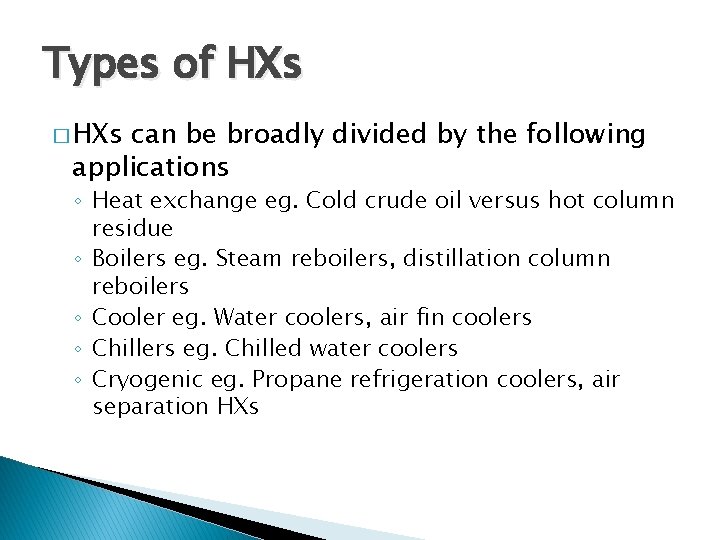
Types of HXs � HXs can be broadly divided by the following applications ◦ Heat exchange eg. Cold crude oil versus hot column residue ◦ Boilers eg. Steam reboilers, distillation column reboilers ◦ Cooler eg. Water coolers, air fin coolers ◦ Chillers eg. Chilled water coolers ◦ Cryogenic eg. Propane refrigeration coolers, air separation HXs
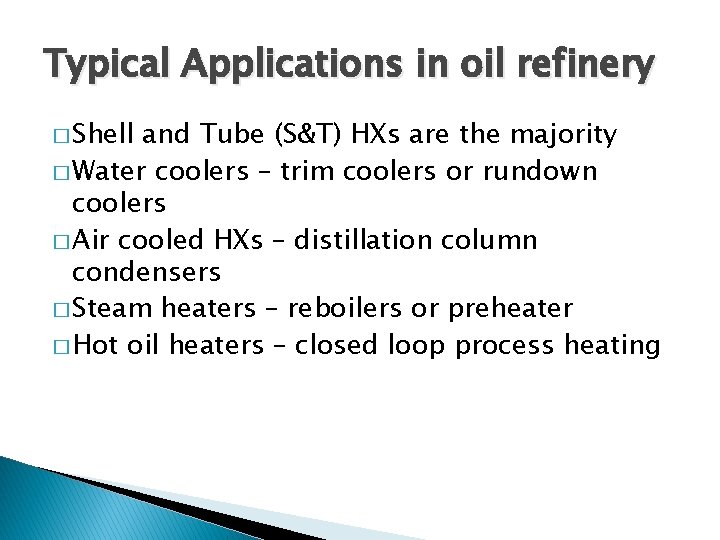
Typical Applications in oil refinery � Shell and Tube (S&T) HXs are the majority � Water coolers – trim coolers or rundown coolers � Air cooled HXs – distillation column condensers � Steam heaters – reboilers or preheater � Hot oil heaters – closed loop process heating
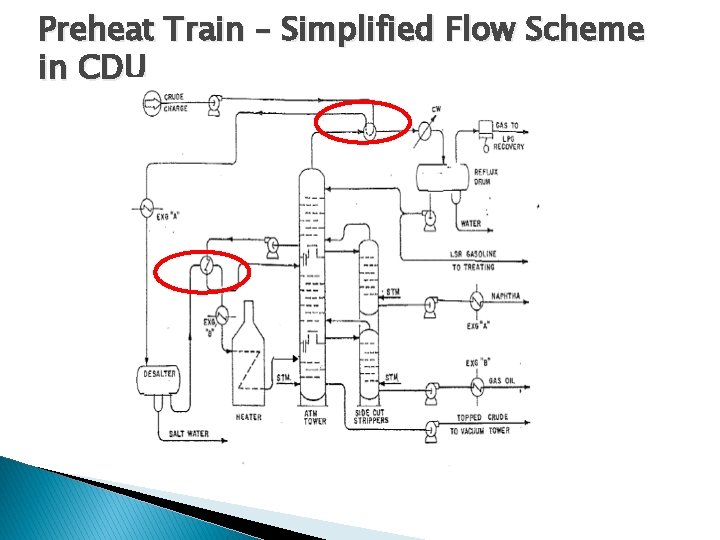
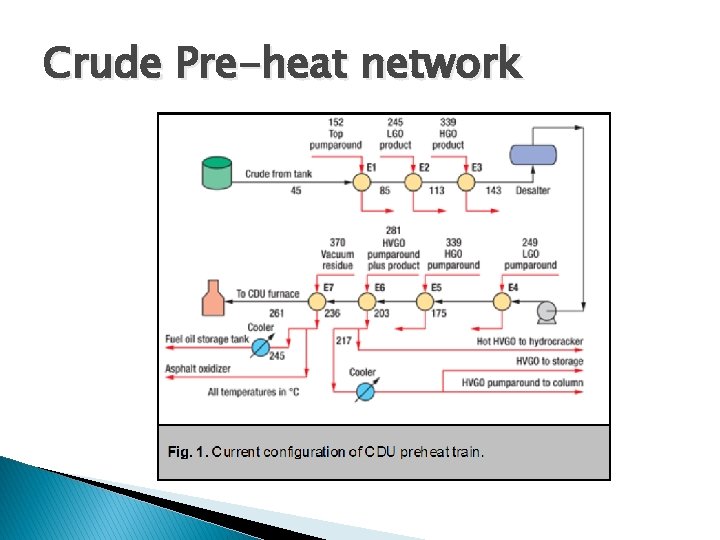
Preheat Train – Simplified Flow Scheme in CDU
Crude Pre-heat network
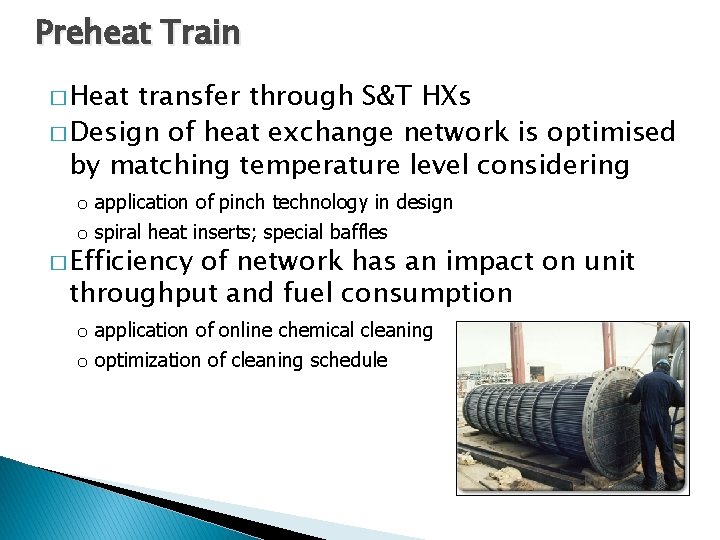
Preheat Train � Heat transfer through S&T HXs � Design of heat exchange network is optimised by matching temperature level considering o application of pinch technology in design o spiral heat inserts; special baffles � Efficiency of network has an impact on unit throughput and fuel consumption o application of online chemical cleaning o optimization of cleaning schedule
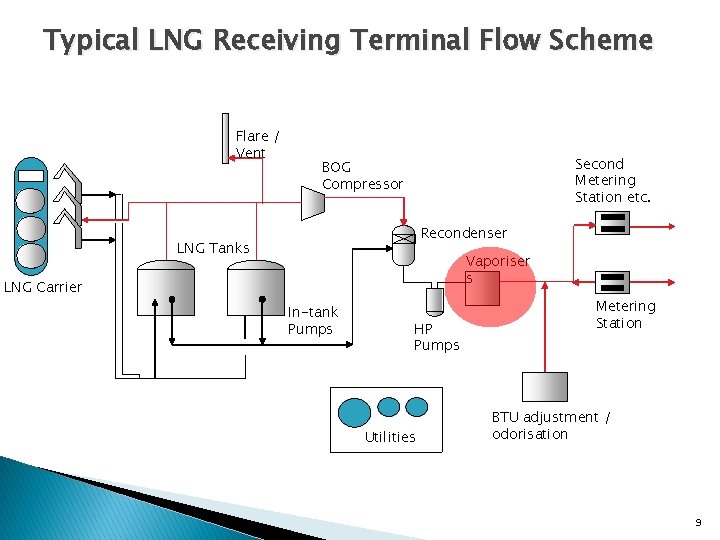
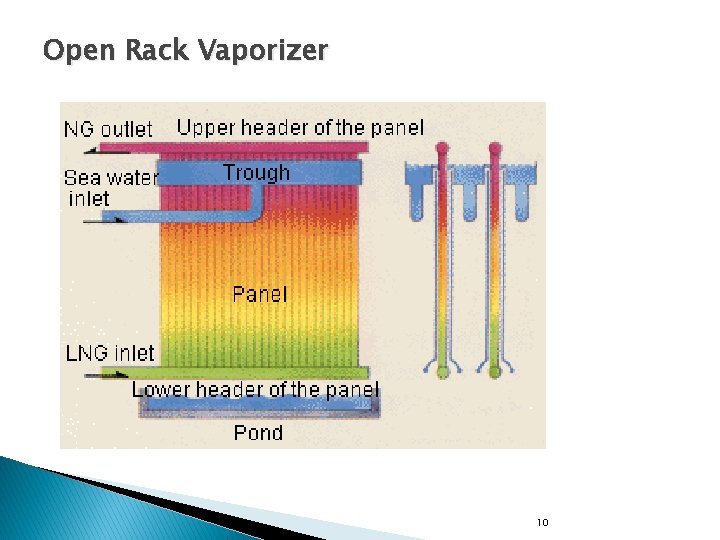
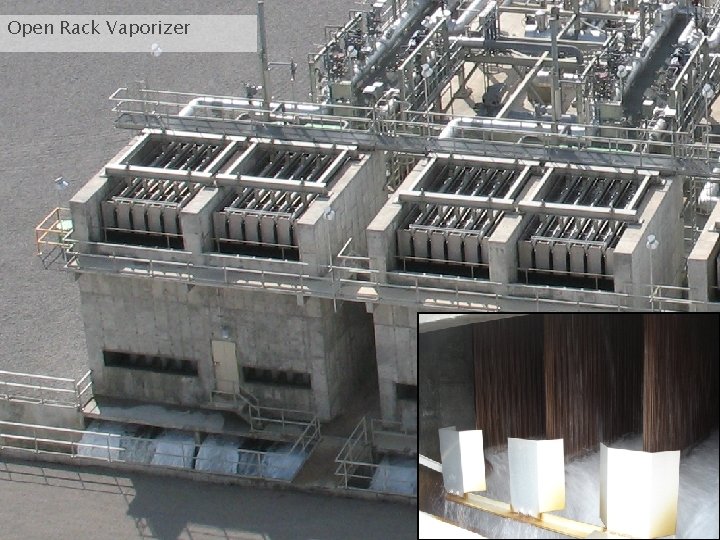
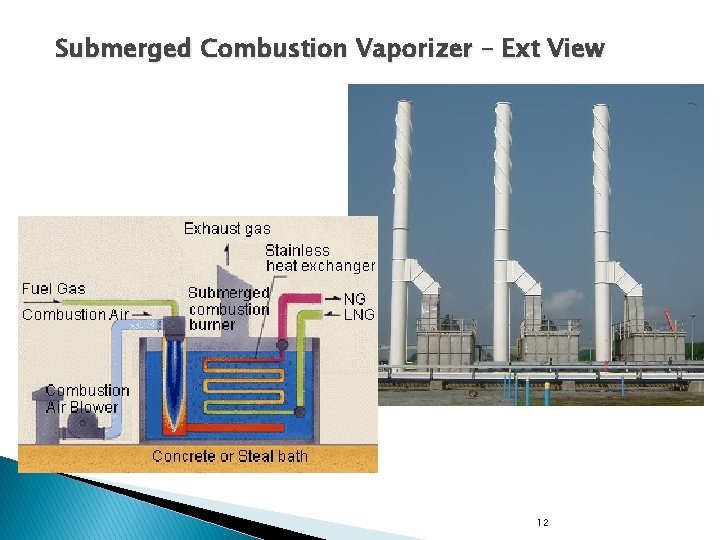
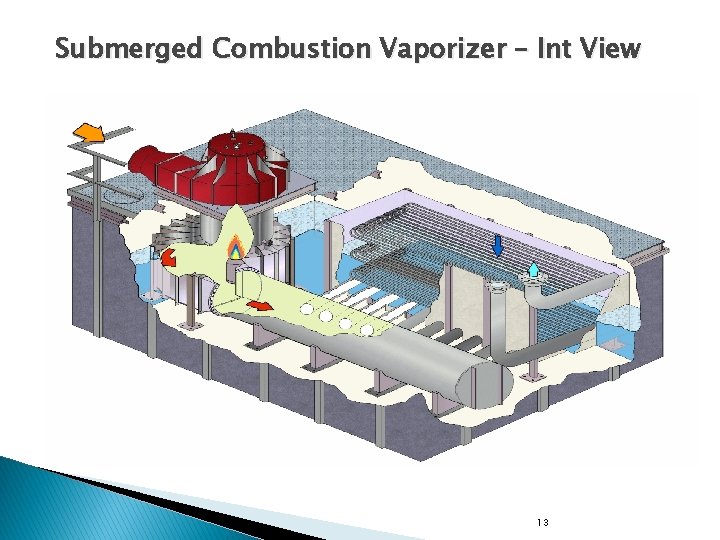
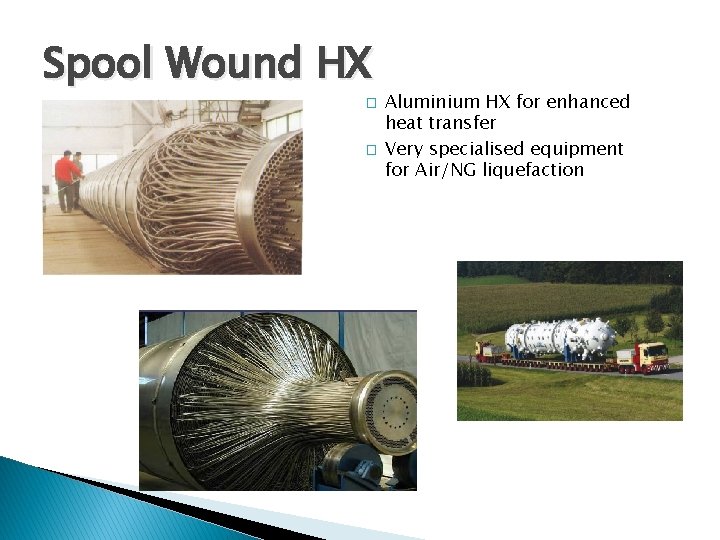
Cryogenic Applications eg. LNG � Plate exchangers in LNG plants, air separation units � Spool wound heat exchangers in LNG liquefaction plants � Printed circuit exchangers in offshore platforms � Propane “kettles” characterized by narrow temperature approaches � In LNG terminals, LNG is vaporised into natural gas using vaporisers (ORVs or SCVs) ◦ ORV – Open Rack Vaporisers ◦ SCV – Submerged Combustion Vaporisers
Typical LNG Receiving Terminal Flow Scheme Flare / Vent Second Metering Station etc. BOG Compressor Recondenser LNG Tanks Vaporiser s LNG Carrier In-tank Pumps HP Pumps Utilities Metering Station BTU adjustment / odorisation 9
Open Rack Vaporizer ORV conceptional flow 10
Open Rack Vaporizer
Submerged Combustion Vaporizer – Ext View � � 12
Submerged Combustion Vaporizer – Int View 13
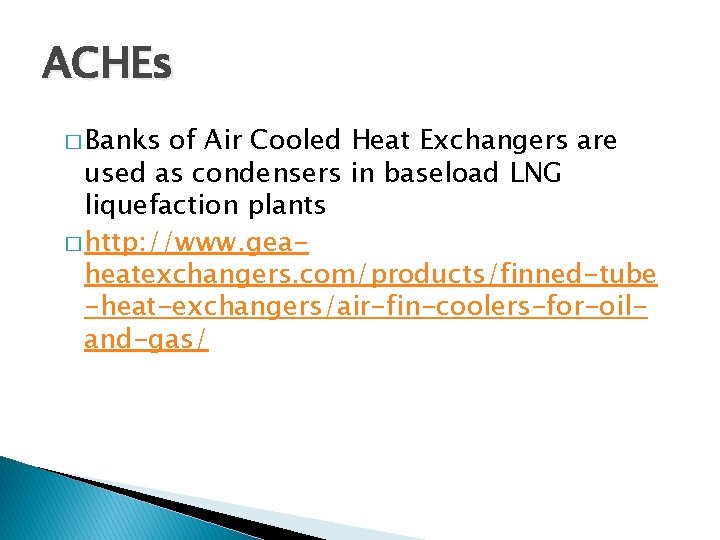
ACHEs � Banks of Air Cooled Heat Exchangers are used as condensers in baseload LNG liquefaction plants � http: //www. geaheatexchangers. com/products/finned-tube -heat-exchangers/air-fin-coolers-for-oiland-gas/
Spool Wound HX � � Aluminium HX for enhanced heat transfer Very specialised equipment for Air/NG liquefaction
Design : General Considerations � Service – fouling / corrosive? � Temperature difference / approach � Allowable/available pressure drop � O&M philosophy � Applicable codes and regulations � CAPEX / OPEX
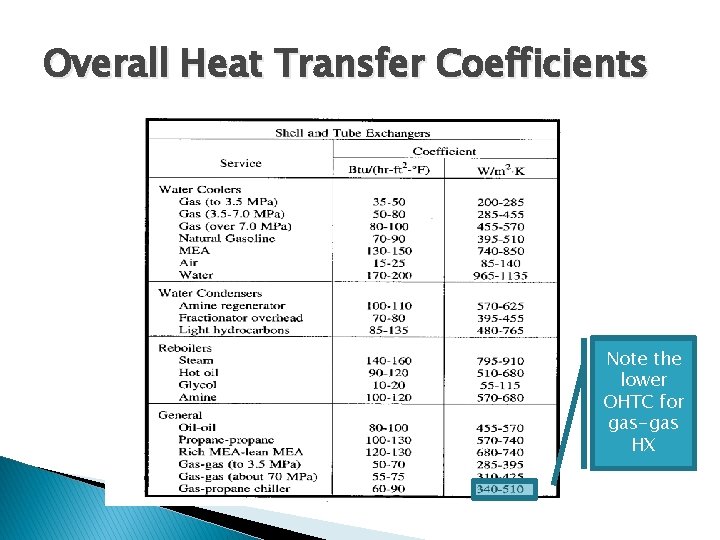
Overall Heat Transfer Coefficients Note the lower OHTC for gas-gas HX
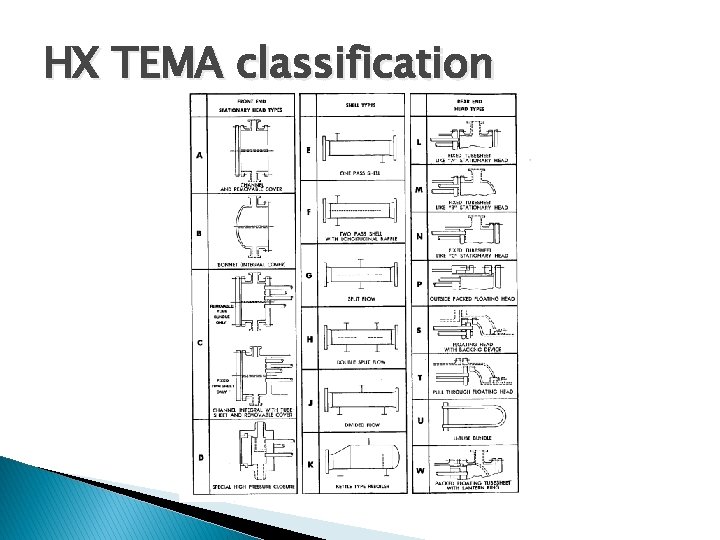
HX TEMA classification
Design Codes
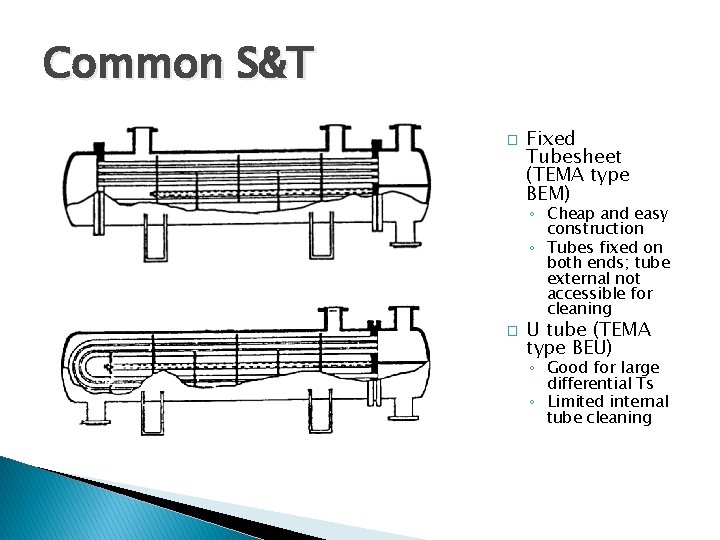
Common S&T � Fixed Tubesheet (TEMA type BEM) ◦ Cheap and easy construction ◦ Tubes fixed on both ends; tube external not accessible for cleaning � U tube (TEMA type BEU) ◦ Good for large differential Ts ◦ Limited internal tube cleaning
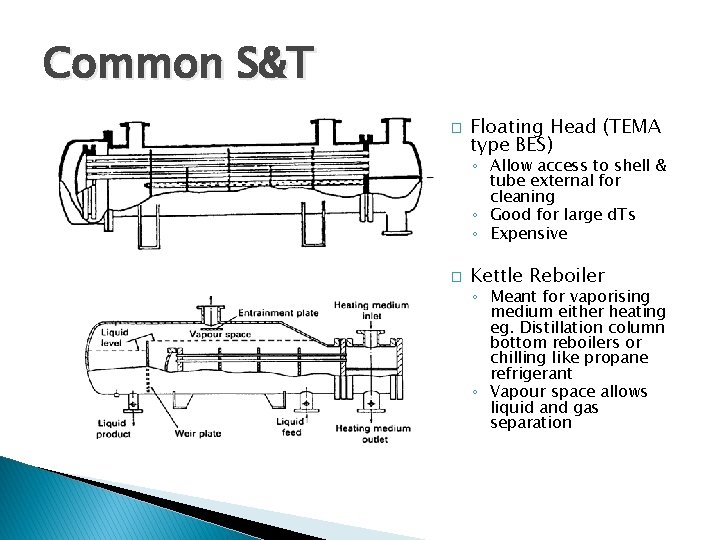
Common S&T � Floating Head (TEMA type BES) ◦ Allow access to shell & tube external for cleaning ◦ Good for large d. Ts ◦ Expensive � Kettle Reboiler ◦ Meant for vaporising medium either heating eg. Distillation column bottom reboilers or chilling like propane refrigerant ◦ Vapour space allows liquid and gas separation
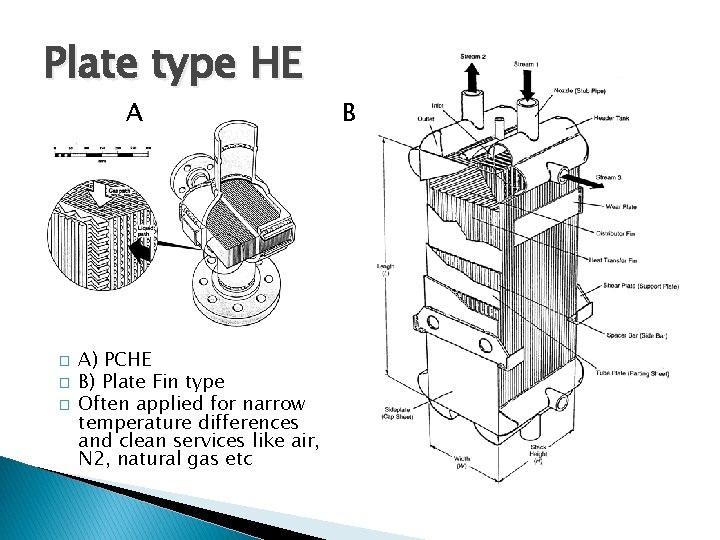
Plate type HE A � � � A) PCHE B) Plate Fin type Often applied for narrow temperature differences and clean services like air, N 2, natural gas etc B
Operations : Process Monitoring (I) Typical “task” for process engineer is to monitor the effectiveness of heat exchange network � WHY? � ◦ Lower efficiency means increased firing in furnaces leading to more burning more fuel and higher costs ◦ Efficiency reduces with time due to “fouling” � How to monitor? � Decide when to clean and what to clean! ◦ Trending the overall heat transfer coefficient of individual HXs or groups of HXs ◦ There is no OHTC meter! OHTC has to be back calculated based on temperatures and flowrates ◦ An alternative is to monitor the fouling factors – essentially the same principle as OHTC ◦ “normalisation” to the right flowrates and temperature is important as differernt flowrates and temperature can have significant effect on OHTC calculations
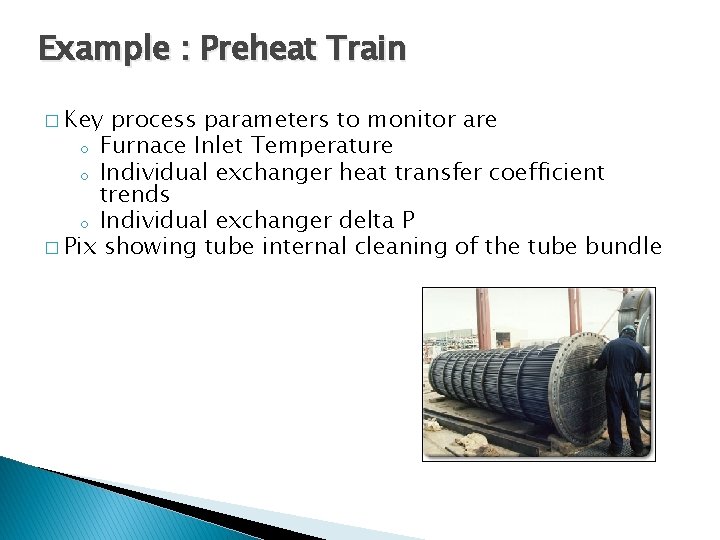
Example : Preheat Train � Key process parameters to monitor are o Furnace Inlet Temperature o Individual exchanger heat transfer coefficient trends o Individual exchanger delta P � Pix showing tube internal cleaning of the tube bundle
Operations : Process Monitoring (II) � For water coolers and air coolers, there are often no flowmeters and temperature meters on the air/water side � Monitoring is often by setting a “baseline” eg after a maintenance shutdown when equipment is clean � Troubleshooting is often via hand held meters like an IR meter to gauge the temperature of the process / portable ultrasonic flowmeters for water flow measurement � Comparison against design values often give good clues to current performance – process models on rating mode is very useful
Vendors � S&T HXs equipment are no longer considered specialized equipment and there are many vendors in the world � Brazed aluminum plate exchangers are more “specials” – Chart industries/Linde are two of the leading vendors � Printed circuit HX is a special small form factor compact HX offered by Heatric � SWHE – specialised HX offered by APCI/Linde for cryogenic applications
Practical Aspects � Heat exchangers are crucial pieces of equipment in maintaining unit throughput and optimizing fuel efficiency � O&M know how and considerations like space requirements, cleaning schedule, valving arrangements, flushing, fouling etc need to be considered in the initial design � Relevant experience is important in choice of HX to be applied � Trend is towards more online cleaning, nonintrusive monitoring and process monitoring via simulation
Some links � Movie on heat exchanger incident at the Tesoro refinery � https: //www. htri. net/ � http: //www. tema. org/ � Prices