
Heat Illness Prevention 2015 Heat Illness Natural bodily
Heat Illness Prevention 2015
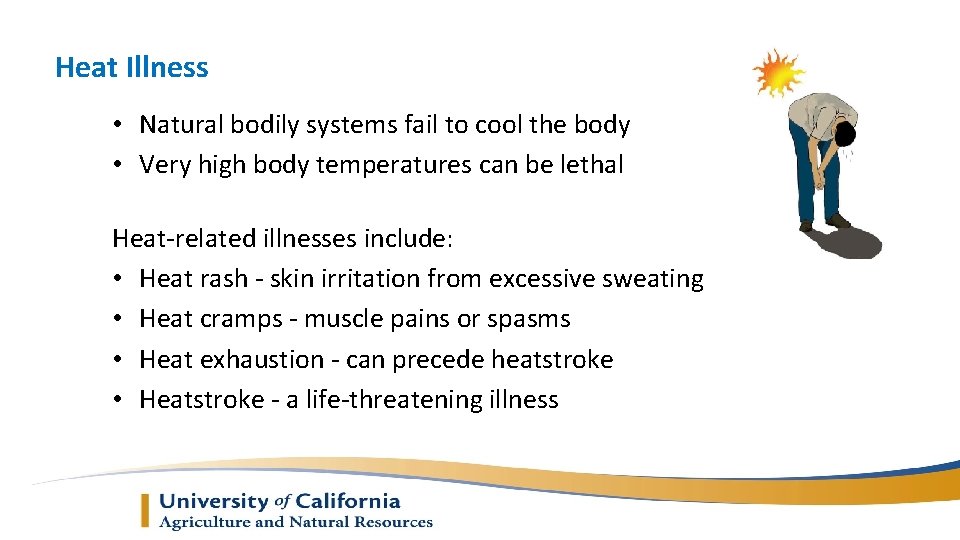
Heat Illness • Natural bodily systems fail to cool the body • Very high body temperatures can be lethal Heat-related illnesses include: • Heat rash - skin irritation from excessive sweating • Heat cramps - muscle pains or spasms • Heat exhaustion - can precede heatstroke • Heatstroke - a life-threatening illness
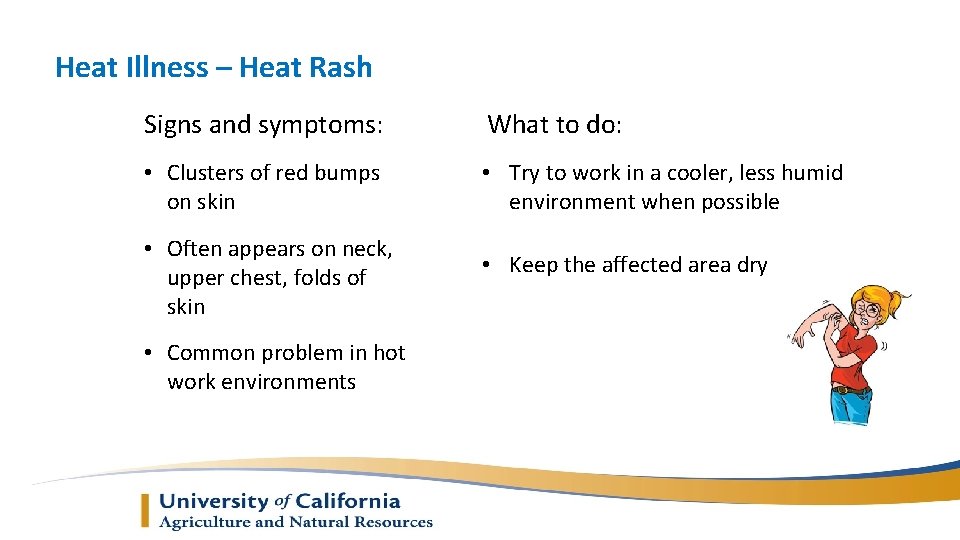
Heat Illness – Heat Rash Signs and symptoms: What to do: • Clusters of red bumps on skin • Try to work in a cooler, less humid environment when possible • Often appears on neck, upper chest, folds of skin • Common problem in hot work environments • Keep the affected area dry
Heat Illness – Heat Cramps Signs and symptoms: What to do: • Muscle spasms • Have worker rest in shady, cool area • Pain • Usually in abdomen, arms, or legs • Can be a first sign of worsening heat-related illness • Drink water or other cool beverages • Wait a few hours before allowing returning to strenuous work • Seek medical attention if cramps don't go away
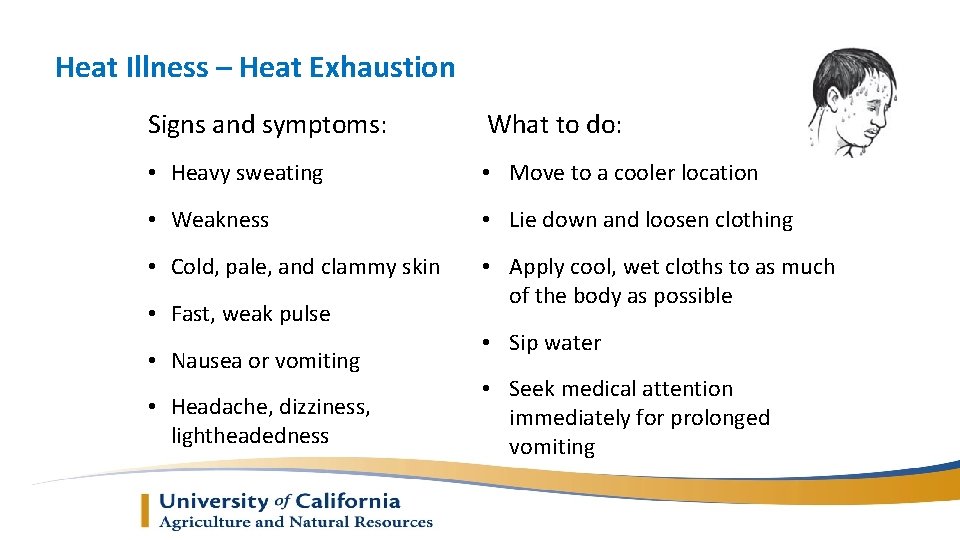
Heat Illness – Heat Exhaustion Signs and symptoms: What to do: • Heavy sweating • Move to a cooler location • Weakness • Lie down and loosen clothing • Cold, pale, and clammy skin • Apply cool, wet cloths to as much of the body as possible • Fast, weak pulse • Nausea or vomiting • Headache, dizziness, lightheadedness • Sip water • Seek medical attention immediately for prolonged vomiting
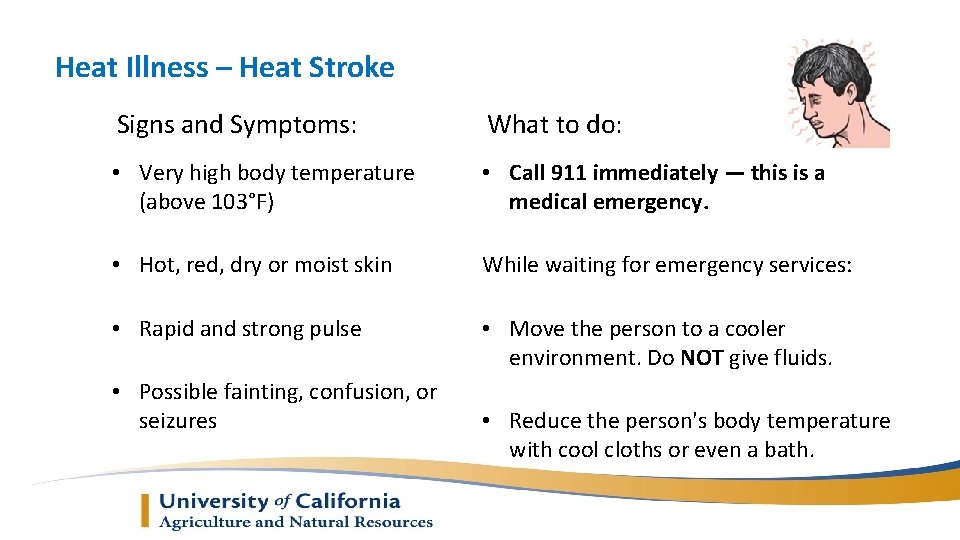
Heat Illness – Heat Stroke Signs and Symptoms: What to do: • Very high body temperature (above 103°F) • Call 911 immediately — this is a medical emergency. • Hot, red, dry or moist skin While waiting for emergency services: • Rapid and strong pulse • Move the person to a cooler environment. Do NOT give fluids. • Possible fainting, confusion, or seizures • Reduce the person's body temperature with cool cloths or even a bath.
Heat Illness Standard – Title 8, Section 3395 • Applies to outdoor worksites • Must have a written plan (can be part of IIPP) • Triggered by temperature at worksite • Employee and Supervisor training is specified • High heat procedures (temperature > 95 F) • Emergency response procedures • Acclimatization procedures
Heat Illness Standard – Changes to Regulation The Occupational Safety & Health Standards Board (OSHSB) approved amendments to the heat illness regulation. The new regulations went into effect on May 1, 2015, in time for this year's growing season and warmer weather. see Cal. OSHA websites for updates https: //www. dir. ca. gov/dosh/heatillnessinfo. html https: //www. dir. ca. gov/oshsb/Heat_illness_prevention. html
Heat Illness Standard - Water • One quart person, per hour (2 gallons for an 8 -hr shift) • Must be “fresh, pure, suitably cool… free of charge” (potable water, not ice cold) • As close as practicable to worksite (if not plumbed or supplied at site) • Educate workers and actively encourage them to drink small amounts of water often (up to 4 cups/hour)

Heat Illness Standard - Shade • Shade = blockage of direct sunlight • Required to be available at 80 F (formerly required at 85 F) • Must accommodate “the number of employees” on rest or recovery break • Access to shade must be permitted at all times • Must be made available upon request if <80 F • If unsafe or not feasible, define alternative procedures
Heat Illness Standard – Cool-down Rest Periods • Must be allowed and encouraged • Employees shall be monitored for symptoms and signs of heat illness (observation and inquiry is sufficient) • If symptoms or signs occur: • First aid or emergency response is required (based on level of heatrelated illness) • Workers must not be ordered back to work, sent home, or left alone until symptoms have abated
Heat Illness Standard - High Heat Procedures • Triggered at 95 F (unchanged in regulation) • Pre-shift meeting to review high heat procedures • Observation of employees for signs and symptoms • Mandatory 10 minutes cool-down recovery time for each two hour period of continuous work • Employees must be authorized and able to call for emergency service (or designate one employee onsite)
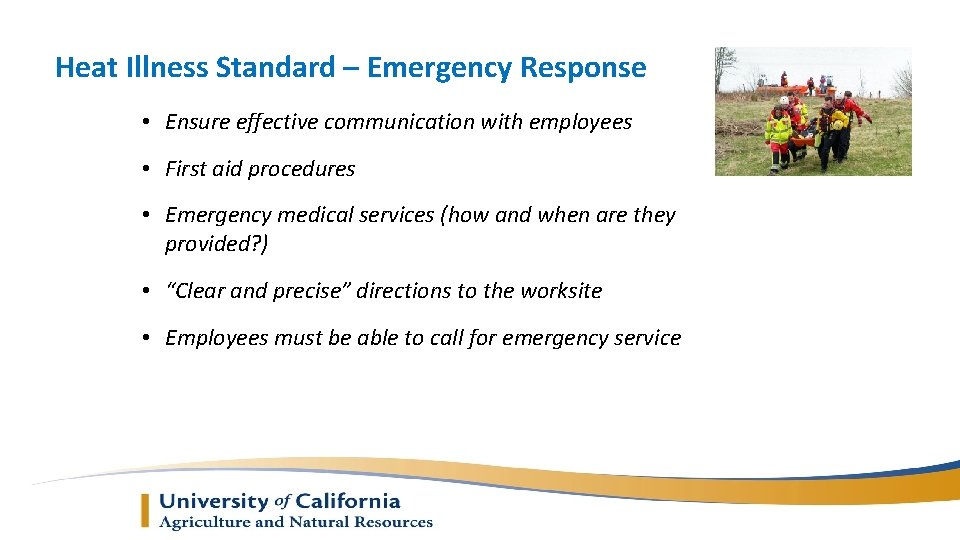
Heat Illness Standard – Emergency Response • Ensure effective communication with employees • First aid procedures • Emergency medical services (how and when are they provided? ) • “Clear and precise” directions to the worksite • Employees must be able to call for emergency service
Heat Illness Standard – Acclimatization • Include concept/definition and specific procedures in training and written plan • Applies to new employees, heatwave events, and employees returning to work after extended absence from heat • New employees must be observed for first 14 days • All employees observed during heat wave events (>80 F AND 10 degrees higher than average of previous 5 days) • Procedure: define gradual increase in work hours over multiday period or define alternative work arrangements
Heat Illness Standard - Training • Employer responsibilities and worker’s rights • Signs and symptoms of heat illness • Personal/environmental risk factors and acclimatization • First aid and emergency response for various levels of heat illness • High heat procedures (pre-shift meeting required) • Emergency response procedures
Heat Illness Standard – Written Plan • Heat Illness Prevention Plan (English/Spanish) • Must be available at worksite upon request • Procedures for complying with standard (water, shade, training • High heat procedures • Emergency response procedures • Acclimatization procedures • Updated template available from EHS by May 1
Heat Illness Standard – Helpful Resources UC-ANR resources: http: //ucanr. edu/heatillness Cal. OSHA Heat Illness prevention website: https: //www. dir. ca. gov/dosh/heatillnessinfo. html Text of changes (took effect May 1, 2015): https: //www. dir. ca. gov/oshsb/documents/Heat_illness_prevention _txtbrdconsider. pdf
Heat Illness Standard – Helpful Resources Federal government resources OSHA picture-based pamphlet: https: //www. osha. gov/SLTC/heatillness/3422_factsheet_en. pdf OSHA Heat Illness prevention website: https: //www. osha. gov/SLTC/heatstress/prevention. html CDC Heat Stress website: http: //www. cdc. gov/niosh/topics/heatstress/
- Slides: 18