
Heat Exchangers HEX Shell Tube Plate type Double
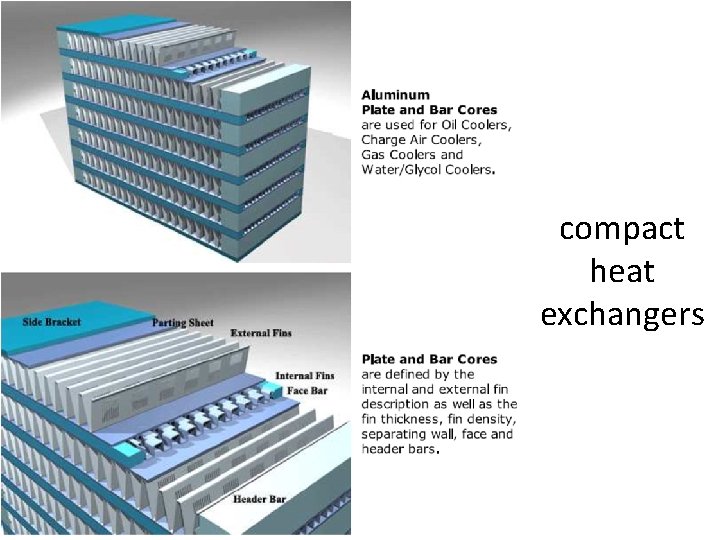
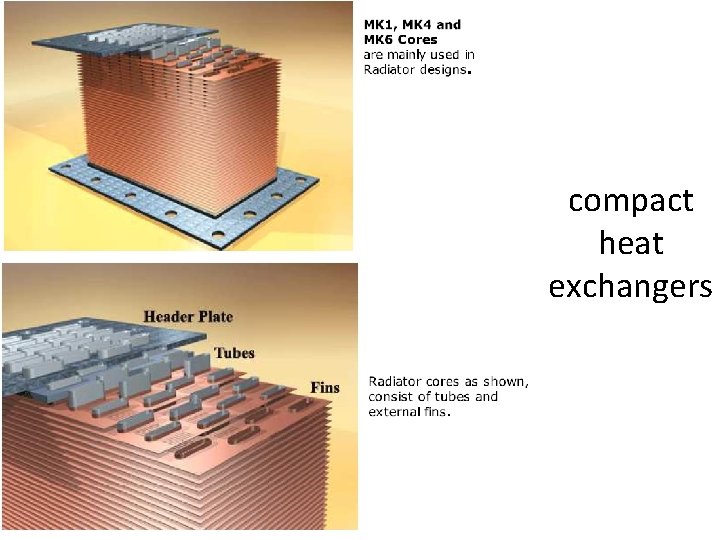
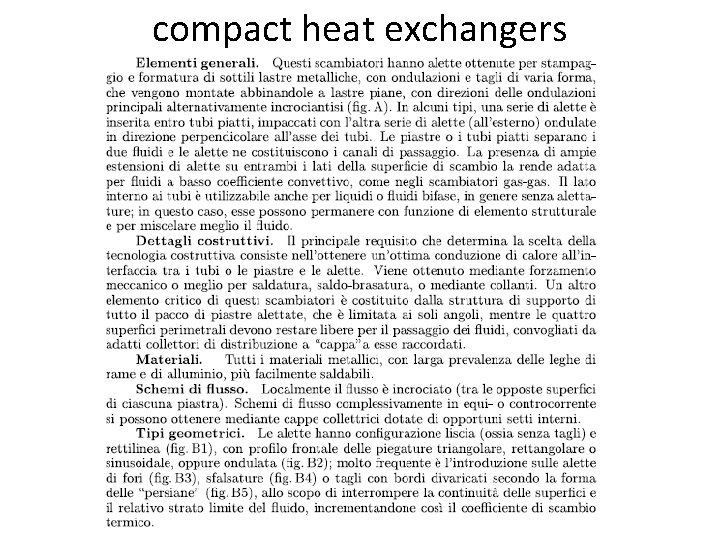
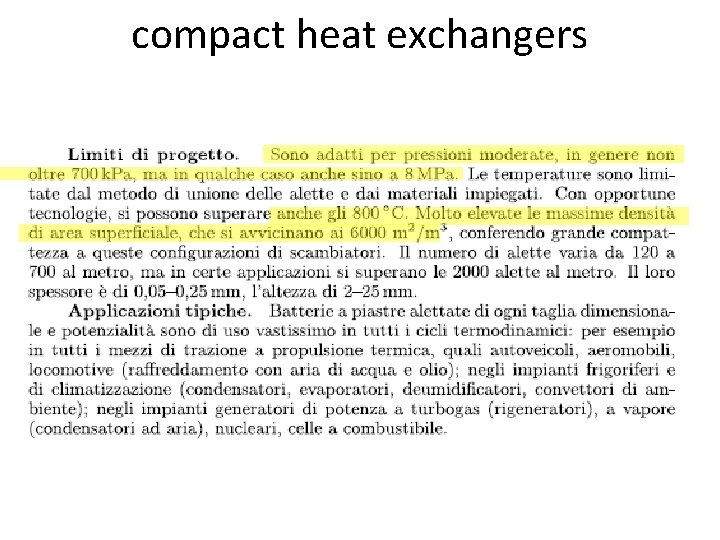
Heat Exchangers- HEX Shell & Tube Plate type Double Pipe Compact heat exchangers
Heat Exchanger is …… A device that is used to transfer thermal energy (enthalpy) between two or more fluids, between a solid surface and a fluid, or between solid particulates and a fluid, at different temperatures and in thermal contact. Presentation on Heat Exchangers
HEAT EXCHANGERS FUNCTIONS • Heating / Cooling / Evaporation • • • Cooling of lubricants Heating of boiler feed water Condensing steam for re-use Pasteurization Sterilization Preheating Presentation on Heat Exchangers
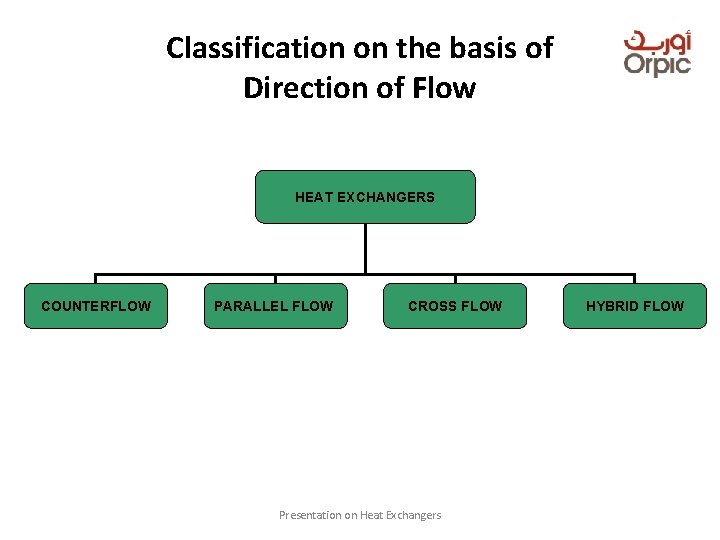
Classification on the basis of Direction of Flow HEAT EXCHANGERS COUNTERFLOW PARALLEL FLOW CROSS FLOW Presentation on Heat Exchangers HYBRID FLOW
CLASSIFICATION On the basis of Fluid Type: • Gas to Gas • Gas to Liquid (evaporator, condenser) • Liquid to liquid On the basis of Flow Pattern: • Single Pass • Multi Pass On the basis of Shape & Geometry: • Shell & Tube • Double Pipe • Plate type Presentation on Heat Exchangers
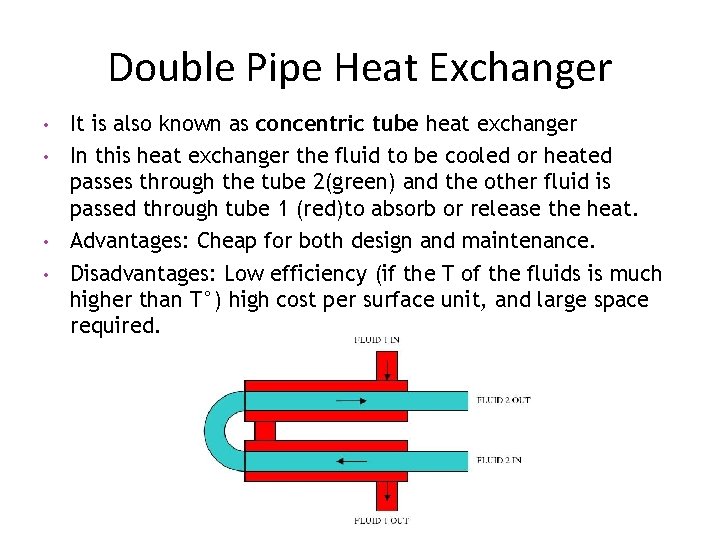
Double Pipe Heat Exchanger • • It is also known as concentric tube heat exchanger In this heat exchanger the fluid to be cooled or heated passes through the tube 2(green) and the other fluid is passed through tube 1 (red)to absorb or release the heat. Advantages: Cheap for both design and maintenance. Disadvantages: Low efficiency (if the T of the fluids is much higher than T°) high cost per surface unit, and large space required. Presentation on Heat Exchangers
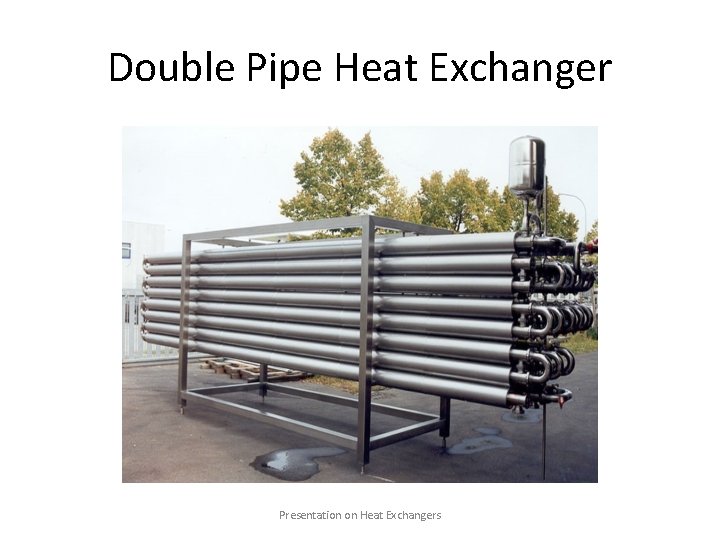
Double Pipe Heat Exchanger Presentation on Heat Exchangers

Double Pipe HEX as a reference case (parallel current) Thermal isolation Therma conduction
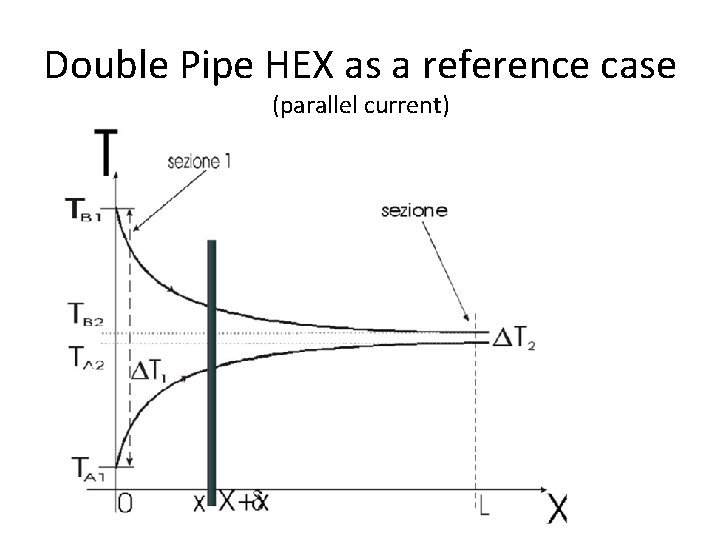
Double Pipe HEX as a reference case (parallel current)
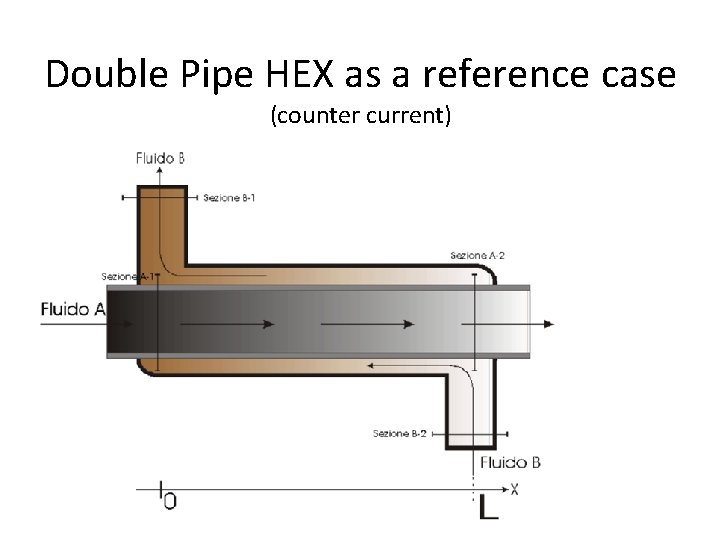
Double Pipe HEX as a reference case (counter current)
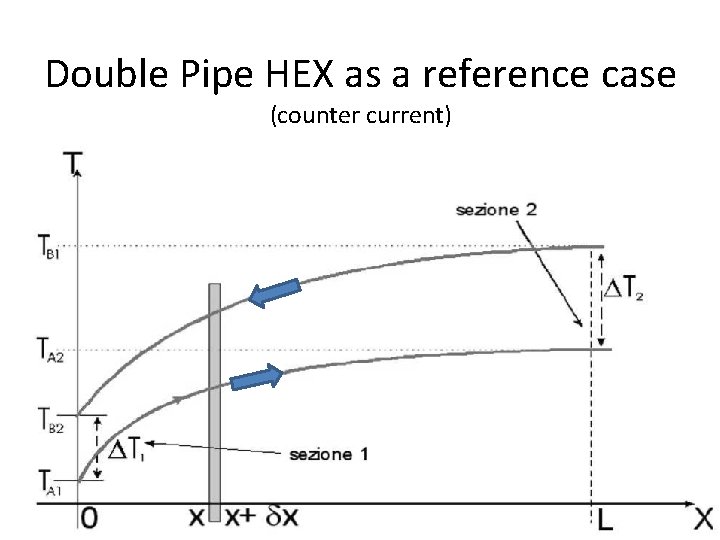
Double Pipe HEX as a reference case (counter current)

Double Pipe HEX as a reference case (counter current)
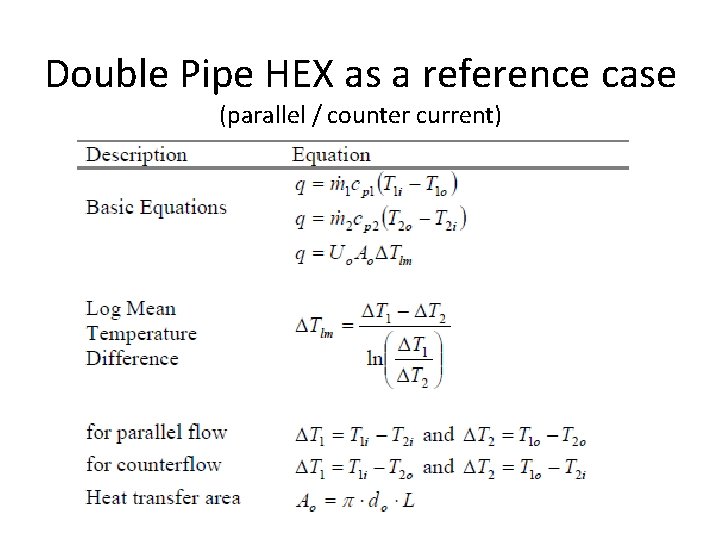
Double Pipe HEX as a reference case (parallel / counter current)
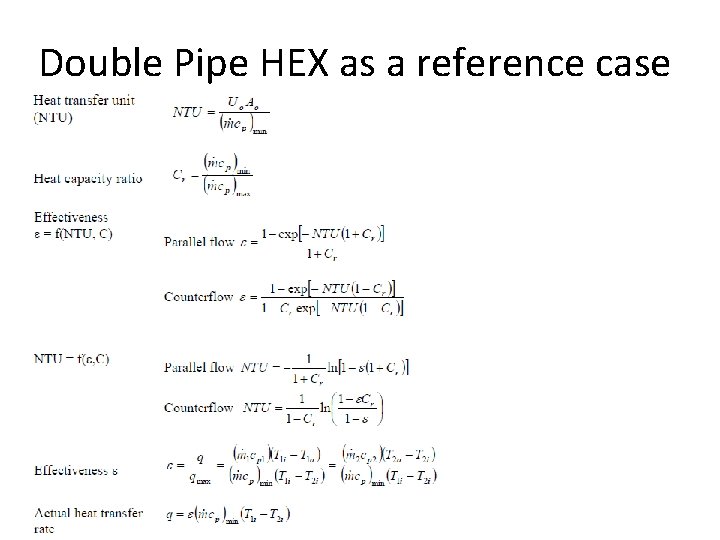
Double Pipe HEX as a reference case
Selection n n High/low pressure limits Thermal performance Temperature ranges Product mix (liquid/liquid, particulates or high -solids liquid) Pressure drops across the exchanger Fluid flow capacity Cost Cleanability, maintenance and repair Materials required for construction Ability and ease of future expansion Presentation on Heat Exchangers
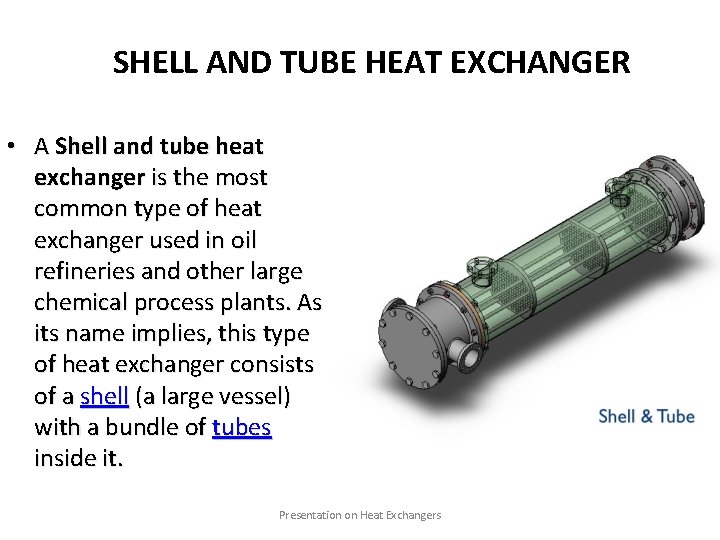
SHELL AND TUBE HEAT EXCHANGER • A Shell and tube heat exchanger is the most common type of heat exchanger used in oil refineries and other large chemical process plants. As its name implies, this type of heat exchanger consists of a shell (a large vessel) with a bundle of tubes inside it. Presentation on Heat Exchangers
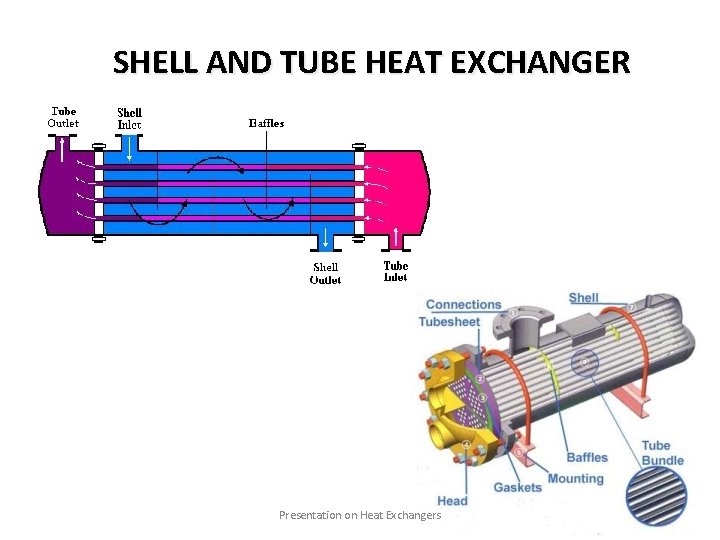
SHELL AND TUBE HEAT EXCHANGER Presentation on Heat Exchangers

TYPES OF SHELL AND TUBE HEAT EXCHANGER Presentation on Heat Exchangers
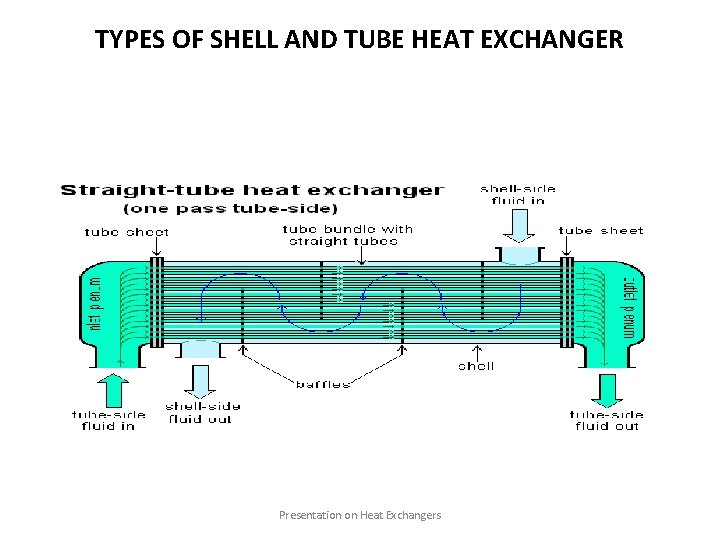
TYPES OF SHELL AND TUBE HEAT EXCHANGER Presentation on Heat Exchangers
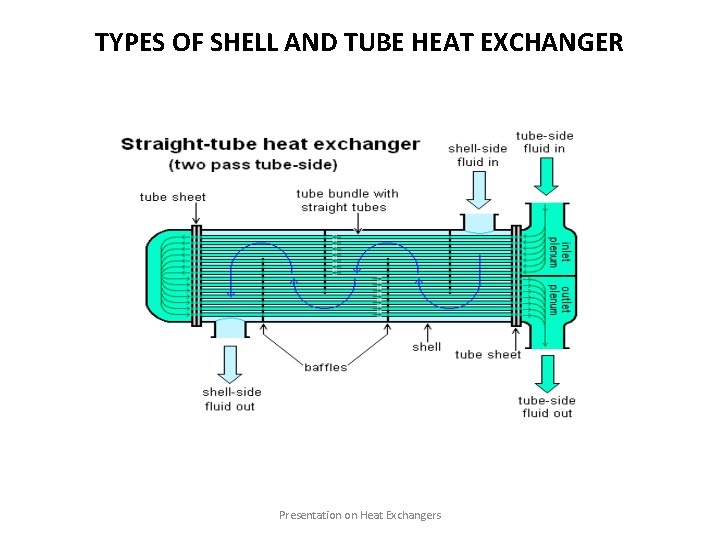
TYPES OF SHELL AND TUBE HEAT EXCHANGER Presentation on Heat Exchangers

TUBE LAYOUT PATTERNS n TRIANGULAR q q q n Accommodates more tubes Produces high Turbulence Limited to Clean Shell side Services SQUARE q q q Where cleaning is required It produces low turbulence Accommodates low No of tubes Presentation on Heat Exchangers

TUBE LAYOUT PATTERNS equivalent diameters (a) Square-pitch layout, (b) triangular-pitch layout. Presentation on Heat Exchangers

HEAT EXCHANGER COMPONENTS Channel partition plates. • For exchangers with multiple tube passes, the channels are fitted with flat metal plates which divide the head into separate compartments. Shell baffles. -Use • Shell cross baffles support the tubes at intervals – Prevent sag and vibration. – Force the shell side fluid back and forth across the bundle. • Type: Segmental single cut baffles are the most common Presentation on Heat Exchangers

Components Tube fluid in Shell fluid out Tube fluid out 1 -Channel cover 2 -Stationary head channel 3 -Channel flange 4 -Pass partition plate 5 - Tube sheet 6 -Shell flange 7 -Tube 8 -Shell-fluid nozzle Shell fluid in 9 -Baffles 10 -Floating head backing device 11 -Floating tube sheet 12 -Floating head 13 -Floating head flange 14 -Stationary head bonnet 15 -Heat exchanger support 16 -Shell expansion joint Presentation on Heat Exchangers
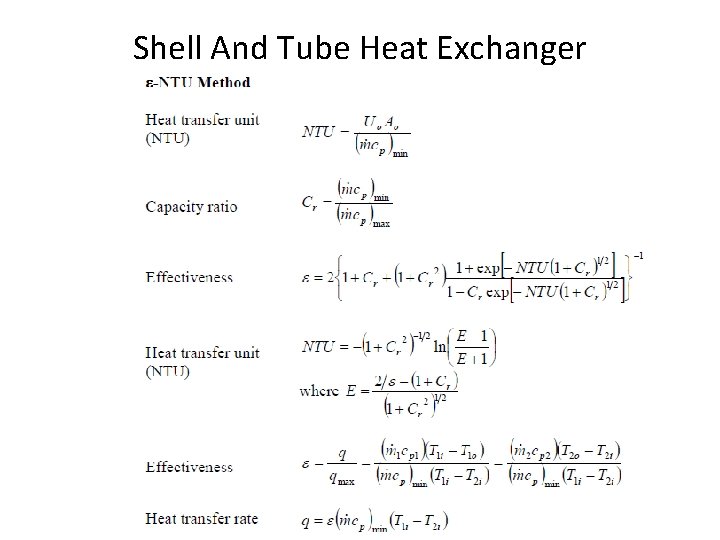
Shell And Tube Heat Exchanger Presentation on Heat Exchangers
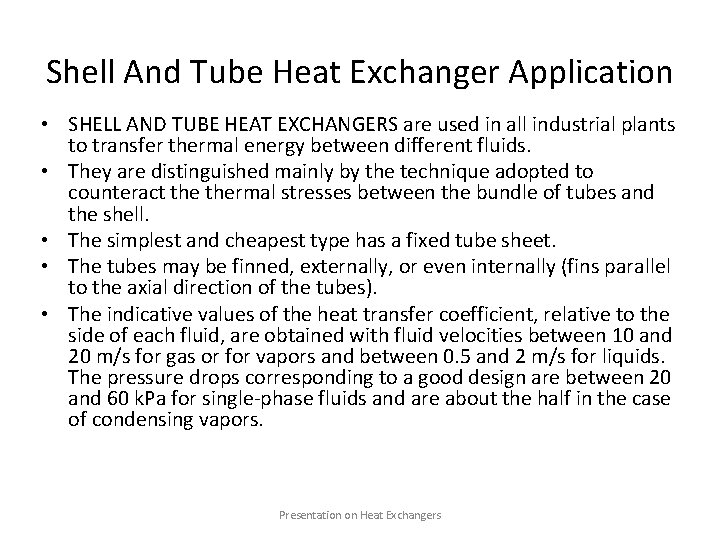
Shell And Tube Heat Exchanger Application • SHELL AND TUBE HEAT EXCHANGERS are used in all industrial plants to transfer thermal energy between different fluids. • They are distinguished mainly by the technique adopted to counteract thermal stresses between the bundle of tubes and the shell. • The simplest and cheapest type has a fixed tube sheet. • The tubes may be finned, externally, or even internally (fins parallel to the axial direction of the tubes). • The indicative values of the heat transfer coefficient, relative to the side of each fluid, are obtained with fluid velocities between 10 and 20 m/s for gas or for vapors and between 0. 5 and 2 m/s for liquids. The pressure drops corresponding to a good design are between 20 and 60 k. Pa for single-phase fluids and are about the half in the case of condensing vapors. Presentation on Heat Exchangers

Shell And Tube Heat Exchanger Application Generally the fluids used are both in the liquid state, but evaporating or condensing fluids may be used, usually on the outside of the pipes. Sometimes one evaporating and the other condensing. More rarely gaseous fluids are used. • • • Cooling of hydraulic fluid, or Cooling of engine oils. Cool or heat swimming pool water or charged air. Evaporators. Heating of chemicals. High pressure fluids inside the tube Presentation on Heat Exchangers
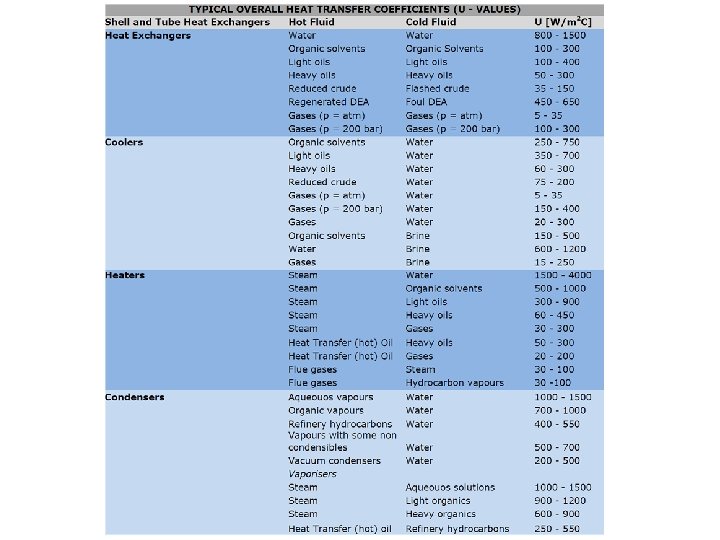
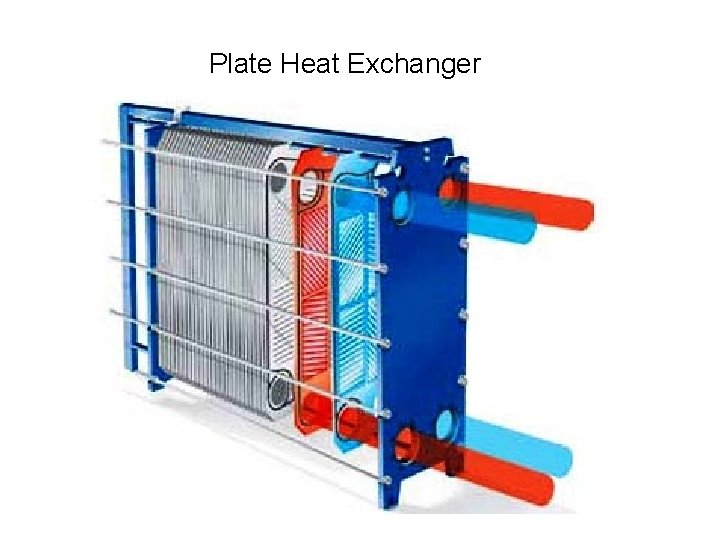
Plate Heat Exchanger
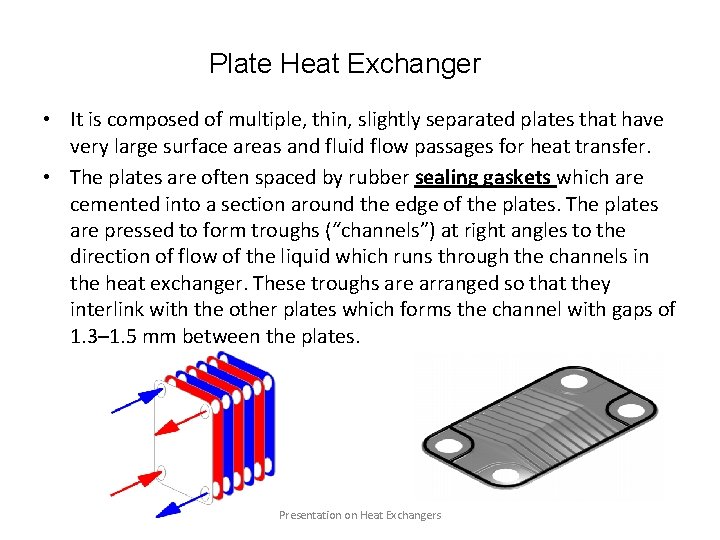
Plate Heat Exchanger • It is composed of multiple, thin, slightly separated plates that have very large surface areas and fluid flow passages for heat transfer. • The plates are often spaced by rubber sealing gaskets which are cemented into a section around the edge of the plates. The plates are pressed to form troughs (“channels”) at right angles to the direction of flow of the liquid which runs through the channels in the heat exchanger. These troughs are arranged so that they interlink with the other plates which forms the channel with gaps of 1. 3– 1. 5 mm between the plates. Presentation on Heat Exchangers
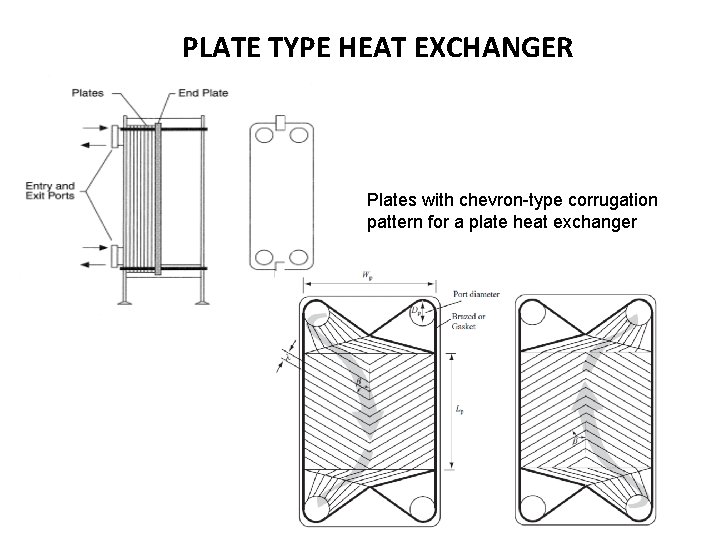
PLATE TYPE HEAT EXCHANGER Plates with chevron-type corrugation pattern for a plate heat exchanger Presentation on Heat Exchangers
FLOWS INSIDE PLATE TYPE HEAT EXCHANGER The vain among plates, where the fluids flow, can be connected in series, in parallel, or in a mixed arrangement. Presentation on Heat Exchangers
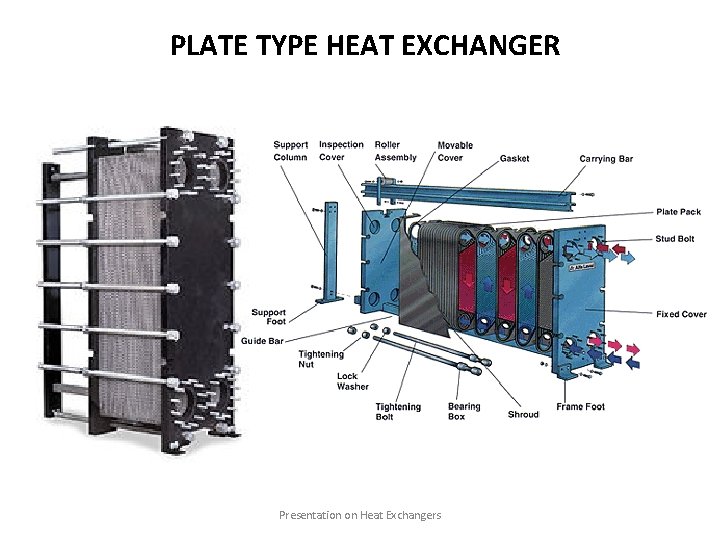
PLATE TYPE HEAT EXCHANGER Presentation on Heat Exchangers
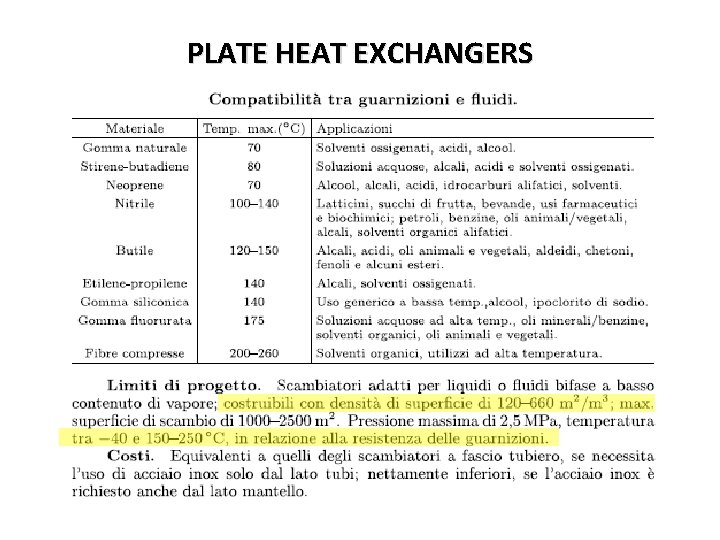
PLATE HEAT EXCHANGERS
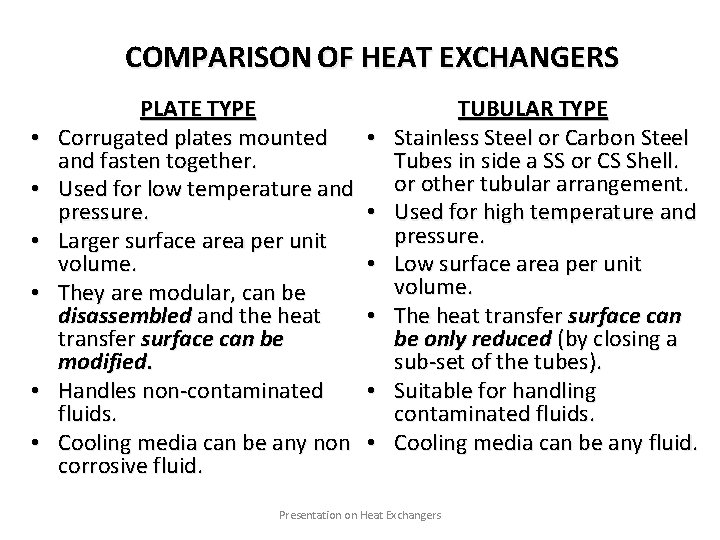
COMPARISON OF HEAT EXCHANGERS • • • PLATE TYPE Corrugated plates mounted and fasten together. Used for low temperature and pressure. Larger surface area per unit volume. They are modular, can be disassembled and the heat transfer surface can be modified. Handles non-contaminated fluids. Cooling media can be any non corrosive fluid. • • • TUBULAR TYPE Stainless Steel or Carbon Steel Tubes in side a SS or CS Shell. or other tubular arrangement. Used for high temperature and pressure. Low surface area per unit volume. The heat transfer surface can be only reduced (by closing a sub-set of the tubes). Suitable for handling contaminated fluids. Cooling media can be any fluid. Presentation on Heat Exchangers
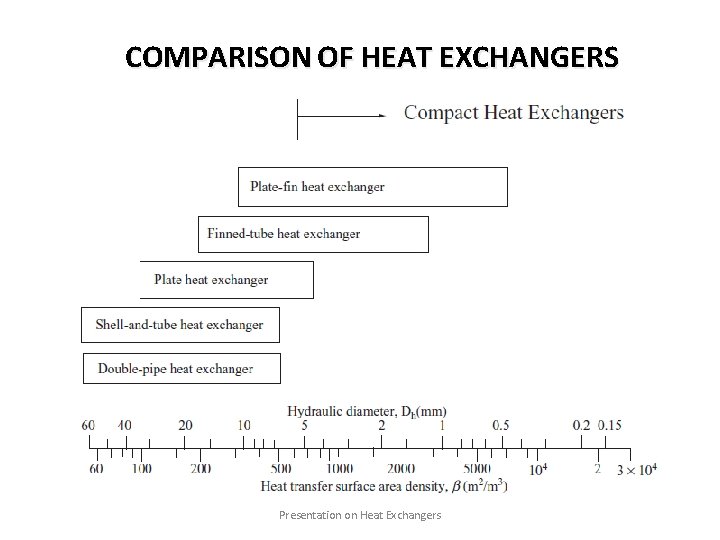
COMPARISON OF HEAT EXCHANGERS Presentation on Heat Exchangers
compact heat exchangers
compact heat exchangers
compact heat exchangers
compact heat exchangers
- Slides: 40