
Heat Exchangers Heat exchange equipment Heating and cooling
![U = The Overall Heat Transfer Coefficient [W/m. K] Region I : Hot Liquid](https://slidetodoc.com/presentation_image_h/299f23e68c6903937a3a043e75d22903/image-15.jpg "U = The Overall Heat Transfer Coefficient [W/m. K] Region I : Hot Liquid")
- Slides: 40
Heat Exchangers
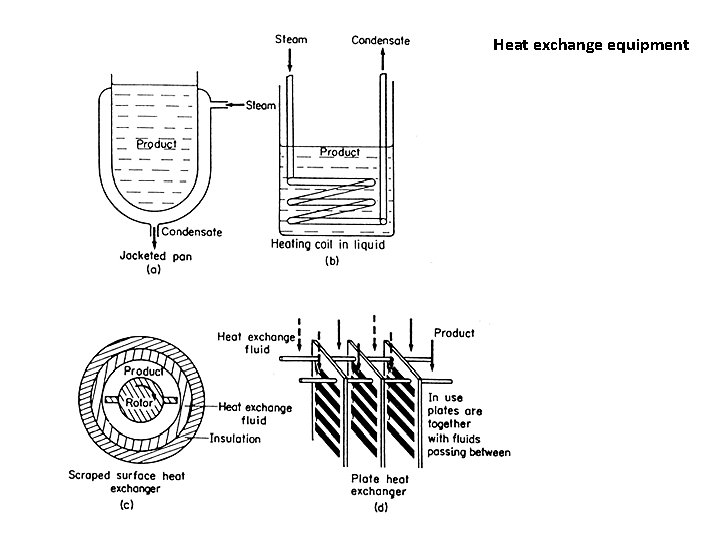
Heat exchange equipment
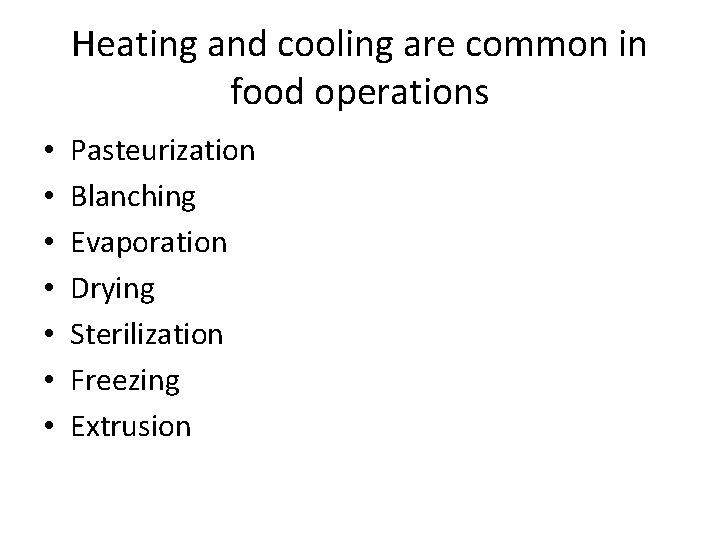
Heating and cooling are common in food operations • • Pasteurization Blanching Evaporation Drying Sterilization Freezing Extrusion
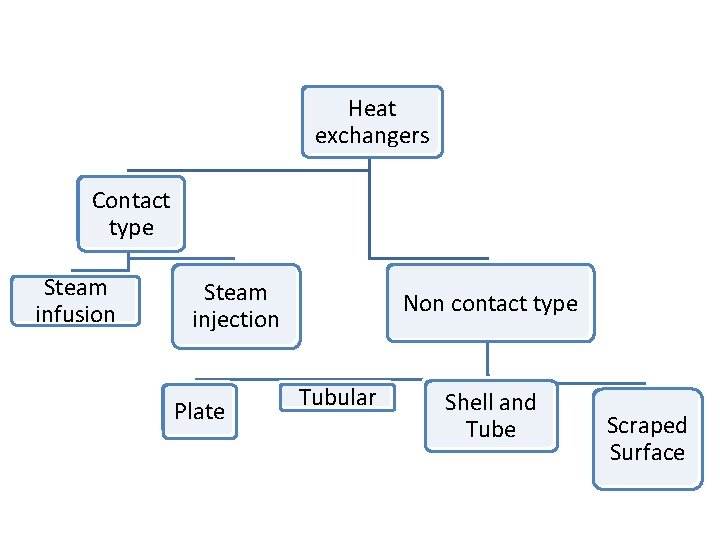
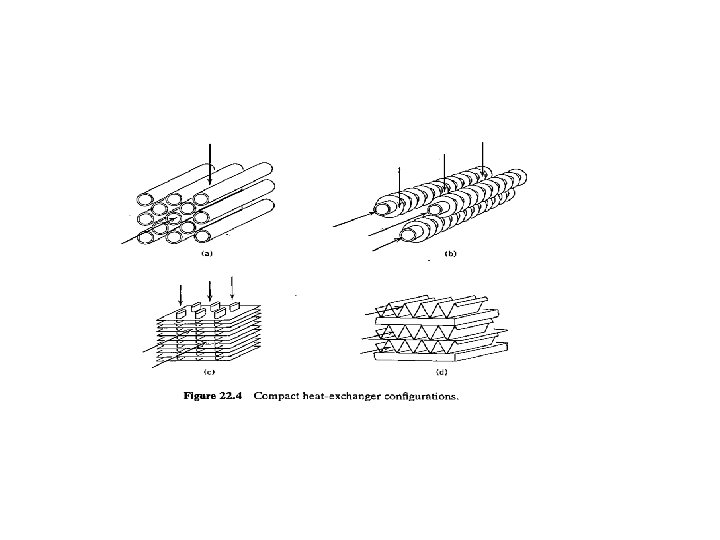
Heat exchangers Contact type Steam infusion Steam injection Plate Non contact type Tubular Shell and Tube Scraped Surface
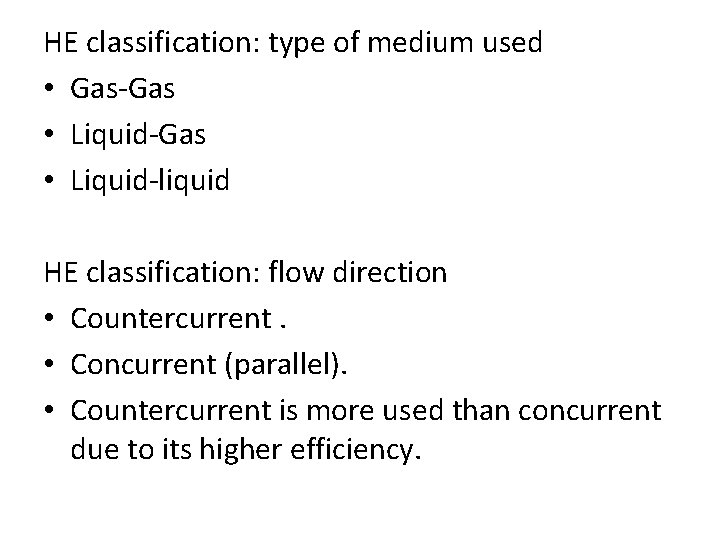
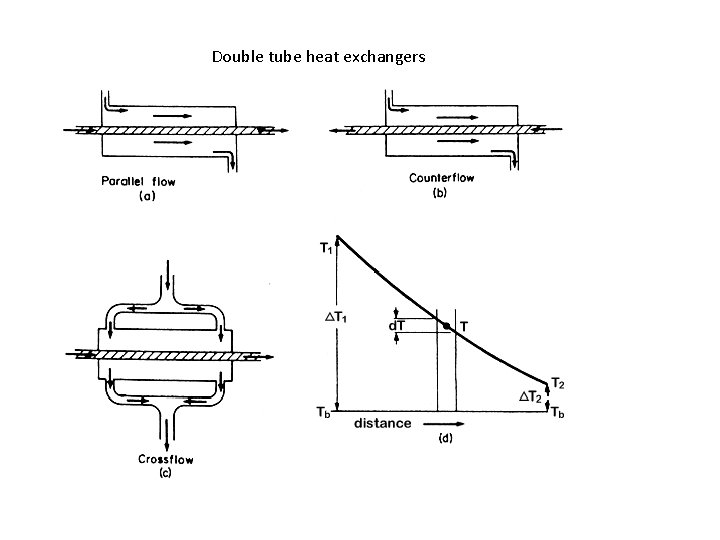
HE classification: type of medium used • Gas-Gas • Liquid-liquid HE classification: flow direction • Countercurrent. • Concurrent (parallel). • Countercurrent is more used than concurrent due to its higher efficiency.
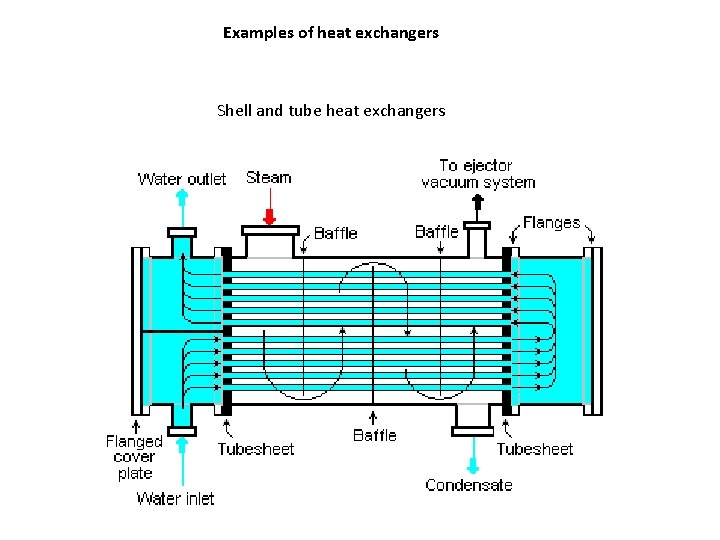
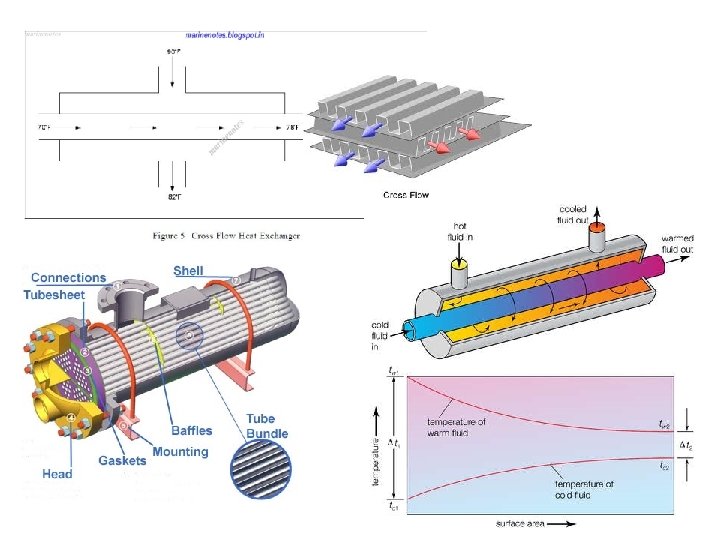
Examples of heat exchangers Shell and tube heat exchangers
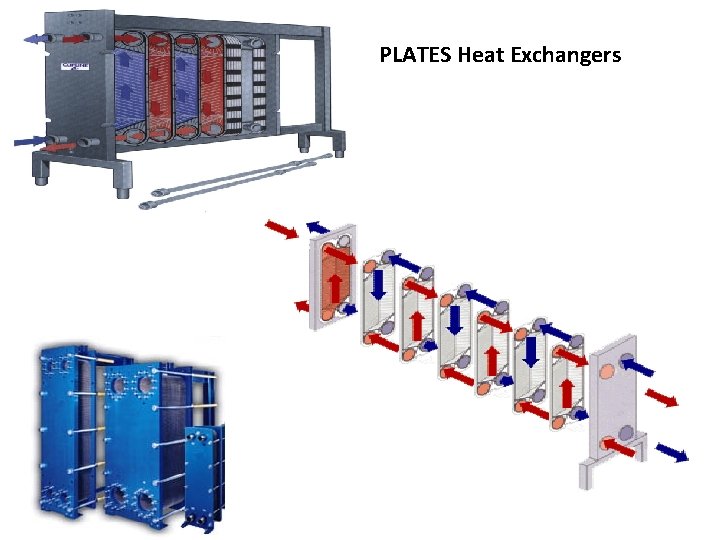
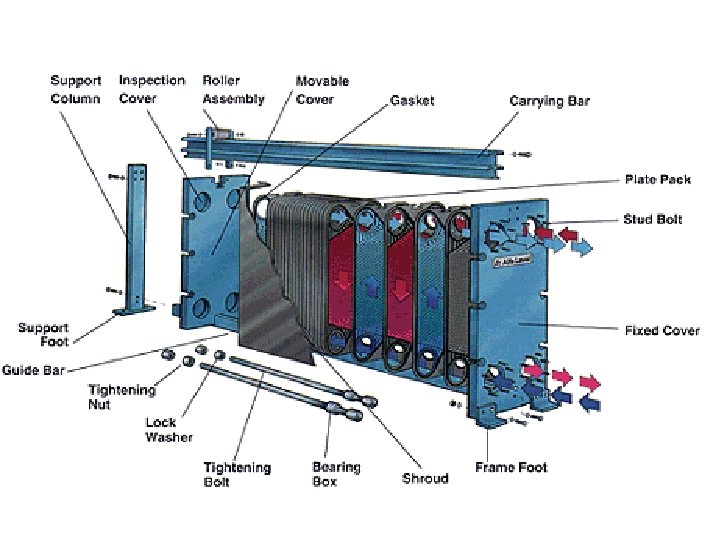
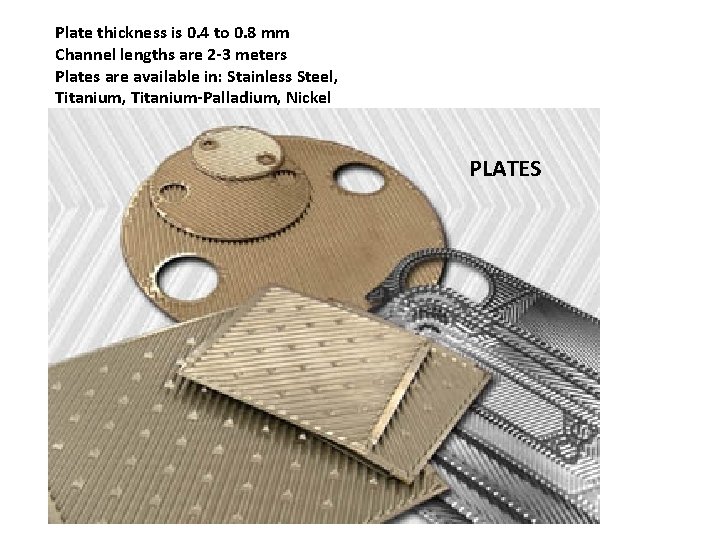
PLATES Heat Exchangers
Plate thickness is 0. 4 to 0. 8 mm Channel lengths are 2 -3 meters Plates are available in: Stainless Steel, Titanium-Palladium, Nickel PLATES
Double tube heat exchangers
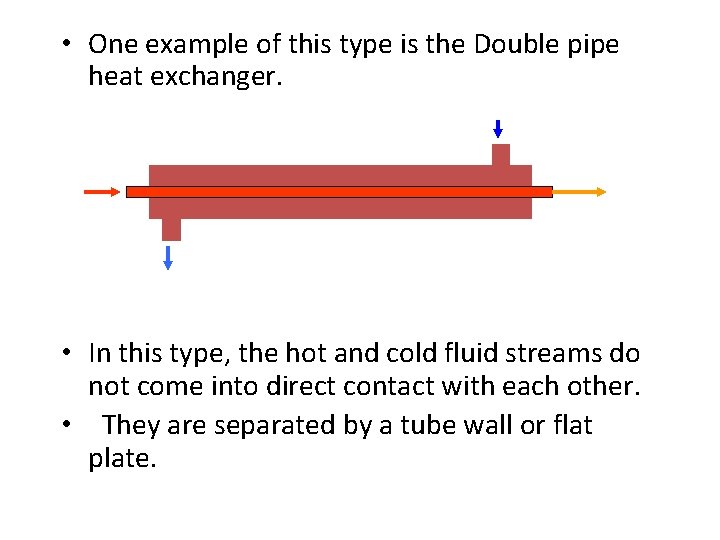
• One example of this type is the Double pipe heat exchanger. • In this type, the hot and cold fluid streams do not come into direct contact with each other. • They are separated by a tube wall or flat plate.
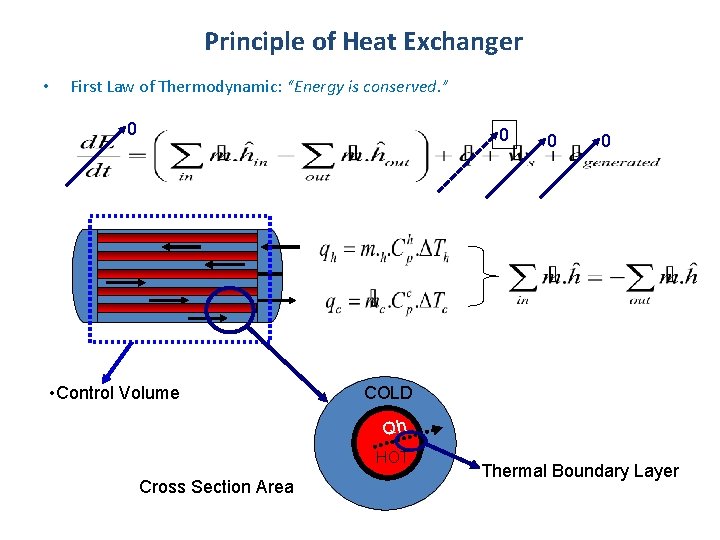
Principle of Heat Exchanger • First Law of Thermodynamic: “Energy is conserved. ” 0 0 • Control Volume 0 0 COLD Qh HOT Cross Section Area Thermal Boundary Layer
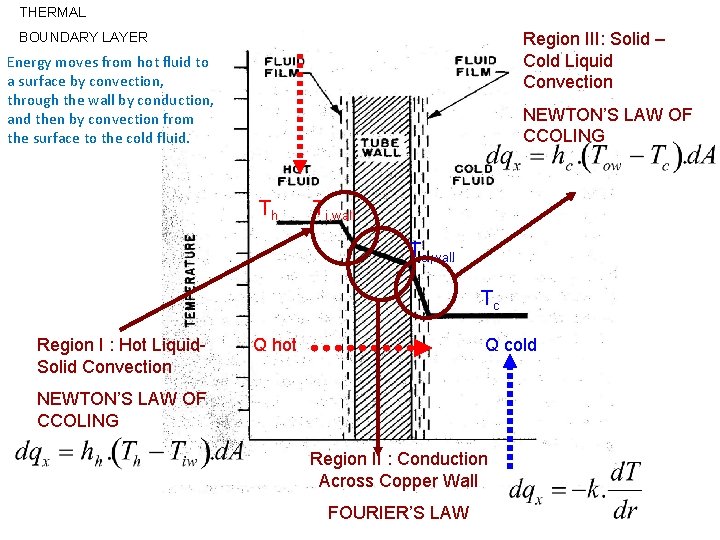
THERMAL Region III: Solid – Cold Liquid Convection BOUNDARY LAYER Energy moves from hot fluid to a surface by convection, through the wall by conduction, and then by convection from the surface to the cold fluid. NEWTON’S LAW OF CCOLING Th Ti, wall To, wall Tc Region I : Hot Liquid. Solid Convection Q hot Q cold NEWTON’S LAW OF CCOLING Region II : Conduction Across Copper Wall FOURIER’S LAW
U = The Overall Heat Transfer Coefficient [W/m. K] Region I : Hot Liquid – Solid Convection Region II : Conduction Across Copper Wall Region III : Solid – Cold Liquid Convection + r r i o
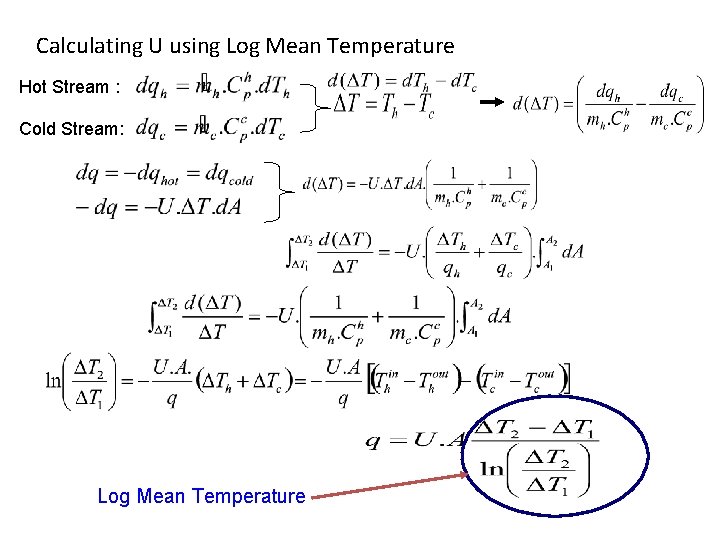
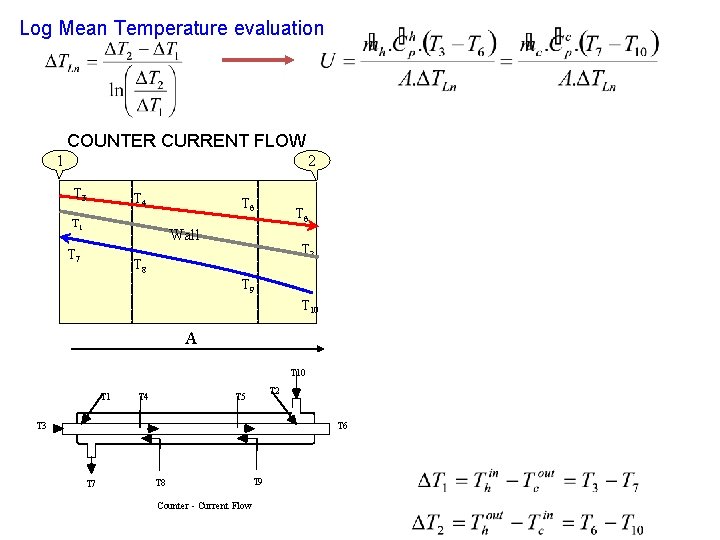
Calculating U using Log Mean Temperature Hot Stream : Cold Stream: Log Mean Temperature
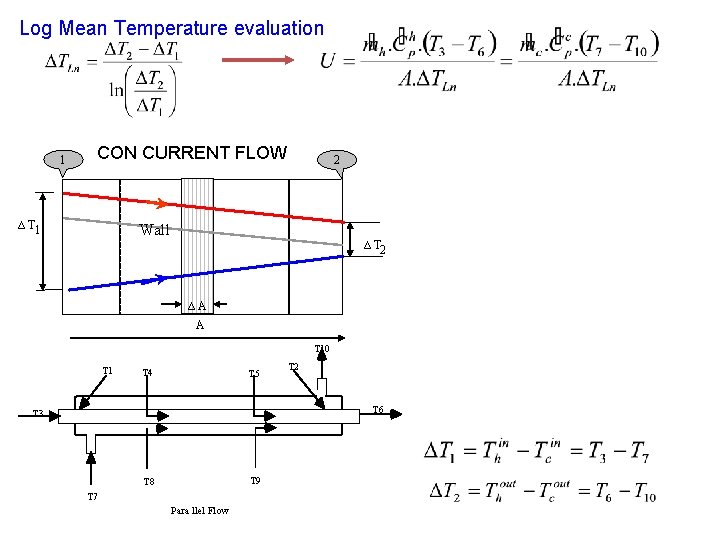
Log Mean Temperature evaluation 1 CON CURRENT FLOW ∆ T 1 2 Wall ∆ T 2 ∆A A T 10 T 1 T 4 T 5 T 2 T 6 T 3 T 9 T 8 T 7 Para llel Flow
Log Mean Temperature evaluation COUNTER CURRENT FLOW 1 2 T 3 T 4 T 6 T 1 T 6 Wall T 7 T 2 T 8 T 9 T 10 A T 10 T 1 T 4 T 2 T 5 T 3 T 6 T 7 T 8 Counter - Current Flow T 9
Heat Exchangers: The Effectiveness – NTU Method
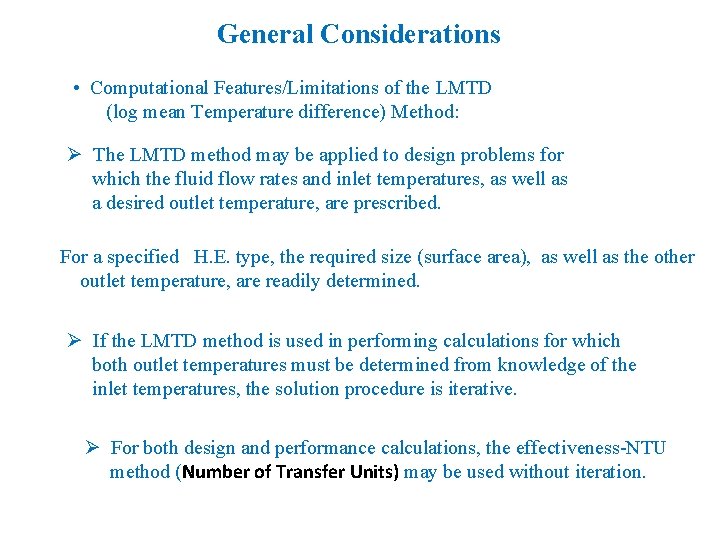
General Considerations • Computational Features/Limitations of the LMTD (log mean Temperature difference) Method: Ø The LMTD method may be applied to design problems for which the fluid flow rates and inlet temperatures, as well as a desired outlet temperature, are prescribed. For a specified H. E. type, the required size (surface area), as well as the other outlet temperature, are readily determined. Ø If the LMTD method is used in performing calculations for which both outlet temperatures must be determined from knowledge of the inlet temperatures, the solution procedure is iterative. Ø For both design and performance calculations, the effectiveness-NTU method (Number of Transfer Units) may be used without iteration.
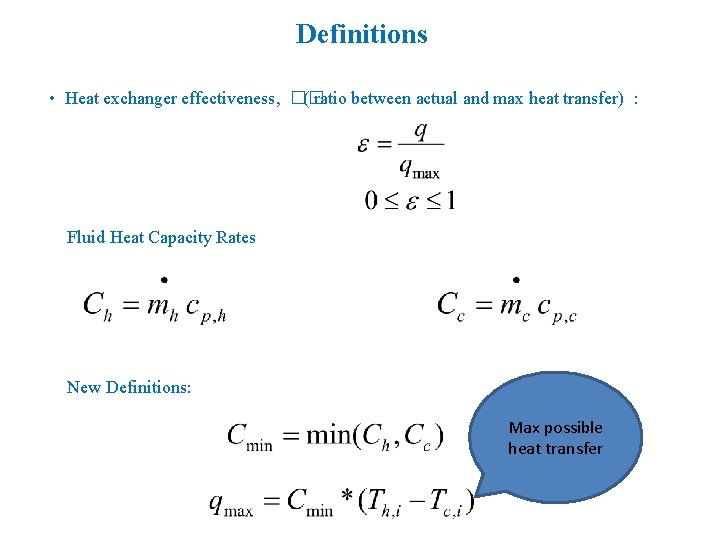
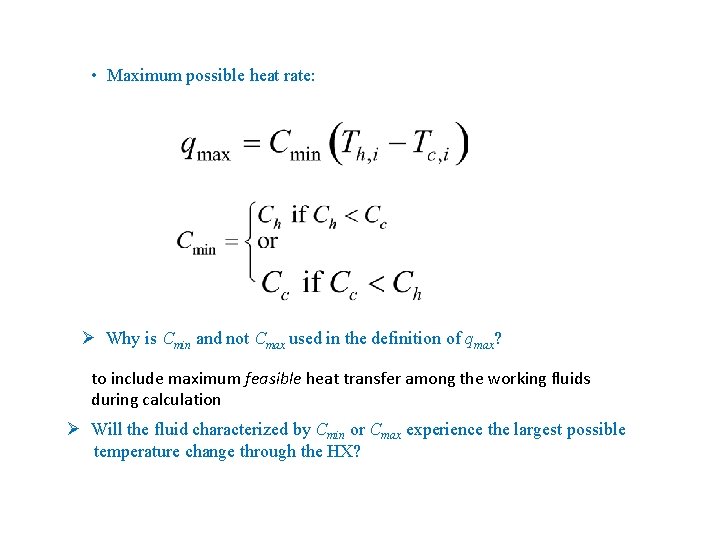
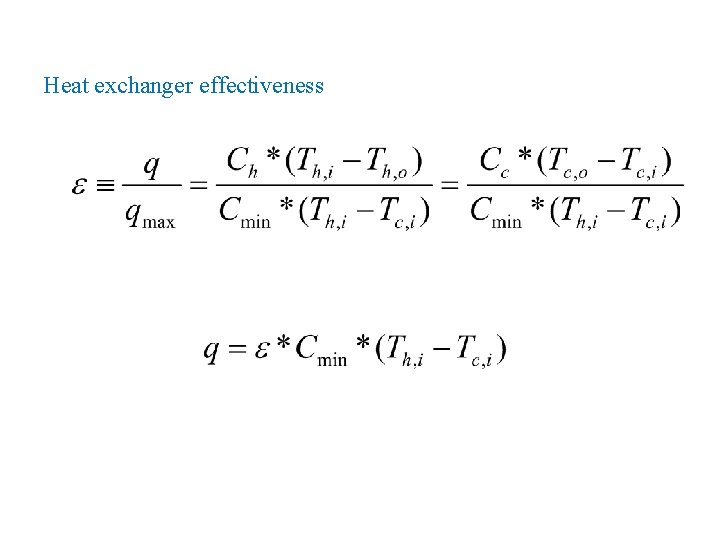
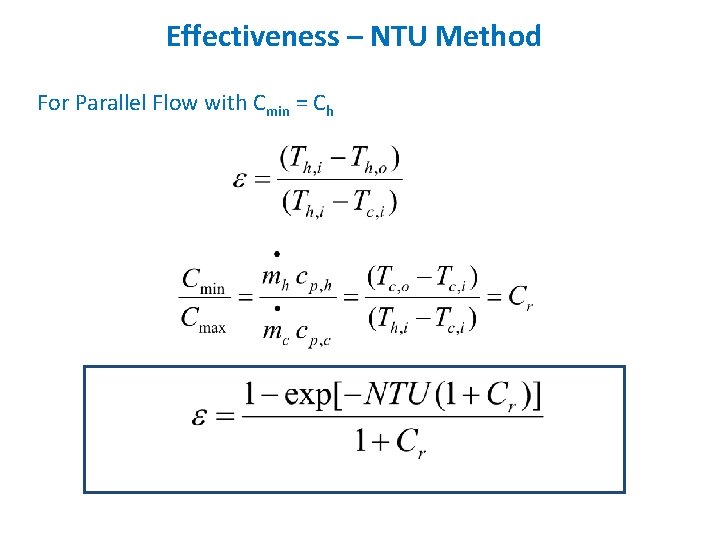
Definitions • Heat exchanger effectiveness, �� ( ratio between actual and max heat transfer) : Fluid Heat Capacity Rates New Definitions: Max possible heat transfer
• Maximum possible heat rate: Ø Why is Cmin and not Cmax used in the definition of qmax? to include maximum feasible heat transfer among the working fluids during calculation Ø Will the fluid characterized by Cmin or Cmax experience the largest possible temperature change through the HX?
Heat exchanger effectiveness
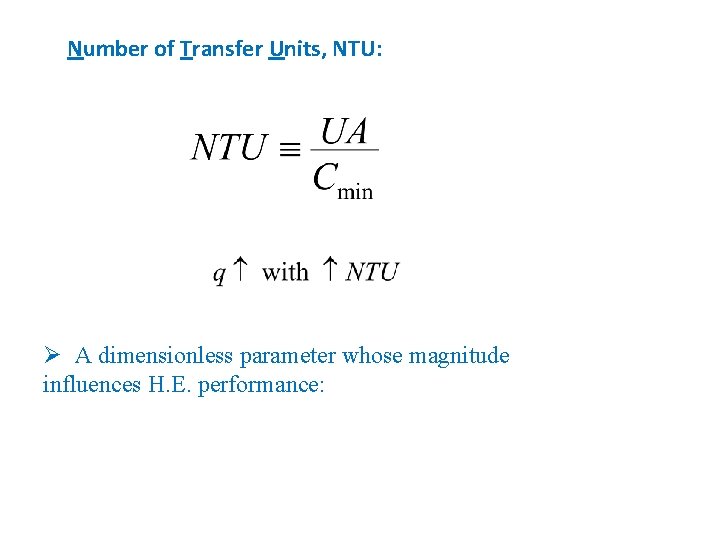
Number of Transfer Units, NTU: Ø A dimensionless parameter whose magnitude influences H. E. performance:
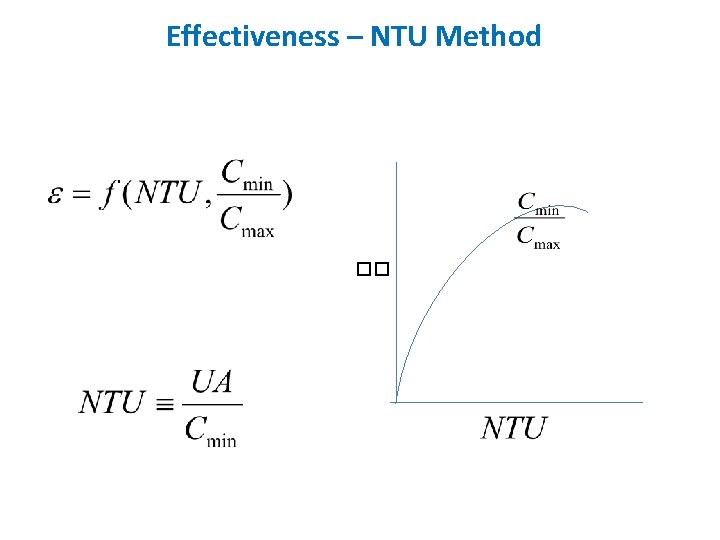
Effectiveness – NTU Method ��
Effectiveness – NTU Method For Parallel Flow with Cmin = Ch
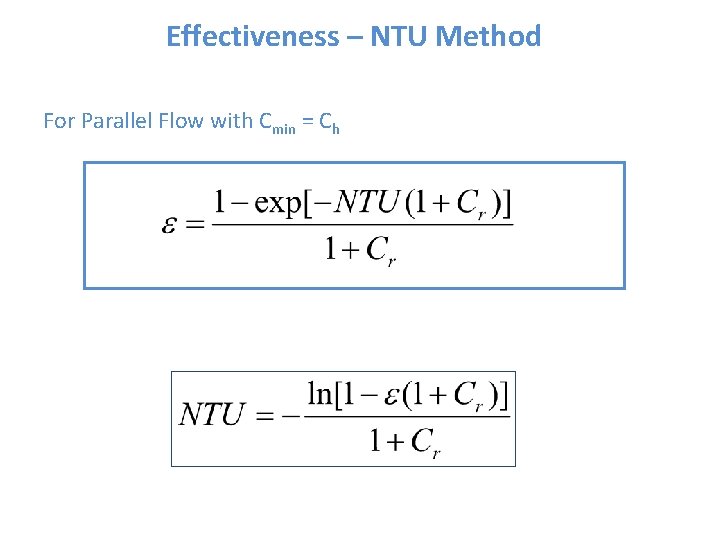
Effectiveness – NTU Method For Parallel Flow with Cmin = Ch
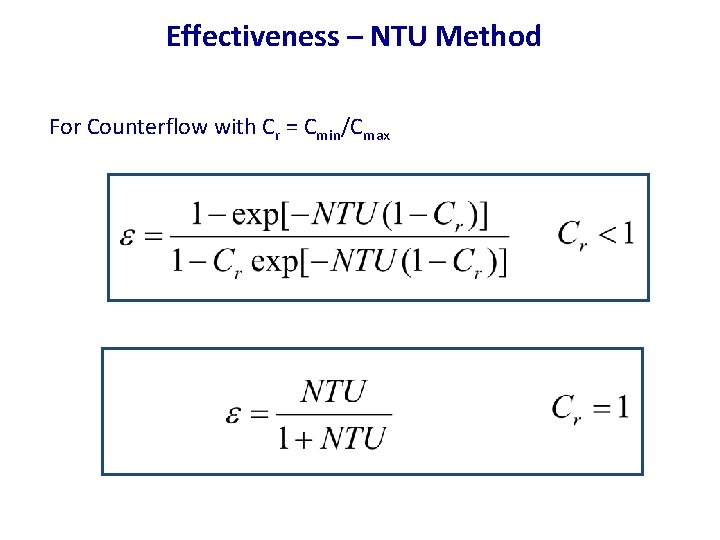
Effectiveness – NTU Method For Counterflow with Cr = Cmin/Cmax
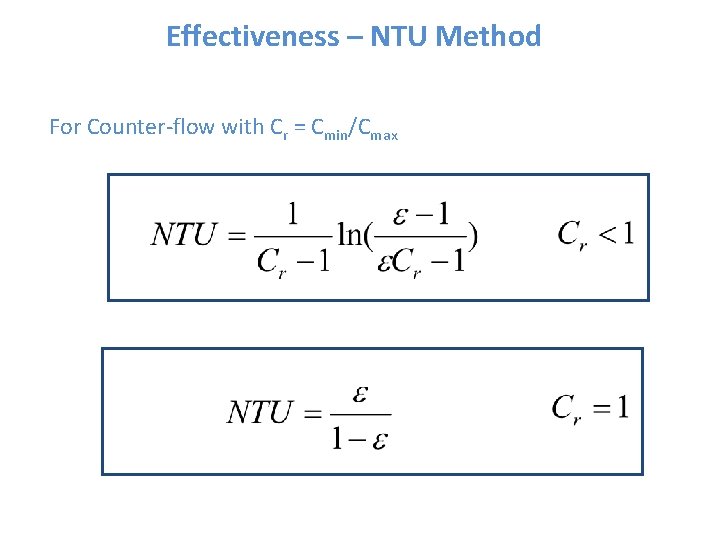
Effectiveness – NTU Method For Counter-flow with Cr = Cmin/Cmax
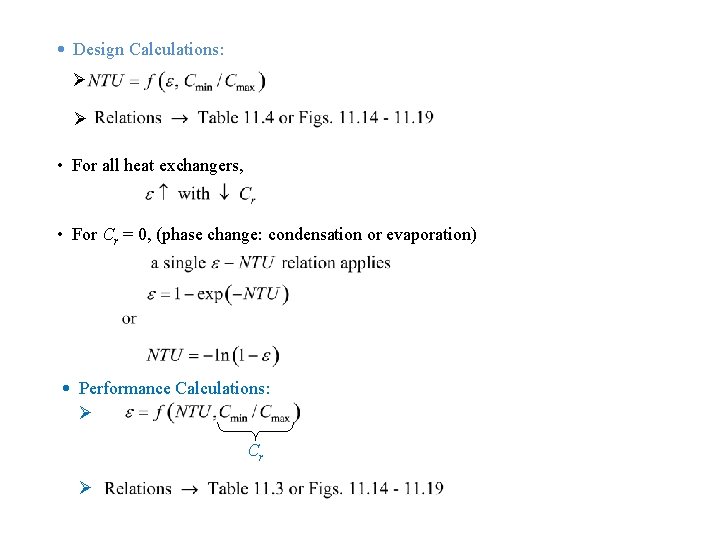
• Design Calculations: Ø Ø • For all heat exchangers, • For Cr = 0, (phase change: condensation or evaporation) • Performance Calculations: Ø Cr Ø
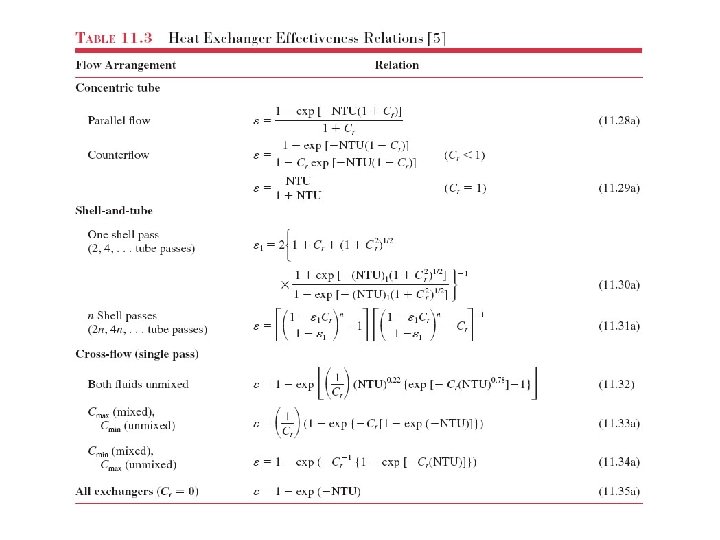
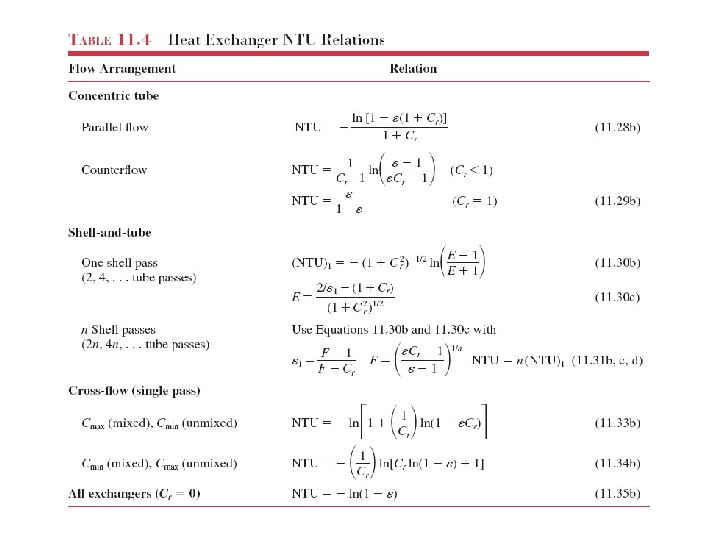
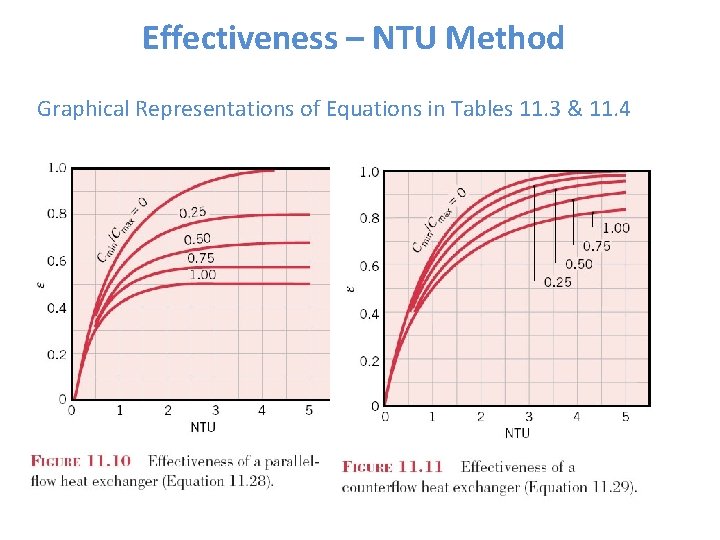
Effectiveness – NTU Method Graphical Representations of Equations in Tables 11. 3 & 11. 4
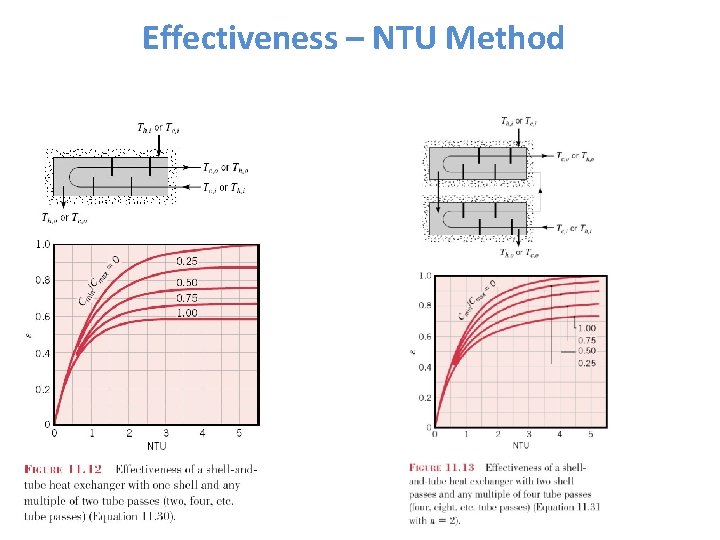
Effectiveness – NTU Method
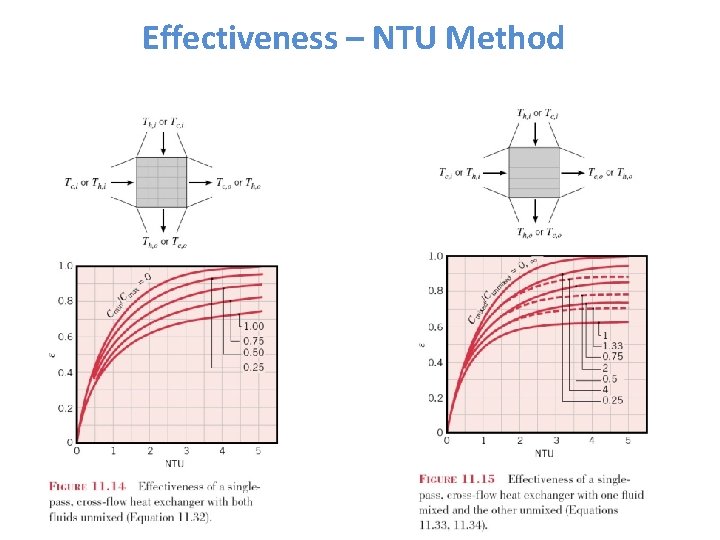
Effectiveness – NTU Method
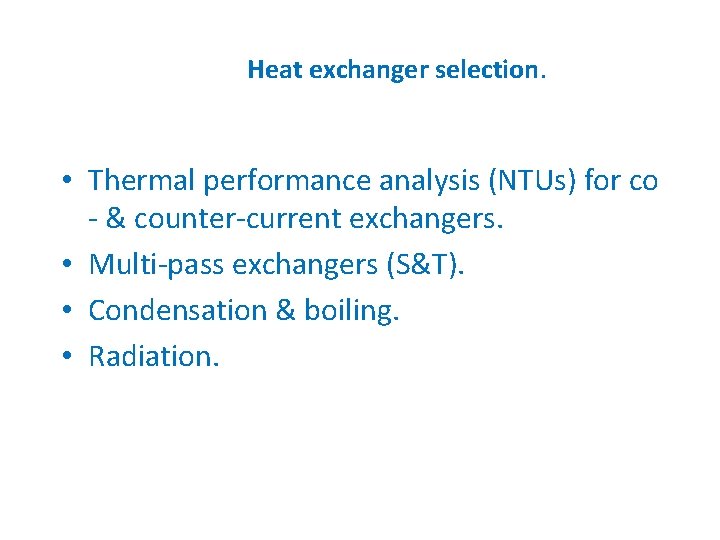
Heat exchanger selection. • Thermal performance analysis (NTUs) for co - & counter-current exchangers. • Multi-pass exchangers (S&T). • Condensation & boiling. • Radiation.
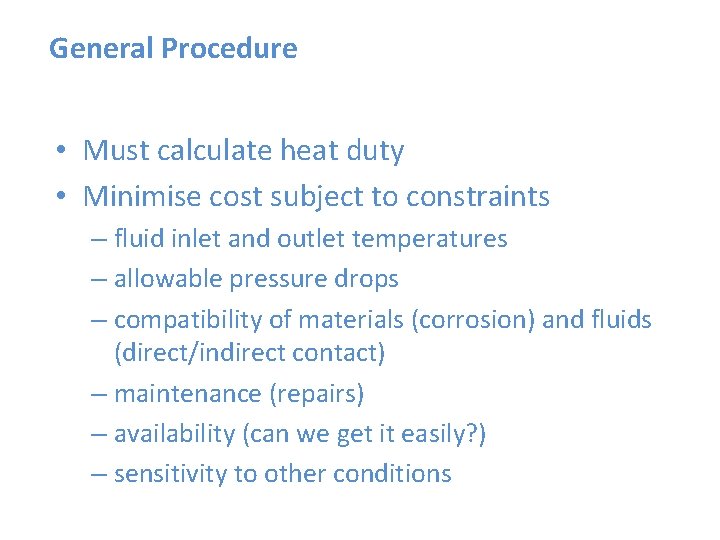
General Procedure • Must calculate heat duty • Minimise cost subject to constraints – fluid inlet and outlet temperatures – allowable pressure drops – compatibility of materials (corrosion) and fluids (direct/indirect contact) – maintenance (repairs) – availability (can we get it easily? ) – sensitivity to other conditions
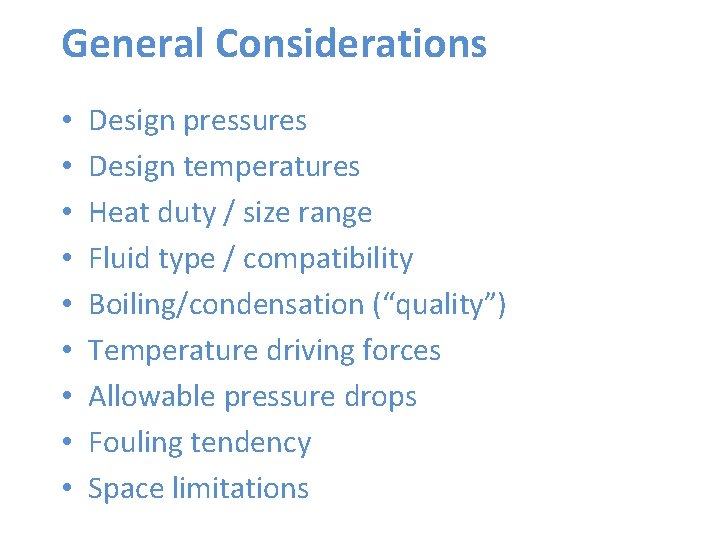
General Considerations • • • Design pressures Design temperatures Heat duty / size range Fluid type / compatibility Boiling/condensation (“quality”) Temperature driving forces Allowable pressure drops Fouling tendency Space limitations
Fundamentals of Heat and Mass Transfer THEODORE L. BERGMAN, FRANK P. INCROPERA, ADRIENNE S. LAVINE, DAVID P. DEWITT http: //books. google. com. sa/books? hl=ar&lr=&id=vvy. Io. XEyw. Mo. C&oi=fnd&pg=PR 21&dq=table+11. 3+heat+exchanger+effectiveness+relations&ots=8 Hqj. QSc. VI 8&sig=e. A 2 Yj. Ac. Hw. A 8 A 1 ls. CFT 6 RNEU 8 h. Y&safe=on&redir_esc=y#v=onepage&q=table%2011. 3%20 heat%20 exchanger%20 effectiveness%20 relations&f=false