
Heat Exchangers 1 Heat Exchangers A heat exchanger
- Slides: 20
Heat Exchangers 1
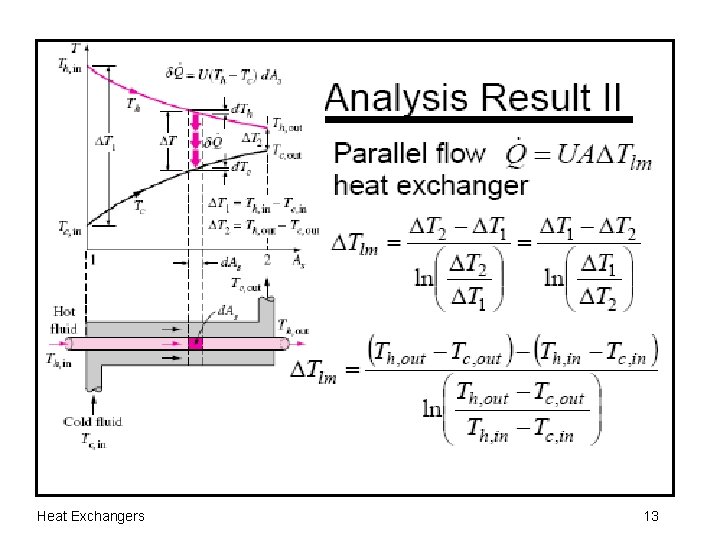
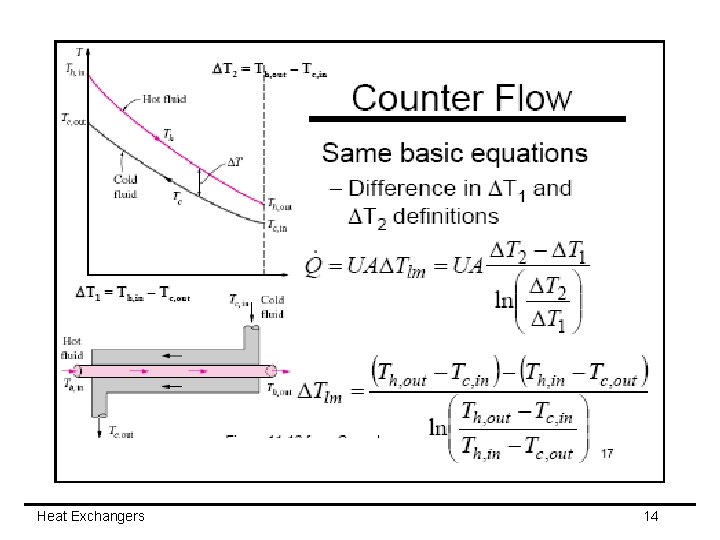
Heat Exchangers • A heat exchanger is used to exchange heat between two fluids of different temperatures, which are separated by a solid wall. • Heat exchangers are used to carry out energy conversion and utilization. They utlize a wide range of flow configurations. • Applications in heating and air conditioning, power production, waste heat recovery, chemical processing, food processing, sterilization in bio-processes. • Heat exchangers are classified according to flow arrangement and type of construction. Heat Exchangers 2
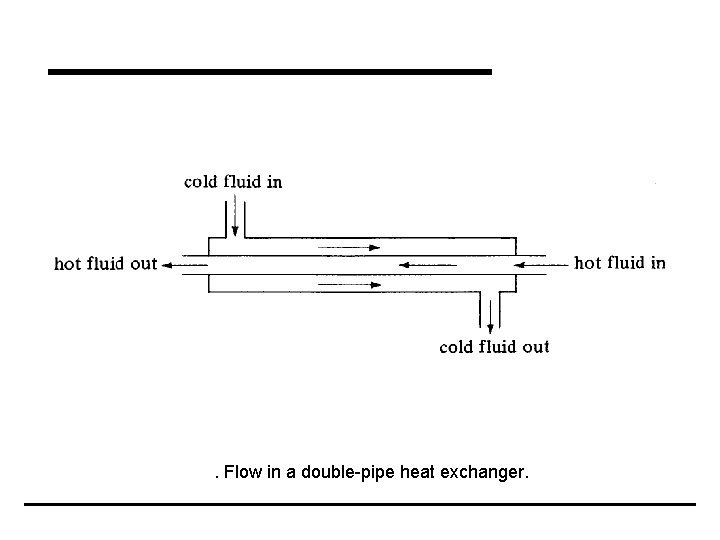
. Flow in a double-pipe heat exchanger.
Heat Exchangers Chee 318 4
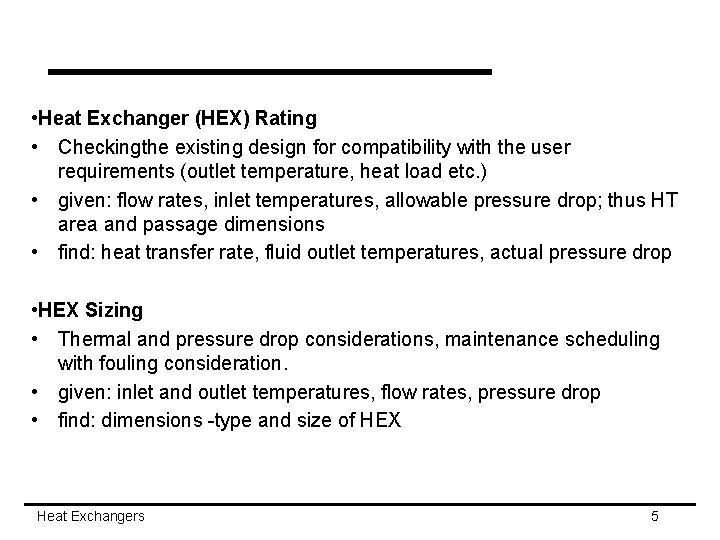
• Heat Exchanger (HEX) Rating • Checkingthe existing design for compatibility with the user requirements (outlet temperature, heat load etc. ) • given: flow rates, inlet temperatures, allowable pressure drop; thus HT area and passage dimensions • find: heat transfer rate, fluid outlet temperatures, actual pressure drop • HEX Sizing • Thermal and pressure drop considerations, maintenance scheduling with fouling consideration. • given: inlet and outlet temperatures, flow rates, pressure drop • find: dimensions -type and size of HEX Heat Exchangers 5
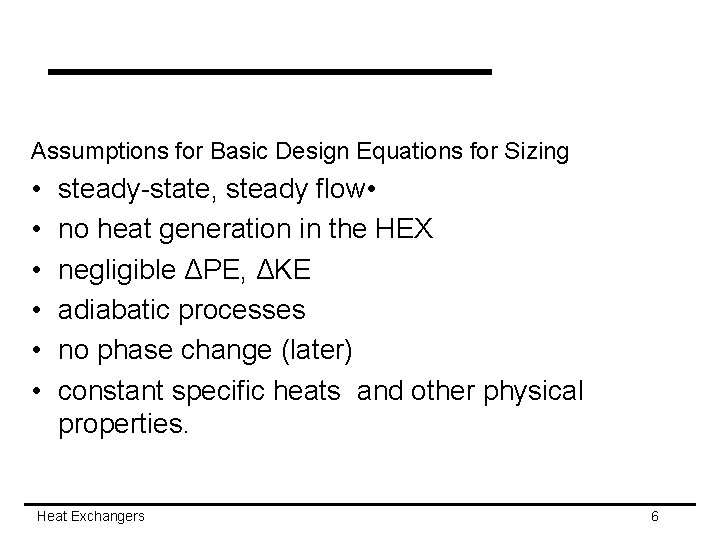
Assumptions for Basic Design Equations for Sizing • • • steady-state, steady flow • no heat generation in the HEX negligible ΔPE, ΔKE adiabatic processes no phase change (later) constant specific heats and other physical properties. Heat Exchangers 6
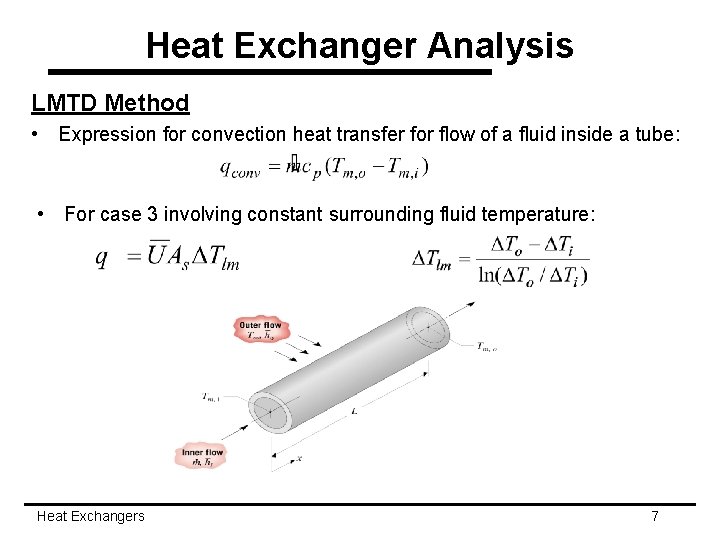
Heat Exchanger Analysis LMTD Method • Expression for convection heat transfer for flow of a fluid inside a tube: • For case 3 involving constant surrounding fluid temperature: Heat Exchangers 7
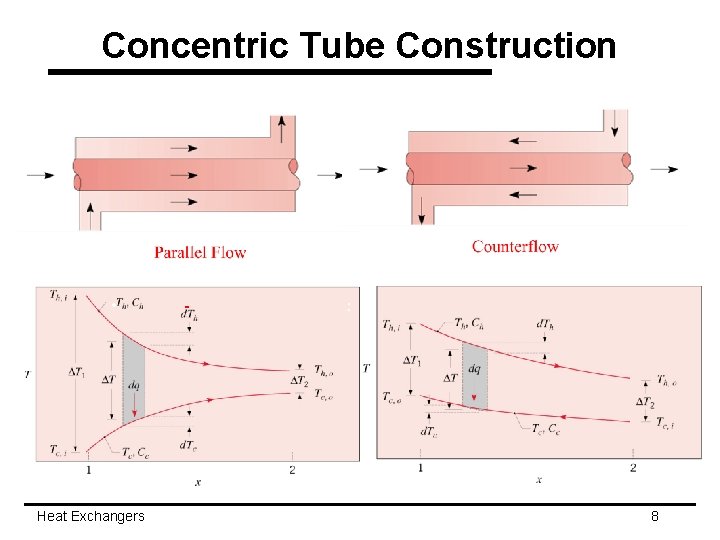
Concentric Tube Construction • Heat Exchangers - : 8
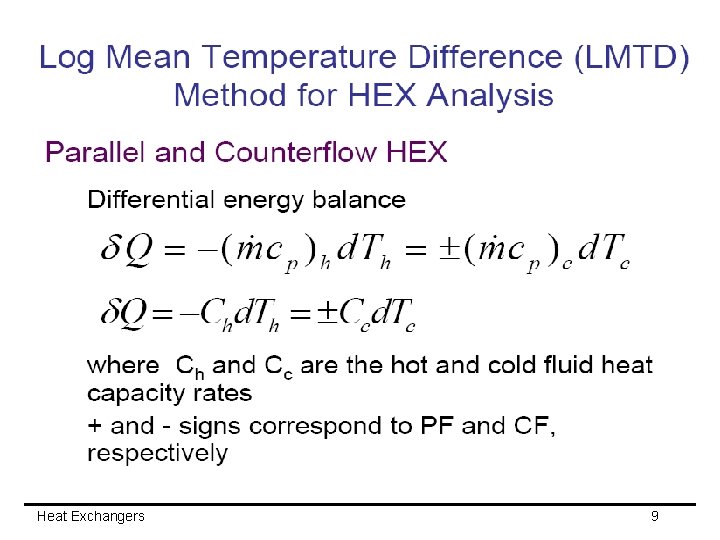
Heat Exchangers 9
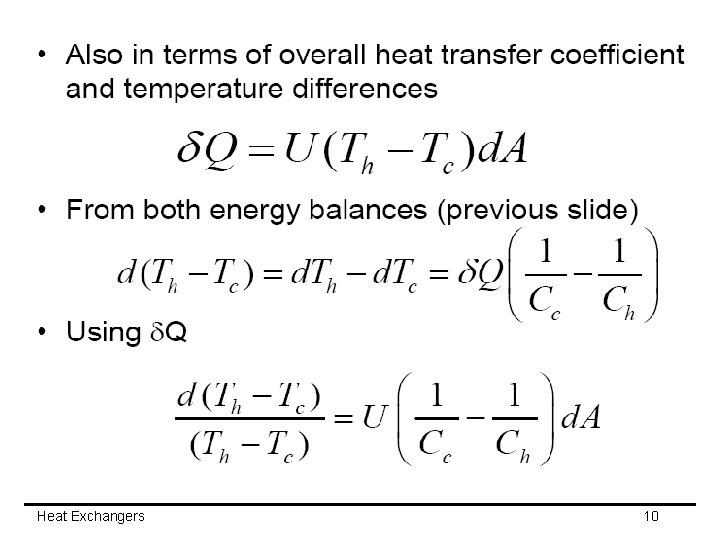
Heat Exchangers 10
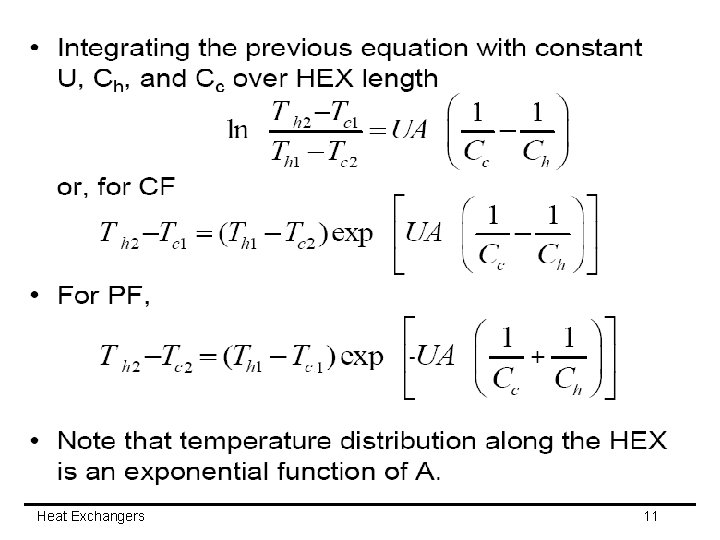
Heat Exchangers 11
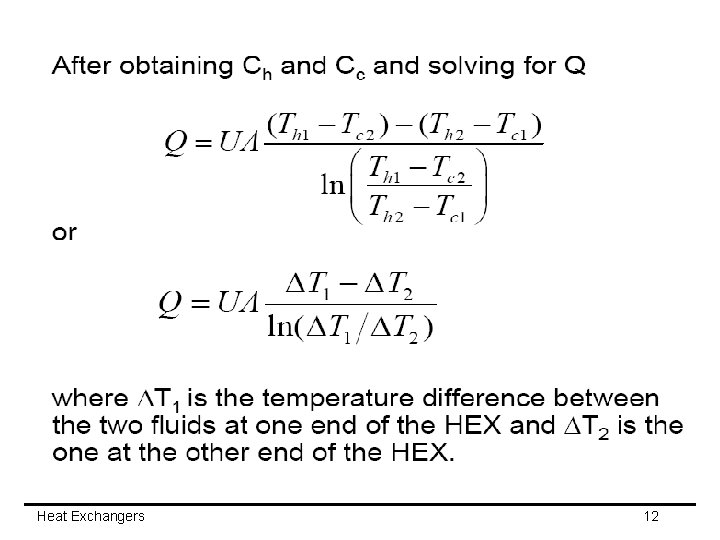
Heat Exchangers 12
Heat Exchangers 13
Heat Exchangers 14
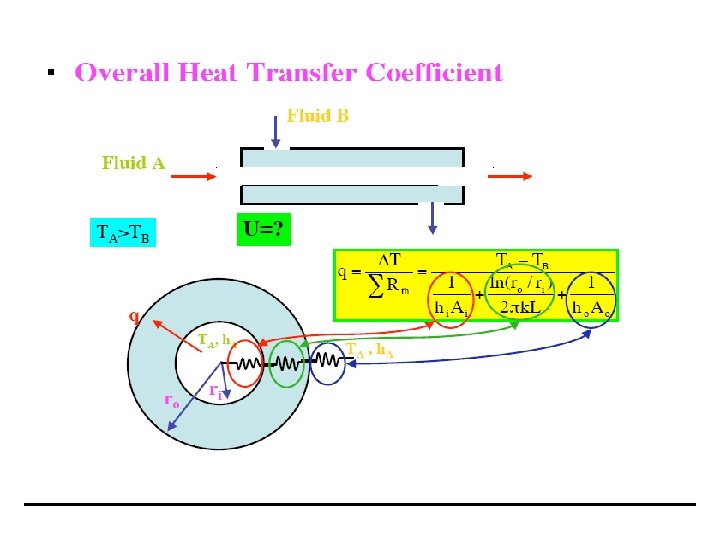
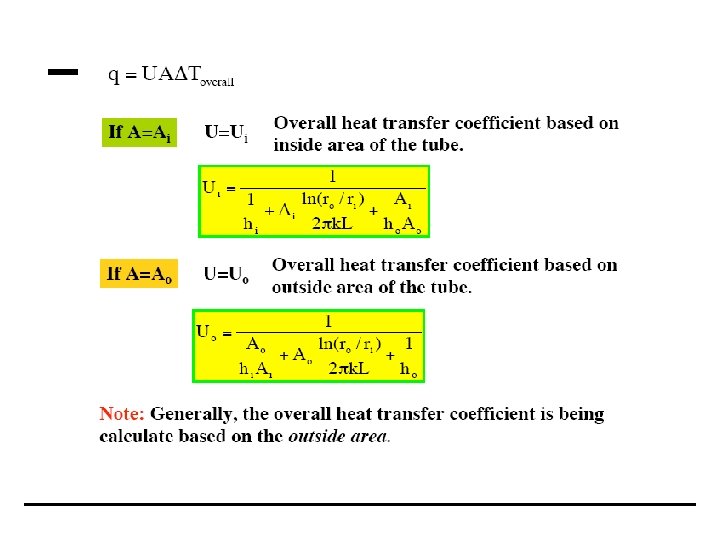
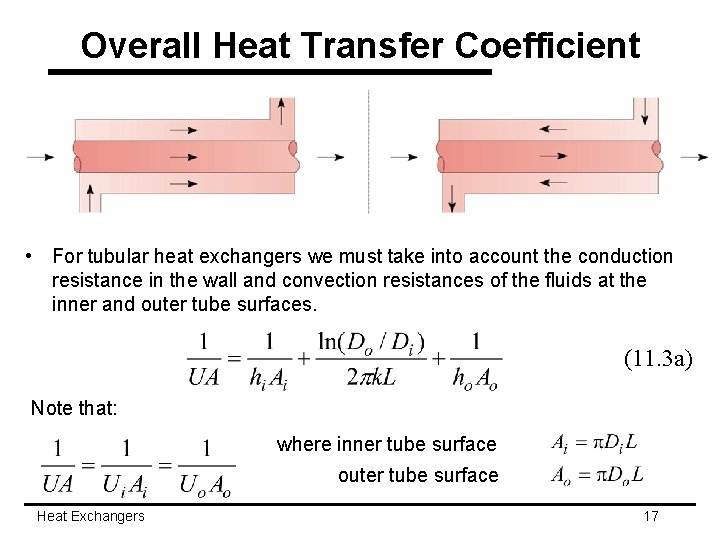
Overall Heat Transfer Coefficient • For tubular heat exchangers we must take into account the conduction resistance in the wall and convection resistances of the fluids at the inner and outer tube surfaces. (11. 3 a) Note that: where inner tube surface outer tube surface Heat Exchangers 17
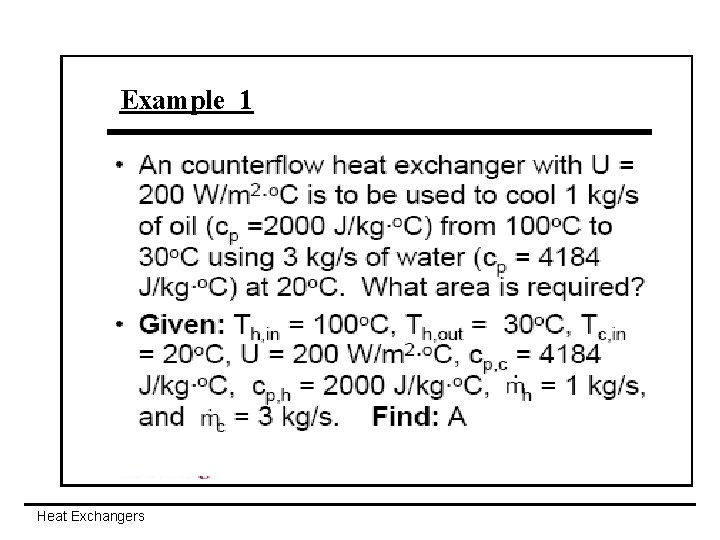
Example 1 Heat Exchangers
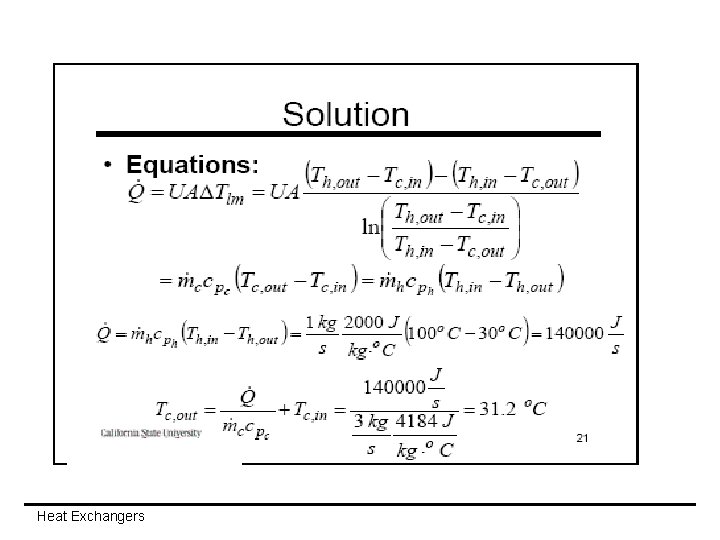
Heat Exchangers
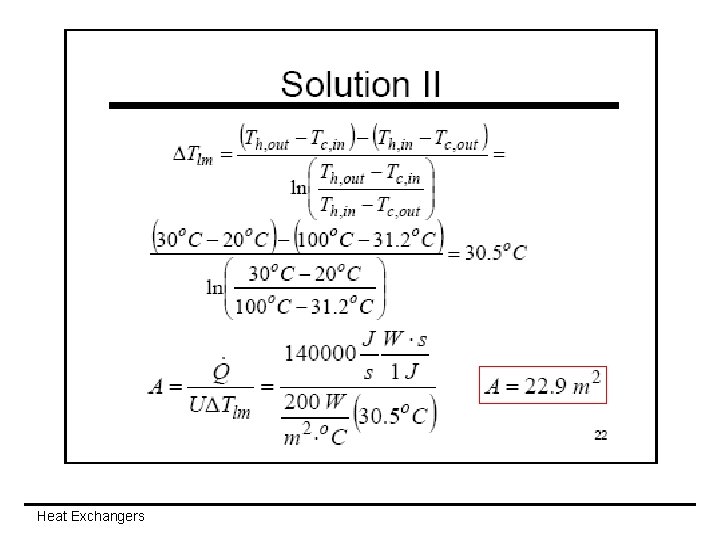
Heat Exchangers