
HEAT ENERGY HEAT The energy transferred between objects
HEAT ENERGY

HEAT • The energy transferred between objects that are at different temperatures. – Heat is ALWAYS transferred from the object that has the higher temperature to the object that has the lower temperature. – This will continue until both objects have the same temperature.
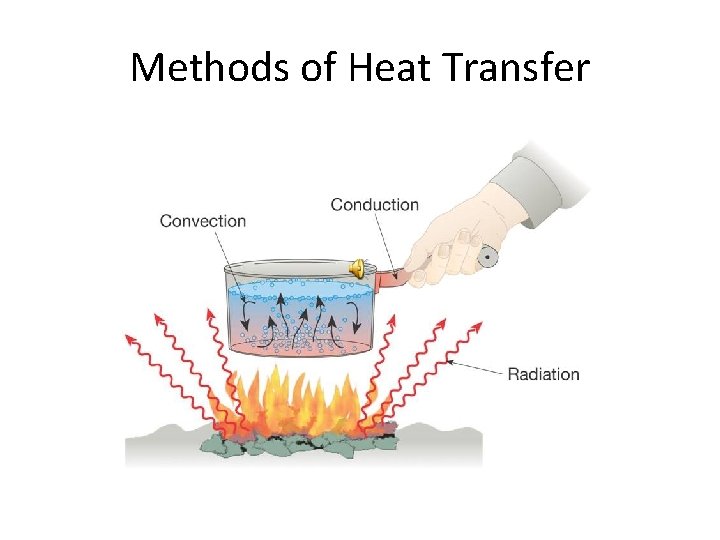
Methods of Heat Transfer
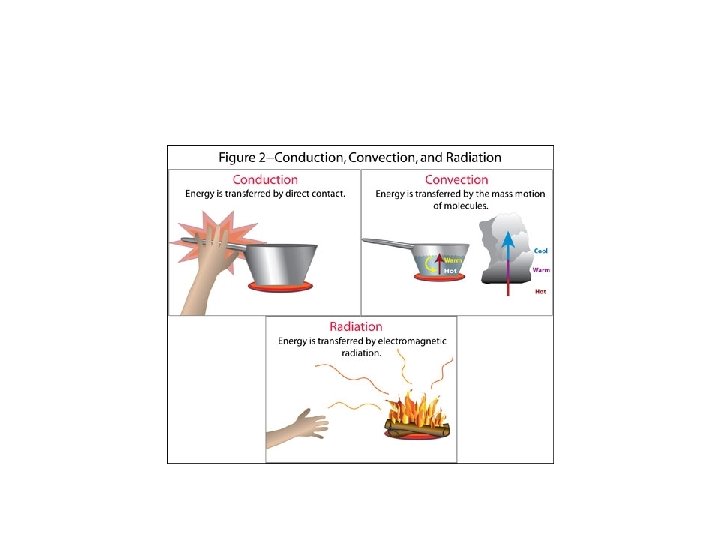
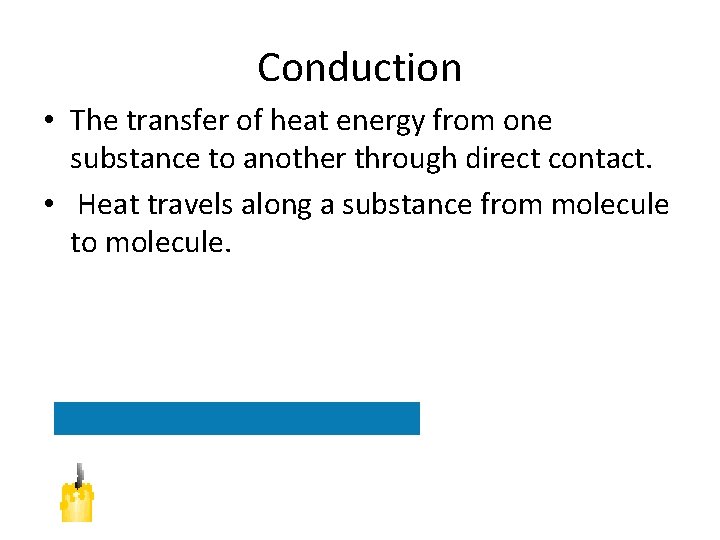
Conduction • The transfer of heat energy from one substance to another through direct contact. • Heat travels along a substance from molecule to molecule.
Conductors = Substances that conduct heat energy very well. – Examples: metals like silver, copper, and gold Insulators = Substances that do not conduct heat energy well. – Examples: wood, plastic, ceramic, cloth, Styrofoam, paper
Conduction Examples: – water heating on an electric stove – hot sand touching your feet – touching a stove and being burned – ice melting in your hand – boiling water by thrusting a red-hot piece of iron into it
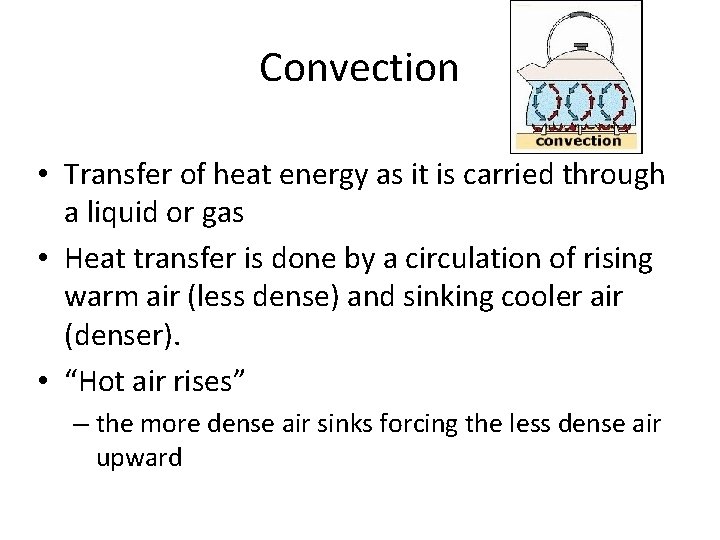
Convection • Transfer of heat energy as it is carried through a liquid or gas • Heat transfer is done by a circulation of rising warm air (less dense) and sinking cooler air (denser). • “Hot air rises” – the more dense air sinks forcing the less dense air upward
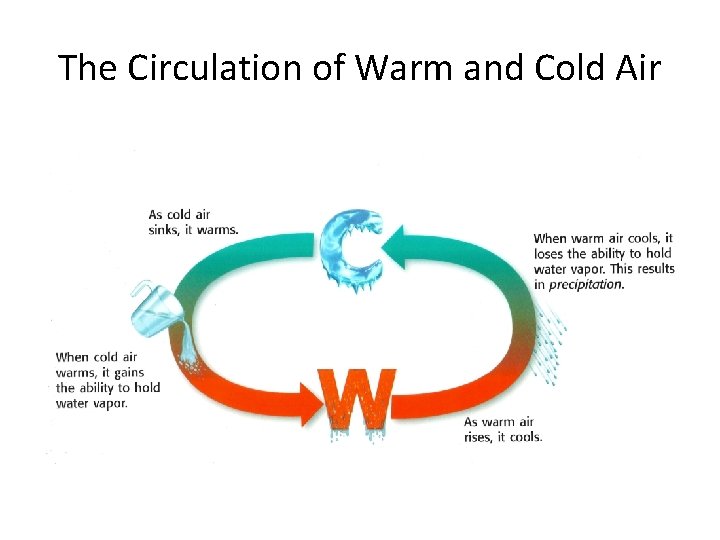
The Circulation of Warm and Cold Air
Convection Examples: • Macaroni rising and falling in a pot of heated water • Heat rising from a chimney

• http: //www. lanly. com/heating. htm#convectio n
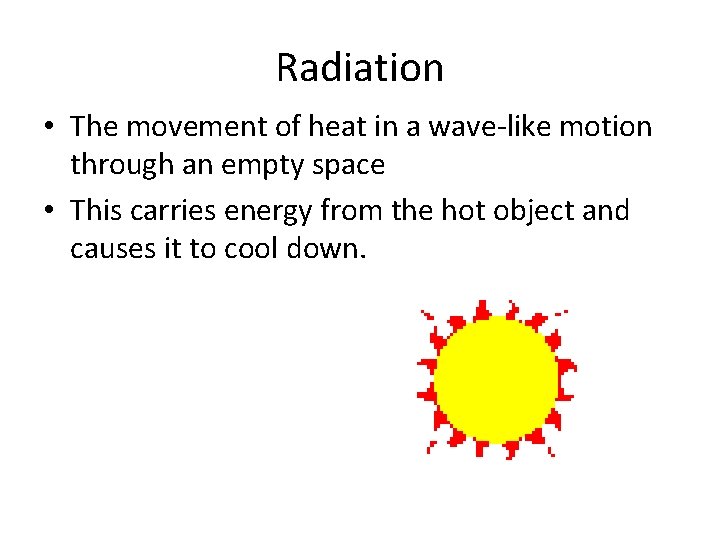
Radiation • The movement of heat in a wave-like motion through an empty space • This carries energy from the hot object and causes it to cool down.
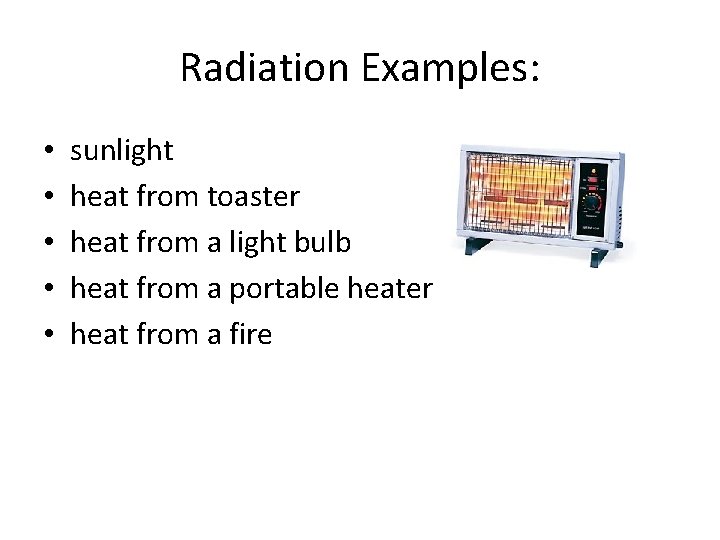
Radiation Examples: • • • sunlight heat from toaster heat from a light bulb heat from a portable heater heat from a fire
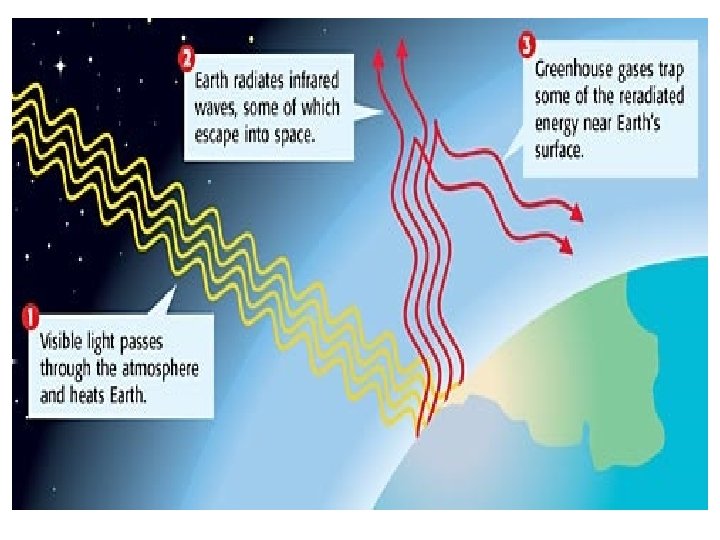
Radiation and the Greenhouse Effect • Earth’s atmosphere allows the sun’s visible light to pass through it, just like the windows of a greenhouse. • Greenhouses trap heat energy, keeping the inside warm. Our atmosphere traps heat from the sun to keep our planet warm. • The Greenhouse Effect = gases such as water vapor, carbon dioxide, and methane trap heat energy from the sun and warm the Earth, allowing for life to exist.
- Slides: 15