
Heat Balance Heat Balance Lesson Objectives When you
Heat Balance
Heat Balance Lesson Objectives When you finish this lesson you will understand: • heat flow • thickness & material conductivity effects • Recommended heat flow practices in spot & flash welding Keywords Conduction Convection Electrode Face Radiation Learning Activities 1. View Slides; 2. Read Notes, 3. Listen to lecture 4. Do on-line workbook Thermal conductivity
Factors Affecting Heat Balance • Relative electrical and thermal conductivities of the metals to be jointed • Relative geometry of the parts at the joint • Thermal and electrical conductivities of the electrodes • Geometry of the electrodes
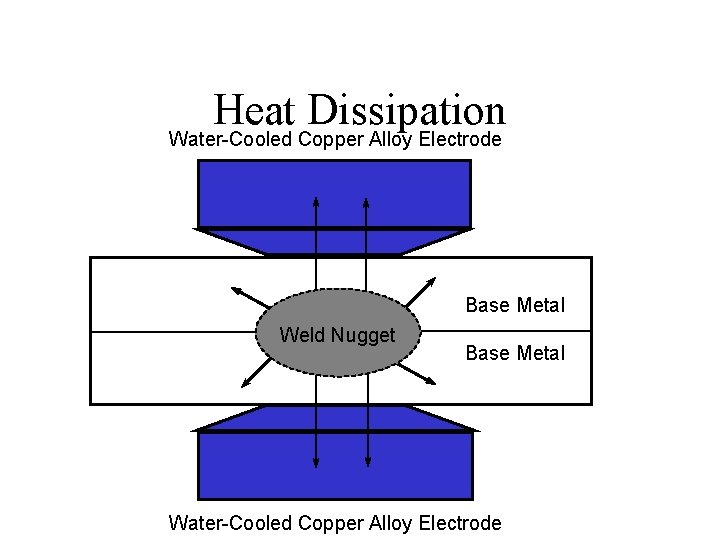
Heat Dissipation Water-Cooled Copper Alloy Electrode Base Metal Weld Nugget Base Metal Water-Cooled Copper Alloy Electrode
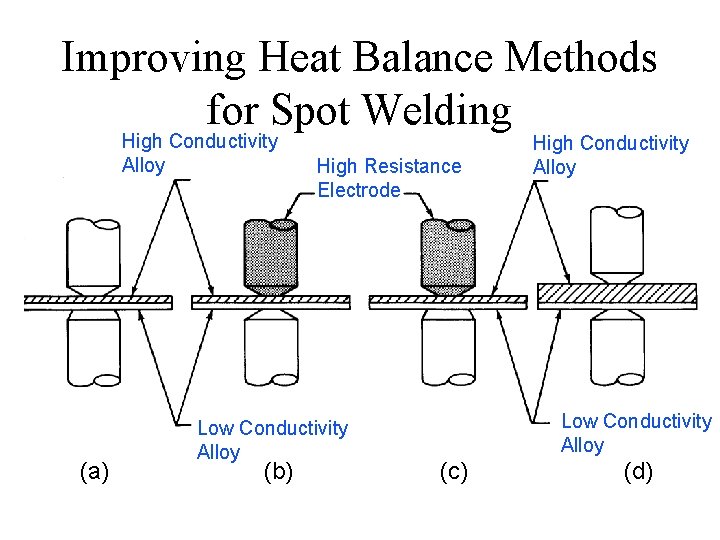
Improving Heat Balance Methods for Spot Welding High Conductivity Alloy (a) High Resistance Electrode Low Conductivity Alloy (b) High Conductivity Alloy Low Conductivity Alloy (c) (d)
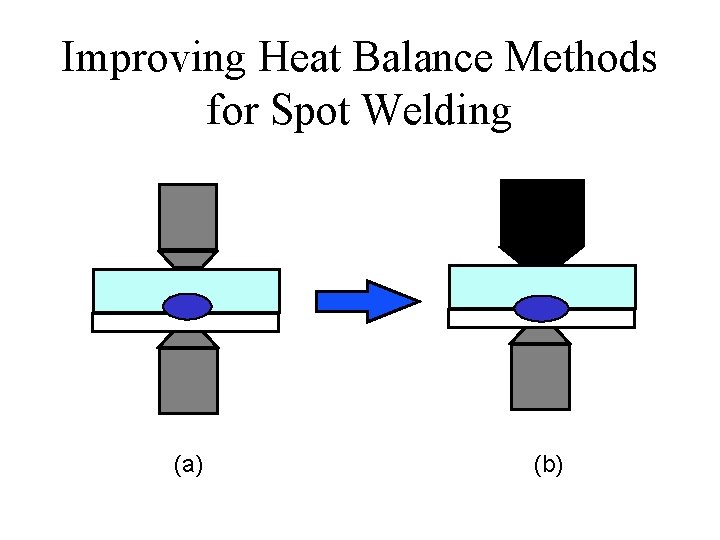
Improving Heat Balance Methods for Spot Welding (a) (b)
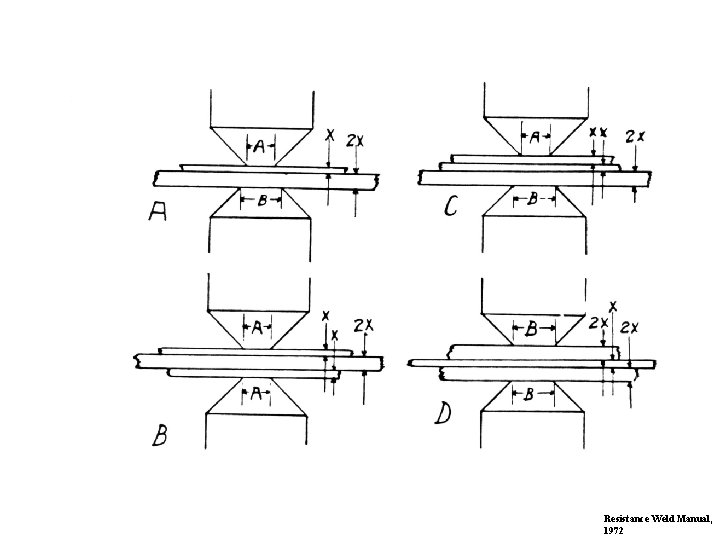
Resistance Weld Manual, 1972
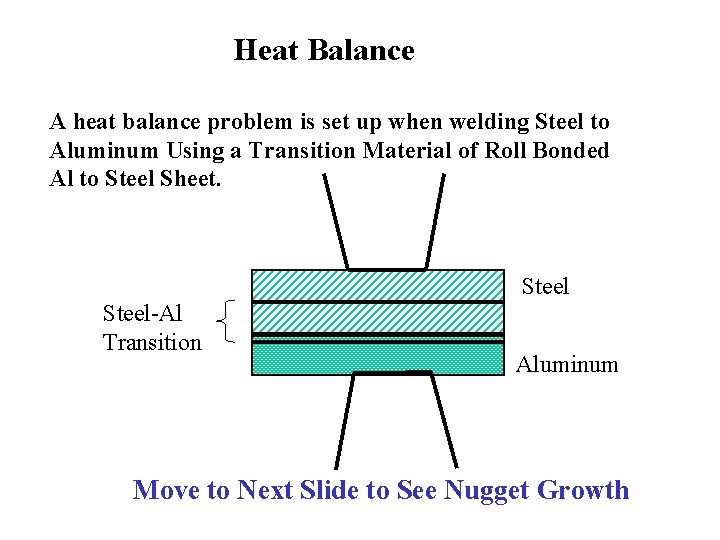
Heat Balance A heat balance problem is set up when welding Steel to Aluminum Using a Transition Material of Roll Bonded Al to Steel Sheet. Steel-Al Transition Aluminum Move to Next Slide to See Nugget Growth
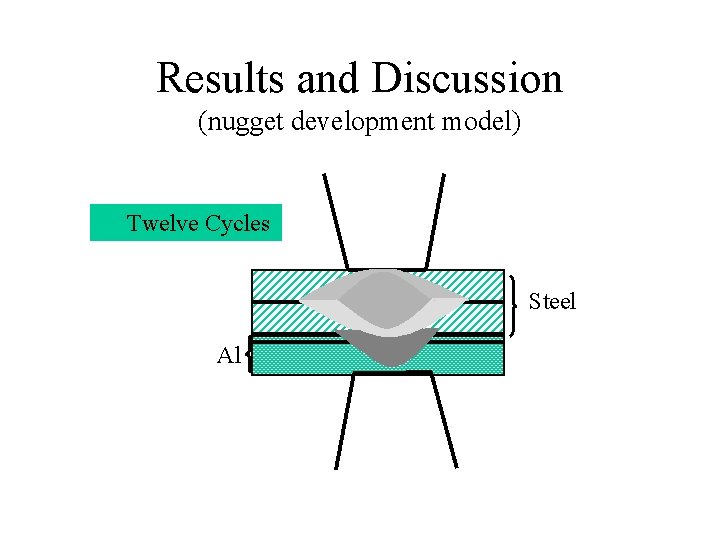
Results and Discussion (nugget development model) Two Three Four Five Eight Six Seven Nine Ten Eleven Twelve Cycles Cycles One Cycle Steel Al
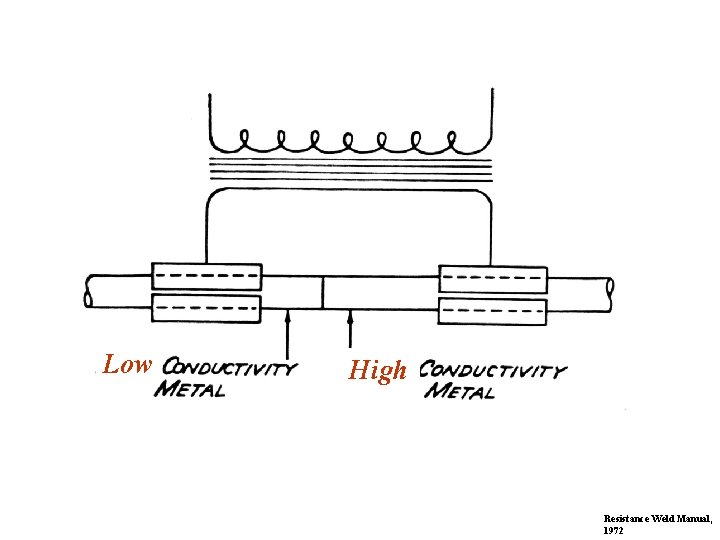
Low High Resistance Weld Manual, 1972
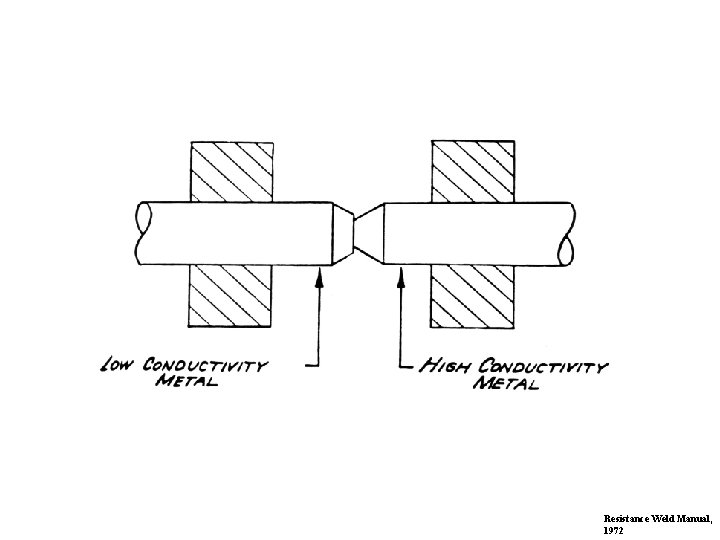
Resistance Weld Manual, 1972
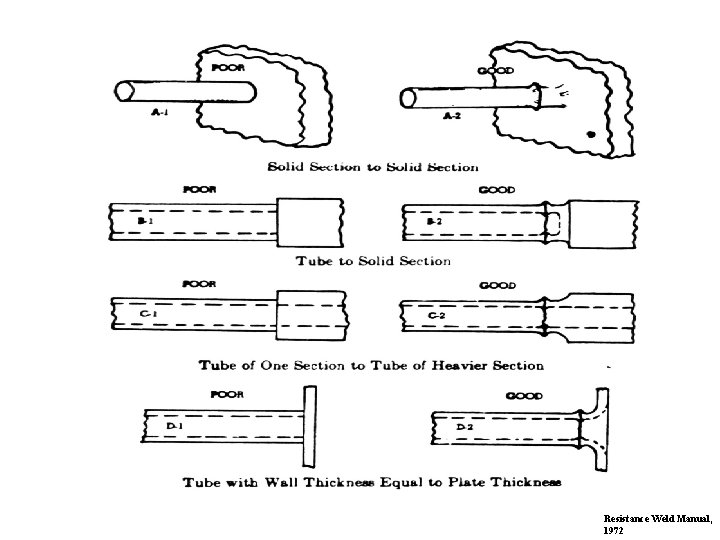
Resistance Weld Manual, 1972
Turn to the person sitting next to you and discuss (1 min. ): • We have seen that there is a heat balance problem when thick and thin steels are welded. What do you think will happen when we try to weld thick and thin copper sheets?
- Slides: 13