
Heat and Sound Waves and Sound Types of
- Slides: 14
Heat and Sound Waves and Sound Types of Waves Harmonic Waves Sound and Light Waves Superposition and Interference The Doppler Effect Resonance 1
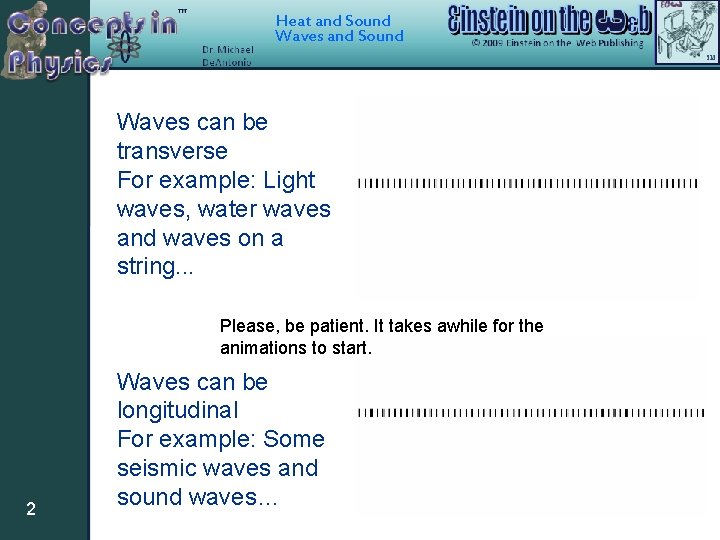
Heat and Sound Waves can be transverse For example: Light waves, water waves and waves on a string. . . Please, be patient. It takes awhile for the animations to start. 2 Waves can be longitudinal For example: Some seismic waves and sound waves…
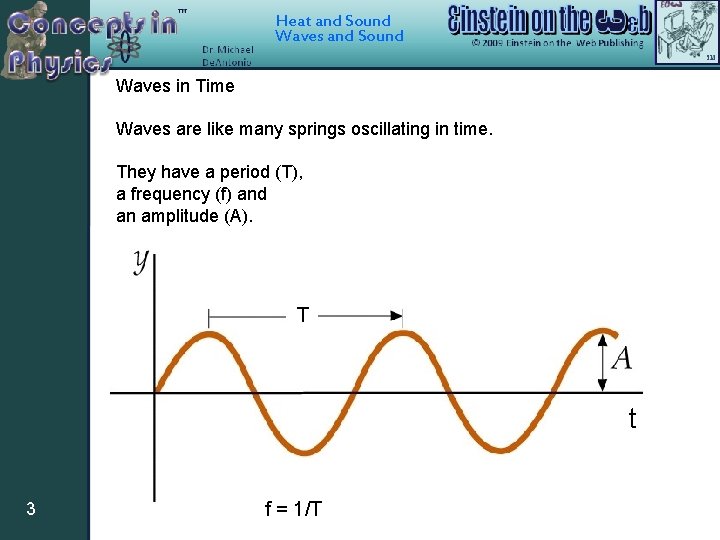
Heat and Sound Waves in Time Waves are like many springs oscillating in time. They have a period (T), a frequency (f) and an amplitude (A). T t 3 f = 1/T
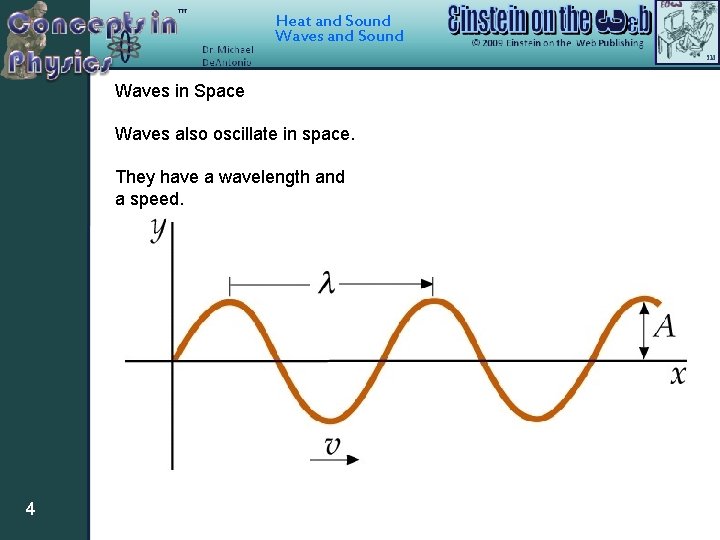
Heat and Sound Waves in Space Waves also oscillate in space. They have a wavelength and a speed. 4
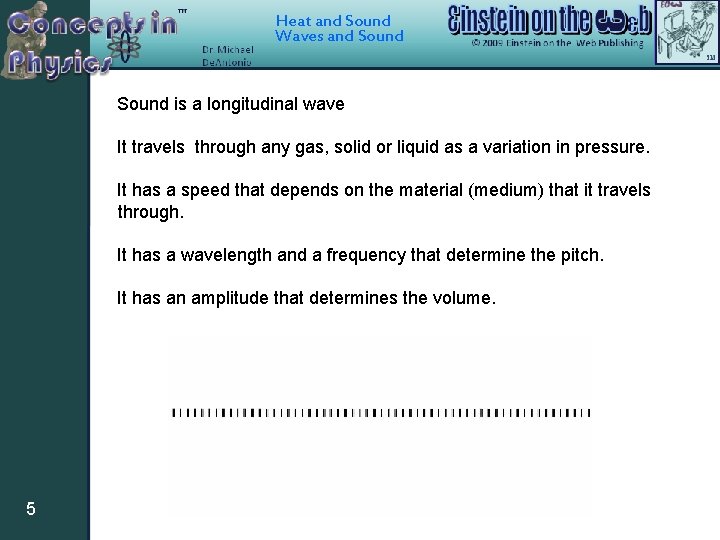
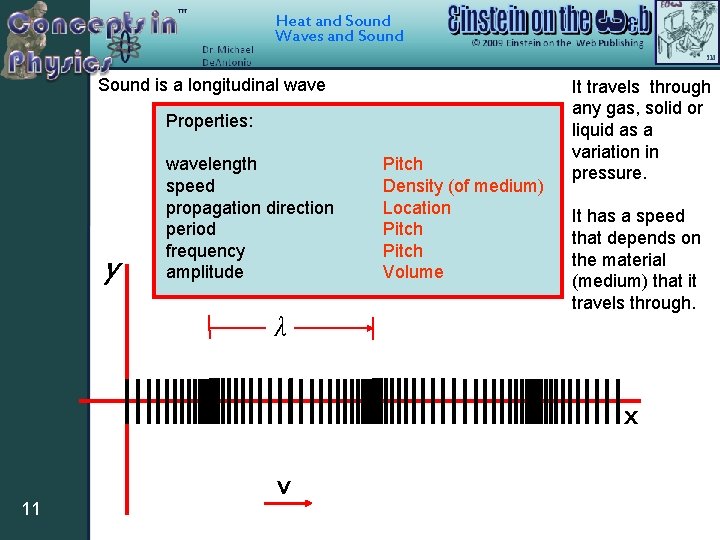
Heat and Sound Waves and Sound is a longitudinal wave It travels through any gas, solid or liquid as a variation in pressure. It has a speed that depends on the material (medium) that it travels through. It has a wavelength and a frequency that determine the pitch. It has an amplitude that determines the volume. 5
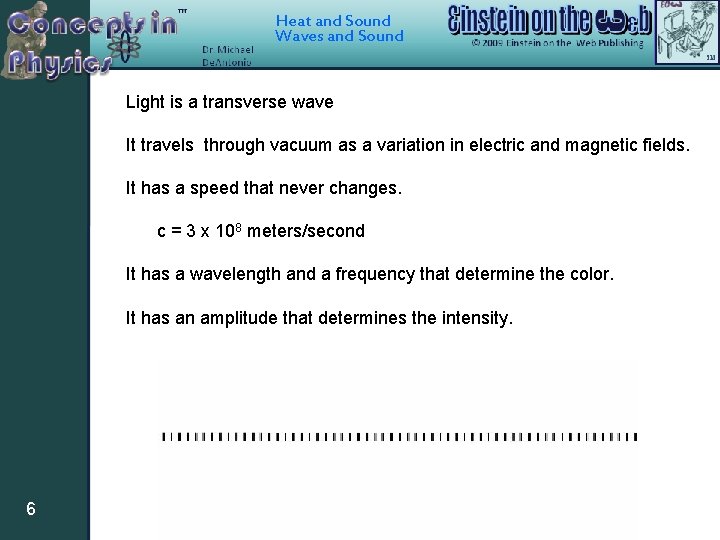
Heat and Sound Waves and Sound Light is a transverse wave It travels through vacuum as a variation in electric and magnetic fields. It has a speed that never changes. c = 3 x 10⁸ meters/second It has a wavelength and a frequency that determine the color. It has an amplitude that determines the intensity. 6
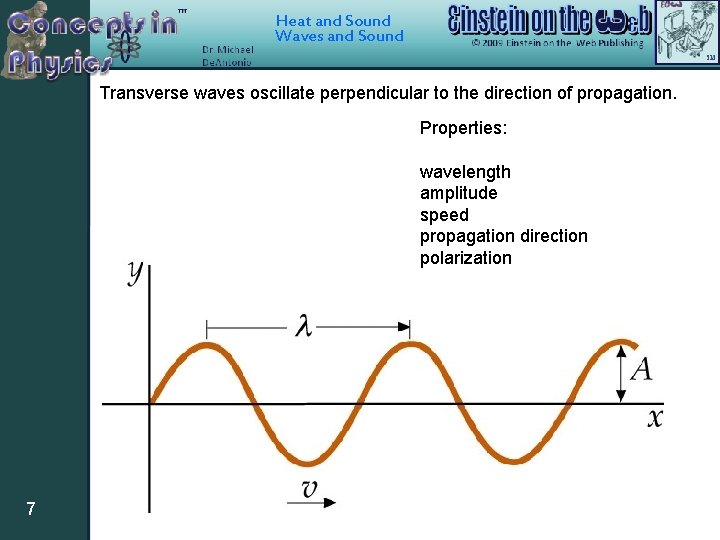
Heat and Sound Waves and Sound Transverse waves oscillate perpendicular to the direction of propagation. Properties: wavelength amplitude speed propagation direction polarization 7
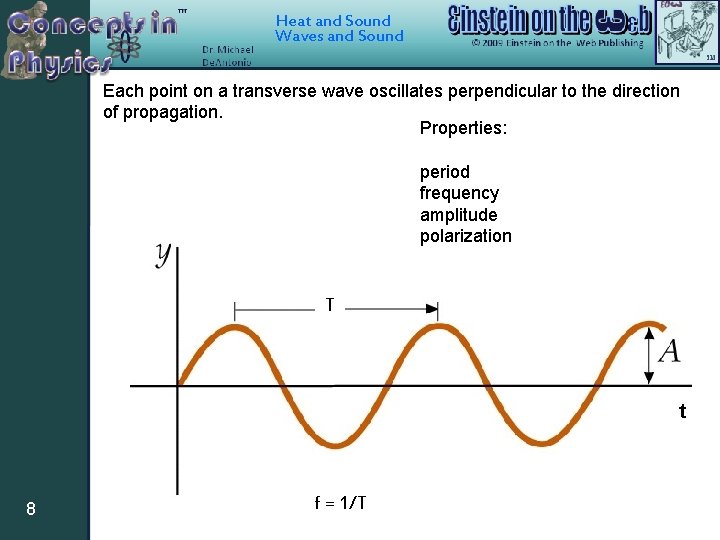
Heat and Sound Waves and Sound Each point on a transverse wave oscillates perpendicular to the direction of propagation. Properties: period frequency amplitude polarization T t 8 f = 1/T
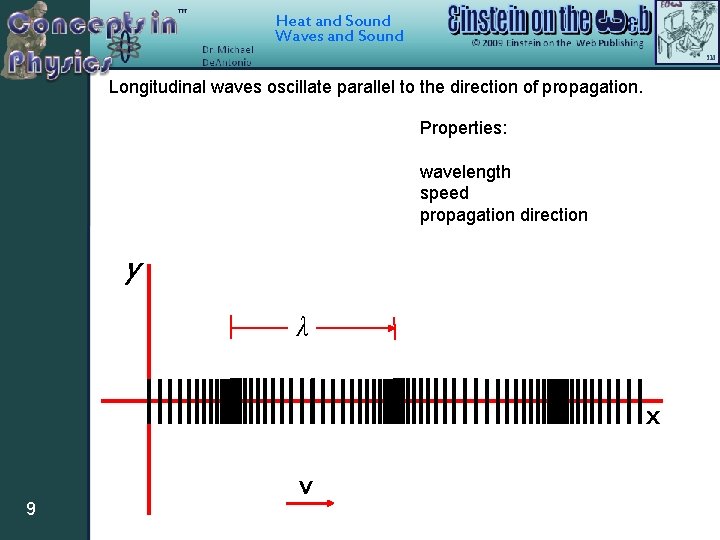
Heat and Sound Waves and Sound Longitudinal waves oscillate parallel to the direction of propagation. Properties: wavelength speed propagation direction y λ x 9 v
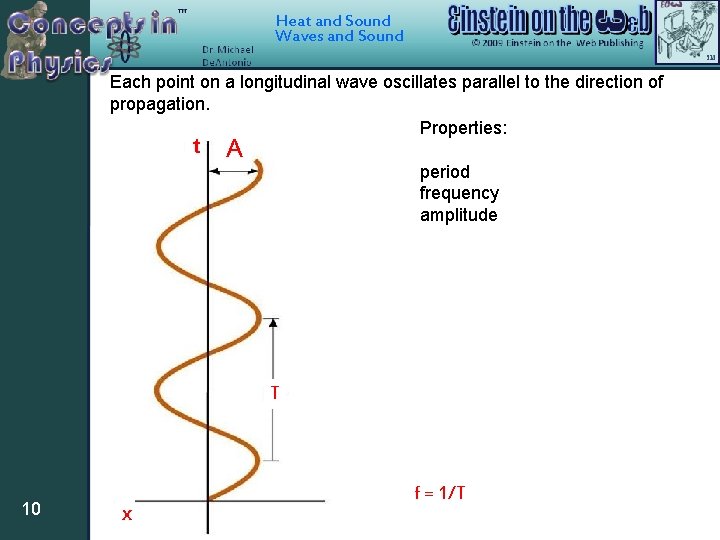
Heat and Sound Waves and Sound Each point on a longitudinal wave oscillates parallel to the direction of propagation. Properties: t A period frequency amplitude T 10 x f = 1/T
Heat and Sound Waves and Sound is a longitudinal wave Properties: y wavelength speed propagation direction period frequency amplitude λ Pitch Density (of medium) Location Pitch Volume It travels through any gas, solid or liquid as a variation in pressure. It has a speed that depends on the material (medium) that it travels through. x 11 v
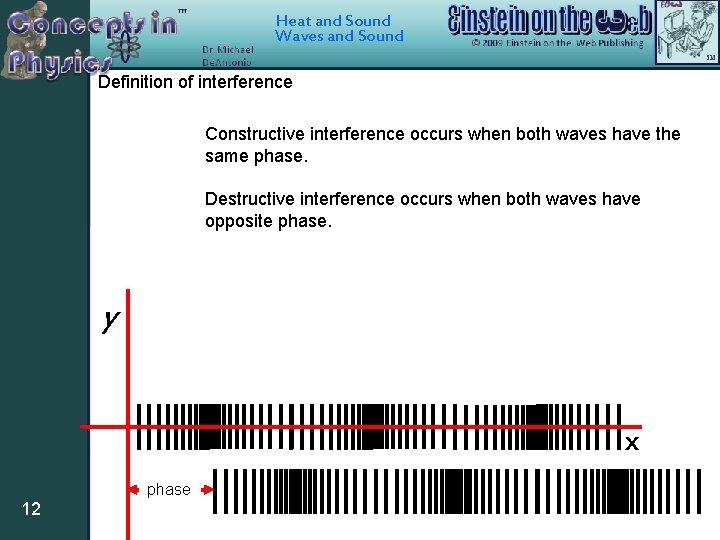
Heat and Sound Waves and Sound Definition of interference Constructive interference occurs when both waves have the same phase. Destructive interference occurs when both waves have opposite phase. y x phase 12
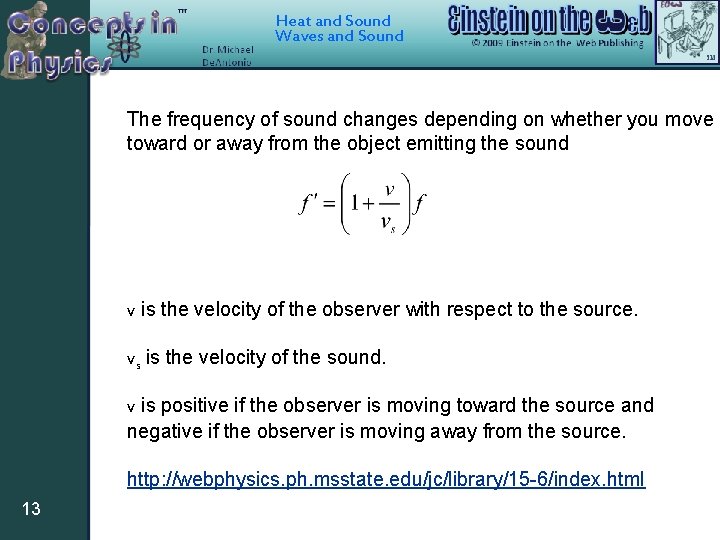
Heat and Sound Waves and Sound The frequency of sound changes depending on whether you move toward or away from the object emitting the sound v is the velocity of the observer with respect to the source. vs is the velocity of the sound. v is positive if the observer is moving toward the source and negative if the observer is moving away from the source. http: //webphysics. ph. msstate. edu/jc/library/15 -6/index. html 13
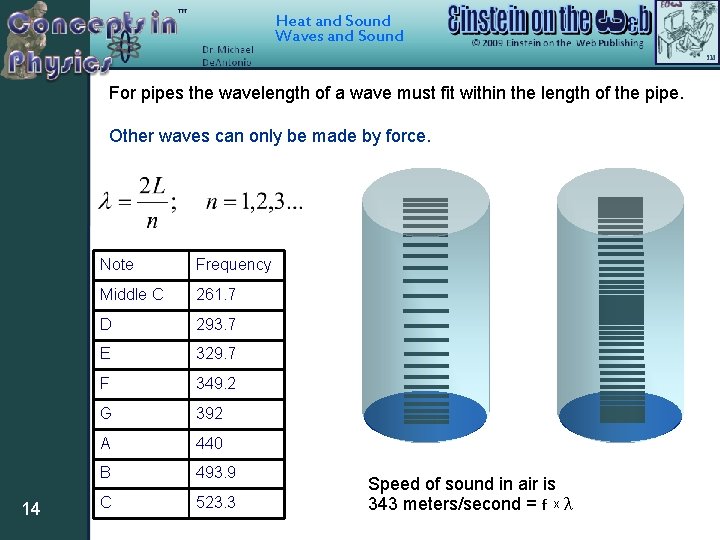
Heat and Sound Waves and Sound For pipes the wavelength of a wave must fit within the length of the pipe. Other waves can only be made by force. 14 Note Frequency Middle C 261. 7 D 293. 7 E 329. 7 F 349. 2 G 392 A 440 B 493. 9 C 523. 3 Speed of sound in air is 343 meters/second = f x λ