
Heat and heat transfer By Ankita Naik51 Suvidha
Heat and heat transfer By Ankita Naik(51) Suvidha Naik (88) Shubhala Salgaonkar (87)
HEAT
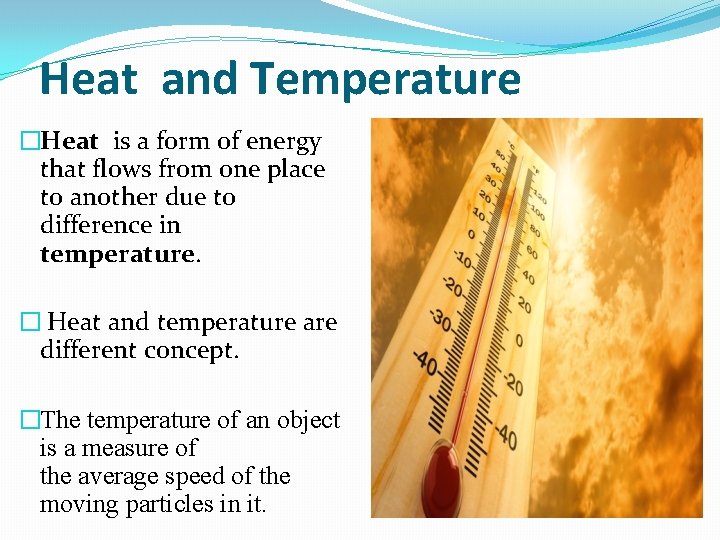
Heat and Temperature �Heat is a form of energy that flows from one place to another due to difference in temperature. � Heat and temperature are different concept. �The temperature of an object is a measure of the average speed of the moving particles in it.
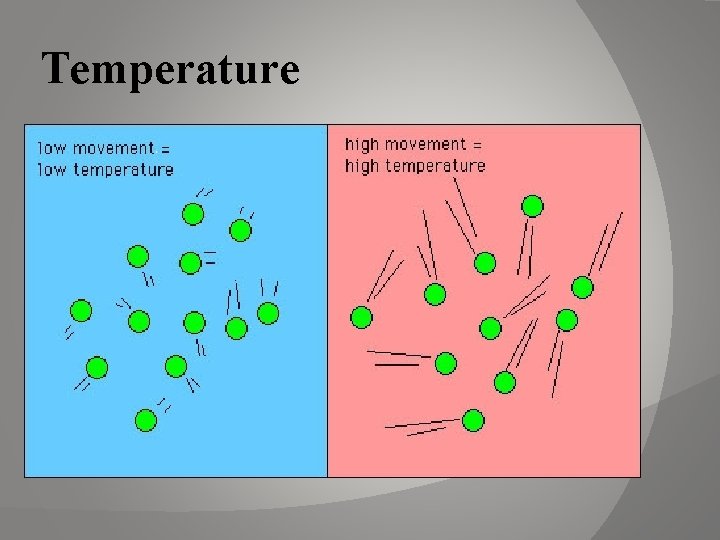
Temperature
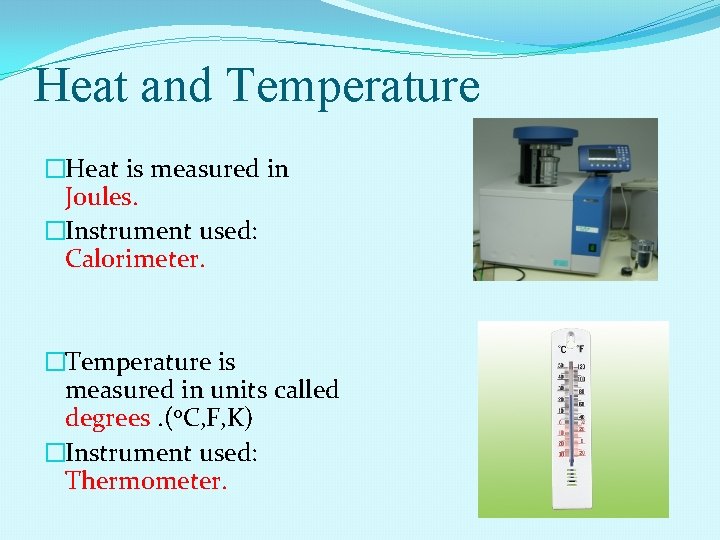
Heat and Temperature �Heat is measured in Joules. �Instrument used: Calorimeter. �Temperature is measured in units called degrees. (o. C, F, K) �Instrument used: Thermometer.
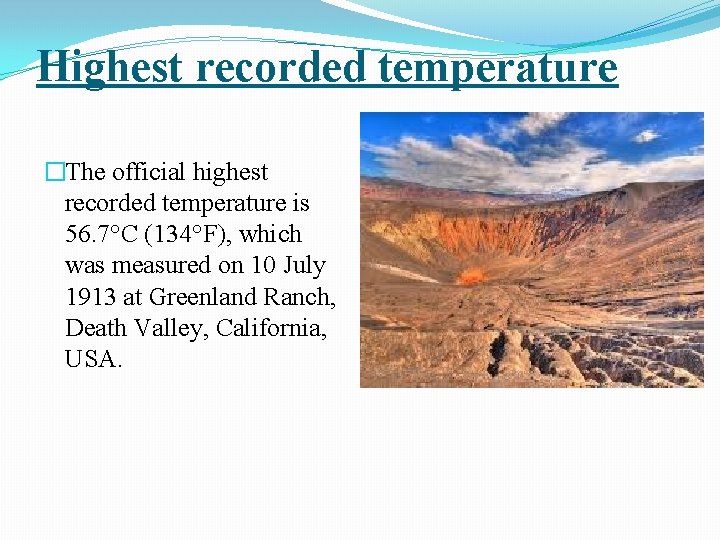
Highest recorded temperature �The official highest recorded temperature is 56. 7°C (134°F), which was measured on 10 July 1913 at Greenland Ranch, Death Valley, California, USA.
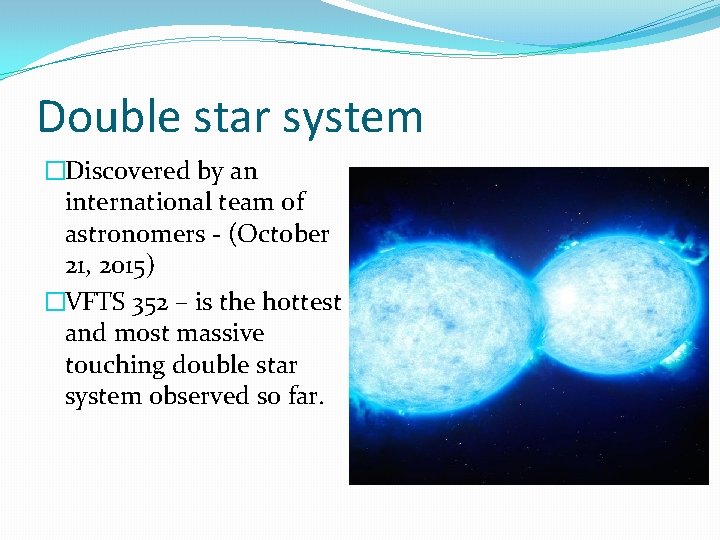
Double star system �Discovered by an international team of astronomers - (October 21, 2015) �VFTS 352 – is the hottest and most massive touching double star system observed so far.
55 cancri e �Hot rocky exoplanet referred as lava world. �It is tidally locked like earth but instead of flowing ocean, tides are liquid lava.
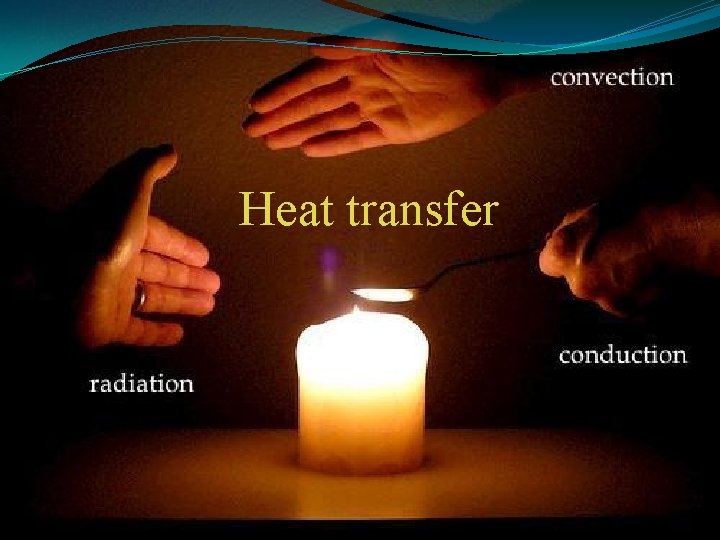
Heat transfer
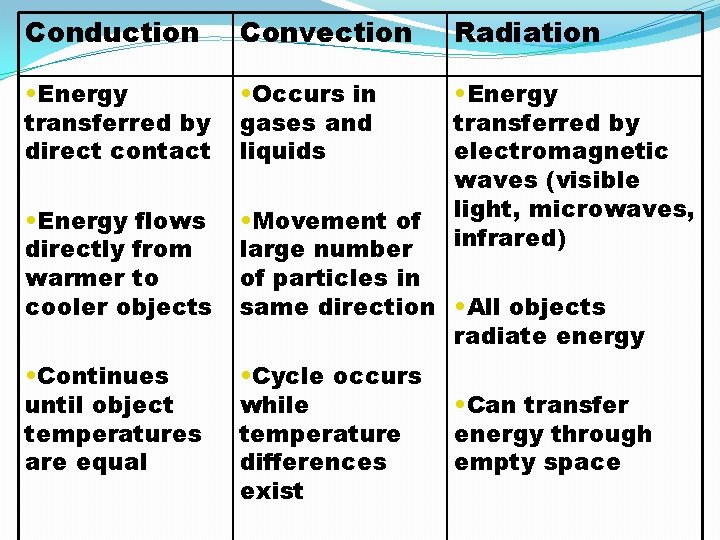
Conduction Convection Radiation • Energy transferred by direct contact • Occurs in gases and liquids • Energy flows directly from warmer to cooler objects • Energy transferred by electromagnetic waves (visible light, microwaves, infrared) • Movement of large number of particles in same direction • All objects radiate energy • Continues until object temperatures are equal • Cycle occurs while temperature differences exist • Can transfer energy through empty space
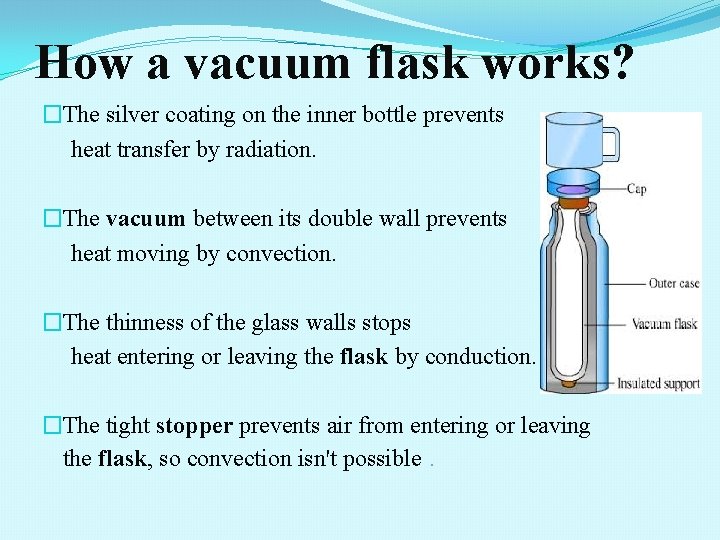
How a vacuum flask works? �The silver coating on the inner bottle prevents heat transfer by radiation. �The vacuum between its double wall prevents heat moving by convection. �The thinness of the glass walls stops heat entering or leaving the flask by conduction. �The tight stopper prevents air from entering or leaving the flask, so convection isn't possible.
HEAT INVOLVED IN CLIMATE CHANGE

e z e e r b d n La and e z e e r b a e s
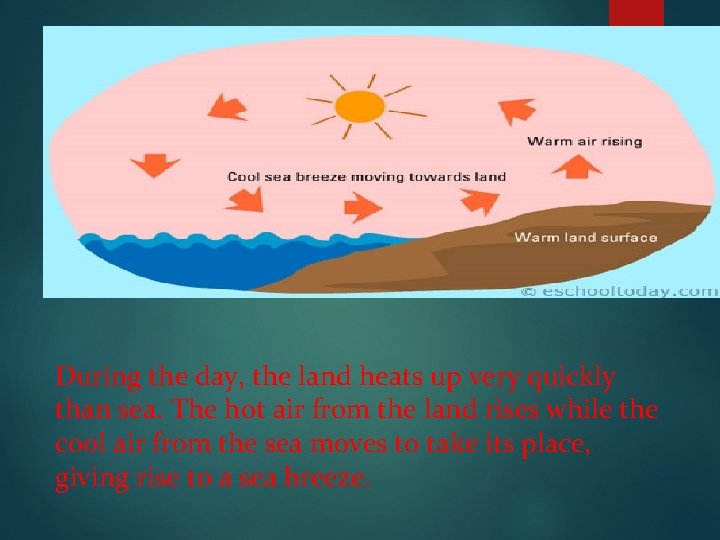
During the day, the land heats up very quickly than sea. The hot air from the land rises while the cool air from the sea moves to take its place, giving rise to a sea breeze.
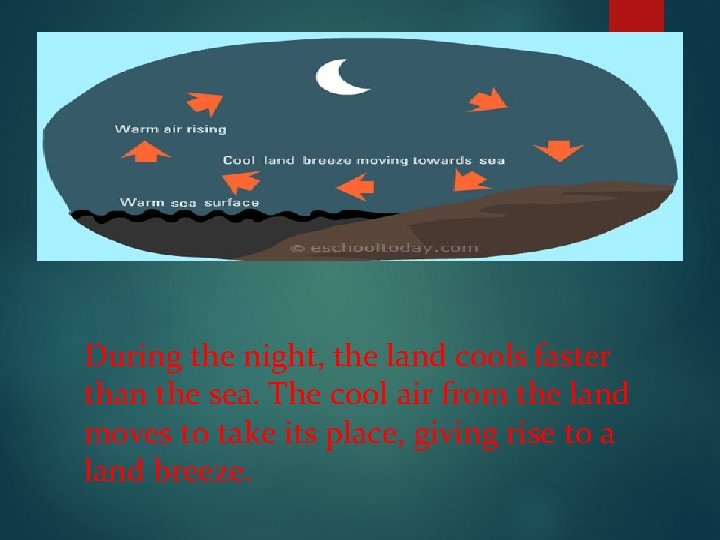
During the night, the land cools faster than the sea. The cool air from the land moves to take its place, giving rise to a land breeze.
Uneven heating of the earth is the main cause of wind movements. As warm air rises, air pressure at that place is reduced and the cooler air moves to that place. High speed winds and air pressure difference can cause cyclones. Heat is a form of energy , that means it can neither be created nor destroyed, it can be transfer from one place to another.
HEAT IN LIVING THINGS
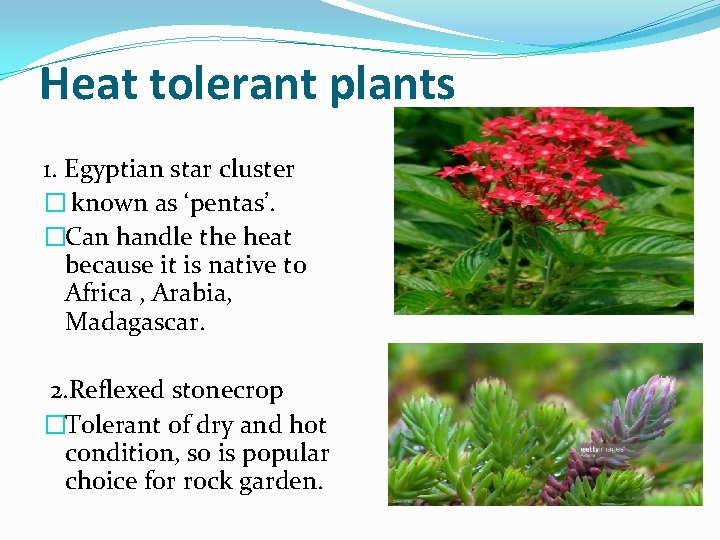
Heat tolerant plants 1. Egyptian star cluster � known as ‘pentas’. �Can handle the heat because it is native to Africa , Arabia, Madagascar. 2. Reflexed stonecrop �Tolerant of dry and hot condition, so is popular choice for rock garden.
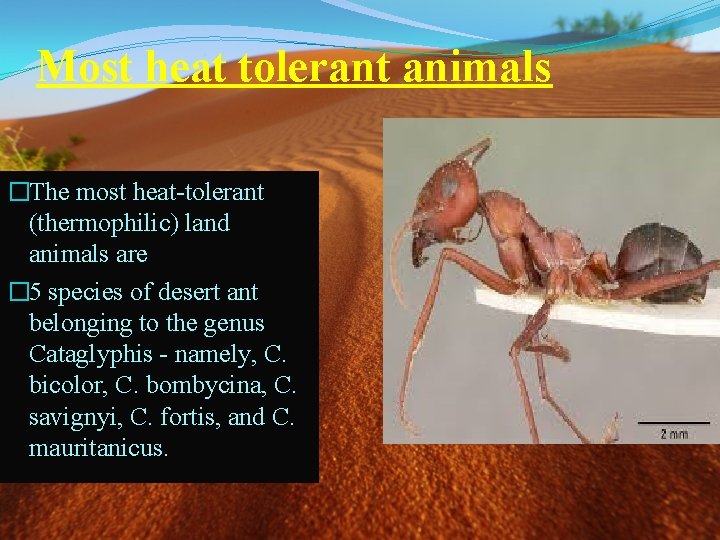
Most heat tolerant animals �The most heat-tolerant (thermophilic) land animals are � 5 species of desert ant belonging to the genus Cataglyphis - namely, C. bicolor, C. bombycina, C. savignyi, C. fortis, and C. mauritanicus.
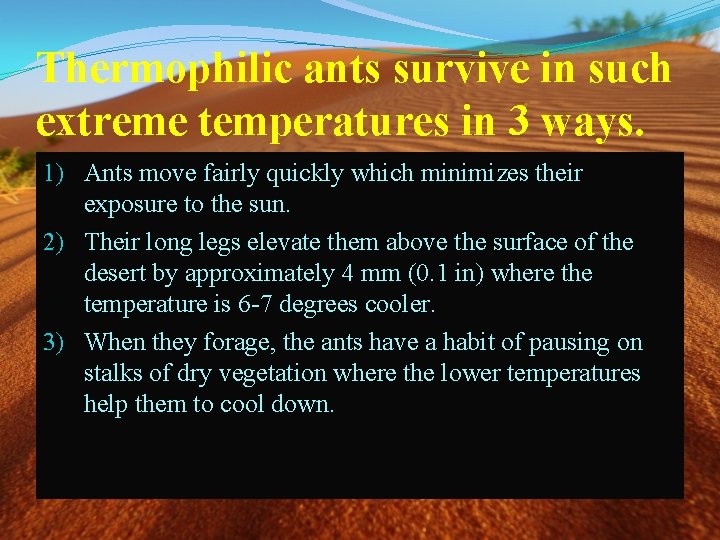
Thermophilic ants survive in such extreme temperatures in 3 ways. 1) Ants move fairly quickly which minimizes their exposure to the sun. 2) Their long legs elevate them above the surface of the desert by approximately 4 mm (0. 1 in) where the temperature is 6 -7 degrees cooler. 3) When they forage, the ants have a habit of pausing on stalks of dry vegetation where the lower temperatures help them to cool down.
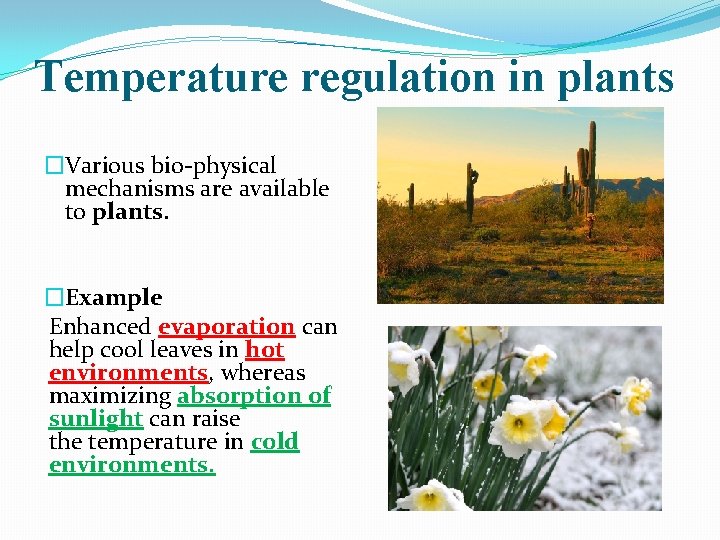
Temperature regulation in plants �Various bio-physical mechanisms are available to plants. �Example Enhanced evaporation can help cool leaves in hot environments, whereas maximizing absorption of sunlight can raise the temperature in cold environments.
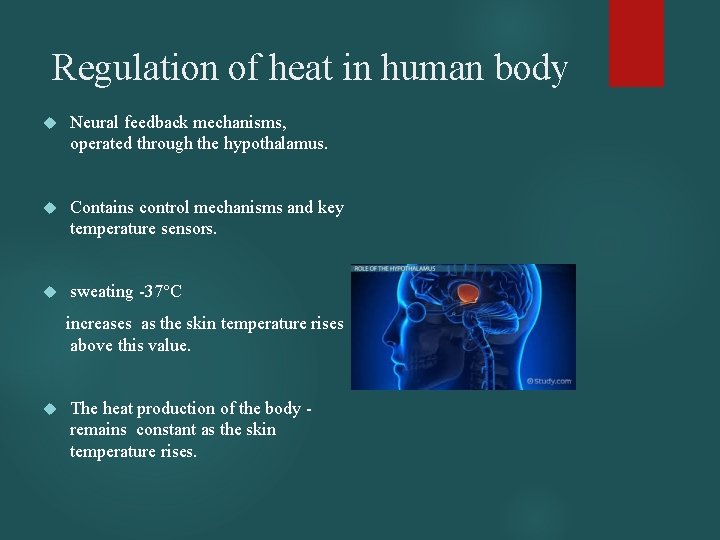
Regulation of heat in human body Neural feedback mechanisms, operated through the hypothalamus. Contains control mechanisms and key temperature sensors. sweating -37°C increases as the skin temperature rises above this value. The heat production of the body remains constant as the skin temperature rises.
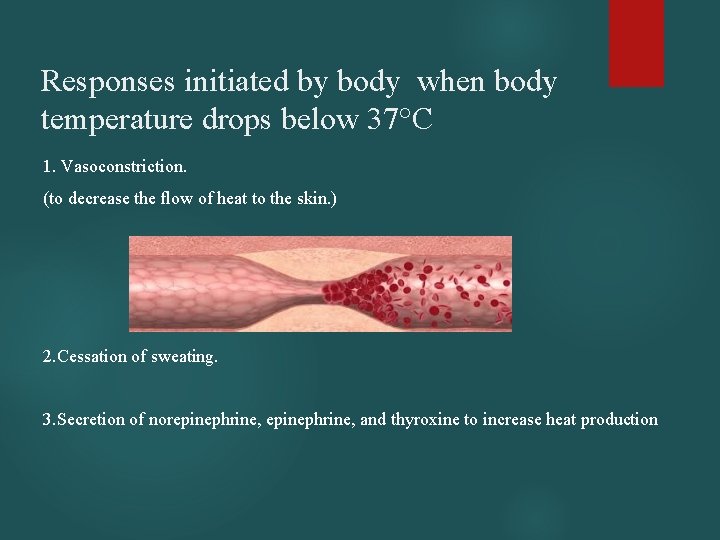
Responses initiated by body when body temperature drops below 37°C 1. Vasoconstriction. (to decrease the flow of heat to the skin. ) 2. Cessation of sweating. 3. Secretion of norepinephrine, and thyroxine to increase heat production
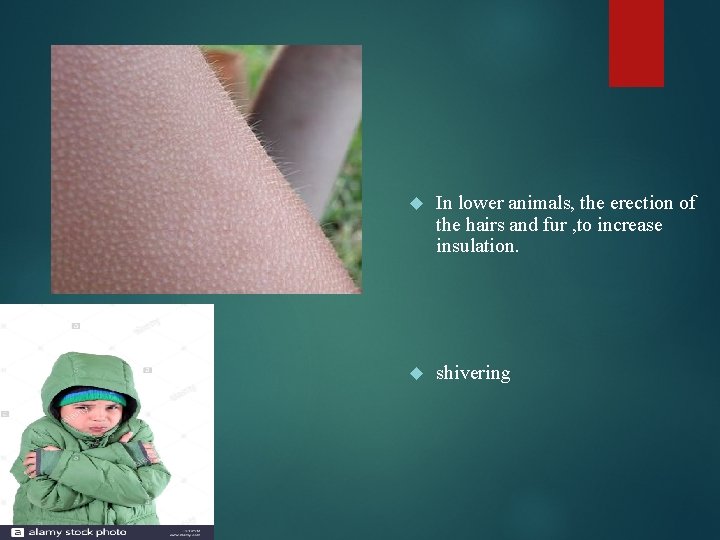
In lower animals, the erection of the hairs and fur , to increase insulation. shivering

INTERESTING APPLICATION OF HEAT
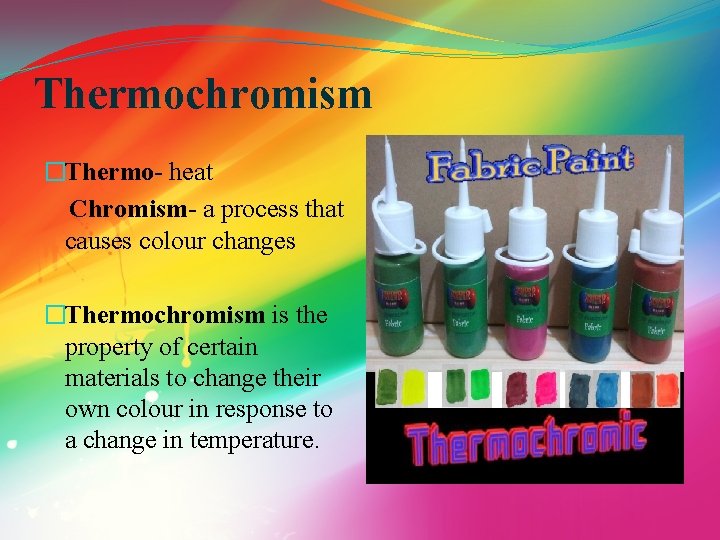
Thermochromism �Thermo- heat Chromism- a process that causes colour changes �Thermochromism is the property of certain materials to change their own colour in response to a change in temperature.

Magic mug
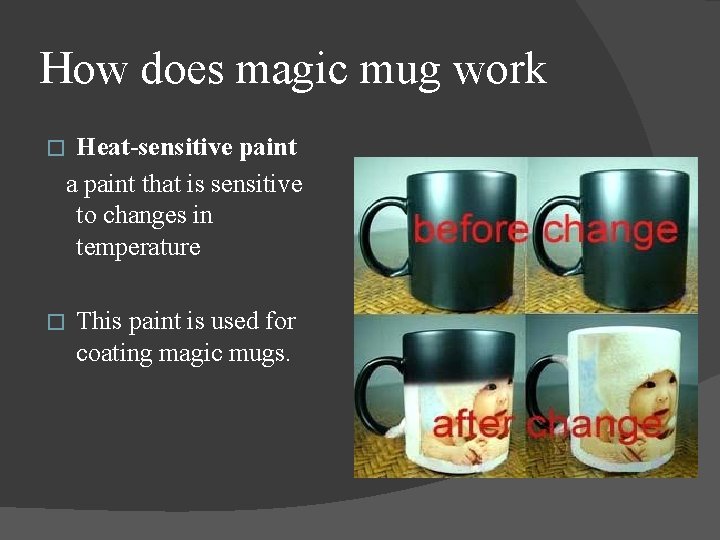
How does magic mug work Heat-sensitive paint a paint that is sensitive to changes in temperature � � This paint is used for coating magic mugs.
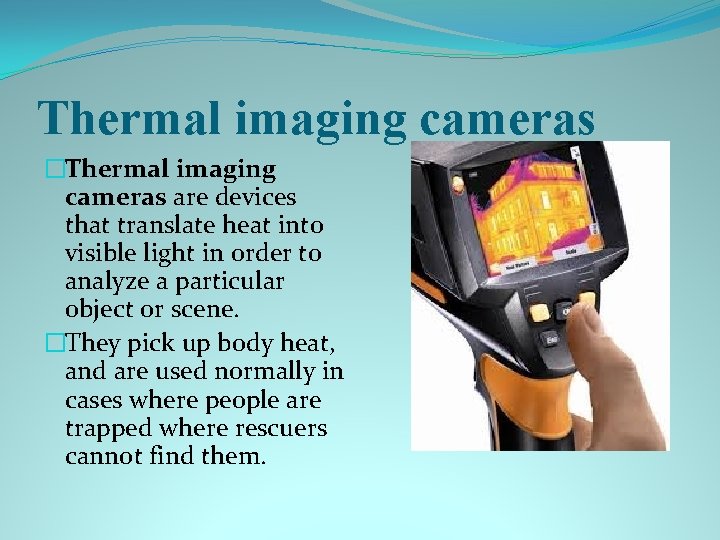
Thermal imaging cameras �Thermal imaging cameras are devices that translate heat into visible light in order to analyze a particular object or scene. �They pick up body heat, and are used normally in cases where people are trapped where rescuers cannot find them.
RESEARCHES IN HEAT
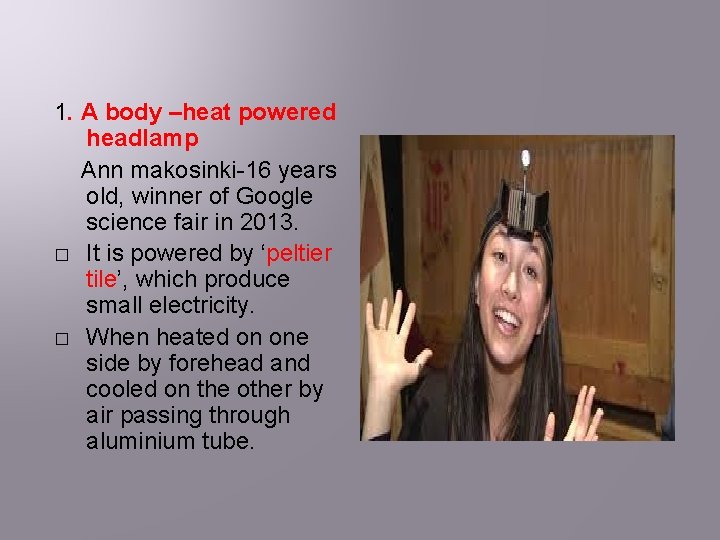
1. A body –heat powered headlamp Ann makosinki-16 years old, winner of Google science fair in 2013. � It is powered by ‘peltier tile’, which produce small electricity. � When heated on one side by forehead and cooled on the other by air passing through aluminium tube.
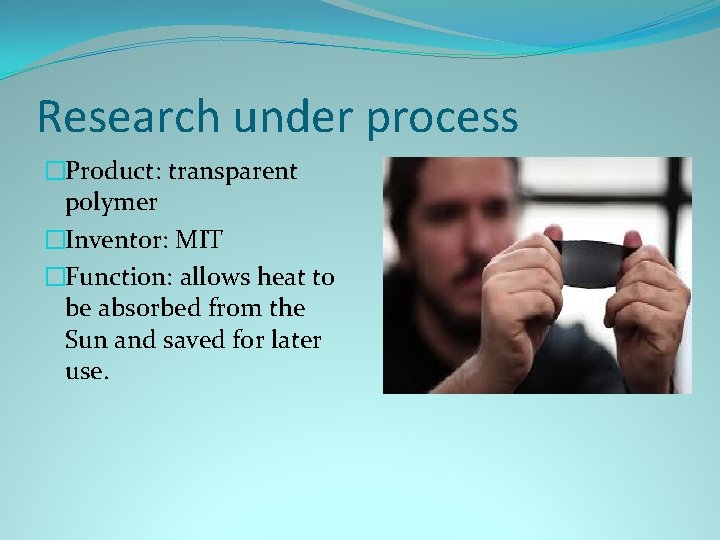
Research under process �Product: transparent polymer �Inventor: MIT �Function: allows heat to be absorbed from the Sun and saved for later use.

�The flapping of the wings of 1000 bees generate 7 watts of heat. �According to NASA , when the temperature reaches 95°F our work output drops by 45 per cent. �The average temperature on mars is -63 °C
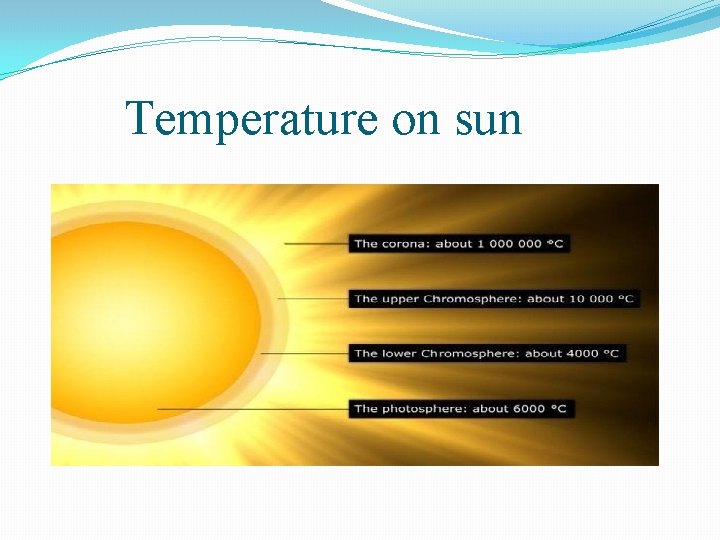
Temperature on sun
References �https: //en. wikipedia. org/wiki/Calorimeter#/media/Fil e: Bombenkalorimeter_mit_bombe. jpg �https: //en. wikipedia. org/wiki/Heat �http: //www. guinnessworldrecords. com/worldrecords/most-heat-tolerant-animal-(land-based) �http: //www. guinnessworldrecords. com/worldrecords/highest-recorded-temperature �https: //www. youtube. com/watch? v=uk 76 zw. QHdt. U �https: //en. wikipedia. org/wiki/Hot_spring

- Slides: 37