
HEAT AND CALORIMETRY HEAT Represented by q Energy
HEAT AND CALORIMETRY
HEAT • Represented by q • Energy that transfers from one object to another because of a temperature difference between them • Heat always flows from a warmer object to a cooler object

UNITS TO MEASURE HEAT FLOW • 2 ways – the calorie and the joule • calorie (cal) – the quantity of heat needed to raise the temperature of 1 g of pure water 1 o. C – Always written with a small c (except with dietary calories) • Dietary Calorie is always written with a capital C • 1 Dietary calorie is equal to one kilocalorie, or 1000 calories
JOULE • SI Unit of Energy (J) • One joule of heat raises the temp of 1 g of pure water 0. 2390 o. C

CONVERTING BETWEEN CALORIES AND JOULES 1 J = 0. 2390 cal 4. 184 J = 1 cal
SPECIFIC HEAT • Represented by C • Amount of heat required to raise the temperature of 1 g of the substance 1 o. C –This is why some things heat up more quickly than others
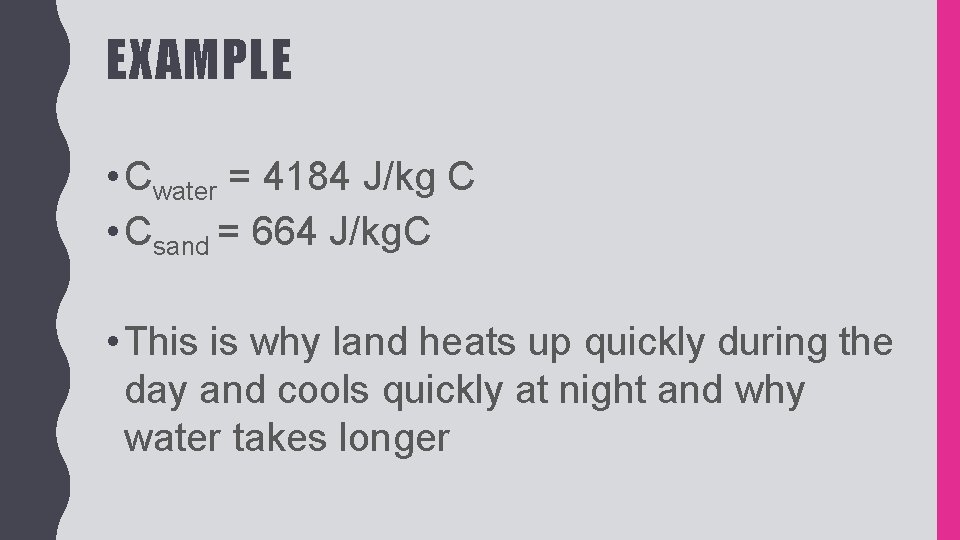
EXAMPLE • Cwater = 4184 J/kg C • Csand = 664 J/kg. C • This is why land heats up quickly during the day and cools quickly at night and why water takes longer
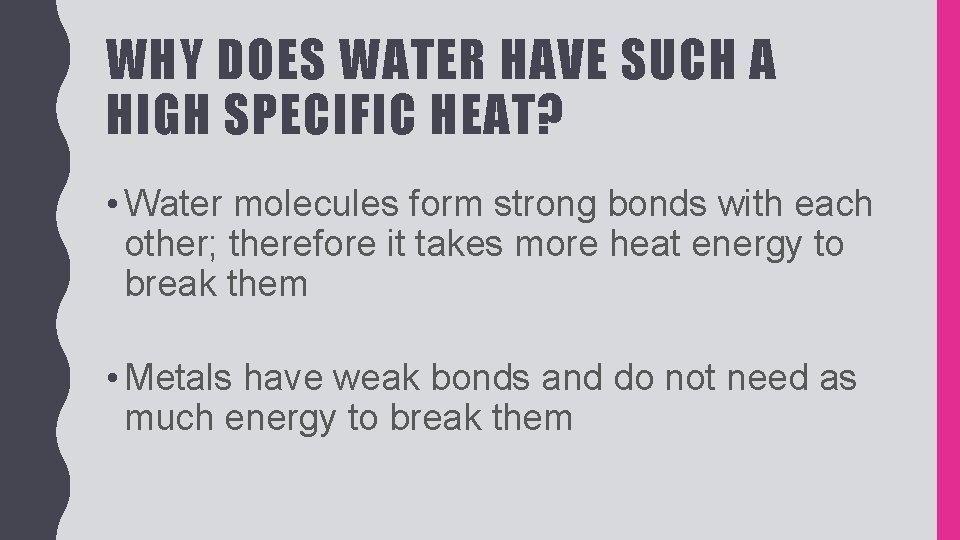
WHY DOES WATER HAVE SUCH A HIGH SPECIFIC HEAT? • Water molecules form strong bonds with each other; therefore it takes more heat energy to break them • Metals have weak bonds and do not need as much energy to break them
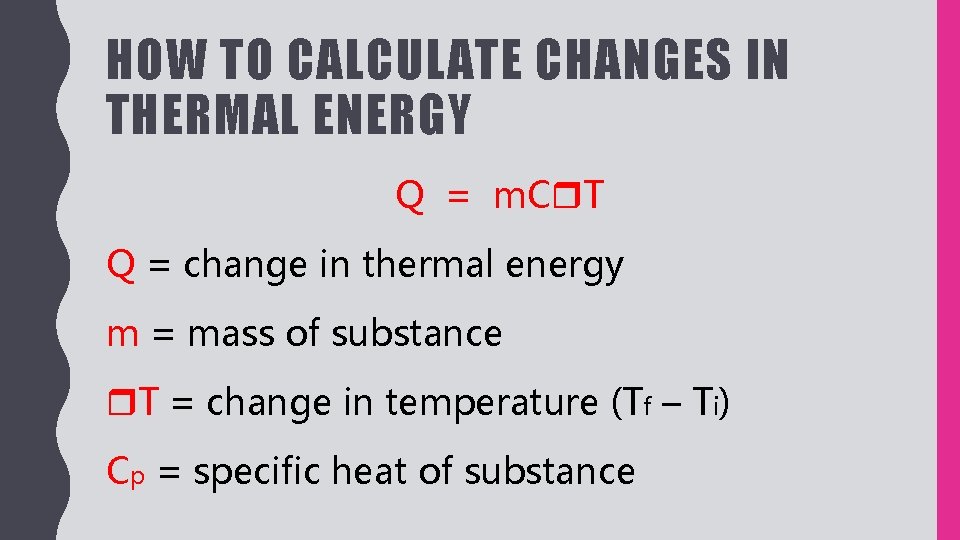
HOW TO CALCULATE CHANGES IN THERMAL ENERGY Q = m. C T Q = change in thermal energy m = mass of substance T = change in temperature (Tf – Ti) Cp = specific heat of substance
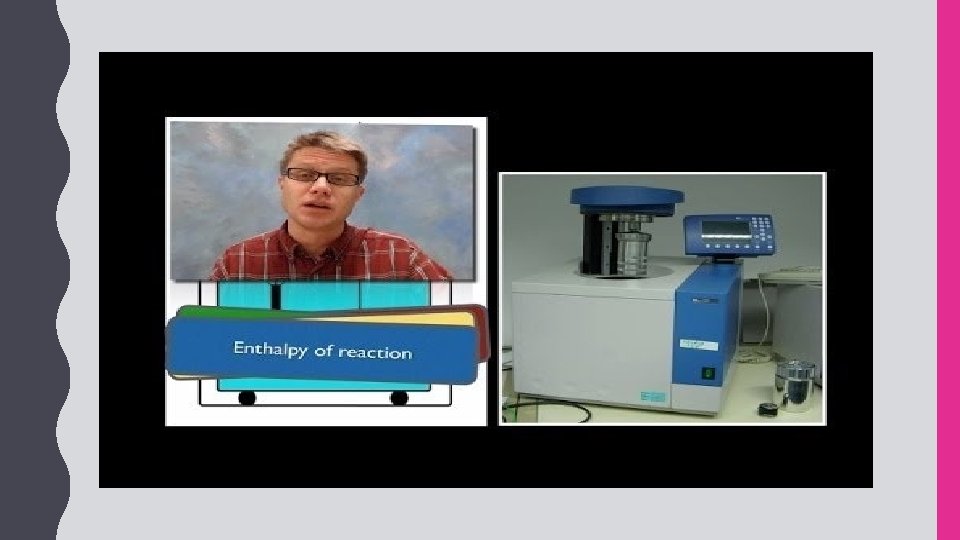
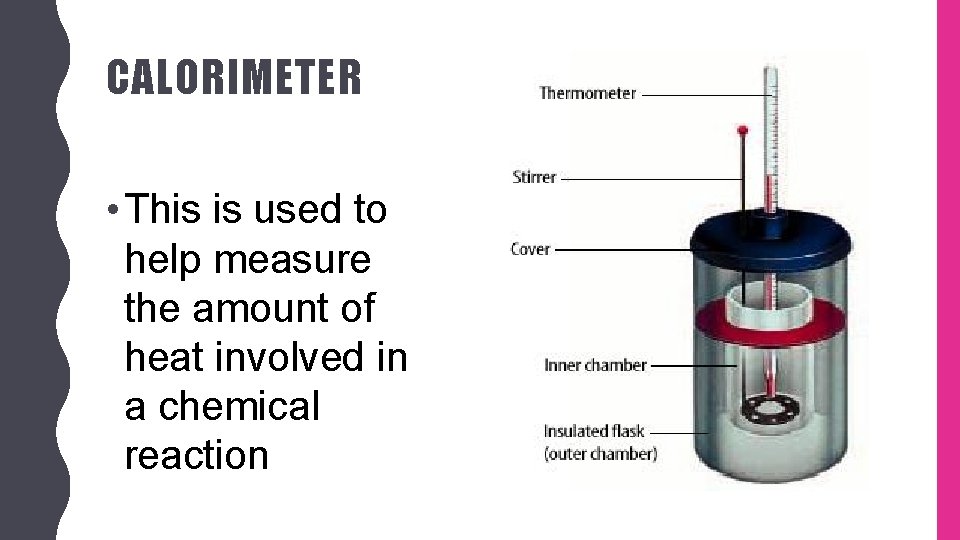
CALORIMETER • This is used to help measure the amount of heat involved in a chemical reaction
- Slides: 11