
Heat Action Plan Process and Implementation in India

- Slides: 26
Heat Action Plan Process and Implementation in India Anup Kumar Srivastava National Disaster Management Authority (NDMA) Government of India, New Delhi
Background • India, with 1. 4 billion population (Census 2019), 31% urban and 69% live in rural areas • Climate change is increasing extreme weather events • Heat waves condition are becoming more frequent, severe and long duration • In India increasing trends of heat-wave (9, 13, 17, 19 and 23 states affected in 2015, 2016, 2017, 2018 and 2019 respectively) • Heat waves caused 25, 743 deaths between 1992 and 2016
Objectives and challenges Objectives • Reduce the negative impact of extreme heat • Reduce the risk of loss of lives, livestock and livelihood. Challenges: • Lack of accurate information and data related to Heat – health impact • Lack of Institutional mechanism • Lack of Awareness • Lack of Capacity /understanding • Lack of inter-agency coordination • Heat-wave is not a notified as natural disaster list in India
Initiatives and process • • • Pro-active initiatives/Actions Assessed the complexity of the issues Heat wave is preventable Multi - Sectoral, multi dimensional approach Strengthen the governance to tackle heat wave • Decided to prepare a guidelines for preparation of action plan, aims to provide a framework for implementations, coordination and evaluation of extreme heat response activities • Get involve the various experts • Constitute an Expert Group i. e. Meteorological expert, Health experts, Disaster managers, Policy maker, Research Institutions, and Government Administration etc. • Organise Expert Group Meeting time to time and get inputs
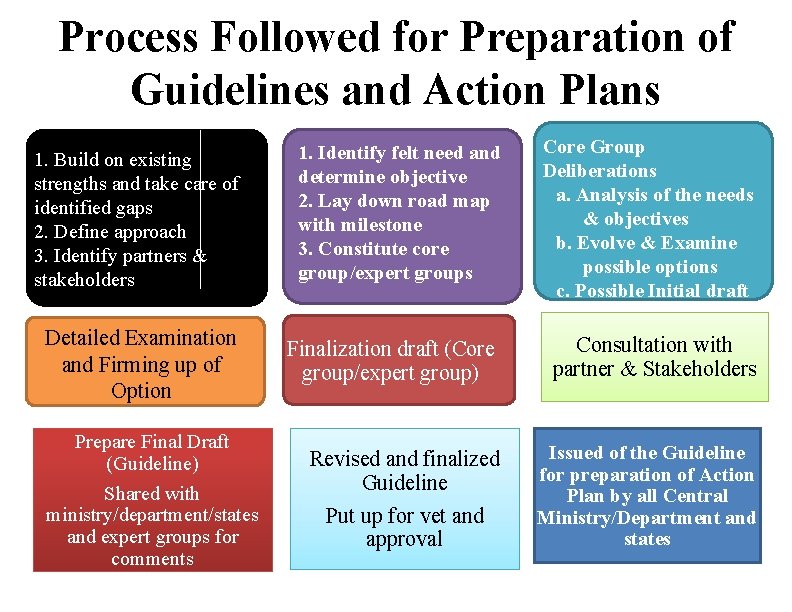
Process Followed for Preparation of Guidelines and Action Plans 1. Build on existing strengths and take care of identified gaps 2. Define approach 3. Identify partners & stakeholders 1. Identify felt need and determine objective 2. Lay down road map with milestone 3. Constitute core group/expert groups Core Group Deliberations a. Analysis of the needs & objectives b. Evolve & Examine possible options c. Possible Initial draft Detailed Examination and Firming up of Option Finalization draft (Core group/expert group) Consultation with partner & Stakeholders Revised and finalized Guideline Put up for vet and approval Issued of the Guideline for preparation of Action Plan by all Central Ministry/Department and states Prepare Final Draft (Guideline) Shared with ministry/department/states and expert groups for comments
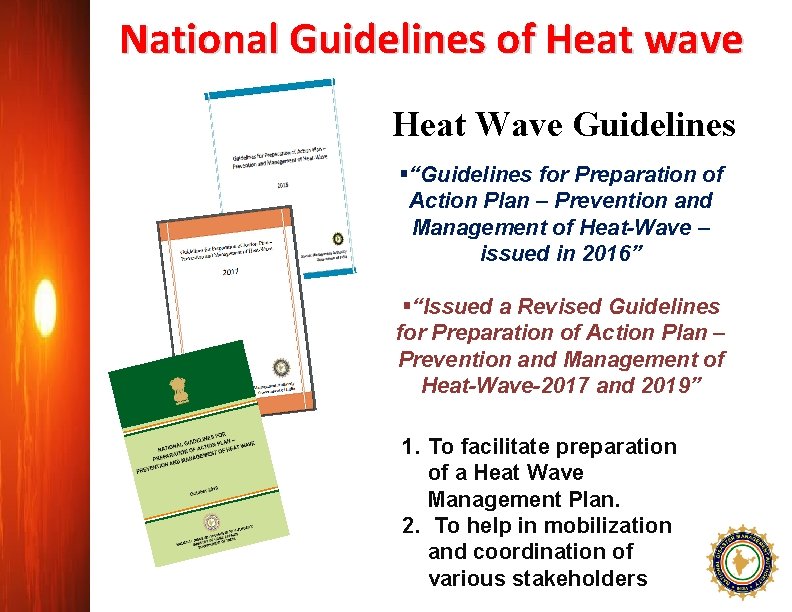
National Guidelines of Heat wave Heat Wave Guidelines §“Guidelines for Preparation of Action Plan – Prevention and Management of Heat-Wave – issued in 2016” §“Issued a Revised Guidelines for Preparation of Action Plan – Prevention and Management of Heat-Wave-2017 and 2019” 1. To facilitate preparation of a Heat Wave Management Plan. 2. To help in mobilization and coordination of various stakeholders
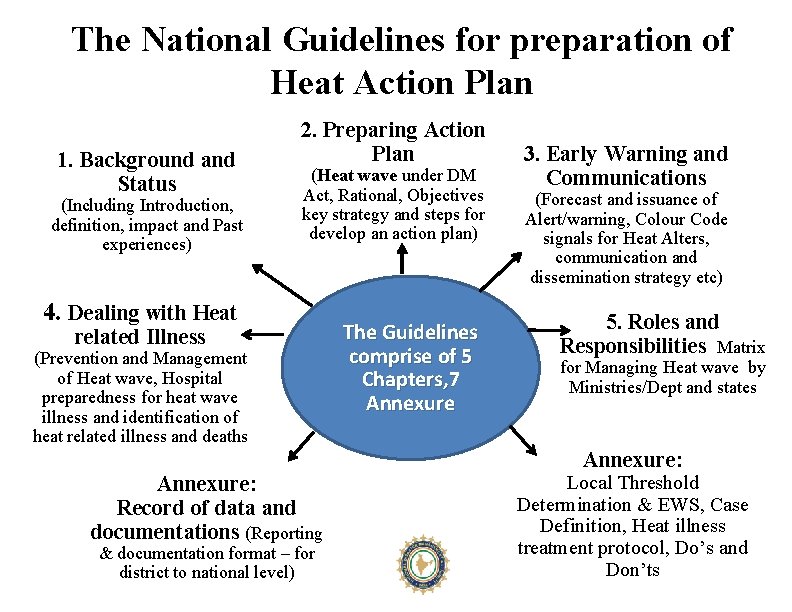
The National Guidelines for preparation of Heat Action Plan 1. Background and Status (Including Introduction, definition, impact and Past experiences) 2. Preparing Action Plan (Heat wave under DM Act, Rational, Objectives key strategy and steps for develop an action plan) 4. Dealing with Heat related Illness (Prevention and Management of Heat wave, Hospital preparedness for heat wave illness and identification of heat related illness and deaths Annexure: Record of data and documentations (Reporting & documentation format – for district to national level) The Guidelines comprise of 5 Chapters, 7 Annexure 3. Early Warning and Communications (Forecast and issuance of Alert/warning, Colour Code signals for Heat Alters, communication and dissemination strategy etc) 5. Roles and Responsibilities Matrix for Managing Heat wave by Ministries/Dept and states Annexure: Local Threshold Determination & EWS, Case Definition, Heat illness treatment protocol, Do’s and Don’ts
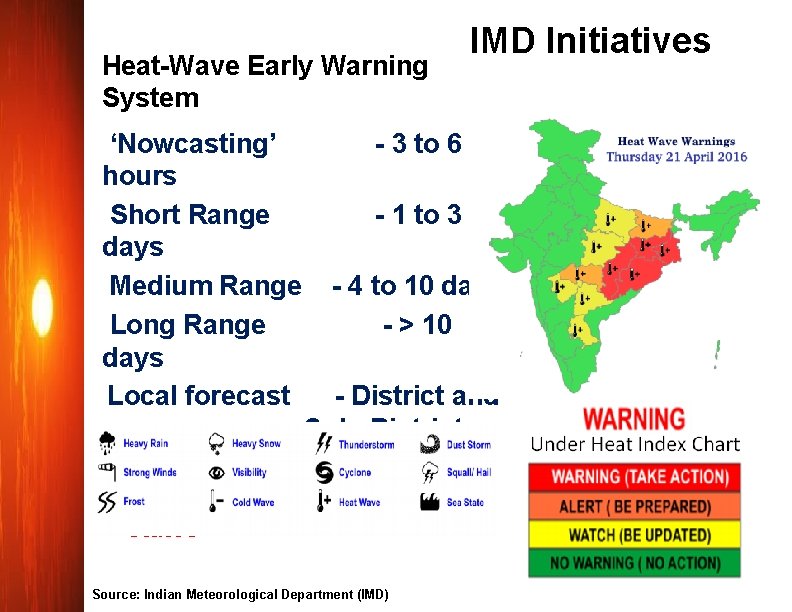
Heat-Wave Early Warning System ‘Nowcasting’ hours Short Range days Medium Range Long Range days Local forecast IMD Initiatives - 3 to 6 - 1 to 3 - 4 to 10 days - > 10 - District and Sub District Level • Also Issued an Advisory to all states Source: Indian Meteorological Department (IMD)
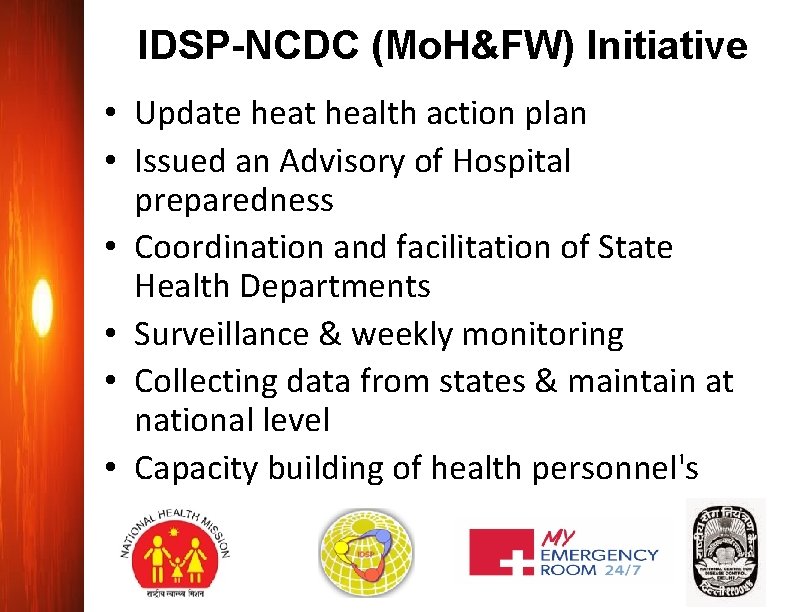
IDSP-NCDC (Mo. H&FW) Initiative • Update heat health action plan • Issued an Advisory of Hospital preparedness • Coordination and facilitation of State Health Departments • Surveillance & weekly monitoring • Collecting data from states & maintain at national level • Capacity building of health personnel's
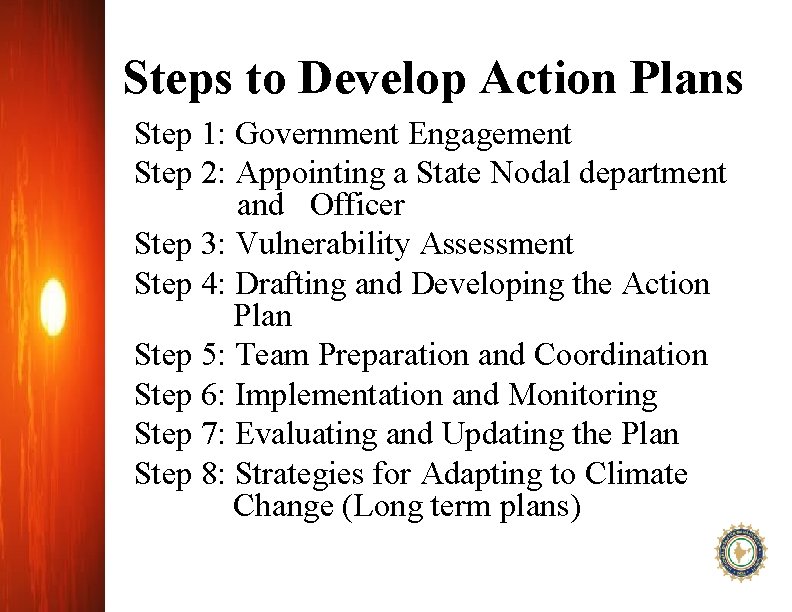
Steps to Develop Action Plans Step 1: Government Engagement Step 2: Appointing a State Nodal department and Officer Step 3: Vulnerability Assessment Step 4: Drafting and Developing the Action Plan Step 5: Team Preparation and Coordination Step 6: Implementation and Monitoring Step 7: Evaluating and Updating the Plan Step 8: Strategies for Adapting to Climate Change (Long term plans)
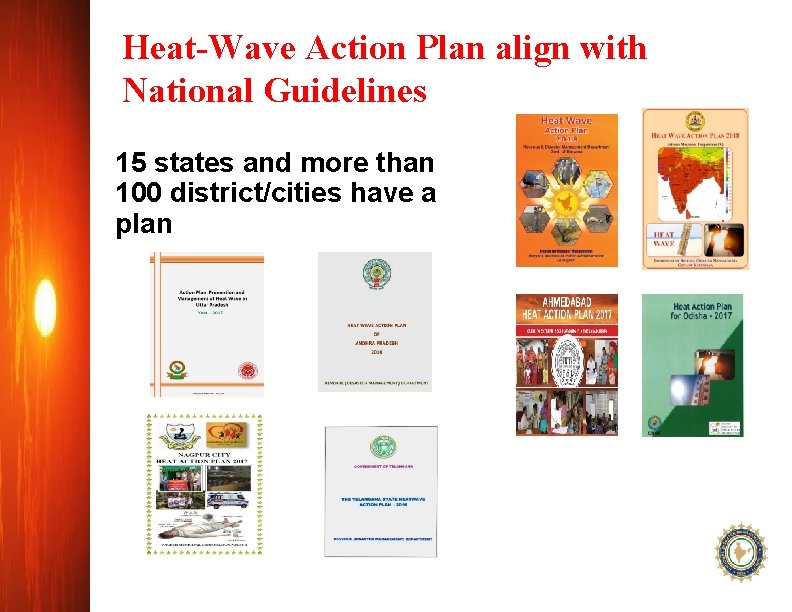
Heat-Wave Action Plan align with National Guidelines 15 states and more than 100 district/cities have a plan
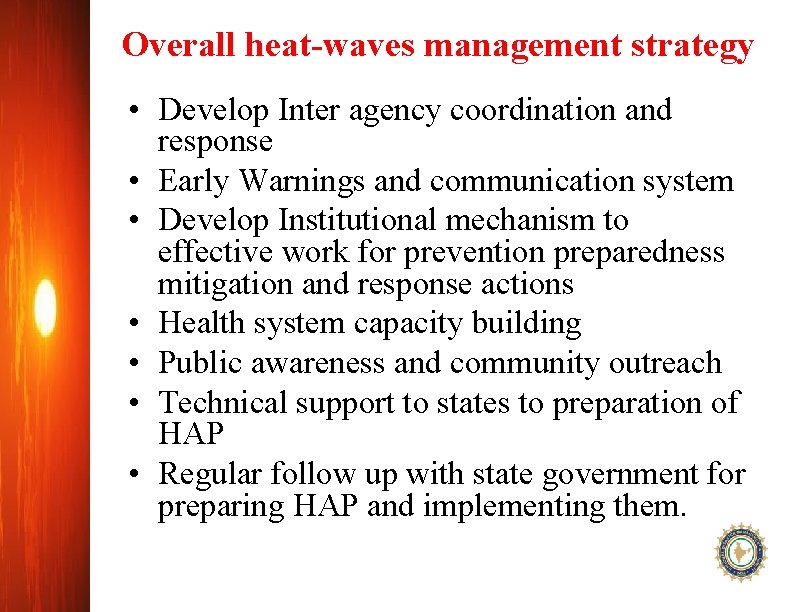
Overall heat-waves management strategy • Develop Inter agency coordination and response • Early Warnings and communication system • Develop Institutional mechanism to effective work for prevention preparedness mitigation and response actions • Health system capacity building • Public awareness and community outreach • Technical support to states to preparation of HAP • Regular follow up with state government for preparing HAP and implementing them.
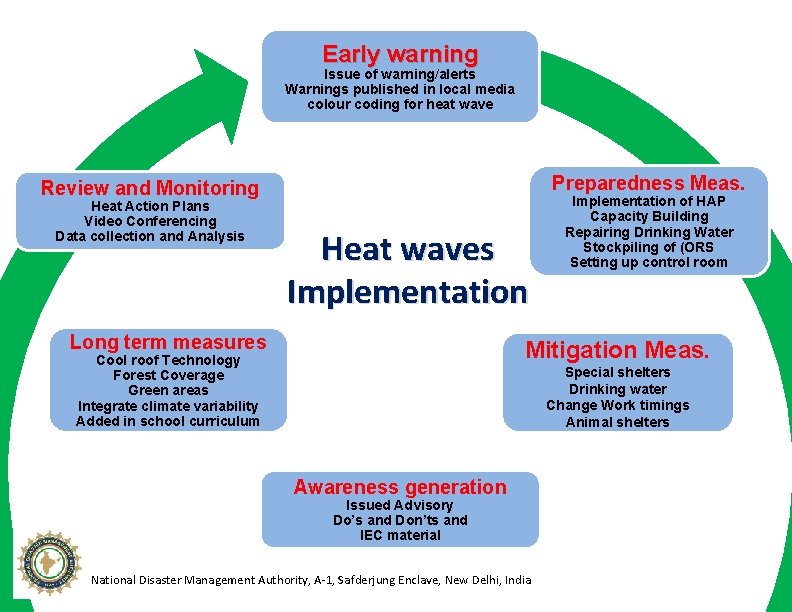
Early warning Issue of warning/alerts Warnings published in local media colour coding for heat wave Preparedness Meas. Review and Monitoring Heat Action Plans Video Conferencing Data collection and Analysis Heat waves Implementation Long term measures Implementation of HAP Capacity Building Repairing Drinking Water Stockpiling of (ORS Setting up control room Mitigation Meas. Cool roof Technology Forest Coverage Green areas Integrate climate variability Added in school curriculum Special shelters Drinking water Change Work timings Animal shelters Awareness generation Issued Advisory Do’s and Don’ts and IEC material National Disaster Management Authority, A-1, Safderjung Enclave, New Delhi, India
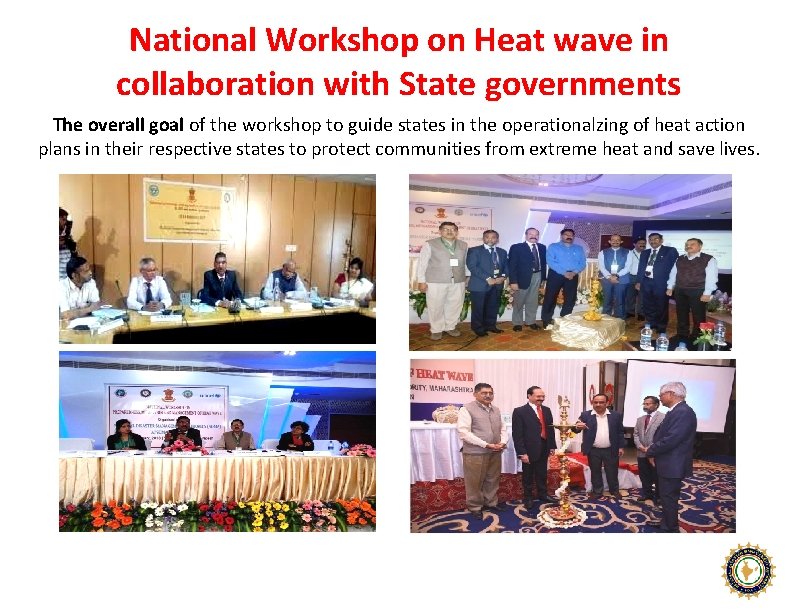
National Workshop on Heat wave in collaboration with State governments The overall goal of the workshop to guide states in the operationalzing of heat action plans in their respective states to protect communities from extreme heat and save lives.
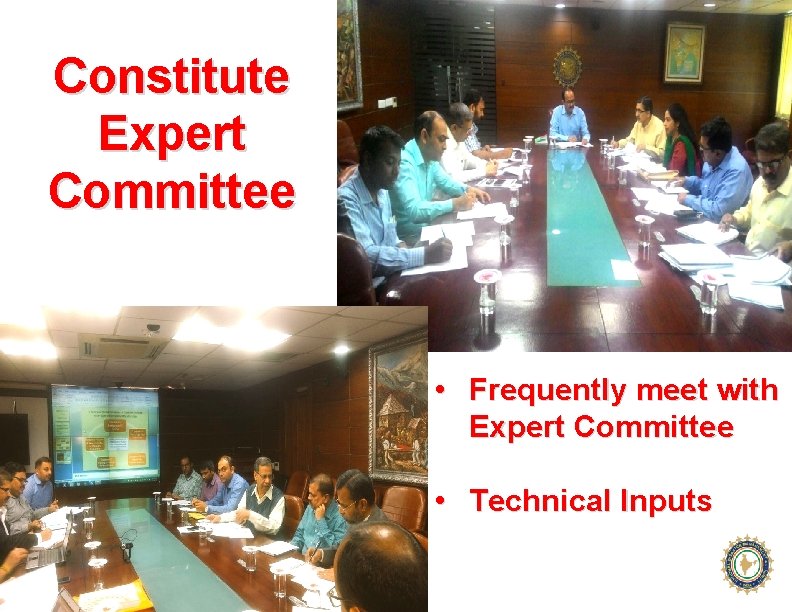
Constitute Expert Committee • Frequently meet with Expert Committee • Technical Inputs
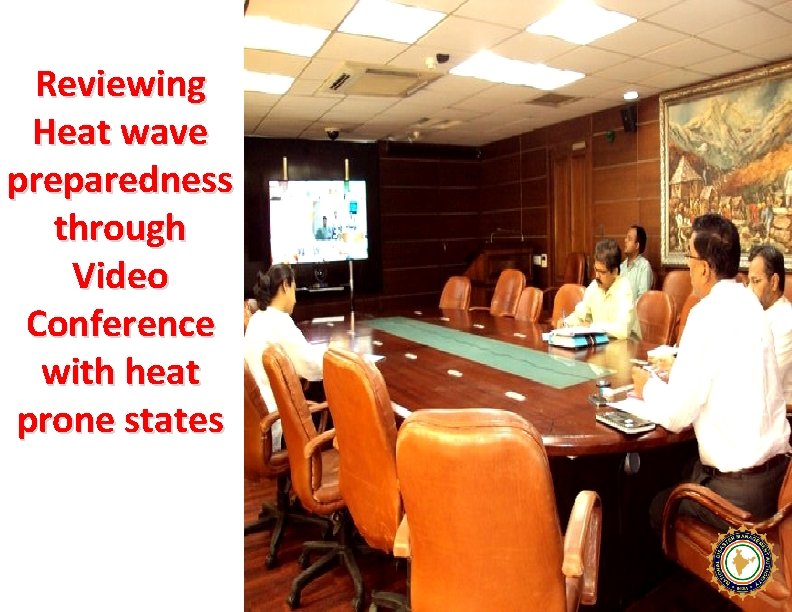
Reviewing Heat wave preparedness through Video Conference with heat prone states
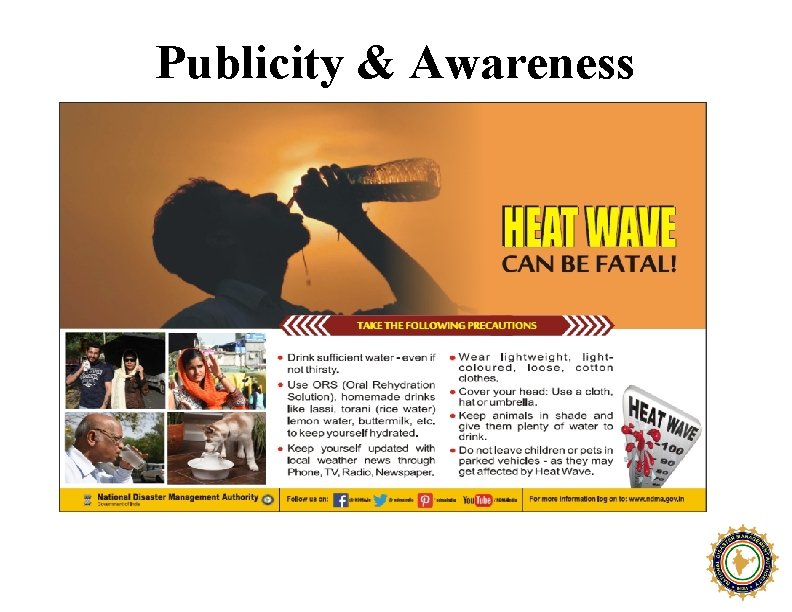
Publicity & Awareness
Social media campaigns Do’s & Don’ts Facebook Twitter Linked. In TVCs Commercial Print & Electronic Media
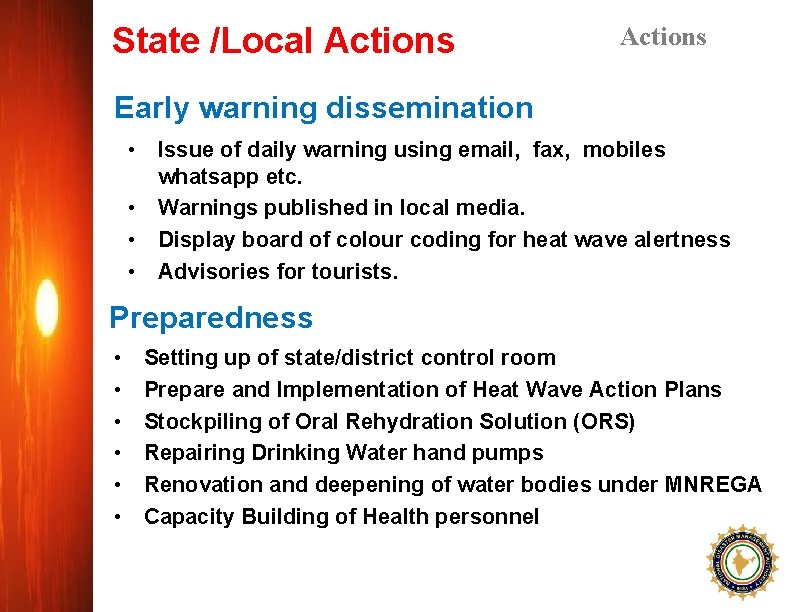
State /Local Actions Early warning dissemination • Issue of daily warning using email, fax, mobiles whatsapp etc. • Warnings published in local media. • Display board of colour coding for heat wave alertness • Advisories for tourists. Preparedness • • • Setting up of state/district control room Prepare and Implementation of Heat Wave Action Plans Stockpiling of Oral Rehydration Solution (ORS) Repairing Drinking Water hand pumps Renovation and deepening of water bodies under MNREGA Capacity Building of Health personnel
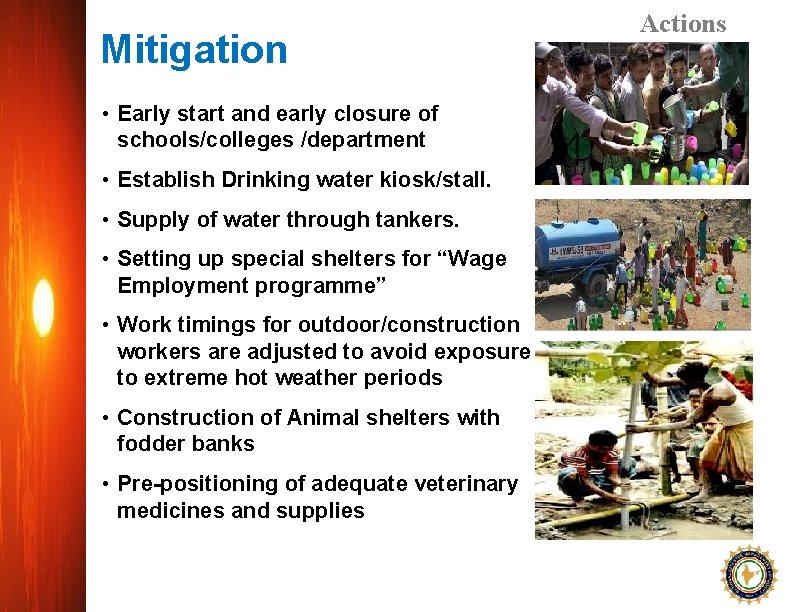
Mitigation • Early start and early closure of schools/colleges /department • Establish Drinking water kiosk/stall. • Supply of water through tankers. • Setting up special shelters for “Wage Employment programme” • Work timings for outdoor/construction workers are adjusted to avoid exposure to extreme hot weather periods • Construction of Animal shelters with fodder banks • Pre-positioning of adequate veterinary medicines and supplies Actions
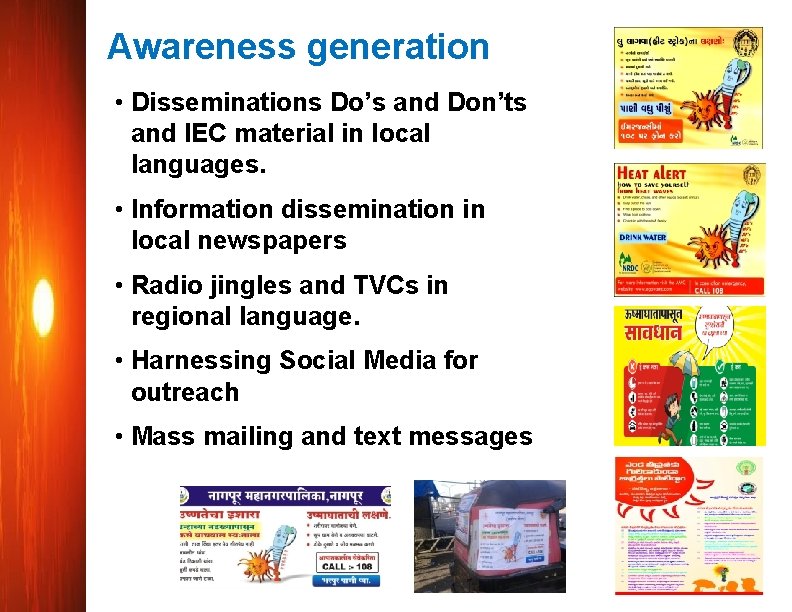
Awareness generation • Disseminations Do’s and Don’ts and IEC material in local languages. • Information dissemination in local newspapers • Radio jingles and TVCs in regional language. • Harnessing Social Media for outreach • Mass mailing and text messages
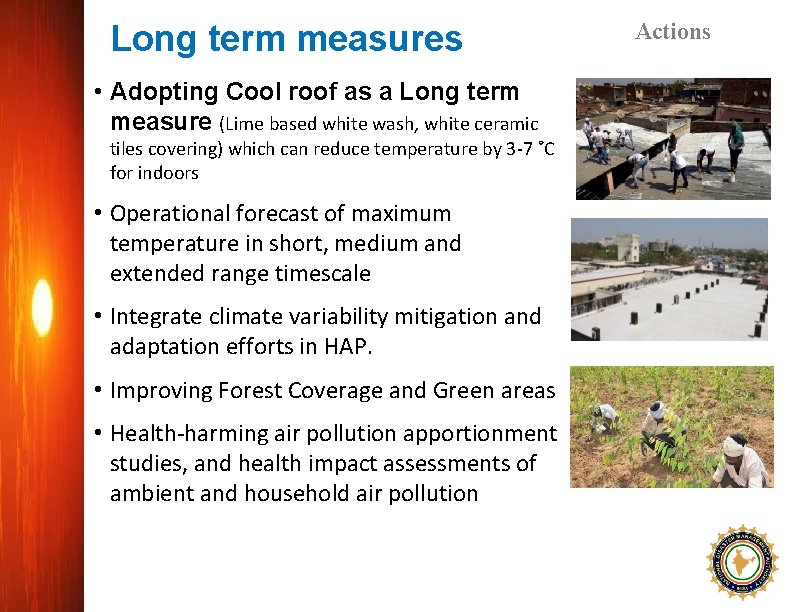
Long term measures • Adopting Cool roof as a Long term measure (Lime based white wash, white ceramic tiles covering) which can reduce temperature by 3 -7 ˚C for indoors • Operational forecast of maximum temperature in short, medium and extended range timescale • Integrate climate variability mitigation and adaptation efforts in HAP. • Improving Forest Coverage and Green areas • Health-harming air pollution apportionment studies, and health impact assessments of ambient and household air pollution Actions
Review and Monitoring • Review of heat wave preparedness and implementation of Heat Action Plans • Review of heat wave preparedness through Video Conferencing at district level • Data collection and Analysis • Documentation
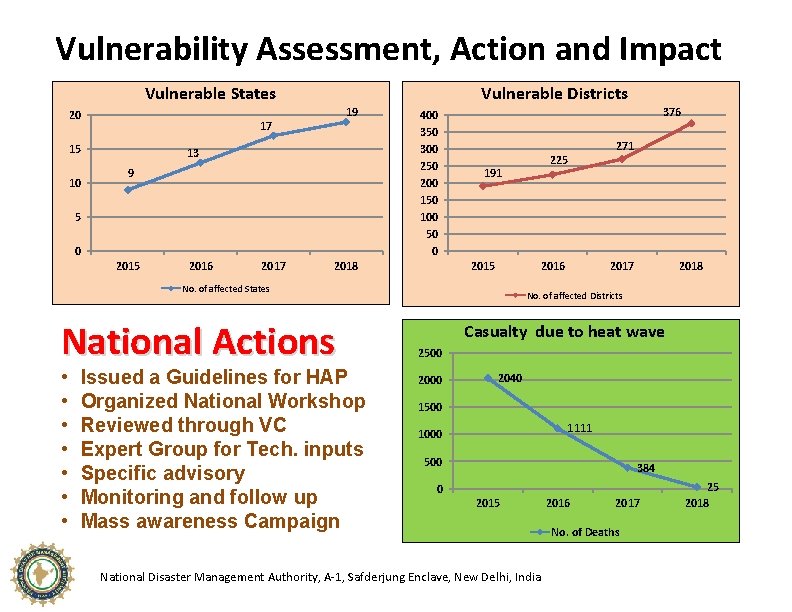
Vulnerability Assessment, Action and Impact Vulnerable States 20 19 17 15 10 Vulnerable Districts 13 9 5 0 2015 2016 2017 2018 400 350 300 250 200 150 100 50 0 376 2015 2016 No. of affected States National Actions • • Issued a Guidelines for HAP Organized National Workshop Reviewed through VC Expert Group for Tech. inputs Specific advisory Monitoring and follow up Mass awareness Campaign 225 191 271 2017 2018 No. of affected Districts Casualty due to heat wave 2500 2040 1500 1111 1000 500 384 0 2015 National Disaster Management Authority, A-1, Safderjung Enclave, New Delhi, India 2016 2017 No. of Deaths 25 2018
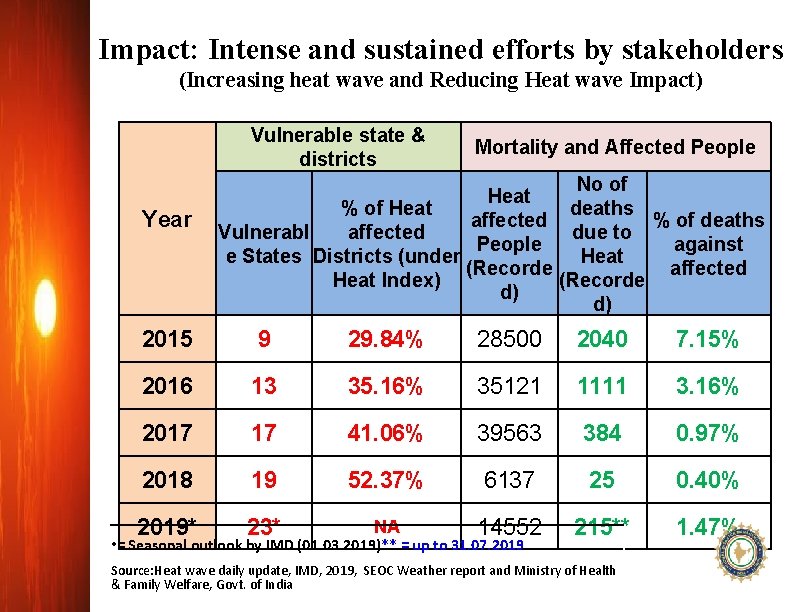
Impact: Intense and sustained efforts by stakeholders (Increasing heat wave and Reducing Heat wave Impact) Vulnerable state & districts Year Mortality and Affected People No of Heat % of Heat deaths affected % of deaths Vulnerabl affected due to People against e States Districts (under Heat (Recorde affected Heat Index) (Recorde d) d) 2015 9 29. 84% 28500 2040 7. 15% 2016 13 35. 16% 35121 1111 3. 16% 2017 17 41. 06% 39563 384 0. 97% 2018 19 52. 37% 6137 25 0. 40% 2019* 23* NA 14552 215** 1. 47% • = Seasonal outlook by IMD (01. 03. 2019)** = up to 31. 07. 2019 Source: Heat wave daily update, IMD, 2019, SEOC Weather report and Ministry of Health & Family Welfare, Govt. of India
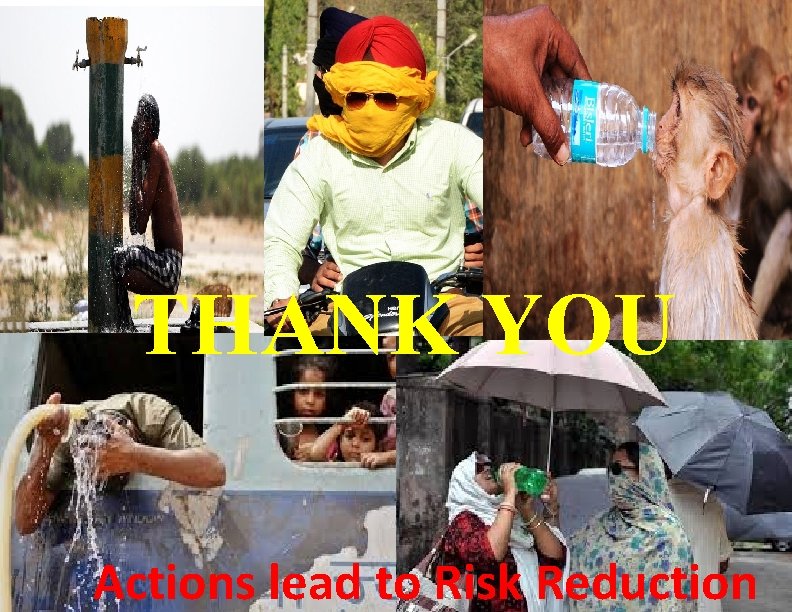
THANK YOU Actions lead to Risk Reduction