
Heart sound Heart sound What we hear n

- Slides: 25
Heart sound
Heart sound
What we hear ? n We have all heard the heart make the usual sounds. LUB-----DUB n Lub is the first sound or S 1 n Dub is the second heart sound or S 2
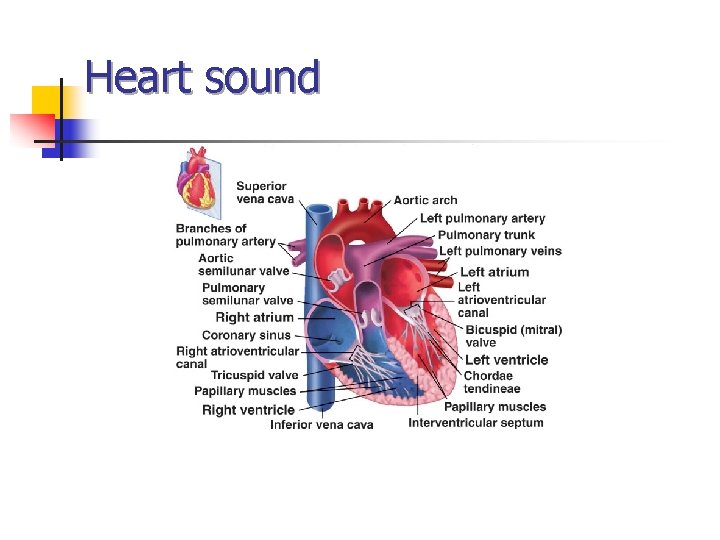
First heart sound S 1 The “lub” in the lub – dub. n This sound is primarily because of the closing of the mitral and tricuspid valves. n Anatomically they are located between the atria and the ventricles n They close because the ventricles contract
S 1 n Louder than usual - Mitral Stenosis n Diminished Mitral or Aortic Regurg.
Second heart sound S 2 is the “dub” in the lub- dub n The sounds are because of the closing of the Pulmonic and Aortic valves. n This is the end of systole
S 2 components: n n n Has two components A 2 and P 2 Inspiration decreases intrathoracic pressure, increases RV filling RV is relatively weak, and an increase in filling results in slower emptying Inspiration delays P 2, causing audible splitting of S 2 P 2 localized to pulmonary area while A 2 audible all over the pericardium with max. intensity at aortic area
S 2 abnormalities Loud P 2 Pulmonary hypertension n Soft P 2 Pulmonary stenosis n Loud A 2 Systemic hypertension n Soft A 2 Aortic stenosis Aortic regurgitation n
S 2 Usual splitting normal in children and young adult Rt bundle branch block Pulmonary hypertension n Fixed splitting Atrial septal defect n Reversed splitting Lf bundle branch block Sever aortic stenosis n
Systole The time between the S 1 and S 2 sounds is: Lub------Dub The ventricles contracting Blood flowing from the heart to the lungs and body Blood flowing across the Pulmonic and Aortic valves
Diastole The time between S 2 and S 1 is : Dub-----Lub The blood is flowing from the atria to the ventricles. The blood flowing across the bicuspid and tricuspid valves. The atrial contraction also occurs now
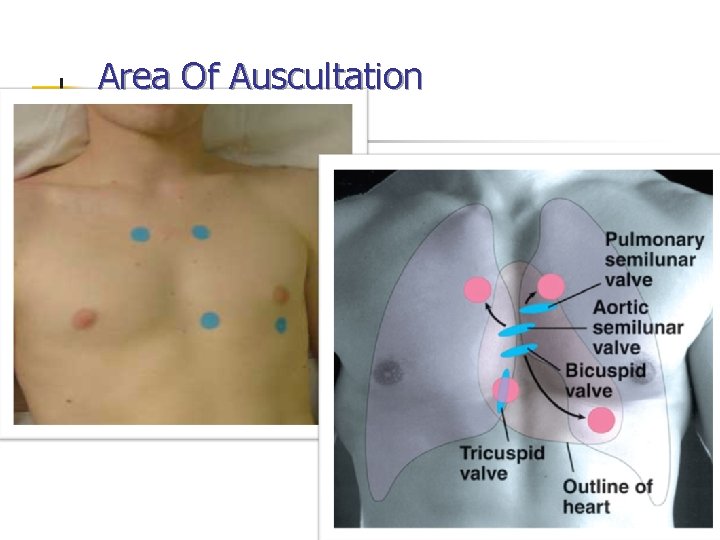
Area Of Auscultation
Area Of Auscultation n n Pulmonary valve second intercostal space, left upper sternal border Aortic valve second intercostal space , right upper sternal border Mitral valve fifth intercostal space , left midclavicular line Tricuspid valve fourth intercostal space, lower left sternal border
S 3 Third heart sound n n n also called a protodiastolic gallop, ventricular gallop caused by Rapid ventricular filling. It occurs at the beginning of diastole after S 2. The third heart sound is benign in youth, some trained athletes, and sometimes in pregnancy The commonest causes are left ventricular failure and mitral regurgitation It is best heard with the bell-side of the stethoscope at the apex of the heart.
S 4 fourth heart sound n n called a presystolic gallop or atrial gallop. This gallop is produced by the sound of blood being forced into a stiff/hypertrophic ventricle. It is a sign of a pathologic state, (left ventriclular hypertrophy, hypertension, aortic stenosis) It is best heard with the bell-side of the stethoscope at the apex of the heart.
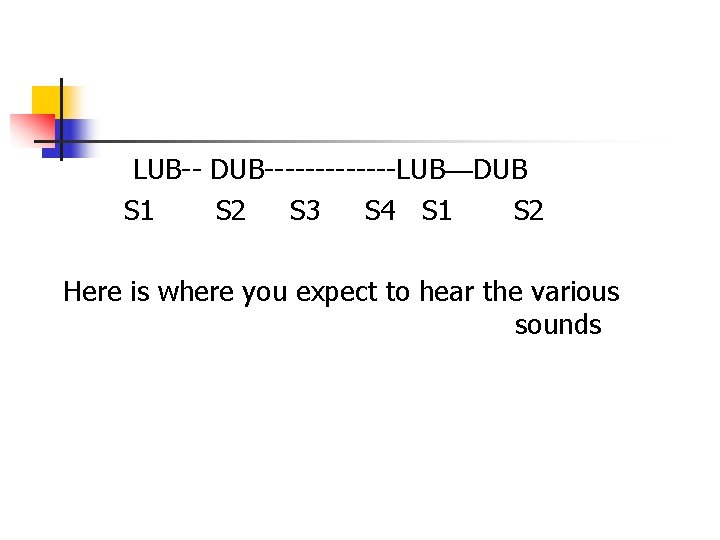
LUB-- DUB-------LUB—DUB S 1 S 2 S 3 S 4 S 1 S 2 Here is where you expect to hear the various sounds
Added sound n Clicks n Rubs
Heart murmurs n n n Heart murmurs are generated by turbulent flow of blood, which may occur inside or outside the heart. Murmurs may be physiological (benign) or pathological (abnormal). Abnormal murmurs can be caused by stenosis restricting the opening of a heart valve, resulting in turbulence as blood flows through it. Abnormal murmurs may also occur with valvular insufficiency (or regurgitation), which allows backflow of blood when the incompetent valve closes with only partial effectiveness. Different murmurs are audible in different parts of the cardiac cycle, depending on the cause of the murmur
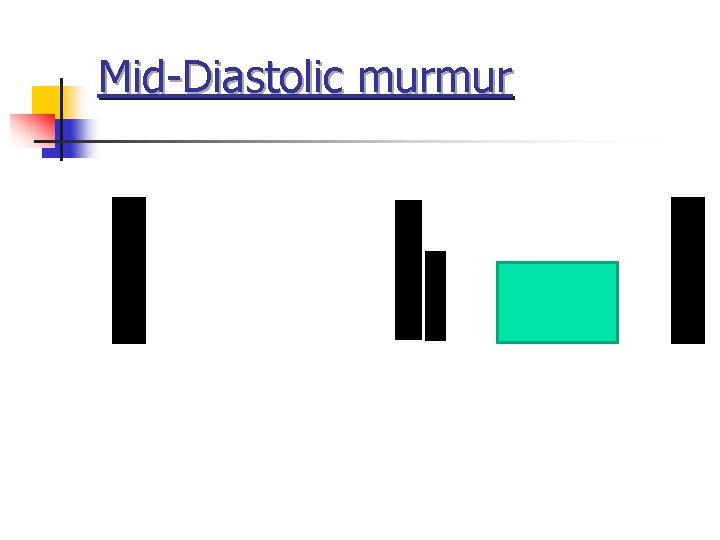
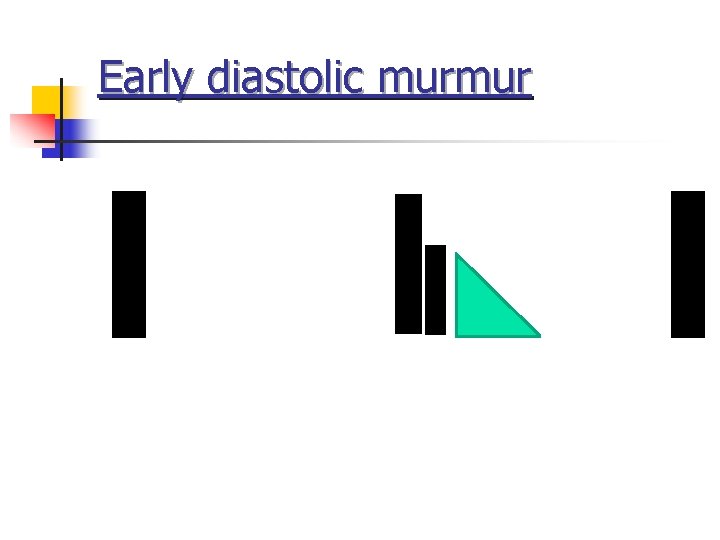
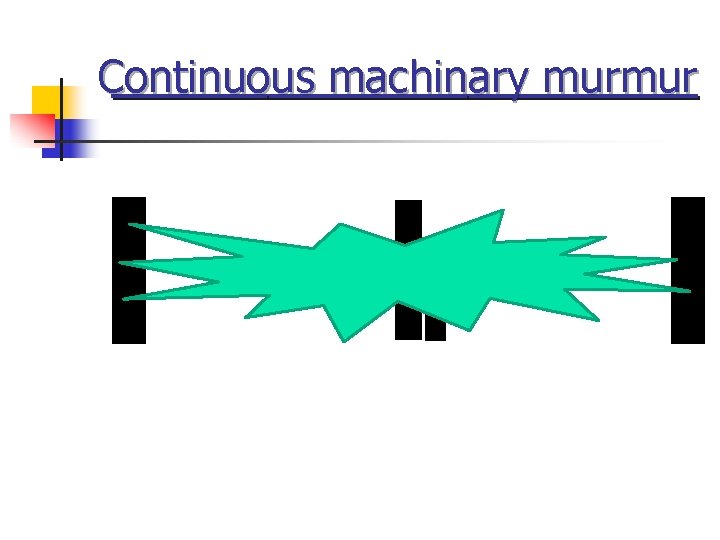
n n Heart murmurs are most frequently organized by timing, into systolic heart murmurs and diastolic heart murmurs. However , continuous murmurs cannot be directly placed into either category
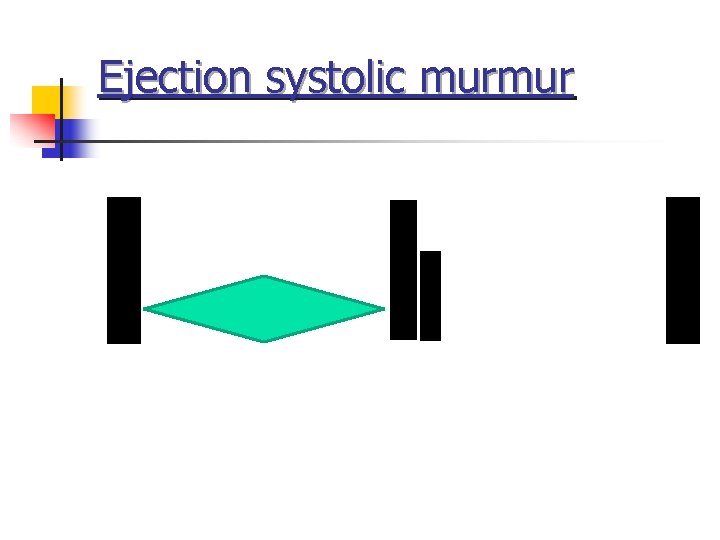
Ejection systolic murmur
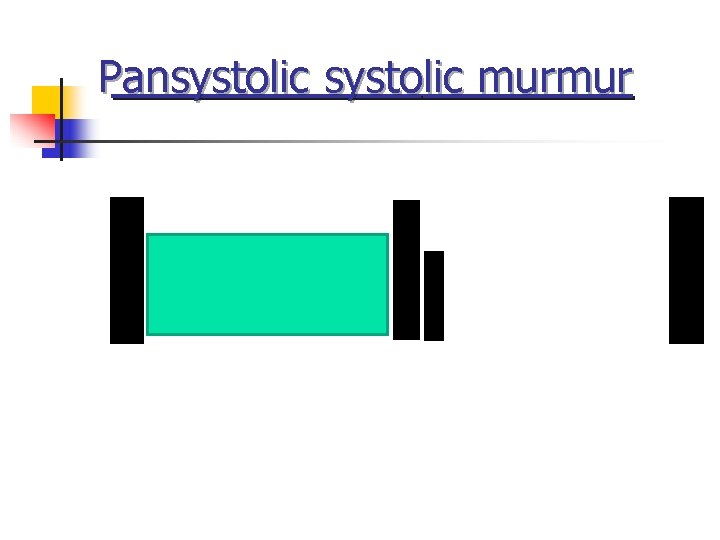
Pansystolic murmur
Mid-Diastolic murmur
Early diastolic murmur
Continuous machinary murmur
Thank you