
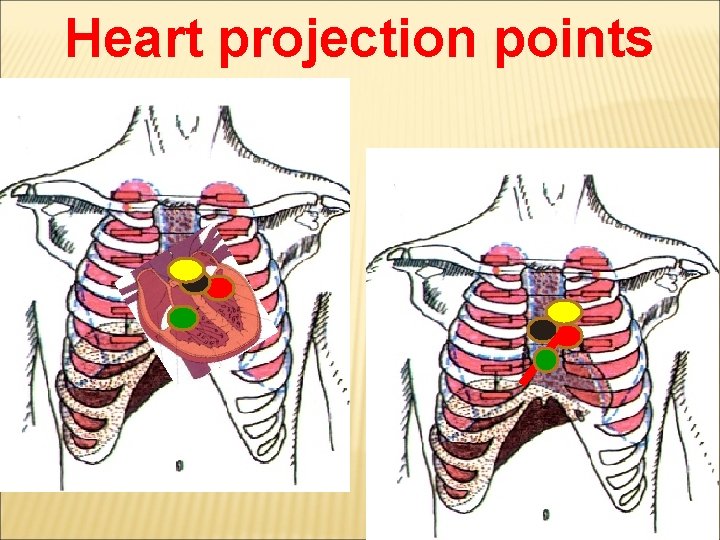
Heart projection points HEART AUSCULTATION POINTS aortic valve



- Slides: 27
Heart projection points
HEART AUSCULTATION POINTS aortic valve pulmonary trunk valve Botkin-Erb point tricuspid valve mitral valve
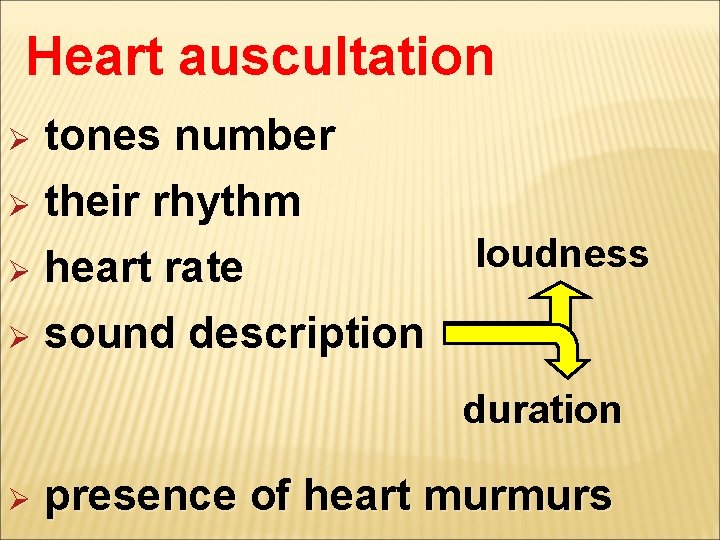
Heart auscultation tones number Ø their rhythm Ø heart rate Ø sound description Ø loudness duration Ø presence of heart murmurs
I SOUND COMPONENTS atrial valvular muscular vascular
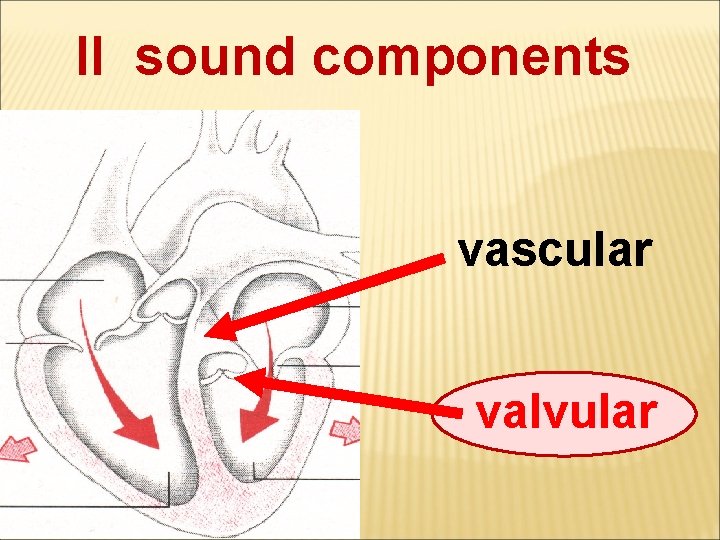
II sound components vascular valvular
Sounds differentiation S I D II I
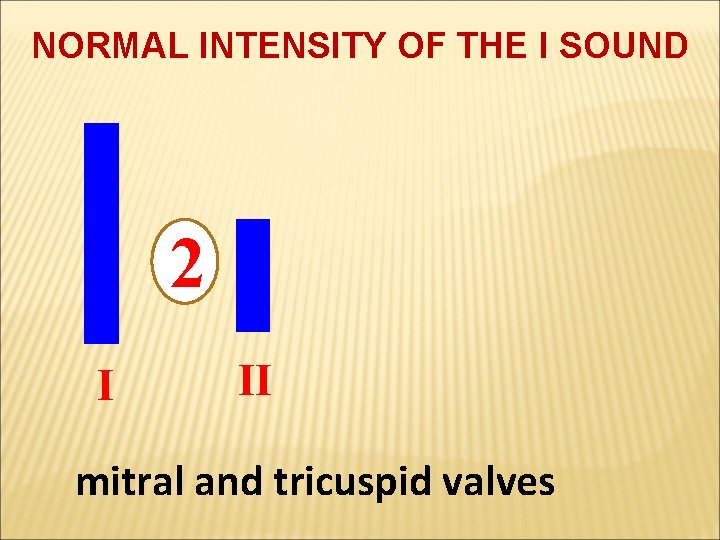
NORMAL INTENSITY OF THE I SOUND 2 I II mitral and tricuspid valves
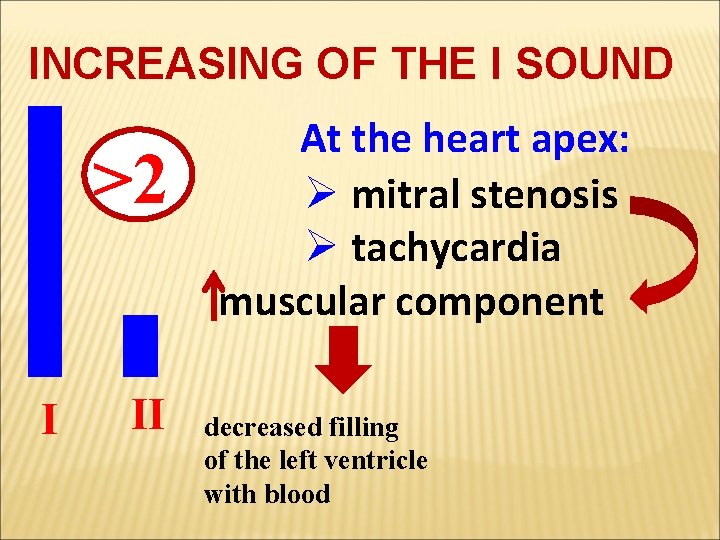
INCREASING OF THE I SOUND >2 I II At the heart apex: Ø mitral stenosis Ø tachycardia muscular component decreased filling of the left ventricle with blood
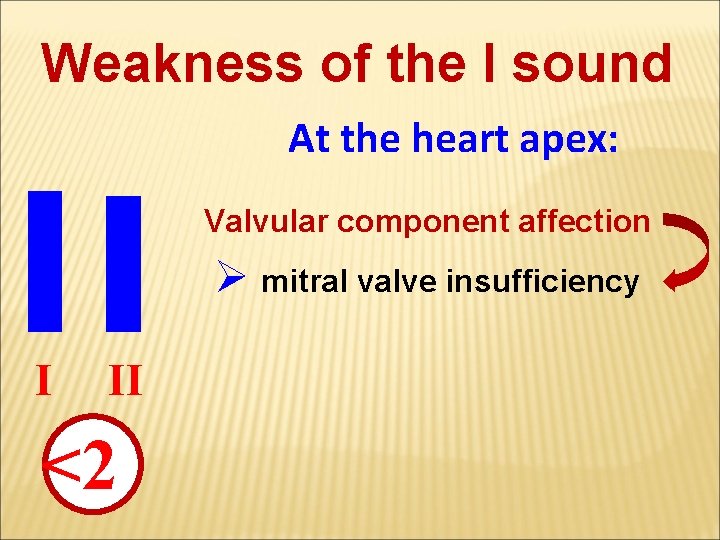
Weakness of the I sound At the heart apex: Valvular component affection Ø mitral valve insufficiency I II <2
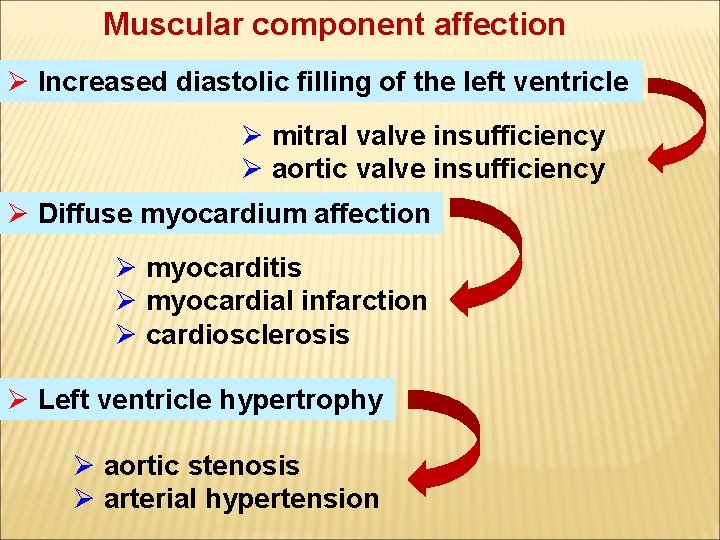
Muscular component affection Ø Increased diastolic filling of the left ventricle Ø mitral valve insufficiency Ø aortic valve insufficiency Ø Diffuse myocardium affection Ø myocarditis Ø myocardial infarction Ø cardiosclerosis Ø Left ventricle hypertrophy Ø aortic stenosis Ø arterial hypertension
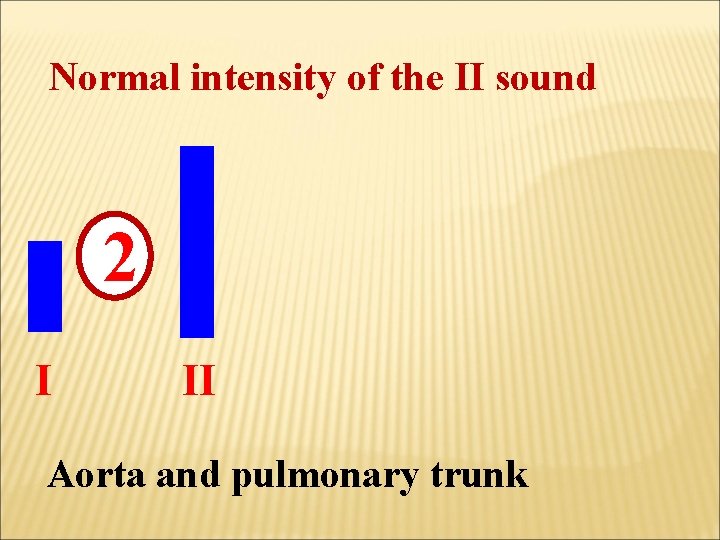
Normal intensity of the II sound 2 I II Aorta and pulmonary trunk
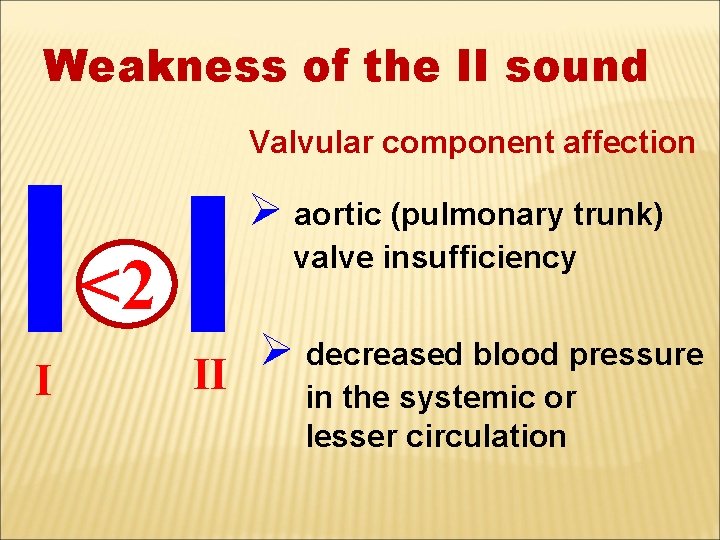
Weakness of the II sound Valvular component affection Ø aortic (pulmonary trunk) valve insufficiency <2 I II Ø decreased blood pressure in the systemic or lesser circulation
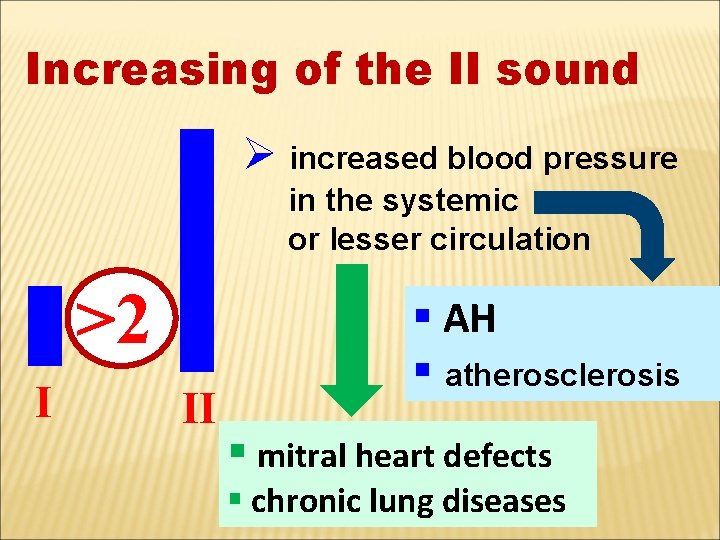
Increasing of the II sound Ø increased blood pressure in the systemic or lesser circulation >2 I II § AH § atherosclerosis § mitral heart defects § chronic lung diseases
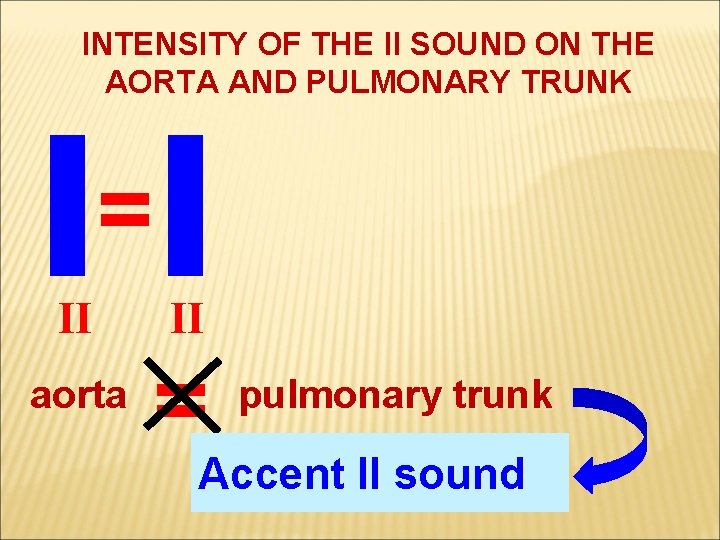
INTENSITY OF THE II SOUND ON THE AORTA AND PULMONARY TRUNK = II II aorta = pulmonary trunk Accent II sound
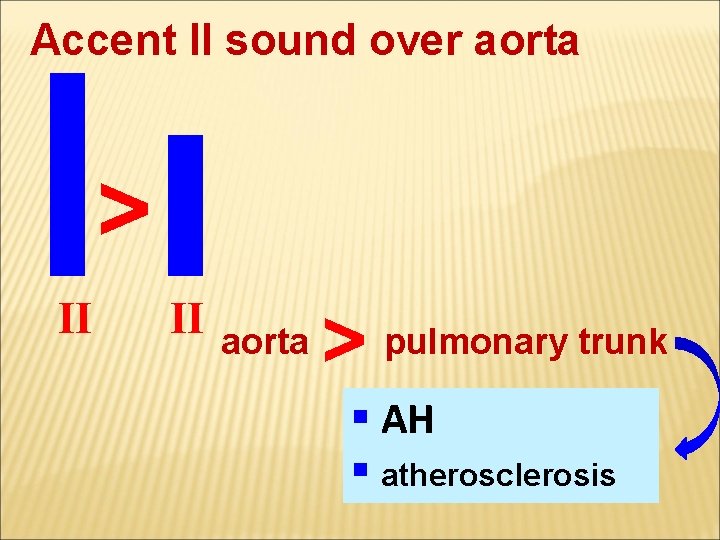
Accent II sound over aorta > II II aorta > pulmonary trunk § AH § atherosclerosis
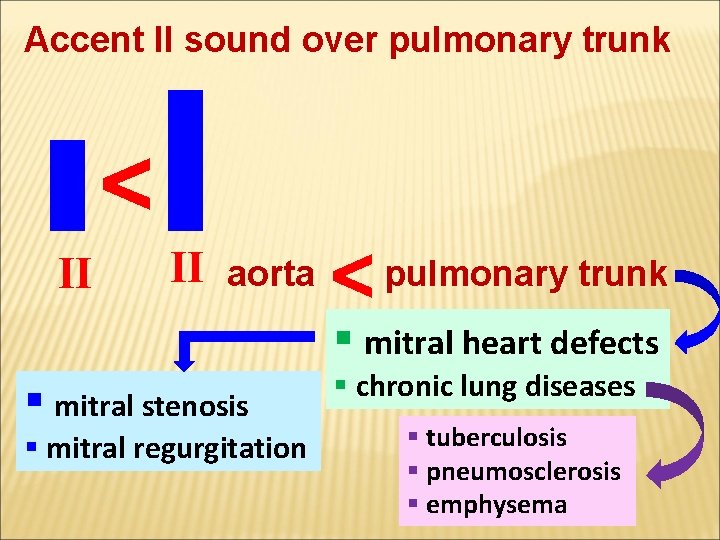
Accent II sound over pulmonary trunk II aorta > > II pulmonary trunk § mitral heart defects § mitral stenosis § mitral regurgitation § chronic lung diseases § tuberculosis § pneumosclerosis § emphysema
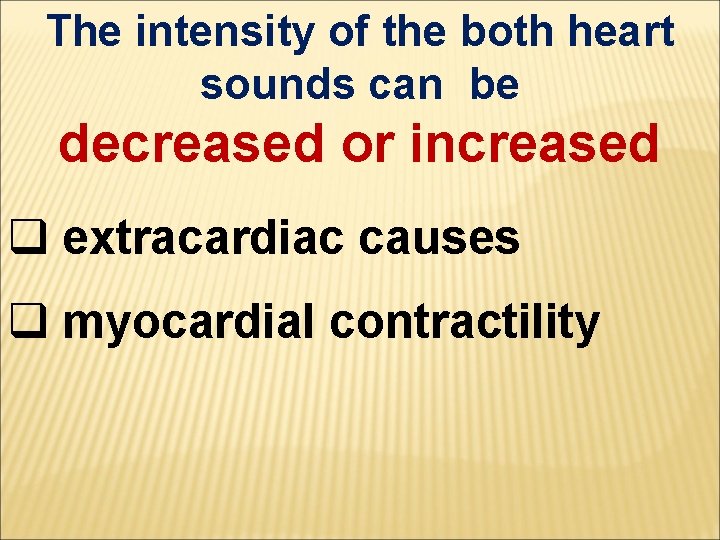
The intensity of the both heart sounds can be decreased or increased q extracardiac causes q myocardial contractility
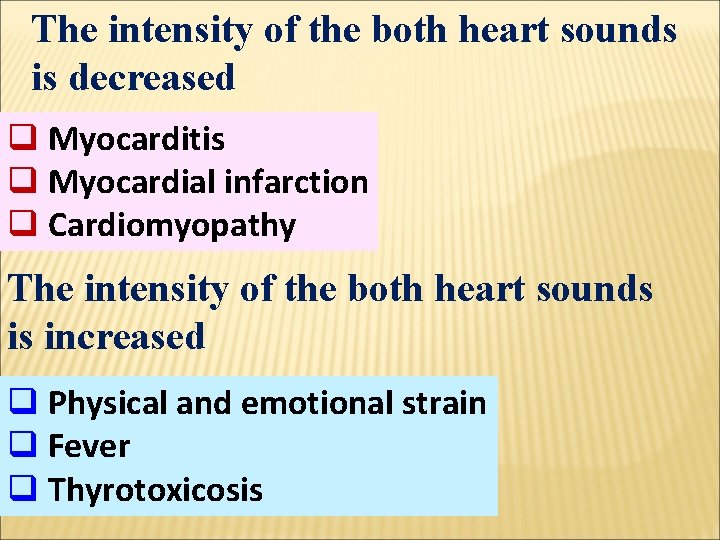
The intensity of the both heart sounds is decreased q Myocarditis q Myocardial infarction q Cardiomyopathy The intensity of the both heart sounds is increased q Physical and emotional strain q Fever q Thyrotoxicosis
EXTRACARDIAC CAUSES Ø overdeveloped subcutaneous fat or muscles of the chest heart sounds decreases Ø lung emphysema but the I sound is louder Ø left hydrothorax then the II sound over heart apex
Heart sounds increase Ø thin chest wall Ø sclerosed lung edges Ø the heart is pressed against the anterior chest wall by a growing tumor in the posterior mediastinum
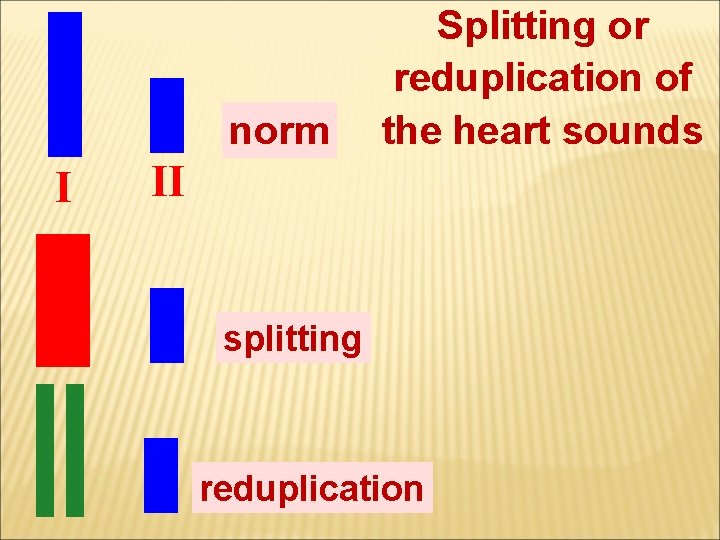
norm I Splitting or reduplication of the heart sounds II splitting reduplication
§Physiological splitting or reduplication of the heart sounds asynchronous closure of the valves during deep breathing §Pathological reduplication of the 1 -st sound impaired intraventricular conduction His bundle block §Pathological reduplication of the 2 -nd sound Øincreased pressure in the lesser or greater circulation ØHis bundle block asynchronous closure of the semilunar valves
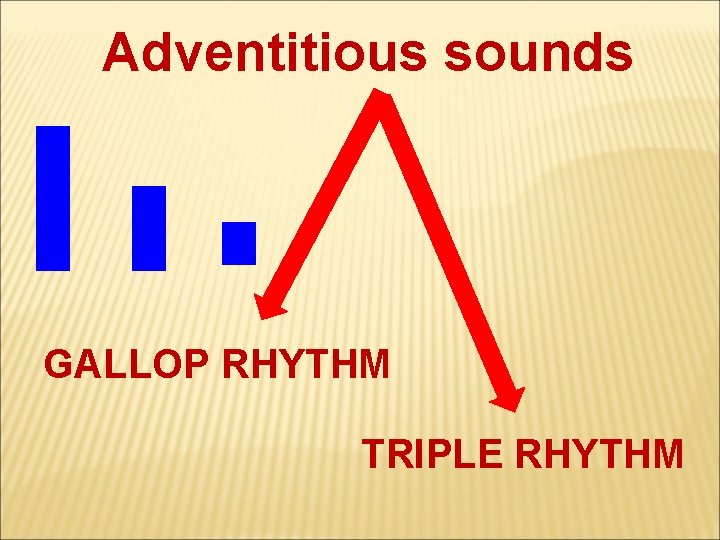
Adventitious sounds GALLOP RHYTHM TRIPLE RHYTHM
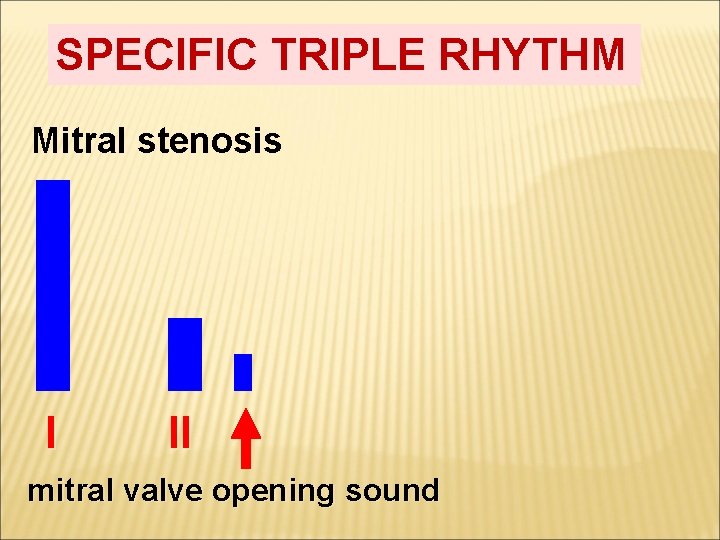
SPECIFIC TRIPLE RHYTHM Mitral stenosis I II mitral valve opening sound
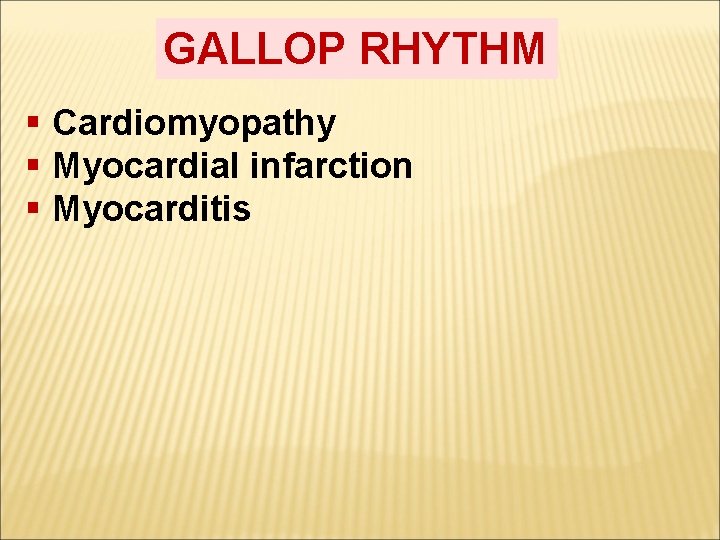
GALLOP RHYTHM § Cardiomyopathy § Myocardial infarction § Myocarditis
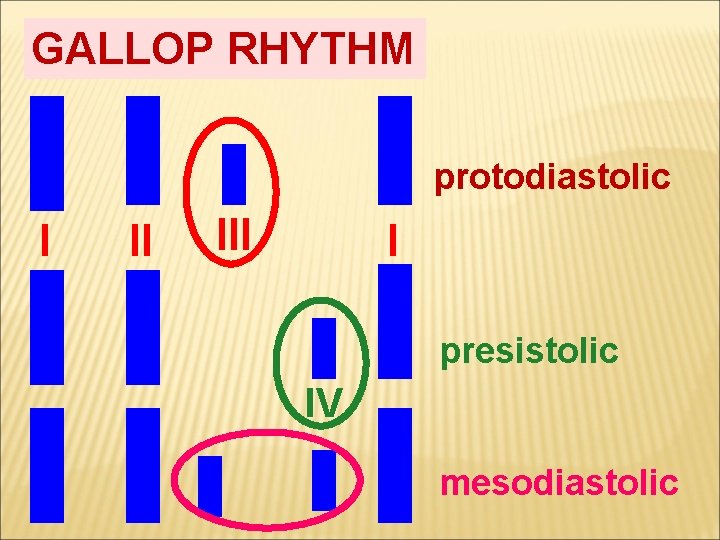
GALLOP RHYTHM protodiastolic I II I presistolic IV mesodiastolic