
HEART HEALTHY CLASS Outpatient Nutrition Clinic Bridget West
HEART HEALTHY CLASS Outpatient Nutrition Clinic Bridget West, RD ext 5395
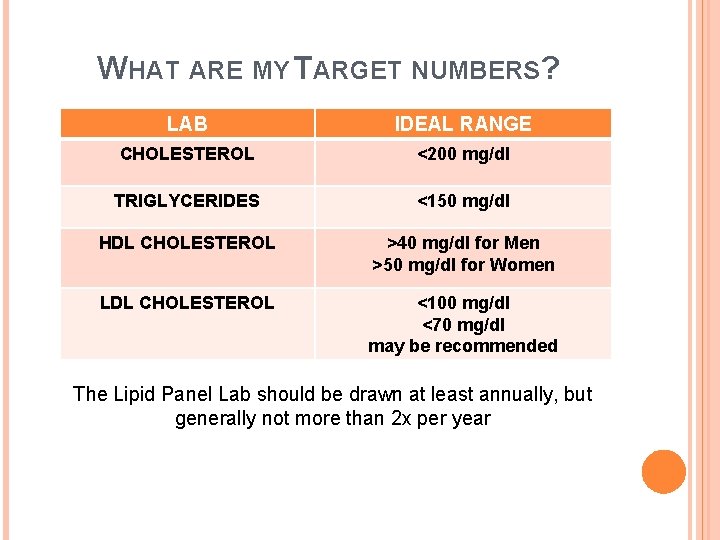
WHAT ARE MY TARGET NUMBERS? LAB IDEAL RANGE CHOLESTEROL <200 mg/dl TRIGLYCERIDES <150 mg/dl HDL CHOLESTEROL >40 mg/dl for Men >50 mg/dl for Women LDL CHOLESTEROL <100 mg/dl <70 mg/dl may be recommended The Lipid Panel Lab should be drawn at least annually, but generally not more than 2 x per year
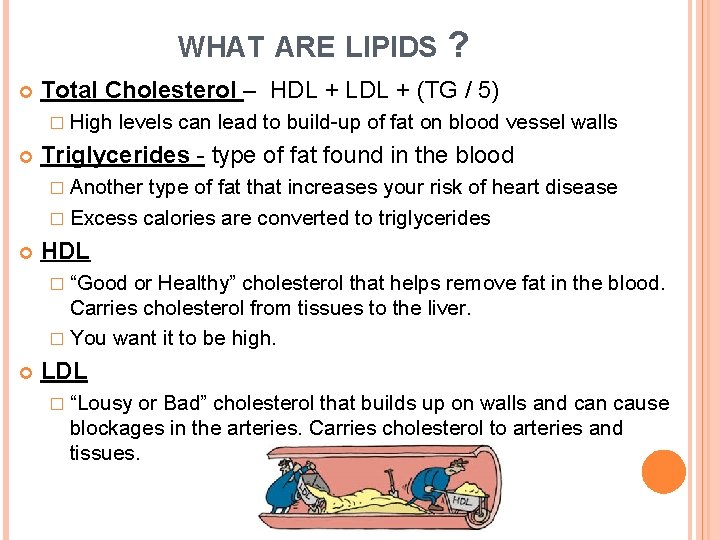
WHAT ARE LIPIDS Total Cholesterol – HDL + LDL + (TG / 5) � High ? levels can lead to build-up of fat on blood vessel walls Triglycerides - type of fat found in the blood � Another type of fat that increases your risk of heart disease � Excess calories are converted to triglycerides HDL � “Good or Healthy” cholesterol that helps remove fat in the blood. Carries cholesterol from tissues to the liver. � You want it to be high. LDL � “Lousy or Bad” cholesterol that builds up on walls and can cause blockages in the arteries. Carries cholesterol to arteries and tissues.
WHAT IS DIETARY CHOLESTEROL It is found in all animal foods. The 2015 -2020 Dietary Guidelines removed the previous 300 mg limit. � Foods that are higher in cholesterol are fatty meats and high-fat dairy products which are also higher in saturated fats. � Relation of dietary cholesterol and decreased risk of CVD and obesity. Foods high in cholesterol but low in saturated fat like eggs (limit six per week) and shellfish can be consumed along with a variety of other protein foods.
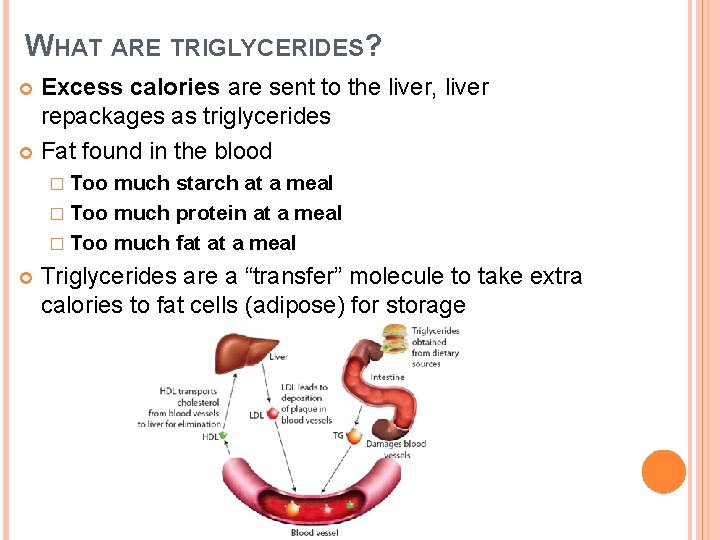
WHAT ARE TRIGLYCERIDES? Excess calories are sent to the liver, liver repackages as triglycerides Fat found in the blood � Too much starch at a meal � Too much protein at a meal � Too much fat at a meal Triglycerides are a “transfer” molecule to take extra calories to fat cells (adipose) for storage
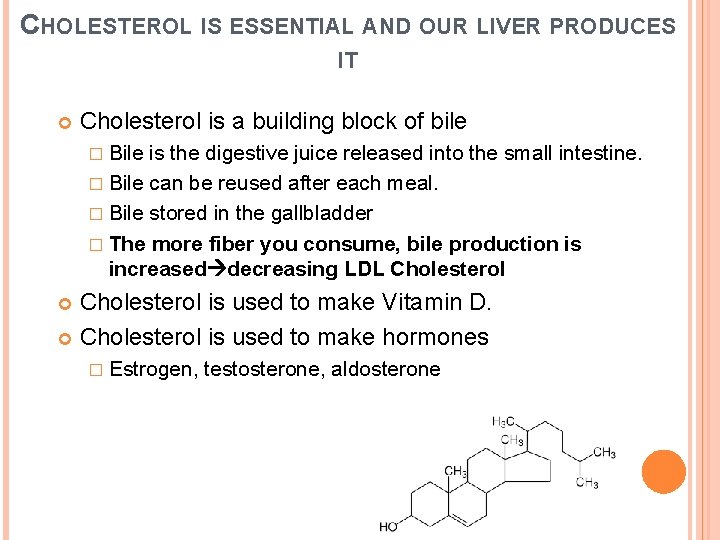
CHOLESTEROL IS ESSENTIAL AND OUR LIVER PRODUCES IT Cholesterol is a building block of bile � Bile is the digestive juice released into the small intestine. � Bile can be reused after each meal. � Bile stored in the gallbladder � The more fiber you consume, bile production is increased decreasing LDL Cholesterol is used to make Vitamin D. Cholesterol is used to make hormones � Estrogen, testosterone, aldosterone
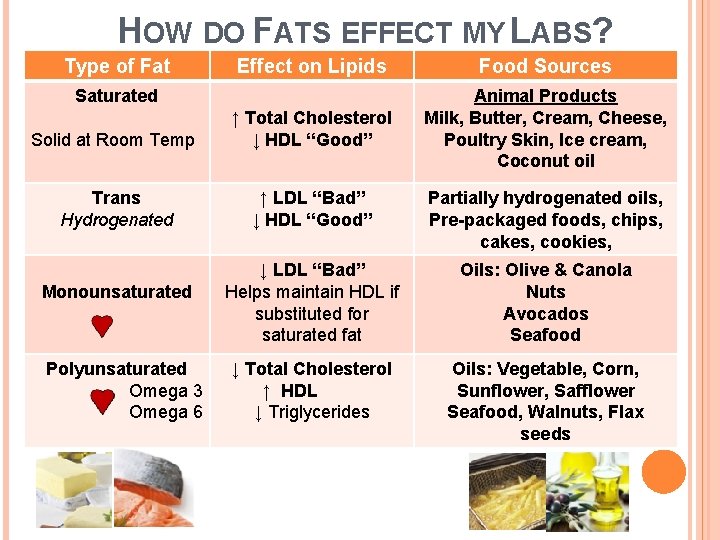
HOW DO FATS EFFECT MY LABS? Type of Fat Effect on Lipids Food Sources Solid at Room Temp ↑ Total Cholesterol ↓ HDL “Good” Animal Products Milk, Butter, Cream, Cheese, Poultry Skin, Ice cream, Coconut oil Trans Hydrogenated ↑ LDL “Bad” ↓ HDL “Good” Partially hydrogenated oils, Pre-packaged foods, chips, cakes, cookies, ↓ LDL “Bad” Helps maintain HDL if substituted for saturated fat Oils: Olive & Canola Nuts Avocados Seafood ↓ Total Cholesterol ↑ HDL ↓ Triglycerides Oils: Vegetable, Corn, Sunflower, Safflower Seafood, Walnuts, Flax seeds Saturated Monounsaturated Polyunsaturated Omega 3 Omega 6
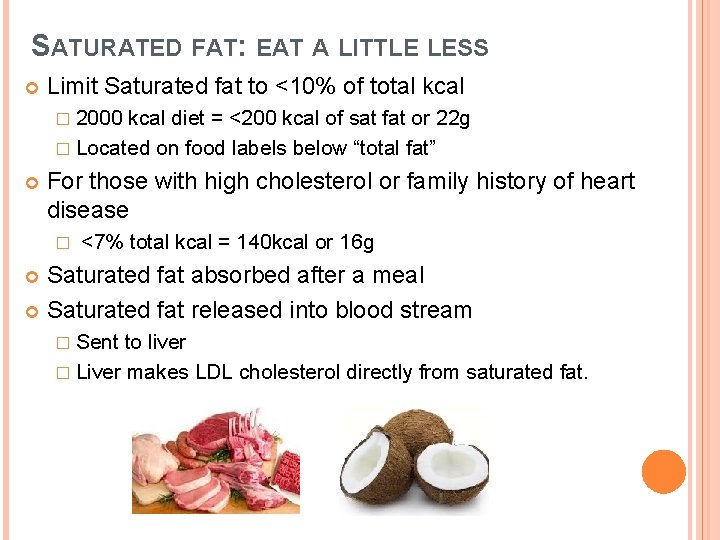
SATURATED FAT: EAT A LITTLE LESS Limit Saturated fat to <10% of total kcal � 2000 kcal diet = <200 kcal of sat fat or 22 g � Located on food labels below “total fat” For those with high cholesterol or family history of heart disease � <7% total kcal = 140 kcal or 16 g Saturated fat absorbed after a meal Saturated fat released into blood stream � Sent to liver � Liver makes LDL cholesterol directly from saturated fat.
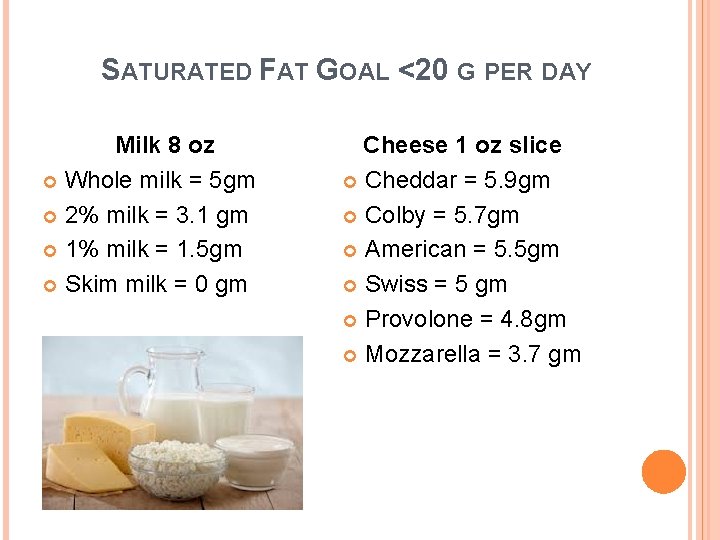
SATURATED FAT GOAL <20 G PER DAY Milk 8 oz Whole milk = 5 gm 2% milk = 3. 1 gm 1% milk = 1. 5 gm Skim milk = 0 gm Cheese 1 oz slice Cheddar = 5. 9 gm Colby = 5. 7 gm American = 5. 5 gm Swiss = 5 gm Provolone = 4. 8 gm Mozzarella = 3. 7 gm
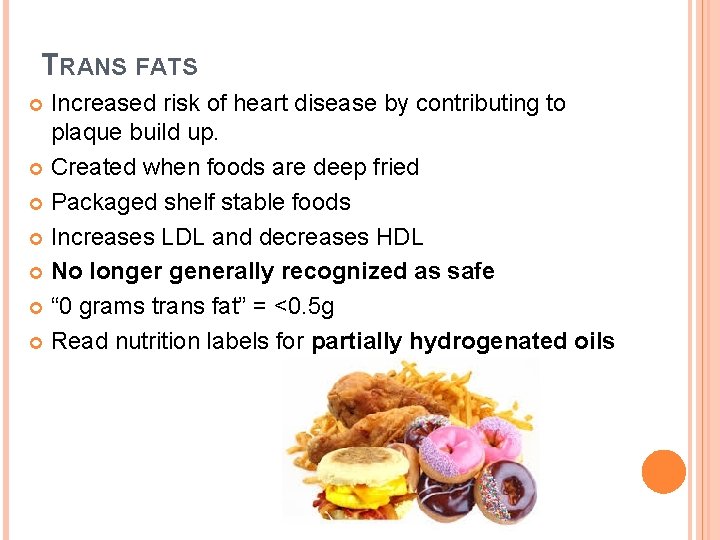
TRANS FATS Increased risk of heart disease by contributing to plaque build up. Created when foods are deep fried Packaged shelf stable foods Increases LDL and decreases HDL No longer generally recognized as safe “ 0 grams trans fat” = <0. 5 g Read nutrition labels for partially hydrogenated oils
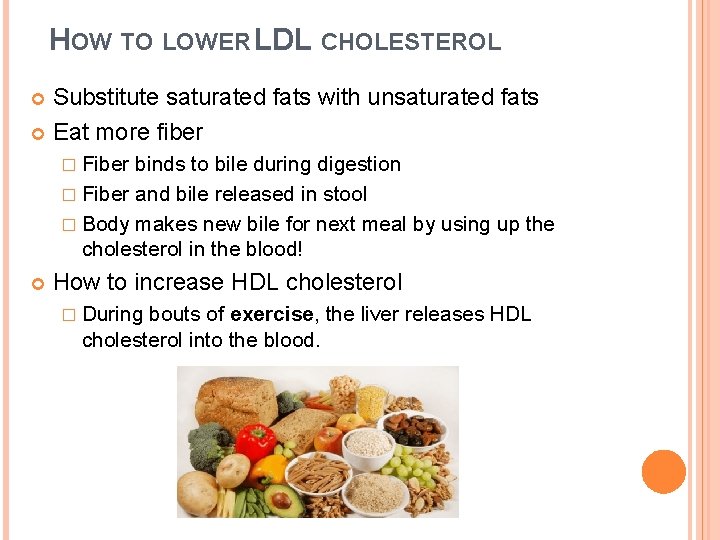
HOW TO LOWER LDL CHOLESTEROL Substitute saturated fats with unsaturated fats Eat more fiber � Fiber binds to bile during digestion � Fiber and bile released in stool � Body makes new bile for next meal by using up the cholesterol in the blood! How to increase HDL cholesterol � During bouts of exercise, the liver releases HDL cholesterol into the blood.
HOW TO LOWER TRIGLYCERIDES Do not overeat starch, protein, or fat at a sitting � This drops triglycerides quickly � Triglyceride level is determined by portion size Limit alcohol 1/day for females and 1 -2/day for men Exercise burns up triglycerides Triglyceride levels can change quickly
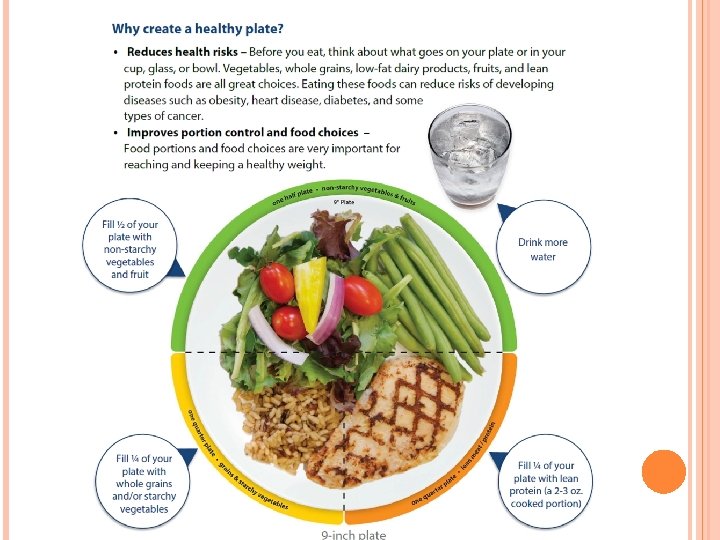
WAYS TO IMPROVE YOUR LABS Choose Whole Grain Products Eat Your Non-Starchy Vegetables Include Some Fruit Replace Saturated fats w/ unsaturated fats Pick Low Fat Dairy Products Try Smaller Portions of Lean Meats Choose Heart Healthy Oils Limit Sweets & Snacks & Alcohol Video
HOW QUICKLY VALUES CHANGE? Cholesterol is used up very slowly. Can take 10 days to lower 1 point of LDL Lipid panel drawn once a year Want to drop 10 points? Take 100 days/ 3 months Triglycerides can drop a lot faster
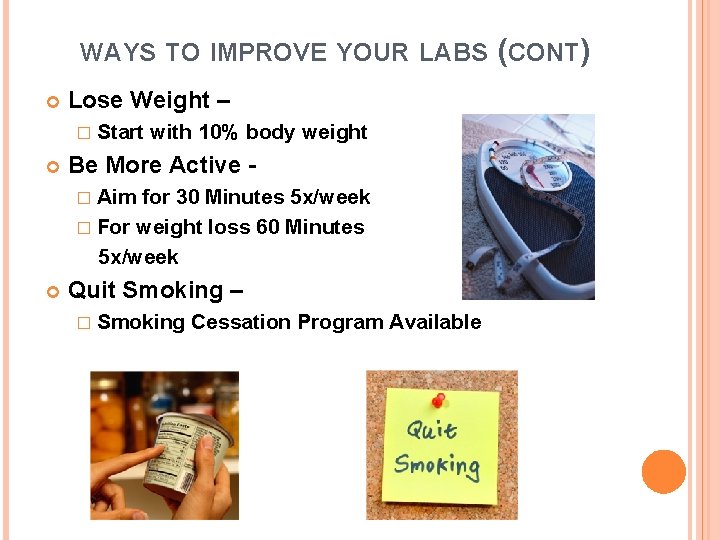
WAYS TO IMPROVE YOUR LABS (CONT) Lose Weight – � Start with 10% body weight Be More Active � Aim for 30 Minutes 5 x/week � For weight loss 60 Minutes 5 x/week Quit Smoking – � Smoking Cessation Program Available
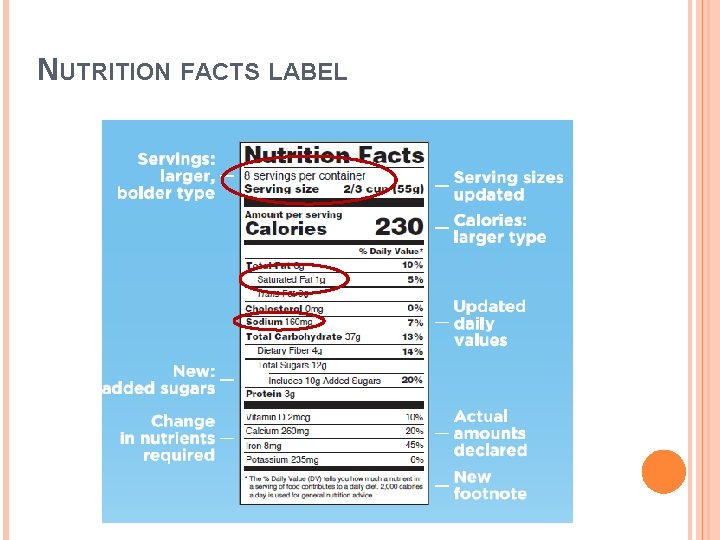
NUTRITION FACTS LABEL
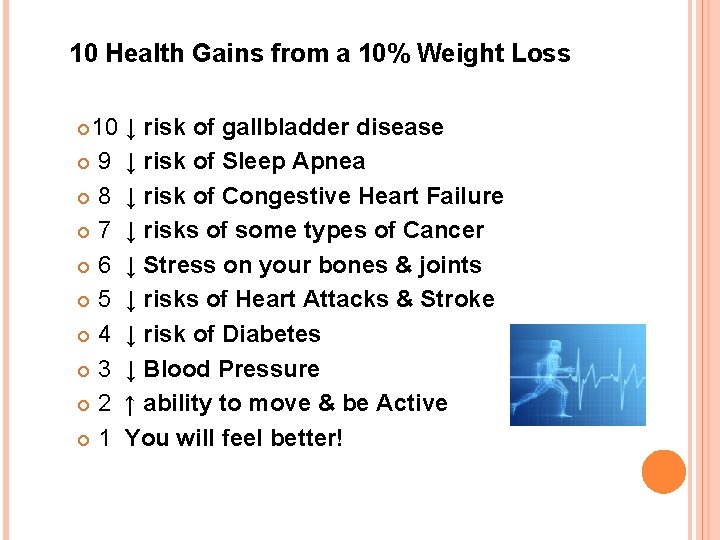
10 Health Gains from a 10% Weight Loss 10 ↓ risk of gallbladder disease 9 ↓ risk of Sleep Apnea 8 ↓ risk of Congestive Heart Failure 7 ↓ risks of some types of Cancer 6 ↓ Stress on your bones & joints 5 ↓ risks of Heart Attacks & Stroke 4 ↓ risk of Diabetes 3 ↓ Blood Pressure 2 ↑ ability to move & be Active 1 You will feel better!
HYPERTENSION HTN is elevated arterial Blood Pressure. It is often referred to as the “silent killer” due to the lack of symptoms. High blood pressure can lead to a heart attack, stroke, heart failure, or end-stage renal disease Risk factors Include: Age (55+ for men, 65+ for women), Ethnicity, Family History, Overweight/Obesity, Low Physical Activity Poor Diet Smoking
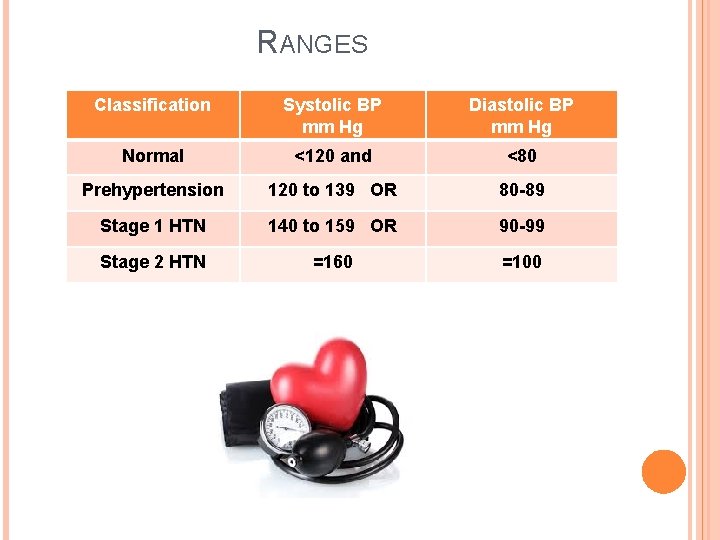
RANGES Classification Systolic BP mm Hg Diastolic BP mm Hg Normal <120 and <80 Prehypertension 120 to 139 OR 80 -89 Stage 1 HTN 140 to 159 OR 90 -99 Stage 2 HTN =160 =100
DIETARY APPROACHES TO STOP HYPERTENSION The DASH diet involves decreasing intake of Salt & Trans/Saturated Fats � Limit saturated fat and packaged/processed foods chips, donuts, cookies, cakes, pies, processed meats, candies, high fat dairy The DASH diet highlights increases fruits, vegetables, whole grains, plant sources of protein, nuts and legumes/beans and healthy sources of monounsaturated and polyunsaturated fats � This will increase intake of Potassium, Calcium, Magnesium & Fiber Alcohol Restriction � 1 drink for women and 2 or fewer for men each day � 1 drink = 5 oz wine, 12 oz beer, 1. 5 oz 80 proof liquor
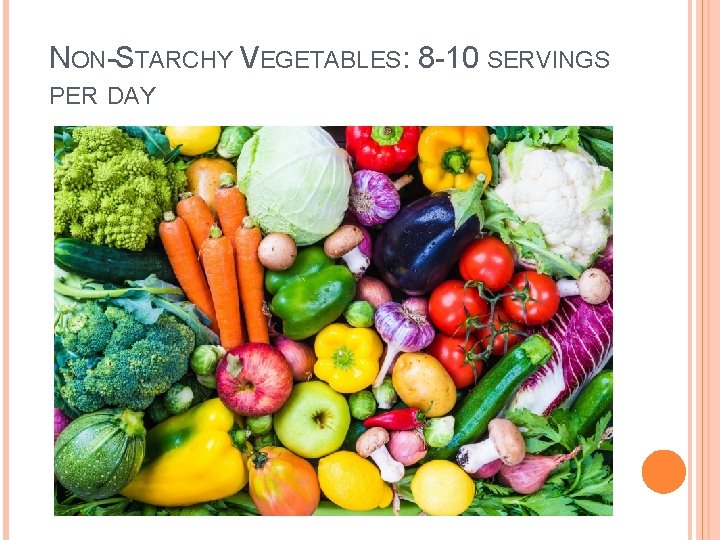
NON-STARCHY VEGETABLES: 8 -10 SERVINGS PER DAY
SODIUM &HEART HEALTH FOOD ALTERNATIVE FLAVORS OR SEASONINGS Beef Basil, Bay Leaf, Curry, Dill, Rosemary, Sage, Onion Powder, Garlic, Parsley, Pepper, Red Pepper Chicken Basil, Cranberries, Nutmeg, Oregano, Paprika, Parsley, Rosemary, Saffron, Sage, Savory, Tarragon, Thyme, Garlic, Turmeric, Pepper, Red Pepper Egg Basil, Bay Leaf, Dill, Dry Mustard, Nutmeg, Garlic or Onion Powder, Paprika, Parsley, Rosemary, Tarragon, Pepper, Red Pepper Fish Lemon Juice, Basil, Bay Leaf, Dill, Dry Mustard, Garlic or Onion Powder, Nutmeg, Paprika, Parsley, Rosemary, Tarragon, Red Pepper/Pepper Pork Applesauce, Basil, Chives, Garlic or Onion Powder, Rosemary, Thyme, Dry Mustard, Red Pepper Vegetables Basil, Dill, Garlic or Onion Powder, Ginger, Lemon Juice, Nutmeg, Tarragon, Tomato, Sugar/Sugar Subs, Vinegar, Salt-free Salad Dressing
VA / NUTRITION CLINIC RESOURCES Individual Appointments with Registered Dietitian 60 & 30 minutes appts § Pre-Diabetes Nutrition Class § 2 nd Wednesday each month, 0830 -0930, One time class MOVE! Weight Management Program Comprehensive 16 week Class series, Thurs. Starting September 12 th 0900 -1000 § Individual appointments (One time or four month commitment) § Weight Reduction Class § 1 st Thursday each month, 1300 -1400, One time class Home Telehealth or Tele. Move: Ext 3384 § Manage hypertension & other medical conditions at home with VA equipment provided § Healthy Teaching Kitchen Offered quarterly, next class offered August 2019 Cooking basics and healthy simple meals. � Move Wellness Class: 3 rd Tuesday of the month, 900 -1000. Overview of healthy eating and wellness
- Slides: 24