
Heart Functions and Blood Vessels Functions of the
Heart Functions and Blood Vessels
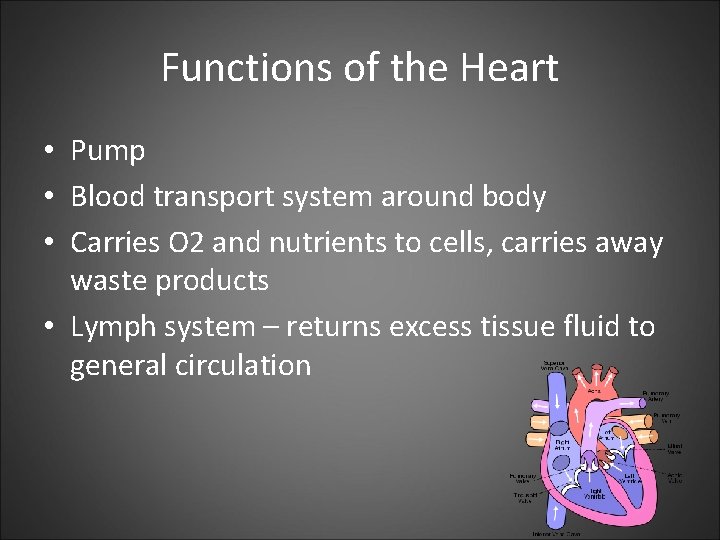
Functions of the Heart • Pump • Blood transport system around body • Carries O 2 and nutrients to cells, carries away waste products • Lymph system – returns excess tissue fluid to general circulation
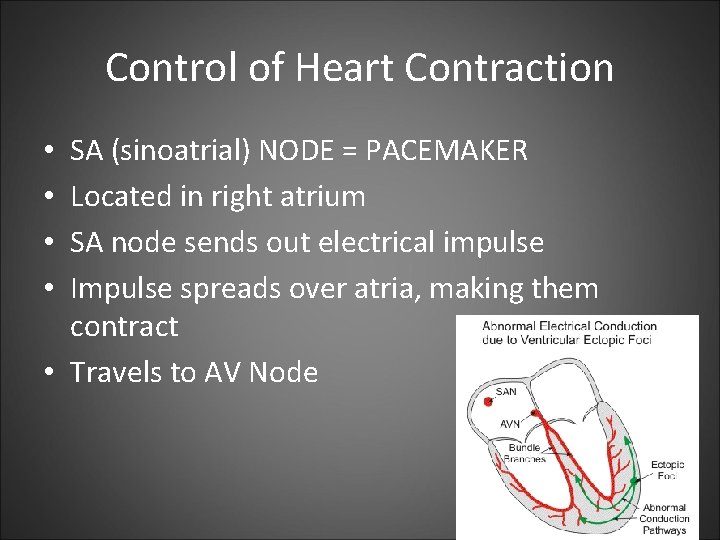
Control of Heart Contraction SA (sinoatrial) NODE = PACEMAKER Located in right atrium SA node sends out electrical impulse Impulse spreads over atria, making them contract • Travels to AV Node • •
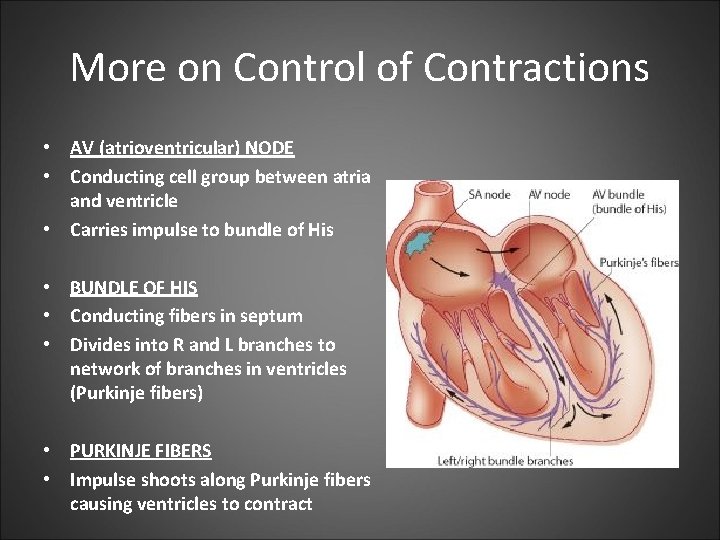
More on Control of Contractions • AV (atrioventricular) NODE • Conducting cell group between atria and ventricle • Carries impulse to bundle of His • BUNDLE OF HIS • Conducting fibers in septum • Divides into R and L branches to network of branches in ventricles (Purkinje fibers) • PURKINJE FIBERS • Impulse shoots along Purkinje fibers causing ventricles to contract
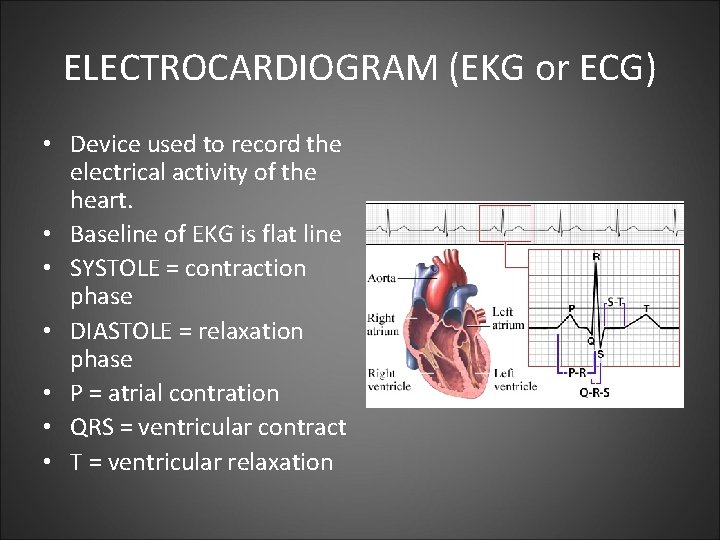
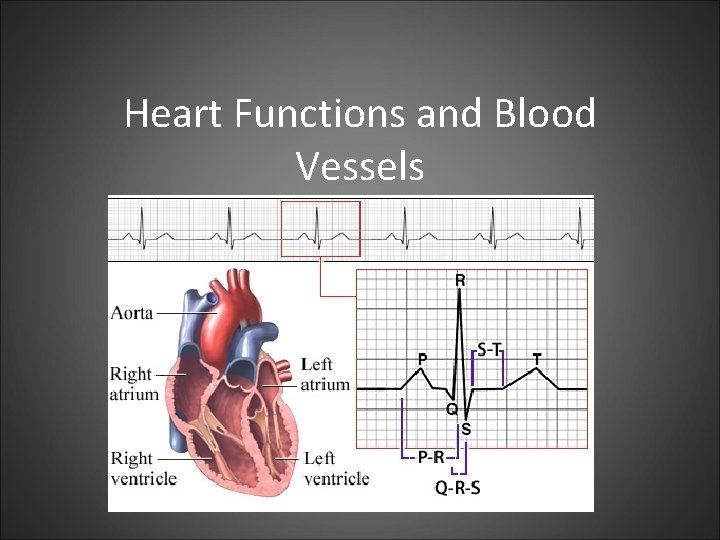
ELECTROCARDIOGRAM (EKG or ECG) • Device used to record the electrical activity of the heart. • Baseline of EKG is flat line • SYSTOLE = contraction phase • DIASTOLE = relaxation phase • P = atrial contration • QRS = ventricular contract • T = ventricular relaxation
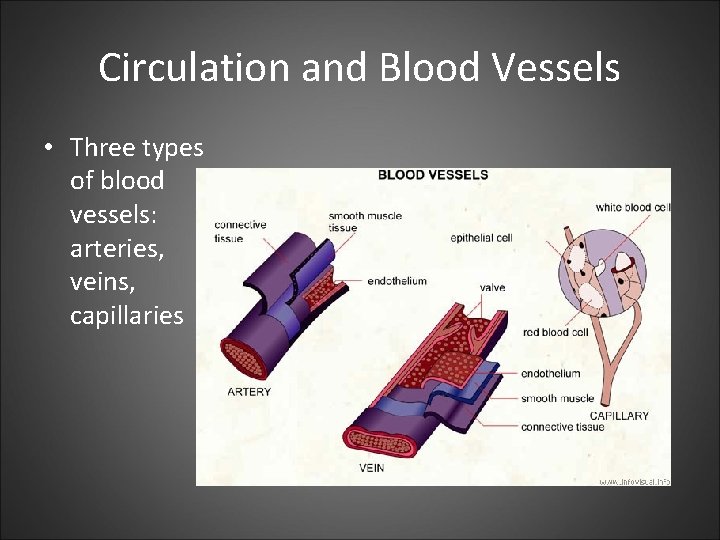
Circulation and Blood Vessels • Three types of blood vessels: arteries, veins, capillaries
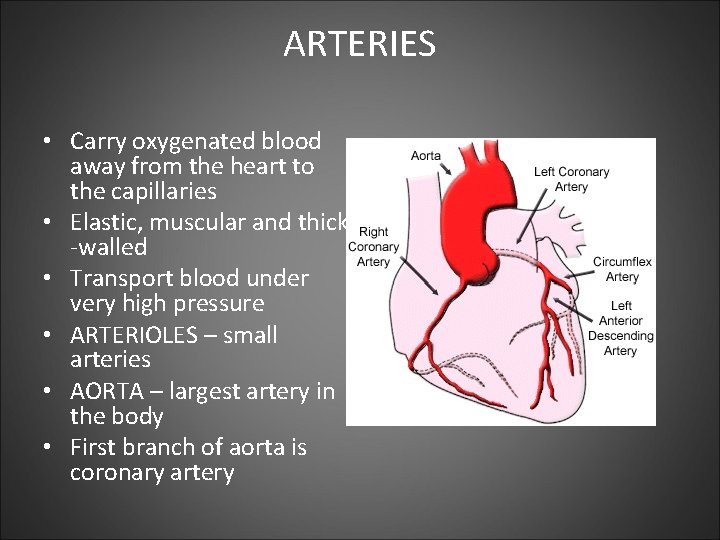
ARTERIES • Carry oxygenated blood away from the heart to the capillaries • Elastic, muscular and thick -walled • Transport blood under very high pressure • ARTERIOLES – small arteries • AORTA – largest artery in the body • First branch of aorta is coronary artery
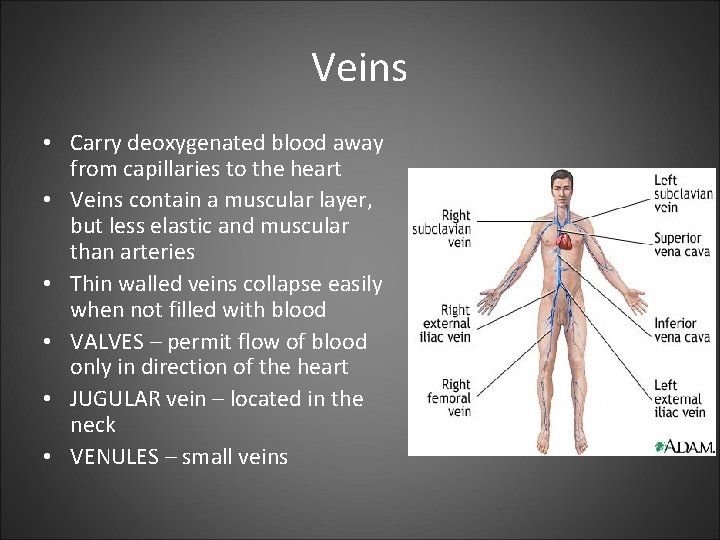
Veins • Carry deoxygenated blood away from capillaries to the heart • Veins contain a muscular layer, but less elastic and muscular than arteries • Thin walled veins collapse easily when not filled with blood • VALVES – permit flow of blood only in direction of the heart • JUGULAR vein – located in the neck • VENULES – small veins
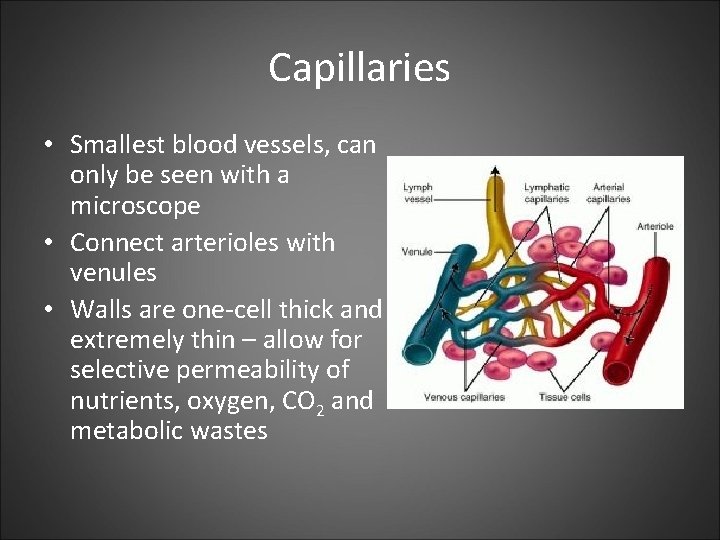
Capillaries • Smallest blood vessels, can only be seen with a microscope • Connect arterioles with venules • Walls are one-cell thick and extremely thin – allow for selective permeability of nutrients, oxygen, CO 2 and metabolic wastes
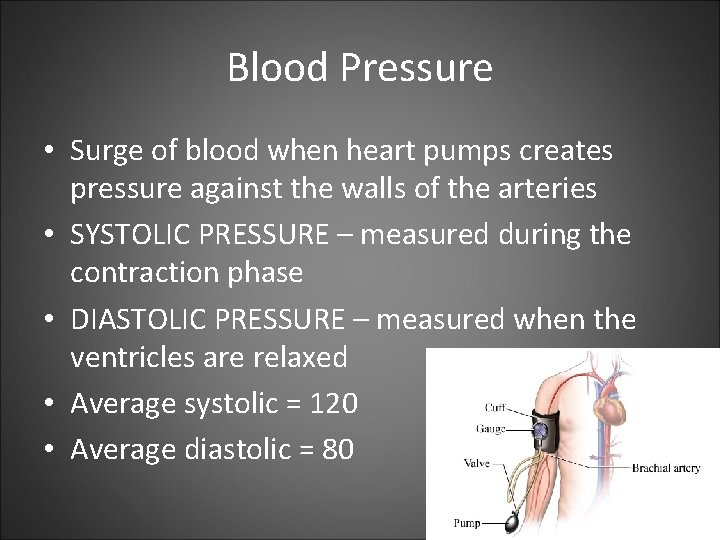
Blood Pressure • Surge of blood when heart pumps creates pressure against the walls of the arteries • SYSTOLIC PRESSURE – measured during the contraction phase • DIASTOLIC PRESSURE – measured when the ventricles are relaxed • Average systolic = 120 • Average diastolic = 80
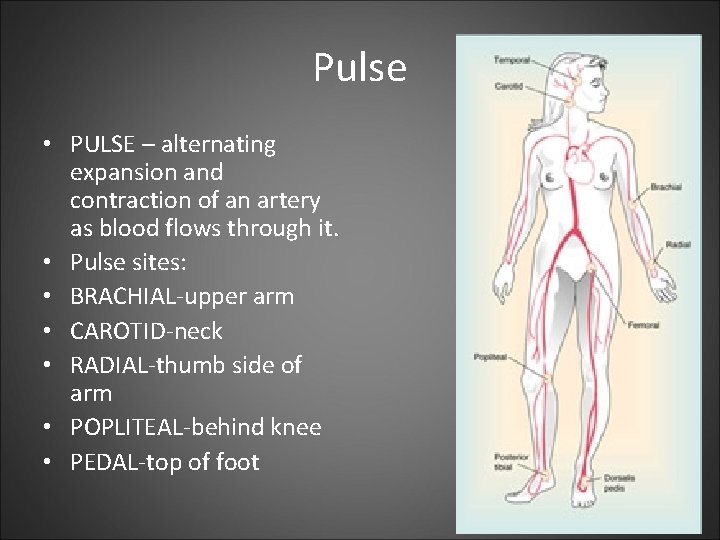
Pulse • PULSE – alternating expansion and contraction of an artery as blood flows through it. • Pulse sites: • BRACHIAL-upper arm • CAROTID-neck • RADIAL-thumb side of arm • POPLITEAL-behind knee • PEDAL-top of foot
- Slides: 11