
Heart Failure u u u Final common pathway


- Slides: 36
Heart Failure u u u Final common pathway for many cardiovascular diseases whose natural history results in symptomatic or asymptomatic left ventricular dysfunction Cardinal manifestations of heart failure include dyspnea, fatigue and fluid retention Risk of death is 5 -10% annually in patients with mild symptoms and increases to as high as 3040% annually in patients with advanced disease
Main causes u Coronary artery disease u Hypertension u Valvular heart disease u Cardiomyopathy u Cor pulmonale
Compensatory changes in heart failure u Activation of SNS u Activation of RAS u Increased heart rate u Release of ADH u Release of atrial natriuretic peptide u Chamber enlargement u Myocardial hypertrophy
NYHA Classification of heart failure u Class I: No limitation of physical activity u Class II: Slight limitation of physical activity u Class III: Marked limitation of physical activity u Class IV: Unable to carry out physical activity without discomfort
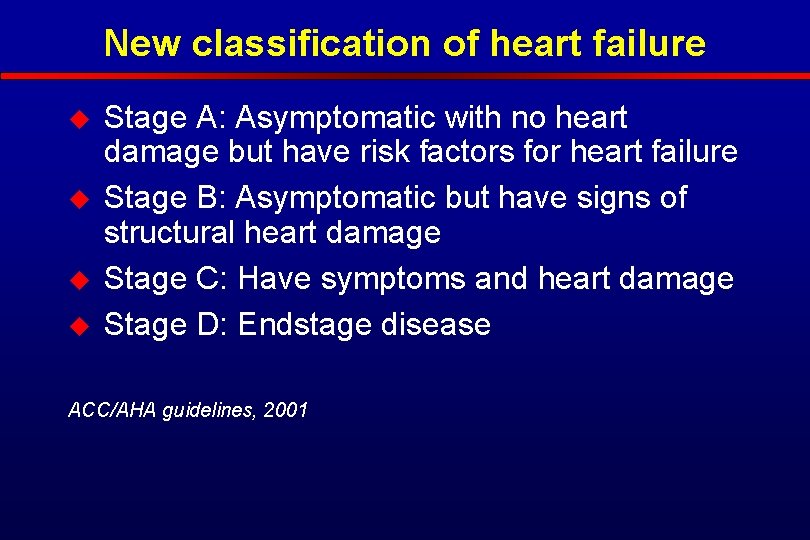
New classification of heart failure u u Stage A: Asymptomatic with no heart damage but have risk factors for heart failure Stage B: Asymptomatic but have signs of structural heart damage Stage C: Have symptoms and heart damage Stage D: Endstage disease ACC/AHA guidelines, 2001
Types of heart failure u Diastolic dysfunction or diastolic heart failure u Systolic dysfunction or systolic heart failure
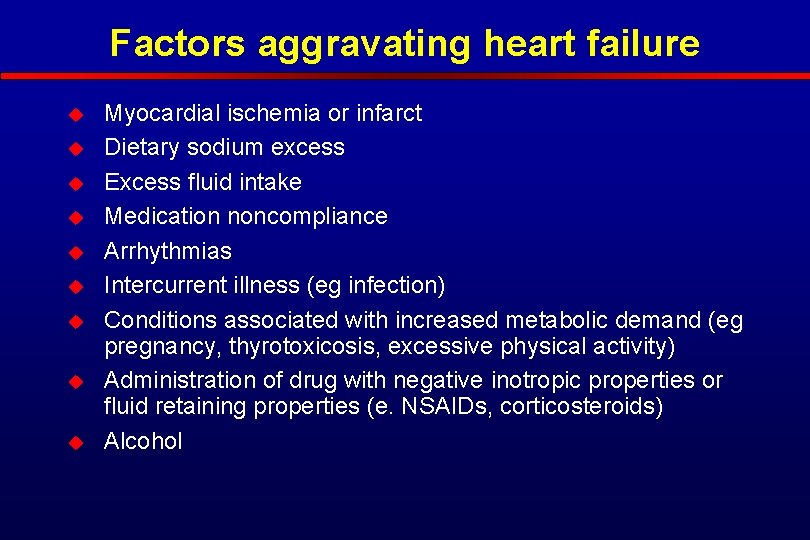
Factors aggravating heart failure u u u u u Myocardial ischemia or infarct Dietary sodium excess Excess fluid intake Medication noncompliance Arrhythmias Intercurrent illness (eg infection) Conditions associated with increased metabolic demand (eg pregnancy, thyrotoxicosis, excessive physical activity) Administration of drug with negative inotropic properties or fluid retaining properties (e. NSAIDs, corticosteroids) Alcohol
Goals of treatment u To improve symptoms and quality of life u To decrease likelihood of disease progression u To reduce the risk of death and need for hospitalisation
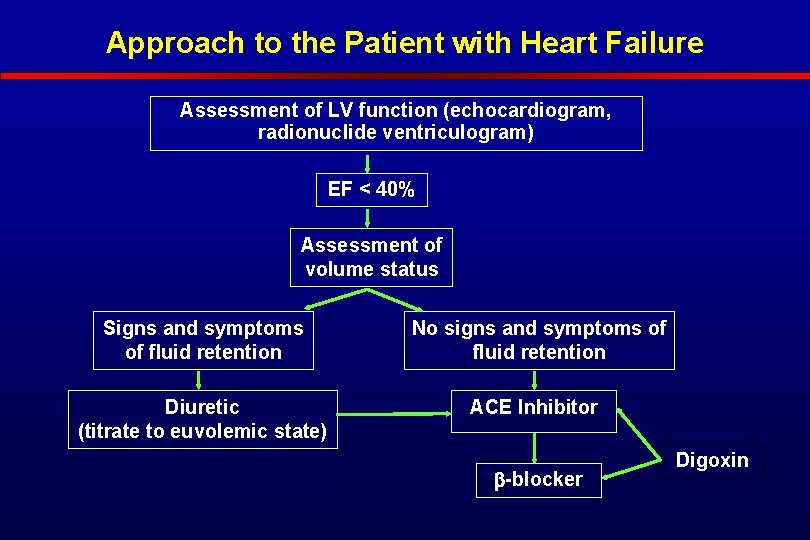
Approach to the Patient with Heart Failure Assessment of LV function (echocardiogram, radionuclide ventriculogram) EF < 40% Assessment of volume status Signs and symptoms of fluid retention No signs and symptoms of fluid retention Diuretic (titrate to euvolemic state) ACE Inhibitor b-blocker Digoxin
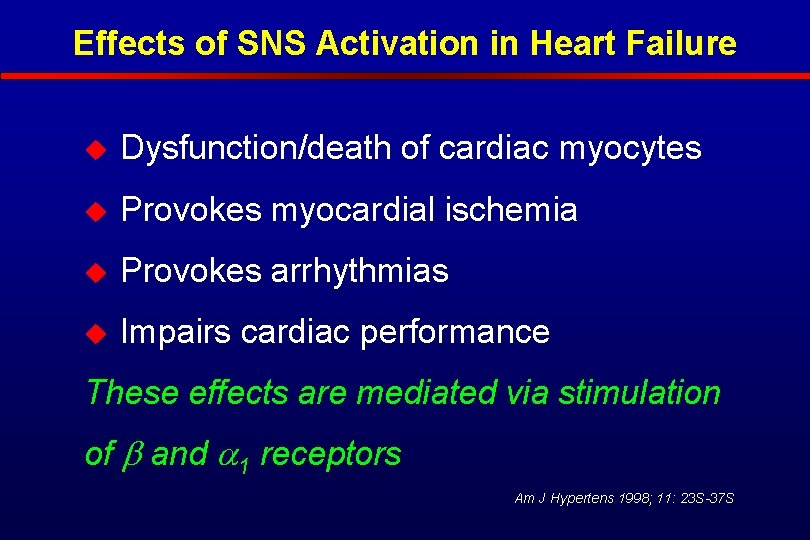
Effects of SNS Activation in Heart Failure u Dysfunction/death of cardiac myocytes u Provokes myocardial ischemia u Provokes arrhythmias u Impairs cardiac performance These effects are mediated via stimulation of b and a 1 receptors Am J Hypertens 1998; 11: 23 S-37 S
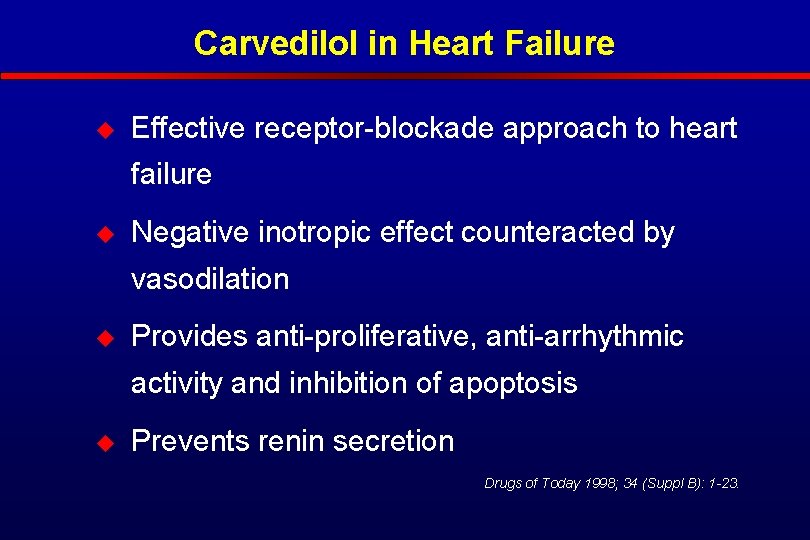
Carvedilol in Heart Failure u Effective receptor-blockade approach to heart failure u Negative inotropic effect counteracted by vasodilation u Provides anti-proliferative, anti-arrhythmic activity and inhibition of apoptosis u Prevents renin secretion Drugs of Today 1998; 34 (Suppl B): 1 -23.
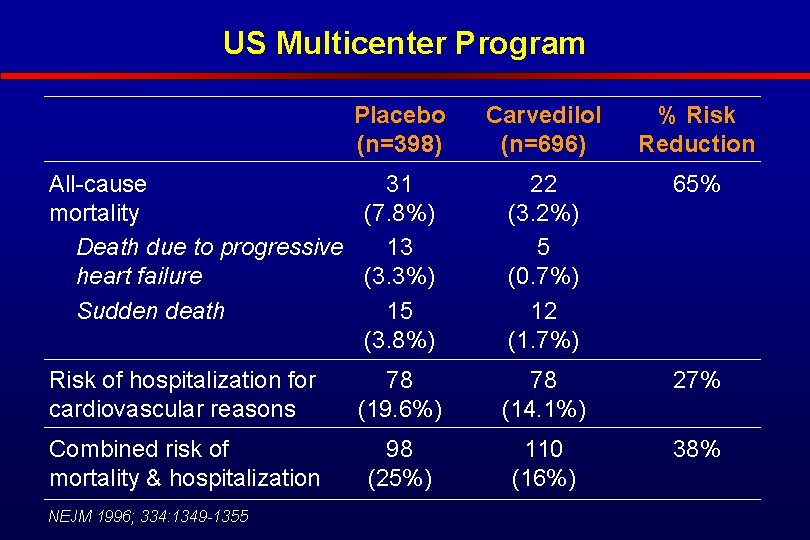
US Multicenter Program Placebo (n=398) Carvedilol (n=696) % Risk Reduction All-cause 31 mortality (7. 8%) Death due to progressive 13 heart failure (3. 3%) Sudden death 15 (3. 8%) 22 (3. 2%) 5 (0. 7%) 12 (1. 7%) 65% Risk of hospitalization for cardiovascular reasons 78 (19. 6%) 78 (14. 1%) 27% Combined risk of mortality & hospitalization 98 (25%) 110 (16%) 38% NEJM 1996; 334: 1349 -1355
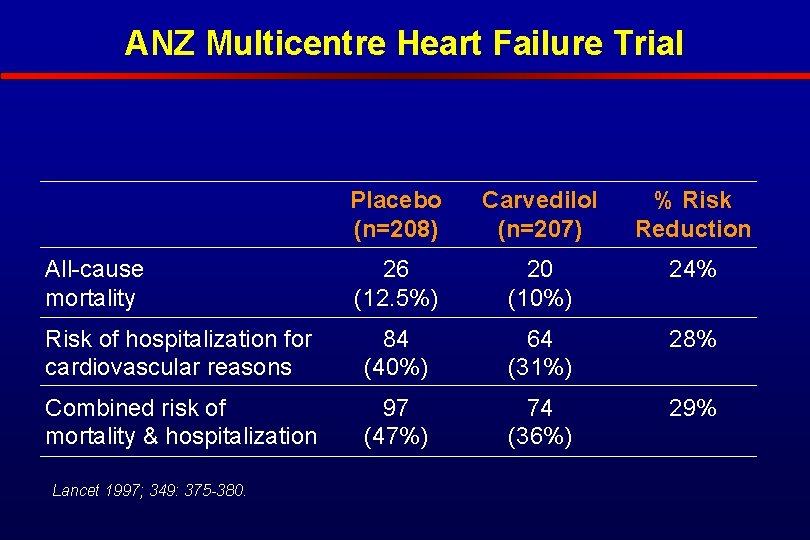
ANZ Multicentre Heart Failure Trial Placebo (n=208) Carvedilol (n=207) % Risk Reduction 26 (12. 5%) 20 (10%) 24% Risk of hospitalization for cardiovascular reasons 84 (40%) 64 (31%) 28% Combined risk of mortality & hospitalization 97 (47%) 74 (36%) 29% All-cause mortality Lancet 1997; 349: 375 -380.
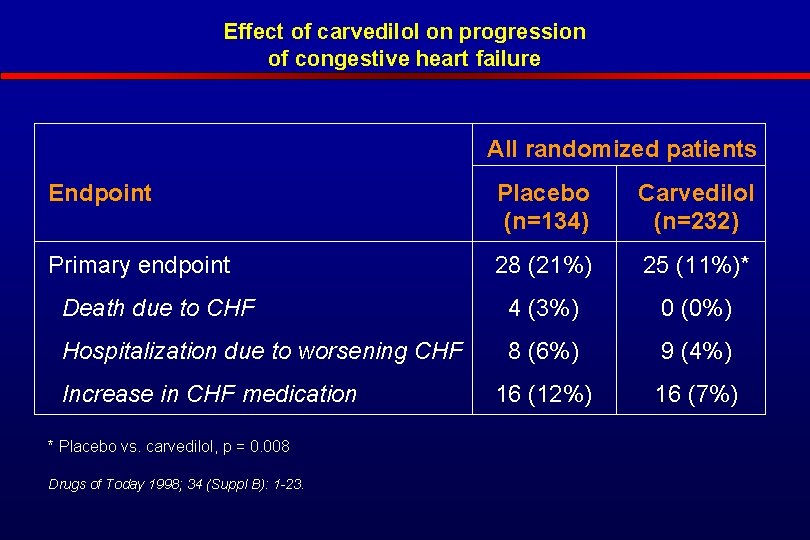
Effect of carvedilol on progression of congestive heart failure All randomized patients Endpoint Placebo (n=134) Carvedilol (n=232) Primary endpoint 28 (21%) 25 (11%)* Death due to CHF 4 (3%) 0 (0%) Hospitalization due to worsening CHF 8 (6%) 9 (4%) 16 (12%) 16 (7%) Increase in CHF medication * Placebo vs. carvedilol, p = 0. 008 Drugs of Today 1998; 34 (Suppl B): 1 -23.
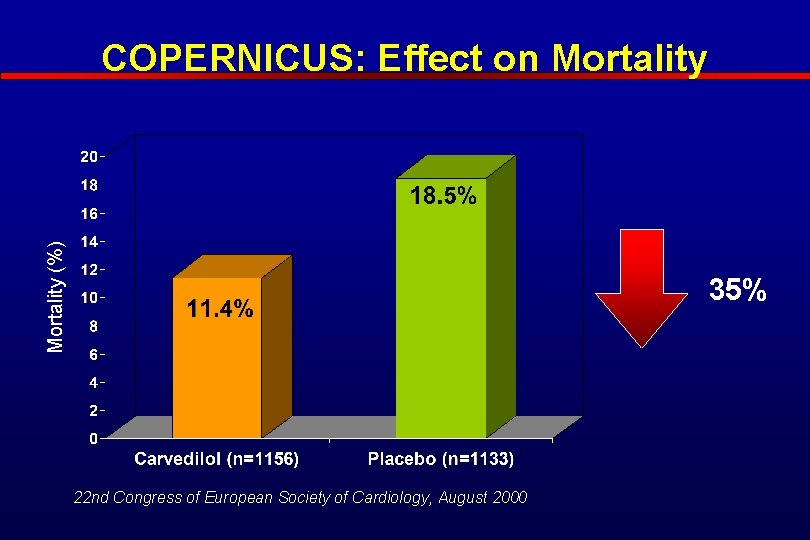
Mortality (%) COPERNICUS: Effect on Mortality 35% 22 nd Congress of European Society of Cardiology, August 2000
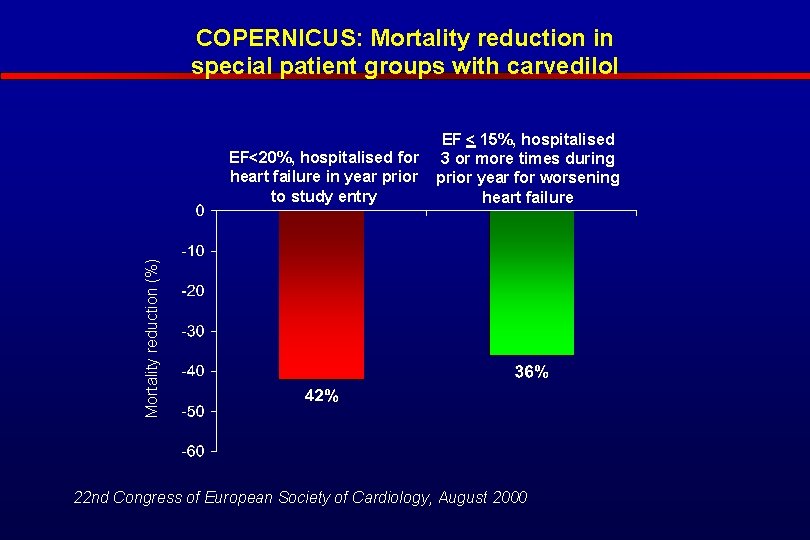
COPERNICUS: Mortality reduction in special patient groups with carvedilol Mortality reduction (%) EF<20%, hospitalised for heart failure in year prior to study entry EF < 15%, hospitalised 3 or more times during prior year for worsening heart failure 22 nd Congress of European Society of Cardiology, August 2000
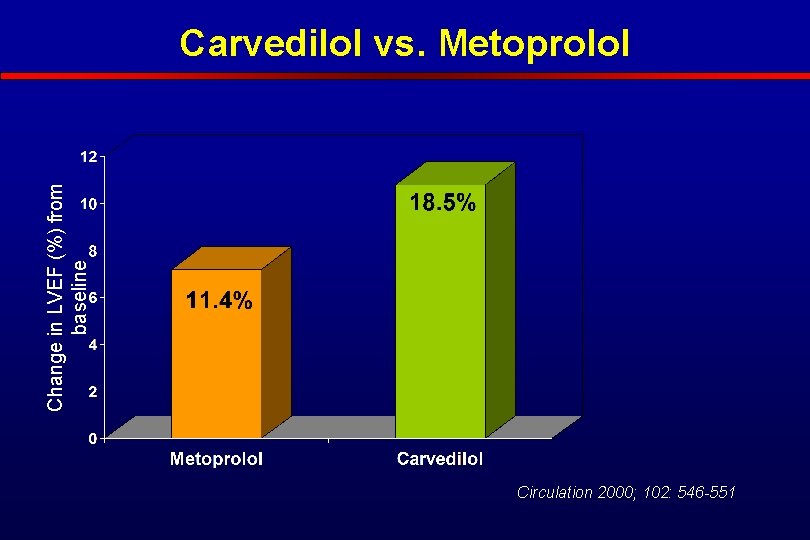
Change in LVEF (%) from baseline Carvedilol vs. Metoprolol Circulation 2000; 102: 546 -551
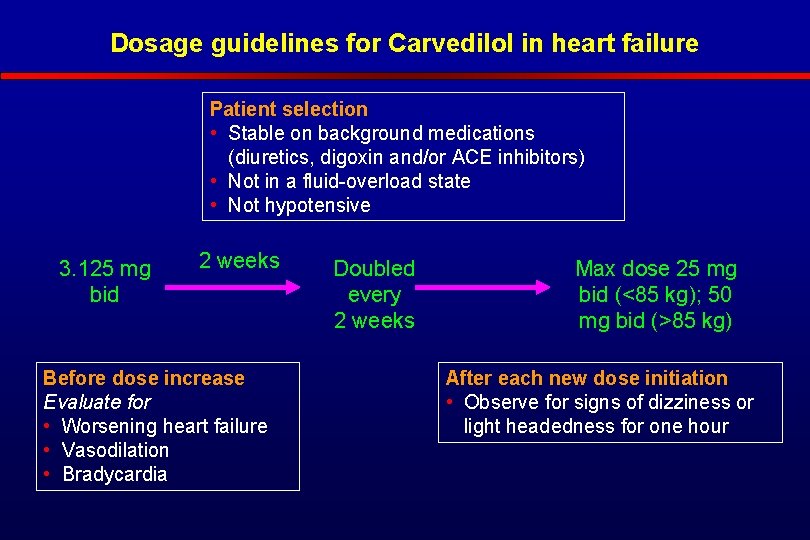
Dosage guidelines for Carvedilol in heart failure Patient selection • Stable on background medications (diuretics, digoxin and/or ACE inhibitors) • Not in a fluid-overload state • Not hypotensive 3. 125 mg bid 2 weeks Before dose increase Evaluate for • Worsening heart failure • Vasodilation • Bradycardia Doubled every 2 weeks Max dose 25 mg bid (<85 kg); 50 mg bid (>85 kg) After each new dose initiation • Observe for signs of dizziness or light headedness for one hour
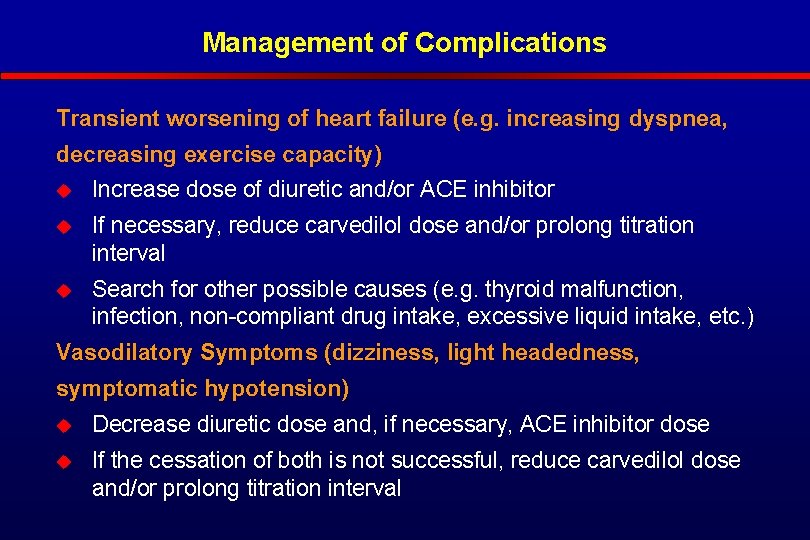
Management of Complications Transient worsening of heart failure (e. g. increasing dyspnea, decreasing exercise capacity) u Increase dose of diuretic and/or ACE inhibitor u If necessary, reduce carvedilol dose and/or prolong titration interval u Search for other possible causes (e. g. thyroid malfunction, infection, non-compliant drug intake, excessive liquid intake, etc. ) Vasodilatory Symptoms (dizziness, light headedness, symptomatic hypotension) u Decrease diuretic dose and, if necessary, ACE inhibitor dose u If the cessation of both is not successful, reduce carvedilol dose and/or prolong titration interval
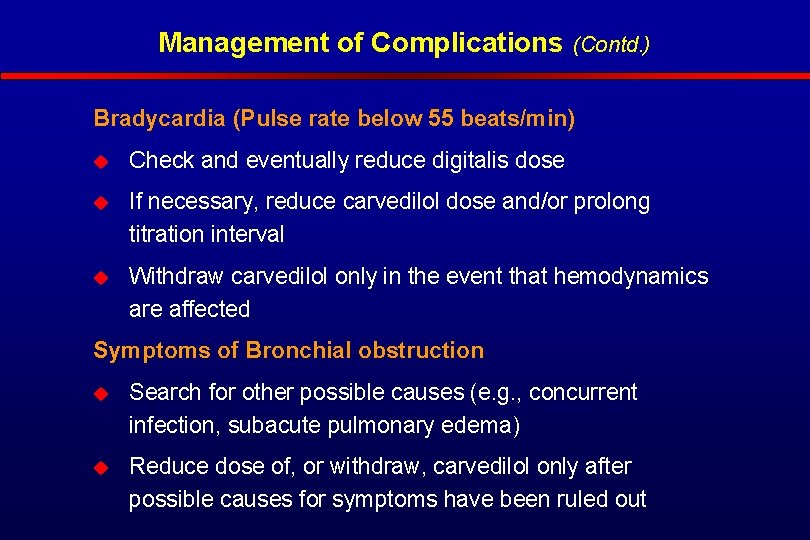
Management of Complications (Contd. ) Bradycardia (Pulse rate below 55 beats/min) u Check and eventually reduce digitalis dose u If necessary, reduce carvedilol dose and/or prolong titration interval u Withdraw carvedilol only in the event that hemodynamics are affected Symptoms of Bronchial obstruction u Search for other possible causes (e. g. , concurrent infection, subacute pulmonary edema) u Reduce dose of, or withdraw, carvedilol only after possible causes for symptoms have been ruled out
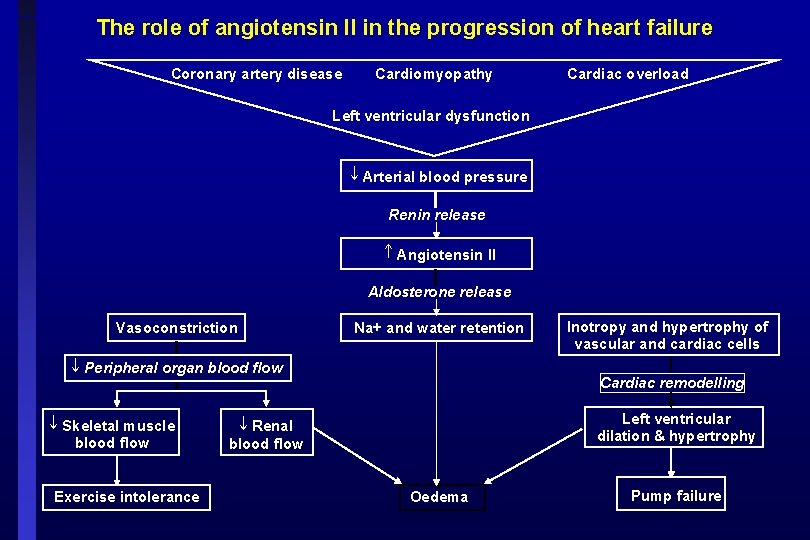
The role of angiotensin II in the progression of heart failure Coronary artery disease Cardiomyopathy Cardiac overload Left ventricular dysfunction Arterial blood pressure Renin release Angiotensin II Aldosterone release Vasoconstriction Na+ and water retention Peripheral organ blood flow Skeletal muscle blood flow Exercise intolerance Inotropy and hypertrophy of vascular and cardiac cells Cardiac remodelling Left ventricular dilation & hypertrophy Renal blood flow Oedema Pump failure
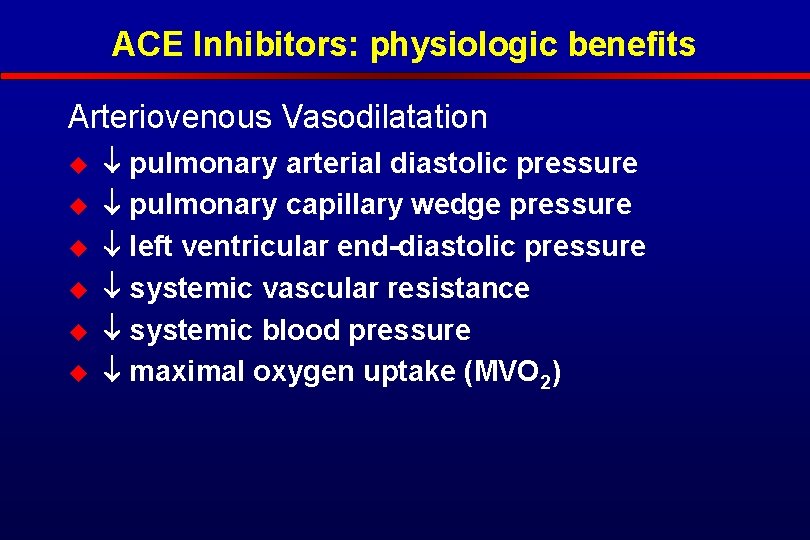
ACE Inhibitors: physiologic benefits Arteriovenous Vasodilatation u u u pulmonary arterial diastolic pressure pulmonary capillary wedge pressure left ventricular end-diastolic pressure systemic vascular resistance systemic blood pressure maximal oxygen uptake (MVO 2)
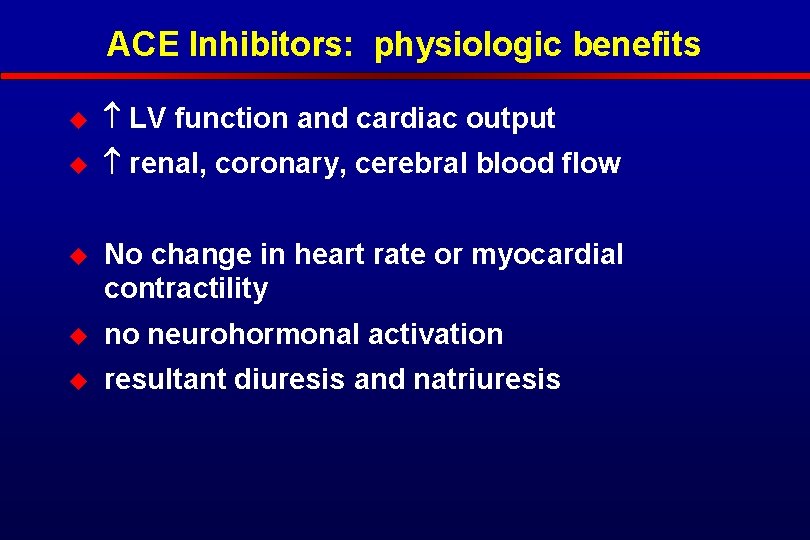
ACE Inhibitors: physiologic benefits u LV function and cardiac output u renal, coronary, cerebral blood flow u No change in heart rate or myocardial contractility u no neurohormonal activation u resultant diuresis and natriuresis
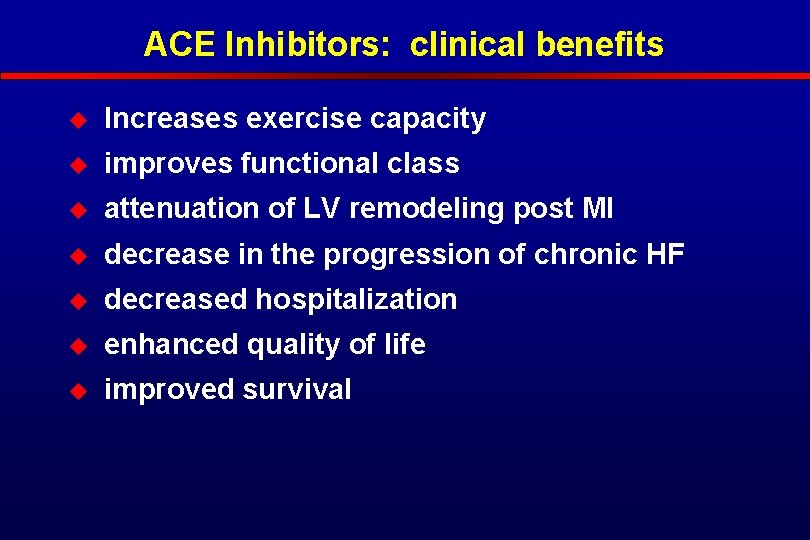
ACE Inhibitors: clinical benefits u Increases exercise capacity u improves functional class u attenuation of LV remodeling post MI u decrease in the progression of chronic HF u decreased hospitalization u enhanced quality of life u improved survival
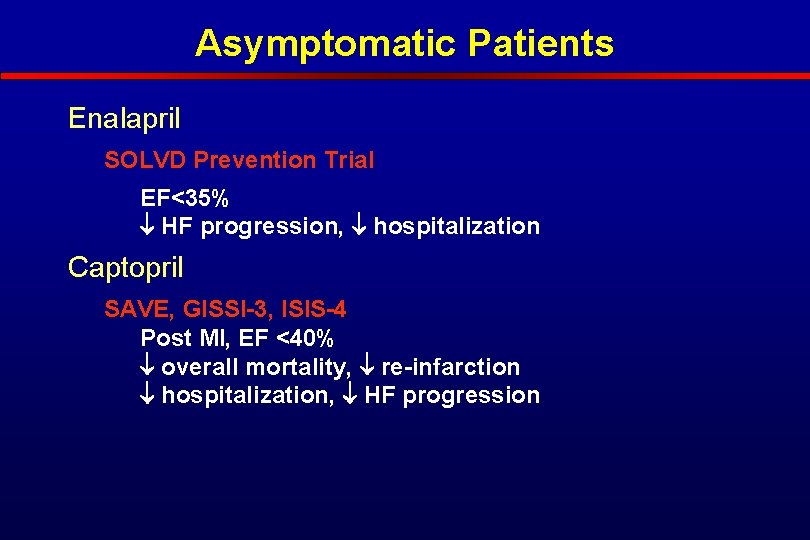
Asymptomatic Patients Enalapril SOLVD Prevention Trial EF<35% HF progression, hospitalization Captopril SAVE, GISSI-3, ISIS-4 Post MI, EF <40% overall mortality, re-infarction hospitalization, HF progression
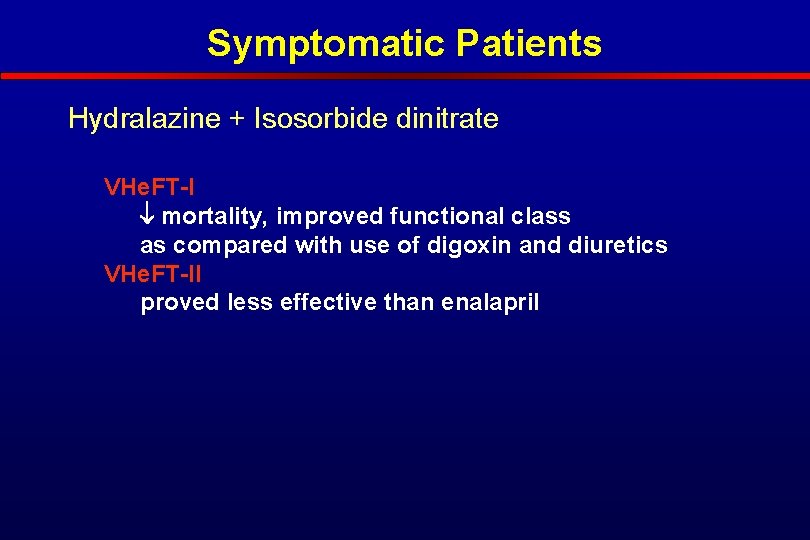
Symptomatic Patients Hydralazine + Isosorbide dinitrate VHe. FT-I mortality, improved functional class as compared with use of digoxin and diuretics VHe. FT-II proved less effective than enalapril
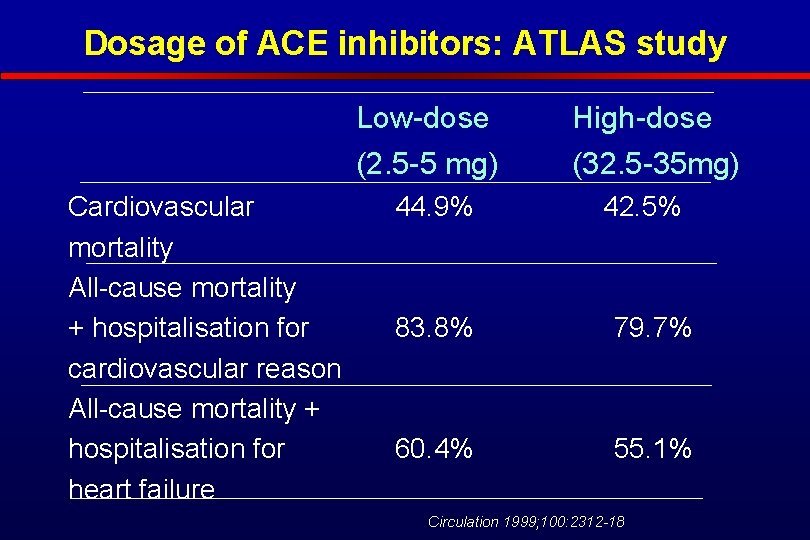
Dosage of ACE inhibitors: ATLAS study Low-dose (2. 5 -5 mg) Cardiovascular mortality All-cause mortality + hospitalisation for cardiovascular reason All-cause mortality + hospitalisation for heart failure 44. 9% High-dose (32. 5 -35 mg) 42. 5% 83. 8% 79. 7% 60. 4% 55. 1% Circulation 1999; 100: 2312 -18
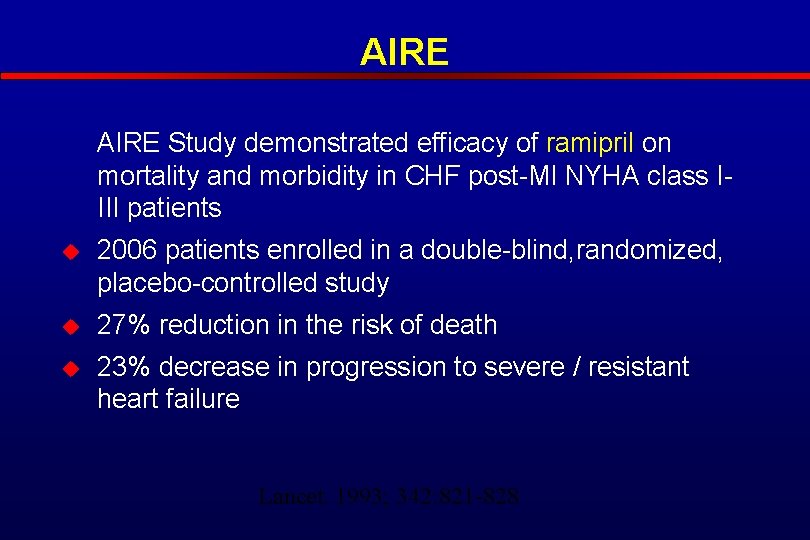
AIRE Study demonstrated efficacy of ramipril on mortality and morbidity in CHF post-MI NYHA class IIII patients u 2006 patients enrolled in a double-blind, randomized, placebo-controlled study u 27% reduction in the risk of death u 23% decrease in progression to severe / resistant heart failure Lancet. 1993; 342: 821 -828
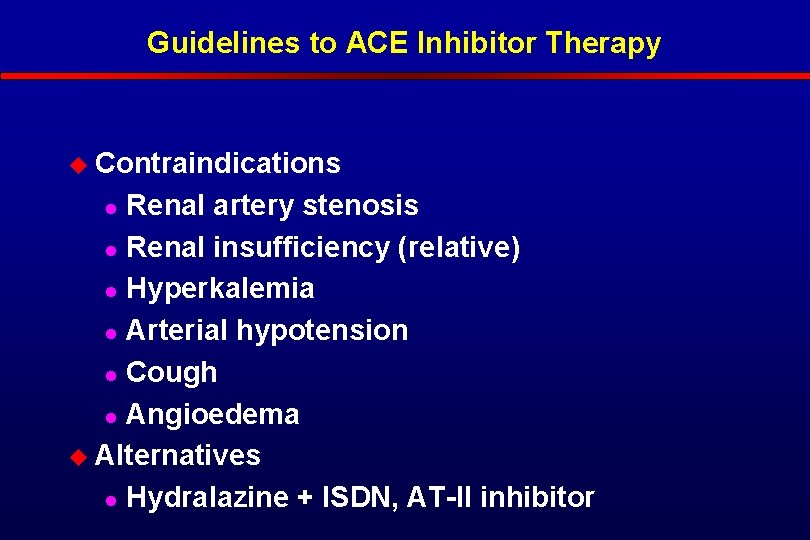
Guidelines to ACE Inhibitor Therapy Contraindications l Renal artery stenosis l Renal insufficiency (relative) l Hyperkalemia l Arterial hypotension l Cough l Angioedema u Alternatives l Hydralazine + ISDN, AT-II inhibitor u
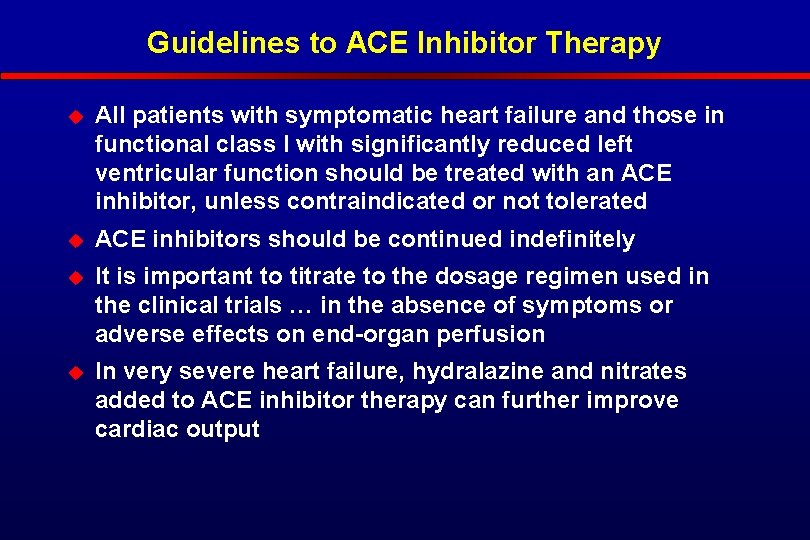
Guidelines to ACE Inhibitor Therapy u All patients with symptomatic heart failure and those in functional class I with significantly reduced left ventricular function should be treated with an ACE inhibitor, unless contraindicated or not tolerated u ACE inhibitors should be continued indefinitely u It is important to titrate to the dosage regimen used in the clinical trials … in the absence of symptoms or adverse effects on end-organ perfusion u In very severe heart failure, hydralazine and nitrates added to ACE inhibitor therapy can further improve cardiac output
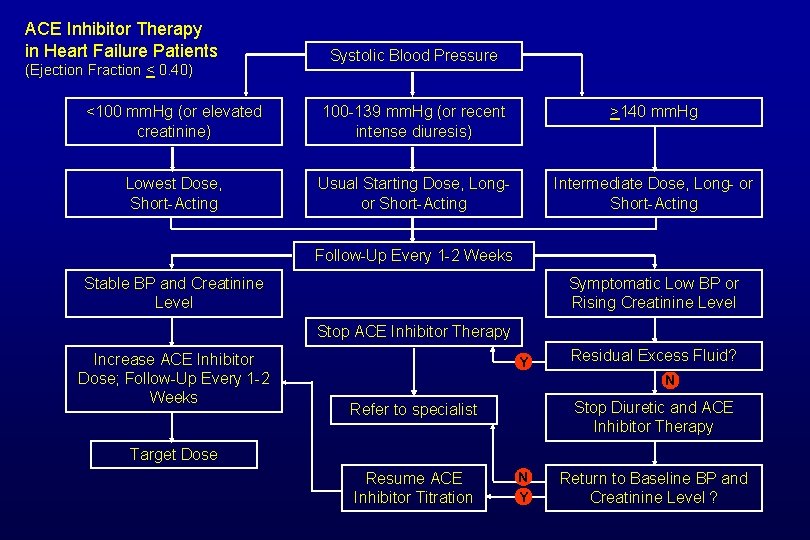
ACE Inhibitor Therapy in Heart Failure Patients (Ejection Fraction < 0. 40) Systolic Blood Pressure <100 mm. Hg (or elevated creatinine) 100 -139 mm. Hg (or recent intense diuresis) >140 mm. Hg Lowest Dose, Short-Acting Usual Starting Dose, Longor Short-Acting Intermediate Dose, Long- or Short-Acting Follow-Up Every 1 -2 Weeks Stable BP and Creatinine Level Symptomatic Low BP or Rising Creatinine Level Stop ACE Inhibitor Therapy Increase ACE Inhibitor Dose; Follow-Up Every 1 -2 Weeks Y Residual Excess Fluid? N Stop Diuretic and ACE Inhibitor Therapy Refer to specialist Target Dose Resume ACE Inhibitor Titration N Y Return to Baseline BP and Creatinine Level ?
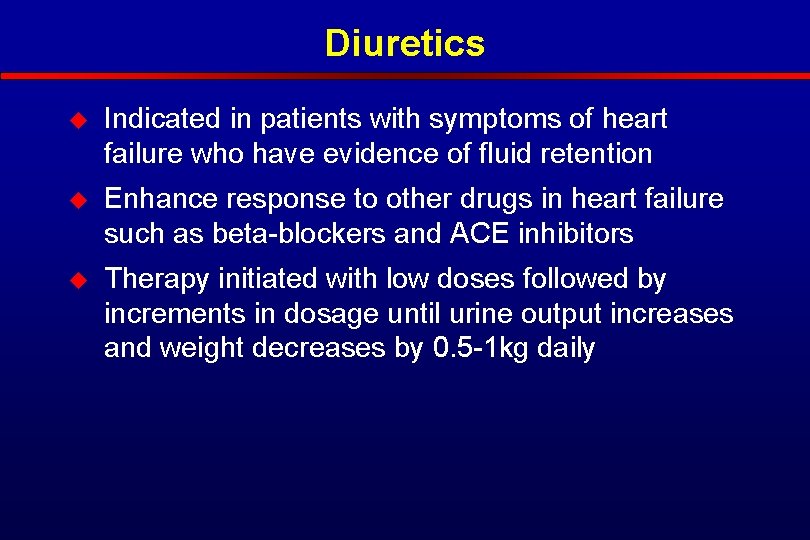
Diuretics u Indicated in patients with symptoms of heart failure who have evidence of fluid retention u Enhance response to other drugs in heart failure such as beta-blockers and ACE inhibitors u Therapy initiated with low doses followed by increments in dosage until urine output increases and weight decreases by 0. 5 -1 kg daily
Digoxin u u u Enhances LV function, normalizes baroreceptor-mediated reflexes and increases cardiac output at rest and during exercise Recommended to improve clinical status of patients with heart failure due to LV dysfunction and should be used in conjunction with diuretics, ACE inhibitors and beta-blockers Also recommended in patients with heart failure who have atrial fibrillation Digoxin initiated and maintained at a dose of 0. 25 mg daily Adverse effects include cardiac arrhythmias, GI symptoms and neurological complaints (eg. visual disturbances, confusion)
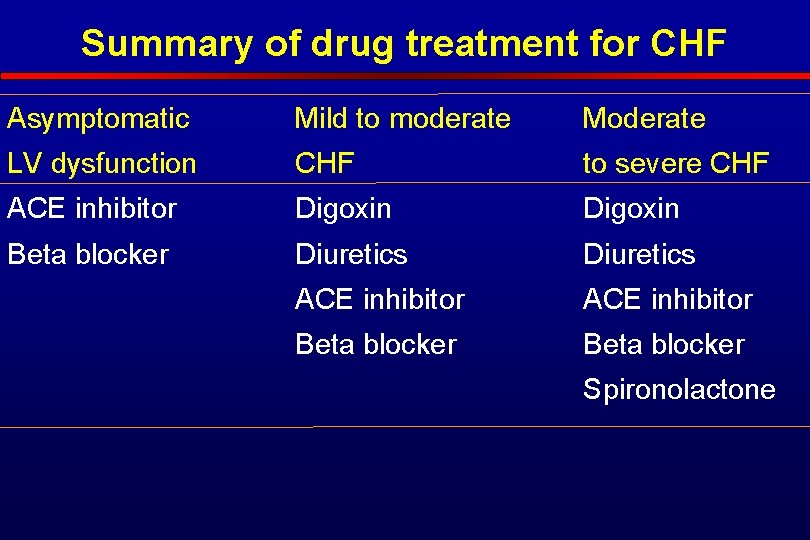
Summary of drug treatment for CHF Asymptomatic Mild to moderate Moderate LV dysfunction CHF to severe CHF ACE inhibitor Digoxin Beta blocker Diuretics ACE inhibitor Beta blocker Spironolactone