
Hearing vs Listening Hearing sense that allows you

- Slides: 13
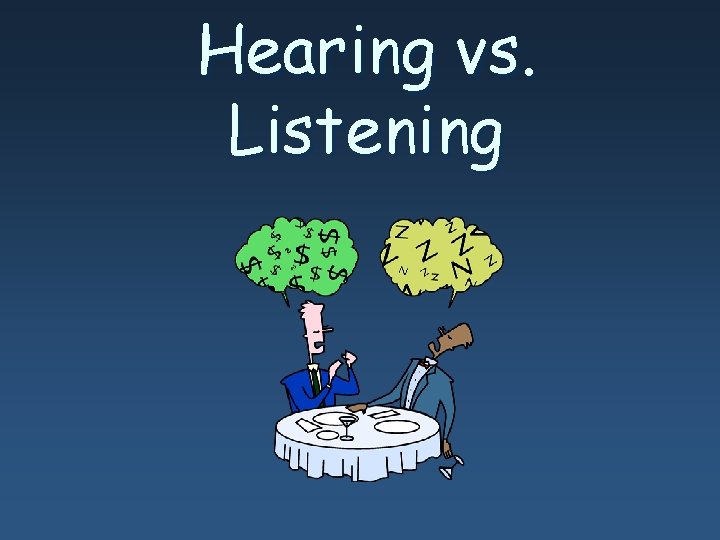
Hearing vs. Listening
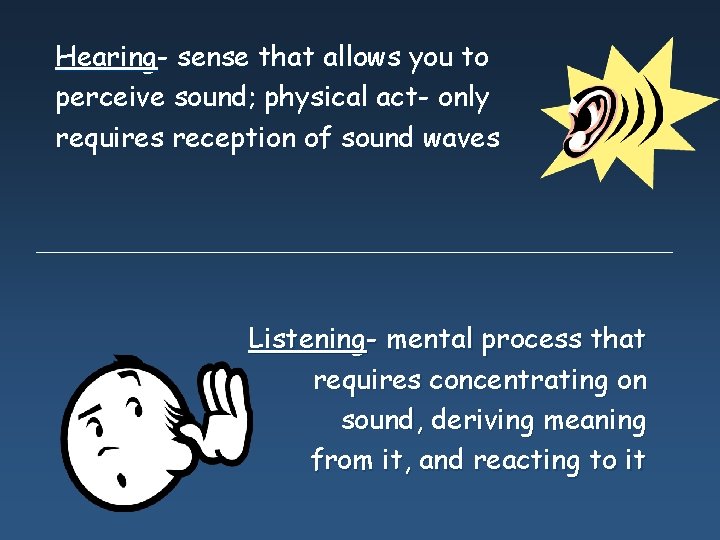
Hearing- sense that allows you to perceive sound; physical act- only requires reception of sound waves Listening- mental process that requires concentrating on sound, deriving meaning from it, and reacting to it
Listening Process
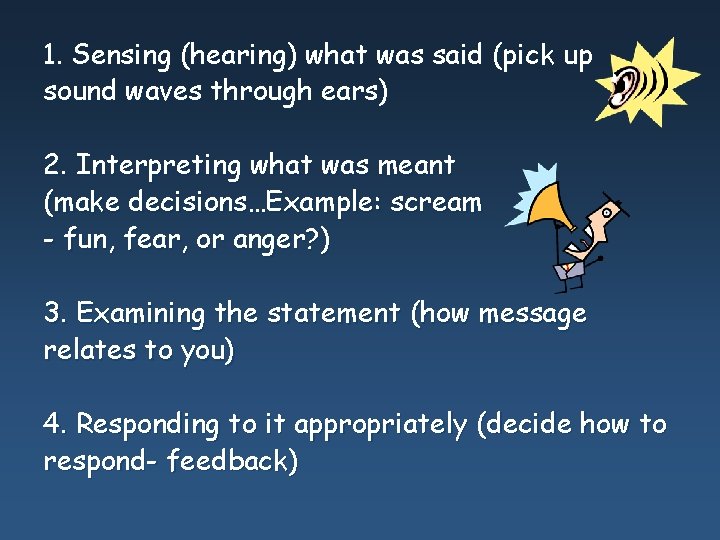
1. Sensing (hearing) what was said (pick up sound waves through ears) 2. Interpreting what was meant (make decisions…Example: scream - fun, fear, or anger? ) 3. Examining the statement (how message relates to you) 4. Responding to it appropriately (decide how to respond- feedback)
Purposes of Listening
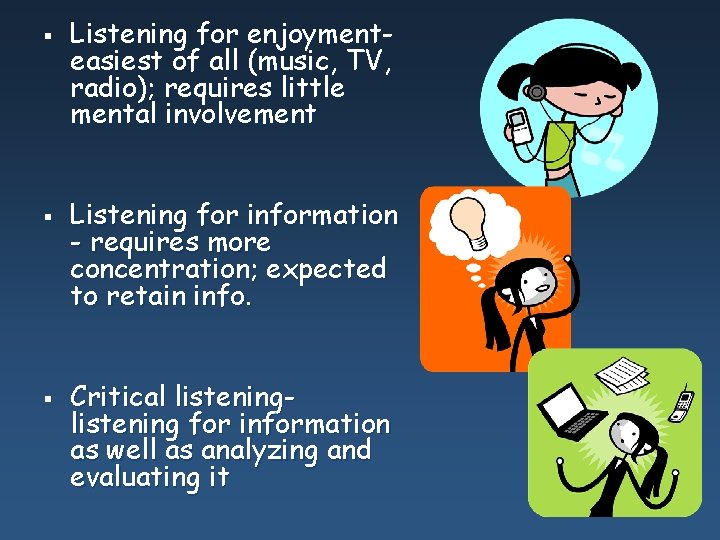
§ § § Listening for enjoymenteasiest of all (music, TV, radio); requires little mental involvement Listening for information - requires more concentration; expected to retain info. Critical listening for information as well as analyzing and evaluating it
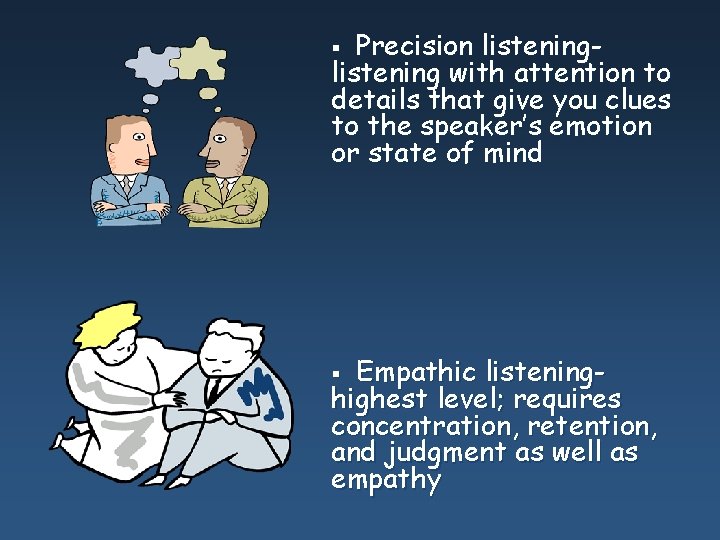
Precision listening with attention to details that give you clues to the speaker’s emotion or state of mind § Empathic listeninghighest level; requires concentration, retention, and judgment as well as empathy §
Barriers to Listening
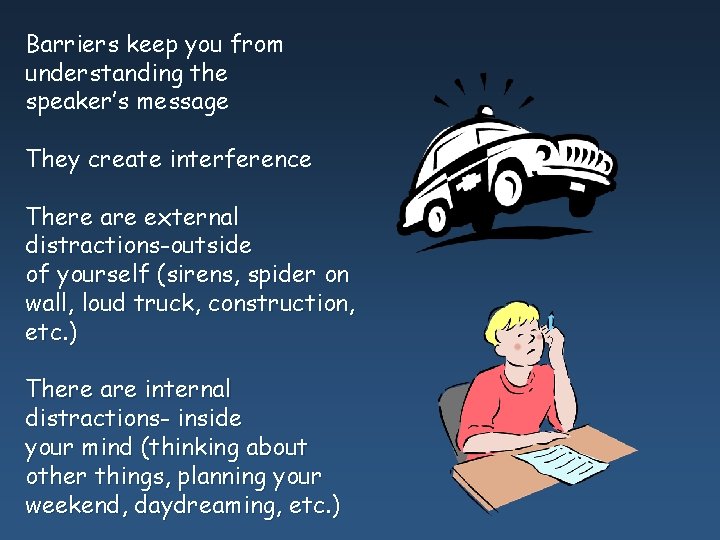
Barriers keep you from understanding the speaker’s message They create interference There are external distractions-outside of yourself (sirens, spider on wall, loud truck, construction, etc. ) There are internal distractions- inside your mind (thinking about other things, planning your weekend, daydreaming, etc. )
Your desire to talk- most people would rather talk than listen; planning our response Personal biases- being for or against an idea and letting that opinion form the basis of your thinking (adults about teenagers; culture- accents) Conflicting demands- doing too many things at one time; can’t give all your attention on one thing if it’s focused on two or three (eating and watching TV while talking on phone)
Improving Listening Work on concentration Practice good listening Prepare yourself to listen Listen for key words Take notes
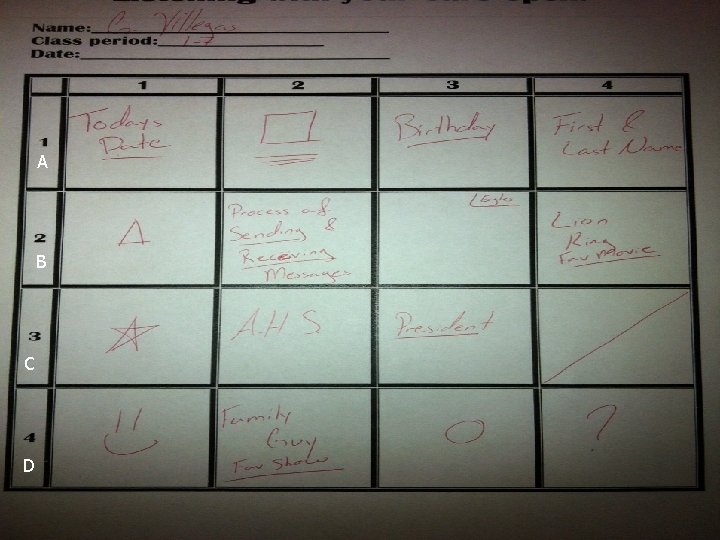
A B C D