
Hearing Loss in Alport Syndrome Dr Sudhira Ratnayake
- Slides: 21
Hearing Loss in Alport Syndrome Dr Sudhira Ratnayake Consultant in Audiovestibular Medicine Gem Centre Royal Wolverhampton NHS Trust 7/2/2015 Alport Information Day 1
Presentation outline • How does the ear work? • Why is the hearing organ involved in AS? • How does hearing loss appear in AS? • How is hearing loss managed? 7/2/2015 Alport Information Day 2
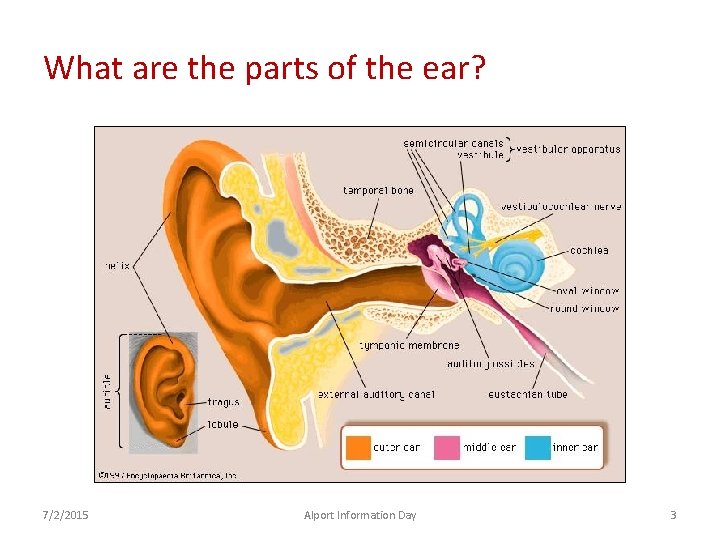
What are the parts of the ear? 7/2/2015 Alport Information Day 3
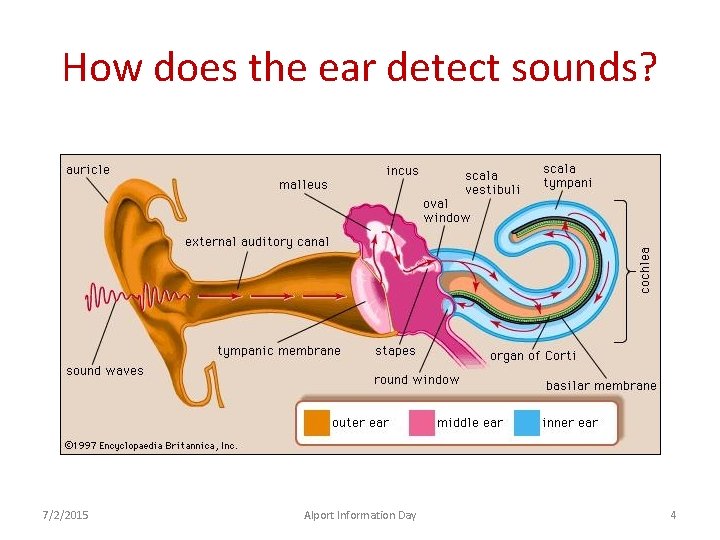
How does the ear detect sounds? 7/2/2015 Alport Information Day 4
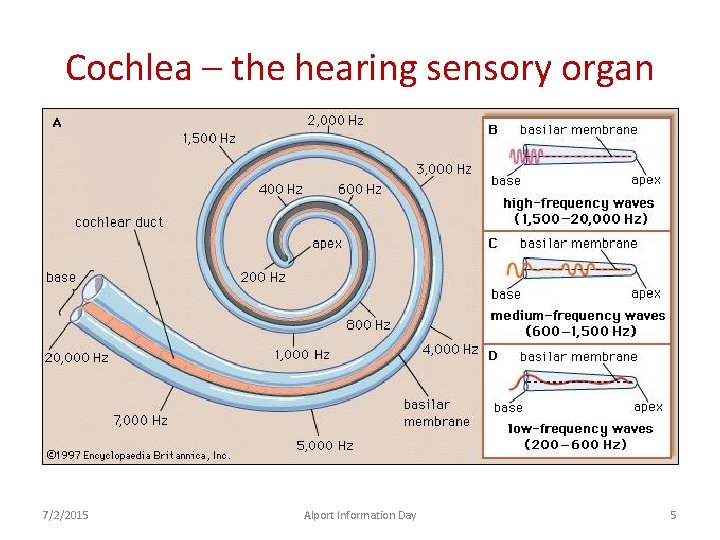
Cochlea – the hearing sensory organ 7/2/2015 Alport Information Day 5
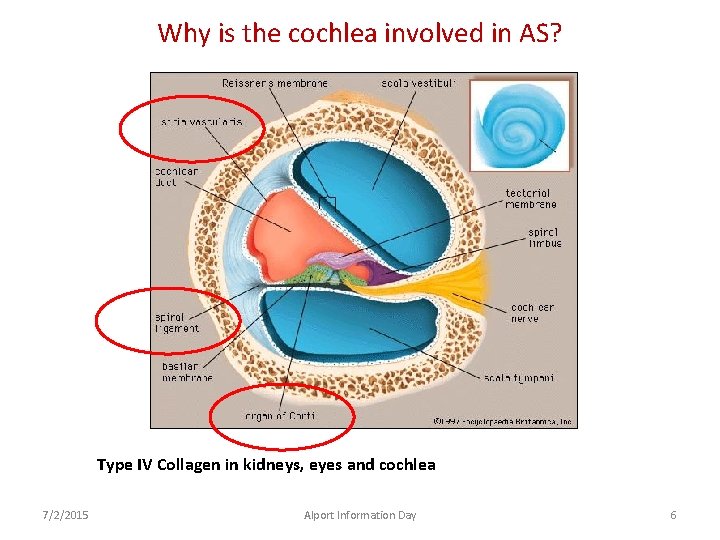
Why is the cochlea involved in AS? Type IV Collagen in kidneys, eyes and cochlea 7/2/2015 Alport Information Day 6
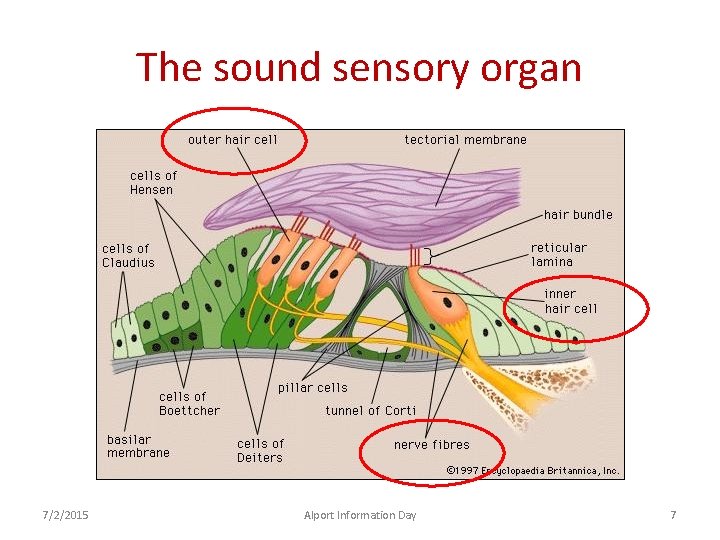
The sound sensory organ 7/2/2015 Alport Information Day 7
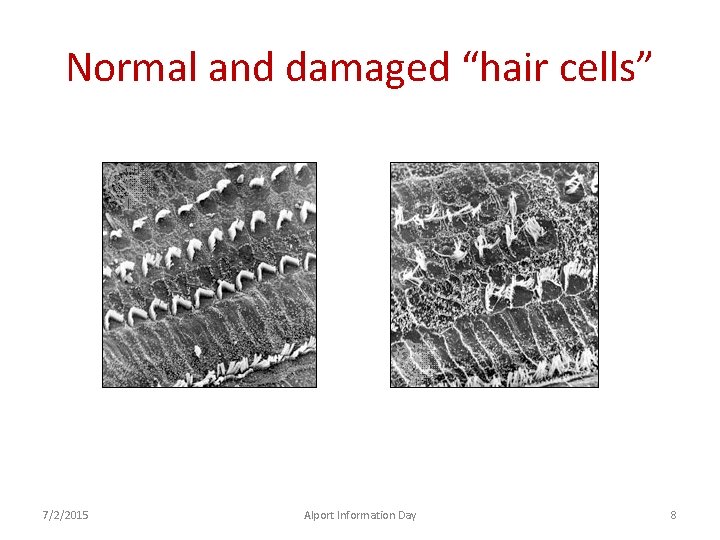
Normal and damaged “hair cells” 7/2/2015 Alport Information Day 8
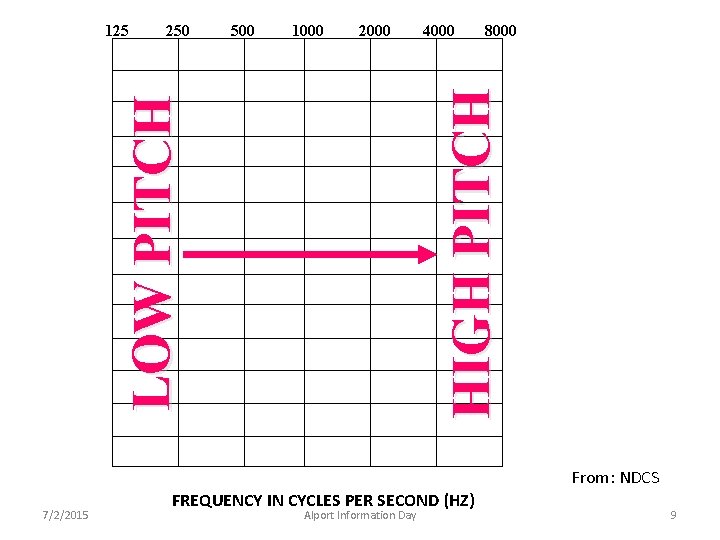
500 1000 2000 4000 8000 HIGH PITCH 250 LOW PITCH 125 From: NDCS 7/2/2015 FREQUENCY IN CYCLES PER SECOND (HZ) Alport Information Day 9
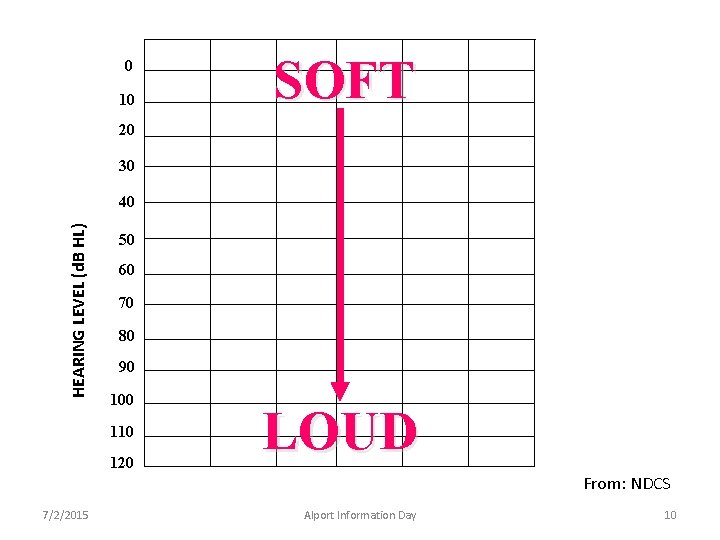
0 10 SOFT 20 30 HEARING LEVEL (d. B HL) 40 50 60 70 80 90 100 110 120 LOUD From: NDCS 7/2/2015 Alport Information Day 10
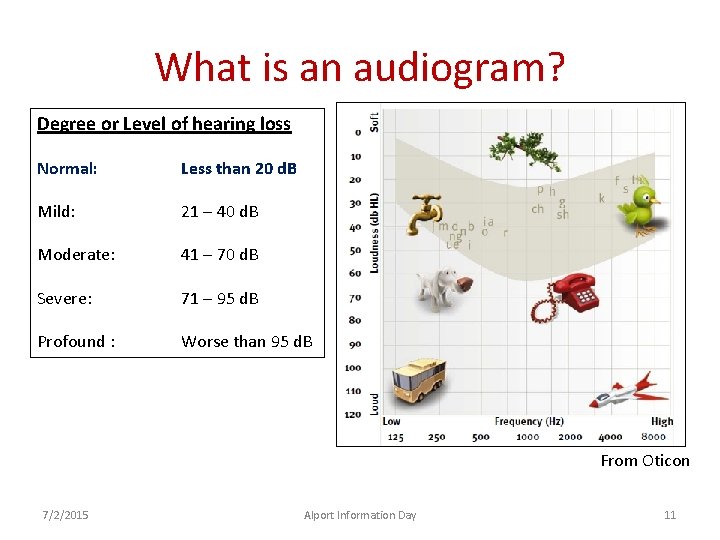
What is an audiogram? Degree or Level of hearing loss Normal: Less than 20 d. B Mild: 21 – 40 d. B Moderate: 41 – 70 d. B Severe: 71 – 95 d. B Profound : Worse than 95 d. B From Oticon 7/2/2015 Alport Information Day 11
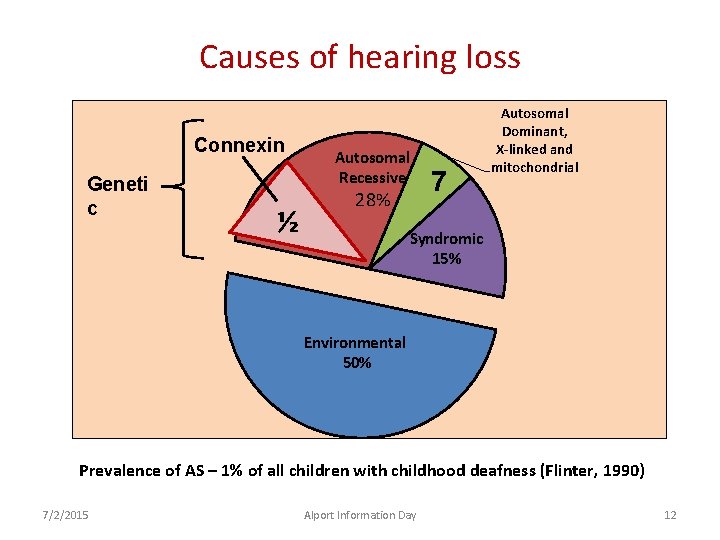
Causes of hearing loss Connexin Geneti c ½ Autosomal Recessive 28% 7 Autosomal Dominant, X-linked and mitochondrial Syndromic 15% Environmental 50% Prevalence of AS – 1% of all children with childhood deafness (Flinter, 1990) 7/2/2015 Alport Information Day 12
Hearing loss in AS • Hearing loss (HL) is one of the first features • 55% of males and 45% of females with AS • X-linked boys: common towards end of first decade of life or early teens • X-liked girls: HL less frequent and later in life • Autosomal Recessive AS (both sexes): childhood HL • Autosomal Dominant AS: Later ages 7/2/2015 Alport Information Day 13
Hearing loss in AS • Typically sensorineural i. e. affecting the cochlea • Variable degrees or levels of hearing loss • Typically affecting the middle and high frequencies, bilateral and symmetrical • Progression of hearing loss suggests poor prognosis of renal disease 7/2/2015 Alport Information Day 14
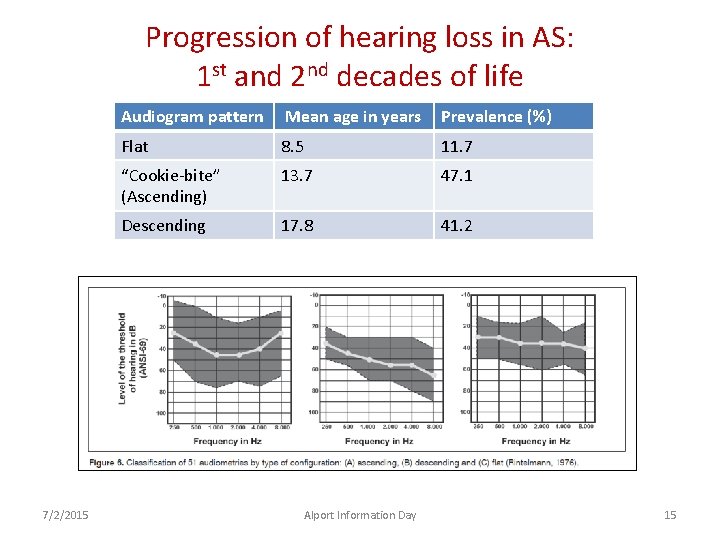
Progression of hearing loss in AS: 1 st and 2 nd decades of life 7/2/2015 Audiogram pattern Mean age in years Prevalence (%) Flat 8. 5 11. 7 “Cookie-bite” (Ascending) 13. 7 47. 1 Descending 17. 8 41. 2 Alport Information Day 15
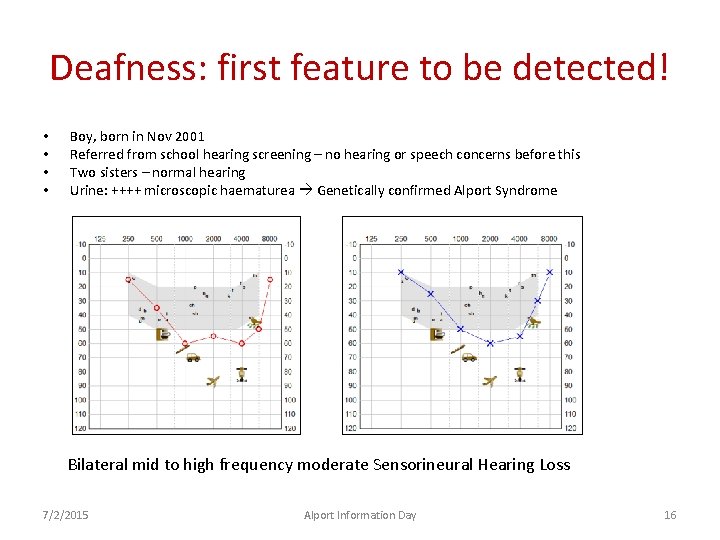
Deafness: first feature to be detected! • • Boy, born in Nov 2001 Referred from school hearing screening – no hearing or speech concerns before this Two sisters – normal hearing Urine: ++++ microscopic haematurea Genetically confirmed Alport Syndrome Bilateral mid to high frequency moderate Sensorineural Hearing Loss 7/2/2015 Alport Information Day 16
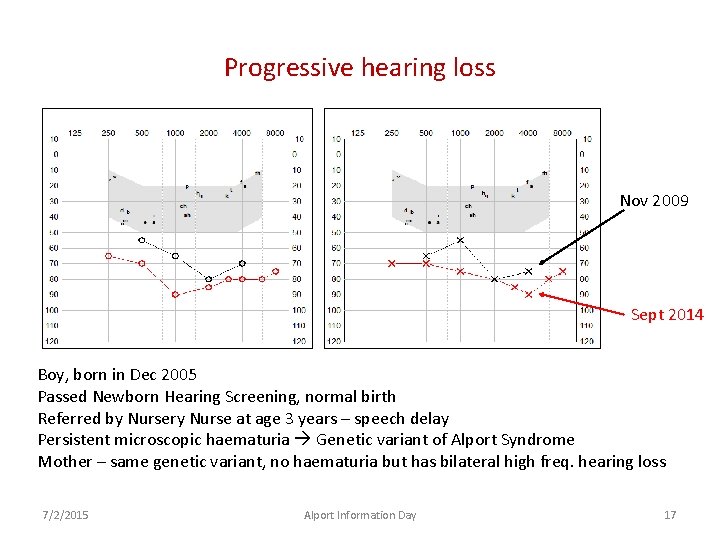
Progressive hearing loss Nov 2009 Sept 2014 Boy, born in Dec 2005 Passed Newborn Hearing Screening, normal birth Referred by Nursery Nurse at age 3 years – speech delay Persistent microscopic haematuria Genetic variant of Alport Syndrome Mother – same genetic variant, no haematuria but has bilateral high freq. hearing loss 7/2/2015 Alport Information Day 17
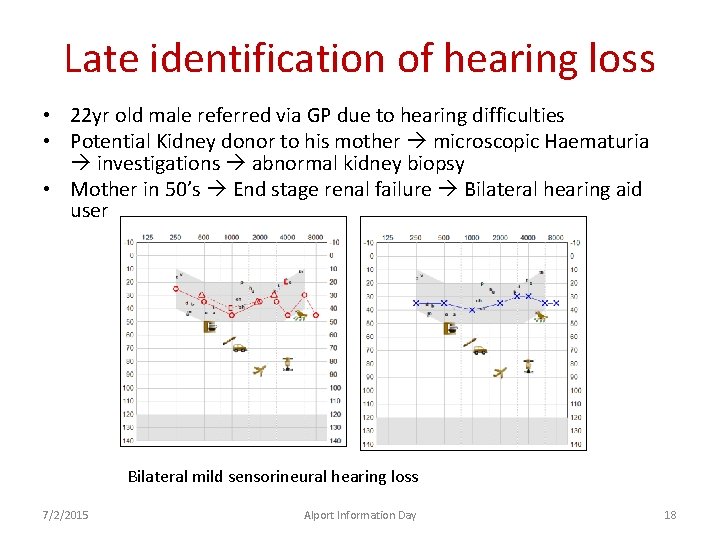
Late identification of hearing loss • 22 yr old male referred via GP due to hearing difficulties • Potential Kidney donor to his mother microscopic Haematuria investigations abnormal kidney biopsy • Mother in 50’s End stage renal failure Bilateral hearing aid user Bilateral mild sensorineural hearing loss 7/2/2015 Alport Information Day 18
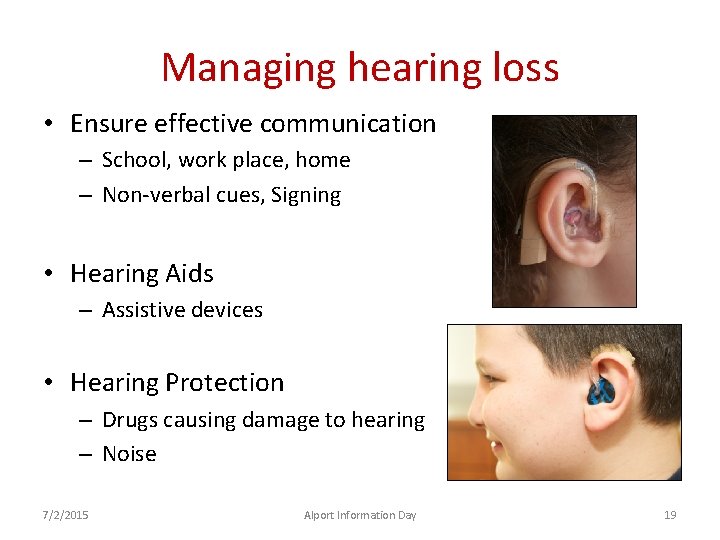
Managing hearing loss • Ensure effective communication – School, work place, home – Non-verbal cues, Signing • Hearing Aids – Assistive devices • Hearing Protection – Drugs causing damage to hearing – Noise 7/2/2015 Alport Information Day 19
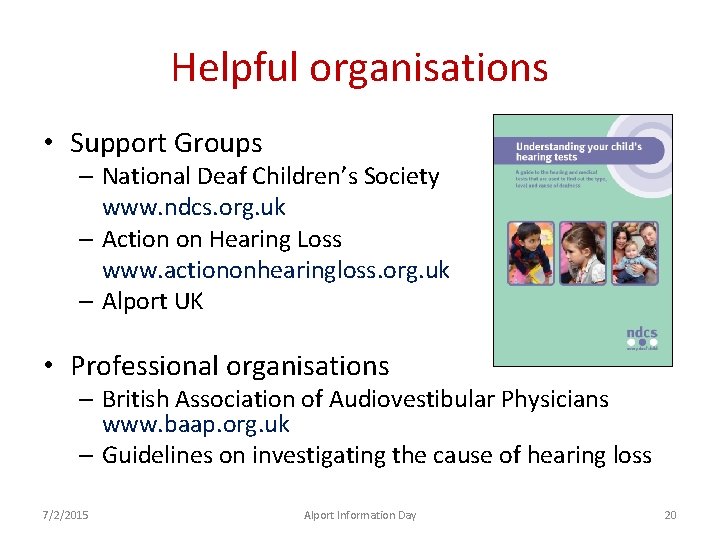
Helpful organisations • Support Groups – National Deaf Children’s Society www. ndcs. org. uk – Action on Hearing Loss www. actiononhearingloss. org. uk – Alport UK • Professional organisations – British Association of Audiovestibular Physicians www. baap. org. uk – Guidelines on investigating the cause of hearing loss 7/2/2015 Alport Information Day 20
Summary • Investigate the underlying cause of hearing loss – Other organs in the body may be involved – Overall diagnosis • Regular monitoring of hearing levels in AS – Look for progression – Worsening hearing loss may indicate deterioration in kidney function 7/2/2015 Alport Information Day 21