
Hearing Conservation Effects of noise Causes hearing loss



- Slides: 27
Hearing Conservation
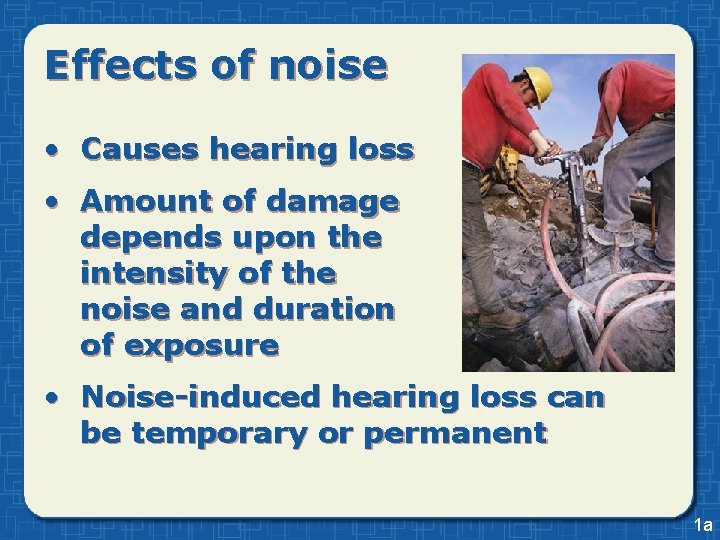
Effects of noise • Causes hearing loss • Amount of damage depends upon the intensity of the noise and duration of exposure • Noise-induced hearing loss can be temporary or permanent 1 a
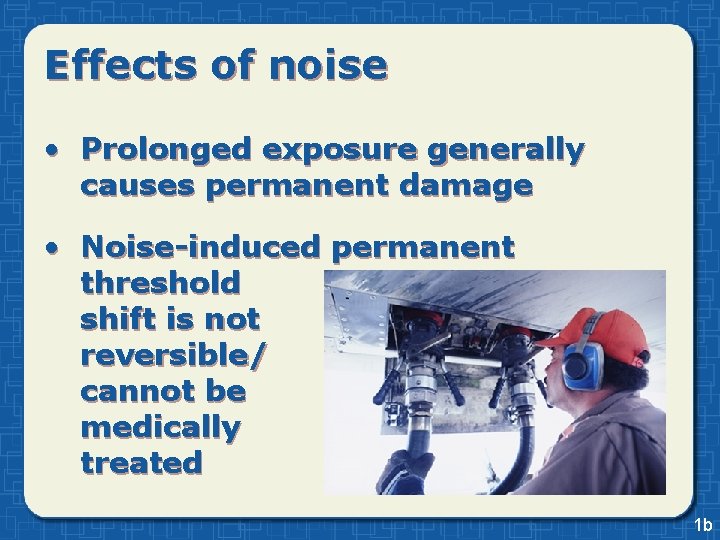
Effects of noise • Prolonged exposure generally causes permanent damage • Noise-induced permanent threshold shift is not reversible/ cannot be medically treated 1 b
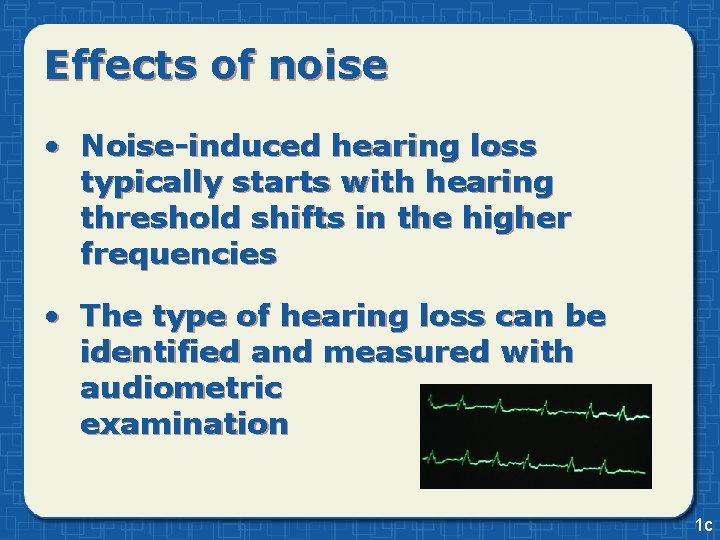
Effects of noise • Noise-induced hearing loss typically starts with hearing threshold shifts in the higher frequencies • The type of hearing loss can be identified and measured with audiometric examination 1 c
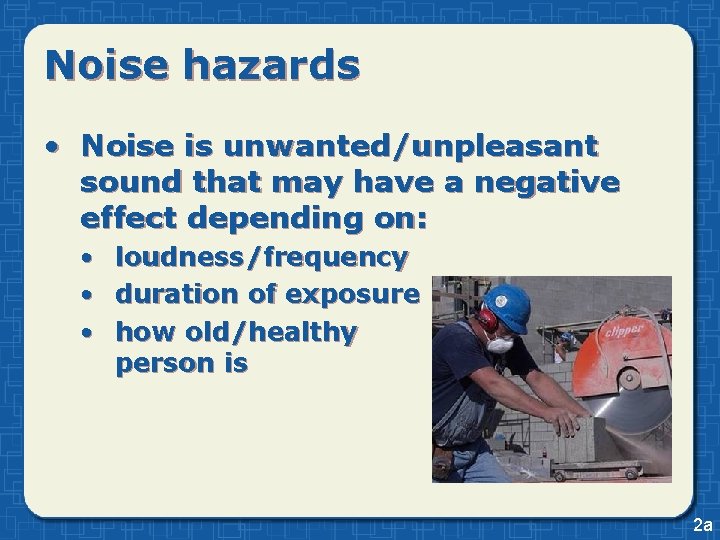
Noise hazards • Noise is unwanted/unpleasant sound that may have a negative effect depending on: • • • loudness/frequency duration of exposure how old/healthy person is 2 a
Noise hazards • Sound is measured by: • frequency • intensity • Noise types include: • wide band • narrow band • impulse 2 b
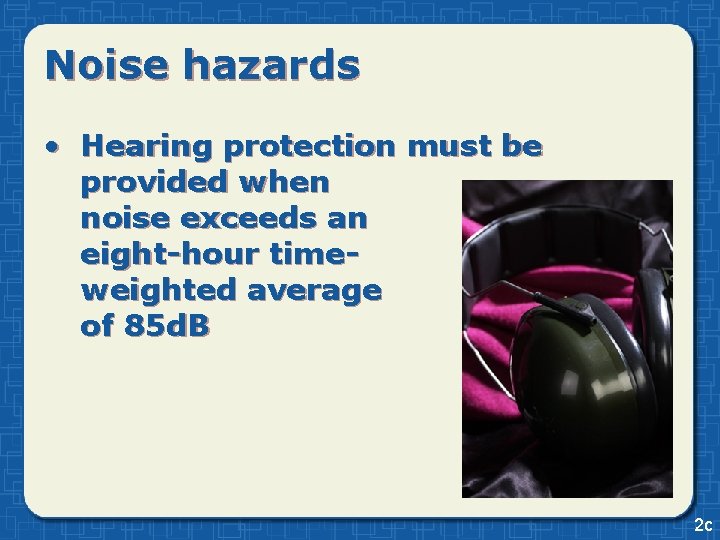
Noise hazards • Hearing protection must be provided when noise exceeds an eight-hour timeweighted average of 85 d. B 2 c
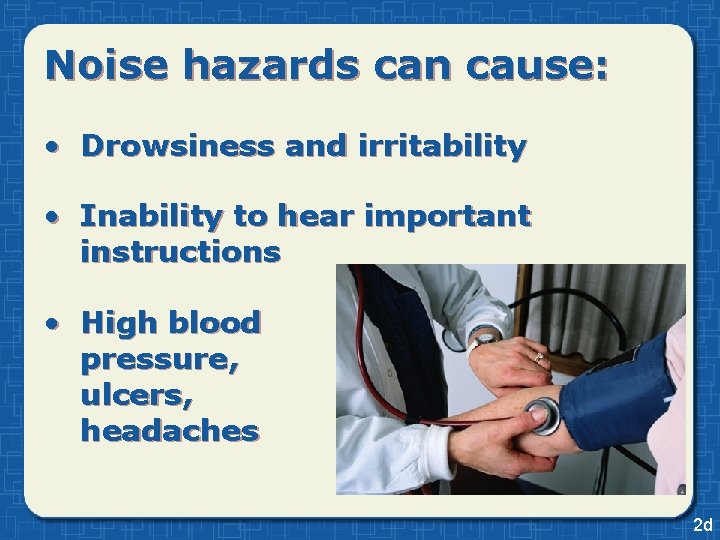
Noise hazards can cause: • Drowsiness and irritability • Inability to hear important instructions • High blood pressure, ulcers, headaches 2 d
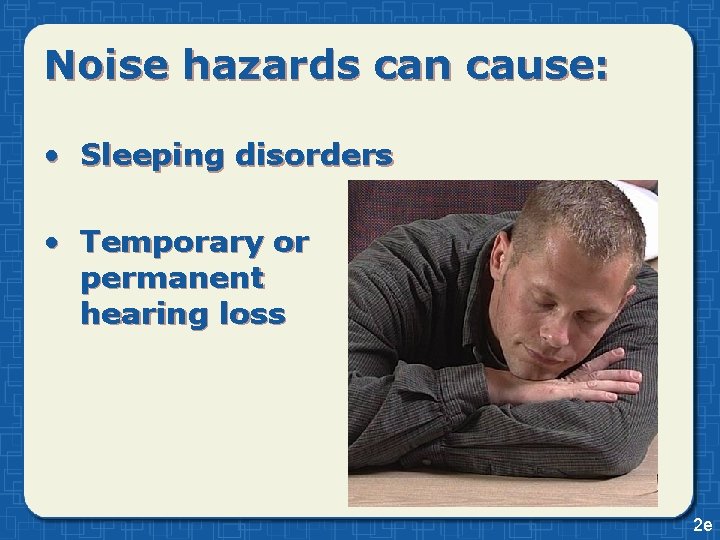
Noise hazards can cause: • Sleeping disorders • Temporary or permanent hearing loss 2 e
Engineering controls • Isolate noisy machinery in a separate area • Place machinery on rubber mountings • Use soundabsorbing acoustical tiles 3 a
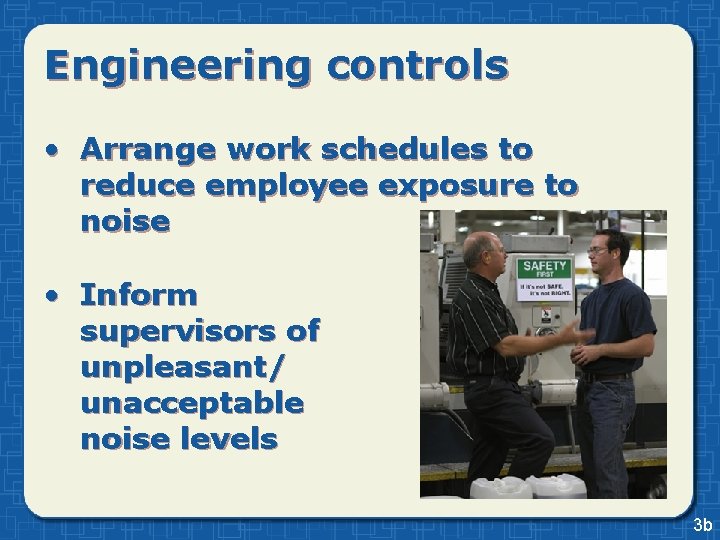
Engineering controls • Arrange work schedules to reduce employee exposure to noise • Inform supervisors of unpleasant/ unacceptable noise levels 3 b
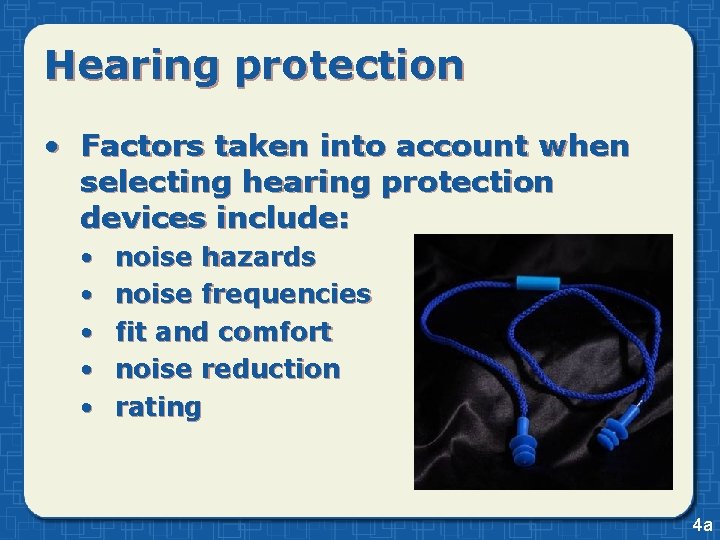
Hearing protection • Factors taken into account when selecting hearing protection devices include: • • • noise hazards noise frequencies fit and comfort noise reduction rating 4 a
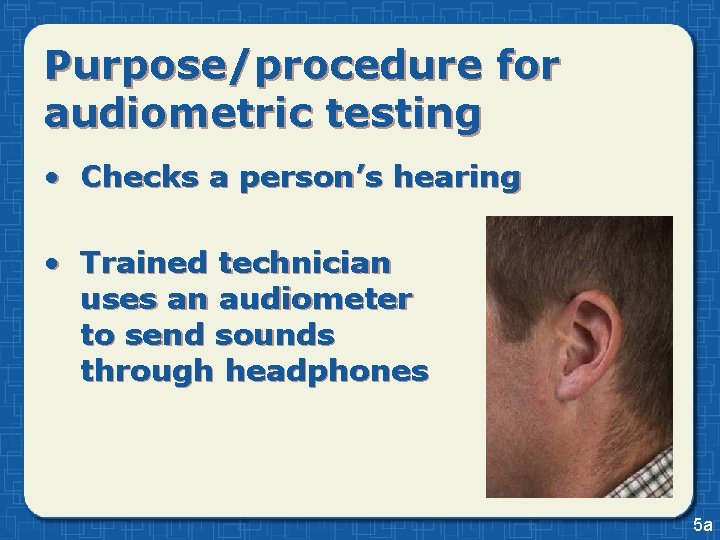
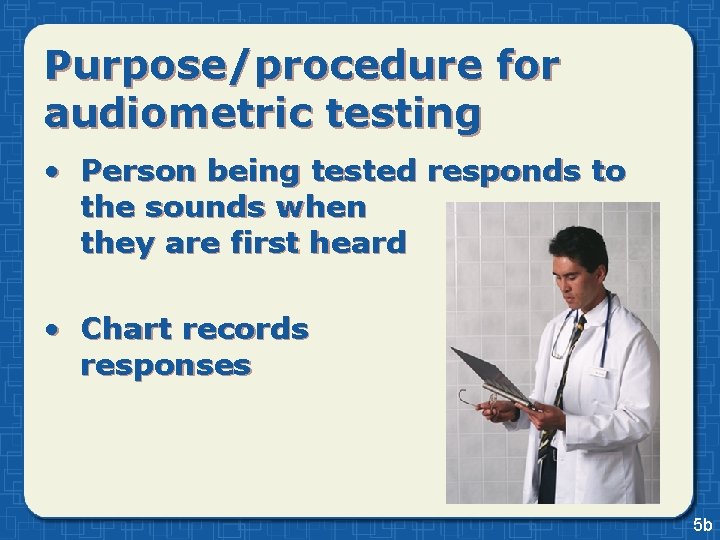
Purpose/procedure for audiometric testing • Checks a person’s hearing • Trained technician uses an audiometer to send sounds through headphones 5 a
Purpose/procedure for audiometric testing • Person being tested responds to the sounds when they are first heard • Chart records responses 5 b
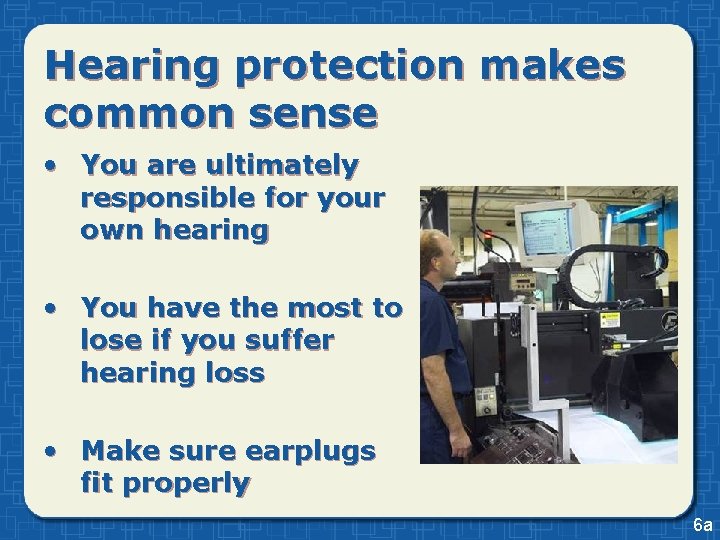
Hearing protection makes common sense • You are ultimately responsible for your own hearing • You have the most to lose if you suffer hearing loss • Make sure earplugs fit properly 6 a
Hearing protection makes common sense • Have an annual hearing test • Keep hearing protection devices in good operation 6 b
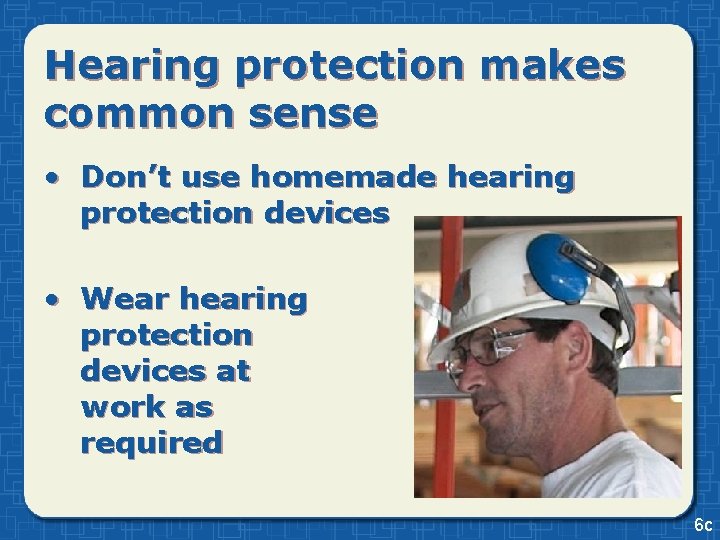
Hearing protection makes common sense • Don’t use homemade hearing protection devices • Wear hearing protection devices at work as required 6 c
Jay Industries, Inc. Hearing Conservation Program • Audiometric Testing Trailer • Noise protection training • Medical Surveillance
Hearing Conservation Program Components • Conduct hearing tests • Testing and reporting meets OSHA requirements • Medical follow-up if needed • Noise monitoring • Education and training
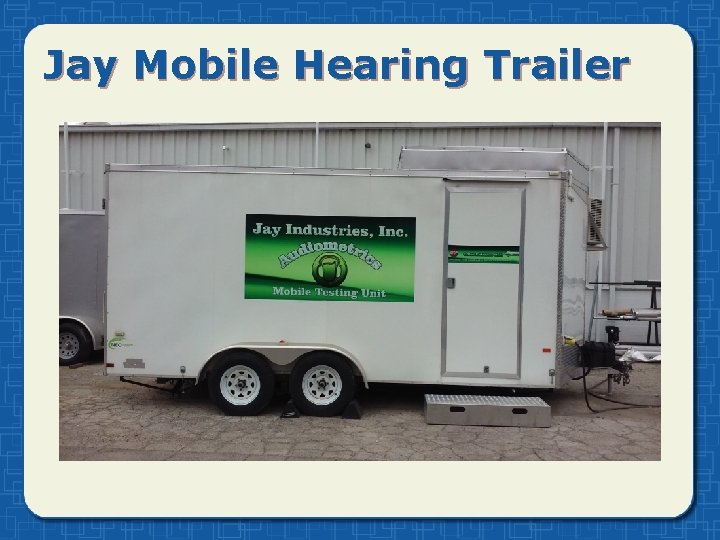
Jay Mobile Hearing Trailer
Hearing Testing • State of the art audiometric equipment • Self-contained trailer • Certified Occupational Conservationist on staff • Annual testing if needed • Testing upon hire
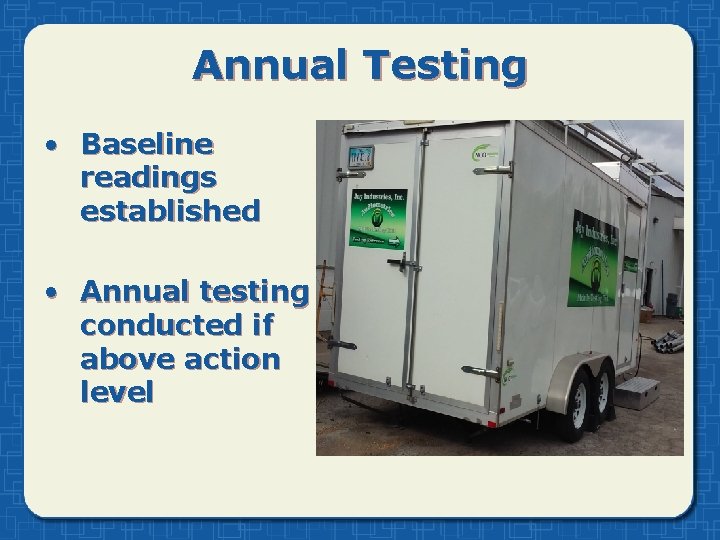
Annual Testing • Baseline readings established • Annual testing conducted if above action level
OSHA Requirements • Reportable thresh holds are established • OSHA reports determined with professional supervision • OSHA reports are filed as needed
Medical Follow-up • Re-testing as required, through Audiology Dept. of AVITA • Professional review of borderline hearing thresh holds • Professional review of hearing changes • Professional referral if needed
Noise Monitoring • Noisy areas in plants are monitored • Dosimeter calibrated annually • Noise maps are established • Noise readings available upon request
Testing upon hire • New employees tested within six months of hire • This establishes a baseline
Any questions? • Contact HR, EHS, or your supervisor