
Hearing Assessment Speech Therapy In CP Downs syndrome





- Slides: 30
Hearing Assessment & Speech Therapy (In CP & Down’s syndrome) Dr. Abhishek Bhardwaj
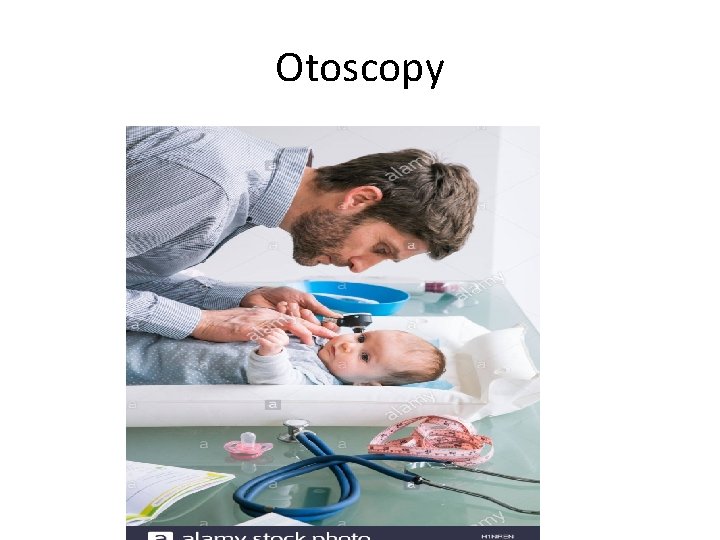
Otoscopy
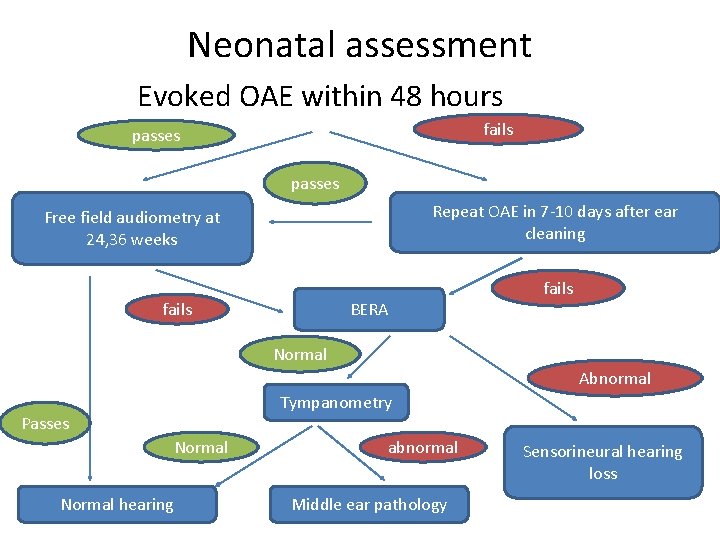
Neonatal assessment Evoked OAE within 48 hours fails passes Repeat OAE in 7 -10 days after ear cleaning Free field audiometry at 24, 36 weeks fails BERA fails Normal Abnormal Tympanometry Passes Normal hearing abnormal Middle ear pathology Sensorineural hearing loss
• EOAE • BERA • Tympanometry
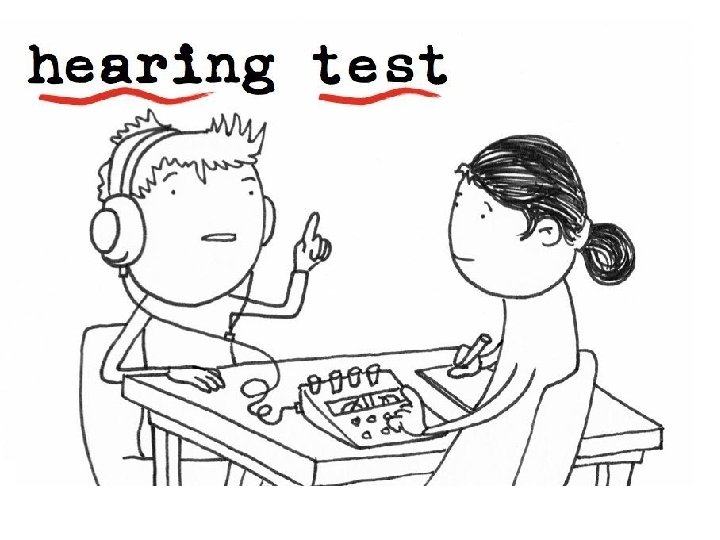
Pure Tone Audiometry • Adjustments needed in patients of Down’s syndrome/CP -Allowing the person to sit in a larger test room -Giving the person more time to respond
-Playing sounds through speakers first to allow a person to become acclimatised, before rushing to put headphones over their ears -Instead of insisting the person press a button in response to sound, trying an alternative such as raising their hand or saying “Yes”.
Clinical tests • <3 months -startle reflex • 5 -6 months -localization to noise • 9 months -localization to name calling
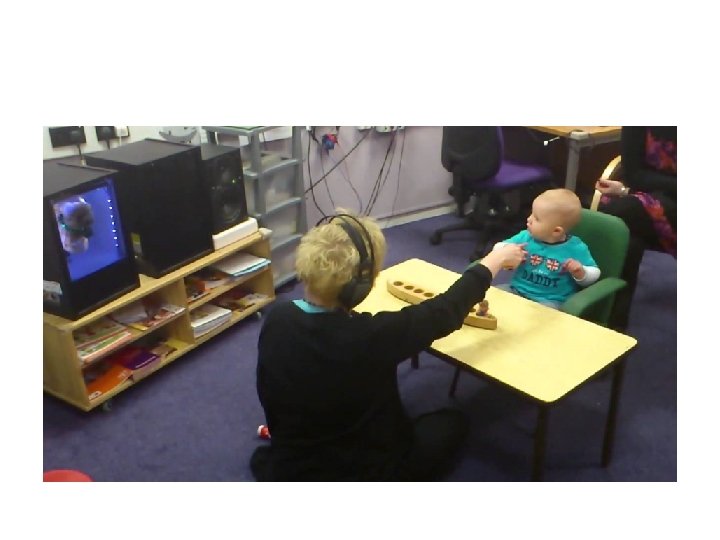
• Free field audiometry • Visual reinforcement audiometry
Importance • Language is vital for mental and social development. • Words equal knowledge, the faster a child learns vocabulary, the faster he/she acquires knowledge about the world.
• Although delayed, children with down syndrome will use spoken language as their main means of communication. • Signs are used as a bridge to talking, not to teach a sign language.
• As children acquire language, they can -ask for, what they want -explain how they feel -describe what they have been doing -share thoughts and worries with friends
No points for guessing the reason of worry
Principles of effective intervention • Target for the following component of speech and language skill -vocabulary -communication -grammar
• Use of sign language to promote spoken language • Using reading activities to teach spoken language • Focus of effective therapy must be to share skills with parents. • Parents are the main therapists.
Models of delivery • Individual Home visits -preferred in 1 st year of age • Group sessions -cost effective way
First year of life • Encourage good communication environment at home -Eye contact, turn taking, pointing • Provide support for feeding and activities for oralmotor development • Encourage the use of gesture and sign to aid comprehension
Second year of life • Continue with targeted work • Keep a record of speech sound progress • Vocabulary teaching with games using objects, pictures
Third to fifth year • Developing early grammar and syntax (arrangement of words and phrases to create well-formed sentences in a language) • Include reading activities to ensure the children understand what they are reading.
• If observers complain that children read but do not understand what they are reading, this is the fault of the teacher not the child.
Primary school years and further • Ideally all children should receive speech and language therapy • Access to service varies • Progress at five years varies widely between children and furtherapy is dependant on the progress. • Target oriented therapy
• Aim to further improvise -vocabulary -grammar -communication skill
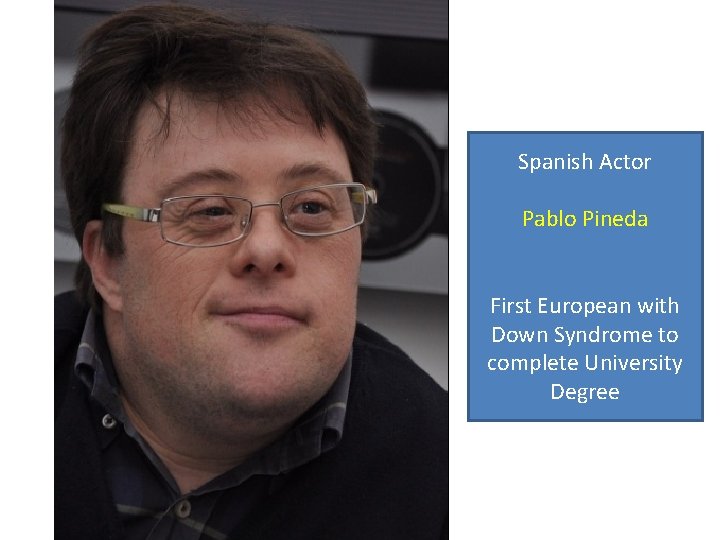
Spanish Actor Pablo Pineda First European with Down Syndrome to complete University Degree
Thank You