
Hearing and Deafness 1 Anatomy physiology Chris Darwin





- Slides: 28
Hearing and Deafness 1. Anatomy & physiology Chris Darwin Web site for lectures, lecture notes and filtering lab: http: //www. lifesci. sussex. ac. uk/home/Chris_Darwin/ look under: "Teaching material for students" "Perception & Attention"
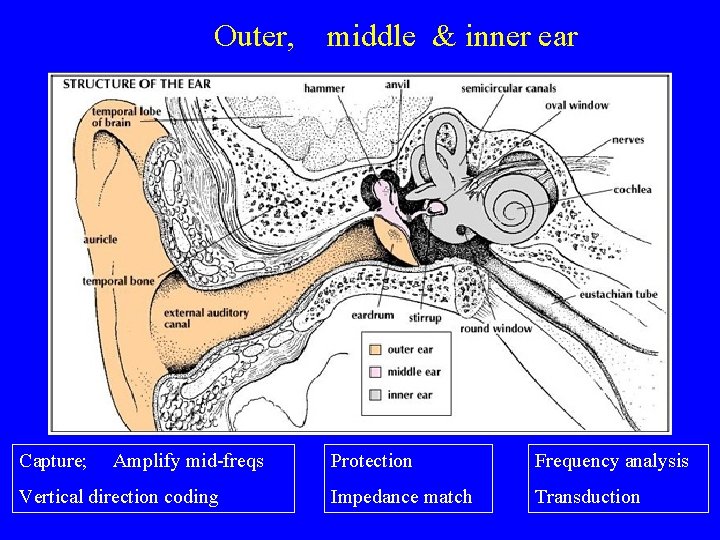
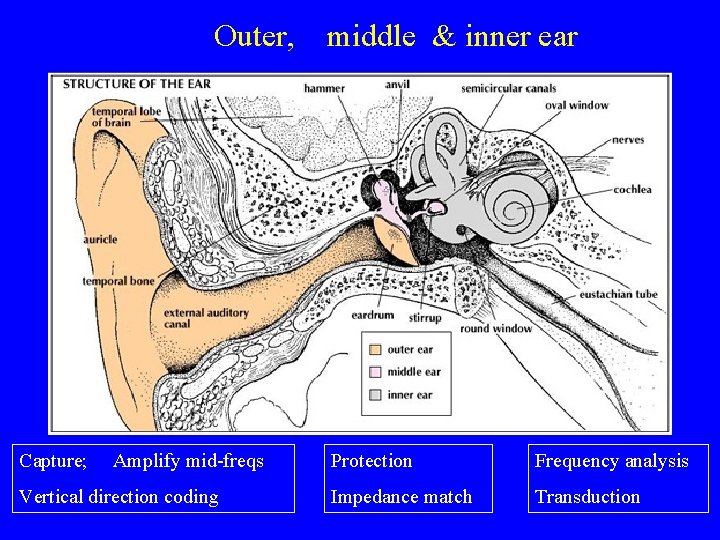
Outer, Capture; Amplify mid-freqs Vertical direction coding middle & inner ear Protection Frequency analysis Impedance match Transduction
Middle ear structure
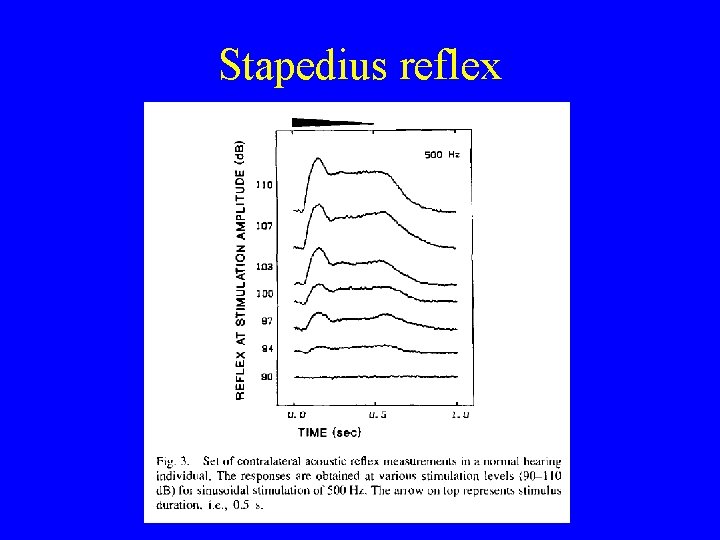
Stapedius reflex
Conductive hearing loss • Sounds don’t get into cochlea • Middle ear problems • Helped by surgery and by amplification
Outer, Capture; Amplify mid-freqs Vertical direction coding middle & inner ear Protection Frequency analysis Impedance match Transduction
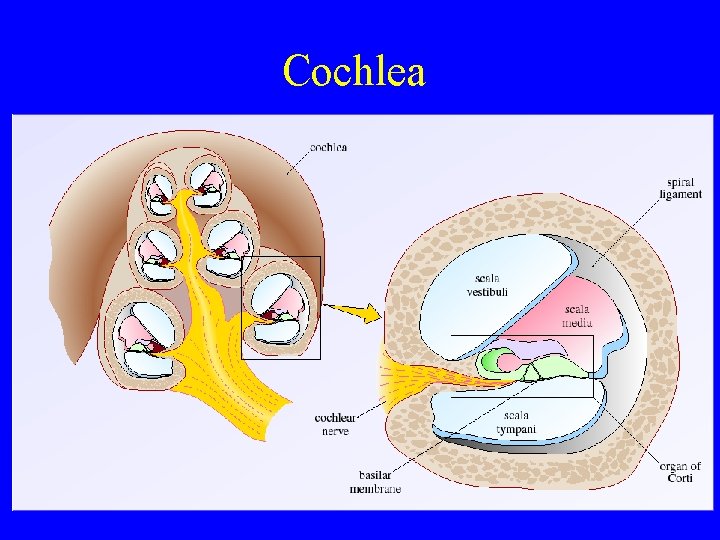
Cochlea
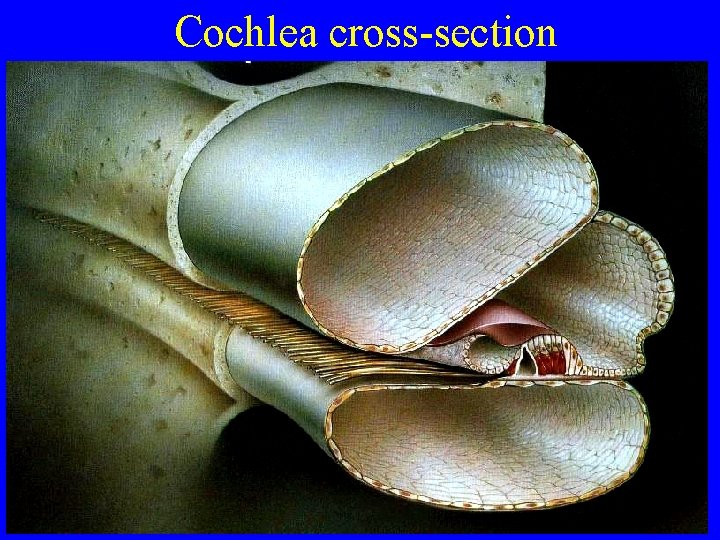
Cochlea cross-section
Travelling wave on basilar membrane sorts sounds by frequency
Reponse of basilar membrane to sine waves Each point on the membrane responds best to a different frequency: high freq at base, low at apex. amadeus praat
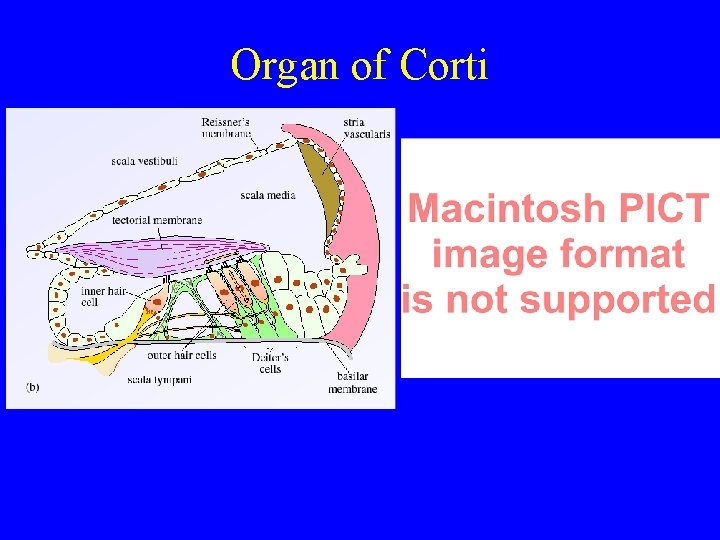
Organ of Corti
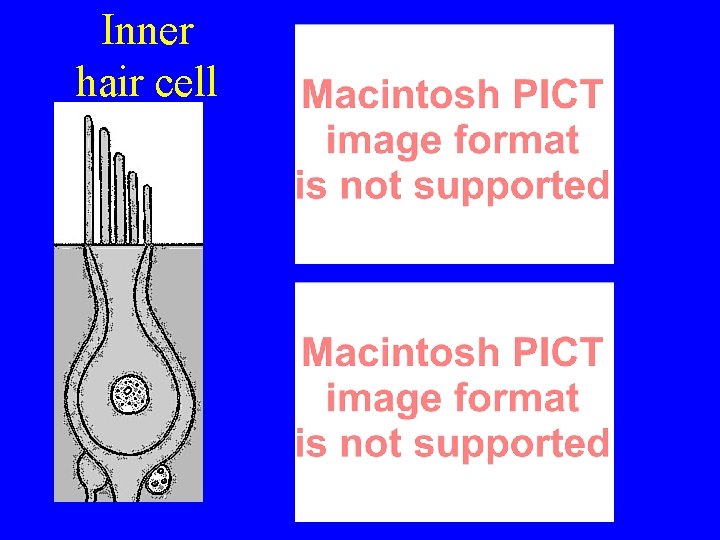
Inner hair cell
Hair Cell Stereocilia
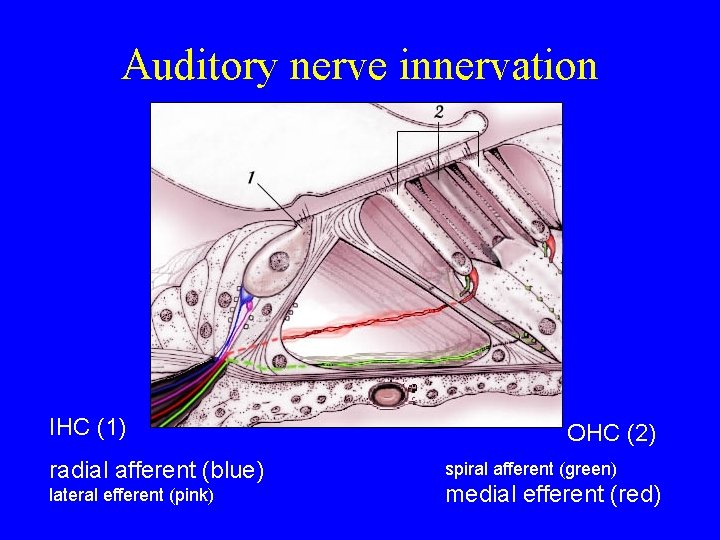
Auditory nerve innervation IHC (1) radial afferent (blue) lateral efferent (pink) OHC (2) spiral afferent (green) medial efferent (red)
Auditory nerve rate-intensity functions
Phase Locking of Inner Hair Cells Auditory nerve connected to inner hair cell tends to fire at the same phase of the stimulating waveform.
Phase-locking
Inner vs Outer Hair Cells
Inner vs Outer Hair Cells
OHC movement Passive No OHC movement Active With OHC movement
OHC activity OHCs are relatively more active for quiet sounds than for loud sounds. They only amplify sounds that have the characteristic frequency of their place. • Increases sensitivity (lowers thresholds) • Increases selectivity (reduces bandwidth of auditory filter) • Gives ear a logarithmic (non-linear) amplitude response • Produce Oto-acoustic emissions
Conductive vs Sensori-neural deafness Mostly a combination of OHC and IHC damage Becomes linear, so No combination tones Or two-tone suppression
Auditory nerve frequency-threshold curves
Auditory tuning curves Inner hair-cell damage Healthy ear
Outer-hair cell damage
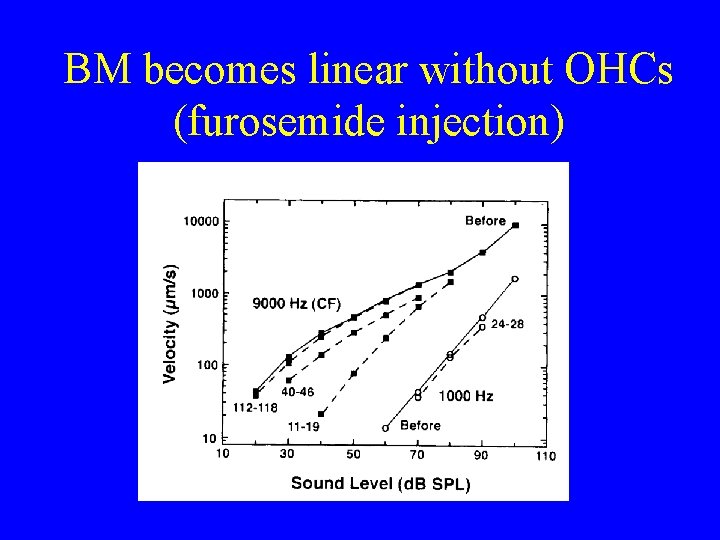
BM becomes linear without OHCs (furosemide injection)
Amplification greater and tuning more selective at low levels Robles, L. and Ruggero, M. A. (2001). "Mechanics of the mammalian cochlea, " Physiological Review 81, 1305 -1352.
Normal auditory non-linearities • Normal loudness growth (follows Weber’s Law) • Combination tones • Two-tone suppression • Oto-acoustic emissions 880 ->1320