
Hearing Aka Audition The Stimulus Input Sound Waves




- Slides: 26
Hearing Aka: Audition
The Stimulus Input: Sound Waves Sound waves are composed of compression and rarefaction of air molecules. Acoustical transduction: Conversion of sound waves into neural impulses in the hair cells of the inner ear.
Sound Characteristics 1. Frequency (pitch) 2. Intensity (loudness) 3. Quality (timbre)
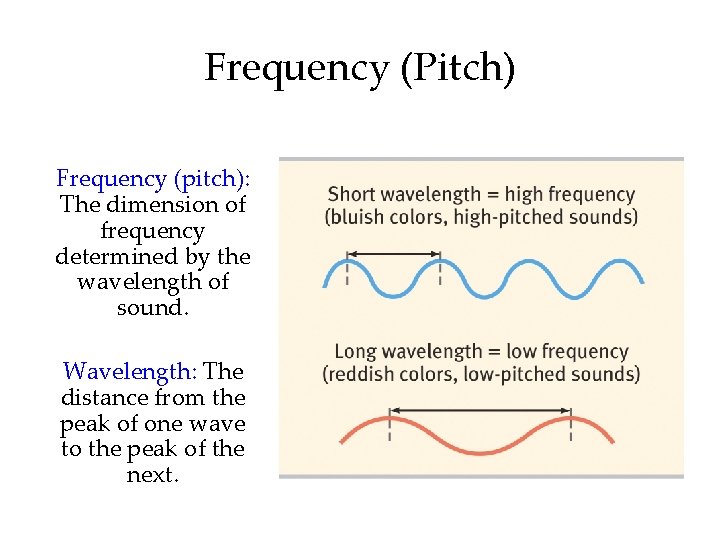
Frequency (Pitch) Frequency (pitch): The dimension of frequency determined by the wavelength of sound. Wavelength: The distance from the peak of one wave to the peak of the next.
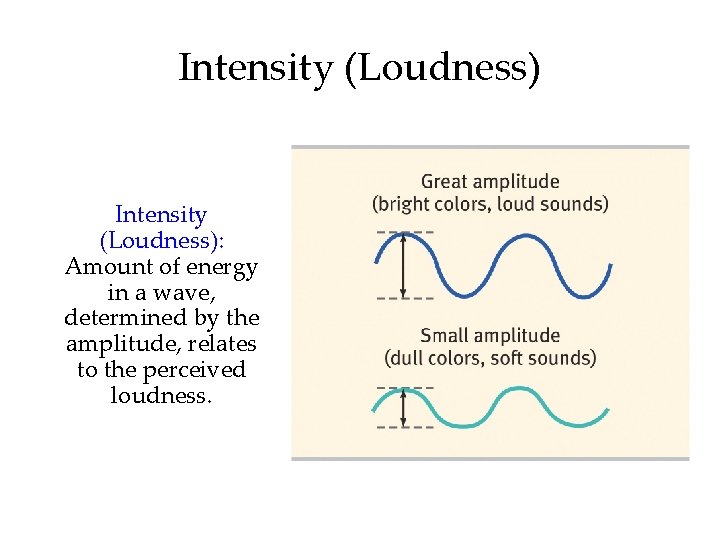
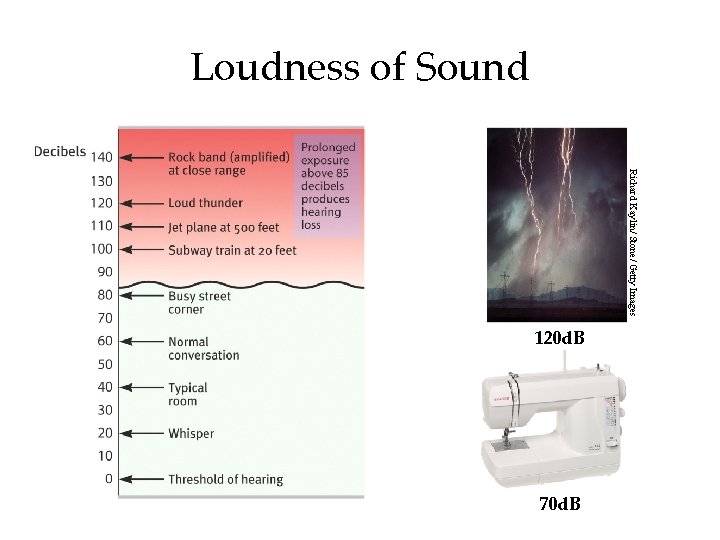
Intensity (Loudness): Amount of energy in a wave, determined by the amplitude, relates to the perceived loudness.
Loudness of Sound Richard Kaylin/ Stone/ Getty Images 120 d. B 70 d. B
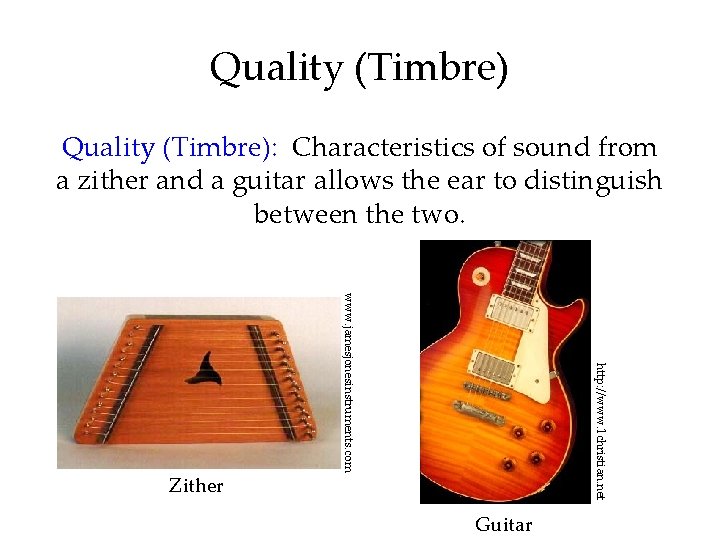
Quality (Timbre): Characteristics of sound from a zither and a guitar allows the ear to distinguish between the two. http: //www. 1 christian. net www. jamesjonesinstruments. com Zither Guitar
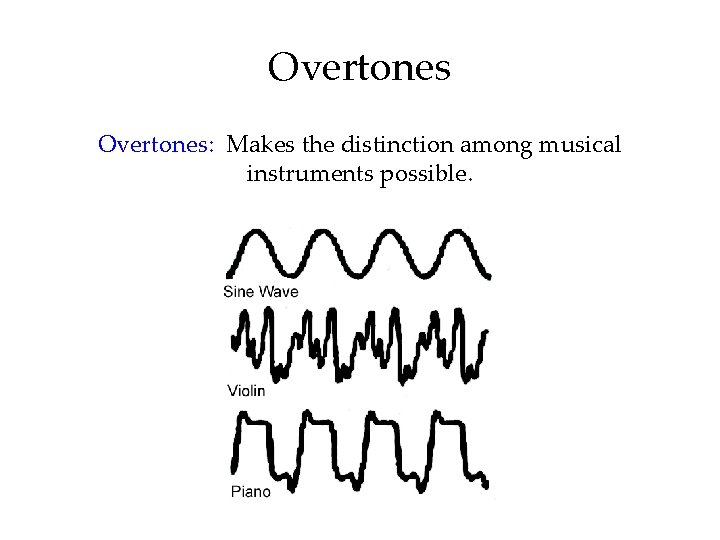
Overtones: Makes the distinction among musical instruments possible.
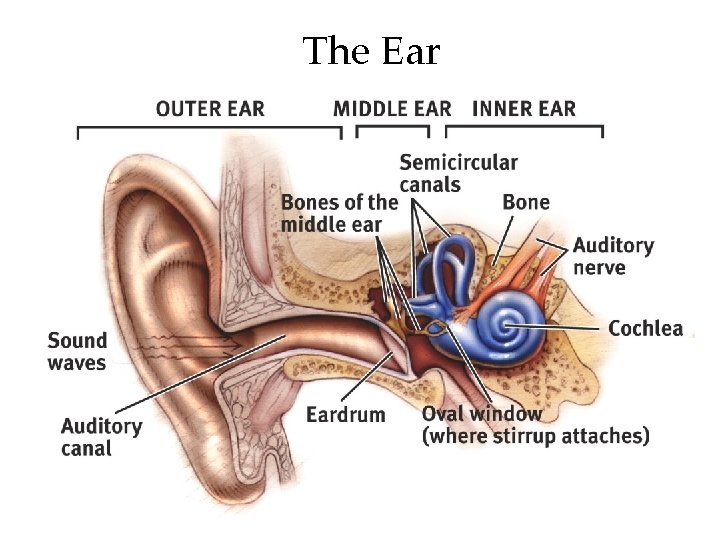
The Ear
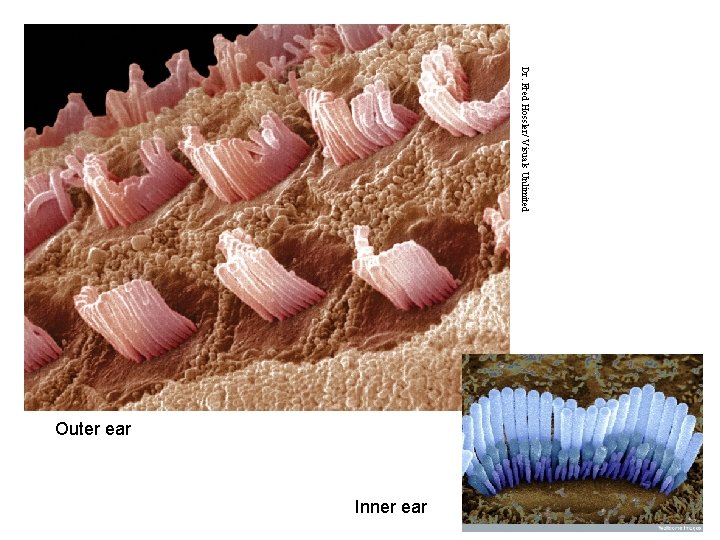
Dr. Fred Hossler/ Visuals Unlimited Outer ear Inner ear
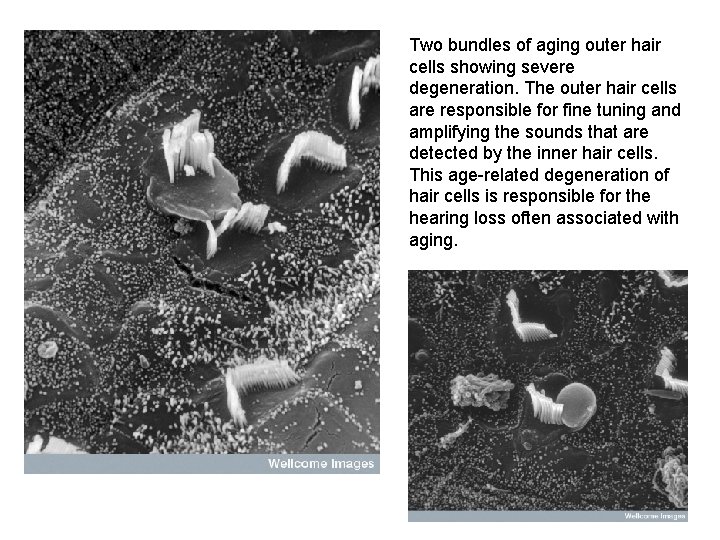
Two bundles of aging outer hair cells showing severe degeneration. The outer hair cells are responsible for fine tuning and amplifying the sounds that are detected by the inner hair cells. This age-related degeneration of hair cells is responsible for the hearing loss often associated with aging.
The Ear Outer Ear: Pinna. Collects sounds. Middle Ear: Chamber between eardrum and cochlea containing three tiny bones (hammer, anvil, stirrup) that concentrate the vibrations of the eardrum on the cochlea’s oval window. Inner Ear: Innermost part of the ear, containing the cochlea, semicircular canals, and vestibular sacs.
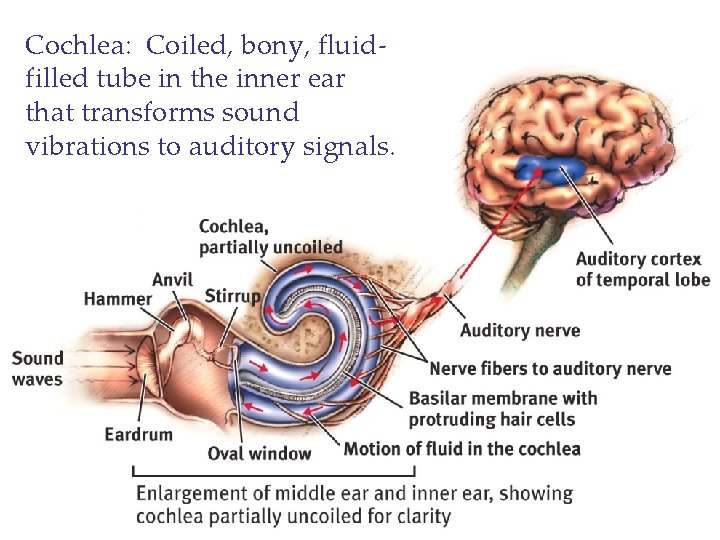
Cochlea: Coiled, bony, fluidfilled tube in the inner ear that transforms sound vibrations to auditory signals.
• Video clip: anatomy of the ear: https: //www. youtube. com/wat ch? v=p 3 Oy 4 lod. ZU 4
How do we perceive differences in pitch? There are two theories……. .
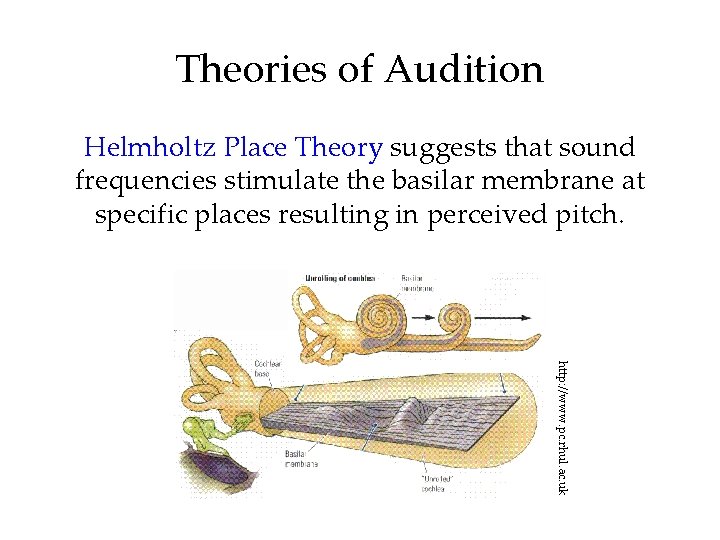
Theories of Audition Helmholtz Place Theory suggests that sound frequencies stimulate the basilar membrane at specific places resulting in perceived pitch. http: //www. pc. rhul. ac. uk
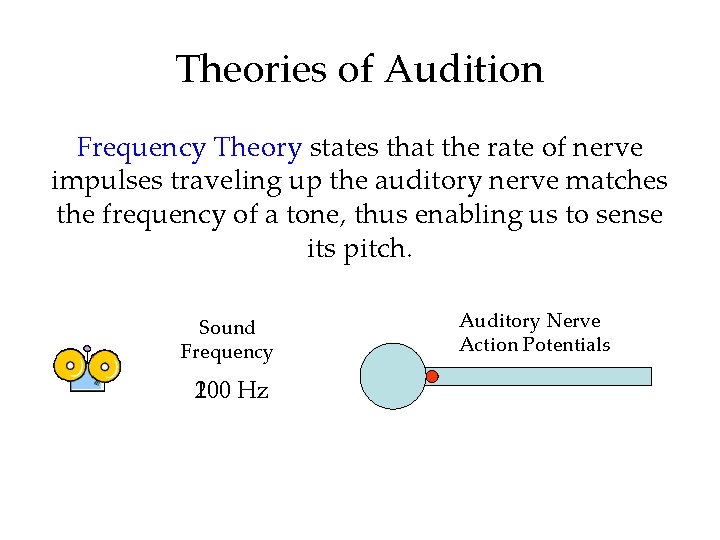
Theories of Audition Frequency Theory states that the rate of nerve impulses traveling up the auditory nerve matches the frequency of a tone, thus enabling us to sense its pitch. Sound Frequency 100 Hz 200 Auditory Nerve Action Potentials
Why do we have two ears?
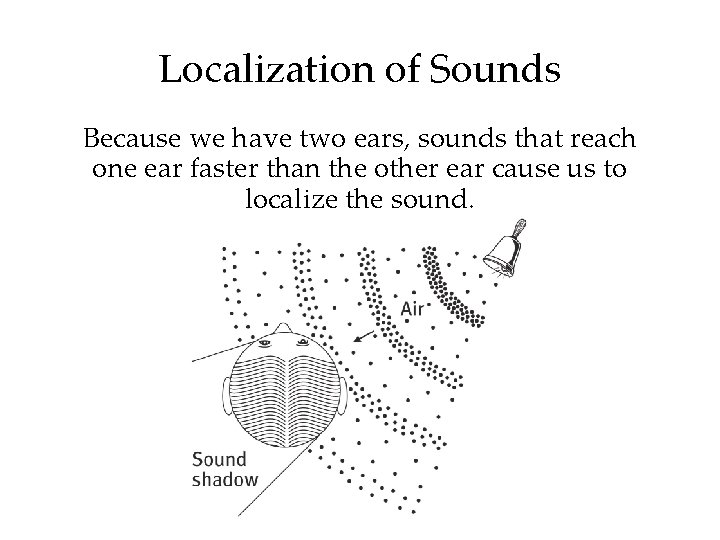
Localization of Sounds Because we have two ears, sounds that reach one ear faster than the other ear cause us to localize the sound.
Localization of Sound 1. Intensity differences 2. Time differences as small as 1/100, 000 of a second can cause us to localize sound. The head acts as a “shadow” or partial sound barrier.
Hearing Loss Conduction Hearing Loss: Hearing loss caused by damage to the mechanical system that conducts sound waves to the cochlea. Sensorineural Hearing Loss: Hearing loss caused by damage to the cochlea’s receptor cells or to the auditory nerve, also called nerve deafness.
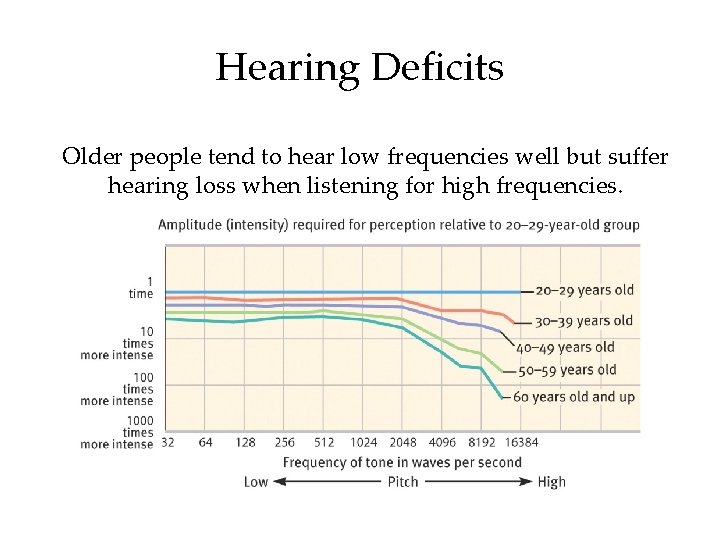
Hearing Deficits Older people tend to hear low frequencies well but suffer hearing loss when listening for high frequencies.
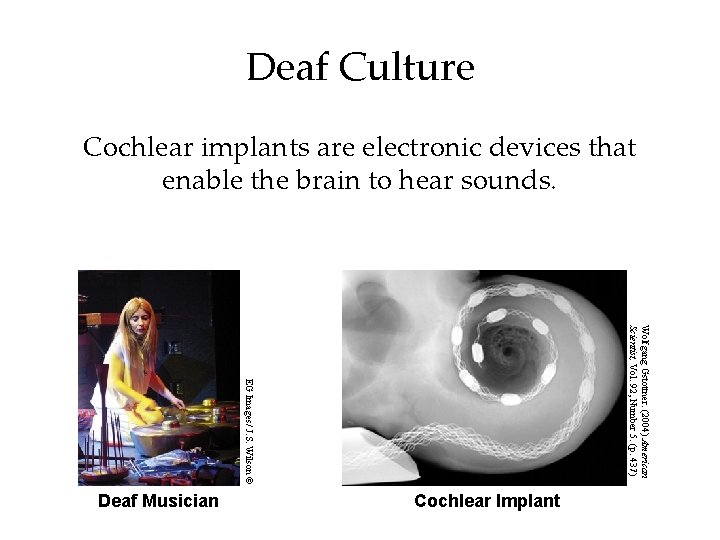
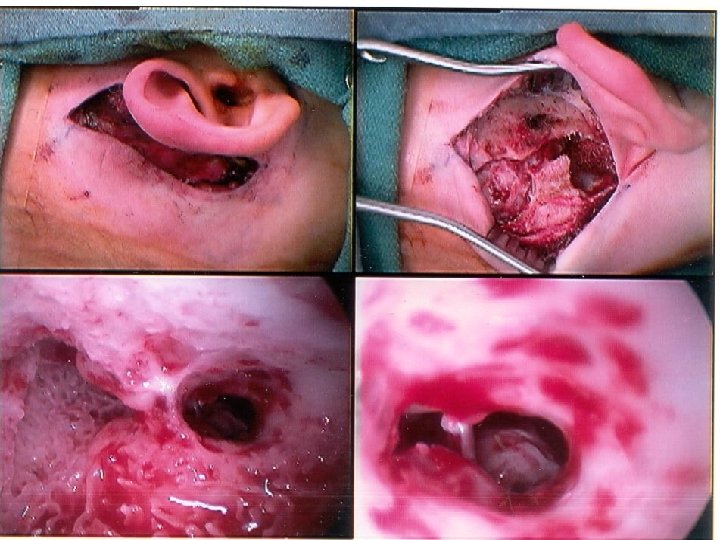
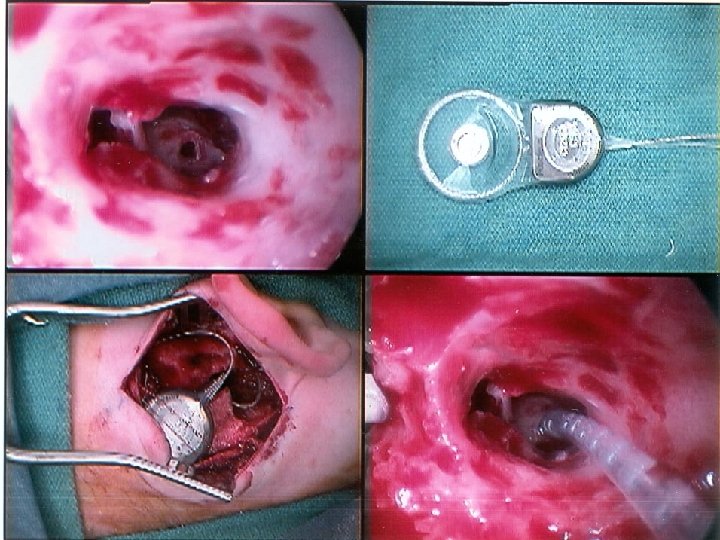
Deaf Culture Cochlear implants are electronic devices that enable the brain to hear sounds. Wolfgang Gstottner. (2004) American Scientist, Vol. 92, Number 5. (p. 437) EG Images/ J. S. Wilson © Deaf Musician Cochlear Implant
Warning: The next series of slides are quite graphic