
Healthy Rivers Water Chemistry Dissolved Oxygen oxygen gas
- Slides: 12
Healthy Rivers Water Chemistry
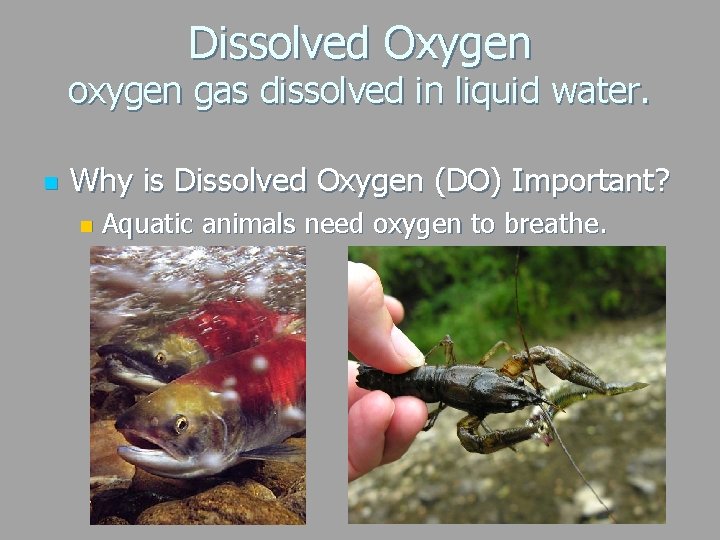
Dissolved Oxygen oxygen gas dissolved in liquid water. n Why is Dissolved Oxygen (DO) Important? n Aquatic animals need oxygen to breathe.
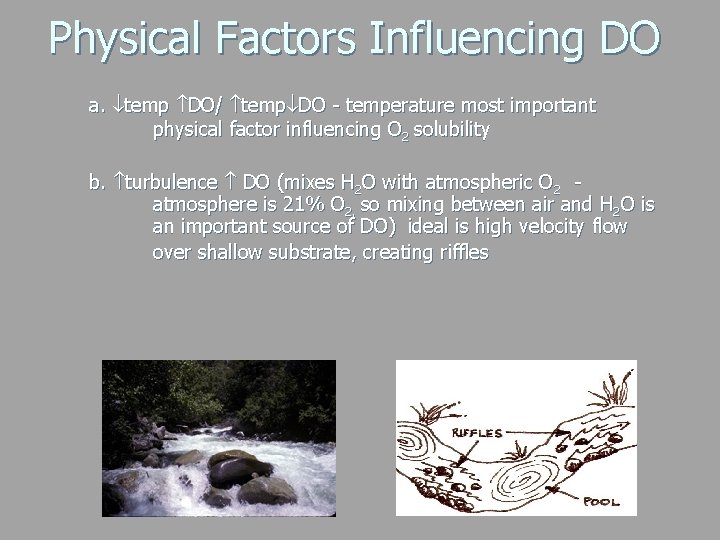
Physical Factors Influencing DO a. temp DO/ temp DO - temperature most important physical factor influencing O 2 solubility b. turbulence DO (mixes H 2 O with atmospheric O 2 atmosphere is 21% O 2, so mixing between air and H 2 O is an important source of DO) ideal is high velocity flow over shallow substrate, creating riffles
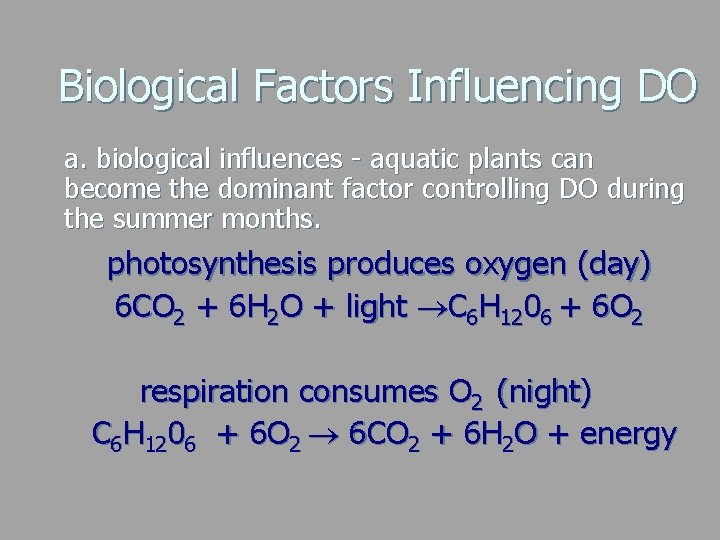
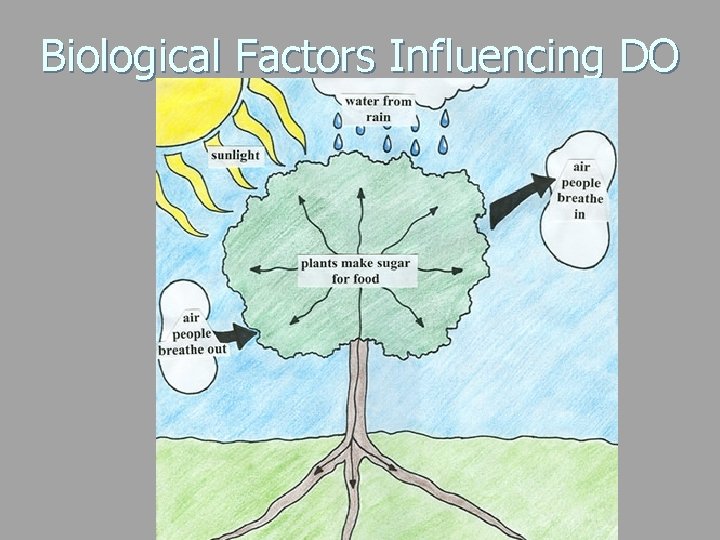
Biological Factors Influencing DO a. biological influences - aquatic plants can become the dominant factor controlling DO during the summer months. photosynthesis produces oxygen (day) 6 CO 2 + 6 H 2 O + light C 6 H 1206 + 6 O 2 respiration consumes O 2 (night) C 6 H 1206 + 6 O 2 6 CO 2 + 6 H 2 O + energy
Biological Factors Influencing DO
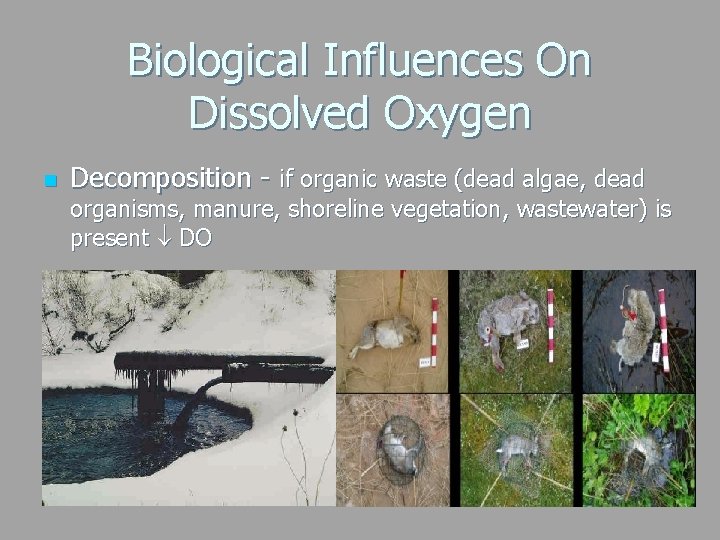
Biological Influences On Dissolved Oxygen n Decomposition - if organic waste (dead algae, dead organisms, manure, shoreline vegetation, wastewater) is present DO
Turbidity v What is turbidity? v The amount of suspended soil particles (sediment) or algae present in water. v Why is turbidity a concern? v Blocks light needed for photosynthesis. v Reduces visibility for visual feeders. v Smothers fish and amphibian eggs.
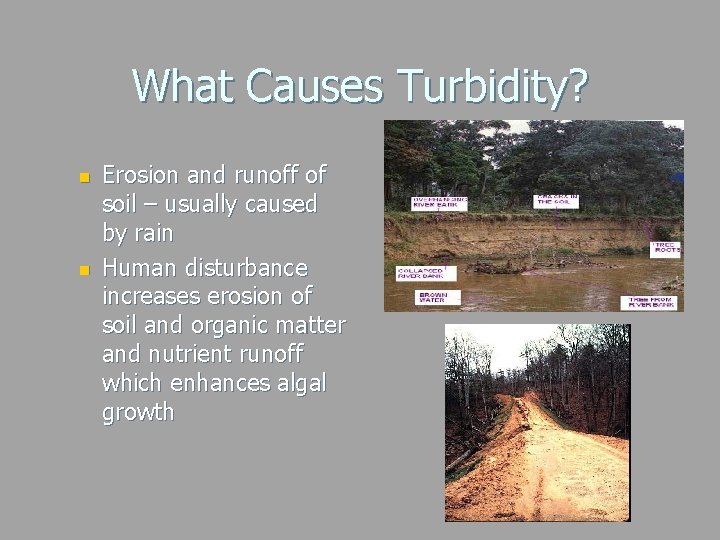
What Causes Turbidity? n n Erosion and runoff of soil – usually caused by rain Human disturbance increases erosion of soil and organic matter and nutrient runoff which enhances algal growth
What Causes Turbidity? n n Suspended algae can be a major problem in the summer. Wind, waves, bottom feeding fish, and mammals walking through a stream can resuspend settled sediment.
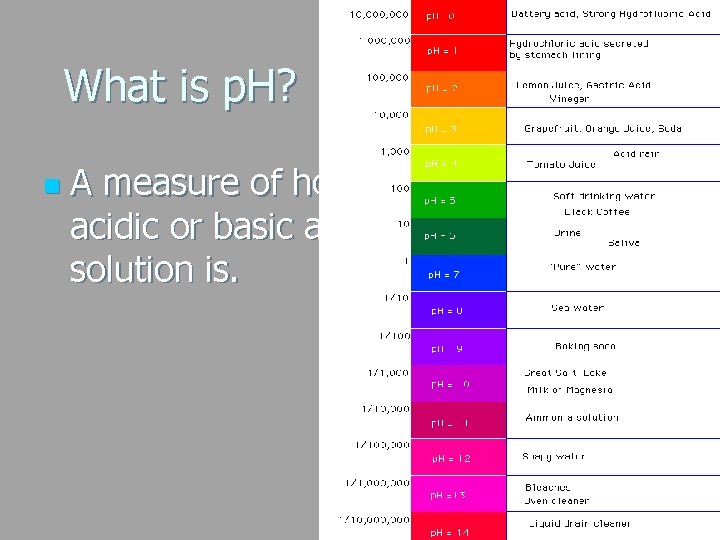
What is p. H? n A measure of how acidic or basic a solution is.
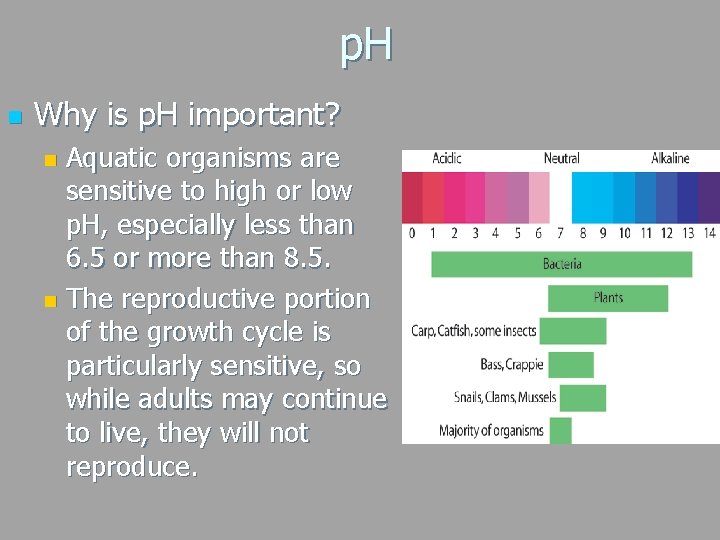
p. H n Why is p. H important? Aquatic organisms are sensitive to high or low p. H, especially less than 6. 5 or more than 8. 5. n The reproductive portion of the growth cycle is particularly sensitive, so while adults may continue to live, they will not reproduce. n
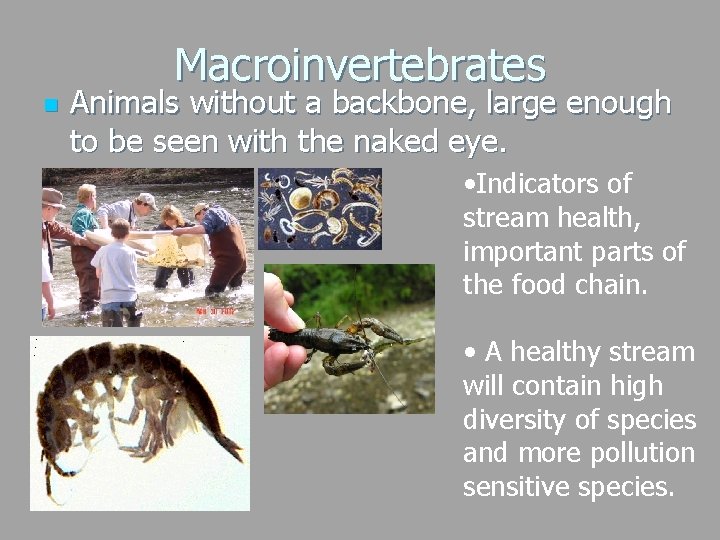
Macroinvertebrates n Animals without a backbone, large enough to be seen with the naked eye. • Indicators of stream health, important parts of the food chain. • A healthy stream will contain high diversity of species and more pollution sensitive species.