
Healthy Relationships Plus Program Information Michele Montgomery Regional





- Slides: 19
Healthy Relationships Plus Program Information Michele Montgomery Regional Prevention of Family Violence and Bullying Coordinator
What is the Fourth R? • School level intervention with a focus on implementing the Fourth R (relationship) designed to include students, teachers, parents and community in reducing violence and risk behaviors. • A relationship- based approach to prevent adolescent violence and related risk behaviors: peer and dating violence, substance use & abuse, • Promotes healthy growth and sexuality • Evidence based curriculum • School based comprehensive prevention approach
Healthy Relationships Plus Program • 15 one hour sessions • Covers topics such as • dating violence • healthy relationships • substance use • mental health issues
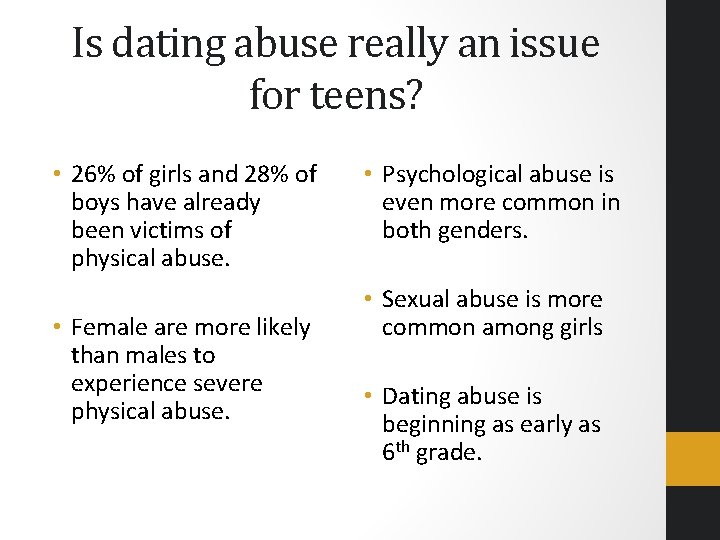
Is dating abuse really an issue for teens? • 26% of girls and 28% of boys have already been victims of physical abuse. • Female are more likely than males to experience severe physical abuse. • Psychological abuse is even more common in both genders. • Sexual abuse is more common among girls • Dating abuse is beginning as early as 6 th grade.
Why is dating abuse such a prevalent issue with teens? • Many see abuse as normal part of the relationship. • Romanticizing about love, teens may interpret jealousy, possessiveness, and abuse as signs of love.
Why is dating abuse such a prevalent issue with teens? • Teens may experience a lot of pressure to be in a dating relationship • A teen may remain in an abusive relationship just to have someone to date.
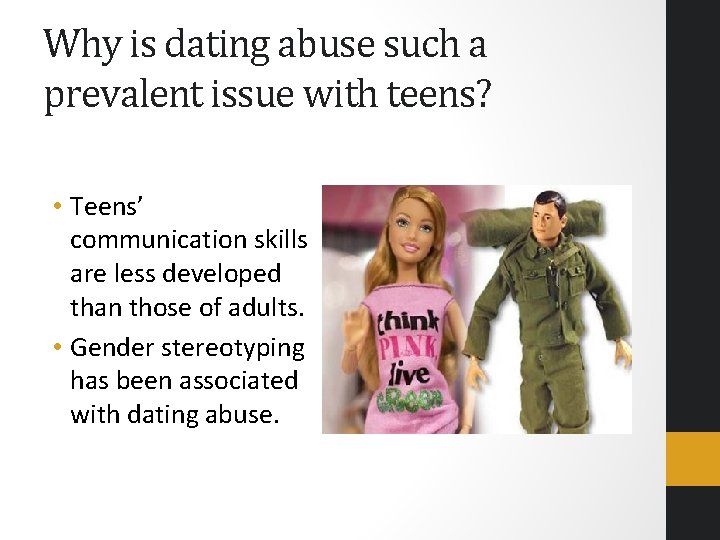
Why is dating abuse such a prevalent issue with teens? • Teens’ communication skills are less developed than those of adults. • Gender stereotyping has been associated with dating abuse.
Implementing the program Sessions run on a weekly basis, outside of classroom time. Groups are both male and females together. Each session is 60 minutes long. Program must be conducted in full, without eliminating content/sessions. • Sessions explore the positive definition of healthy relationships and helps students work on win/win solutions. • Behavior is a choice is reinforced – we are each responsible for our own behaviors. • •
Sessions • Session 1: Getting to know you • Session 2: Its you choice: friendships/ relationships • Session 3: Shaping your values • Session 4: Influences on Relationships • Session 5: Impact of Substance Use and Abuse • Session 6: Healthy Relationships • Session 7: Early warning signs of dating violence • Session 8: Knowing your values and boundaries
Sessions Cont… • Session 9: Communication Skills • Session 10: Taking Responsibilities for Emotions • Session 11: Standing up for what is right • Session 12: When friendships and relationships end • Session 13: Emotional Health and well being • Session 14: Helping our friends • Session 15: Sharing and Celebrating
Activity Time • What does it look like when people are in a healthy relationships? • What does it look like when people are in an unhealthy relationship?
Harmful consequences of dating abuse • Lose confidence in oneself • Doubt their own abilities, feelings and decision making • Problems at work, school, and other activities • Abandon dreams and goals • Feel shame and guilt • Feel lonely
Harmful consequences of dating abuse • Face inability to maintain long lasting or fulfilling relationships • Become afraid to express feelings of anger • Feel isolation from family and friends • Become depressed, anxious, fearful, or suicidal • Get an STI or experience unwanted pregnancy • Experience damage to personal property • Suffer serious injury, even death
Relationships and Mental Health What's the connection? • Healthy relationships contribute to a person’s mental well being. • People who feel meaningfully connected and who have healthy relationships in their life are in a much better position to access help when needed. • Unhealthy relationships can contribute to mental health issues and challenges. • A person’s mental health can affect how they interact with the people in their lives: parents, peers, partners, teachers, co -workers, etc.
Goals of HRP • Promote discussion about mental health challenges in a safe and accepting environment. • Get youth to think about how they manage their stress level and well being.
Goals of HRP • Get youth to think about how their relationships contribute to their emotional well being. • Give them information about how they might help themselves or a friend who is struggling.
Important notes • This is a research project - Consent forms need to be filled out for each teen and signed by a guardian. - Pre and Post Test for each youth. - Tracking forms for facilitator. - Satisfaction surveys for the facilitator after each session.
How to talk to your students about the program • Explain to them what you know about the program • Let them know that the program isn't all about abusive behaviors and mental health issues. It also includes fun activities related to dating and mental health in general. • It can give them skills to help keep them safe. • It can give them the skills to help friends who are involved in unhealthy relationships. • If they are not dating, this program is great preparation for it.
Questions? Michele Montgomery Regional Prevention of Family Violence and Bullying Coordinator michele. montgomery@gov. ab. ca 403 -381 -5916