
Healthy Building Systems Energy Moisture Materials Course Number
Healthy Building Systems: Energy, Moisture & Materials Course Number: AIAAEC_081415 Susan Doll & Lee Ball Date: August 14, 2015 Appalachian State University Provider Number: 60114136
7 LU|HSW Credits earned on completion of this course will be reported to AIA CES for AIA members. Certificates of Completion for both AIA members and non-AIA members will be received at the end of the class. This course is registered with AIA CES for continuing professional education. As such, it does not include content that may be deemed or construed to be an approval or endorsement by the AIA of any material of construction or any method or manner of handling, using, distributing, or dealing in any material or product. ____________________ Questions related to specific materials, methods, and services will be addressed at the conclusion of this presentation.
Course Description As building envelopes have become tighter to save energy and meet the changes required by the new NC Building Code, it is important to understand the potential impact of energy efficiency on indoor environment quality (IEQ). Tighter buildings can trap moisture resulting in mold growth, and inadequate ventilation leads to elevated contaminant concentrations, that may impact occupant health. This workshop will cover an integrated approach to building performance that explains the relationship between energy and IEQ, and how construction methods, materials, building pressure differences and airflow patterns influence moisture and contaminant generation/removal rates that ultimately determine the quality of indoor environments and health of building occupants. Participants will learn about observational diagnostic techniques and energy rating systems, and demonstrations will include IEQ monitoring methods and interpretation of results, that can be used to assess energy, moisture, and material related issues in existing buildings.
Learning Objectives At the end of the this course, participants will be able to: 1. Understand how basic building science and construction techniques can affect indoor environment quality (IEQ) and may impact health of building occupants. 2. Review energy-efficiency measures outlined in the North Carolina Building Code and understand the inter-relationship with IEQ. 3. Participants will be able to identify design strategies that have the potential to enhance IEQ while maintaining energy efficiency objectives. 4. Participants will learn how to identify sources of air leakage through the use of diagnostic equipment.
Workshop Agenda INTRODUCTIONS PART 1: The Indoor Environment PART 2: Buildings as a System <Break for lunch 12 -1 pm> PART 3: Keeping Homes Healthy PART 4: Smart Energy Practices PART 5: Practical Applications, Q & A
PART 1: The Indoor Environment Dr. Susan Doll
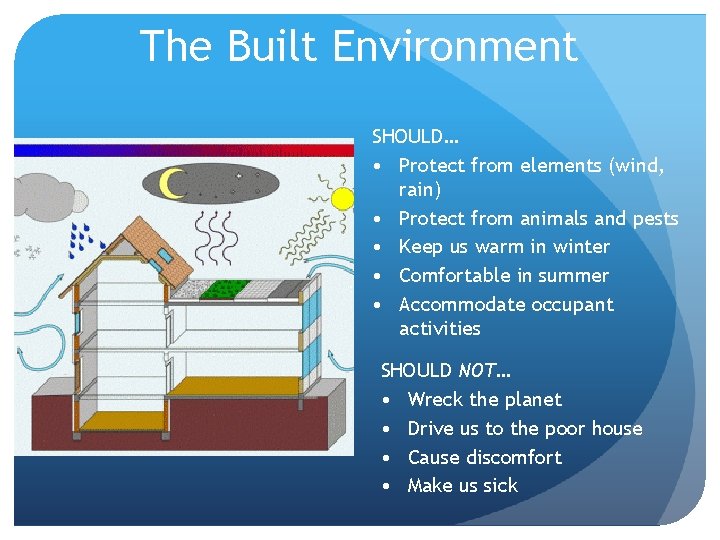
The Built Environment SHOULD… • Protect from elements (wind, rain) • Protect from animals and pests • Keep us warm in winter • Comfortable in summer • Accommodate occupant activities SHOULD NOT… • Wreck the planet • Drive us to the poor house • Cause discomfort • Make us sick

BUILT ENVIRONMENT – Exterior, Boundary, Interior Space UNCONDITIONED (attic) (garage) INDOOR ENVIRONMENT (conditioned living space) (basement, crawlspace) OUTDOORS
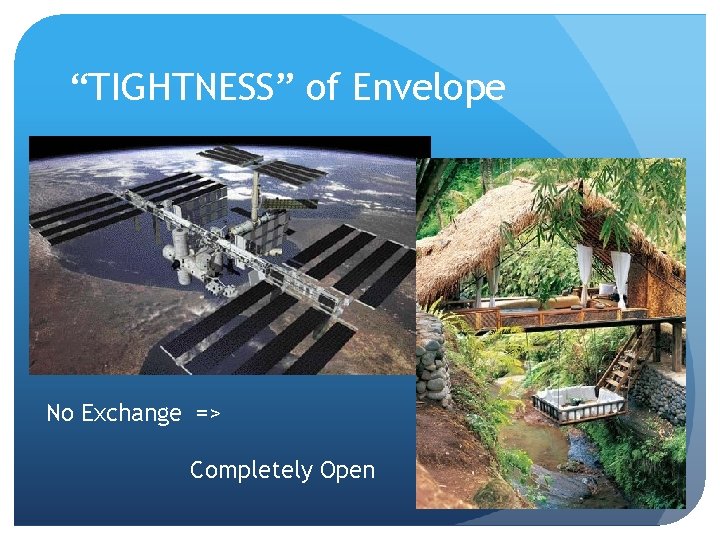
“TIGHTNESS” of Envelope No Exchange => Completely Open
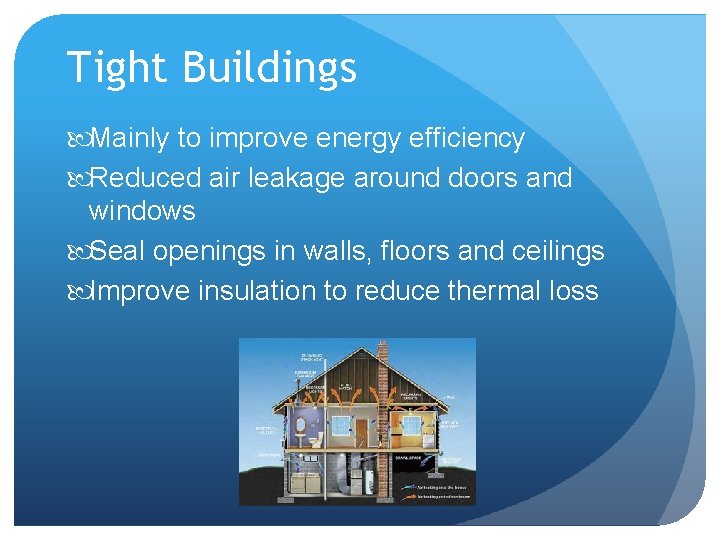
Tight Buildings Mainly to improve energy efficiency Reduced air leakage around doors and windows Seal openings in walls, floors and ceilings Improve insulation to reduce thermal loss
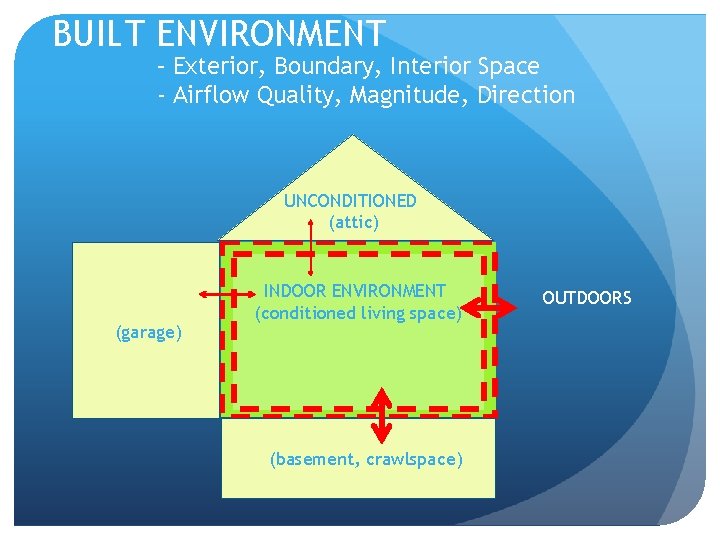
BUILT ENVIRONMENT – Exterior, Boundary, Interior Space - Airflow Quality, Magnitude, Direction UNCONDITIONED (attic) (garage) INDOOR ENVIRONMENT (conditioned living space) (basement, crawlspace) OUTDOORS
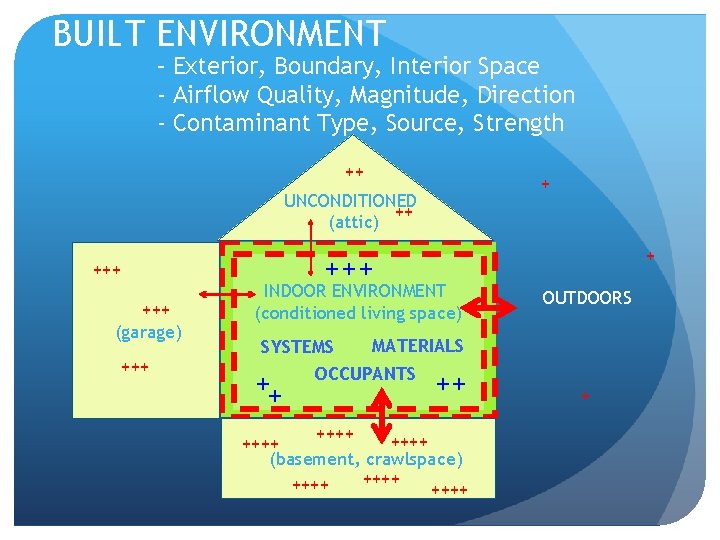
BUILT ENVIRONMENT – Exterior, Boundary, Interior Space - Airflow Quality, Magnitude, Direction - Contaminant Type, Source, Strength ++ + UNCONDITIONED ++ (attic) + +++ +++ (garage) +++ INDOOR ENVIRONMENT (conditioned living space) SYSTEMS ++ OUTDOORS MATERIALS OCCUPANTS ++ ++++ (basement, crawlspace) ++++ +
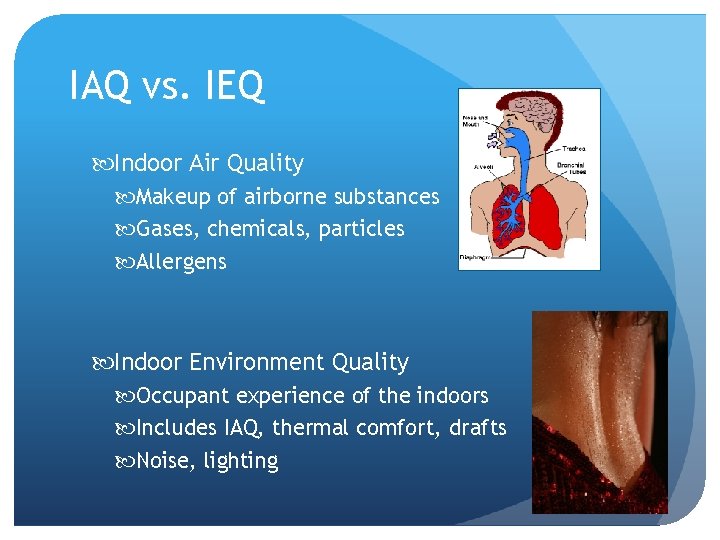
IAQ vs. IEQ Indoor Air Quality Makeup of airborne substances Gases, chemicals, particles Allergens Indoor Environment Quality Occupant experience of the indoors Includes IAQ, thermal comfort, drafts Noise, lighting
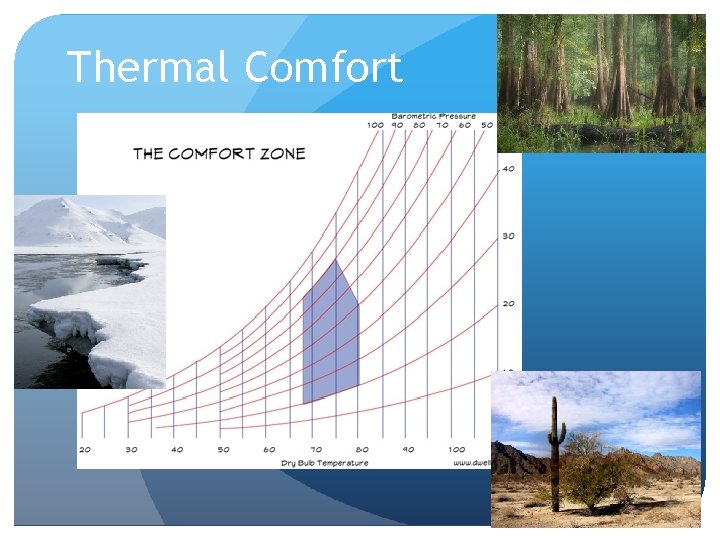
Thermal Comfort
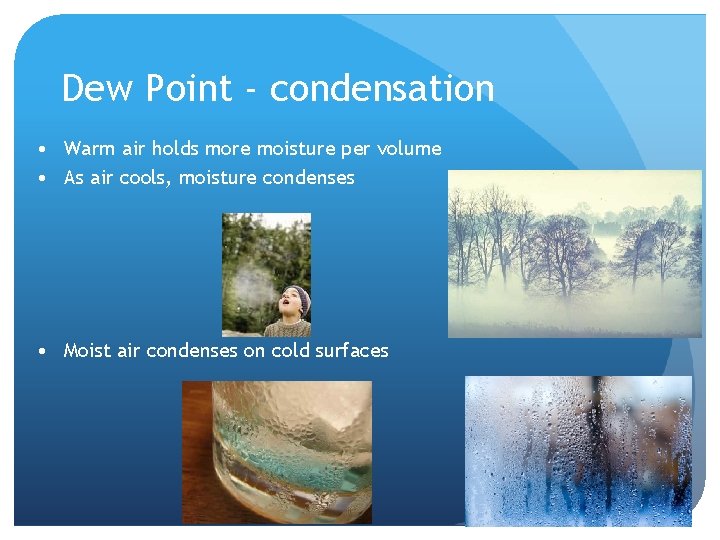
Dew Point - condensation • Warm air holds more moisture per volume • As air cools, moisture condenses • Moist air condenses on cold surfaces
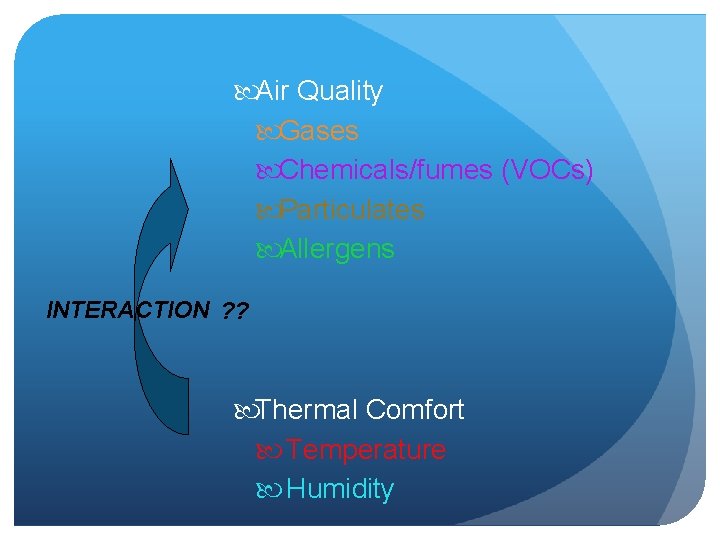
Air Quality Gases Chemicals/fumes (VOCs) Particulates Allergens INTERACTION ? ? Thermal Comfort Temperature Humidity
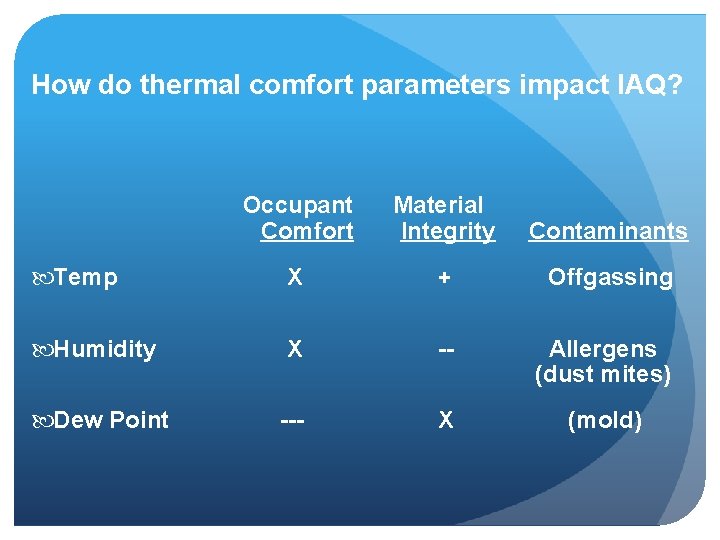
How do thermal comfort parameters impact IAQ? Occupant Comfort Material Integrity Contaminants Temp X + Offgassing Humidity X -- Allergens (dust mites) Dew Point --- X (mold)
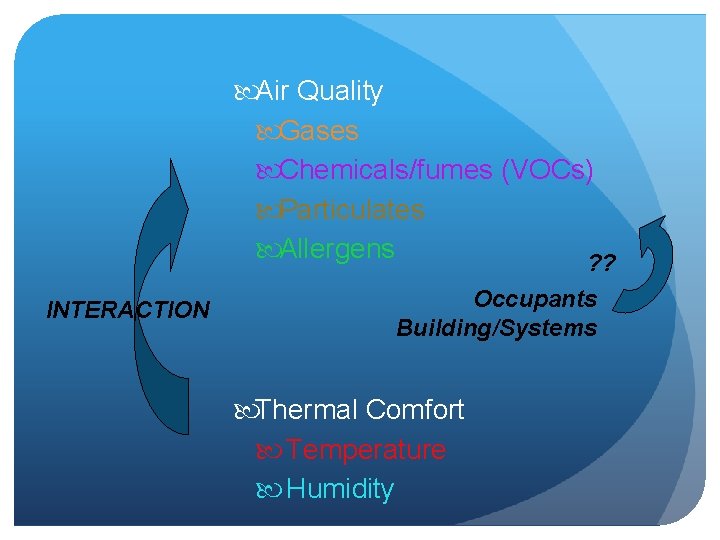
Air Quality Gases Chemicals/fumes (VOCs) Particulates Allergens ? ? INTERACTION Occupants Building/Systems Thermal Comfort Temperature Humidity
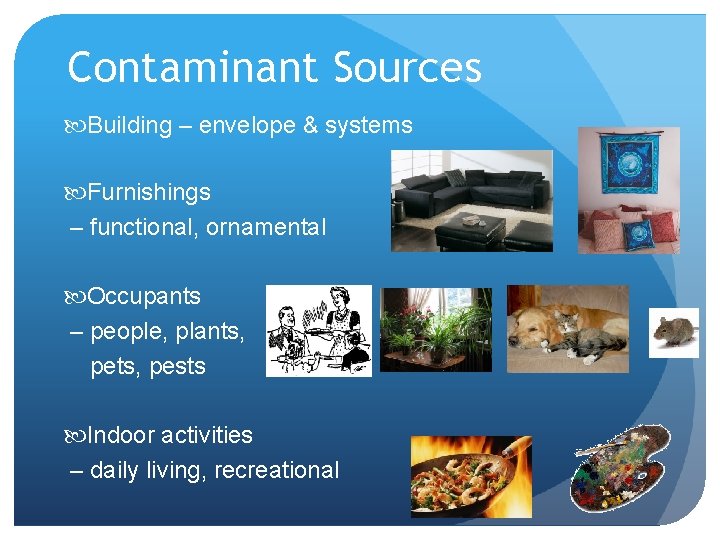
Contaminant Sources Building – envelope & systems Furnishings – functional, ornamental Occupants – people, plants, pests Indoor activities – daily living, recreational
Gases: Outdoor Sources Combustion Products
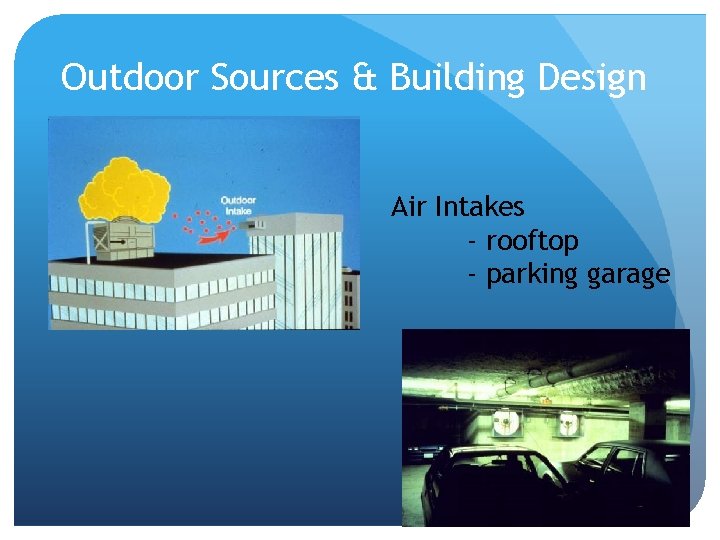
Outdoor Sources & Building Design Air Intakes - rooftop - parking garage
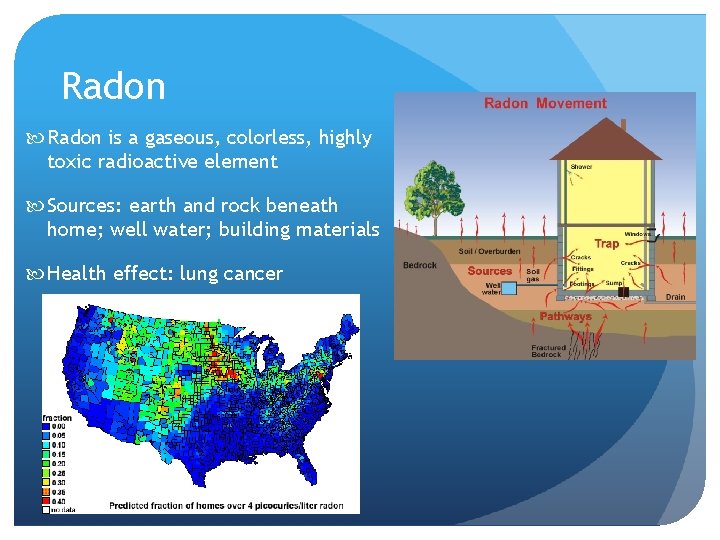
Radon is a gaseous, colorless, highly toxic radioactive element Sources: earth and rock beneath home; well water; building materials Health effect: lung cancer
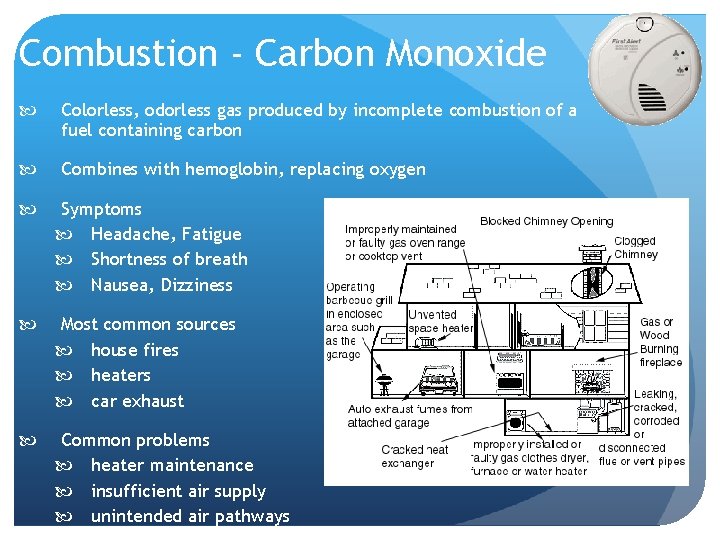
Combustion - Carbon Monoxide Colorless, odorless gas produced by incomplete combustion of a fuel containing carbon Combines with hemoglobin, replacing oxygen Symptoms Headache, Fatigue Shortness of breath Nausea, Dizziness Most common sources house fires heaters car exhaust Common problems heater maintenance insufficient air supply unintended air pathways
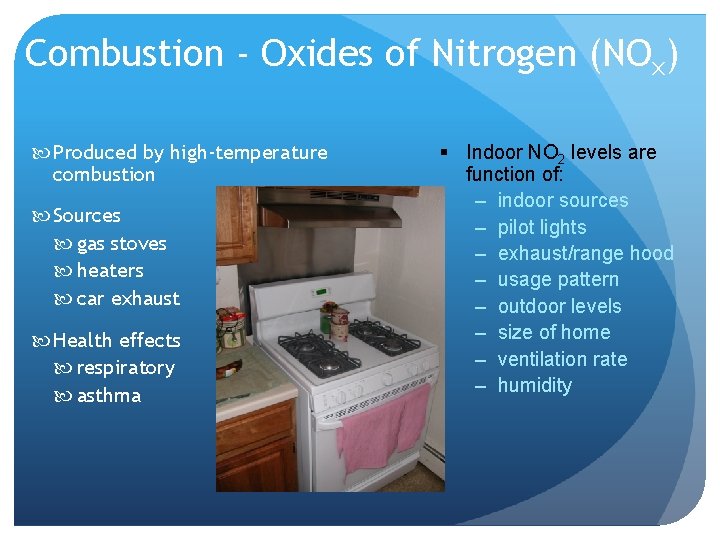
Combustion - Oxides of Nitrogen (NOx) Produced by high-temperature combustion Sources gas stoves heaters car exhaust Health effects respiratory asthma § Indoor NO 2 levels are function of: – indoor sources – pilot lights – exhaust/range hood – usage pattern – outdoor levels – size of home – ventilation rate – humidity
Chemicals: Formaldehyde Volatile Organic Compounds (VOCs)
Product Offgassing Amount, type, concentration Depends on… Type of material Age Temperature and humidity Absorbtion/desorption Ventilation/air concentration
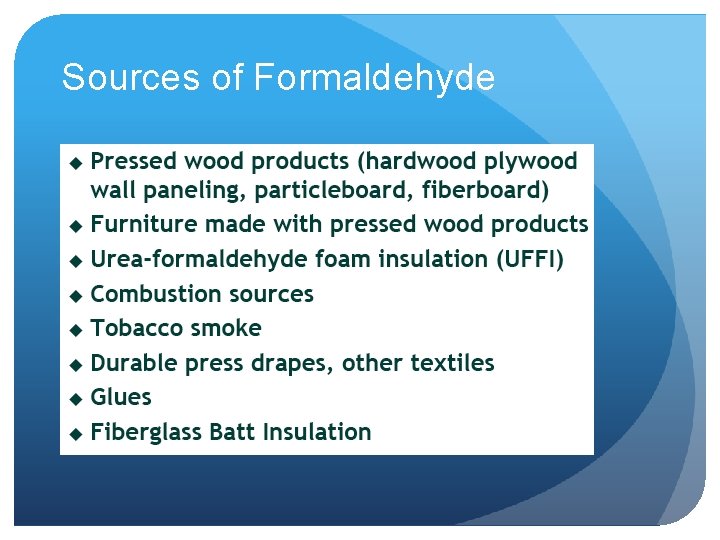
Sources of Formaldehyde
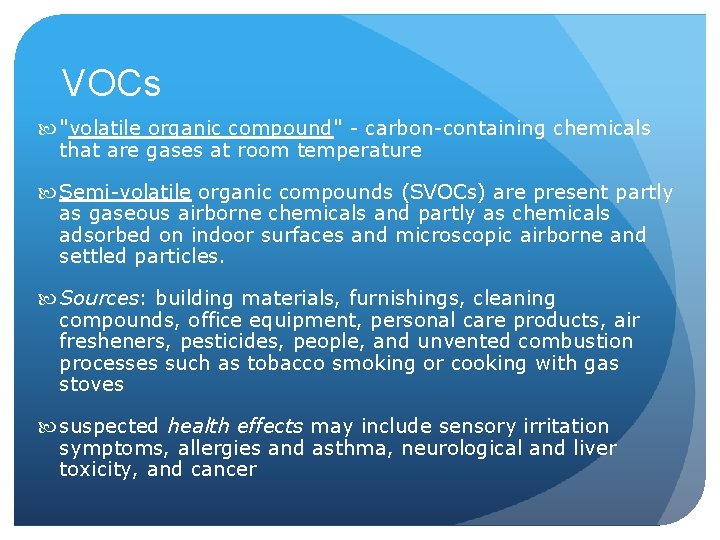
VOCs "volatile organic compound" - carbon-containing chemicals that are gases at room temperature Semi-volatile organic compounds (SVOCs) are present partly as gaseous airborne chemicals and partly as chemicals adsorbed on indoor surfaces and microscopic airborne and settled particles. Sources: building materials, furnishings, cleaning compounds, office equipment, personal care products, air fresheners, pesticides, people, and unvented combustion processes such as tobacco smoking or cooking with gas stoves suspected health effects may include sensory irritation symptoms, allergies and asthma, neurological and liver toxicity, and cancer
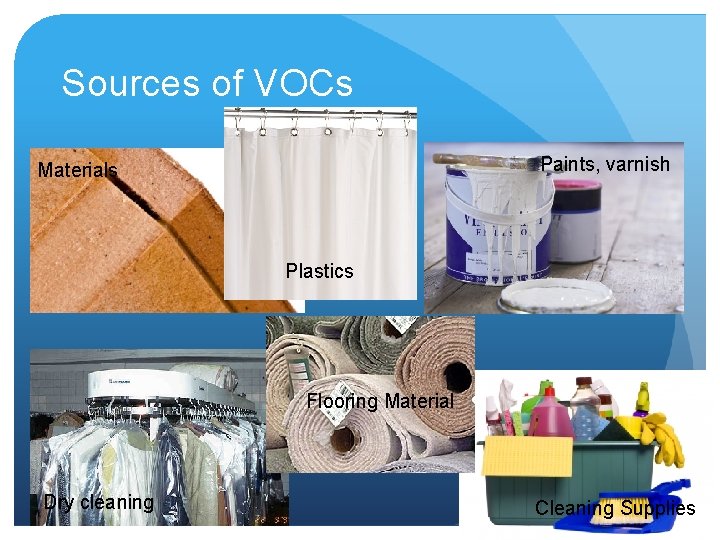
Sources of VOCs Paints, varnish Materials Plastics Flooring Material Dry cleaning Cleaning Supplies
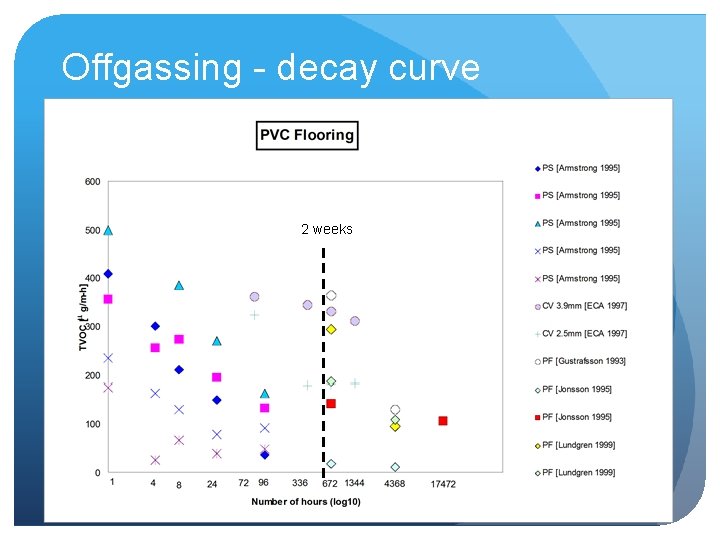
Offgassing - decay curve 2 weeks
Particulates: Dust Smoke Aerosols
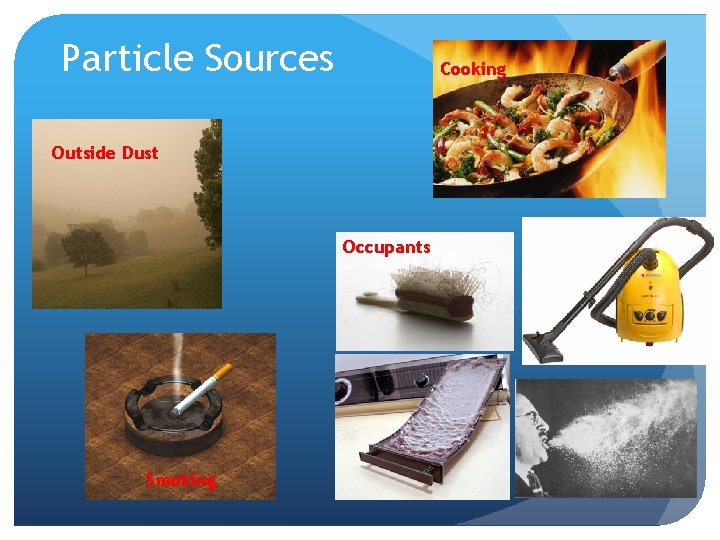
Particle Sources Cooking Outside Dust Occupants Smoking
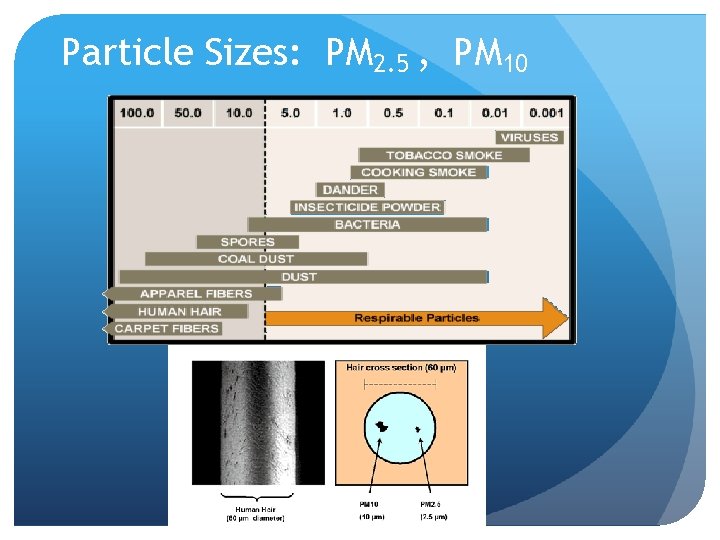
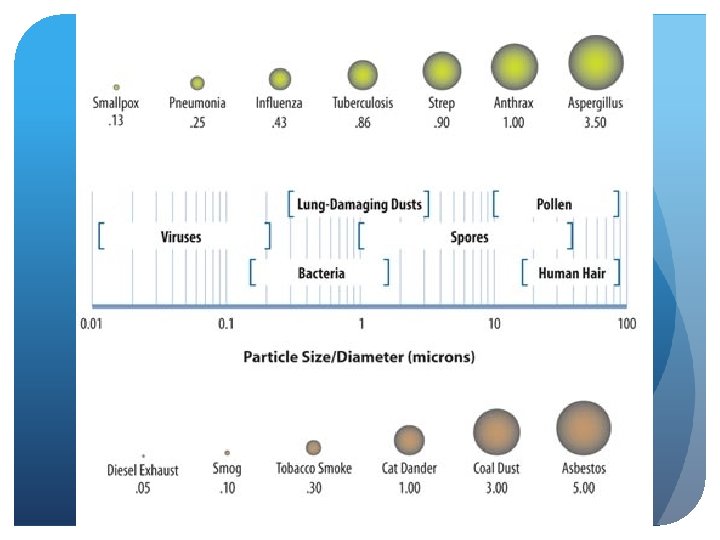
Particle Sizes: PM 2. 5 , PM 10
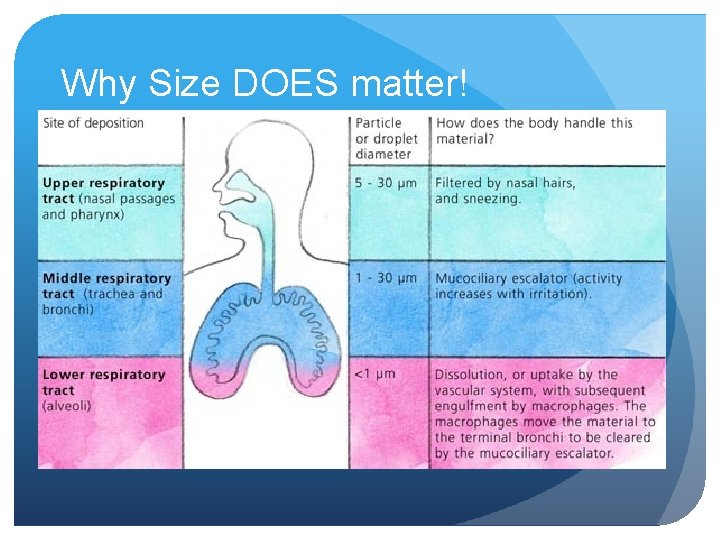
Why Size DOES matter!
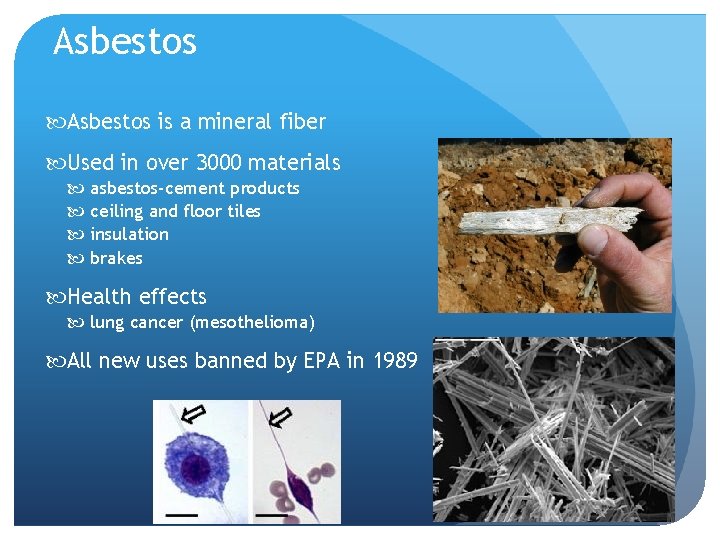
Asbestos is a mineral fiber Used in over 3000 materials asbestos-cement products ceiling and floor tiles insulation brakes Health effects lung cancer (mesothelioma) All new uses banned by EPA in 1989
Allergens: Elicit an allergic reaction in sensitive individuals Usually biological in nature
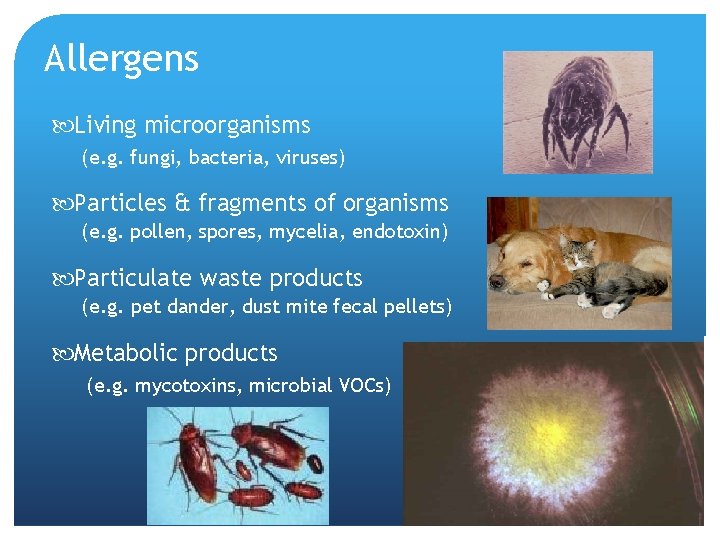
Allergens Living microorganisms (e. g. fungi, bacteria, viruses) Particles & fragments of organisms (e. g. pollen, spores, mycelia, endotoxin) Particulate waste products (e. g. pet dander, dust mite fecal pellets) Metabolic products (e. g. mycotoxins, microbial VOCs)
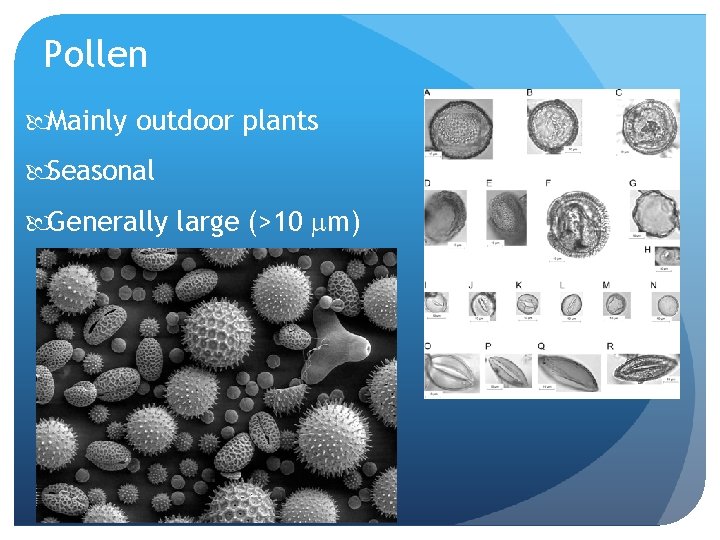
Pollen Mainly outdoor plants Seasonal Generally large (>10 m)
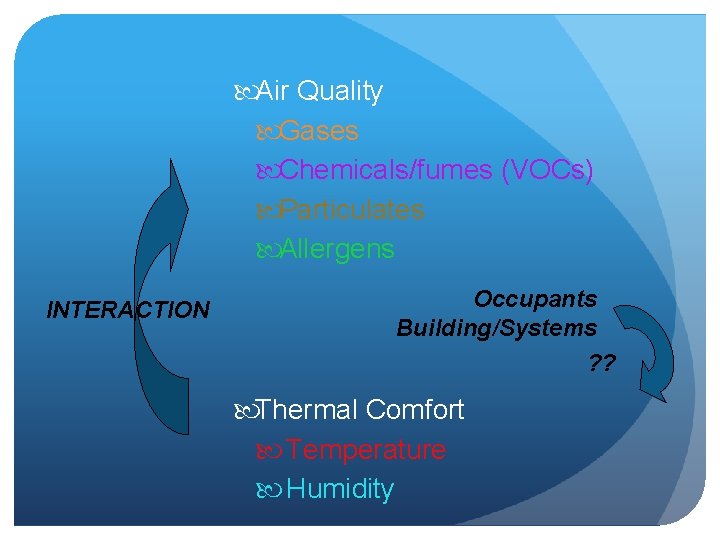
Air Quality Gases Chemicals/fumes (VOCs) Particulates Allergens INTERACTION Occupants Building/Systems ? ? Thermal Comfort Temperature Humidity
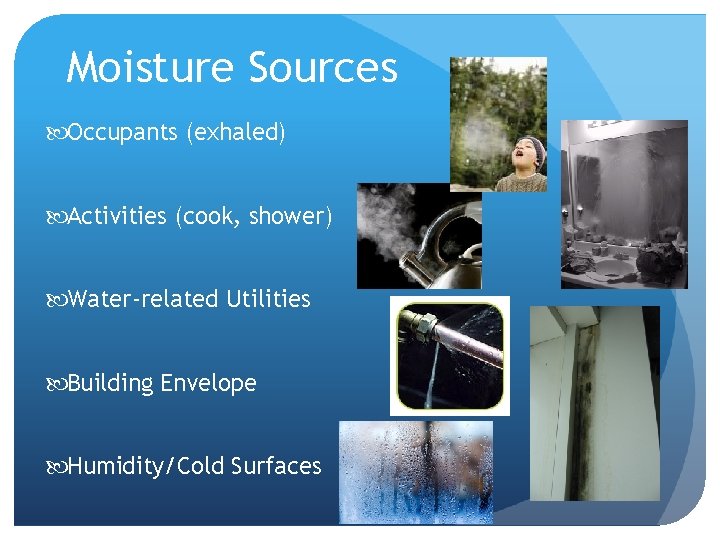
Moisture Sources Occupants (exhaled) Activities (cook, shower) Water-related Utilities Building Envelope Humidity/Cold Surfaces
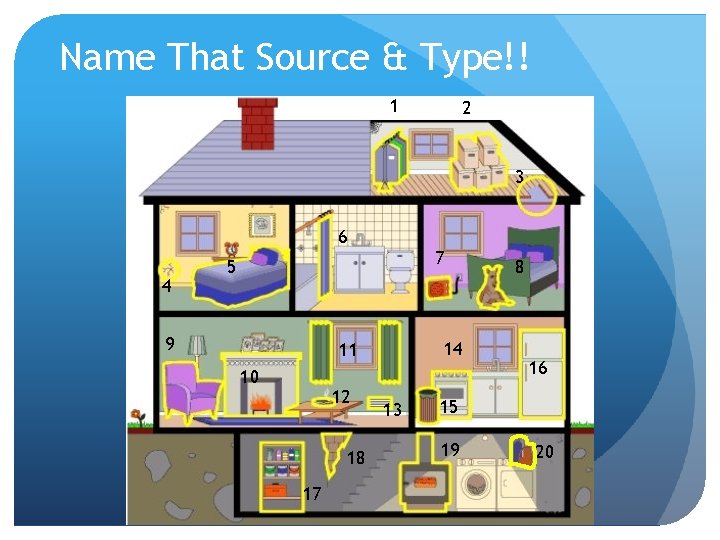
Name That Source & Type!! 1 2 3 6 4 7 5 9 14 11 10 12 18 17 13 8 16 15 19 20
Who has control over sources? Builders? ? Homeowners? ?
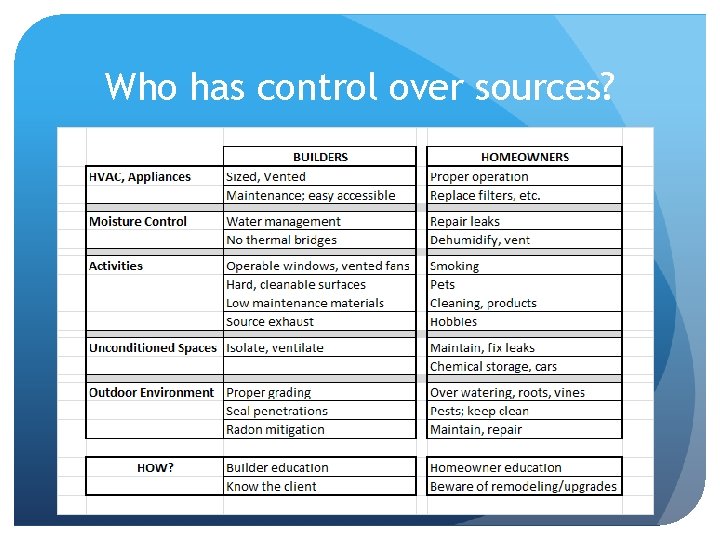
Who has control over sources?
Building Envelope and Systems are KEY to good IEQ Buildings are “too” tight: Moisture accumulation Contaminant accumulation Thermal discomfort Uncontrolled air exchange: Contaminant source Contaminant migration from unconditioned spaces Drafts Energy loss Inadequate or spotty insulation Cold condensing surfaces Energy Loss
- Slides: 45