
Health Wellness World Health Organization definition of Health
- Slides: 15
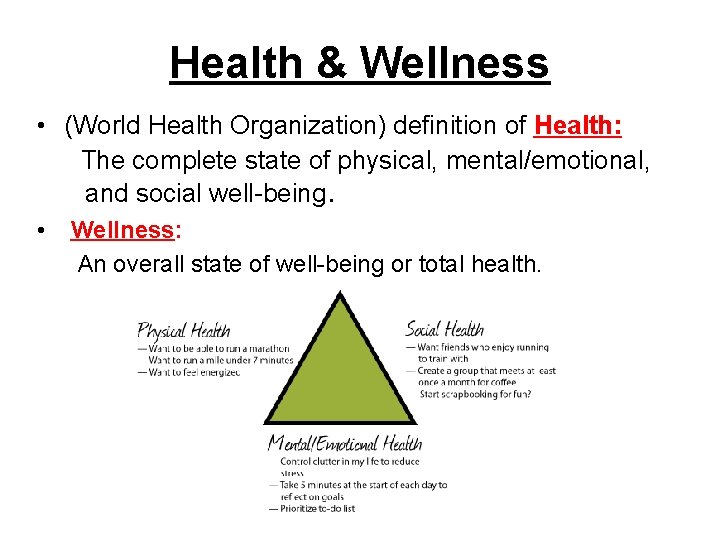
Health & Wellness • (World Health Organization) definition of Health: The complete state of physical, mental/emotional, and social well-being. • Wellness: An overall state of well-being or total health.
1. Physical health: State of physical well-being in which an individual is able to perform daily physical task without problems. Ø Get 8 -10 hours of sleep (brain function, cell maintenance/repair, hormone regulation, immune system health) Ø 150 minutes of structured moderate intensity exercise per week (Ex. Heart rate > 60%) Ø Eat nutritious meals & drink fluids (men- 3 liters per day; women 2. 2 liters per day) Ø Avoid tobacco, alcohol & drugs Ø Personal Care (access to OTC/prescription medications and primary care, hygiene)
2. Mental / Emotional health: Feelings and thoughts about yourself, how you meet the demands and cope with the problems that occur in your life. Ø Ø Accepting responsibility Enjoying challenges Stress Management Express your emotions in appropriate ways (Ex: controlling anger) Ø Accepting failure Ø Thoughtful/responsible decision making
3. Social health: Interactions with people and getting along with others to build satisfying relationships. Ø Ø Ø Seeking & lending support when needed Communicating clearly & listening to others Showing respect and care for yourself and others Positive relationships with family and friends Making & keeping friends Working well in groups
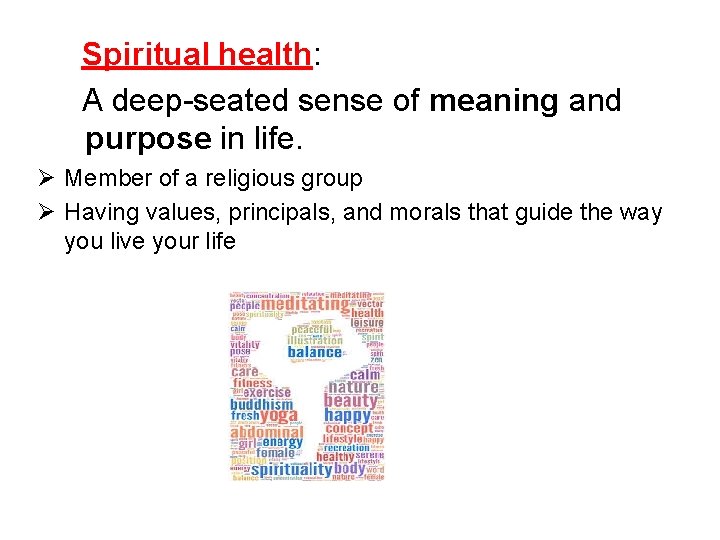
Spiritual health: A deep-seated sense of meaning and purpose in life. Ø Member of a religious group Ø Having values, principals, and morals that guide the way you live your life
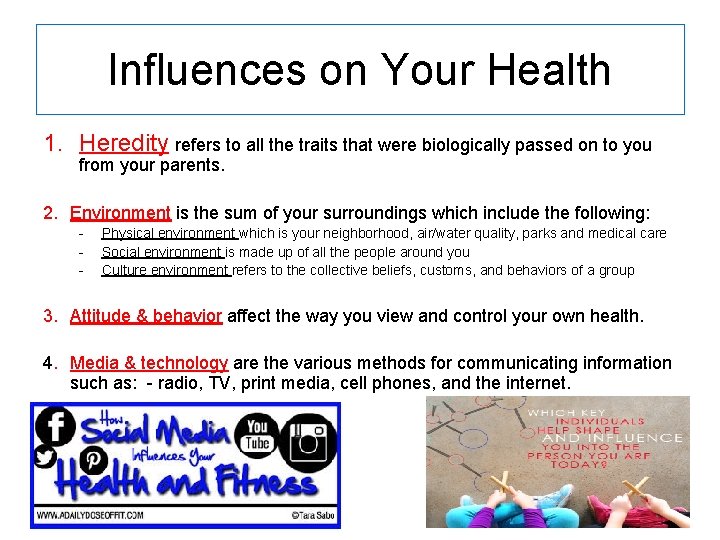
Influences on Your Health 1. Heredity refers to all the traits that were biologically passed on to you from your parents. 2. Environment is the sum of your surroundings which include the following: - Physical environment which is your neighborhood, air/water quality, parks and medical care Social environment is made up of all the people around you Culture environment refers to the collective beliefs, customs, and behaviors of a group 3. Attitude & behavior affect the way you view and control your own health. 4. Media & technology are the various methods for communicating information such as: - radio, TV, print media, cell phones, and the internet.
Risk behaviors & Lifestyle factors • Risk behaviors are actions that can potentially threaten your health or the health of others. Ø Top risk behaviors among high school students: 1. Alcohol and other drug use (41% of deaths) 2. Behaviors that contribute to unintentional injuries (31% mv crashes, 15% unintentional accidents, 15% homicide, 12% suicide) 3. Tobacco use 4. Unhealthy dietary behaviors 5. Physical Inactivity *Engaging in multiple risk behaviors increase the chances of facing negative health consequences. • Lifestyle factors are personal habits and behaviors related to the way a person lives.
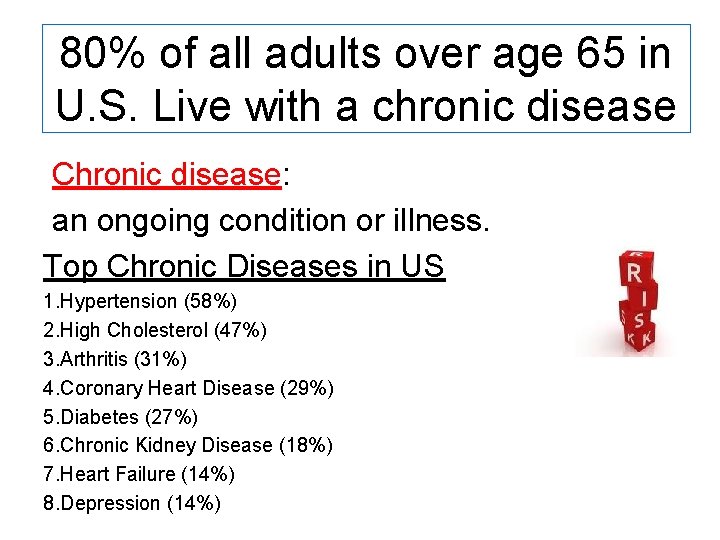
80% of all adults over age 65 in U. S. Live with a chronic disease Chronic disease: an ongoing condition or illness. Top Chronic Diseases in US 1. Hypertension (58%) 2. High Cholesterol (47%) 3. Arthritis (31%) 4. Coronary Heart Disease (29%) 5. Diabetes (27%) 6. Chronic Kidney Disease (18%) 7. Heart Failure (14%) 8. Depression (14%)
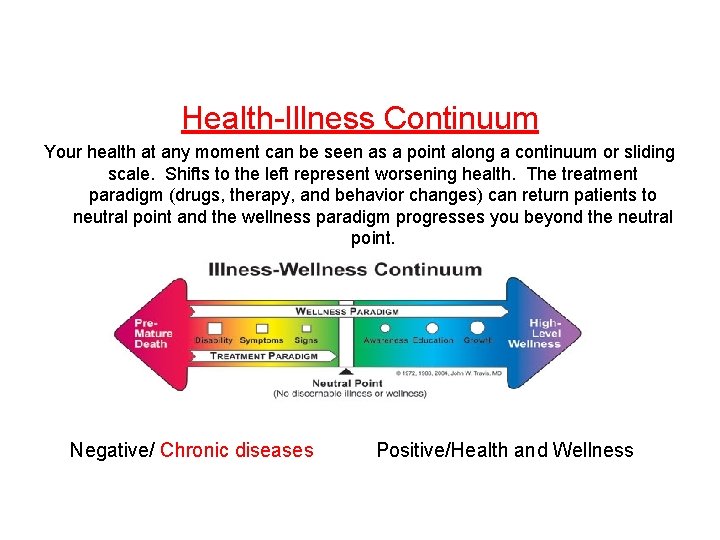
Health-Illness Continuum Your health at any moment can be seen as a point along a continuum or sliding scale. Shifts to the left represent worsening health. The treatment paradigm (drugs, therapy, and behavior changes) can return patients to neutral point and the wellness paradigm progresses you beyond the neutral point. Negative/ Chronic diseases Positive/Health and Wellness
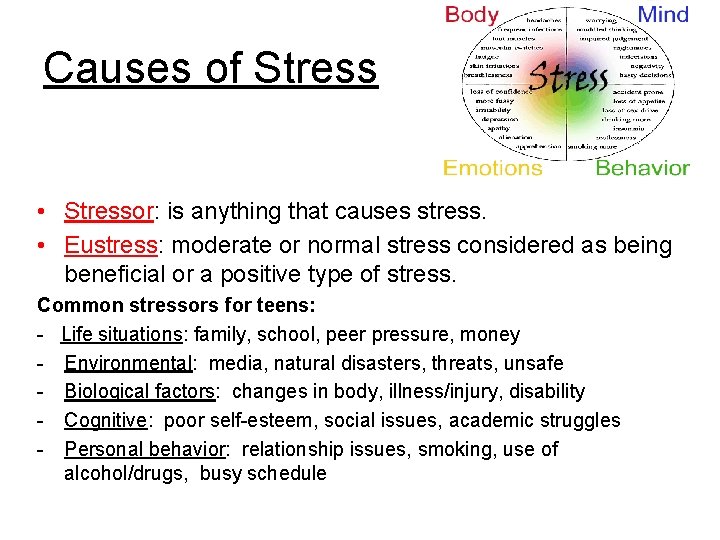
Causes of Stress • Stressor: is anything that causes stress. • Eustress: moderate or normal stress considered as being beneficial or a positive type of stress. Common stressors for teens: - Life situations: family, school, peer pressure, money - Environmental: media, natural disasters, threats, unsafe - Biological factors: changes in body, illness/injury, disability - Cognitive: poor self-esteem, social issues, academic struggles - Personal behavior: relationship issues, smoking, use of alcohol/drugs, busy schedule
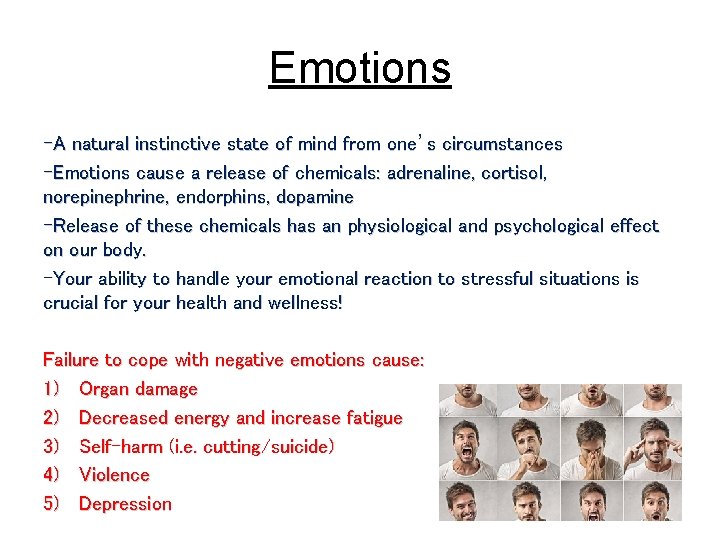
Emotions -A natural instinctive state of mind from one’s circumstances -Emotions cause a release of chemicals: adrenaline, cortisol, norepinephrine, endorphins, dopamine -Release of these chemicals has an physiological and psychological effect on our body. -Your ability to handle your emotional reaction to stressful situations is crucial for your health and wellness! Failure to cope with negative emotions cause: 1) Organ damage 2) Decreased energy and increase fatigue 3) Self-harm (i. e. cutting/suicide) 4) Violence 5) Depression
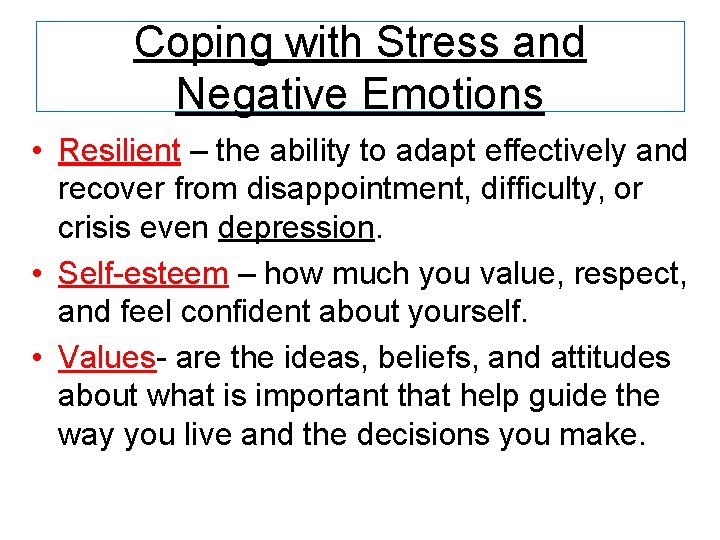
Coping with Stress and Negative Emotions • Resilient – the ability to adapt effectively and recover from disappointment, difficulty, or crisis even depression. • Self-esteem – how much you value, respect, and feel confident about yourself. • Values- are the ideas, beliefs, and attitudes about what is important that help guide the way you live and the decisions you make.
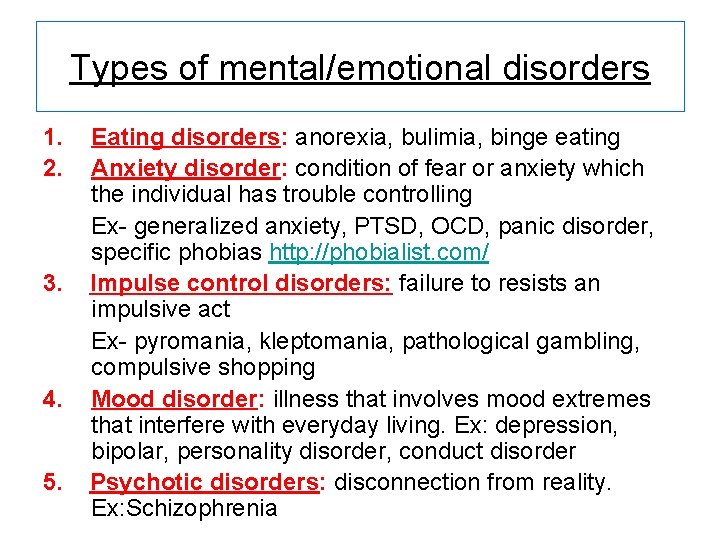
Types of mental/emotional disorders 1. 2. 3. 4. 5. Eating disorders: anorexia, bulimia, binge eating Anxiety disorder: condition of fear or anxiety which the individual has trouble controlling Ex- generalized anxiety, PTSD, OCD, panic disorder, specific phobias http: //phobialist. com/ Impulse control disorders: failure to resists an impulsive act Ex- pyromania, kleptomania, pathological gambling, compulsive shopping Mood disorder: illness that involves mood extremes that interfere with everyday living. Ex: depression, bipolar, personality disorder, conduct disorder Psychotic disorders: disconnection from reality. Ex: Schizophrenia
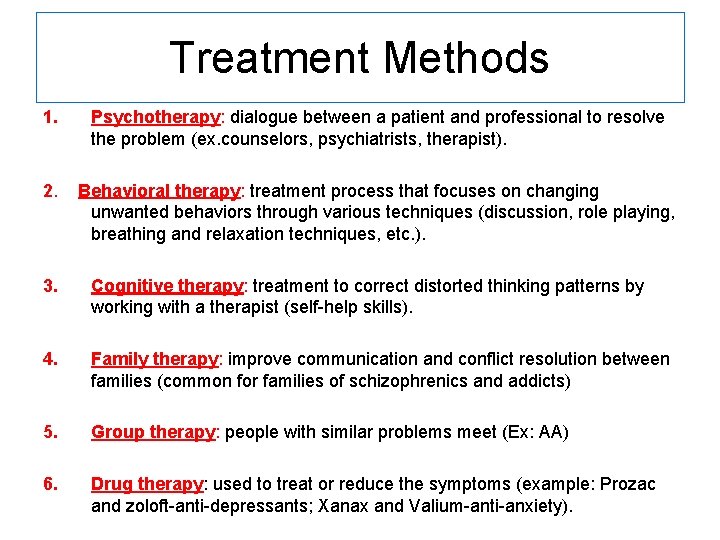
Treatment Methods 1. Psychotherapy: dialogue between a patient and professional to resolve the problem (ex. counselors, psychiatrists, therapist). 2. Behavioral therapy: treatment process that focuses on changing unwanted behaviors through various techniques (discussion, role playing, breathing and relaxation techniques, etc. ). 3. Cognitive therapy: treatment to correct distorted thinking patterns by working with a therapist (self-help skills). 4. Family therapy: improve communication and conflict resolution between families (common for families of schizophrenics and addicts) 5. Group therapy: people with similar problems meet (Ex: AA) 6. Drug therapy: used to treat or reduce the symptoms (example: Prozac and zoloft-anti-depressants; Xanax and Valium-anti-anxiety).