
Health Wellbeing Champions 29 th January 2020 St
Health & Wellbeing Champions 29 th January 2020 St Anthony’s Primary School
Overview of the Session • Excerpt from the council de-escalation training focusing on: – the impact of shame on self-regulation – brain functions – attunement – the de-escalation cycle • Consider best practice in sharing key messages with whole staff groups
Not at your best… • Think of a time when you haven’t behaved at your best, and haven’t done yourself justice… • Why was this? What factors were relevant to your behaviour? • How did others respond to you? • How would you have liked others to respond to you?
Children who experience shame • See reprimands as a very personal attack and can get very upset / angry at small comments. • See themselves as bad and have low self–esteem. • Respond to criticism with more poor behaviour. • Do not own up as they cannot bear further reinforcement that they are bad. • Blame everyone and everything else. • Withdraw from relationships with those who have shamed them.
The poorly attached child habitually experiences pervasive shame that is intensified by discipline. When discipline is given without empathy, his/her shame is likely to intensify and trigger outbursts of rage. Inside I’m Hurting: Louise Michelle Bomber 2007

Fight/Flight/Freeze: Emotional/Amygdala Hijack
Dan Siegal – “Flipping Your Lid” • https: //www. youtube. com/watch? v=G 0 T_2 NN o. C 68
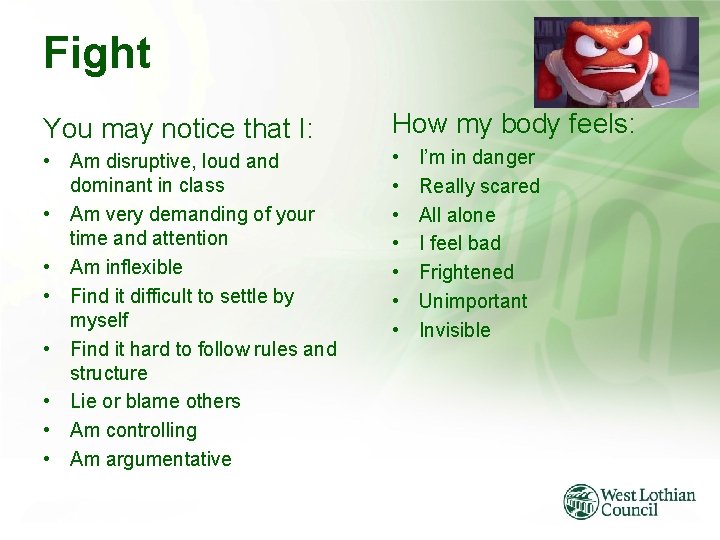
Fight You may notice that I: How my body feels: • Am disruptive, loud and dominant in class • Am very demanding of your time and attention • Am inflexible • Find it difficult to settle by myself • Find it hard to follow rules and structure • Lie or blame others • Am controlling • Am argumentative • • I’m in danger Really scared All alone I feel bad Frightened Unimportant Invisible
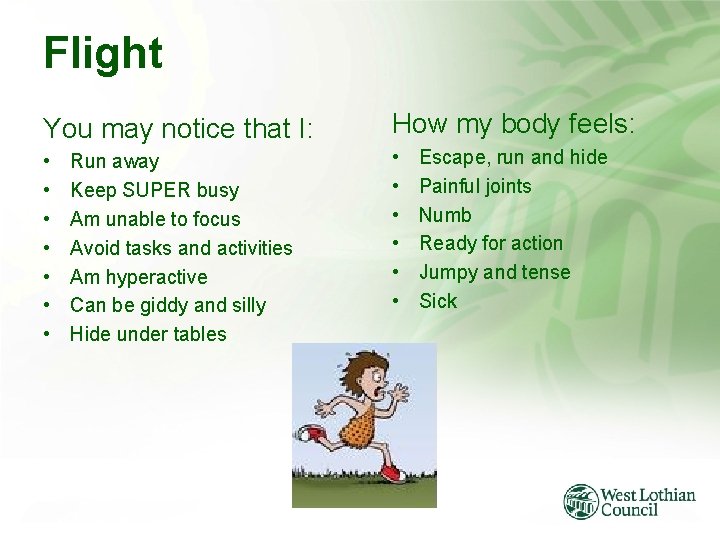
Flight You may notice that I: How my body feels: • • • • Run away Keep SUPER busy Am unable to focus Avoid tasks and activities Am hyperactive Can be giddy and silly Hide under tables Escape, run and hide Painful joints Numb Ready for action Jumpy and tense Sick
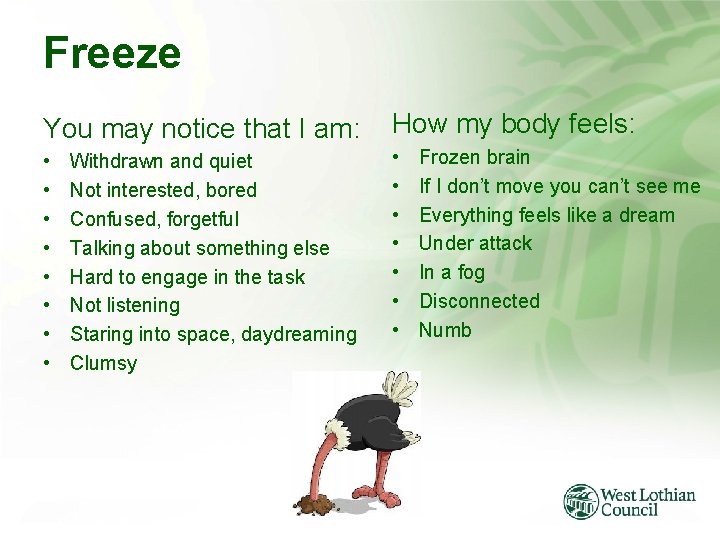
Freeze You may notice that I am: How my body feels: • • • • Withdrawn and quiet Not interested, bored Confused, forgetful Talking about something else Hard to engage in the task Not listening Staring into space, daydreaming Clumsy Frozen brain If I don’t move you can’t see me Everything feels like a dream Under attack In a fog Disconnected Numb
Amygdala hi-jack example https: //www. youtube. com/watch? v=5 XTi. I 1 ew. Vc
Spotting Emotional Hijacks With a partner, discuss an incident where a pupil experienced an emotional hijack
What can we do? : Use of Language • What is the first question we ask when someone does the wrong thing? • If we ask ‘why’, what answers do you expect to get? • What is the problem with the ‘why’ question? Alternatives…. “I’m wondering if you’re feeling……” “ What was your reason for? . . . ” “Sometimes people who feel…. . ” “so you did that because…. . ? ” “What’s the problem? ”
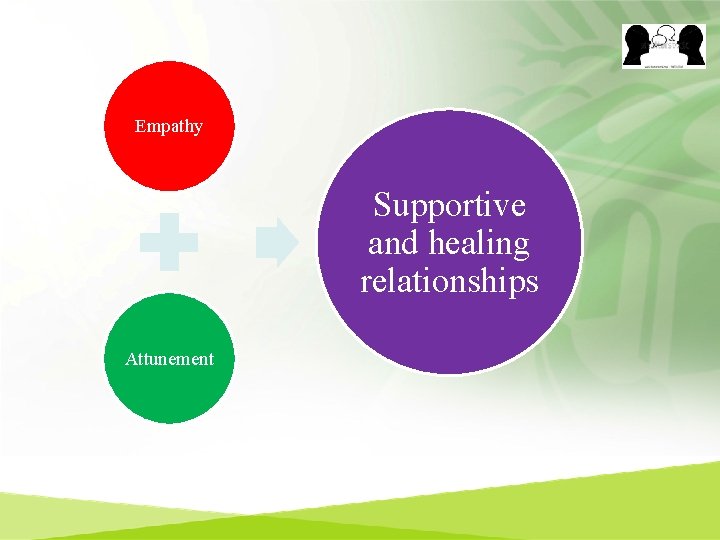
Empathy Supportive and healing relationships Attunement
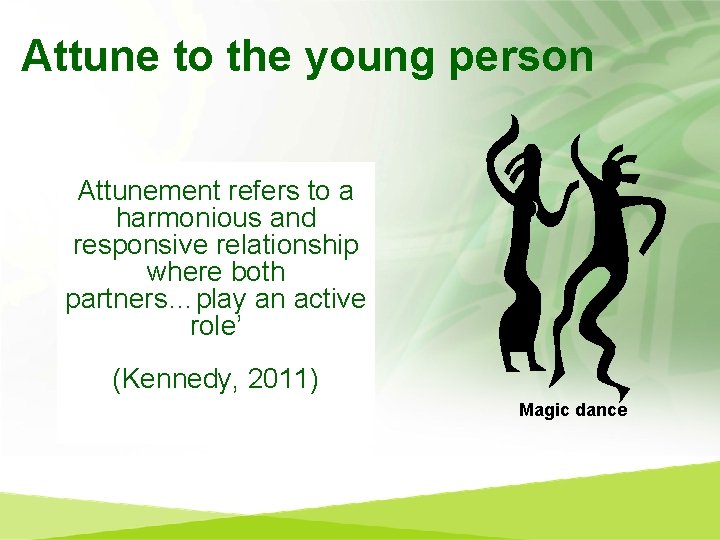
Attune to the young person Attunement refers to a harmonious and responsive relationship where both partners…play an active role’ (Kennedy, 2011) Magic dance
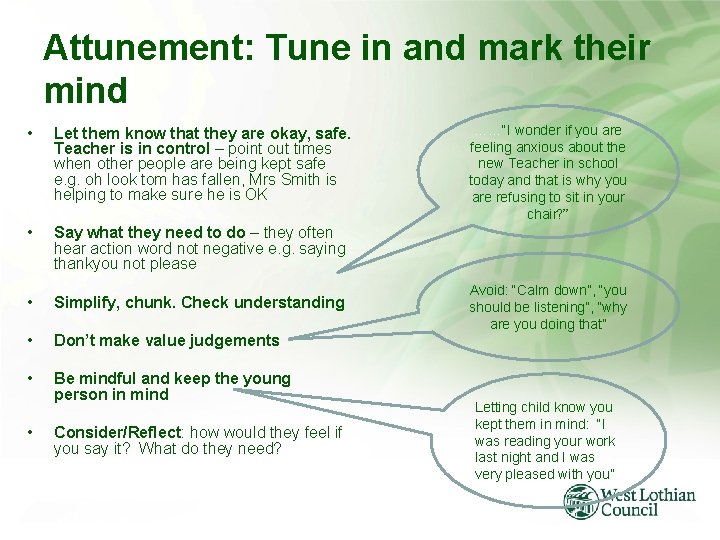
Attunement: Tune in and mark their mind • Let them know that they are okay, safe. Teacher is in control – point out times when other people are being kept safe e. g. oh look tom has fallen, Mrs Smith is helping to make sure he is OK • Say what they need to do – they often hear action word not negative e. g. saying thankyou not please • Simplify, chunk. Check understanding • Don’t make value judgements • Be mindful and keep the young person in mind • Consider/Reflect: how would they feel if you say it? What do they need? ……“I wonder if you are feeling anxious about the new Teacher in school today and that is why you are refusing to sit in your chair? ” Avoid: “Calm down”, “you should be listening”, “why are you doing that” Letting child know you kept them in mind: “I was reading your work last night and I was very pleased with you”
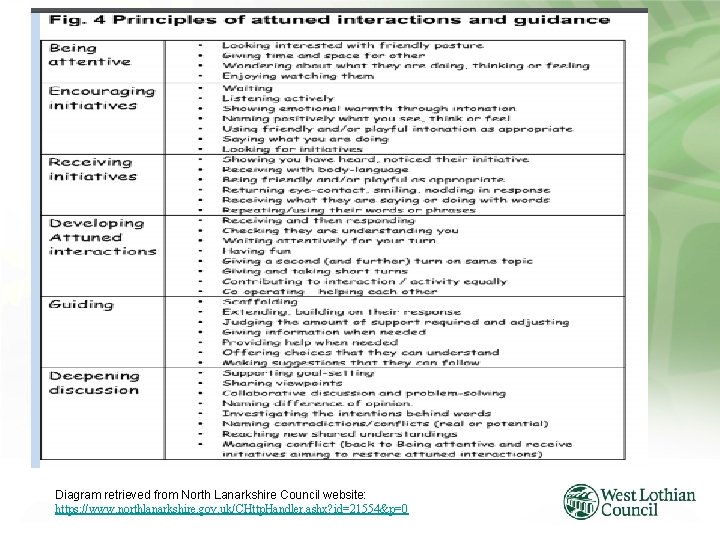
Diagram retrieved from North Lanarkshire Council website: https: //www. northlanarkshire. gov. uk/CHttp. Handler. ashx? id=21554&p=0
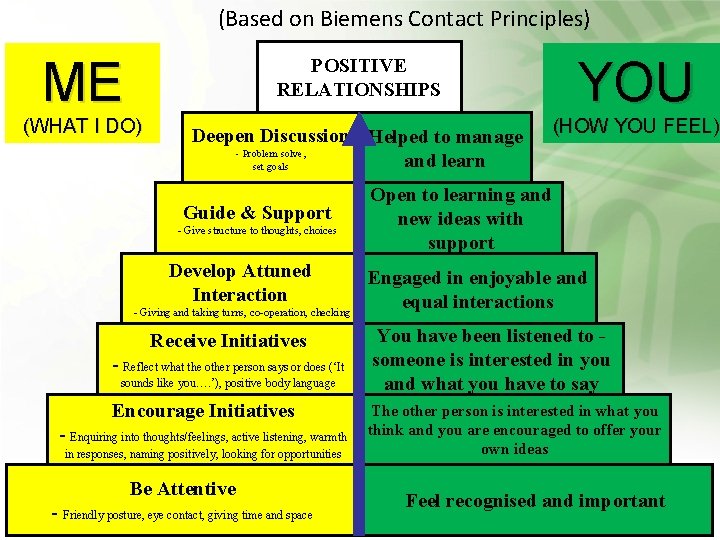
(Based on Biemens Contact Principles) ME POSITIVE RELATIONSHIPS YOU (WHAT I DO) Deepen Discussion Helped to manage - Problem solve, and learn set goals (HOW YOU FEEL) Guide & Support - Give structure to thoughts, choices Develop Attuned Interaction - Giving and taking turns, co-operation, checking Receive Initiatives - Reflect what the other person says or does (‘It sounds like you…. ’), positive body language Encourage Initiatives - Enquiring into thoughts/feelings, active listening, warmth in responses, naming positively, looking for opportunities Be Attentive - Friendly posture, eye contact, giving time and space Open to learning and new ideas with support Engaged in enjoyable and equal interactions You have been listened to someone is interested in you and what you have to say The other person is interested in what you think and you are encouraged to offer your own ideas Feel recognised and important
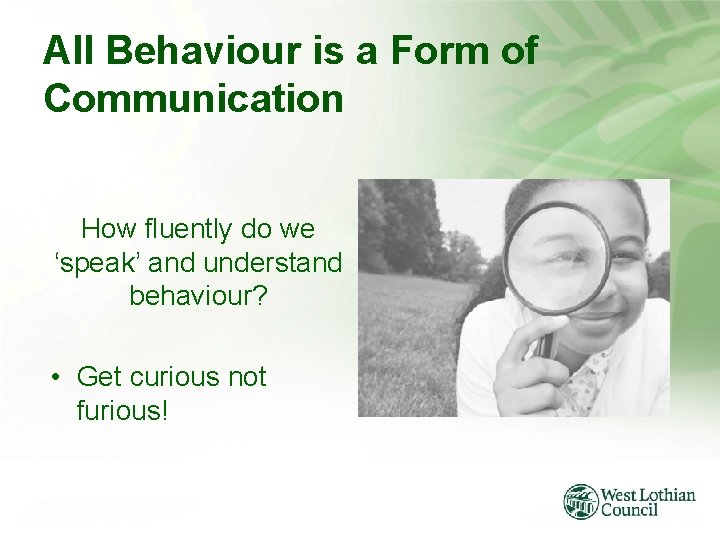
All Behaviour is a Form of Communication How fluently do we ‘speak’ and understand behaviour? • Get curious not furious!
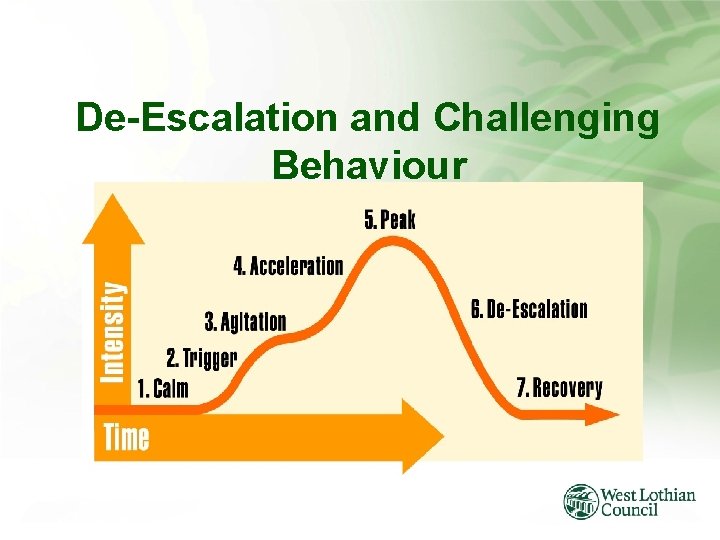
De-Escalation and Challenging Behaviour
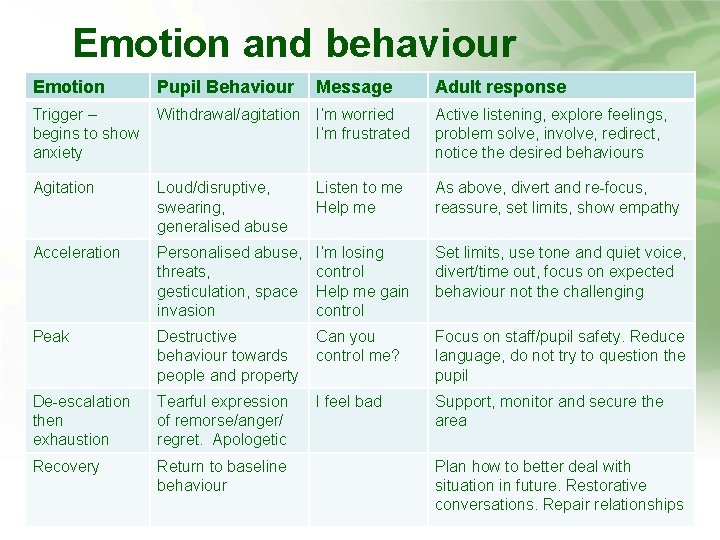
Emotion and behaviour Pupil Behaviour Message Adult response Trigger – begins to show anxiety Withdrawal/agitation I’m worried I’m frustrated Active listening, explore feelings, problem solve, involve, redirect, notice the desired behaviours Agitation Loud/disruptive, swearing, generalised abuse Listen to me Help me As above, divert and re-focus, reassure, set limits, show empathy Acceleration Personalised abuse, threats, gesticulation, space invasion I’m losing control Help me gain control Set limits, use tone and quiet voice, divert/time out, focus on expected behaviour not the challenging Peak Destructive behaviour towards people and property Can you control me? Focus on staff/pupil safety. Reduce language, do not try to question the pupil De-escalation then exhaustion Tearful expression of remorse/anger/ regret. Apologetic I feel bad Support, monitor and secure the area Recovery Return to baseline behaviour City of Edinburgh Council Psychological Services Emotion Plan how to better deal with situation in future. Restorative conversations. Repair relationships
Staff wellbeing • Important to continually consider our own wellbeing when involved in situations where pupils have “peaked. ” • Consider de-briefing processes for staff • Consider whether staff are back to the Recovery Stage before attempting restorative conversations. • The de-escalation cycle is the same for grown ups!
Sharing practice • What’s are the current mechanisms in place for sharing practice like this at whole school level? • What are the challenges? • How could we ensure that whole staff groups are best informed / supported with information / training in this area?
- Slides: 23