
Health Safety With the Grain Health Safety The



- Slides: 48
Health & Safety With the Grain
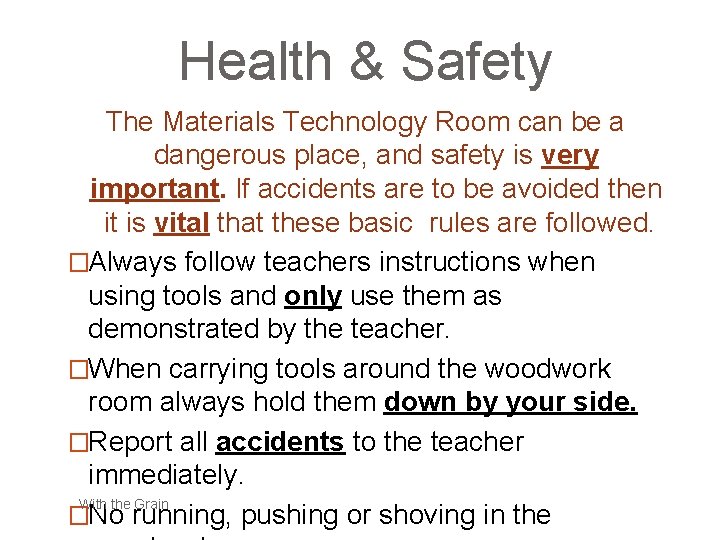
Health & Safety The Materials Technology Room can be a dangerous place, and safety is very important. If accidents are to be avoided then it is vital that these basic rules are followed. �Always follow teachers instructions when using tools and only use them as demonstrated by the teacher. �When carrying tools around the woodwork room always hold them down by your side. �Report all accidents to the teacher immediately. With the Grain �No running, pushing or shoving in the
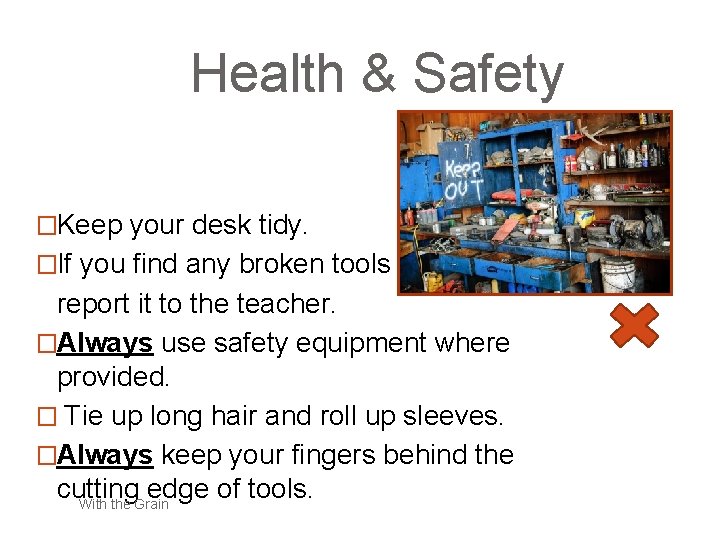
Health & Safety �Keep your desk tidy. �If you find any broken tools report it to the teacher. �Always use safety equipment where provided. � Tie up long hair and roll up sleeves. �Always keep your fingers behind the cutting edge of tools. With the Grain
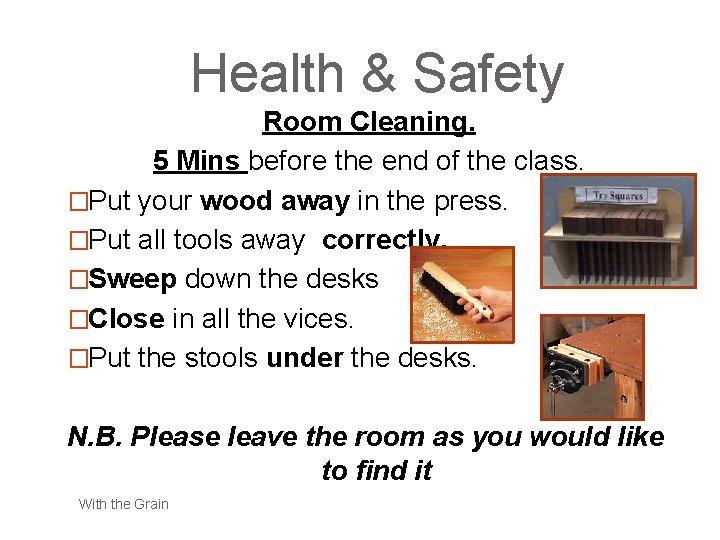
Health & Safety Room Cleaning. 5 Mins before the end of the class. �Put your wood away in the press. �Put all tools away correctly. �Sweep down the desks �Close in all the vices. �Put the stools under the desks. N. B. Please leave the room as you would like to find it With the Grain
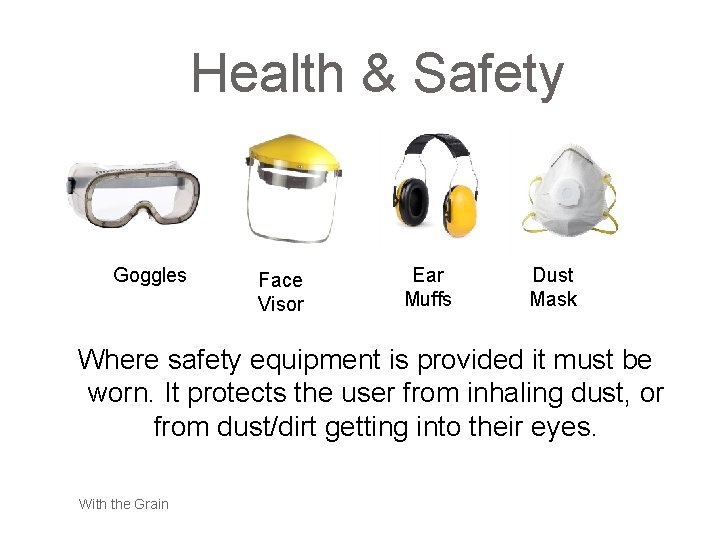
Health & Safety Goggles Face Visor Ear Muffs Dust Mask Where safety equipment is provided it must be worn. It protects the user from inhaling dust, or from dust/dirt getting into their eyes. With the Grain
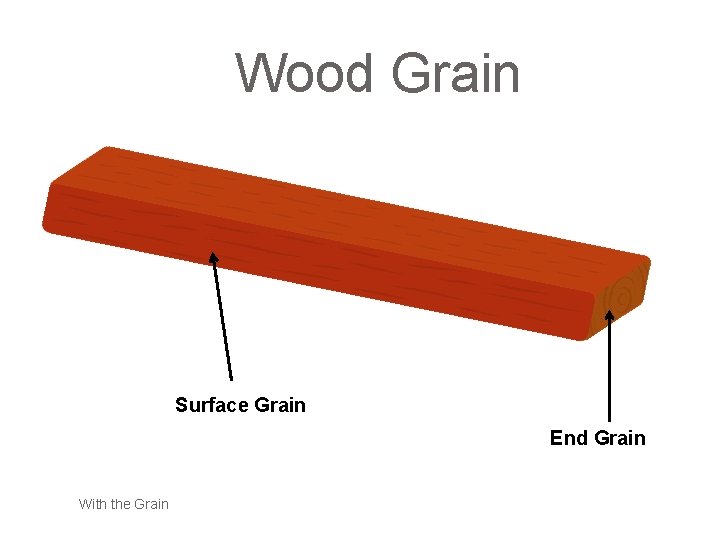
Wood Grain Surface Grain End Grain With the Grain
Tools in the Woodwork Room With the Grain
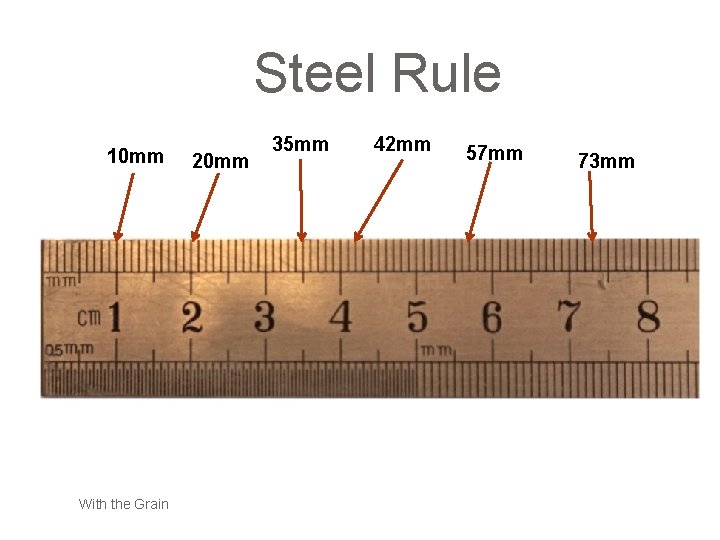
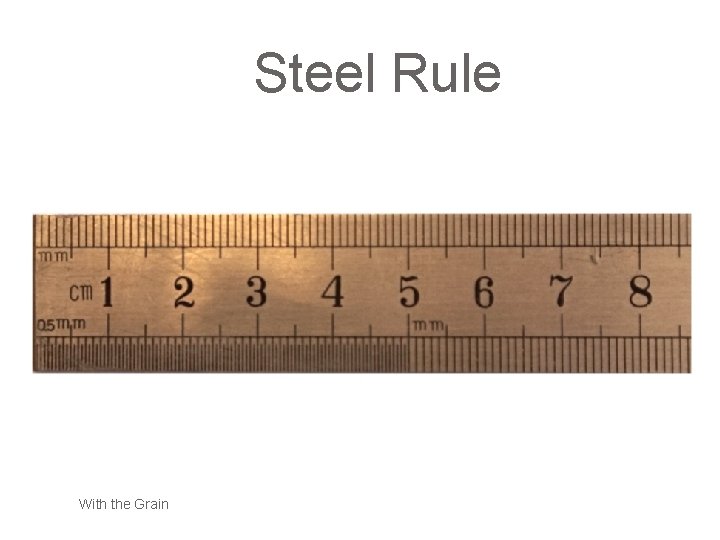
Steel Rule �The rule is made from stainless steel and is 300 mm long �It begins at zero. Use: �With the Grain It is used for measuring distances accurately.
Steel Rule 10 mm With the Grain 20 mm 35 mm 42 mm 57 mm 73 mm
Steel Rule With the Grain
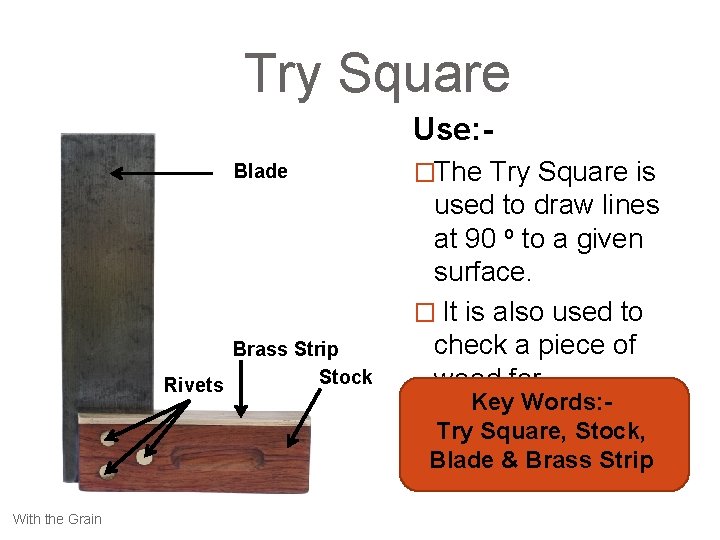
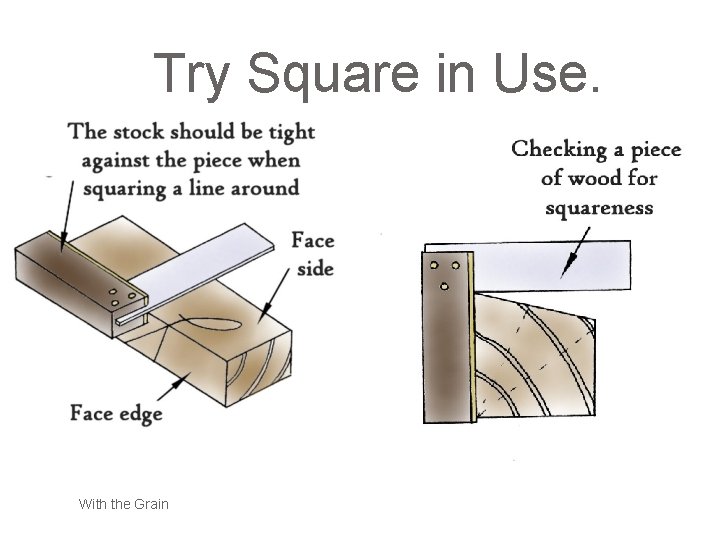
Try Square Use: Blade Brass Strip Stock Rivets �The Try Square is used to draw lines at 90 o to a given surface. � It is also used to check a piece of wood for Key Words: squareness. Try Square, Stock, Blade & Brass Strip With the Grain
Try Square in Use. With the Grain
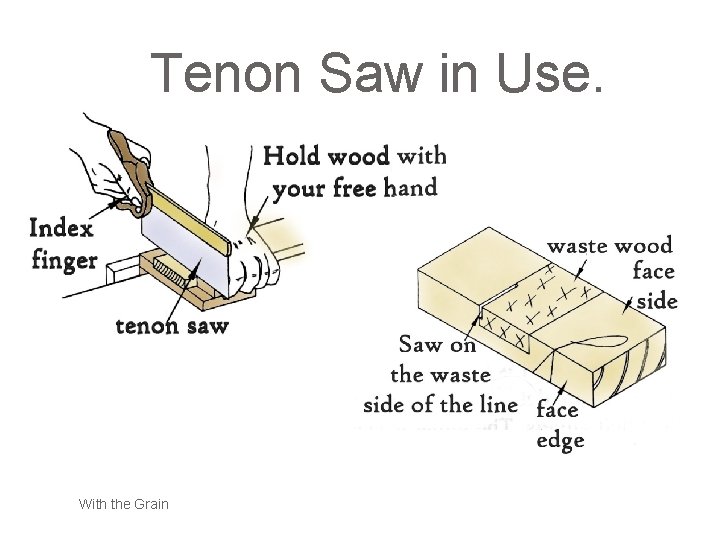
Tenon Saw Handle Brass Rib Screws/Rivets Use: �The Tenon saw is used for light bench work and is used for sawing straight lines. With the Grain Blade Key Words: Tenon Saw, Brass rib & rivets
Tenon Saw in Use. With the Grain
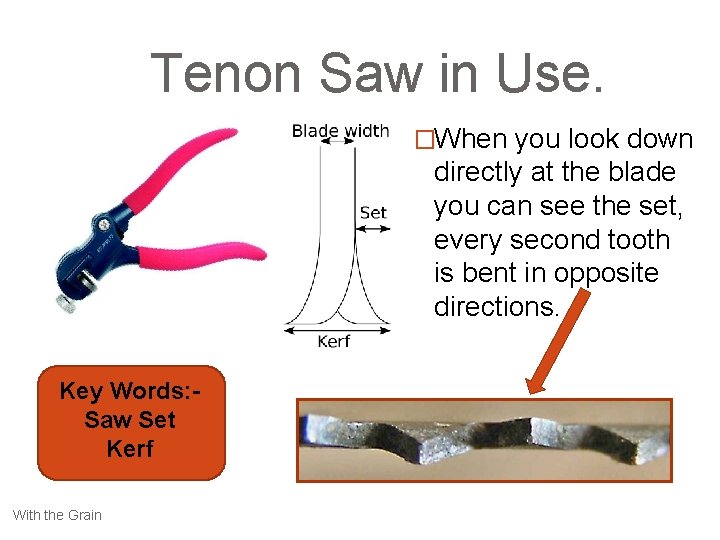
Tenon Saw in Use. �When you look down directly at the blade you can see the set, every second tooth is bent in opposite directions. Key Words: Saw Set Kerf With the Grain
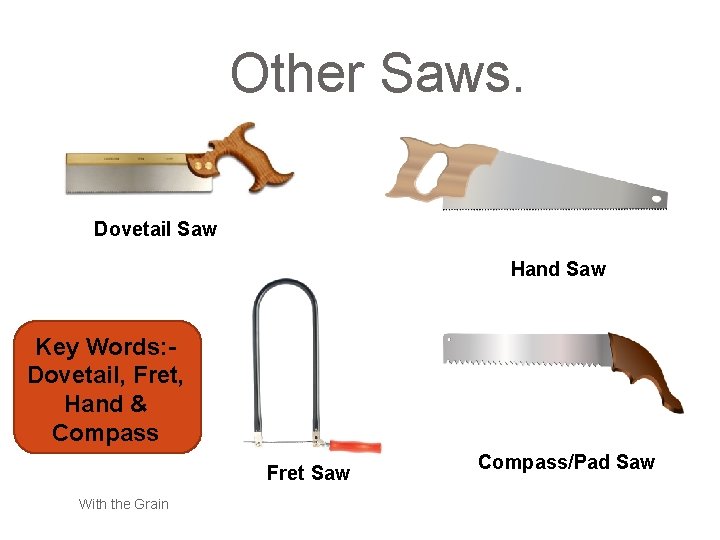
Other Saws. Dovetail Saw Hand Saw Key Words: Dovetail, Fret, Hand & Compass Fret Saw With the Grain Compass/Pad Saw
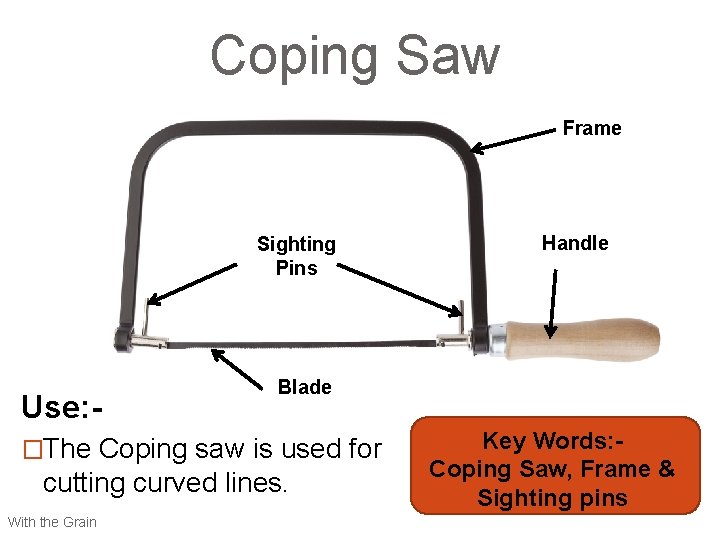
Coping Saw Frame Sighting Pins Use: - Blade �The Coping saw is used for cutting curved lines. With the Grain Handle Key Words: Coping Saw, Frame & Sighting pins
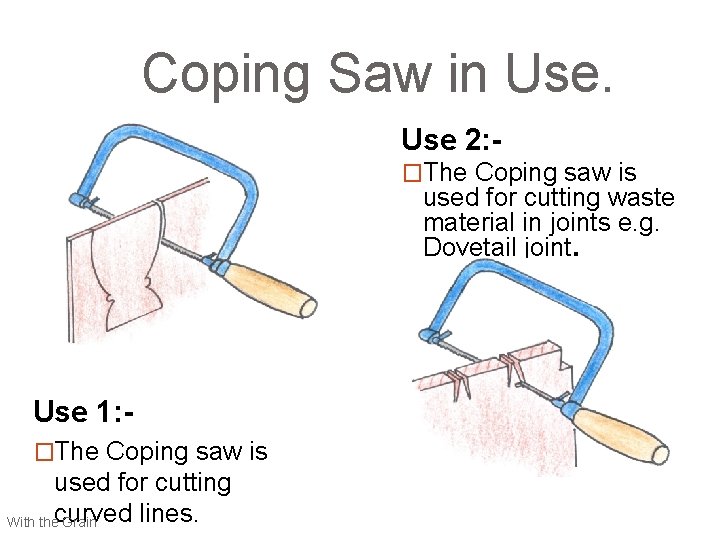
Coping Saw in Use 2: �The Coping saw is used for cutting waste material in joints e. g. Dovetail joint. Use 1: �The Coping saw is used for cutting curved lines. With the Grain
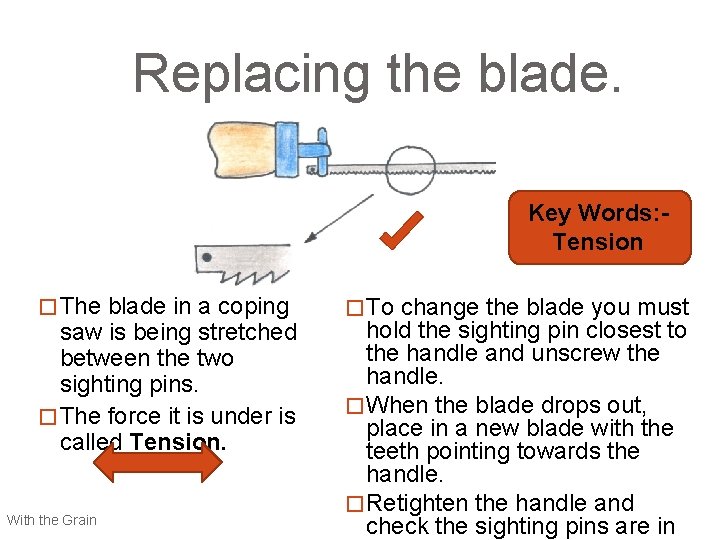
Replacing the blade. Key Words: Tension � The blade in a coping saw is being stretched between the two sighting pins. � The force it is under is called Tension. With the Grain � To change the blade you must hold the sighting pin closest to the handle and unscrew the handle. � When the blade drops out, place in a new blade with the teeth pointing towards the handle. � Retighten the handle and check the sighting pins are in
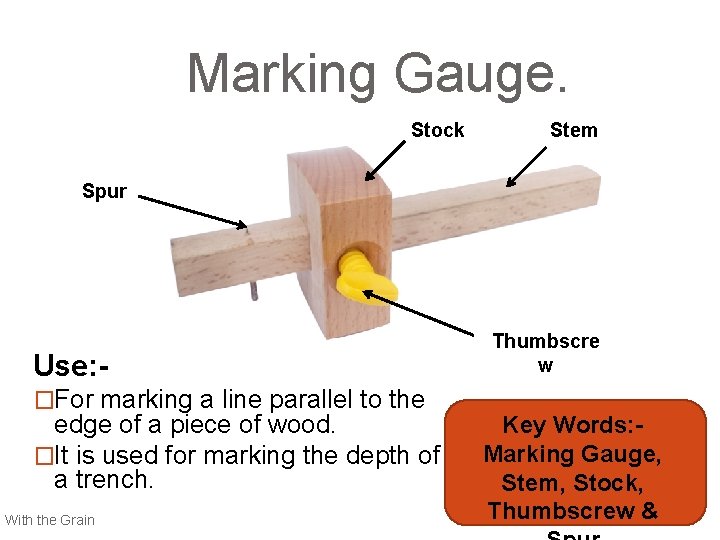
Marking Gauge. Stock Stem Spur Use: �For marking a line parallel to the edge of a piece of wood. �It is used for marking the depth of a trench. With the Grain Thumbscre w Key Words: Marking Gauge, Stem, Stock, Thumbscrew &
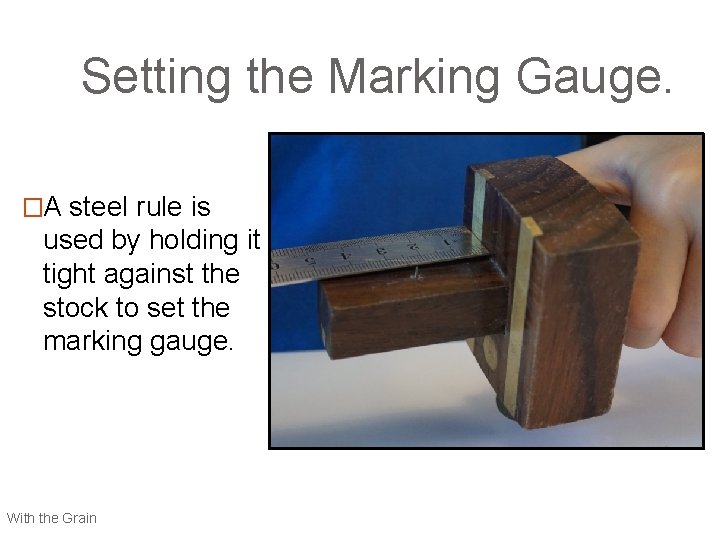
Setting the Marking Gauge. �A steel rule is used by holding it tight against the stock to set the marking gauge. With the Grain
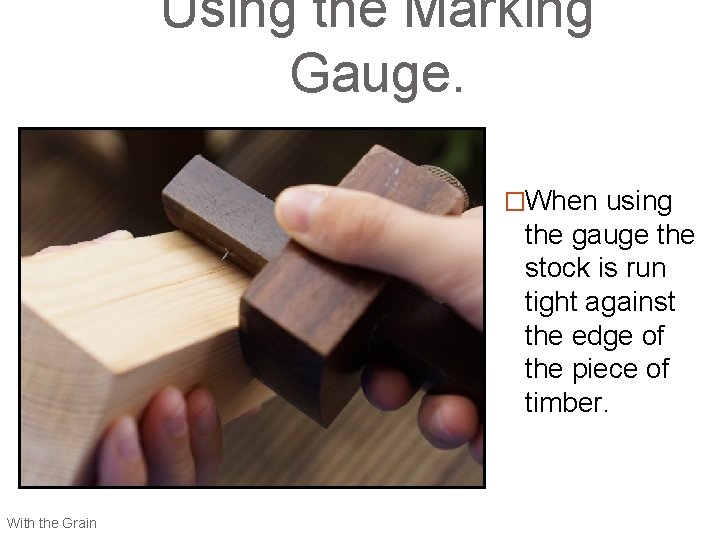
Using the Marking Gauge. �When using the gauge the stock is run tight against the edge of the piece of timber. With the Grain
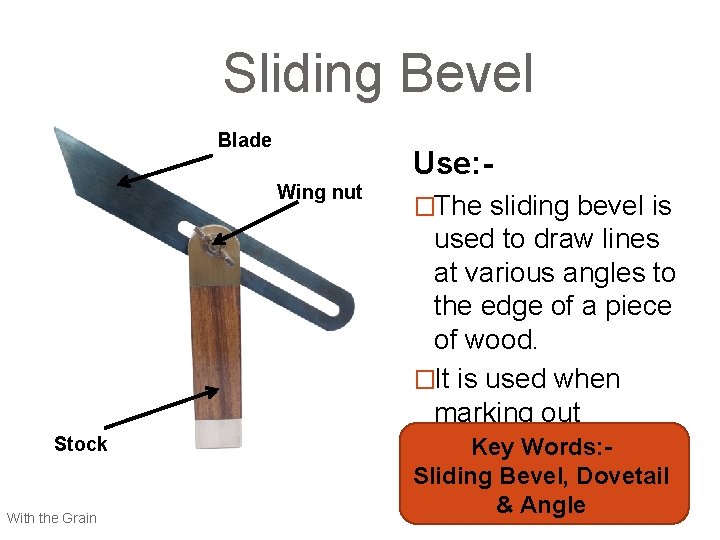
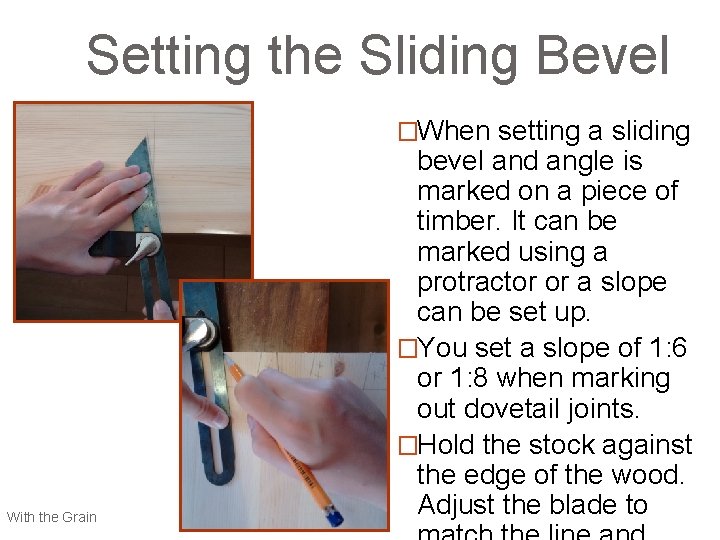
Sliding Bevel Blade Wing nut Stock With the Grain Use: �The sliding bevel is used to draw lines at various angles to the edge of a piece of wood. �It is used when marking out Key Words: dovetail joints. Sliding Bevel, Dovetail & Angle
Setting the Sliding Bevel �When setting a sliding With the Grain bevel and angle is marked on a piece of timber. It can be marked using a protractor or a slope can be set up. �You set a slope of 1: 6 or 1: 8 when marking out dovetail joints. �Hold the stock against the edge of the wood. Adjust the blade to
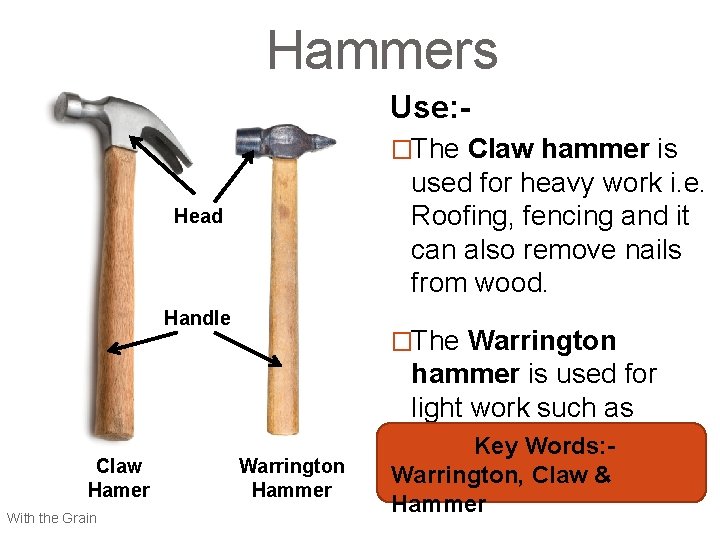
Hammers Use: �The Claw hammer is used for heavy work i. e. Roofing, fencing and it can also remove nails from wood. Head Handle Claw Hamer With the Grain �The Warrington Hammer hammer is used for light work such as putting in panel pins or Key Words: Warrington, Claw & tacks. Hammer
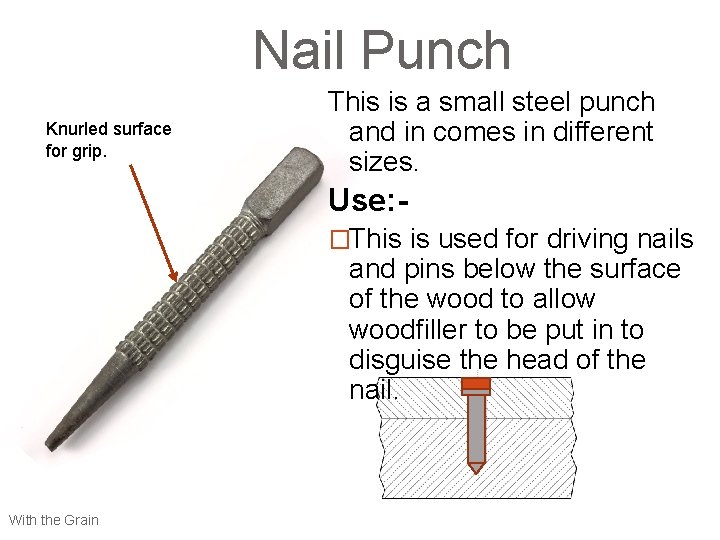
Nail Punch Knurled surface for grip. This is a small steel punch and in comes in different sizes. Use: �This is used for driving nails and pins below the surface of the wood to allow woodfiller to be put in to disguise the head of the nail. With the Grain
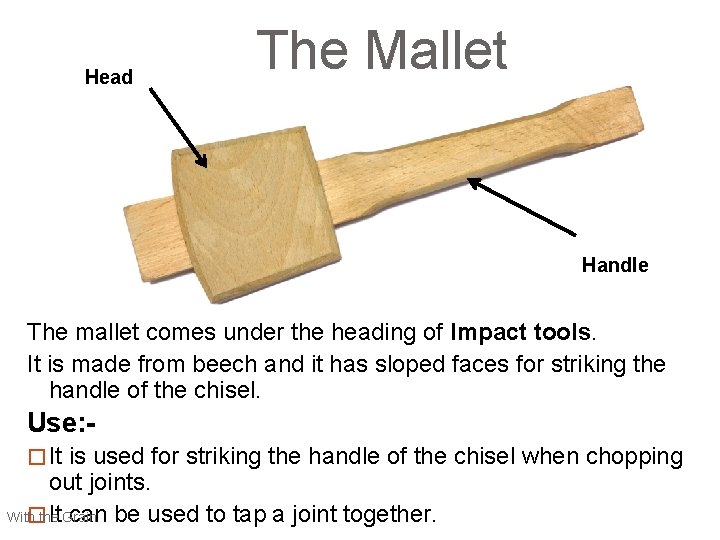
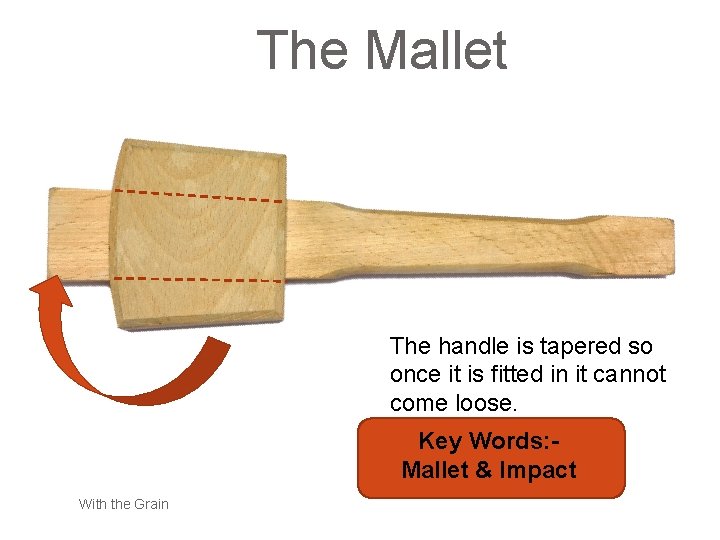
Head The Mallet Handle The mallet comes under the heading of Impact tools. It is made from beech and it has sloped faces for striking the handle of the chisel. Use: � It is used for striking the handle of the chisel when chopping out joints. � It can be used to tap a joint together. With the Grain
The Mallet The handle is tapered so once it is fitted in it cannot come loose. Key Words: Mallet & Impact With the Grain
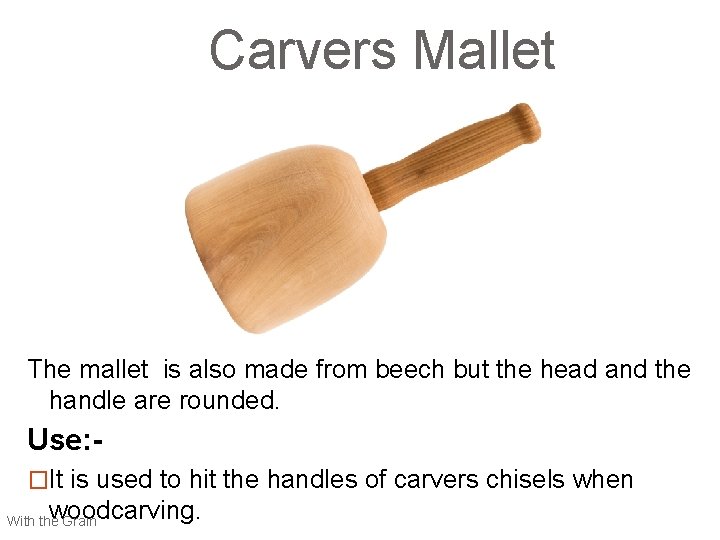
Carvers Mallet The mallet is also made from beech but the head and the handle are rounded. Use: �It is used to hit the handles of carvers chisels when woodcarving. With the Grain
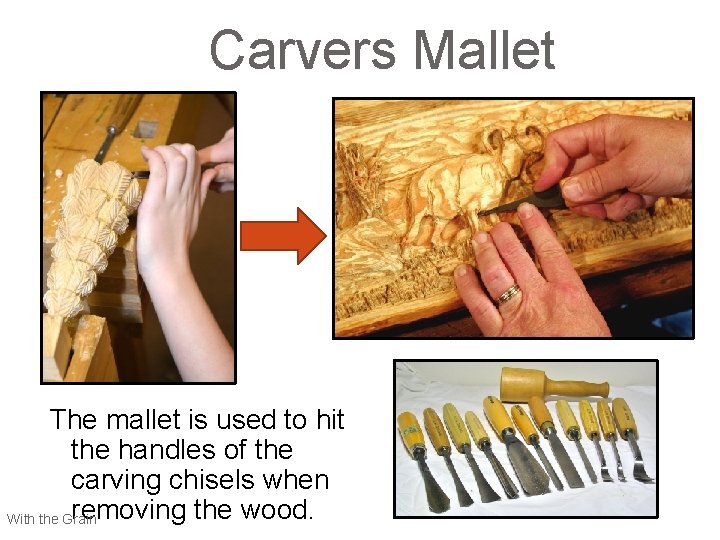
Carvers Mallet The mallet is used to hit the handles of the carving chisels when removing the wood. With the Grain
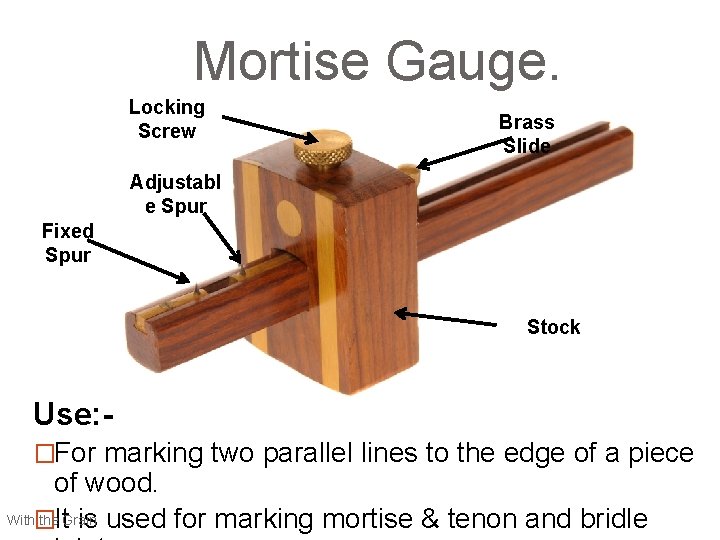
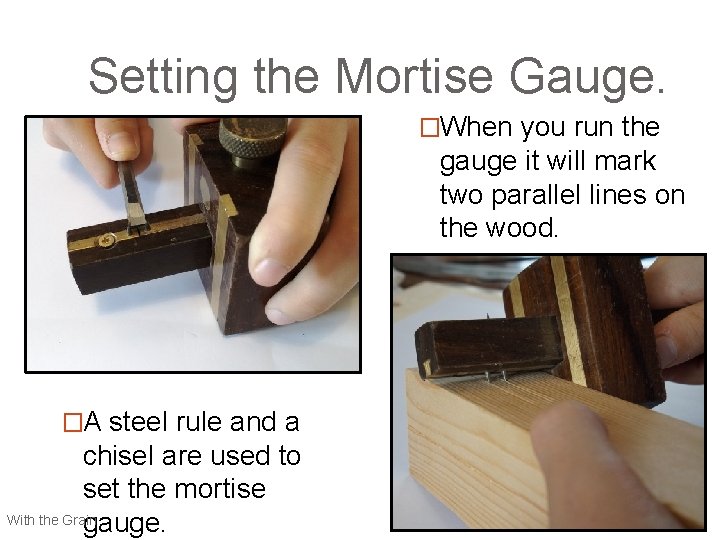
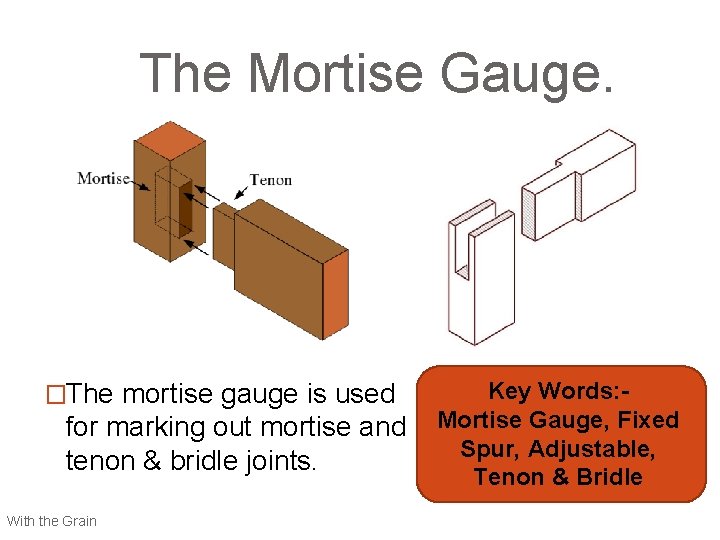
Mortise Gauge. Locking Screw Brass Slide Adjustabl e Spur Fixed Spur Stock Use: �For marking two parallel lines to the edge of a piece of wood. With the Grain �It is used for marking mortise & tenon and bridle
Setting the Mortise Gauge. �When you run the gauge it will mark two parallel lines on the wood. �A steel rule and a chisel are used to set the mortise With the Grain gauge.
The Mortise Gauge. Key Words: for marking out mortise and Mortise Gauge, Fixed Spur, Adjustable, tenon & bridle joints. Tenon & Bridle �The mortise gauge is used With the Grain
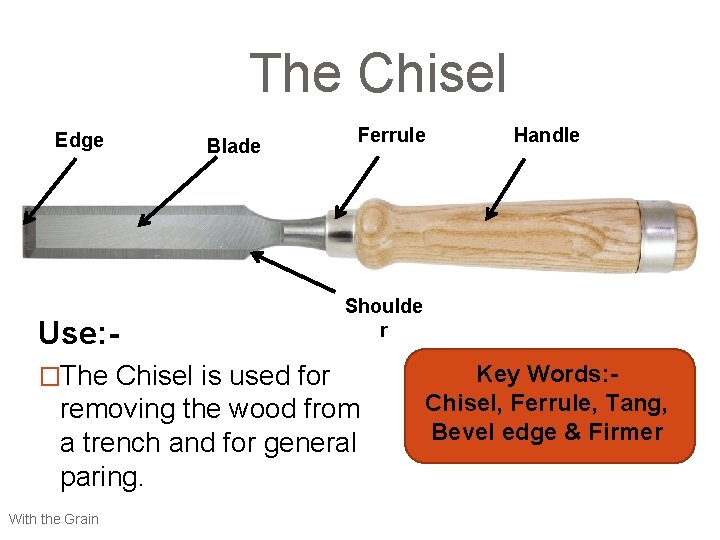
The Chisel Edge Blade Use: - Ferrule Shoulde r �The Chisel is used for removing the wood from a trench and for general paring. With the Grain Handle Key Words: Chisel, Ferrule, Tang, Bevel edge & Firmer
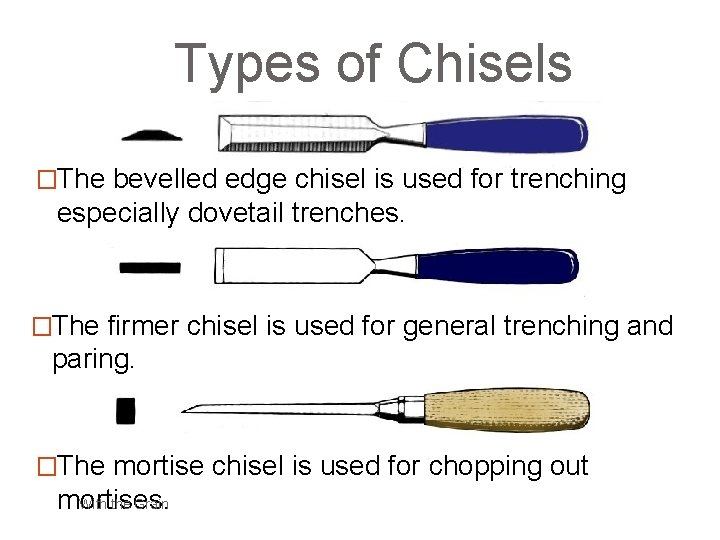
Types of Chisels �The bevelled edge chisel is used for trenching especially dovetail trenches. �The firmer chisel is used for general trenching and paring. �The mortise chisel is used for chopping out mortises. With the Grain
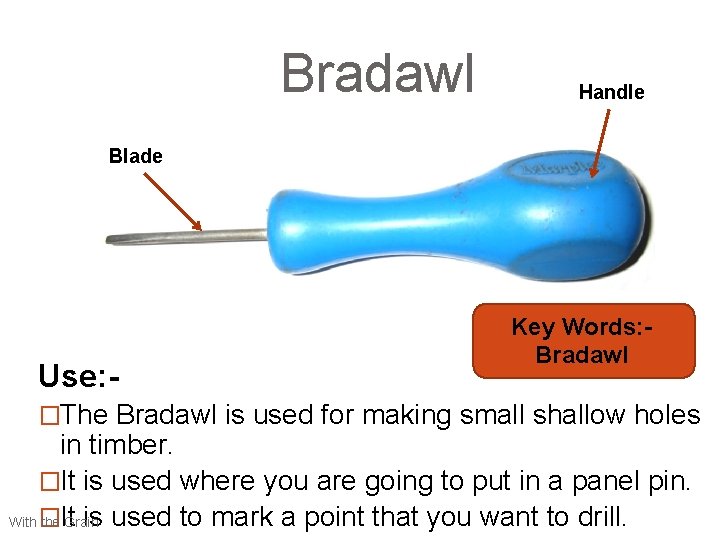
Bradawl Handle Blade Use: - Key Words: Bradawl �The Bradawl is used for making small shallow holes in timber. �It is used where you are going to put in a panel pin. �It is used to mark a point that you want to drill. With the Grain
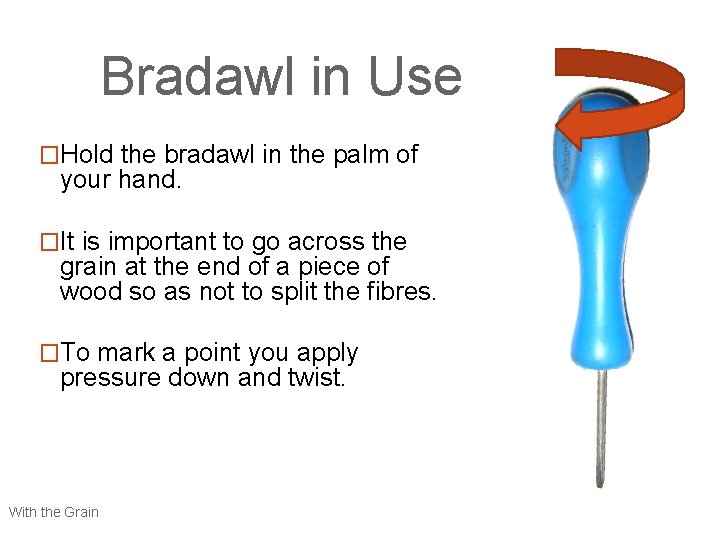
Bradawl in Use �Hold the bradawl in the palm of your hand. �It is important to go across the grain at the end of a piece of wood so as not to split the fibres. �To mark a point you apply pressure down and twist. With the Grain
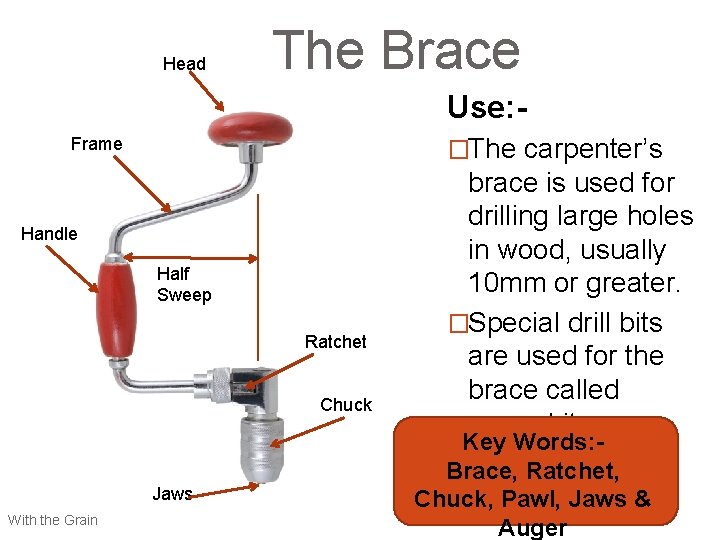
Head The Brace Use: �The carpenter’s Frame Handle Half Sweep Ratchet Chuck Jaws With the Grain brace is used for drilling large holes in wood, usually 10 mm or greater. �Special drill bits are used for the brace called auger bits. Key Words: Brace, Ratchet, Chuck, Pawl, Jaws & Auger
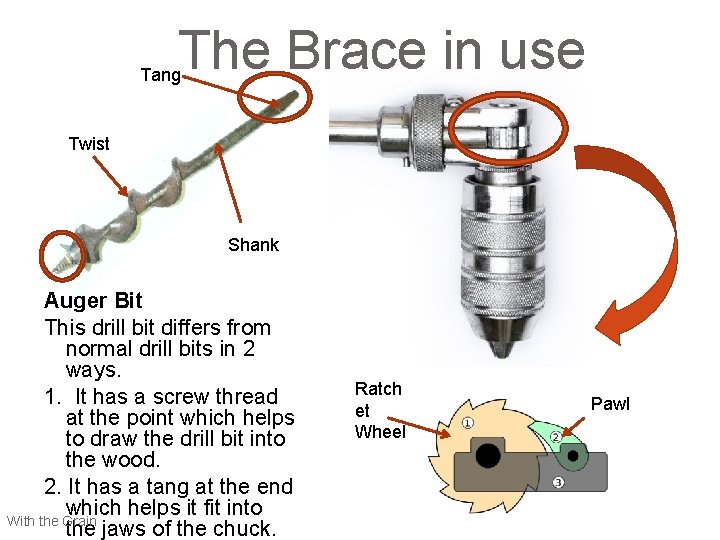
The Brace in use Tang Twist Shank Auger Bit This drill bit differs from normal drill bits in 2 ways. 1. It has a screw thread at the point which helps to draw the drill bit into the wood. 2. It has a tang at the end which helps it fit into With the Grain the jaws of the chuck. Ratch et Wheel Pawl
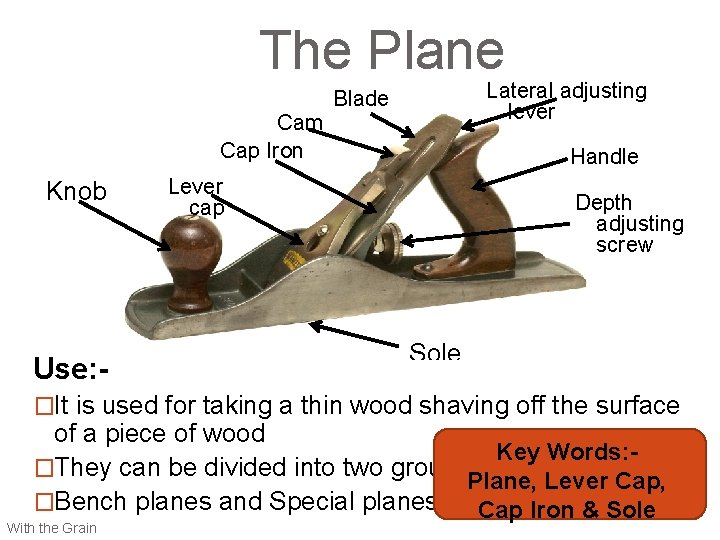
The Plane Cam Cap Iron Knob Use: - Lateral adjusting lever Blade Handle Lever cap Depth adjusting screw Sole �It is used for taking a thin wood shaving off the surface of a piece of wood Key Words: �They can be divided into two groups. Plane, Lever Cap, �Bench planes and Special planes. Cap Iron & Sole With the Grain
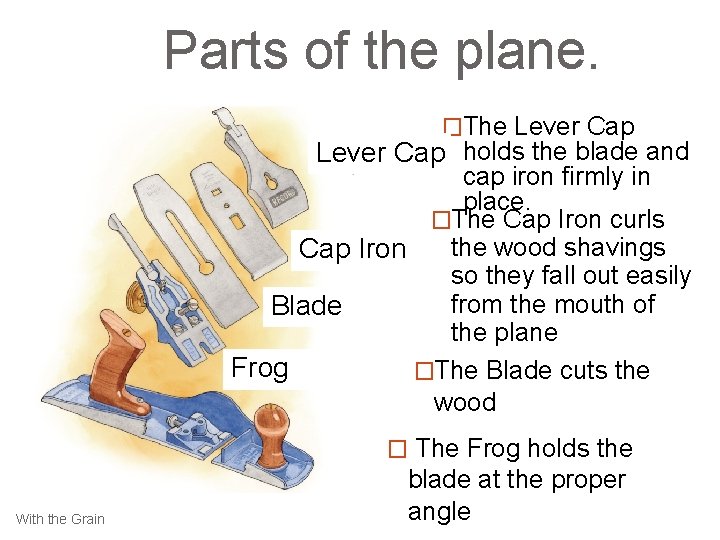
Parts of the plane. �The Lever Cap holds the blade and cap iron firmly in place. �The Cap Iron curls the wood shavings Cap Iron so they fall out easily from the mouth of Blade the plane Frog �The Blade cuts the wood � The Frog holds the With the Grain blade at the proper angle
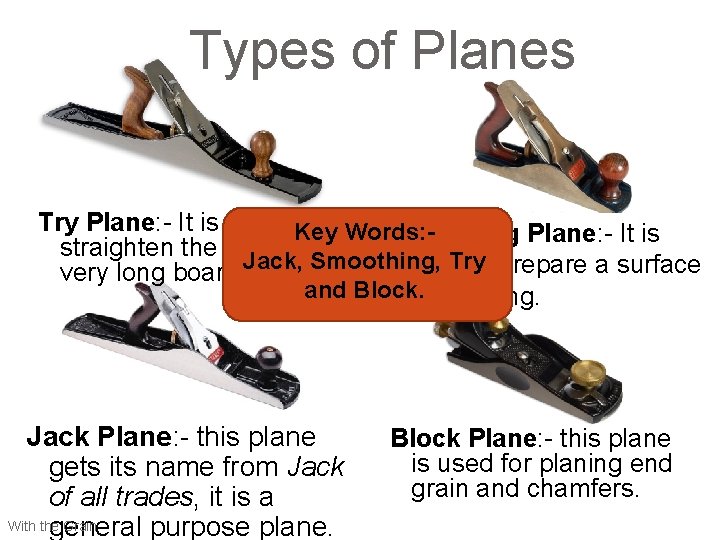
Types of Planes Try Plane: - It is used to Key Words: Smoothing Plane: - It is straighten the edge of Jack, Smoothing, Try used to prepare a surface very long boards. and Block. for sanding. Jack Plane: - this plane gets its name from Jack of all trades, it is a With the Grain general purpose plane. Block Plane: - this plane is used for planing end grain and chamfers.
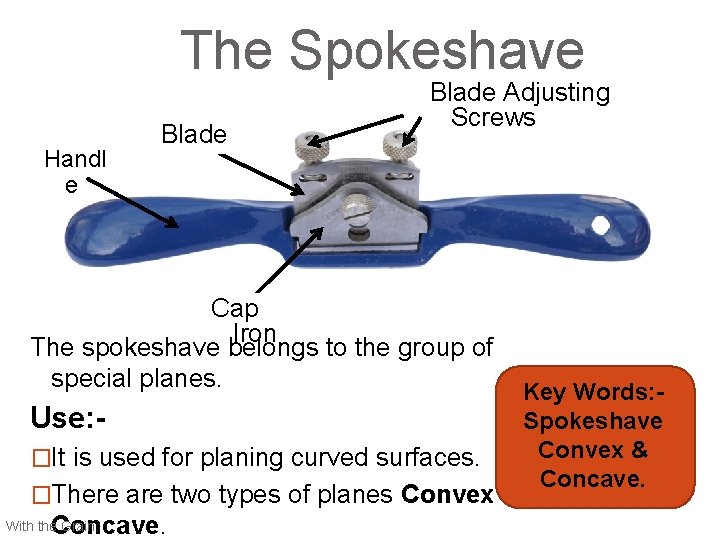
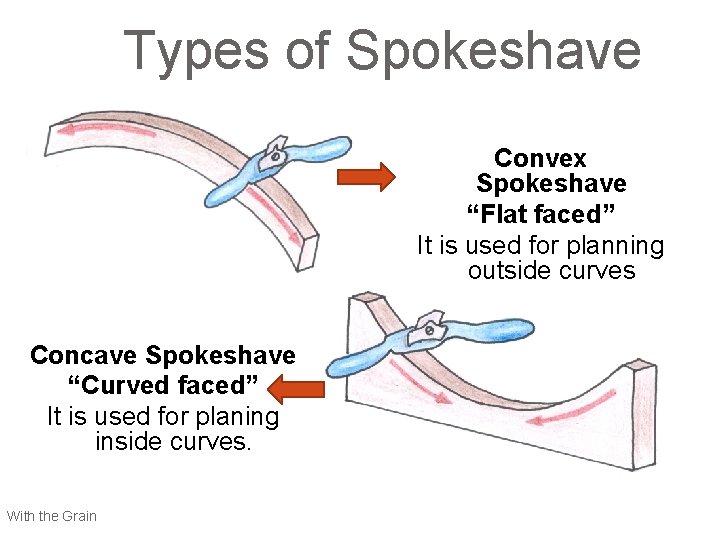
The Spokeshave Handl e Blade Adjusting Screws Cap Iron The spokeshave belongs to the group of special planes. Use: �It is used for planing curved surfaces. Key Words: Spokeshave Convex & Concave. �There are two types of planes Convex and Concave. With the Grain
Types of Spokeshave Convex Spokeshave “Flat faced” It is used for planning outside curves Concave Spokeshave “Curved faced” It is used for planing inside curves. With the Grain
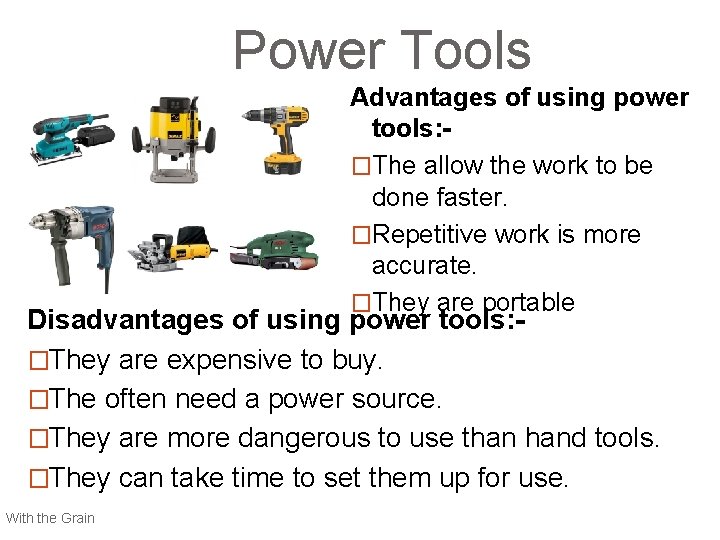
Power Tools Advantages of using power tools: �The allow the work to be done faster. �Repetitive work is more accurate. �They are portable Disadvantages of using power tools: �They are expensive to buy. �The often need a power source. �They are more dangerous to use than hand tools. �They can take time to set them up for use. With the Grain
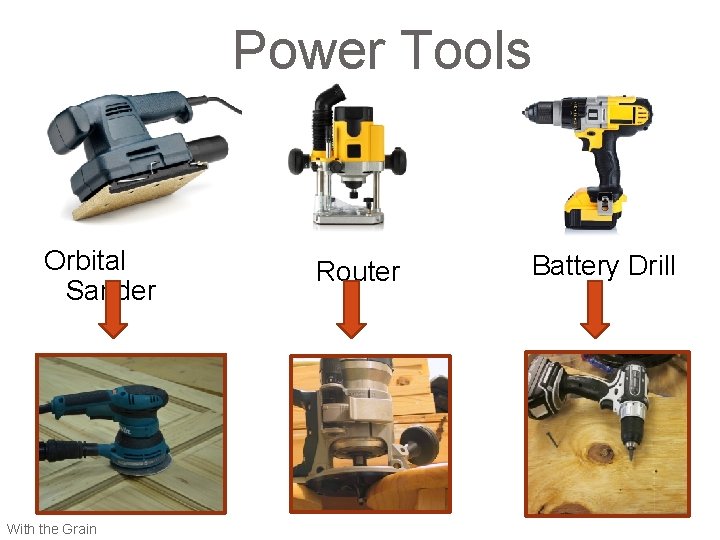
Power Tools Orbital Sander With the Grain Router Battery Drill
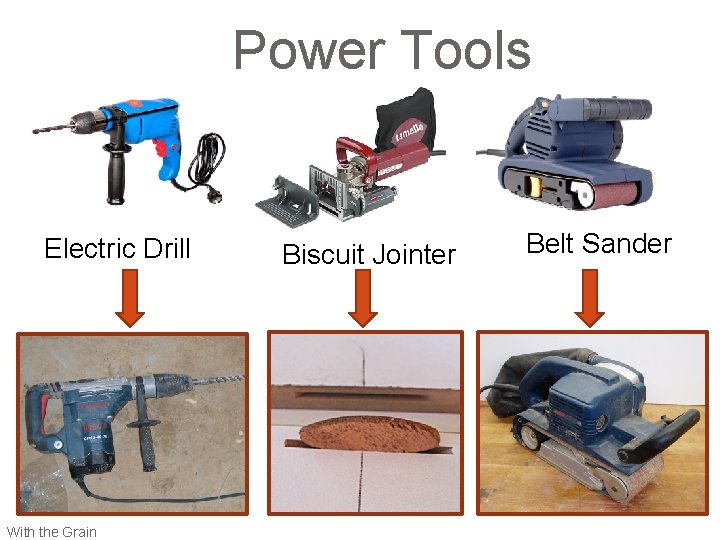
Power Tools Electric Drill With the Grain Biscuit Jointer Belt Sander
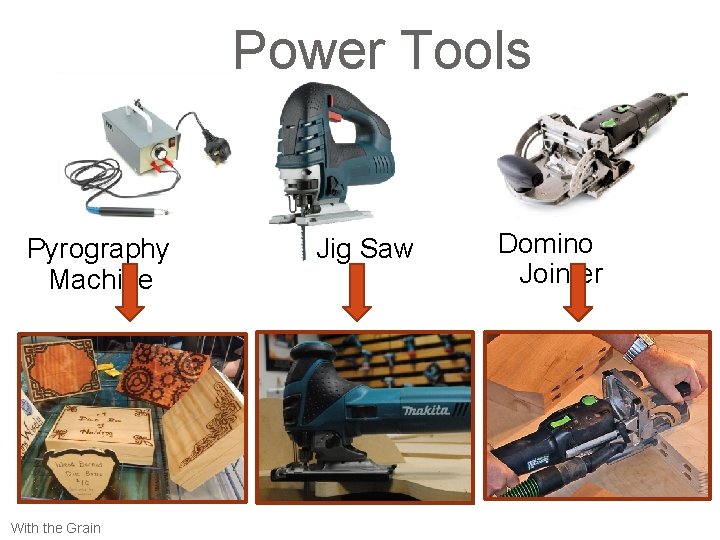
Power Tools Pyrography Machine With the Grain Jig Saw Domino Jointer