
Health Quality Ontario Quality Rounds Gertie Mai Muise
- Slides: 39
Health Quality Ontario Quality Rounds Gertie Mai Muise, BA, MAL Aboriginal Health Access Centre & Aboriginal Community Health Centres Building Capacity for the Wholistic Model of Health and Wellbeing June 16, 2016
Greetings! M’Tallawin Kweh Boozhoo Ahnee Shekóli Shé: kon Tansi Watchiya 2
3
4
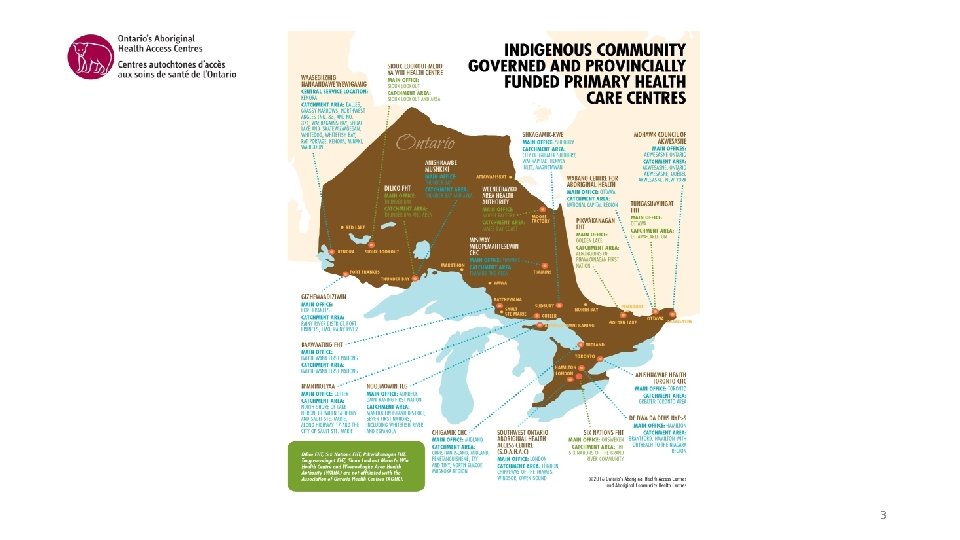
• Unique in Canada and made in Ontario, the 10 AHACs and 3 ACHCs are community-led, primary health care organizations, providing an array of health and social services to Indigenous people across the province • Primary Health Care • Traditional healing • Mental Health & Wellness • Cultural programs • Health promotion • Social supports • Community development 5
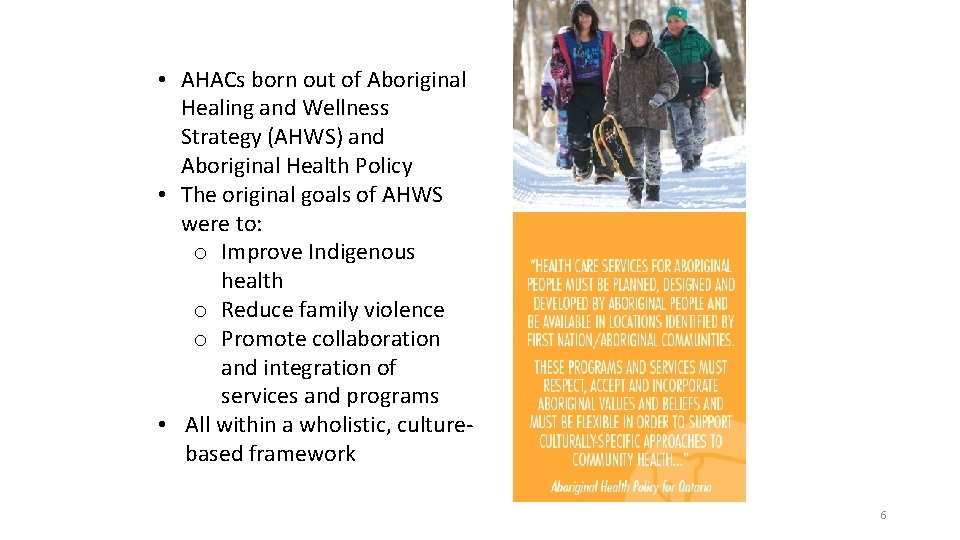
• AHACs born out of Aboriginal Healing and Wellness Strategy (AHWS) and Aboriginal Health Policy • The original goals of AHWS were to: o Improve Indigenous health o Reduce family violence o Promote collaboration and integration of services and programs • All within a wholistic, culturebased framework 6
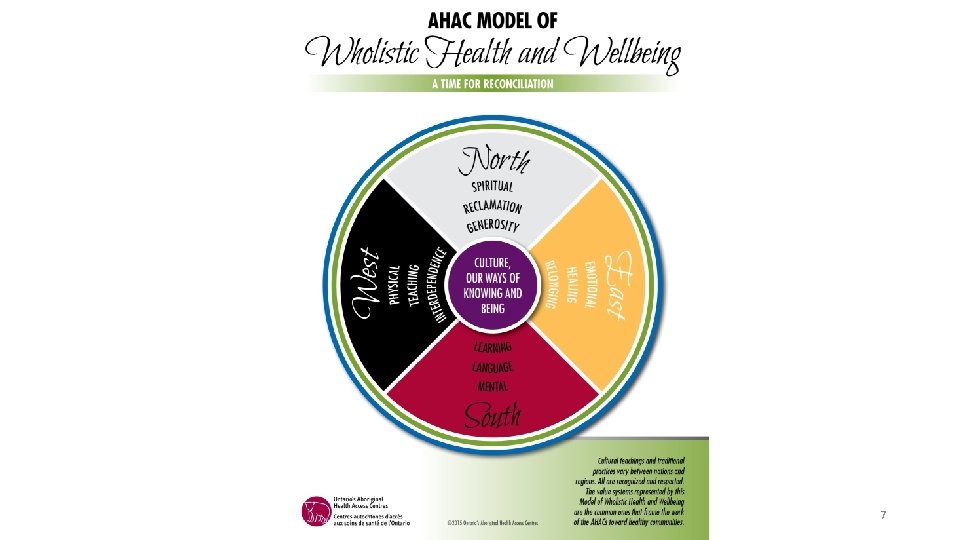
7
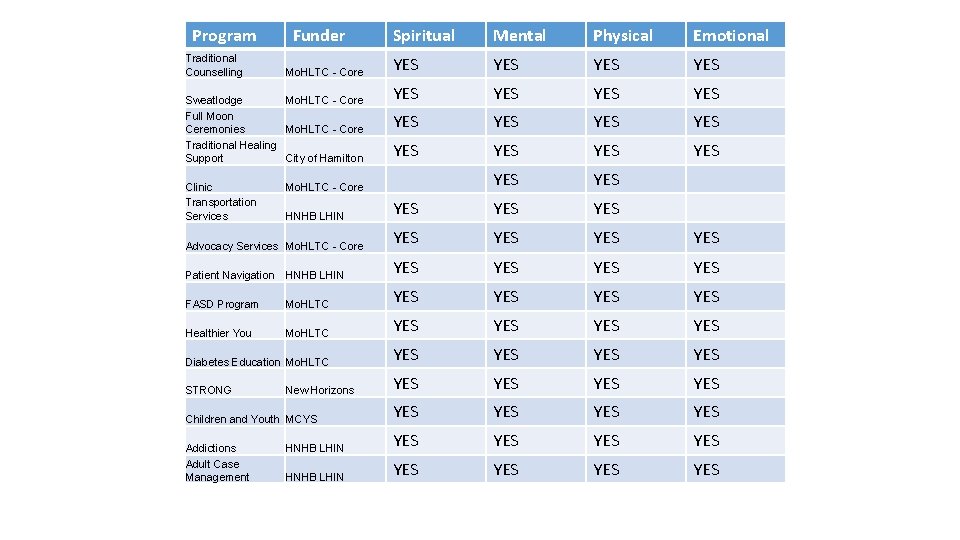
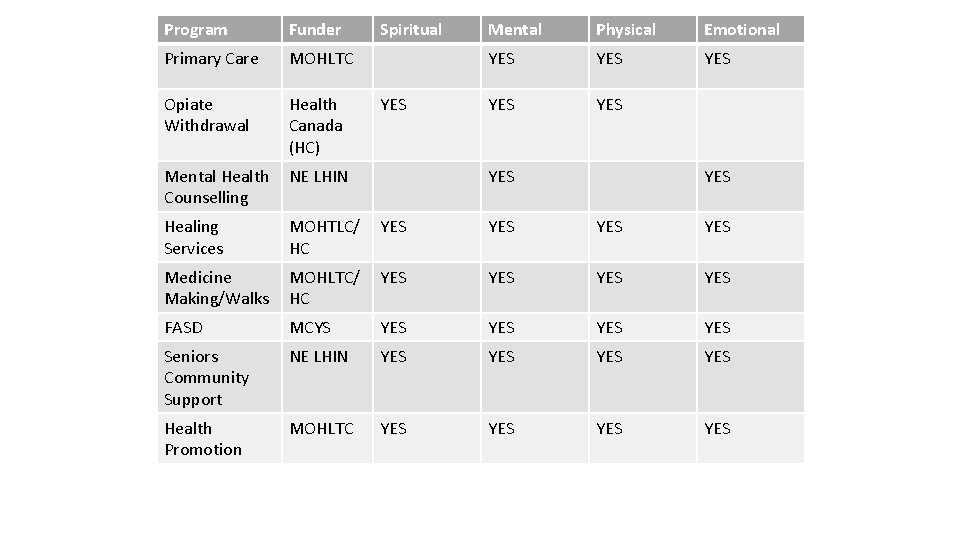
AHAC & ACHC Service Types Unique Services, Unique Health Human Resource Requirements
Program Spiritual Mental Physical Emotional YES YES YES YES YES YES Advocacy Services Mo. HLTC - Core YES YES Patient Navigation HNHB LHIN YES YES FASD Program Mo. HLTC YES YES Healthier You Mo. HLTC YES YES Diabetes Education Mo. HLTC YES YES STRONG YES YES HNHB LHIN YES YES Traditional Counselling Funder Mo. HLTC - Core Sweatlodge Mo. HLTC - Core Full Moon Ceremonies Mo. HLTC - Core Traditional Healing Support City of Hamilton Clinic Transportation Services Mo. HLTC - Core HNHB LHIN New Horizons Children and Youth MCYS Addictions Adult Case Management
Program Funder Primary Care MOHLTC Opiate Withdrawal Health Canada (HC) Spiritual YES Mental Health NE LHIN Counselling Mental Physical Emotional YES YES Healing Services MOHTLC/ HC YES YES Medicine Making/Walks MOHLTC/ HC YES YES FASD MCYS YES YES Seniors Community Support NE LHIN YES YES Health Promotion MOHLTC YES YES
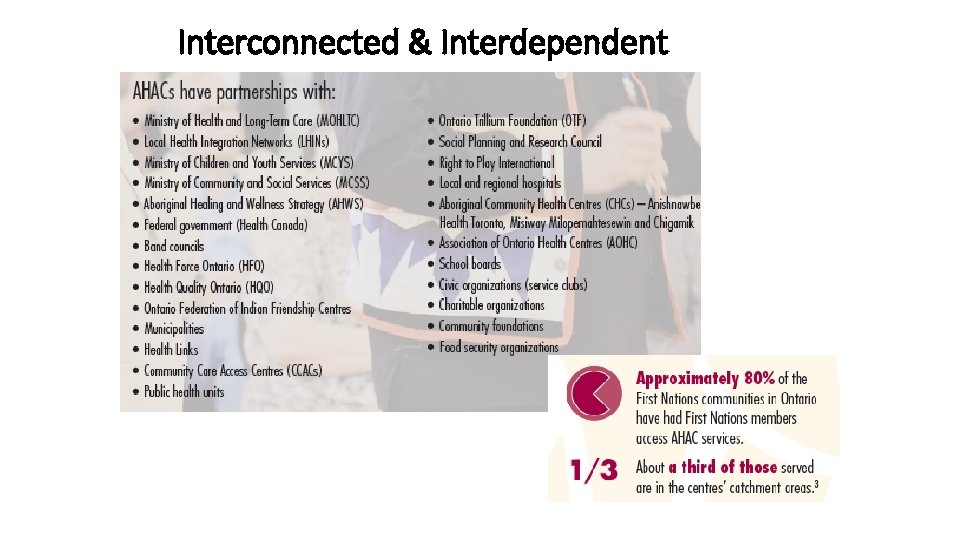
Interconnected & Interdependent
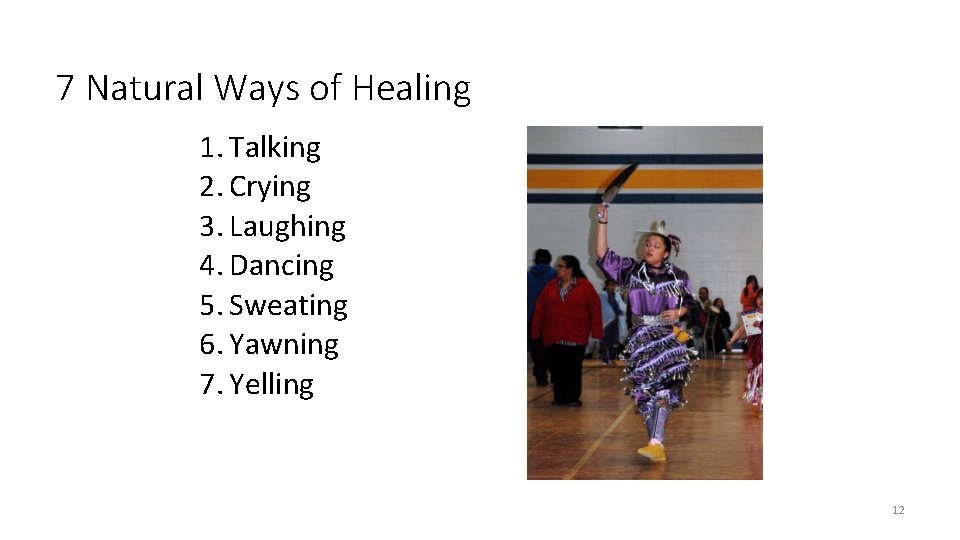
7 Natural Ways of Healing 1. Talking 2. Crying 3. Laughing 4. Dancing 5. Sweating 6. Yawning 7. Yelling 12
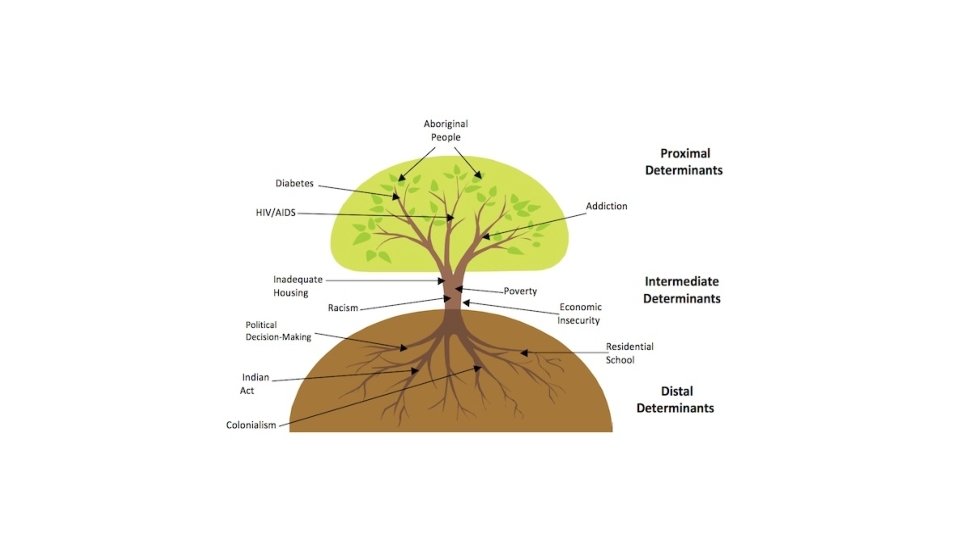
Tree Metaphor
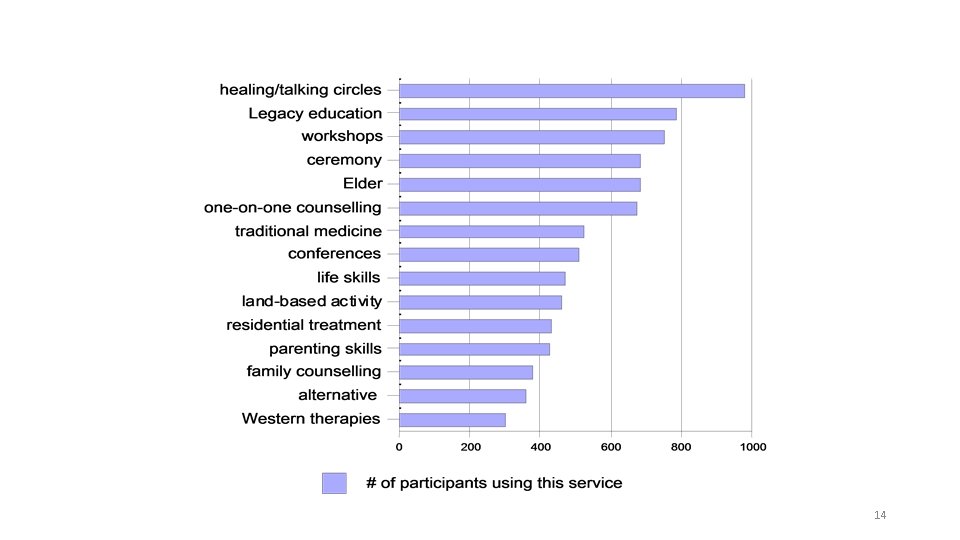
14
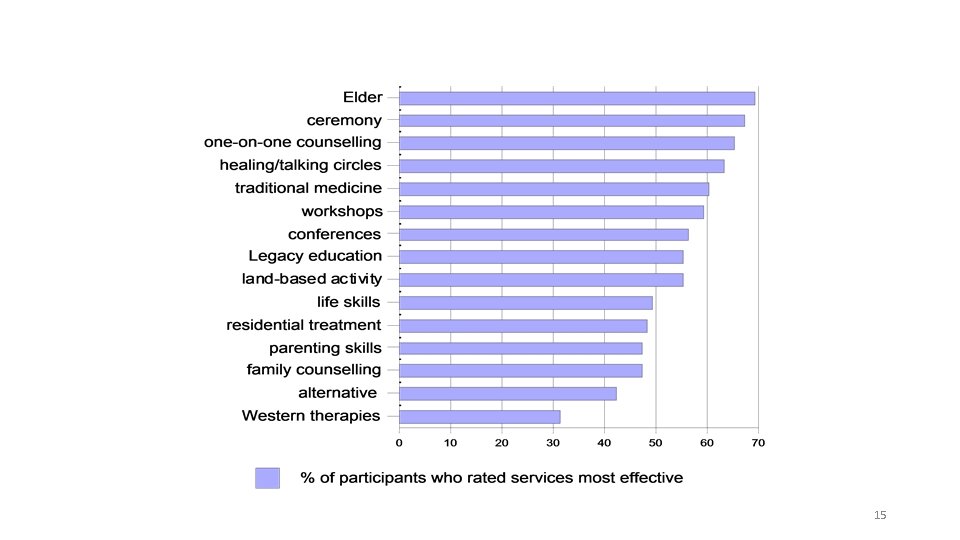
15
AHACs & ACHC Reports • Serves Indigenous people on and off-reserve and in urban and rural settings For more detailed information about AHACs go here: AHAC Report 2015 16
Quality Population Needs Based Health Planning Closing gaps in Indigenous population health data
Why population based health assessment? • Sophisticated population level tracking of the incidence, risk factors related to, and course of acute and chronic disease are taken for granted by the majority of Ontario citizens. • This information guides the strategic implementation of evidence based health interventions such as vaccinations, primary and tertiary health care enhancements and health promotion programs. • These interventions in turn reduce morbidity, mortality, and overall health care expenditures. • Service-based information only tells us about the health of people who are already accessing health services – so it will be biased. (ie. Aboriginal women and breast cancer)
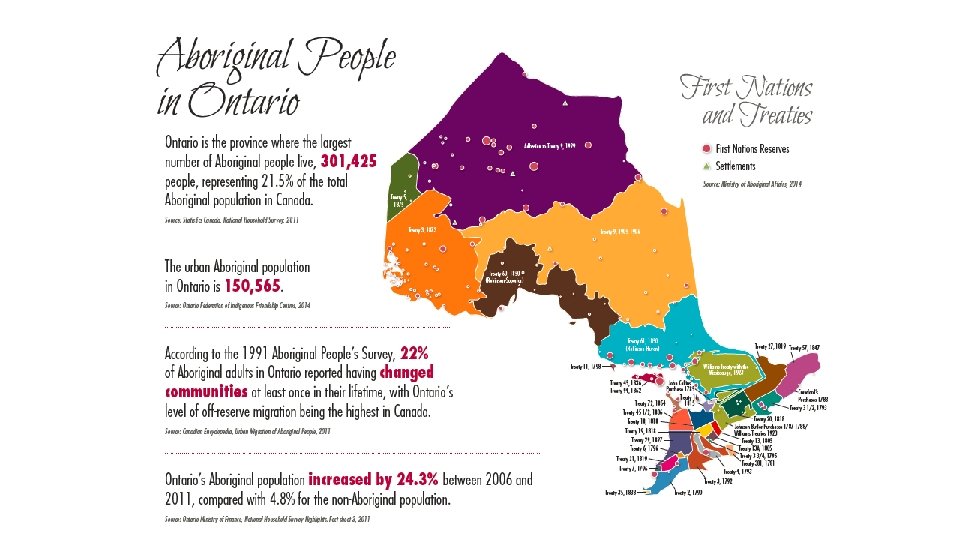
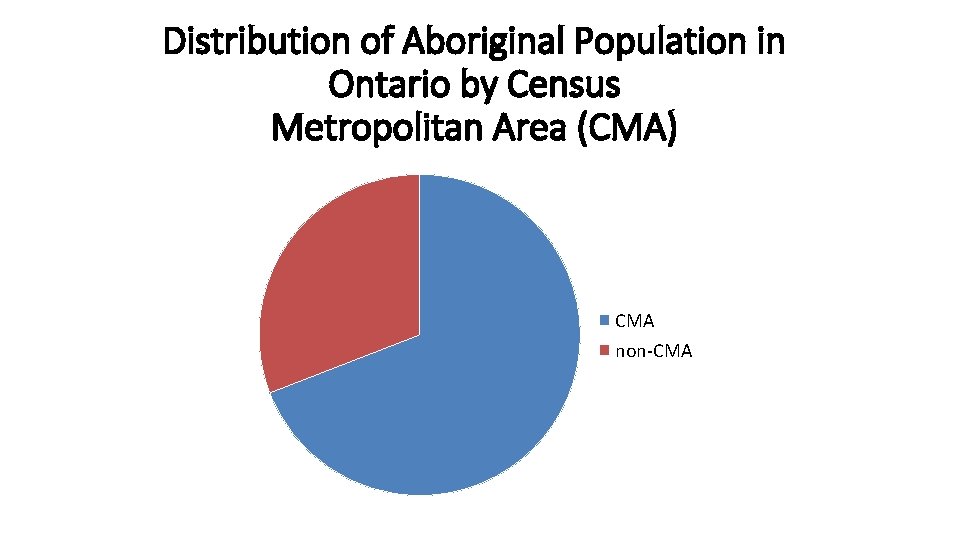
Why urban Aboriginal population based health assessment? • Ontario has the largest population of self-identified Aboriginal people of any province or territory – 301, 425 persons or 21. 5% of the total Aboriginal identity population in Canada according to the 2011 NHS • The large majority of this population lives in urban areas of Ontario (69% in CMAs, 2011 NHS) • A small minority (17%) of this population is First Nations with status living on reserve
Urban Aboriginal population based health assessment (con’t) • This is a rapidly growing and youthful population – 2011 NHS Aboriginal identity population estimate for Ontario is 24% higher than 2006 Census estimate • First Nations and non-Status Indians, Inuit and Métis populations experience striking disparities in health determinants and health status outcomes compared to non-Aboriginal people and these disparities do not improve in urban areas (ie. poverty, inadequate housing, infant mortality, respiratory infection, HTN, diabetes)
Urban Aboriginal population based health assessment (con’t) • Existing health services data indicates that health services for urban Aboriginal populations are poorly matched to health needs • To continue this health assessment double standard, which is undoubtedly resulting in unnecessary morbidity and mortality for urban Aboriginal people is unacceptable morally and practically and in tension with domestic and international human rights obligations
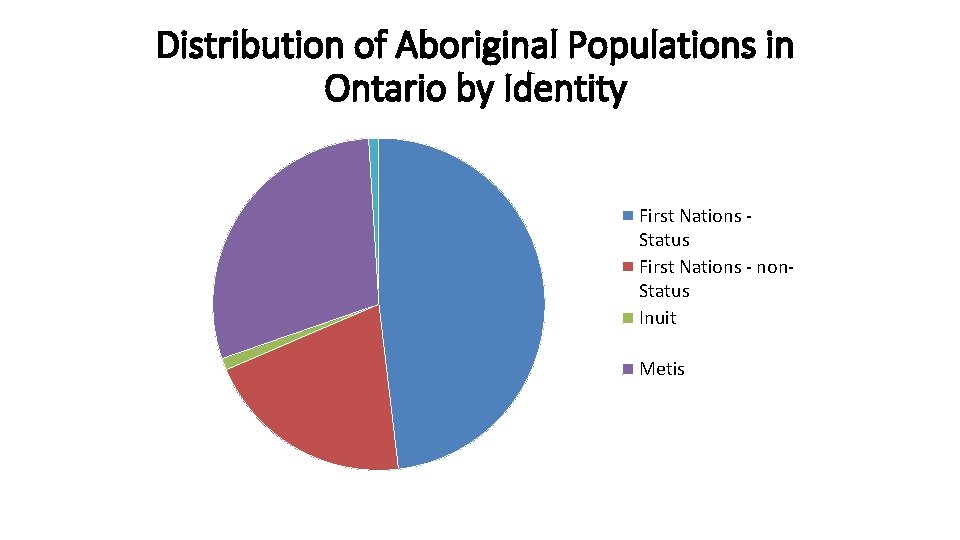
Distribution of Aboriginal Populations in Ontario by Identity First Nations - Status First Nations - non. Status Inuit Metis
Distribution of Aboriginal Population in Ontario by Census Metropolitan Area (CMA) CMA non-CMA
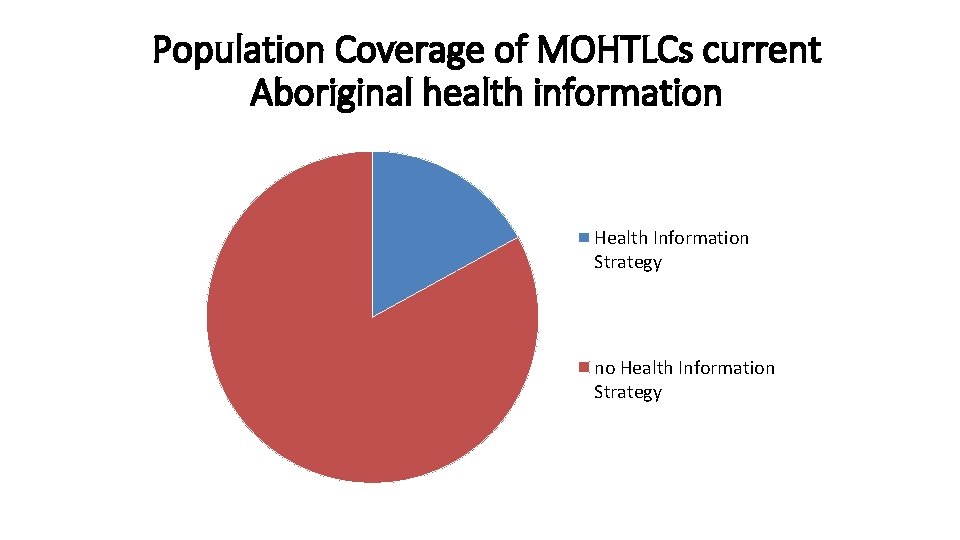
Population Coverage of MOHTLCs current Aboriginal health information Health Information Strategy no Health Information Strategy
http: //aboriginalhealthcentre. com/services/ourhealth-counts/
Indigenous Health Human Resource Capacity Development Unique Health Human Resource Requirements
Trends in Aboriginal Health Human Resources • The majority of Aboriginal health human resources are located in Ontario (24. 8 per cent) • Continual increases in First Nation and Metis but not Inuit • Higher # of health workers in urban areas • Increases in all health professionals Ontario Indigenous Health Professionals 5, 415 (24. 82 per cent) Total Ontario Health Professionals 356, 460 (35. 97 per cent) 27
Health Human Resource Strategies in Ontario • Pan Canadian Health Human Resources Strategy • First Nation and Inuit Health Strategic Plan (Health Canada) • Healthforce Ontario Retention & Recruitment 28
Unique Health Human Resources Capacity Initiatives • Community Worker Training Program • Traditional Healing Training Model (AHT) • Aboriginal Nurses Mentorship (ANAC) • Physicians Cultural Safety Training Programs • Physicians remote and isolated internships (NOSM) • New in 2016 – Masters of Social Work with specialization in Indigenous Trauma and Resiliency Program (OFIFC) • Culture as Treatment Symposium (Wabano) 29
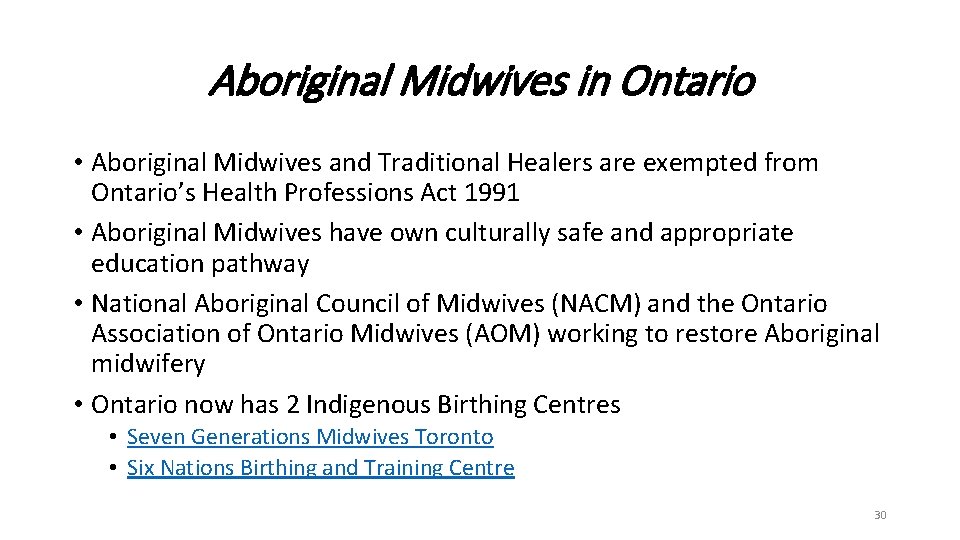
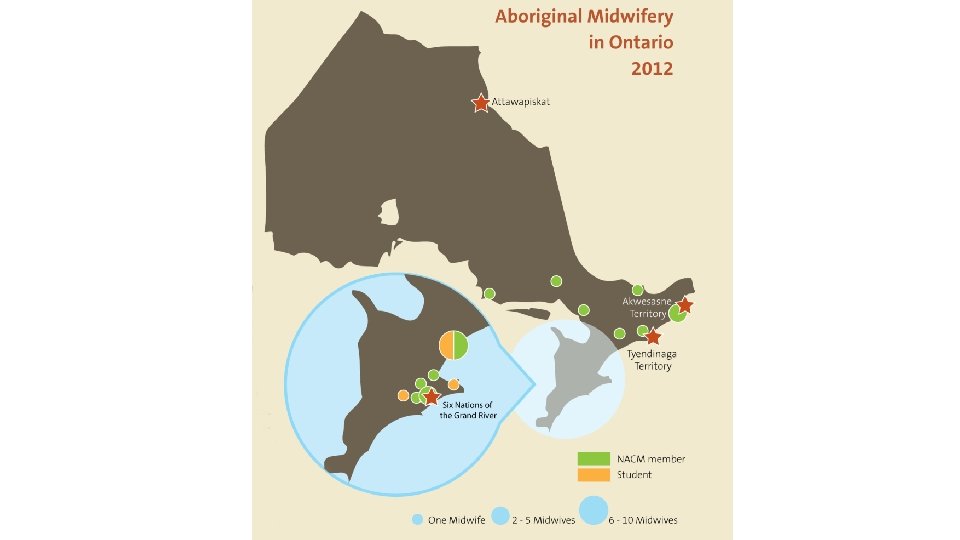
Aboriginal Midwives in Ontario • Aboriginal Midwives and Traditional Healers are exempted from Ontario’s Health Professions Act 1991 • Aboriginal Midwives have own culturally safe and appropriate education pathway • National Aboriginal Council of Midwives (NACM) and the Ontario Association of Ontario Midwives (AOM) working to restore Aboriginal midwifery • Ontario now has 2 Indigenous Birthing Centres • Seven Generations Midwives Toronto • Six Nations Birthing and Training Centre 30
New Indigenous Accreditation Standards • Within the Canadian Centre of Accreditation (CCA) for all community primary care and health centres • Applies to all Indigenous Community Health Centres and to those mainstream services providers delivering services to Indigenous people • Imbeds cultural safety • Includes respect for Indigenous determination in healthcare and access to traditional healers and medicines • Follows Ontario’s Aboriginal Health Policy Principles 32
New Cultural Safety Training Requirements • Ontario’s Premier, Catherine Wynne has mandated that all Ontario public service employees (60, 000) receive Indigenous cultural safety training! • Ontario’s Online Indigenous Cultural Safety Training program is an anti-racist, anti-oppressive, de-colonizing training developed by the Southwest Aboriginal Health Access Centre, in partnership with the Provincial Health Services Authority in British Columbia, ON Ministry of Health and SW Local Health Integration Network • Ontario's Online Cultural Safety Training 33
Moving Forward • We need to plan our own health care systems in our own ways in collaboration with excellent partners – apply evidence already available • Need to close the gaps in population health data and information • Health Human Resources Capacity development has to include restoring traditional healing knowledge, land appropriate training for healers (Tribal Doctors) • Restore Indigenous practices of identifying young people who have capacity and potential for health careers - informed by traditional worldviews and values 34
Moving Forward • Develop professional education pathways inclusive of Indigenous worldviews for all health professionals working inside Indigenous communities • Plan for system wide cultural safety development • Include in recruitment the demonstrated ability to be self reflective to lower systemic racism 35
Contacts Gertie Mai Muise, BA, MAL Director, AHAC Strategy and Transformation Association of Ontario Health Centres 500 – 970 Lawrence Avenue West Toronto, ON M 6 A 3 B 6 Tel. 416. 236. 2539 ext. 331 Fax. 416. 236. 0431 Cell: 519. 317. 0087 Gertiemai. muise@aohc. org 36
Indigenous Cultural Safety Contact Diane Smylie Provincial Manager, Indigenous Cultural Safety Program Southwest Ontario Aboriginal Health Access Centre 500 – 970 Lawrence Avenue West Toronto, ON M 6 A 3 B 6 416. 529. 7021 I dsmylie@soahac. on. ca 37
Midwifery Contact Ellen Blais National Co- Chair National Aboriginal Council of Midwives nacm@aboriginalmidwive s. ca www. aboriginalmidwives. ca Ellen Blais Policy Analyst, Aboriginal Midwifery Association of Ontario Midwives Ellen. blais@aom. on. ca 38
Thank-you! Wellaylin Chi-Miigwetch Nia: wen Yaw^ko 39