
Health Physics 2 Radiation Measurements Introduction Radiation not






- Slides: 92
Health Physics 2: Radiation Measurements
Introduction • Radiation not detected with our senses • Need detectors to confirm presence of radiation • Avoid over – exposures (reddening of skin - 3 Gy) Page(s): 107 Page numbers refer to handout: ”Chapter 8: Radiation Measurements”.
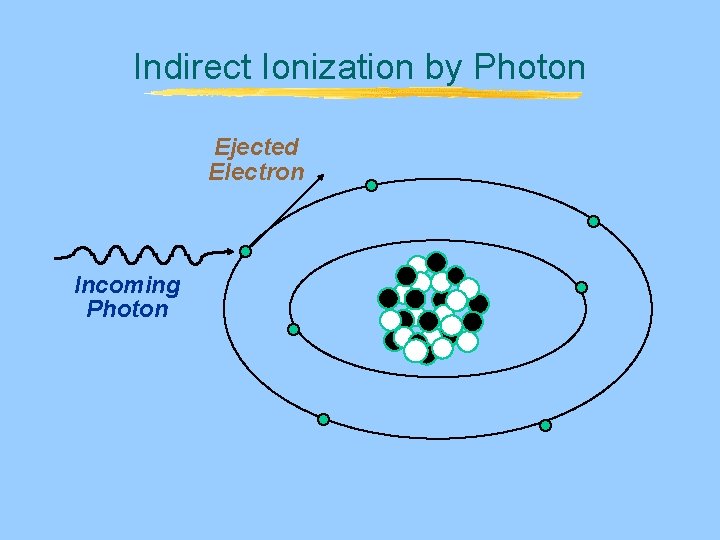
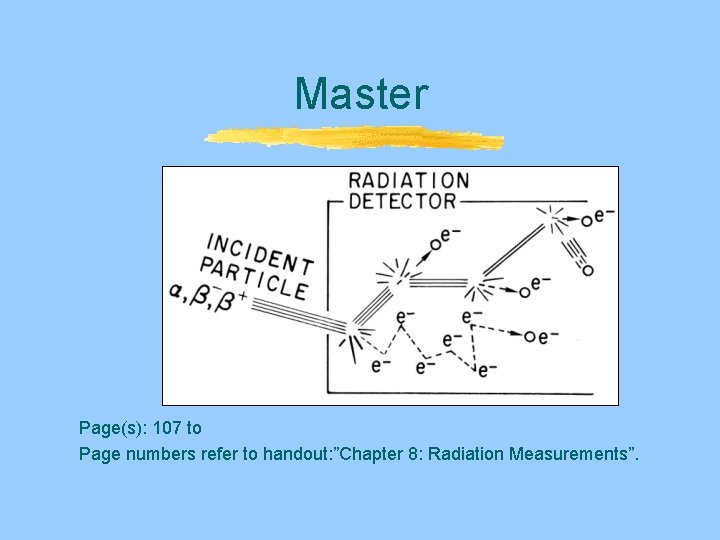
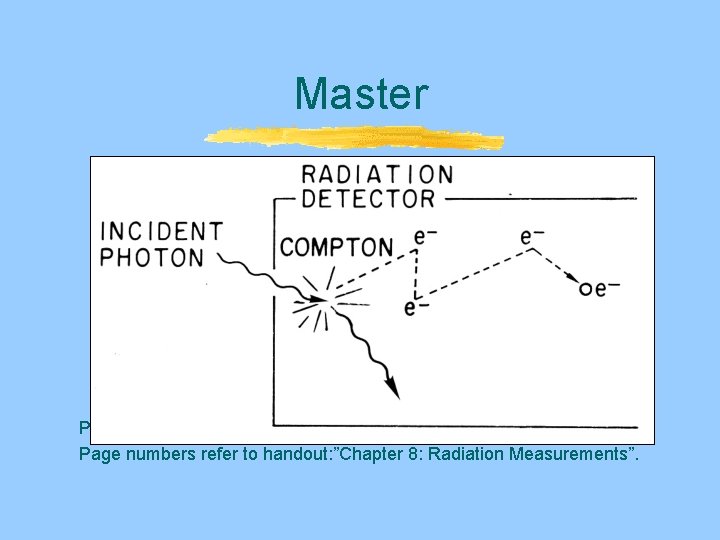
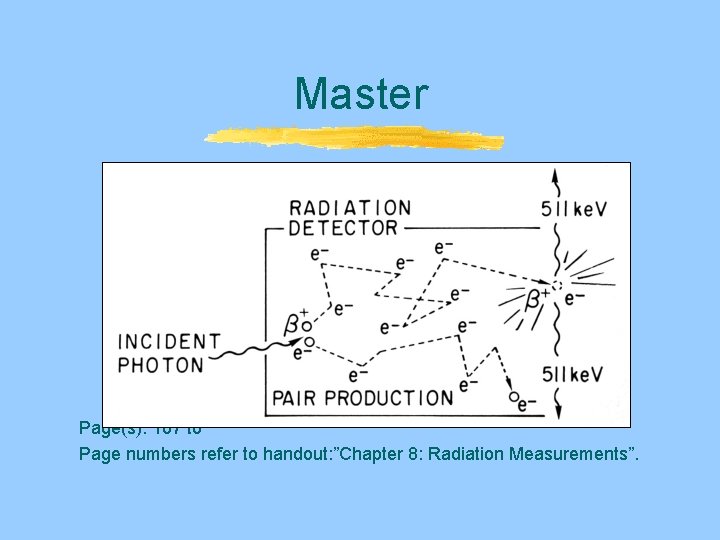
Detection of Radiation • Made possible by its interaction with matter (solid, liquid gas) • Ionization (electrical charges), excitation • Direct (charged particels) and indirect (photons, neutrons) ionization Page(s): 108 Page numbers refer to handout: ”Chapter 8: Radiation Measurements”.
Indirect Ionization by Photon Ejected Electron Incoming Photon
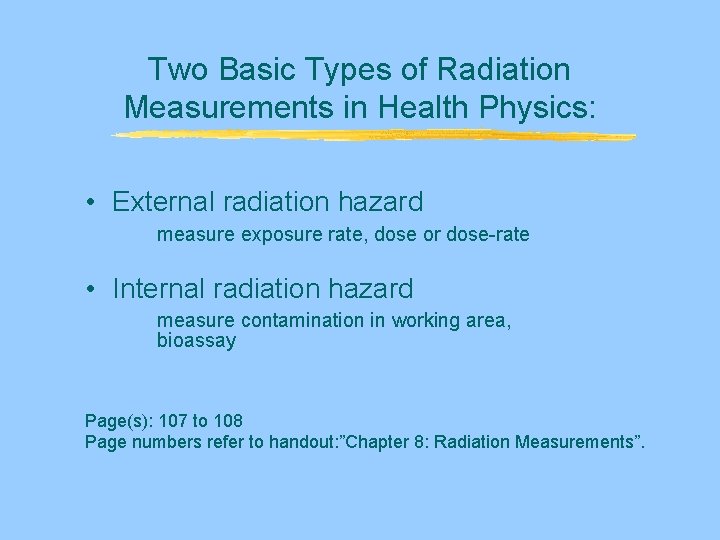
Two Basic Types of Radiation Measurements in Health Physics: • External radiation hazard measure exposure rate, dose or dose-rate • Internal radiation hazard measure contamination in working area, bioassay Page(s): 107 to 108 Page numbers refer to handout: ”Chapter 8: Radiation Measurements”.
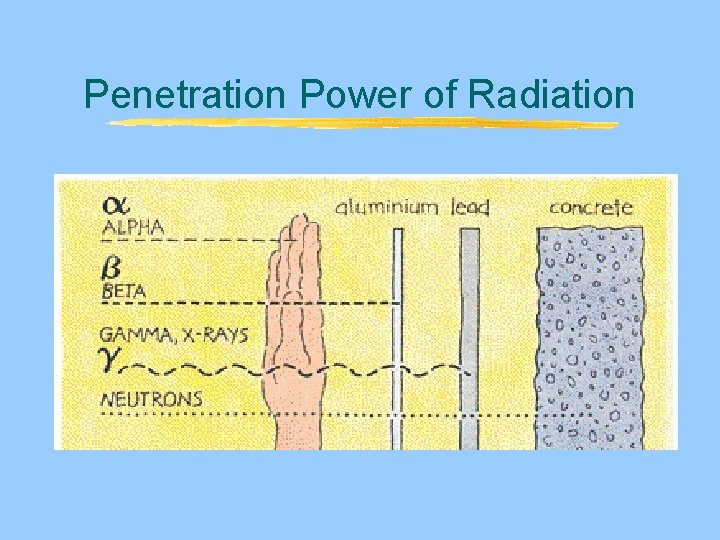
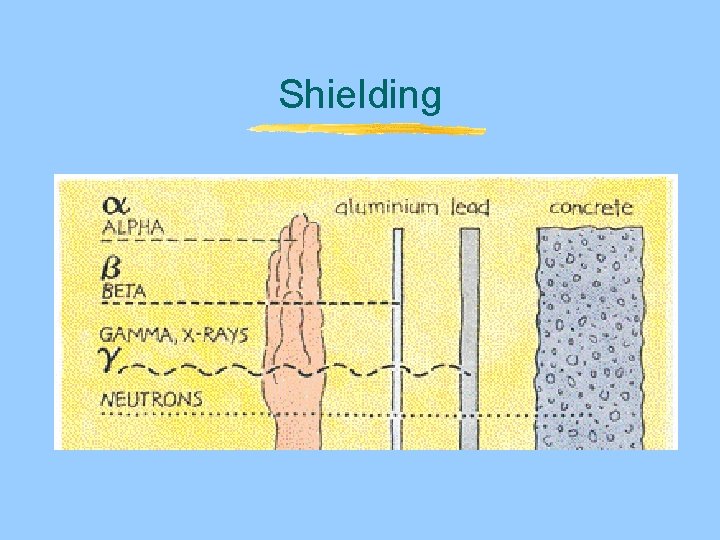
Penetration Power of Radiation
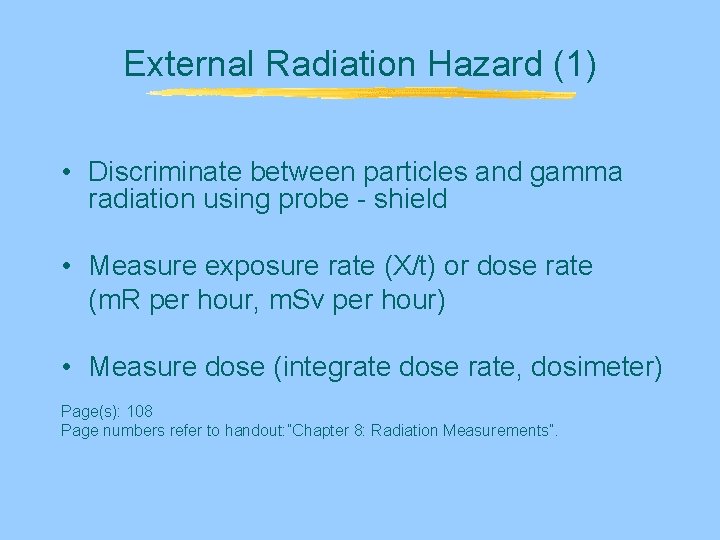
External Radiation Hazard (1) • Discriminate between particles and gamma radiation using probe - shield • Measure exposure rate (X/t) or dose rate (m. R per hour, m. Sv per hour) • Measure dose (integrate dose rate, dosimeter) Page(s): 108 Page numbers refer to handout: ”Chapter 8: Radiation Measurements”.
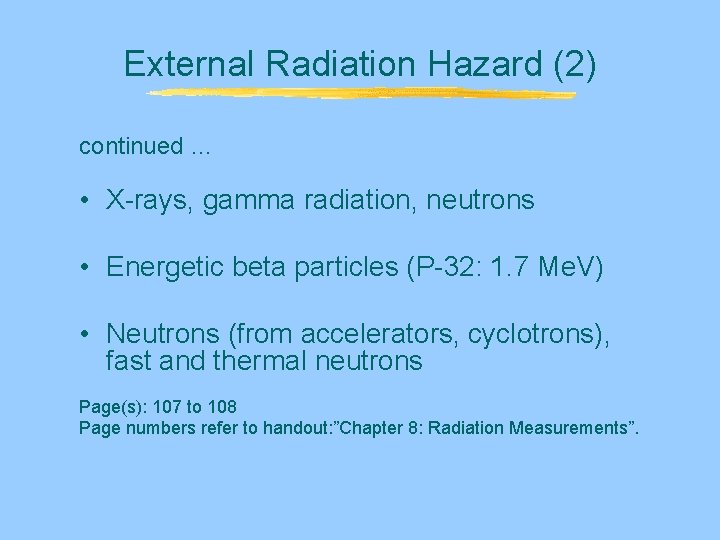
External Radiation Hazard (2) continued … • X-rays, gamma radiation, neutrons • Energetic beta particles (P-32: 1. 7 Me. V) • Neutrons (from accelerators, cyclotrons), fast and thermal neutrons Page(s): 107 to 108 Page numbers refer to handout: ”Chapter 8: Radiation Measurements”.
Internal Radiation Hazard (1) • Measure contamination in working area (surface, air, water) “wipe tests” (betas) • Whole-body counter (gamma emitters) • Bioassays (thyroid assay, urine analysis) Page(s): 108 Page numbers refer to handout: ”Chapter 8: Radiation Measurements”.
Internal Radiation Hazard (2) continued … • Alpha or beta particles when inhaled or ingested (e. g. tritium vapors in power stations containing H-3 with 18 ke. V betas) • Boneseekers with long half-lives when inhaled or ingested (Sr-90: 0. 5 Me. V betas, Pu-239 : 5 Me. V alphas) • Any radioactive material that enters the body in large amounts Page(s): 108 Page numbers refer to handout: ”Chapter 8: Radiation Measurements”.
Types of Radiation Monitoring • Area and survey monitoring (portable or fixed detectors) • Technique or procedure monitoring (DRDs or EPDs) • Personal Monitoring (TLD “badges”) Page(s): 108 Page numbers refer to handout: ”Chapter 8: Radiation Measurements”.
“Ideal” Radiation Detector • Responds to one radiation type only • Includes radiation quality factor, w. R • Uniform energy response • Gives equivalent dose (H) or equivalent dose rate Page(s): 108 Page numbers refer to handout: ”Chapter 8: Radiation Measurements”.
“Real” Radiation Detector • Need to discriminate between particles and gamma radiation using probe - shield • Non-uniform energy response • Often gives exposure rate (X / t) only (Milli-Roentgen per hour) Page(s): 108 Page numbers refer to handout: ”Chapter 8: Radiation Measurements”.
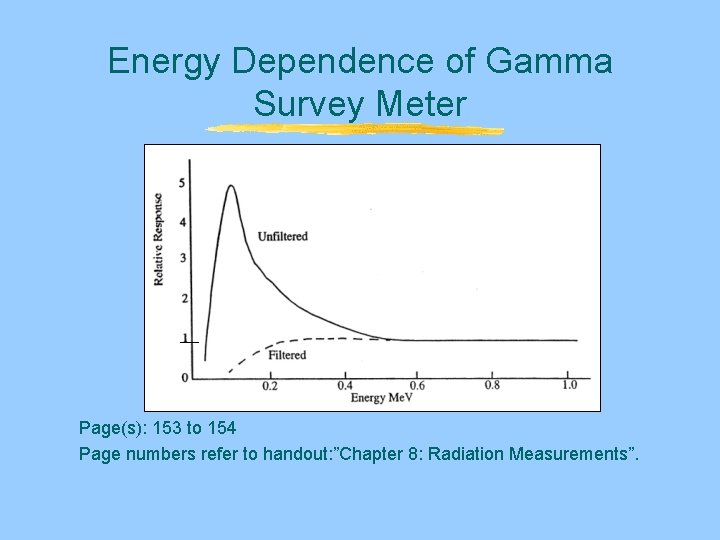
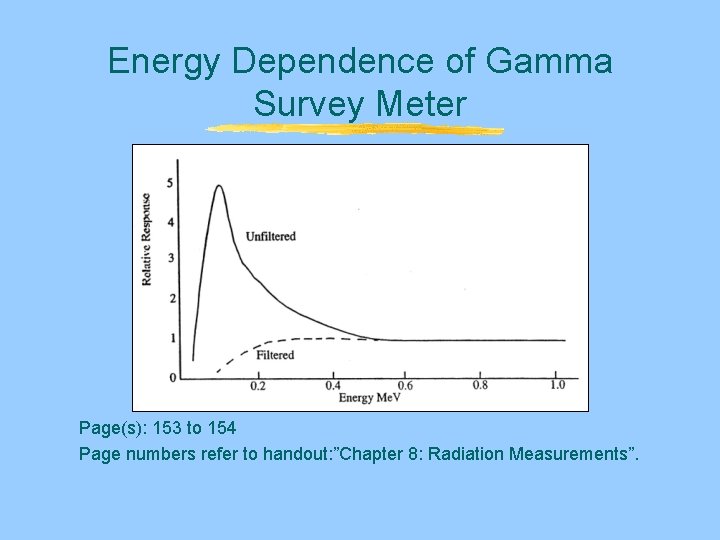
Energy Dependence of Gamma Survey Meter Page(s): 153 to 154 Page numbers refer to handout: ”Chapter 8: Radiation Measurements”.
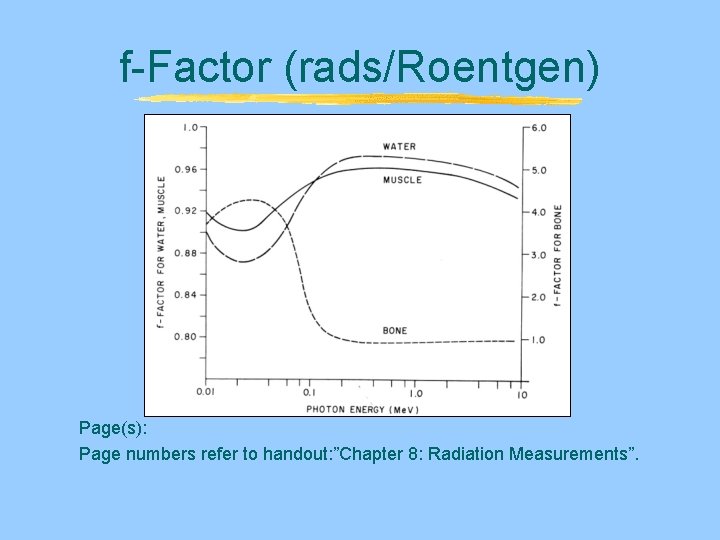
f-Factor (rads/Roentgen) Page(s): Page numbers refer to handout: ”Chapter 8: Radiation Measurements”.
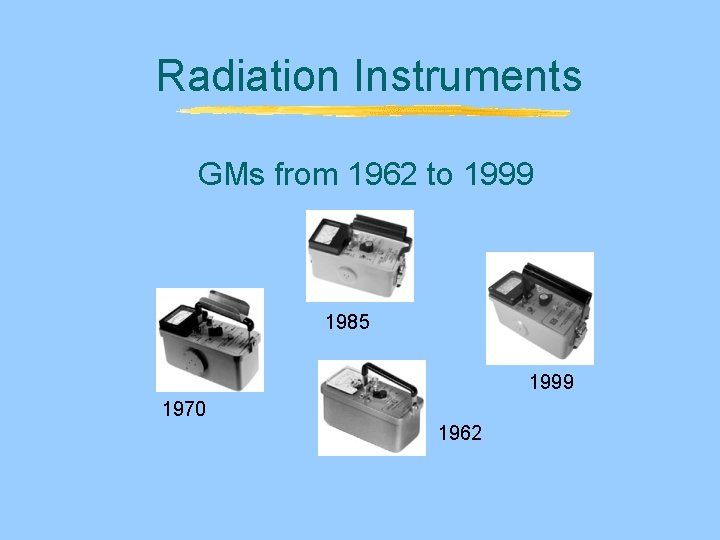
Radiation Instruments GMs from 1962 to 1999 1985 1999 1970 1962
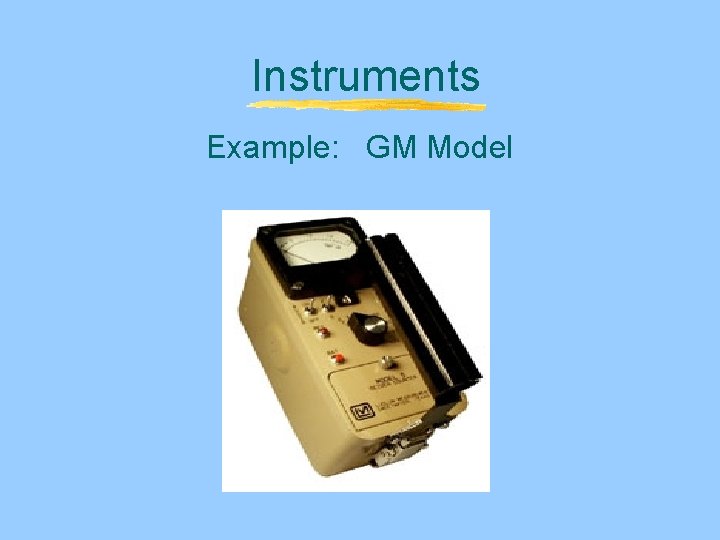
Instruments Example: GM Model
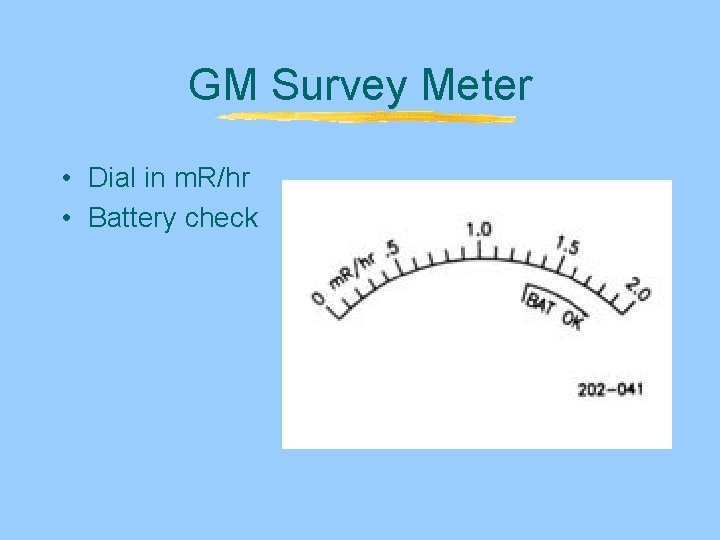
GM Survey Meter • Dial in m. R/hr • Battery check
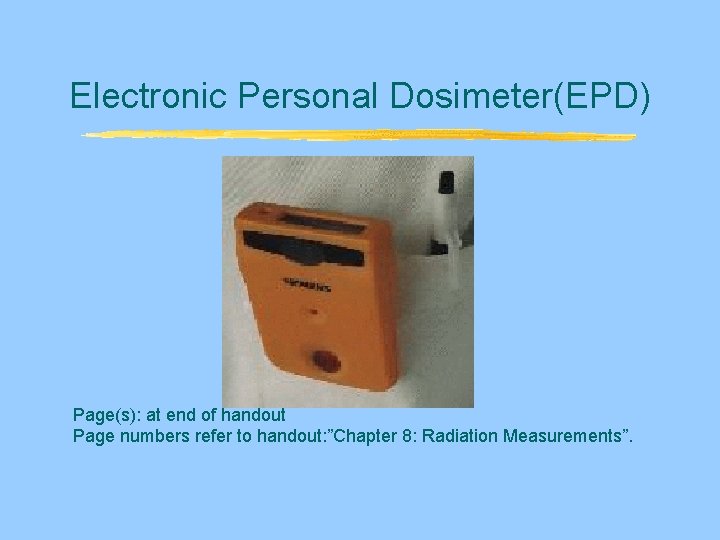
Electronic Personal Dosimeter(EPD) Page(s): at end of handout Page numbers refer to handout: ”Chapter 8: Radiation Measurements”.
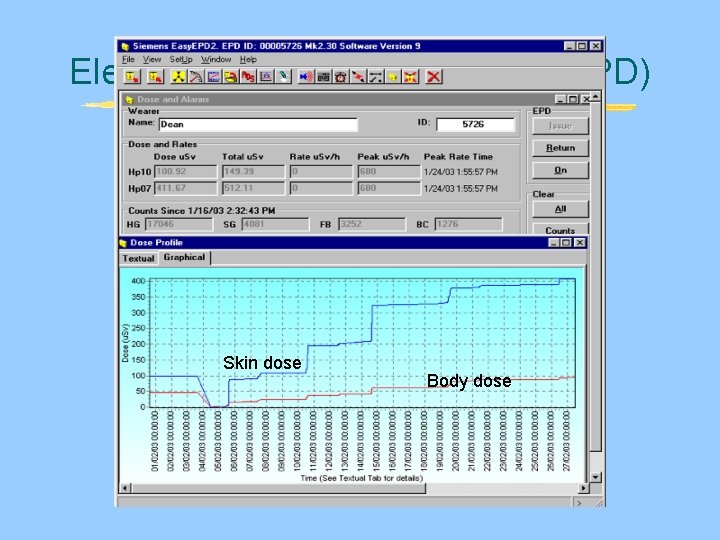
Electronic Personal Dosimeter(EPD) Skin dose Body dose
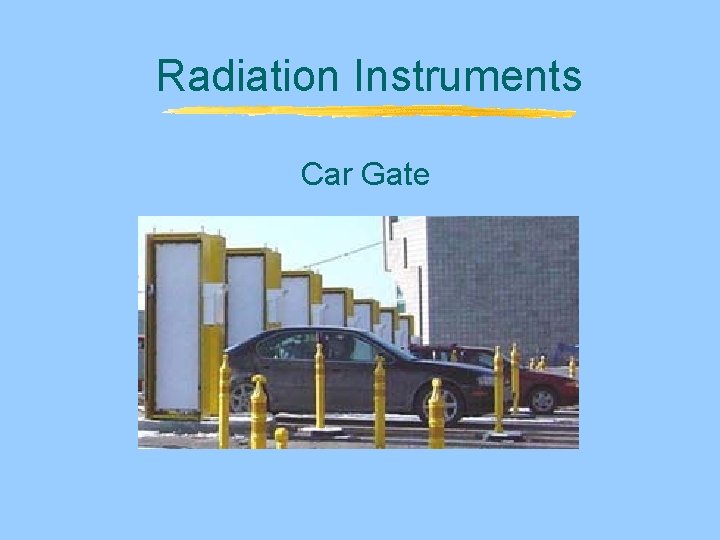
Radiation Instruments Car Gate
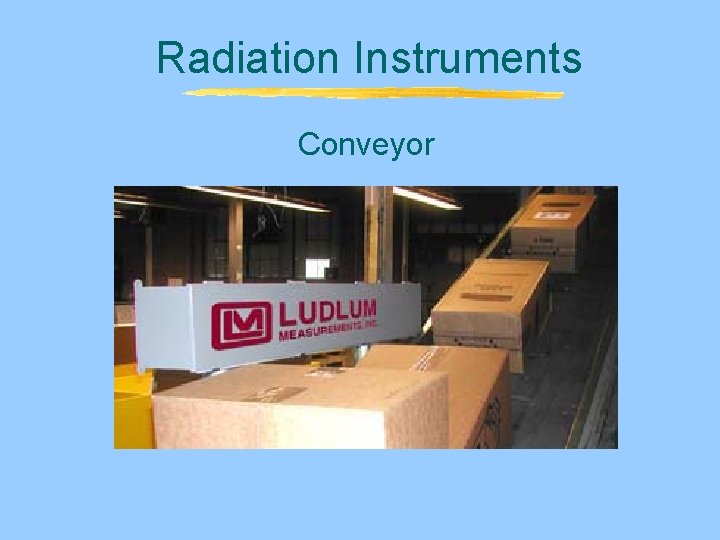
Radiation Instruments Conveyor
Radiation Instruments Truck Monitor
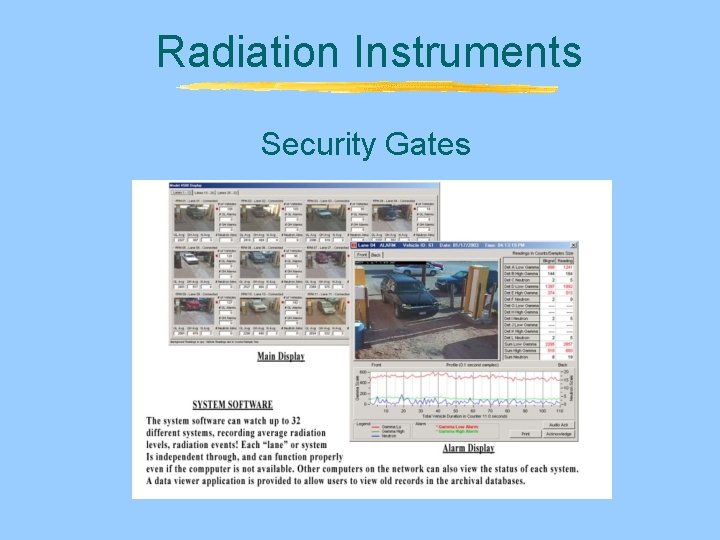
Radiation Instruments Security Gates
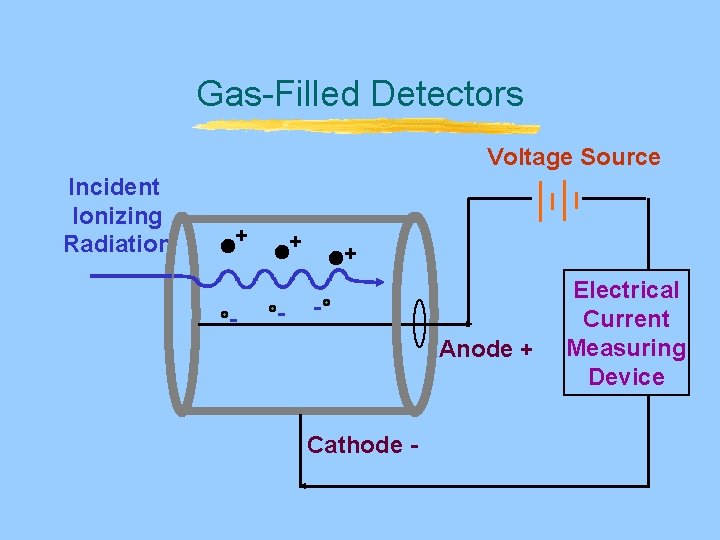
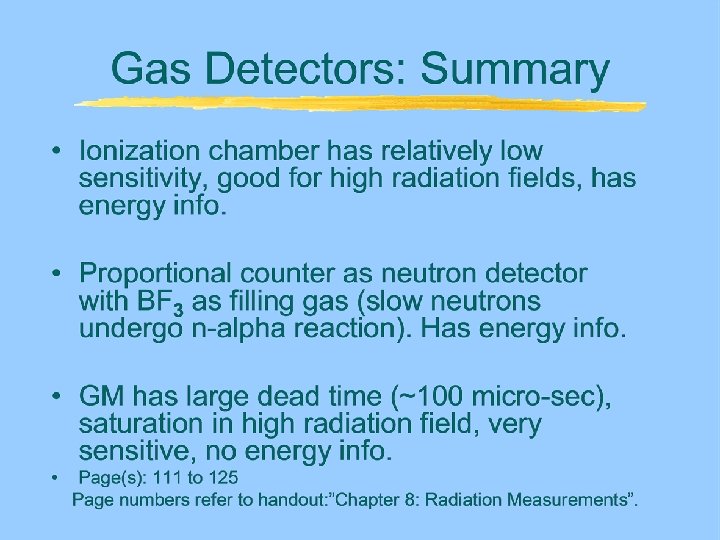
Gas Detectors • Ionization Chambers • Proportional Counters • Geiger-Mueller Counters (GMs) Page(s): 111 to 125 Page numbers refer to handout: ”Chapter 8: Radiation Measurements”.
Gas-Filled Detectors Voltage Source Incident Ionizing Radiation + - + Anode + Cathode - Electrical Current Measuring Device
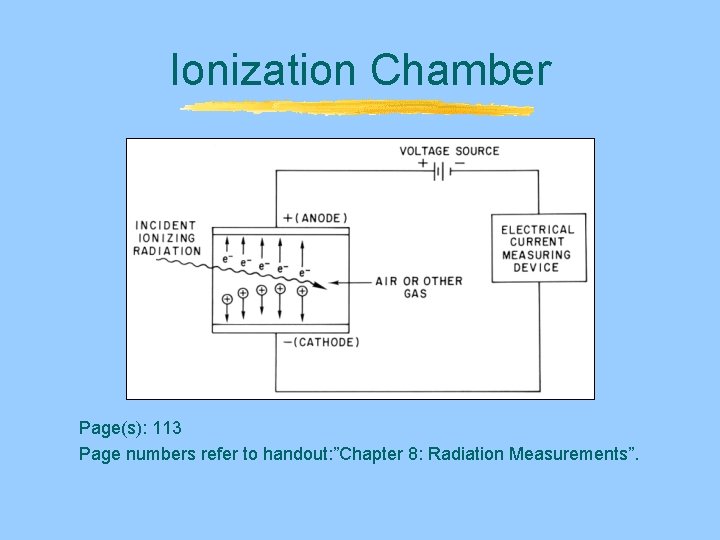
Ionization Chamber Page(s): 113 Page numbers refer to handout: ”Chapter 8: Radiation Measurements”.
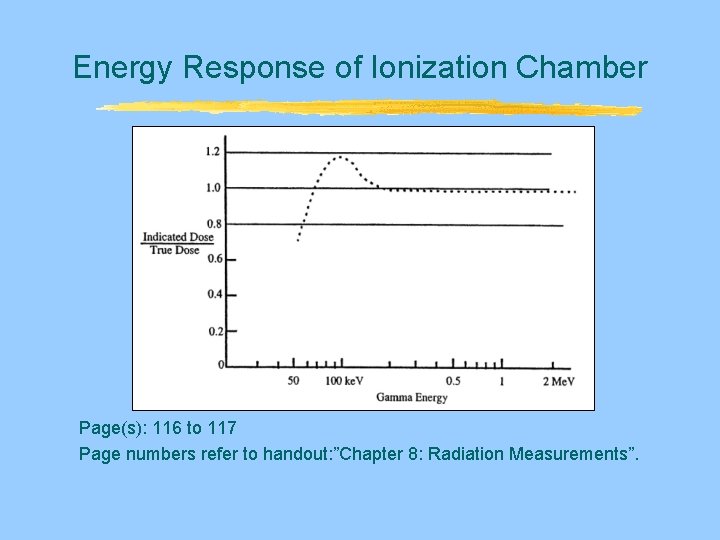
Ionization Chamber • Characteristics – rel. low sensitivity (ideal as control instrument in high field of nuclear reactors) – measures exposure rates up to 1000 R / min • Page(s): 112 to 117 Page numbers refer to handout: ”Chapter 8: Radiation Measurements”.
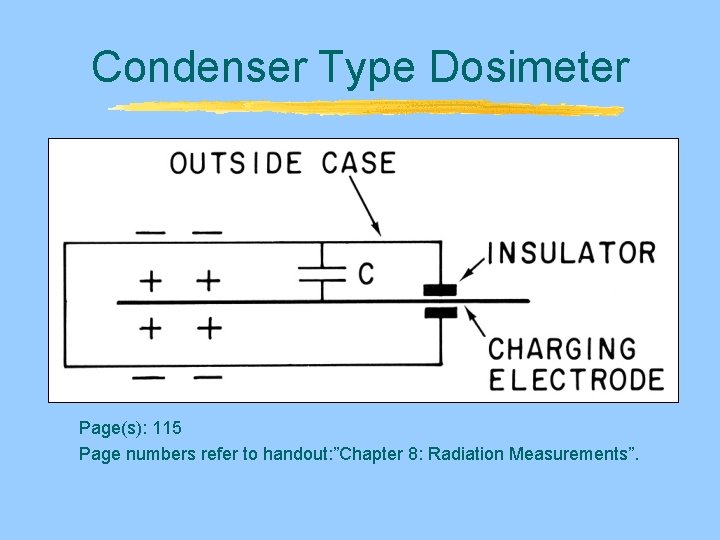
Condenser Type Dosimeter Page(s): 115 Page numbers refer to handout: ”Chapter 8: Radiation Measurements”.
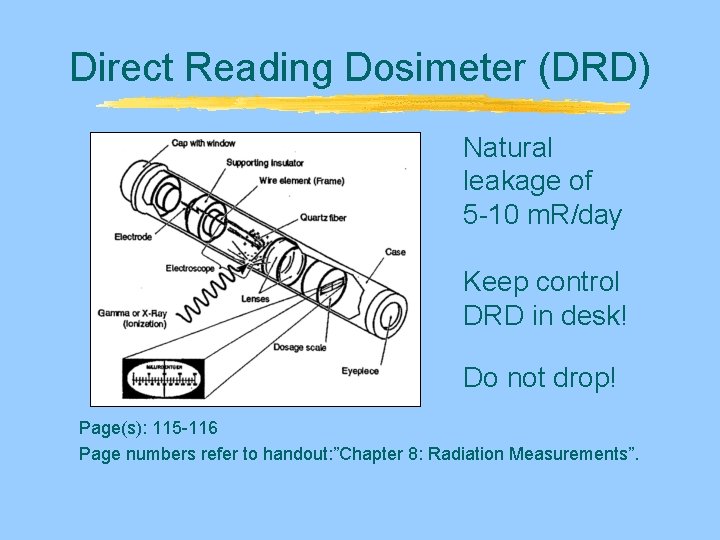
Direct Reading Dosimeter (DRD) Natural leakage of 5 -10 m. R/day Keep control DRD in desk! Do not drop! Page(s): 115 -116 Page numbers refer to handout: ”Chapter 8: Radiation Measurements”.
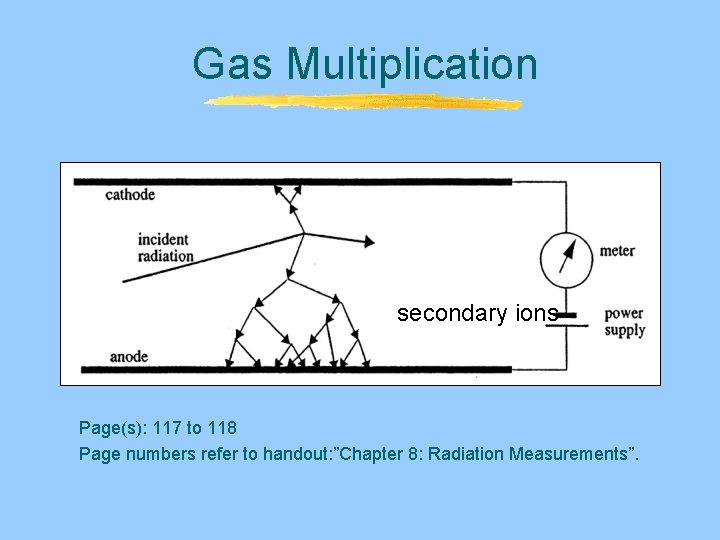
Gas Multiplication secondary ions Page(s): 117 to 118 Page numbers refer to handout: ”Chapter 8: Radiation Measurements”.
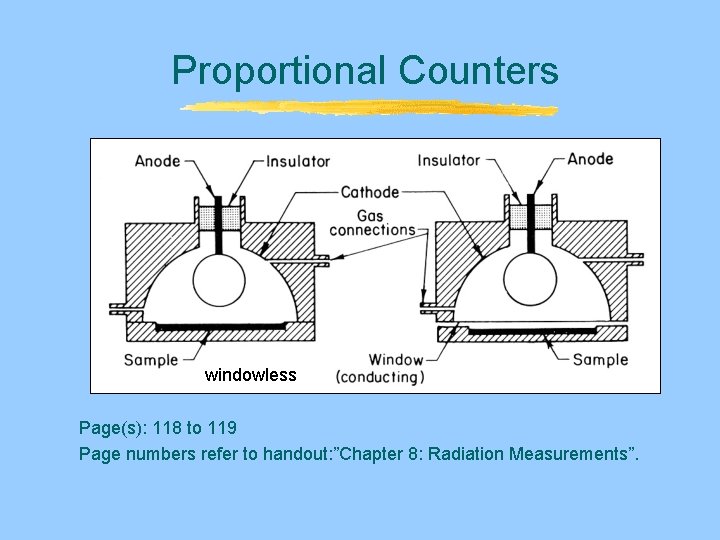
Proportional Counters windowless Page(s): 118 to 119 Page numbers refer to handout: ”Chapter 8: Radiation Measurements”.
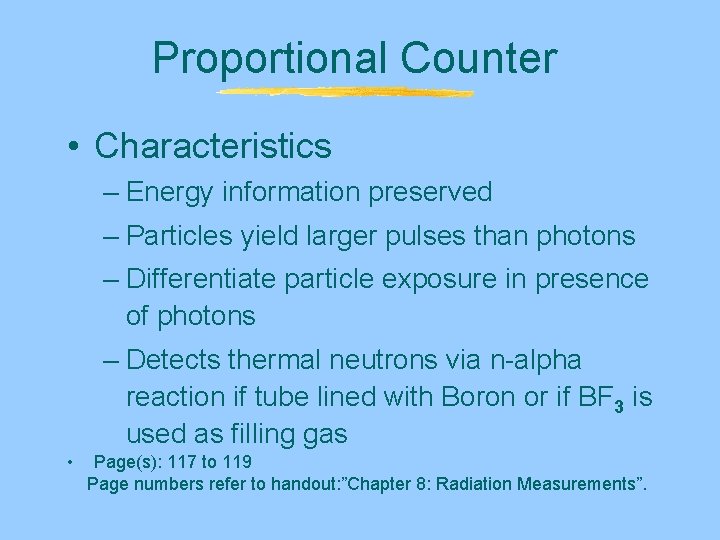
Proportional Counter • Characteristics – Energy information preserved – Particles yield larger pulses than photons – Differentiate particle exposure in presence of photons – Detects thermal neutrons via n-alpha reaction if tube lined with Boron or if BF 3 is used as filling gas • Page(s): 117 to 119 Page numbers refer to handout: ”Chapter 8: Radiation Measurements”.
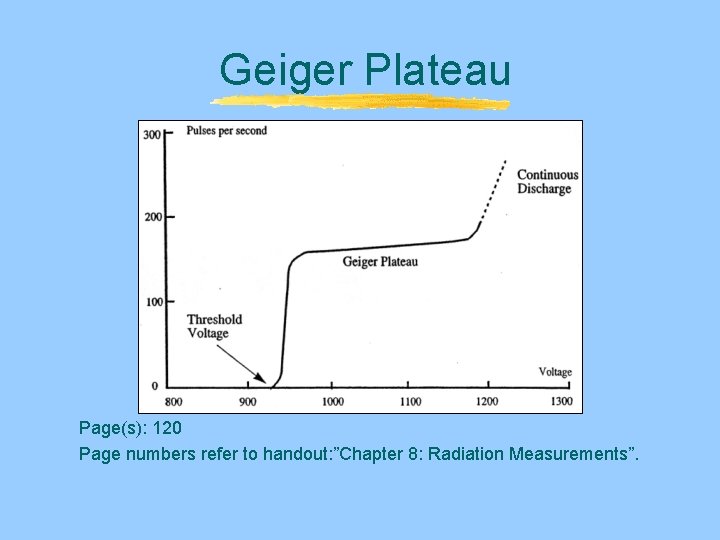
Geiger Plateau Page(s): 120 Page numbers refer to handout: ”Chapter 8: Radiation Measurements”.
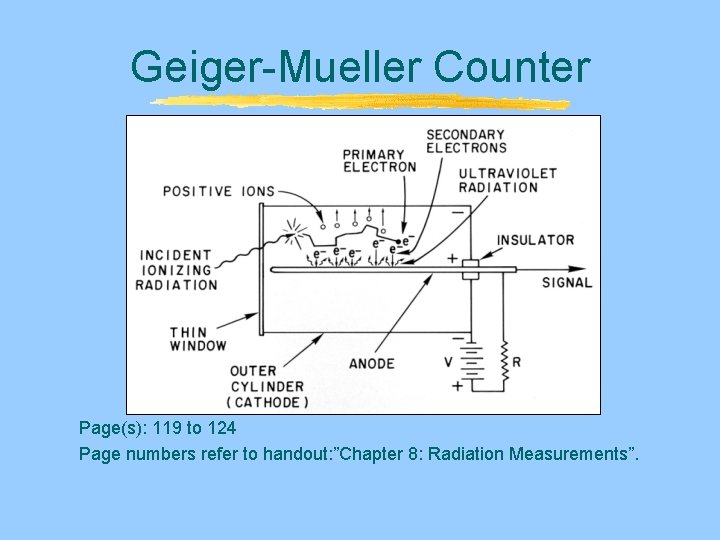
Geiger-Mueller Counter Page(s): 119 to 124 Page numbers refer to handout: ”Chapter 8: Radiation Measurements”.
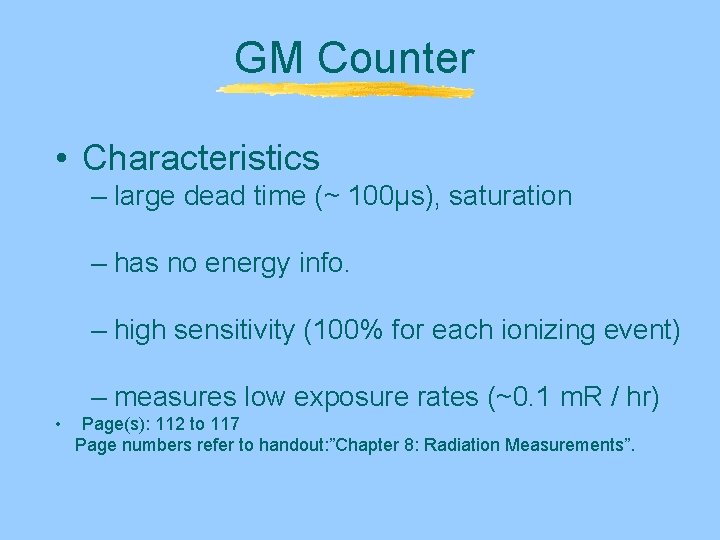
GM Counter • Characteristics – large dead time (~ 100μs), saturation – has no energy info. – high sensitivity (100% for each ionizing event) – measures low exposure rates (~0. 1 m. R / hr) • Page(s): 112 to 117 Page numbers refer to handout: ”Chapter 8: Radiation Measurements”.
Single Images
Scintillation Detectors • Phosphors (Na. I(Tl), Cs. F, BGO, LSO) • Photomultiplier Tube (PMT) dynodes, counting chain, spectra • Liquid Scintillation Counting (“wipes”) Page(s): 125 to 137 Page numbers refer to handout: ”Chapter 8: Radiation Measurements”.
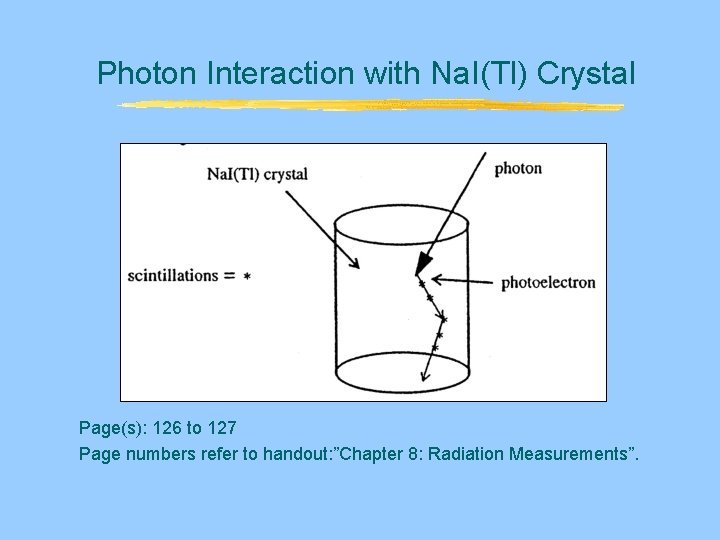
Photon Interaction with Na. I(Tl) Crystal Page(s): 126 to 127 Page numbers refer to handout: ”Chapter 8: Radiation Measurements”.
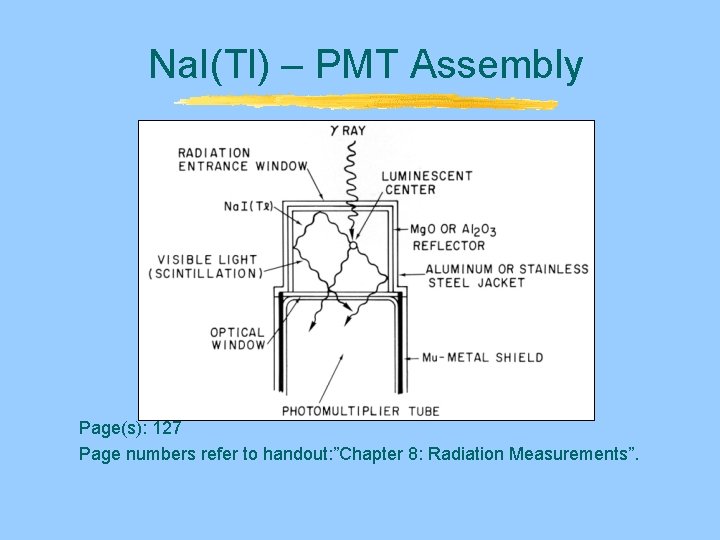
Na. I(Tl) – PMT Assembly Page(s): 127 Page numbers refer to handout: ”Chapter 8: Radiation Measurements”.
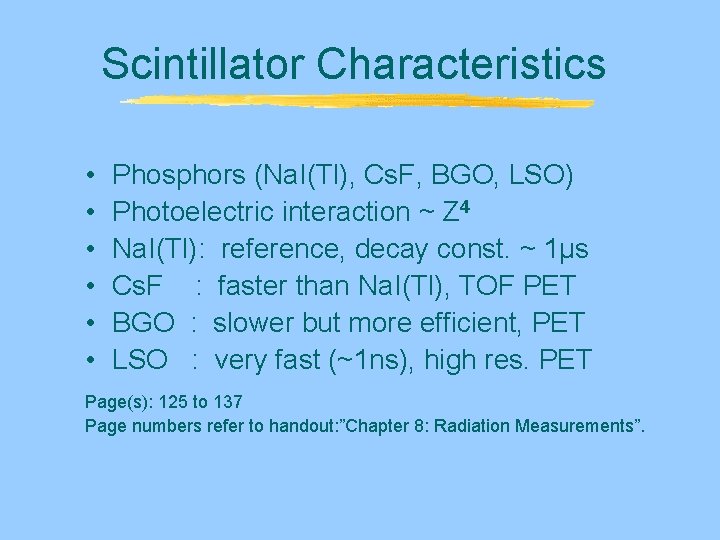
Scintillator Characteristics • • • Phosphors (Na. I(Tl), Cs. F, BGO, LSO) Photoelectric interaction ~ Z 4 Na. I(Tl): reference, decay const. ~ 1μs Cs. F : faster than Na. I(Tl), TOF PET BGO : slower but more efficient, PET LSO : very fast (~1 ns), high res. PET Page(s): 125 to 137 Page numbers refer to handout: ”Chapter 8: Radiation Measurements”.
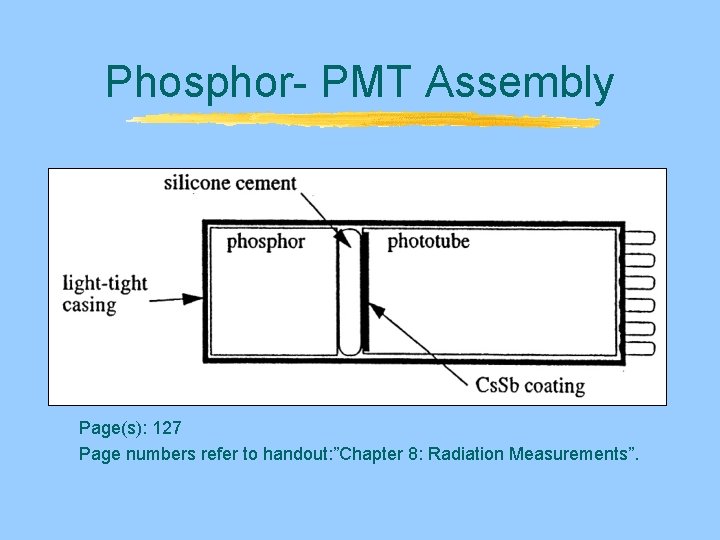
Phosphor- PMT Assembly Page(s): 127 Page numbers refer to handout: ”Chapter 8: Radiation Measurements”.
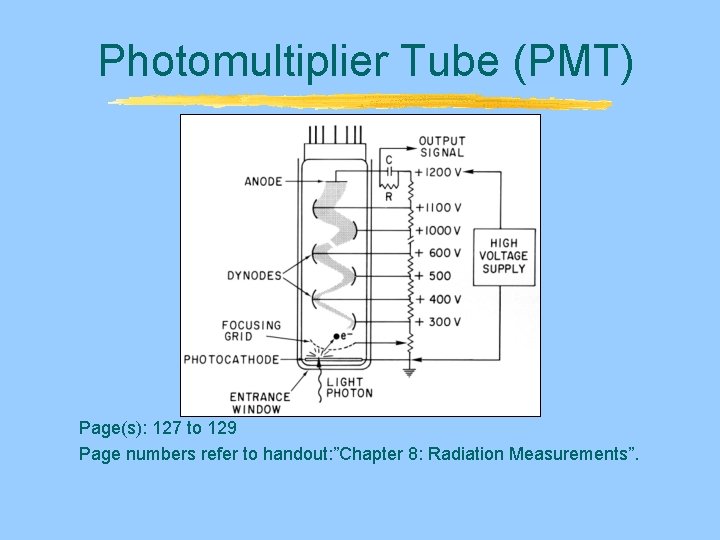
Photomultiplier Tube (PMT) Page(s): 127 to 129 Page numbers refer to handout: ”Chapter 8: Radiation Measurements”.
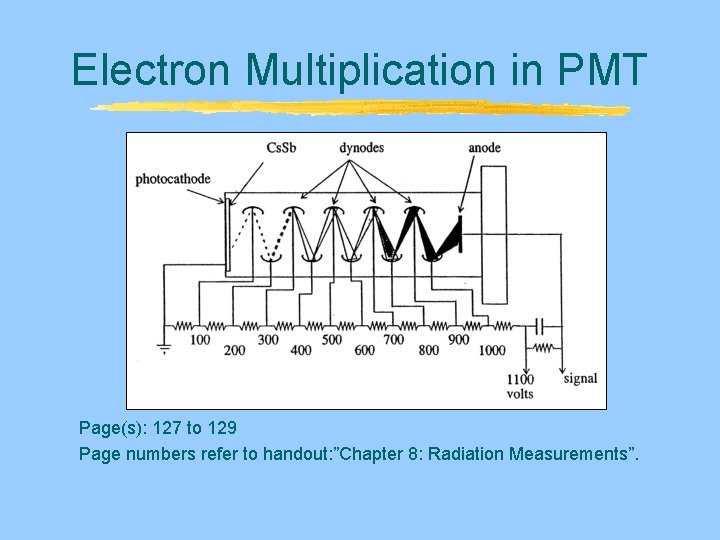
Electron Multiplication in PMT Page(s): 127 to 129 Page numbers refer to handout: ”Chapter 8: Radiation Measurements”.
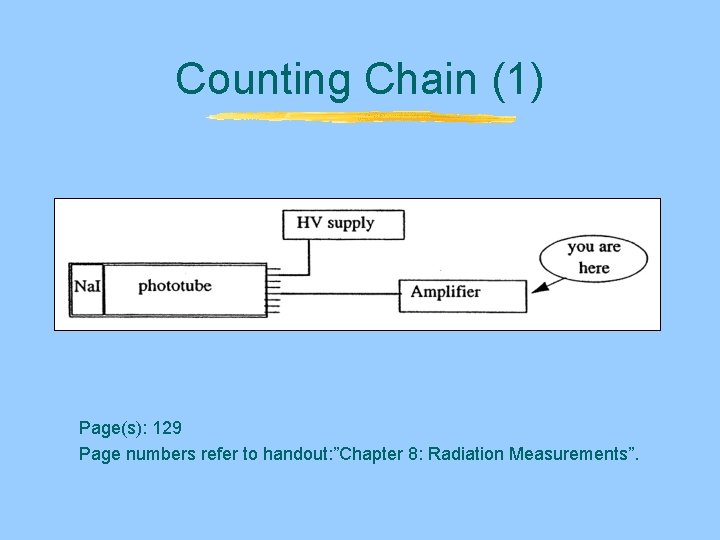
Counting Chain (1) Page(s): 129 Page numbers refer to handout: ”Chapter 8: Radiation Measurements”.
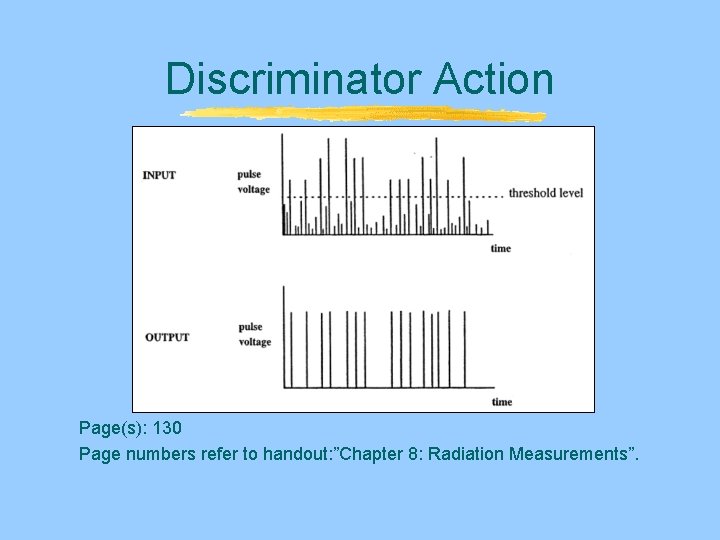
Discriminator Action Page(s): 130 Page numbers refer to handout: ”Chapter 8: Radiation Measurements”.
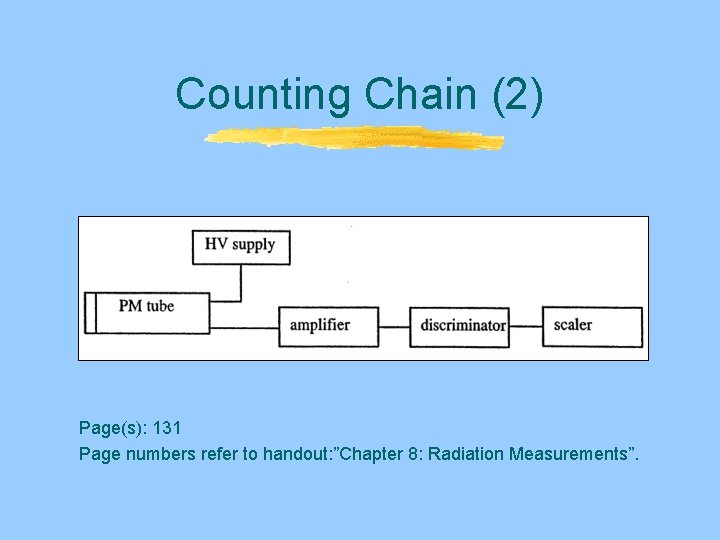
Counting Chain (2) Page(s): 131 Page numbers refer to handout: ”Chapter 8: Radiation Measurements”.
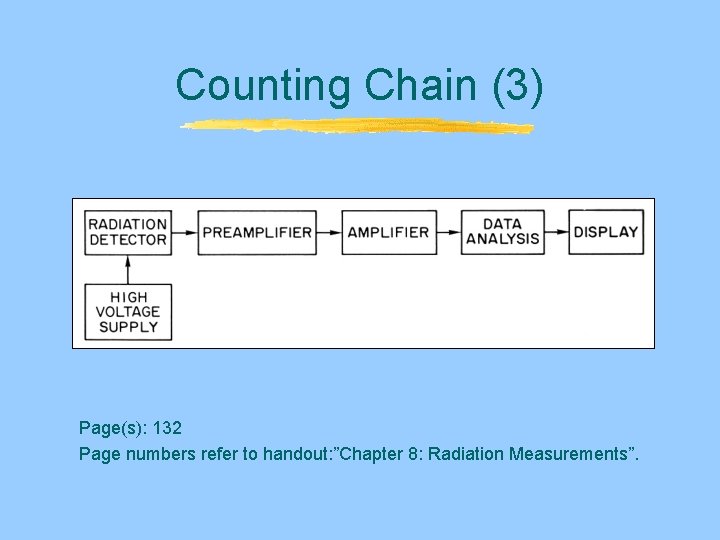
Counting Chain (3) Page(s): 132 Page numbers refer to handout: ”Chapter 8: Radiation Measurements”.
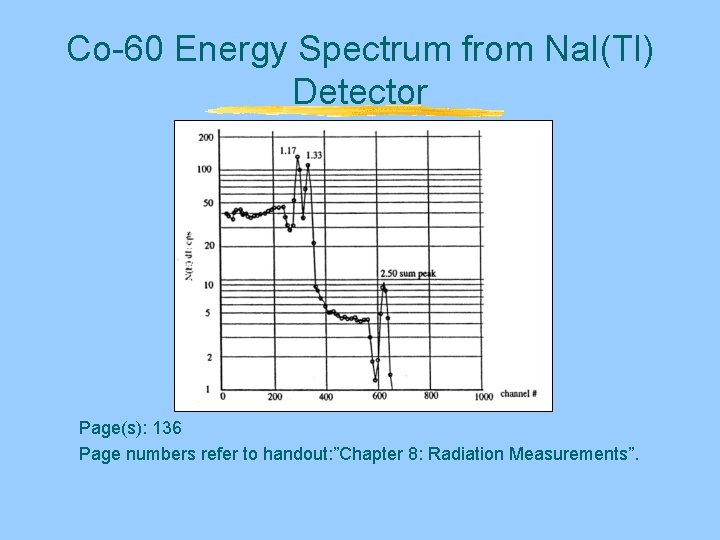
Co-60 Energy Spectrum from Na. I(Tl) Detector Page(s): 136 Page numbers refer to handout: ”Chapter 8: Radiation Measurements”.
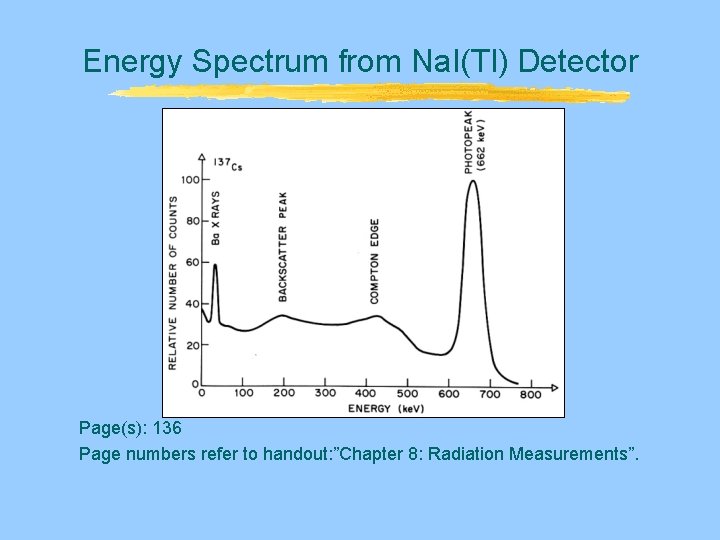
Energy Spectrum from Na. I(Tl) Detector Page(s): 136 Page numbers refer to handout: ”Chapter 8: Radiation Measurements”.
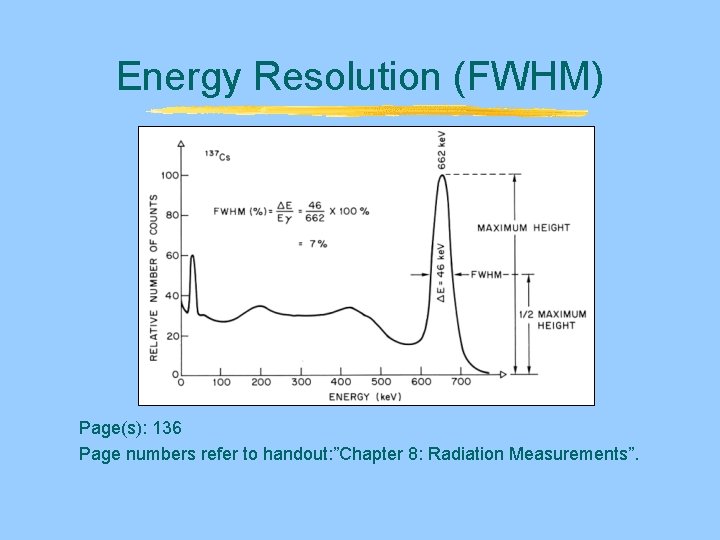
Energy Resolution (FWHM) Page(s): 136 Page numbers refer to handout: ”Chapter 8: Radiation Measurements”.
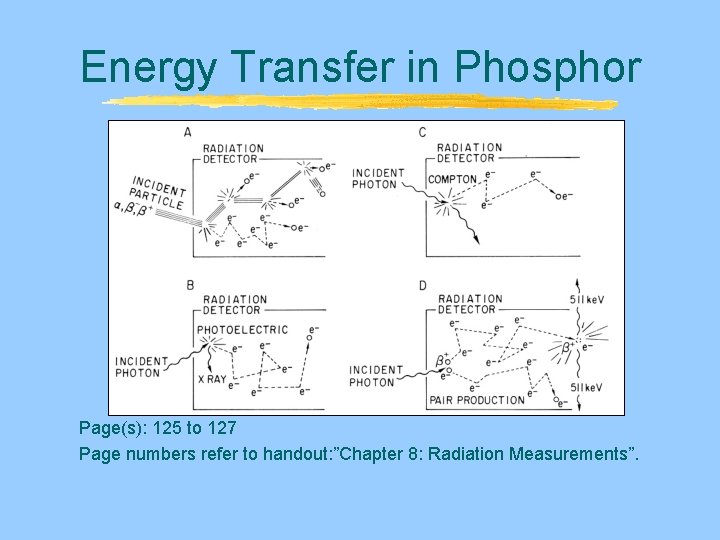
Energy Transfer in Phosphor Page(s): 125 to 127 Page numbers refer to handout: ”Chapter 8: Radiation Measurements”.
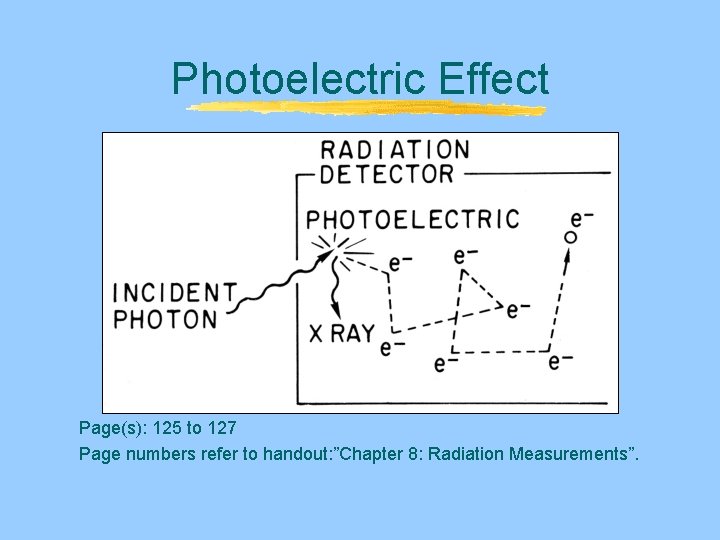
Photoelectric Effect Page(s): 125 to 127 Page numbers refer to handout: ”Chapter 8: Radiation Measurements”.
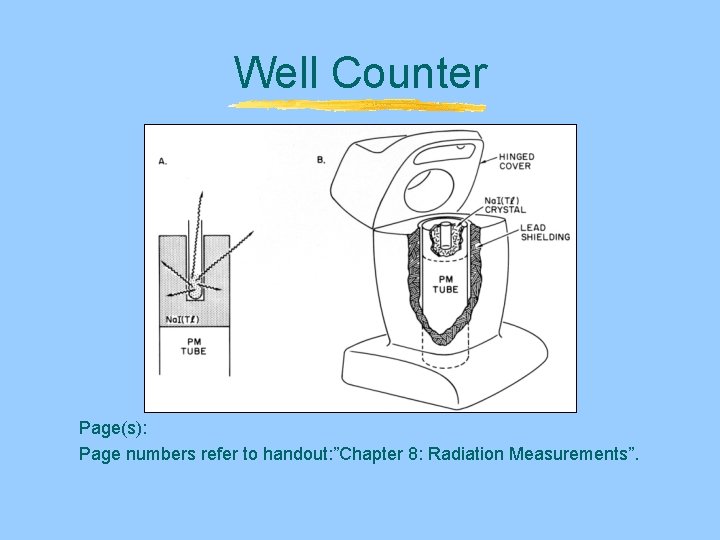
Well Counter Page(s): Page numbers refer to handout: ”Chapter 8: Radiation Measurements”.
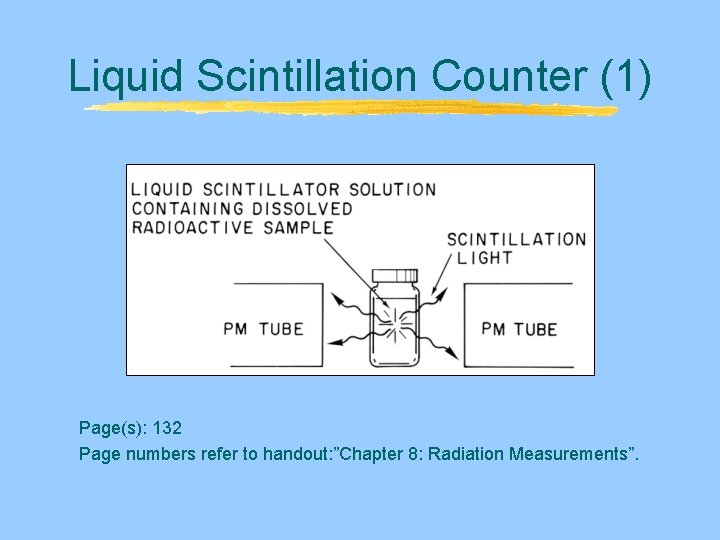
Liquid Scintillation Counter (1) Page(s): 132 Page numbers refer to handout: ”Chapter 8: Radiation Measurements”.
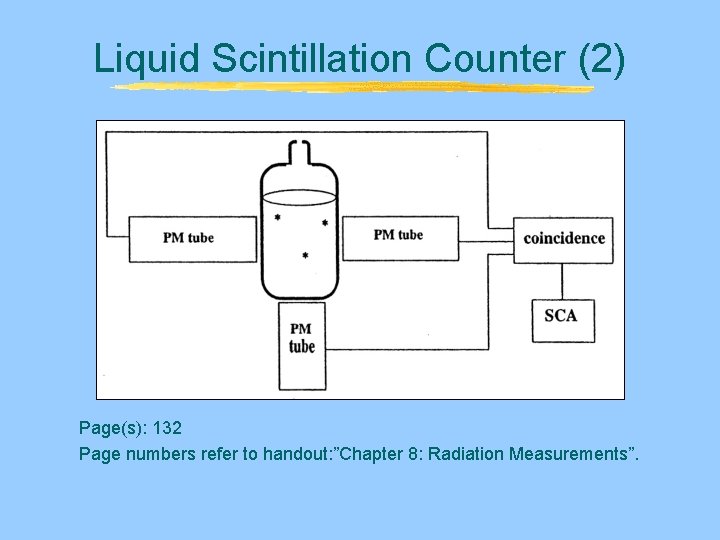
Liquid Scintillation Counter (2) Page(s): 132 Page numbers refer to handout: ”Chapter 8: Radiation Measurements”.
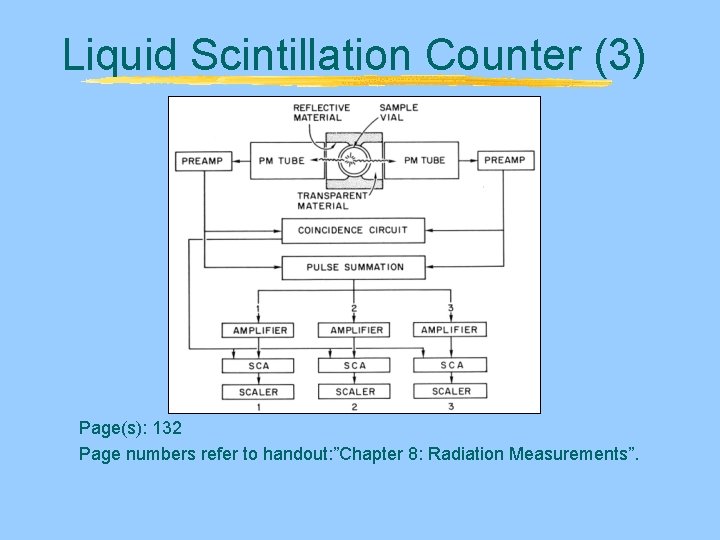
Liquid Scintillation Counter (3) Page(s): 132 Page numbers refer to handout: ”Chapter 8: Radiation Measurements”.
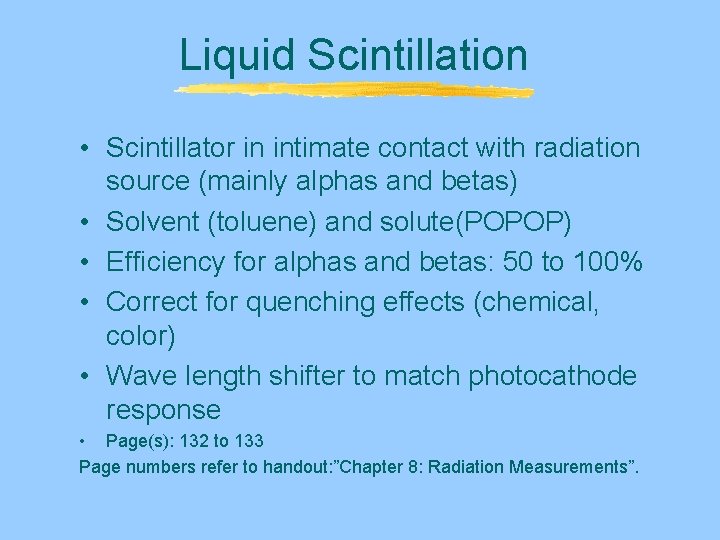
Liquid Scintillation • Scintillator in intimate contact with radiation source (mainly alphas and betas) • Solvent (toluene) and solute(POPOP) • Efficiency for alphas and betas: 50 to 100% • Correct for quenching effects (chemical, color) • Wave length shifter to match photocathode response • Page(s): 132 to 133 Page numbers refer to handout: ”Chapter 8: Radiation Measurements”.
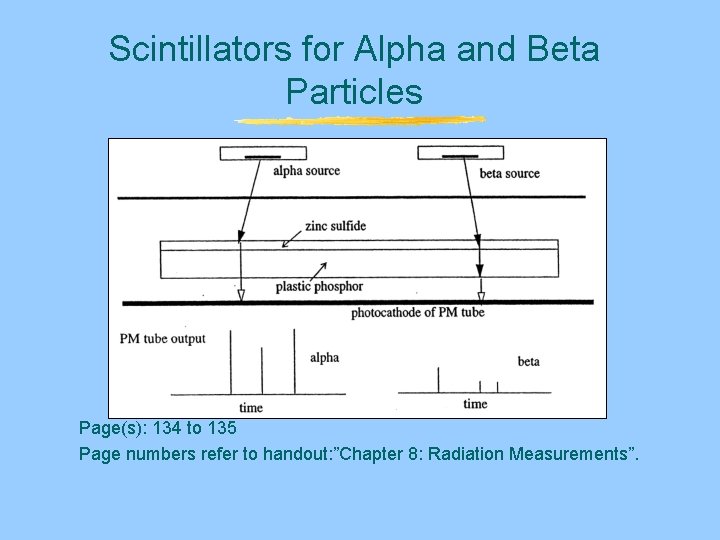
Scintillators for Alpha and Beta Particles Page(s): 134 to 135 Page numbers refer to handout: ”Chapter 8: Radiation Measurements”.
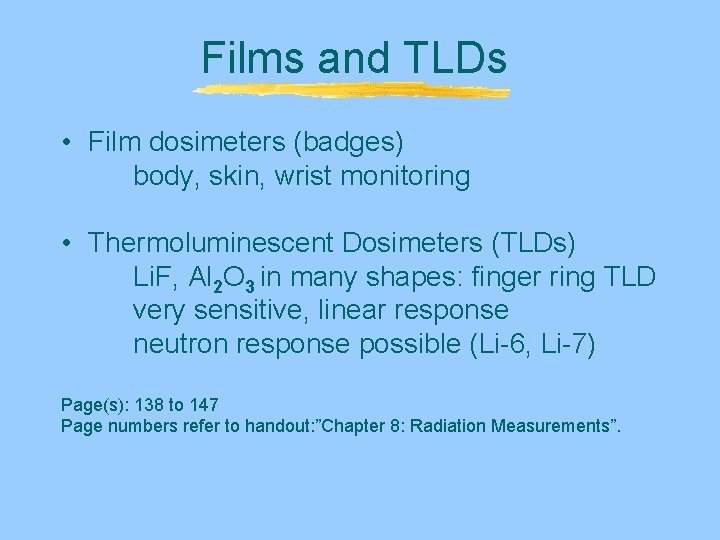
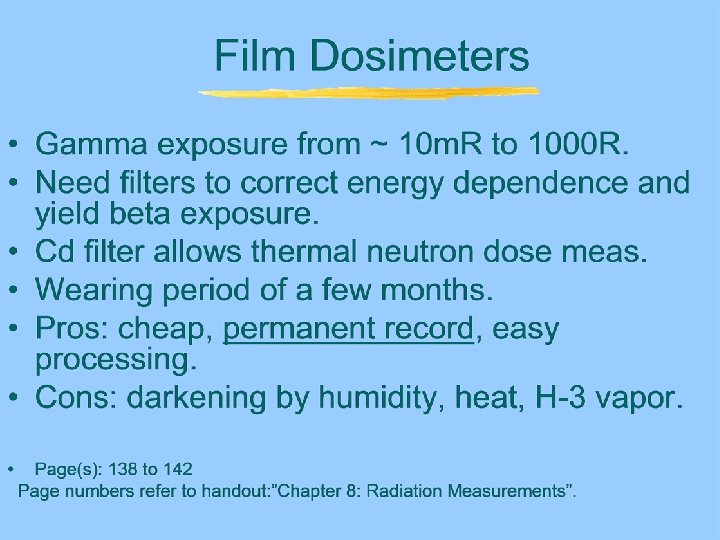
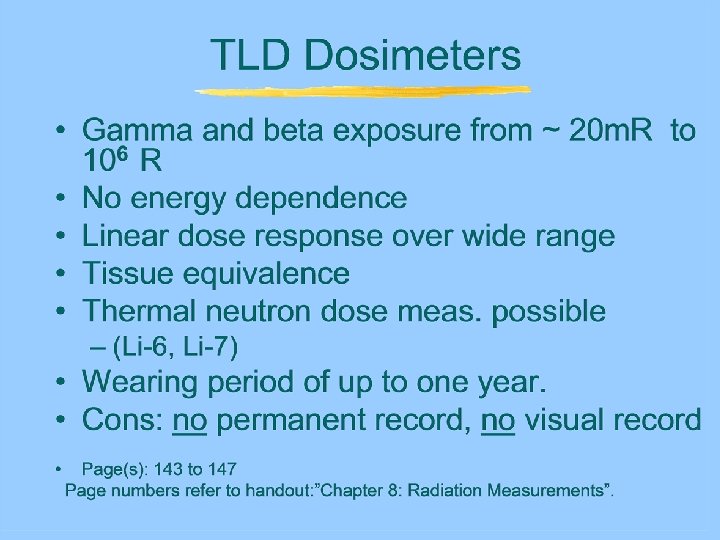
Films and TLDs • Film dosimeters (badges) body, skin, wrist monitoring • Thermoluminescent Dosimeters (TLDs) Li. F, Al 2 O 3 in many shapes: finger ring TLD very sensitive, linear response neutron response possible (Li-6, Li-7) Page(s): 138 to 147 Page numbers refer to handout: ”Chapter 8: Radiation Measurements”.
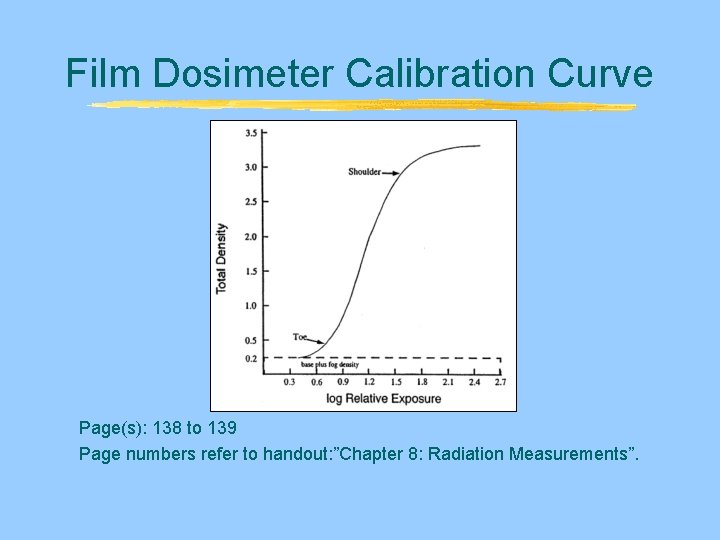
Film Dosimeter Calibration Curve Page(s): 138 to 139 Page numbers refer to handout: ”Chapter 8: Radiation Measurements”.
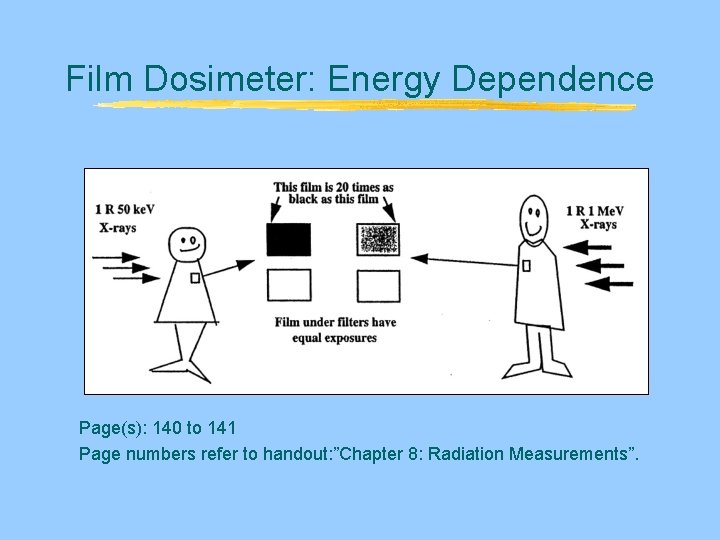
Film Dosimeter: Energy Dependence Page(s): 140 to 141 Page numbers refer to handout: ”Chapter 8: Radiation Measurements”.
Single Images
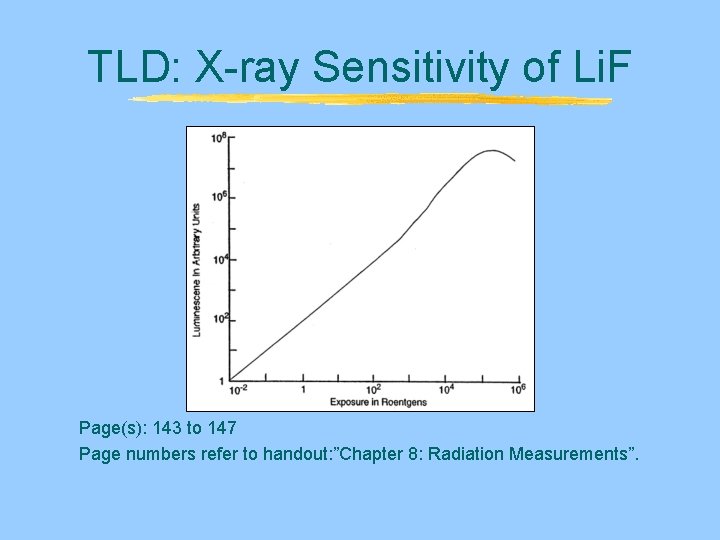
TLD: X-ray Sensitivity of Li. F Page(s): 143 to 147 Page numbers refer to handout: ”Chapter 8: Radiation Measurements”.
Single Images
Special Detectors • Semiconductor detectors (nuclear diodes) Si(Li), Ge(hyperpure) • Thermoluminescent neutron dosimeters Li-6 vs. Li-7 • Damage track neutron dosimeters • Bubble neutron dosimeters Page(s): 147 to end of handout Page numbers refer to handout: ”Chapter 8: Radiation Measurements”.
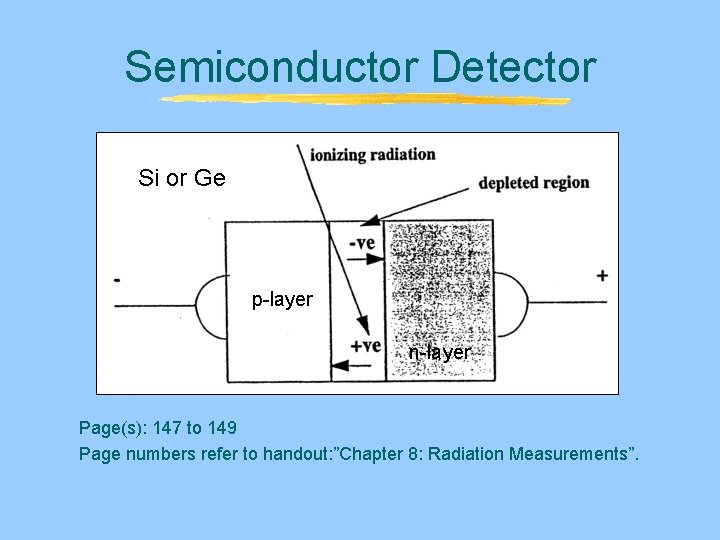
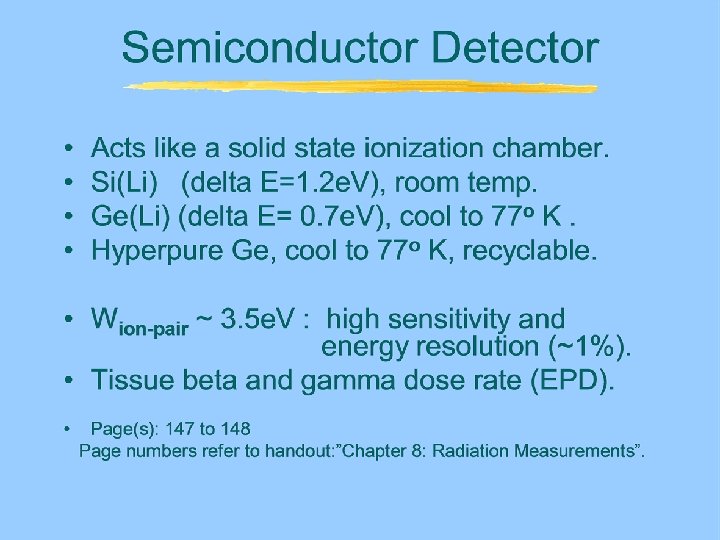
Semiconductor Detector Si or Ge p-layer n-layer Page(s): 147 to 149 Page numbers refer to handout: ”Chapter 8: Radiation Measurements”.
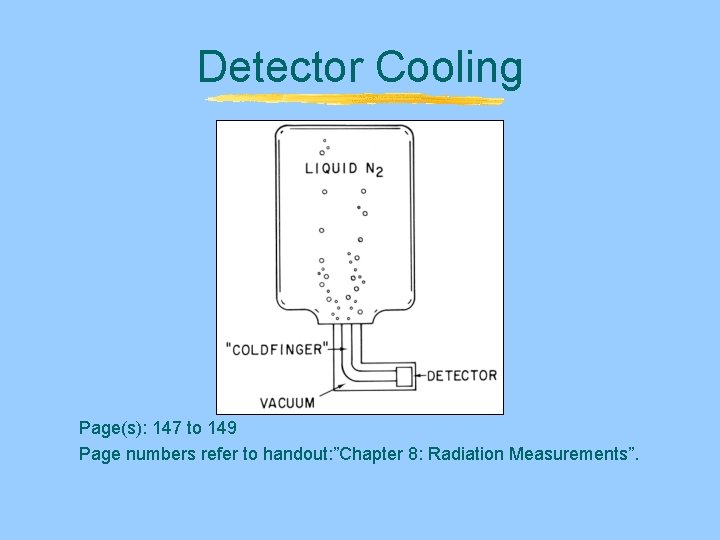
Detector Cooling Page(s): 147 to 149 Page numbers refer to handout: ”Chapter 8: Radiation Measurements”.
Single Images
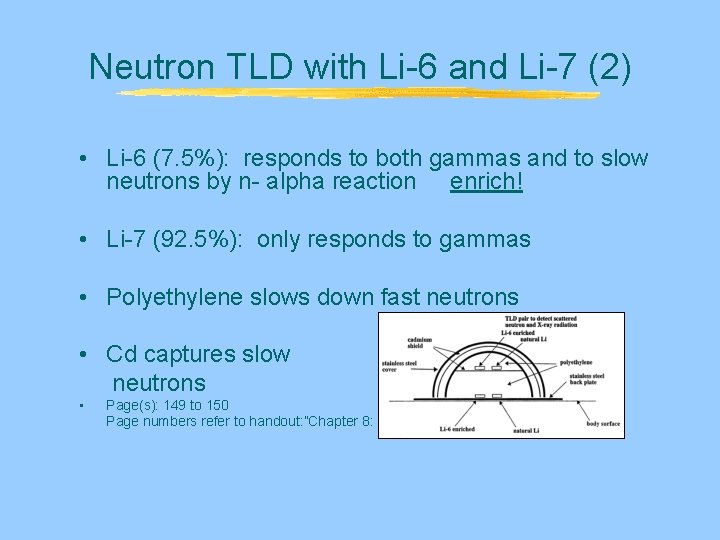
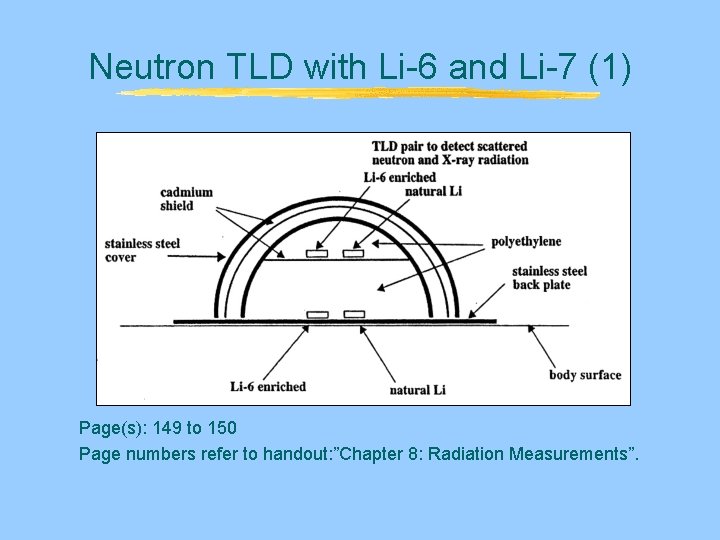
Neutron TLD with Li-6 and Li-7 (2) • Li-6 (7. 5%): responds to both gammas and to slow neutrons by n- alpha reaction enrich! • Li-7 (92. 5%): only responds to gammas • Polyethylene slows down fast neutrons • Cd captures slow neutrons • Page(s): 149 to 150 Page numbers refer to handout: ”Chapter 8: Radiation Measurements”.
Neutron TLD with Li-6 and Li-7 (1) Page(s): 149 to 150 Page numbers refer to handout: ”Chapter 8: Radiation Measurements”.
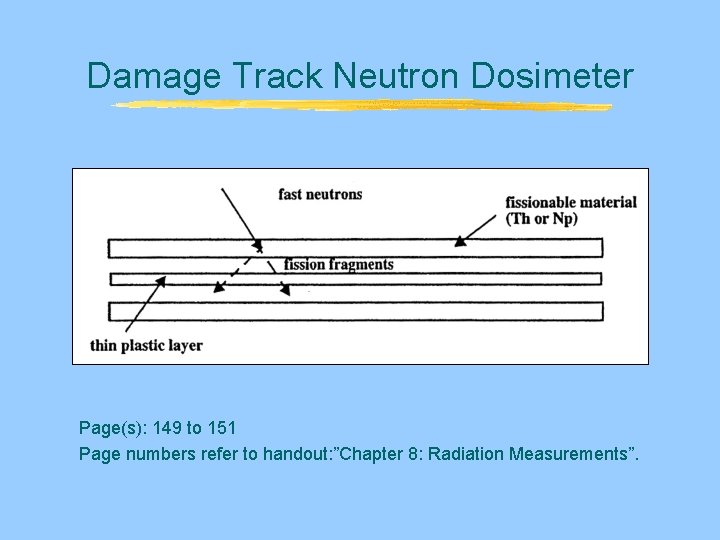
Damage Track Neutron Dosimeter Page(s): 149 to 151 Page numbers refer to handout: ”Chapter 8: Radiation Measurements”.
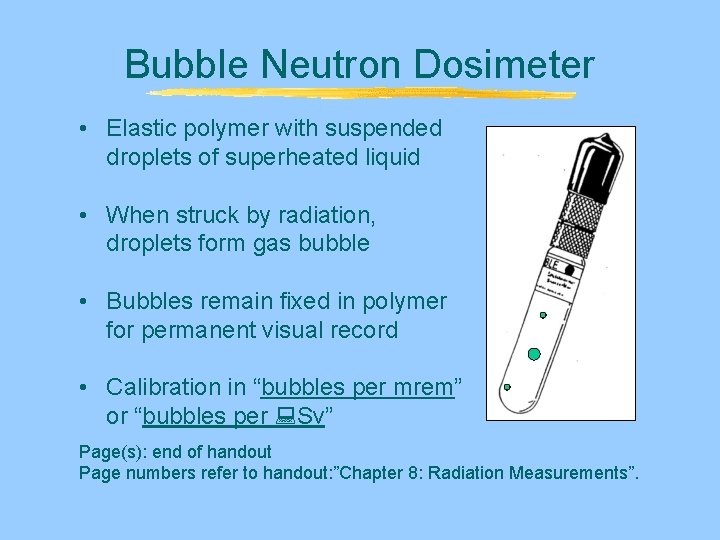
Bubble Neutron Dosimeter • Elastic polymer with suspended droplets of superheated liquid • When struck by radiation, droplets form gas bubble • Bubbles remain fixed in polymer for permanent visual record • Calibration in “bubbles per mrem” or “bubbles per Sv” Page(s): end of handout Page numbers refer to handout: ”Chapter 8: Radiation Measurements”.
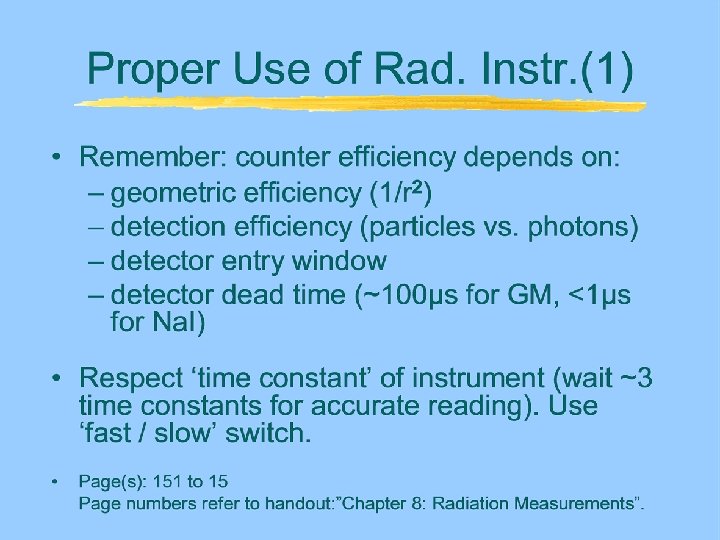
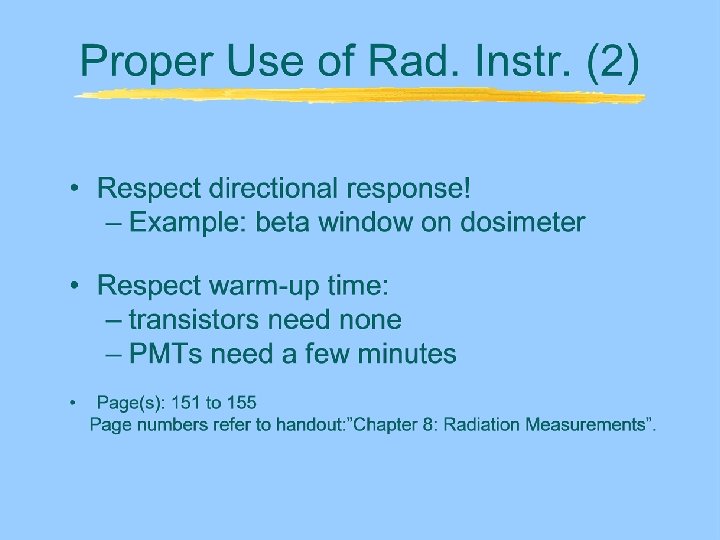
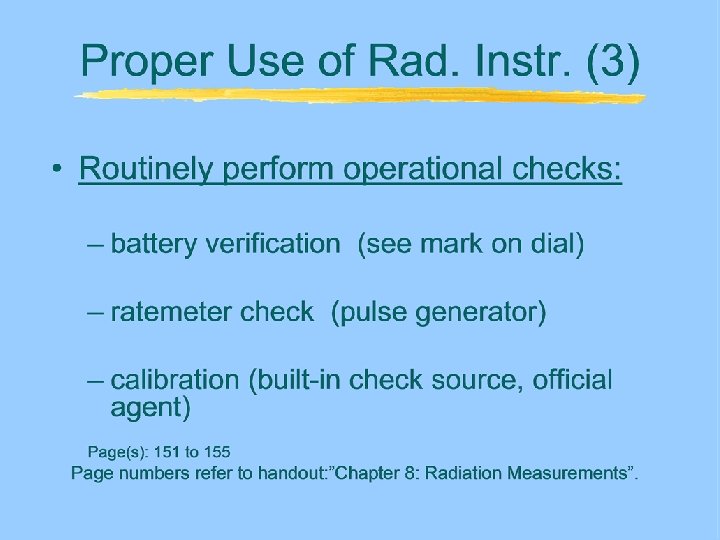
Use of Radiation Instruments • Detection and geometric efficiency • Time constant and dead time • Directional response • Operational checks (battery!), calibration Page(s): 151 to 156 Page numbers refer to handout: ”Chapter 8: Radiation Measurements”.
Single Images
Energy Dependence of Gamma Survey Meter Page(s): 153 to 154 Page numbers refer to handout: ”Chapter 8: Radiation Measurements”.
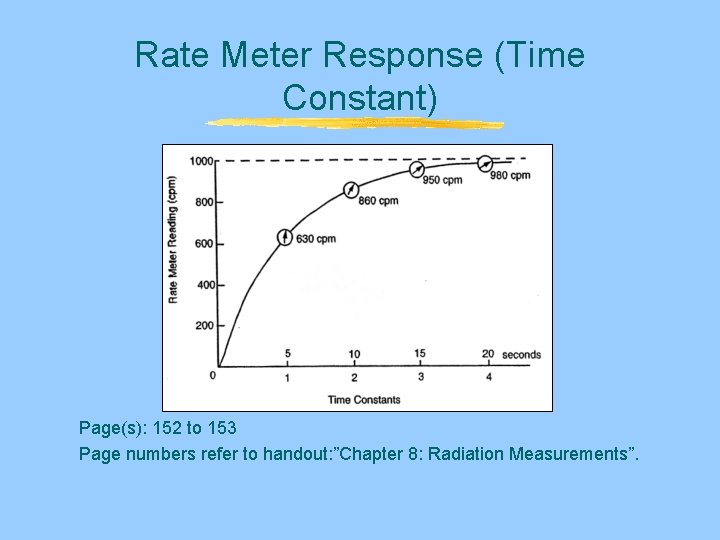
Rate Meter Response (Time Constant) Page(s): 152 to 153 Page numbers refer to handout: ”Chapter 8: Radiation Measurements”.
Single Images
Single Images
Master Page(s): 107 to Page numbers refer to handout: ”Chapter 8: Radiation Measurements”.
Master Page(s): 107 to Page numbers refer to handout: ”Chapter 8: Radiation Measurements”.
Master Page(s): 107 to Page numbers refer to handout: ”Chapter 8: Radiation Measurements”.
Master Page(s): 107 to Page numbers refer to handout: ”Chapter 8: Radiation Measurements”.
Shielding
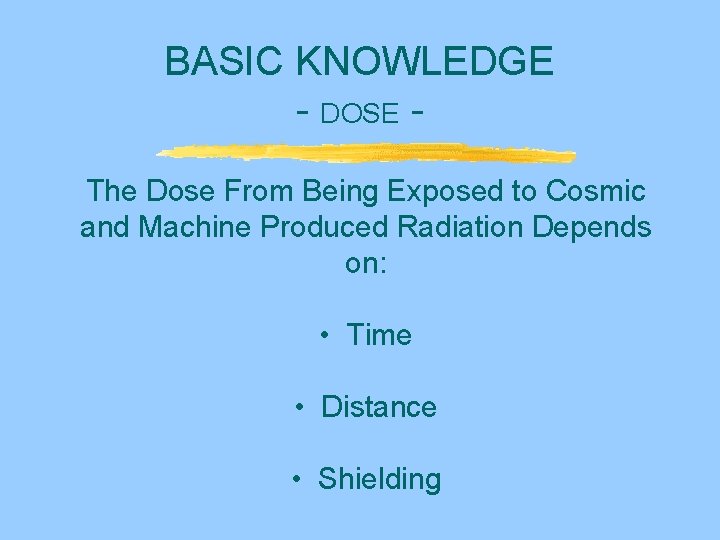
BASIC KNOWLEDGE - DOSE The Dose From Being Exposed to Cosmic and Machine Produced Radiation Depends on: • Time • Distance • Shielding
Energy Response of Ionization Chamber Page(s): 116 to 117 Page numbers refer to handout: ”Chapter 8: Radiation Measurements”.
References • Nuclear Regulatory Commission Home Page: www. nrc. gov • teachers corner@www. nrc. gov/NRC/teachers. html • students corner@www. nrc. gov/NRC/STUDENTS/stude nts. html • Nuclear Energy Institute Home Page: www. nei. org • science club@ www. nei. org/scienceclub/index. html • Health Physics Society Home Page: www. hps. org • www. hps. org/publicinformation/radfactsheets/