
Health Information System Challenges Health Information Systems should

- Slides: 15
Health Information System Challenges
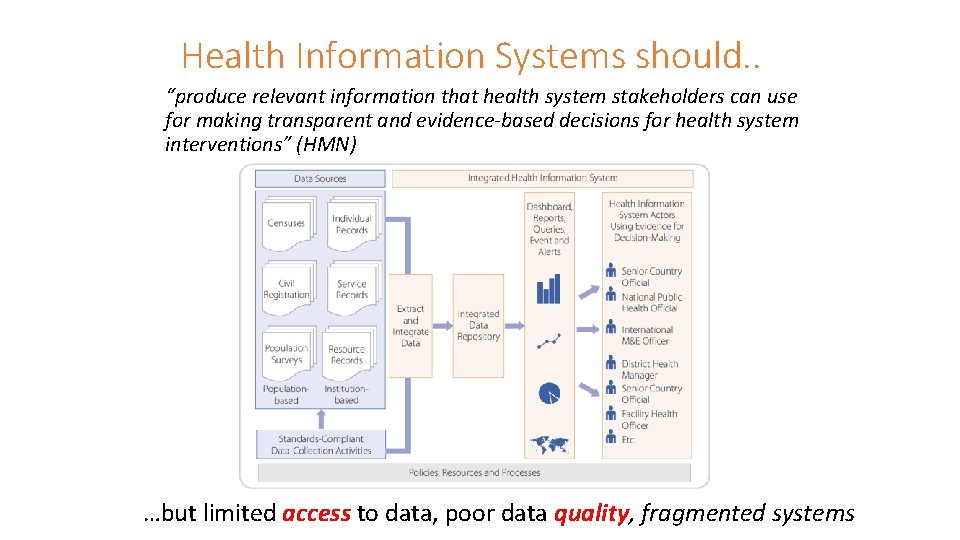
Health Information Systems should. . “produce relevant information that health system stakeholders can use for making transparent and evidence-based decisions for health system interventions” (HMN) …but limited access to data, poor data quality, fragmented systems
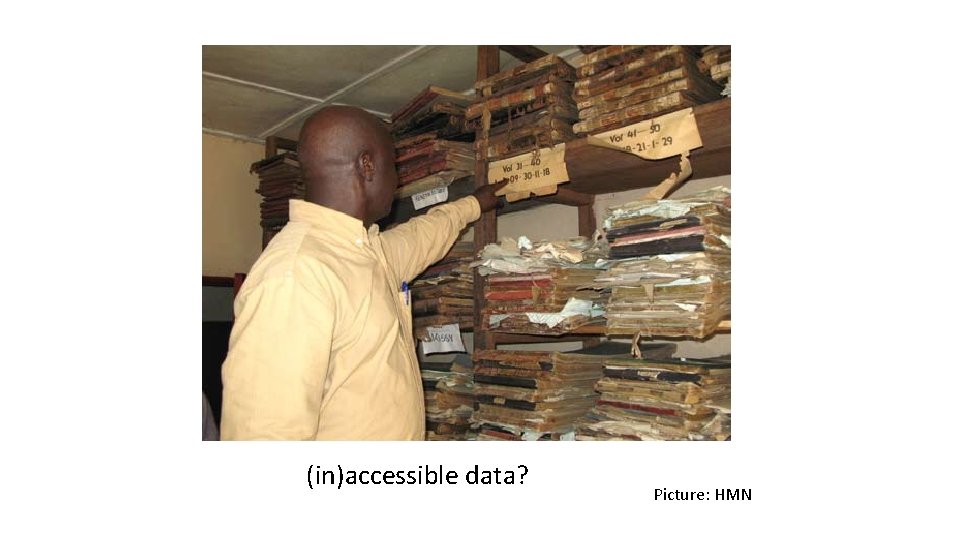
(in)accessible data? Picture: HMN
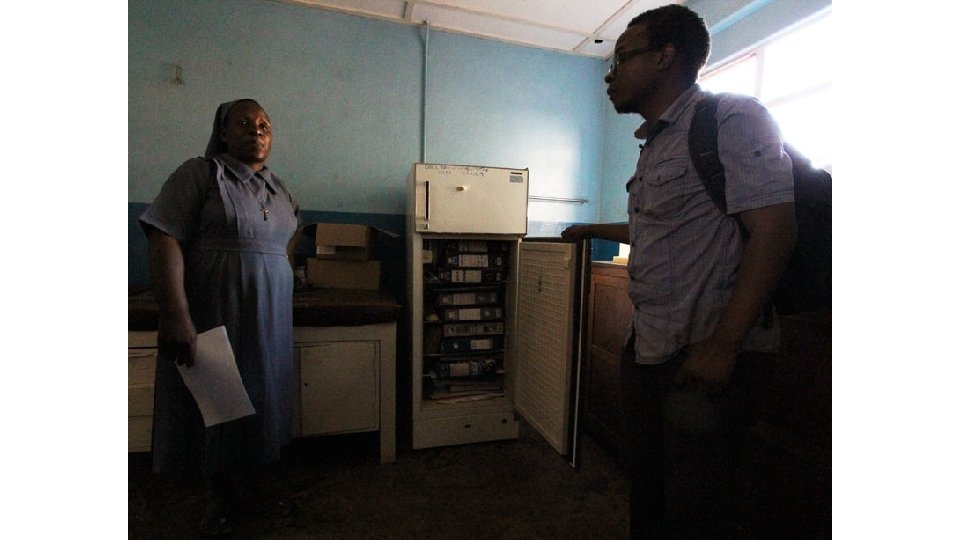
Lack of access to health information Why?
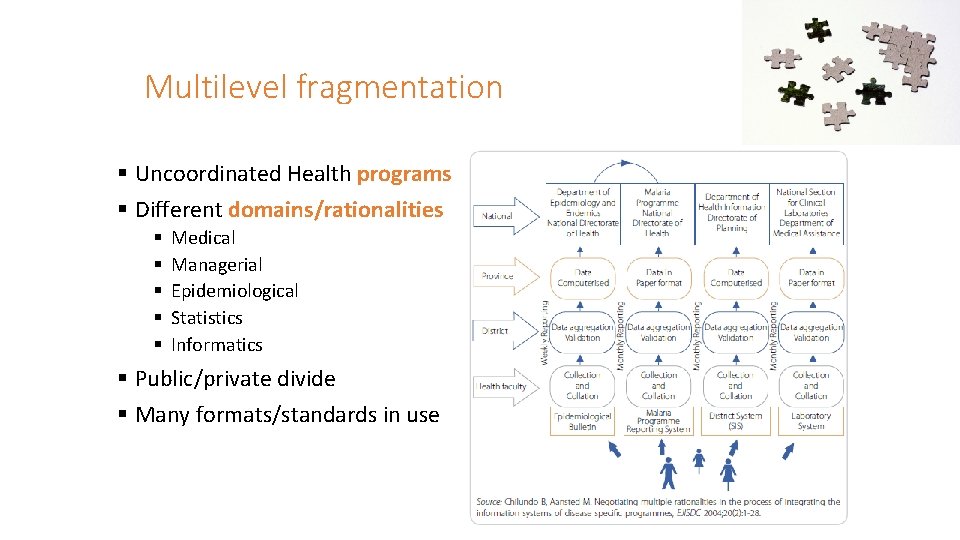
Multilevel fragmentation § Uncoordinated Health programs § Different domains/rationalities § § § Medical Managerial Epidemiological Statistics Informatics § Public/private divide § Many formats/standards in use
Fragmentation of health programs One information stream for Malaria program One information stream for TB program One information stream for… pluss Demographic and Health Surveys, household surveys etc. Data not available for comparison Double counting Low data quality
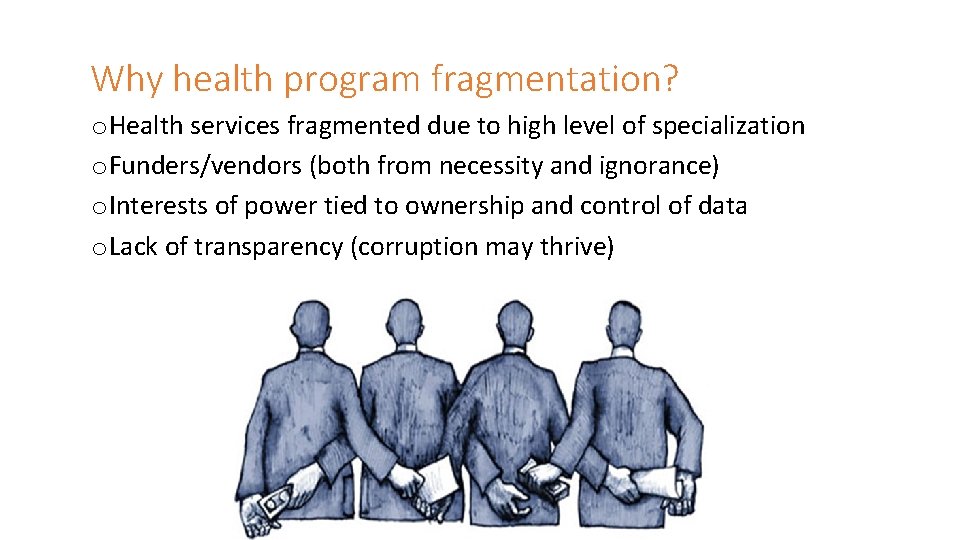
Why health program fragmentation? o Health services fragmented due to high level of specialization o Funders/vendors (both from necessity and ignorance) o Interests of power tied to ownership and control of data o Lack of transparency (corruption may thrive)
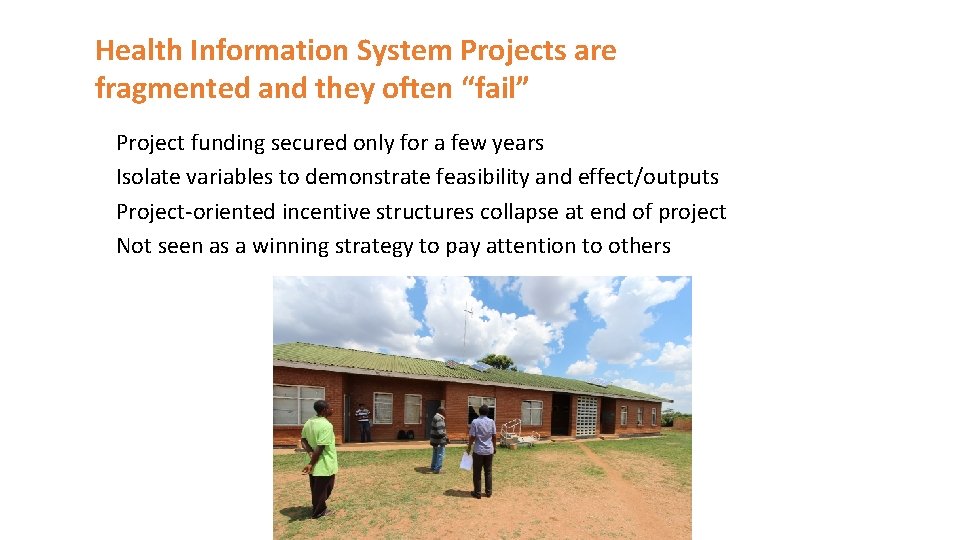
Health Information System Projects are fragmented and they often “fail” Project funding secured only for a few years Isolate variables to demonstrate feasibility and effect/outputs Project-oriented incentive structures collapse at end of project Not seen as a winning strategy to pay attention to others
Uncoordinated government => fragmentation Ministry of Health is not alone… • • • National/Central Statistics office /NSO (census) Ministry of Local Government (run clinics) Ministry of Education (school health programs) Ministry of Defense (military clinics) Special units and structures on HIV and IDSR See also: Stansfield, S. K. , Walsh, J. , Prata, N. , & Evans, T. (2006). Information to improve decision making for health.
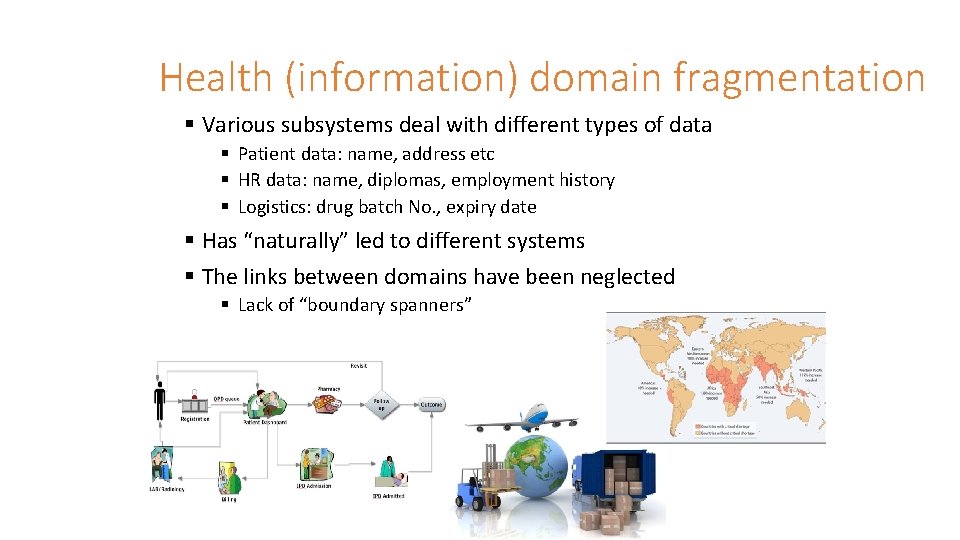
Health (information) domain fragmentation § Various subsystems deal with different types of data § Patient data: name, address etc § HR data: name, diplomas, employment history § Logistics: drug batch No. , expiry date § Has “naturally” led to different systems § The links between domains have been neglected § Lack of “boundary spanners”
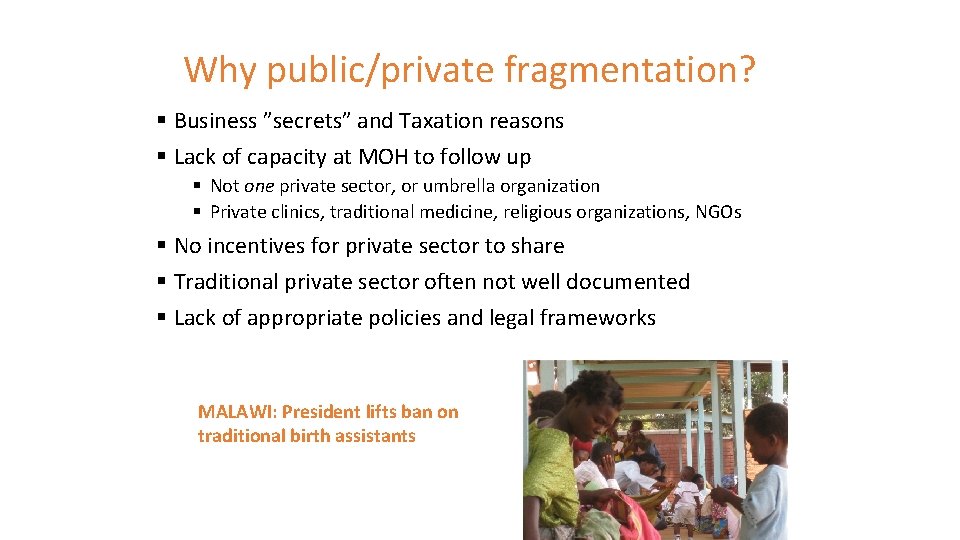
Why public/private fragmentation? § Business ”secrets” and Taxation reasons § Lack of capacity at MOH to follow up § Not one private sector, or umbrella organization § Private clinics, traditional medicine, religious organizations, NGOs § No incentives for private sector to share § Traditional private sector often not well documented § Lack of appropriate policies and legal frameworks MALAWI: President lifts ban on traditional birth assistants
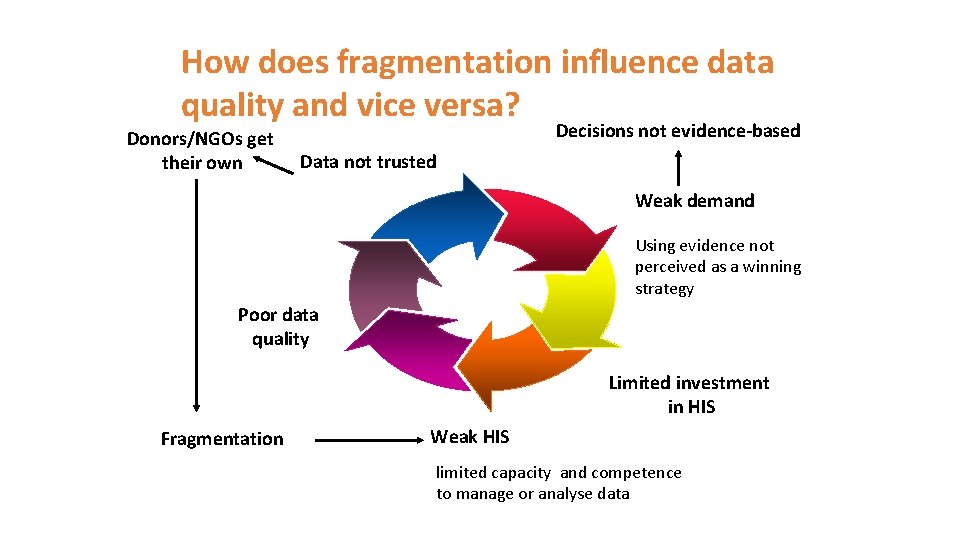
How does fragmentation influence data quality and vice versa? Donors/NGOs get their own Decisions not evidence-based Data not trusted Weak demand Using evidence not perceived as a winning strategy Poor data quality Limited investment in HIS Fragmentation Weak HIS limited capacity and competence to manage or analyse data
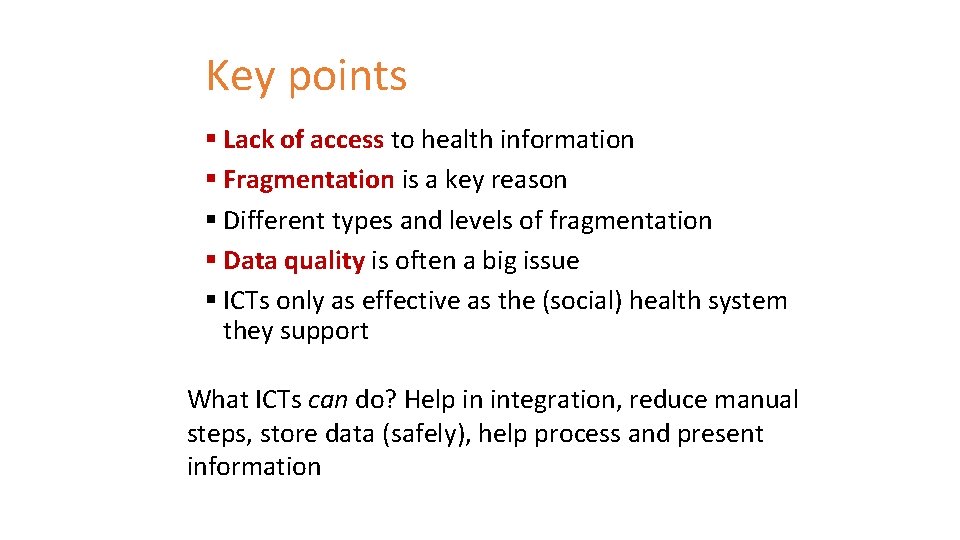
Key points § Lack of access to health information § Fragmentation is a key reason § Different types and levels of fragmentation § Data quality is often a big issue § ICTs only as effective as the (social) health system they support What ICTs can do? Help in integration, reduce manual steps, store data (safely), help process and present information