
HEALTH HAZARDS IN AGRICULTURE A FOCUS ON BIOLOGICAL
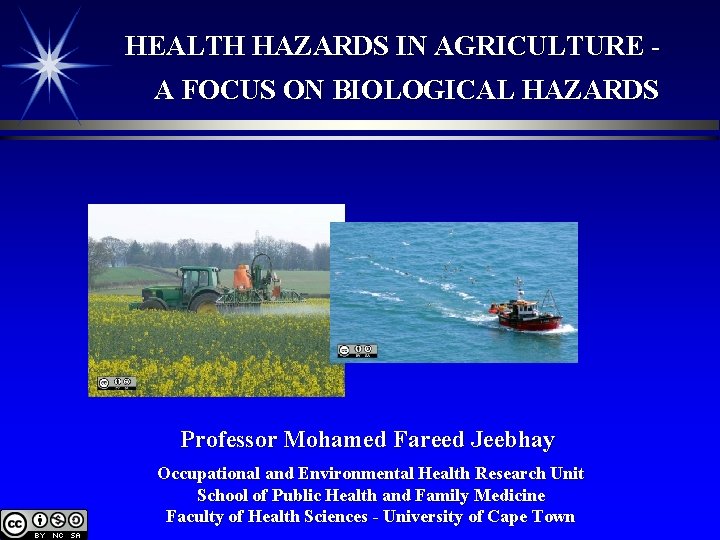
HEALTH HAZARDS IN AGRICULTURE A FOCUS ON BIOLOGICAL HAZARDS Professor Mohamed Fareed Jeebhay Occupational and Environmental Health Research Unit School of Public Health and Family Medicine Faculty of Health Sciences - University of Cape Town
OUTLINE l l l What is a hazardous biological agent (HBA)? Major categories of biological agents of natural origin and some examples Common agricultural settings with exposure to HBA Major mechanisms through which HBA cause health problems Major health effects and occupational diseases caused by HBA
WHAT IS A HAZARDOUS BIOLOGICAL AGENT (HBA)? Any cell (plant, animal, human), micro-organism or cell culture of natural origin or genetically engineered that constitutes a risk to human health
MAJOR CATEGORIES OF BIOLOGICAL AGENTS OF NATURAL ORIGIN

COMMON AGRICULTURAL SETTINGS WITH EXPOSURE TO HBA SECTOR Agriculture Agricultural products EXAMPLES l Cultivating, harvesting, forestry l Breeding and tending animals, fishing s Abattoirs, food processing plants Storage facilities: grain silos, cotton, tobacco Processing animal hair, leather, silk Textile plants, sawmills, paper-mills s Waste removal, treatment plants s Sewage & waste disposal
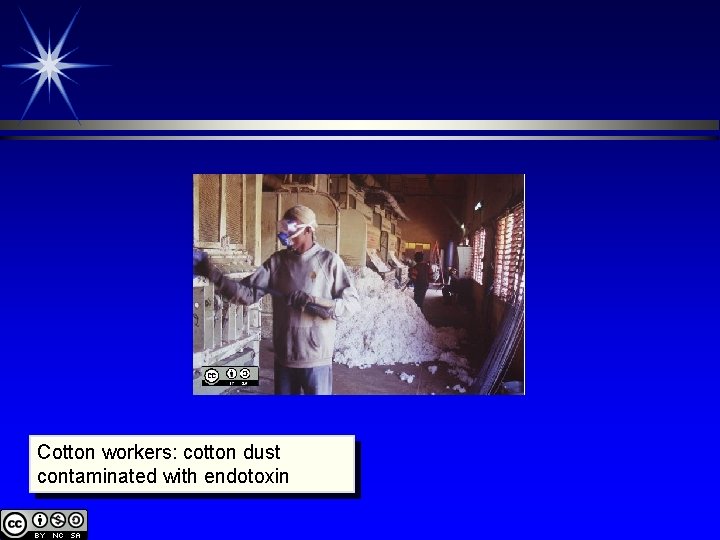
Cotton workers: cotton dust contaminated with endotoxin
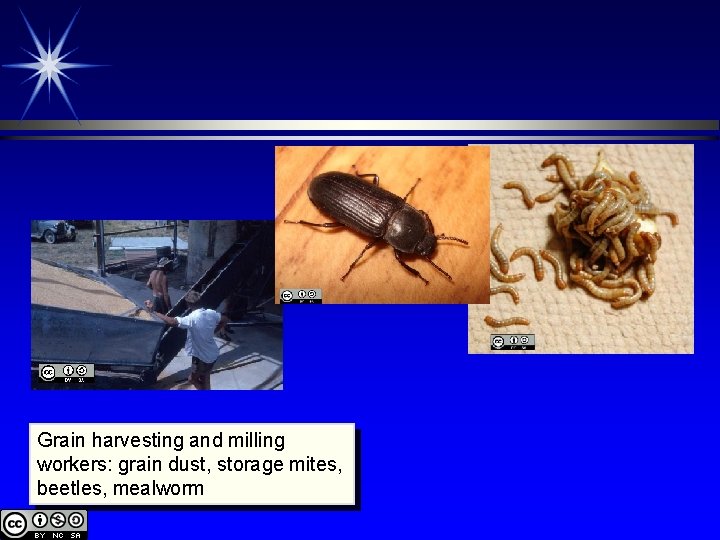
Grain harvesting and milling workers: grain dust, storage mites, beetles, mealworm
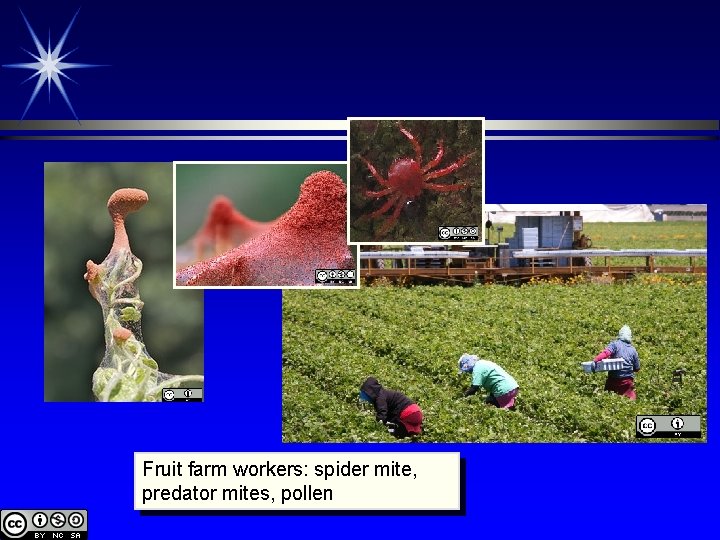
Fruit farm workers: spider mite, predator mites, pollen
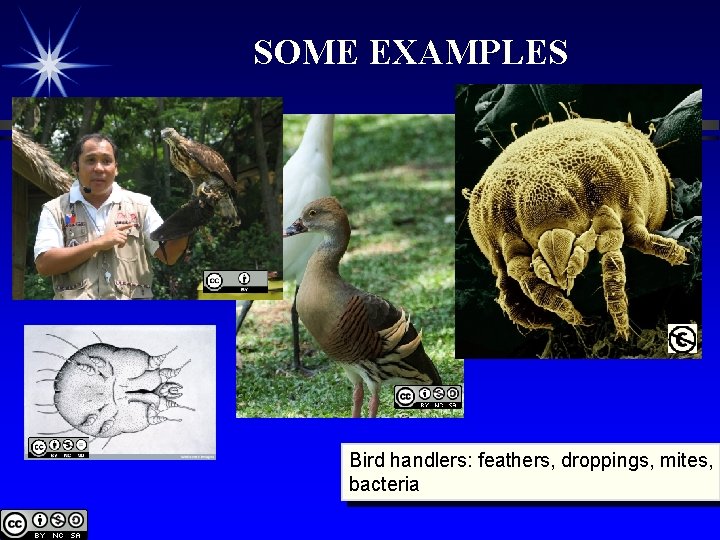
SOME EXAMPLES Bird handlers: feathers, droppings, mites, bacteria
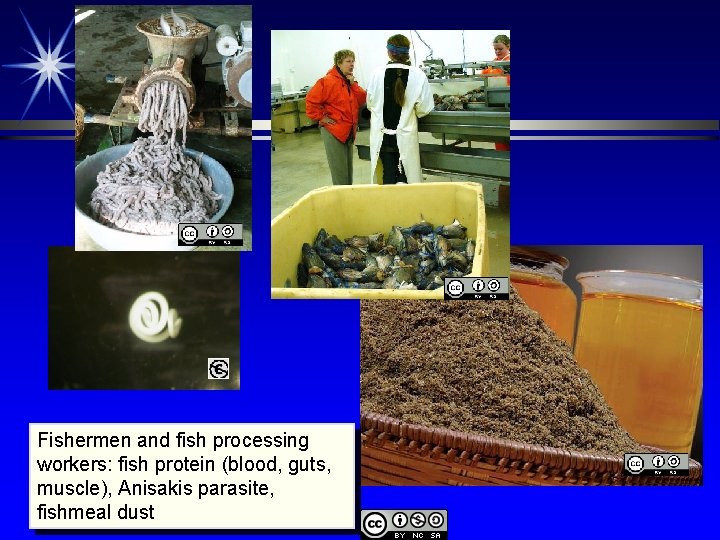
Fishermen and fish processing workers: fish protein (blood, guts, muscle), Anisakis parasite, fishmeal dust
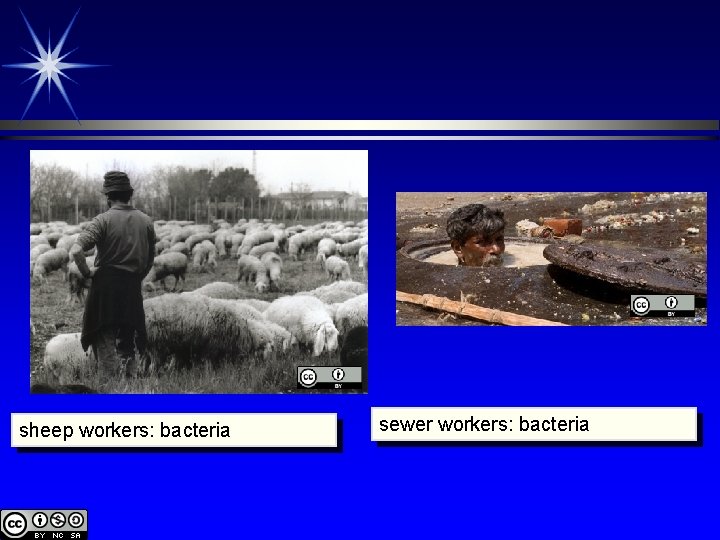
sheep workers: bacteria sewer workers: bacteria
BIOLOGICAL HAZARD VS RISK The “HAZARD” refers to the environmental stressors which have a capacity to do harm (bacteria, virus, toxin, etc. ). The term “RISK” introduces an element of likelihood or possibility that the harmful event may take place Therefore for there to be a risk, there has to be “EXPOSURE” (potential or actual) to the harmful biological agent
CIRCUMSTANCES SURROUNDING OCCUPATIONAL EXPOSURE Environmental factors - route of exposure: inhalation, direct skin contact, (ingestion) - dose and duration of exposure Host-associated factors - atopy - smoking - genetic (e. g. HLA-type)
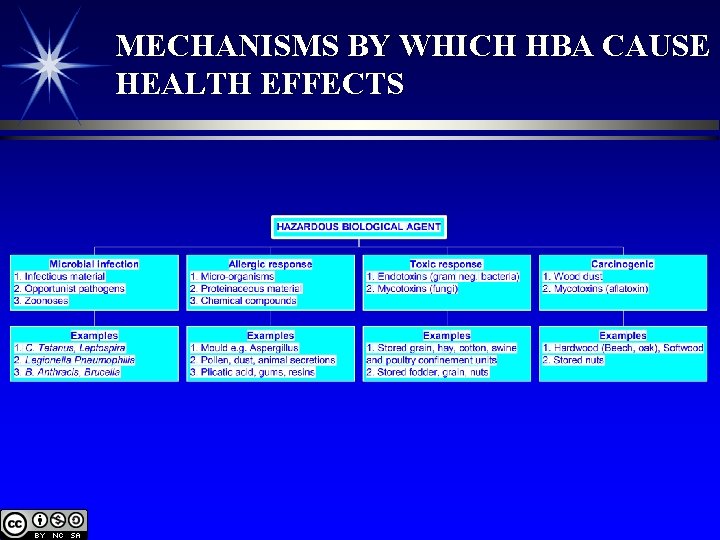
MECHANISMS BY WHICH HBA CAUSE HEALTH EFFECTS
OCCUPATIONAL DISEASES DUE TO HBA
AGRICULTURAL RESPIRATORY DISEASE
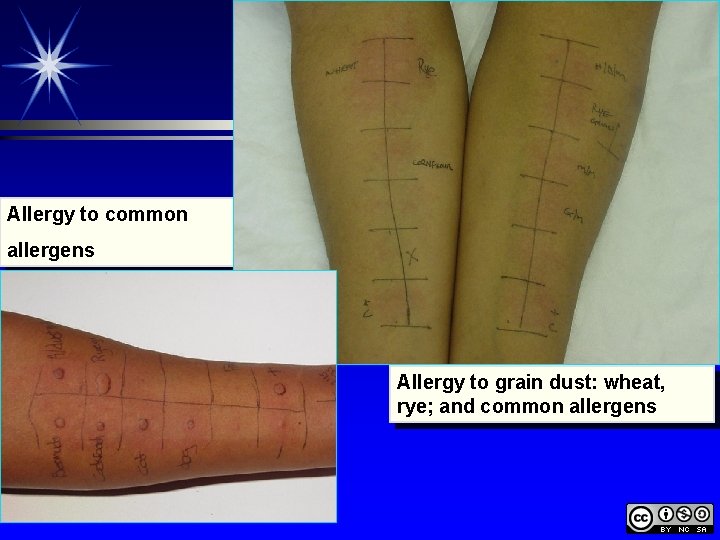
Allergy to common allergens Allergy to grain dust: wheat, rye; and common allergens
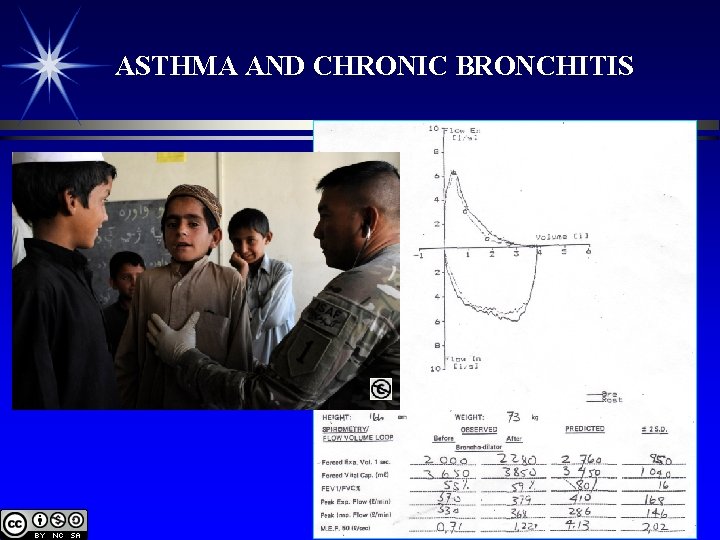
ASTHMA AND CHRONIC BRONCHITIS
Induction and effector mechanisms in Ig. E-mediated hypersensitivity for allergic asthma (Lehrer SB et al; Critical Reviews in Food Science and Nutrition, 1996)
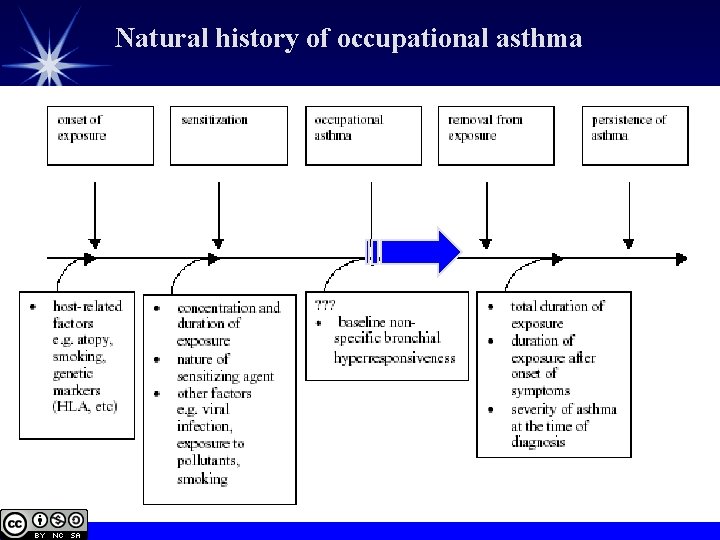
Natural history of occupational asthma
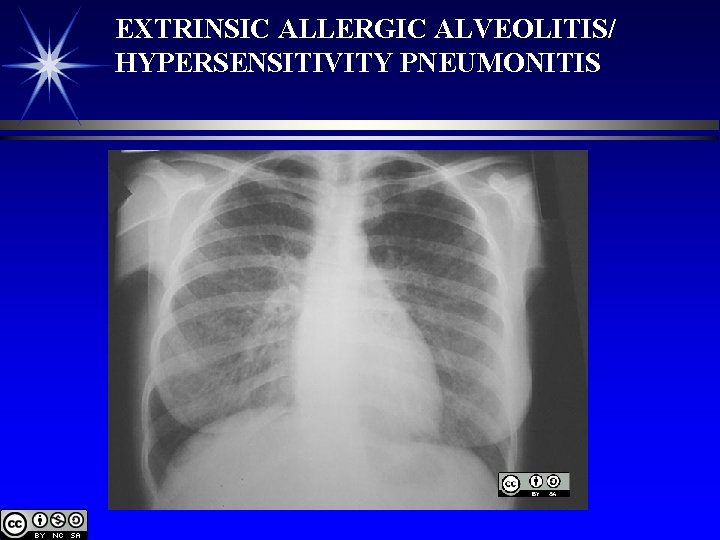
EXTRINSIC ALLERGIC ALVEOLITIS/ HYPERSENSITIVITY PNEUMONITIS
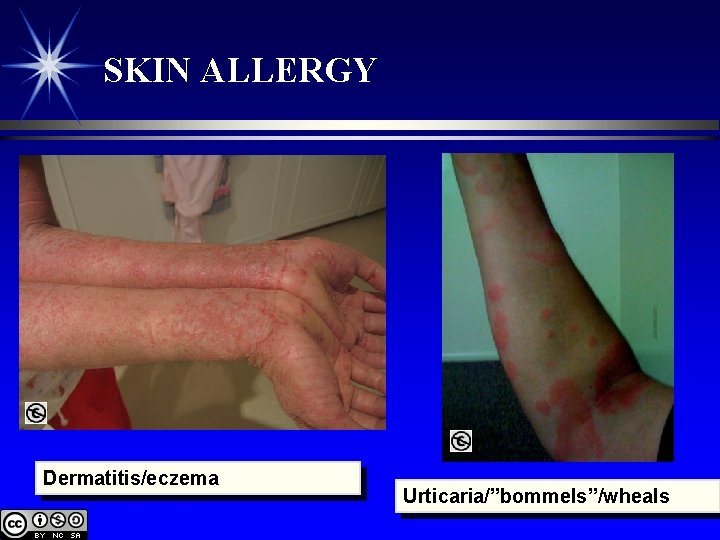
SKIN ALLERGY Dermatitis/eczema Urticaria/”bommels”/wheals
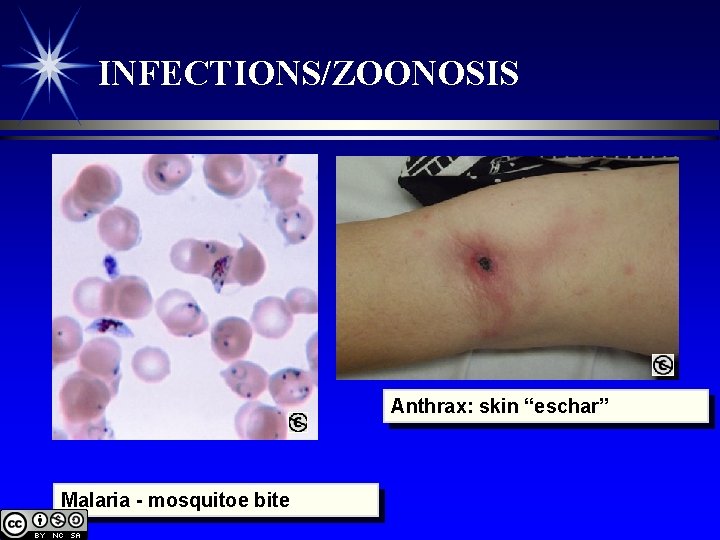
INFECTIONS/ZOONOSIS Anthrax: skin “eschar” Malaria - mosquitoe bite
MAIN MESSAGES l l Biological hazards are a major problem in agricultural production Occupational lung diseases (asthma, chronic bronchitis, pneumonitis) due to inhalation of organic dust are a common problem encountered among agricultural workers
- Slides: 24