
Health Equity TraumaInformed Transformation Health Equity Framework Principles
- Slides: 15
Health Equity & Trauma-Informed Transformation
Health Equity Framework Principles • Leverages Data • Prioritizes Health Equity • Addresses Root Causes • Emphasizes Collaboration
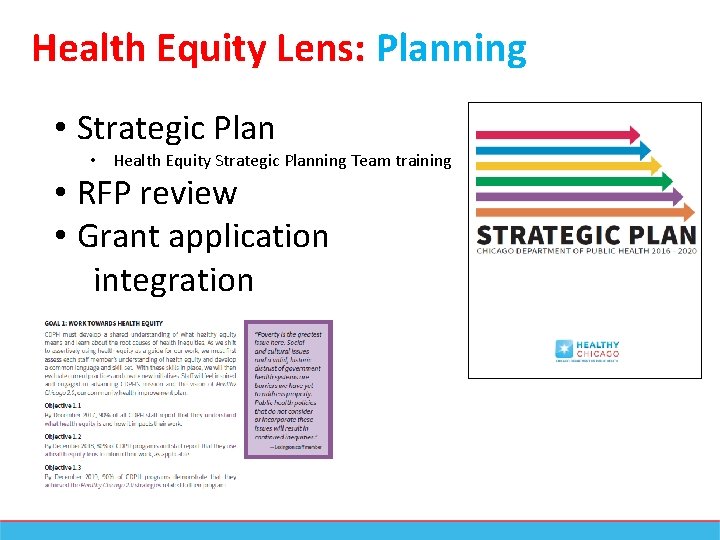
Health Equity Lens: Planning • Strategic Plan • Health Equity Strategic Planning Team training • RFP review • Grant application integration
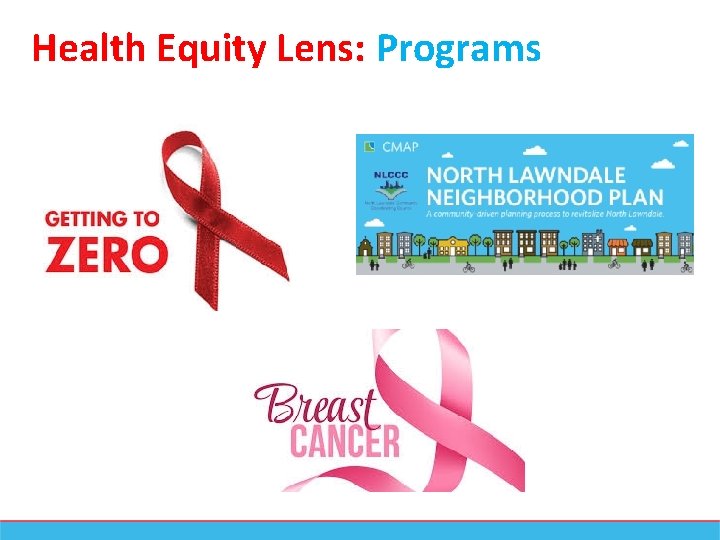
Health Equity Lens: Programs
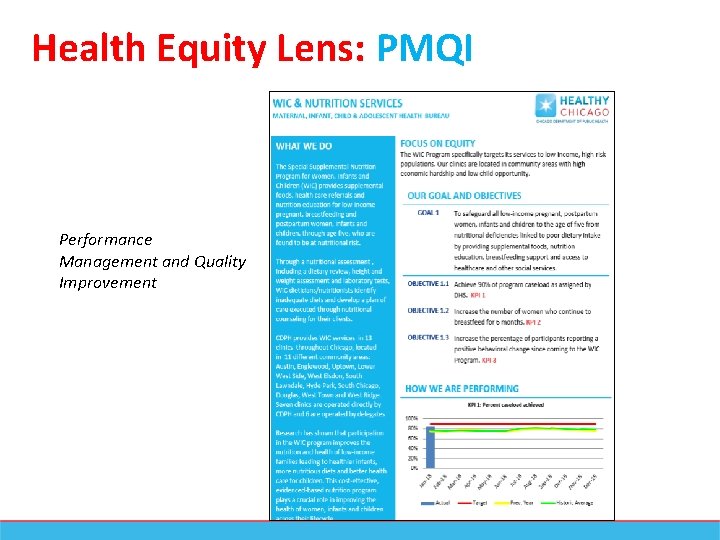
Health Equity Lens: PMQI Performance Management and Quality Improvement
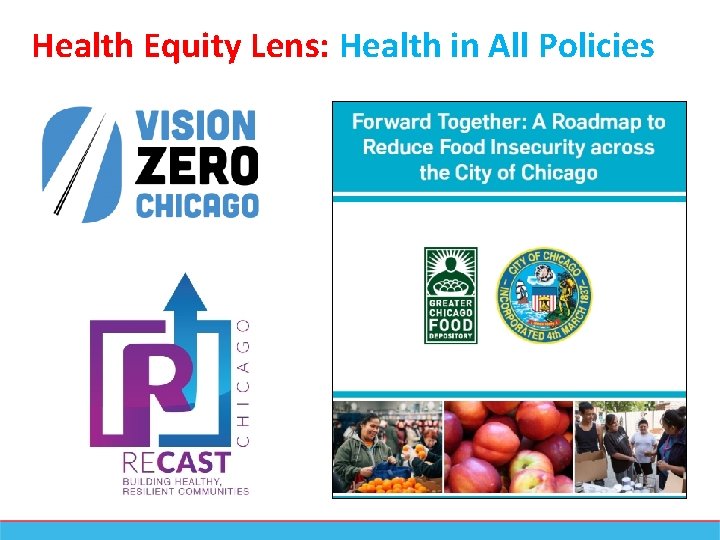
Health Equity Lens: Health in All Policies
Trauma-Informed Transformation Project (Ti. TP)
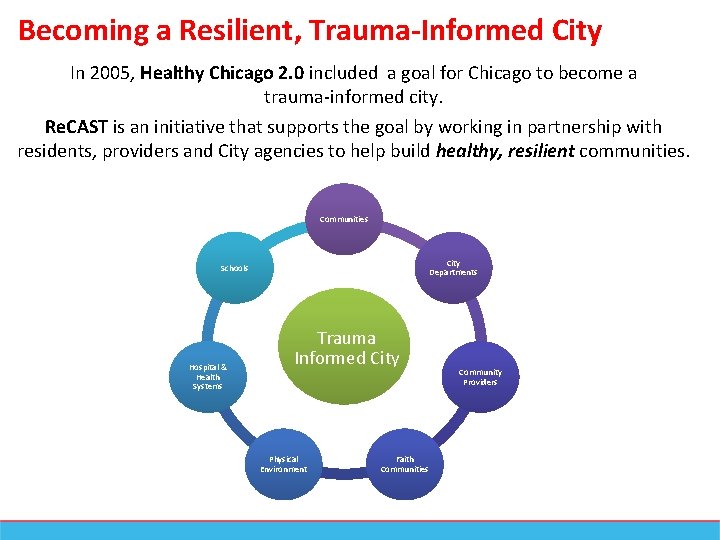
Becoming a Resilient, Trauma-Informed City In 2005, Healthy Chicago 2. 0 included a goal for Chicago to become a trauma-informed city. Re. CAST is an initiative that supports the goal by working in partnership with residents, providers and City agencies to help build healthy, resilient communities. Communities City Departments Schools Hospital & Health Systems Trauma Informed City Physical Environment Faith Communities Community Providers
Becoming A Trauma-informed City • A Trauma-Informed City utilizes this knowledge to develop policies and system improvements that ensure effective responses to recovery. • Becoming a Trauma Informed City will require significant changes in attitude, knowledge and practice. • Chicago will also work toward a shared understanding of the impact of trauma and will develop approaches to build resiliency across Chicago.
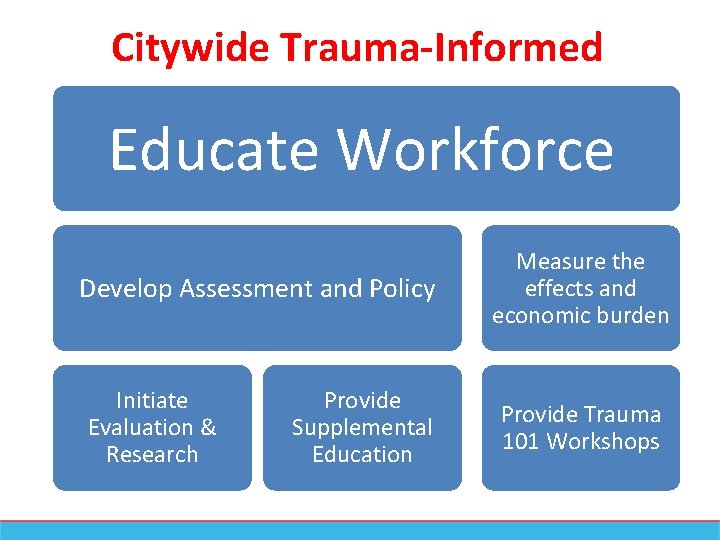
Citywide Trauma-Informed Strategies Educate Workforce Develop Assessment and Policy Initiate Evaluation & Research Provide Supplemental Education Measure the effects and economic burden Provide Trauma 101 Workshops
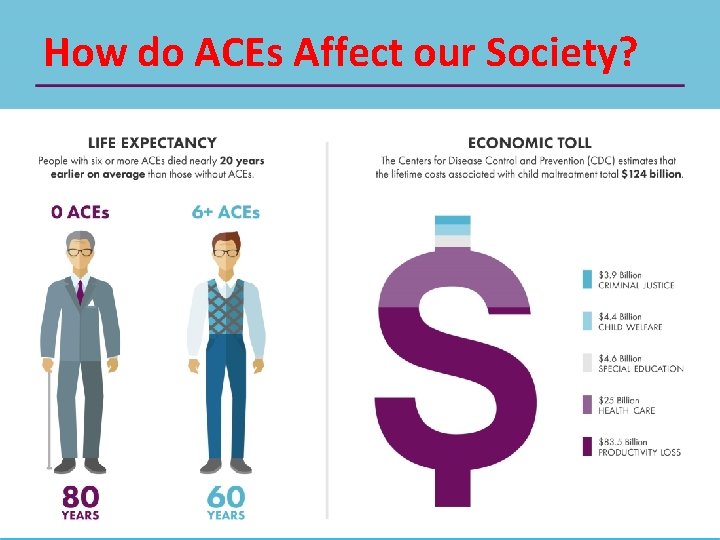
How do ACEs Affect our Society?
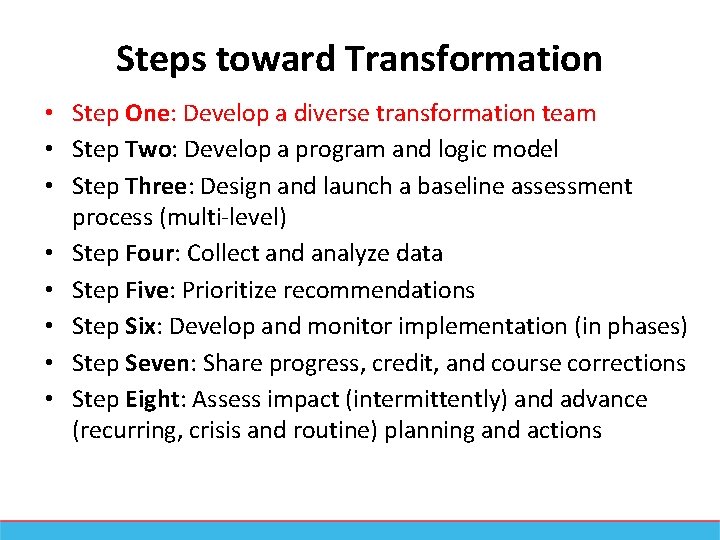
Steps toward Transformation • Step One: Develop a diverse transformation team • Step Two: Develop a program and logic model • Step Three: Design and launch a baseline assessment process (multi-level) • Step Four: Collect and analyze data • Step Five: Prioritize recommendations • Step Six: Develop and monitor implementation (in phases) • Step Seven: Share progress, credit, and course corrections • Step Eight: Assess impact (intermittently) and advance (recurring, crisis and routine) planning and actions
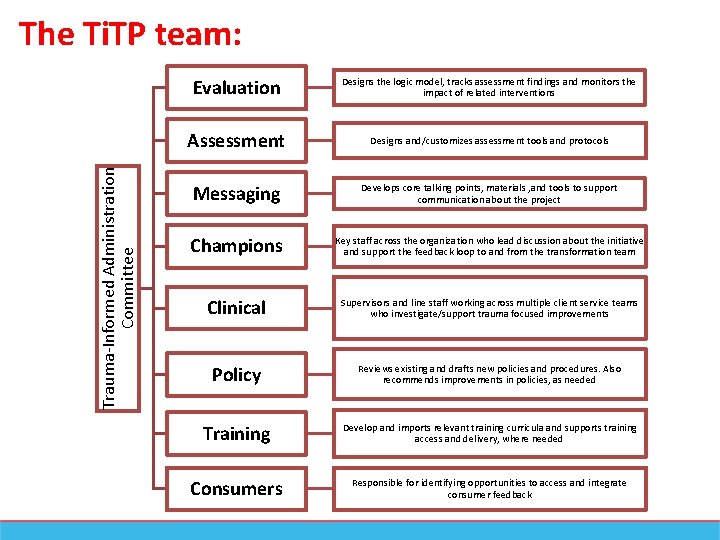
Trauma-Informed Administration Committee The Ti. TP team: Evaluation Designs the logic model, tracks assessment findings and monitors the impact of related interventions Assessment Designs and/customizes assessment tools and protocols Messaging Develops core talking points, materials , and tools to support communication about the project Champions Key staff across the organization who lead discussion about the initiative and support the feedback loop to and from the transformation team Clinical Supervisors and line staff working across multiple client service teams who investigate/support trauma focused improvements Policy Reviews existing and drafts new policies and procedures. Also recommends improvements in policies, as needed Training Develop and imports relevant training curricula and supports training access and delivery, where needed Consumers Responsible for identifying opportunities to access and integrate consumer feedback
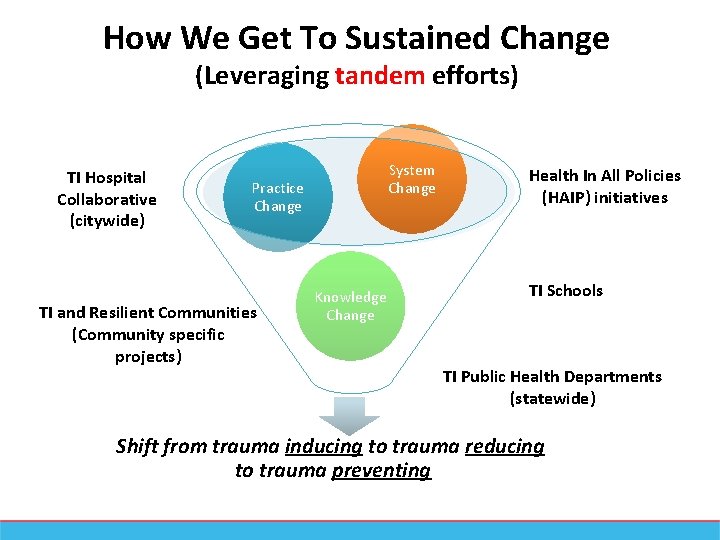
How We Get To Sustained Change (Leveraging tandem efforts) TI Hospital Collaborative (citywide) System Change Practice Change TI and Resilient Communities (Community specific projects) Knowledge Change Health In All Policies (HAIP) initiatives TI Schools TI Public Health Departments (statewide) Shift from trauma inducing to trauma reducing to trauma preventing
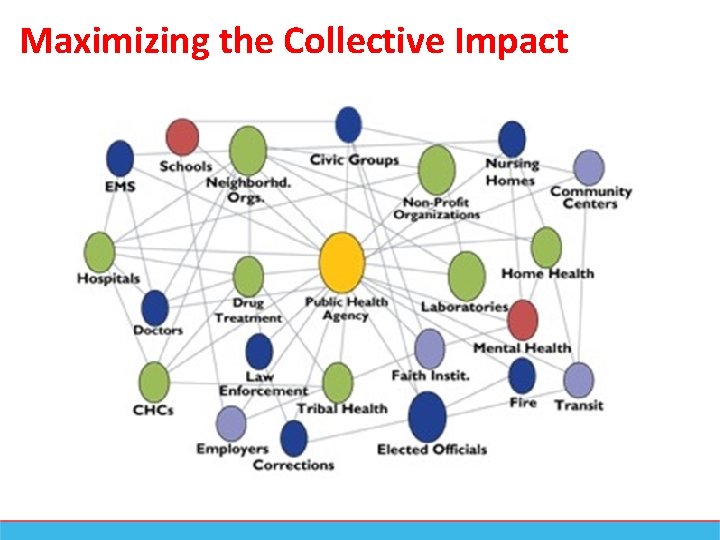
Maximizing the Collective Impact