
Health Effects after Radioactive Contamination Art Chang MD
- Slides: 25
Health Effects after Radioactive Contamination Art Chang MD MS National Center for Environmental Health Division of Environmental Hazards and Health Effects Health Studies Branch National Center for Environmental Health Division of Environmental Hazards and Health Effects
Disclaimer The findings and conclusions in this presentation are those of the author(s) and do not necessarily represent the official position of the Centers for Disease Control and Prevention/the Agency for Toxic Substances and Disease Registry
Outline q Differences between Radioactive Exposure and Contamination q Health Effects after External Contamination § Assessment of external contamination § Decontamination procedures q Health Effects after Internal Contamination § Assessment of internal contamination § Medical countermeasures for internal contamination
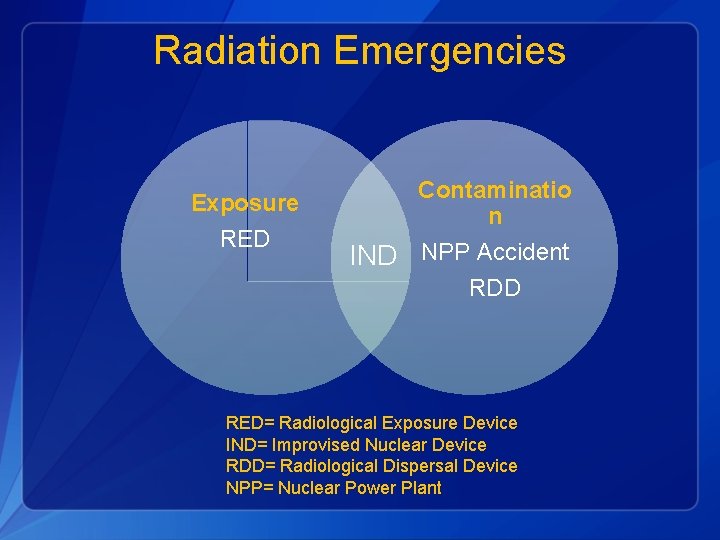
Radiation Emergencies Exposure RED Contaminatio n IND NPP Accident RDD RED= Radiological Exposure Device IND= Improvised Nuclear Device RDD= Radiological Dispersal Device NPP= Nuclear Power Plant
External Contamination
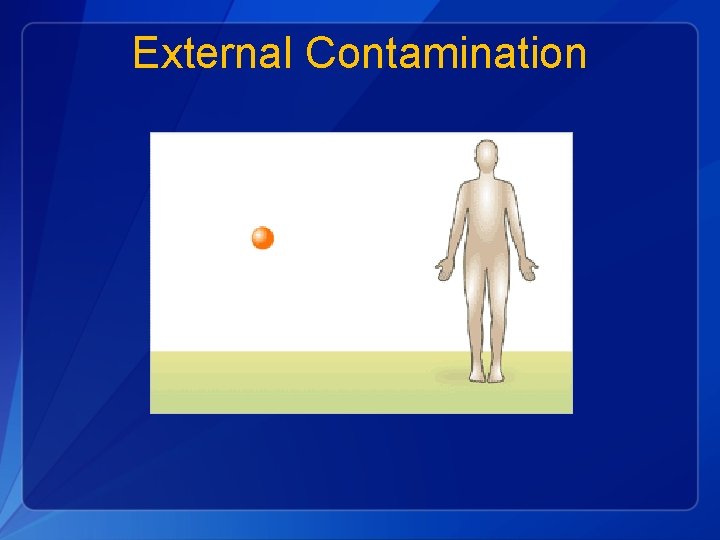
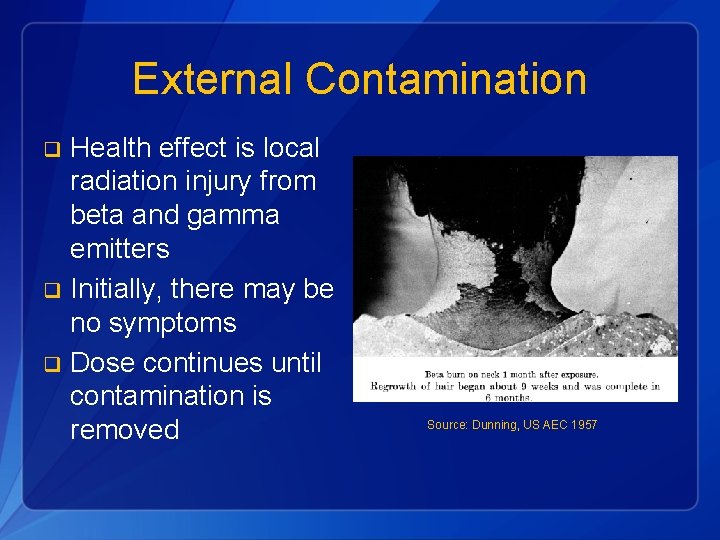
External Contamination Health effect is local radiation injury from beta and gamma emitters q Initially, there may be no symptoms q Dose continues until contamination is removed q Source: Dunning, US AEC 1957
External Contamination External contamination increases risk of internal contamination q Alpha particles cannot penetrate the skin, but they can be internalized q Personal protective equipment (N 95 mask and gown/gloves) should be worn by personnel at medical facilities q Treat critical medical conditions first! (even before decontamination) q
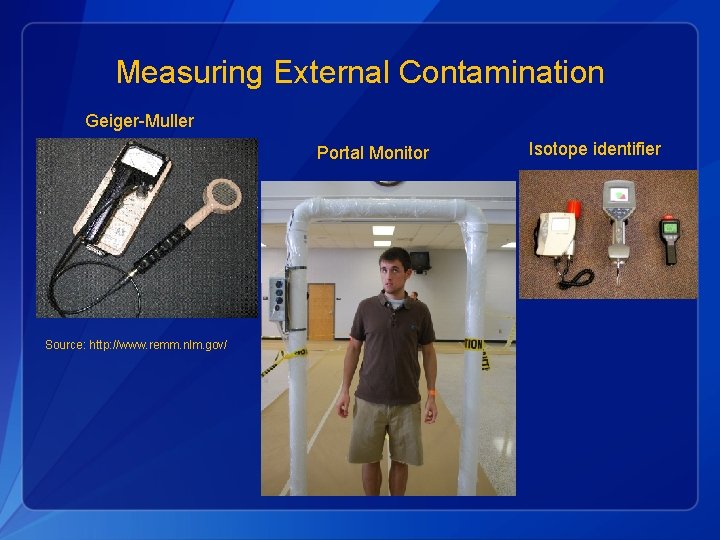
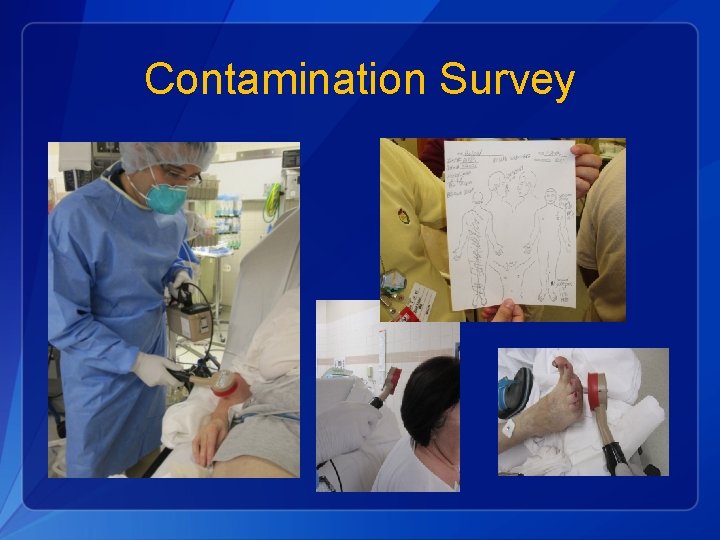
Measuring External Contamination Geiger-Muller Portal Monitor Source: http: //www. remm. nlm. gov/ Isotope identifier
Contamination Survey
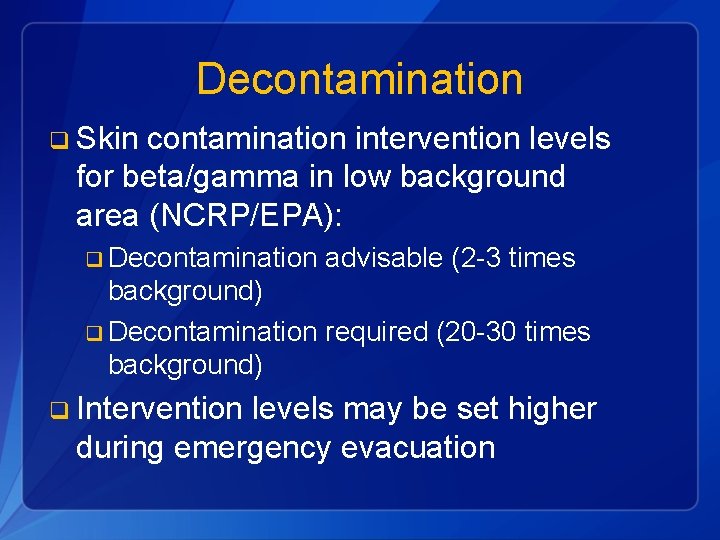
Decontamination q Skin contamination intervention levels for beta/gamma in low background area (NCRP/EPA): q Decontamination advisable (2 -3 times background) q Decontamination required (20 -30 times background) q Intervention levels may be set higher during emergency evacuation
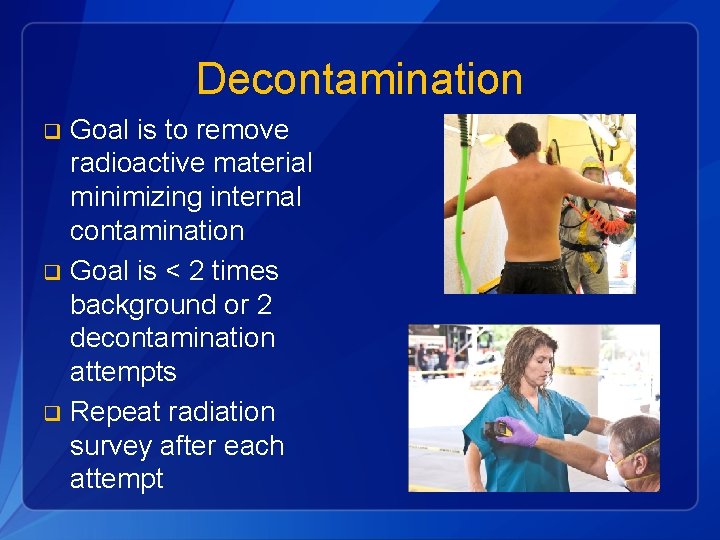
Decontamination Goal is to remove radioactive material minimizing internal contamination q Goal is < 2 times background or 2 decontamination attempts q Repeat radiation survey after each attempt q
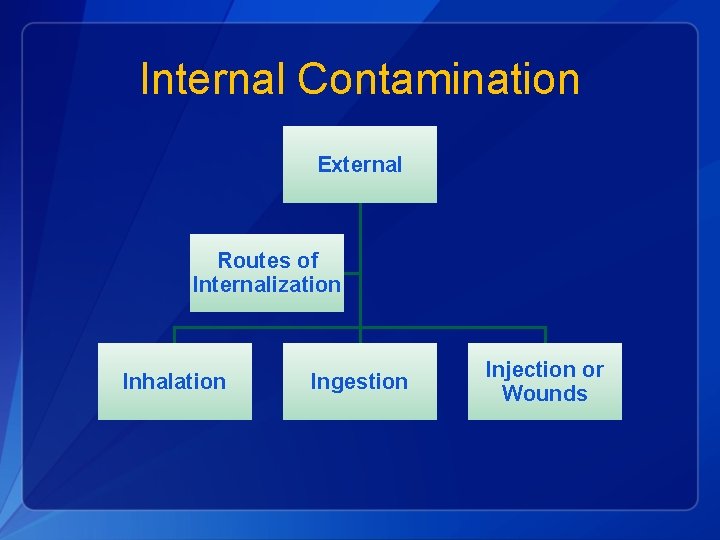
Internal Contamination External Routes of Internalization Inhalation Ingestion Injection or Wounds
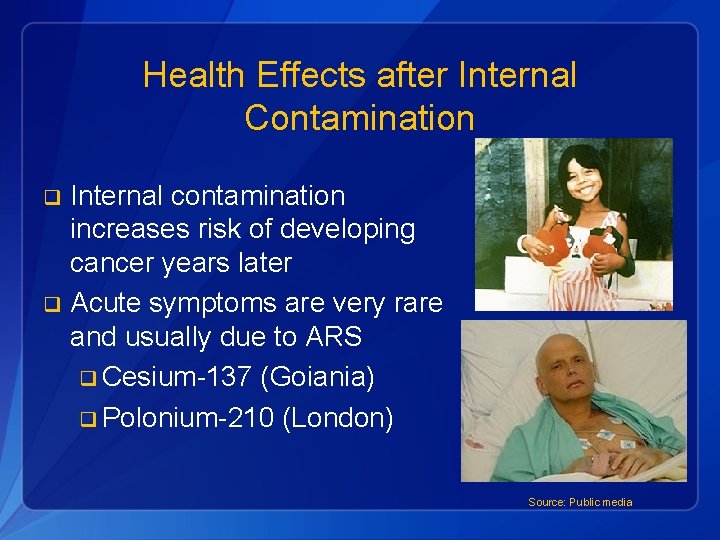
Health Effects after Internal Contamination Internal contamination increases risk of developing cancer years later q Acute symptoms are very rare and usually due to ARS q Cesium-137 (Goiania) q Polonium-210 (London) q Source: Public media
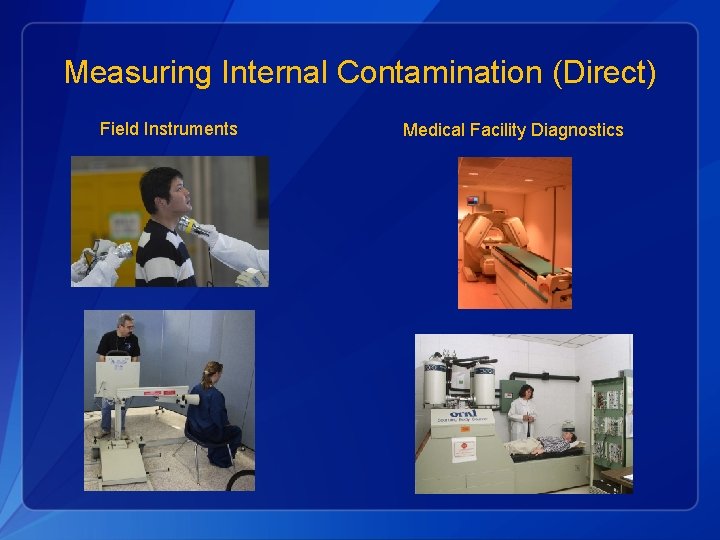
Measuring Internal Contamination (Direct) Field Instruments Medical Facility Diagnostics
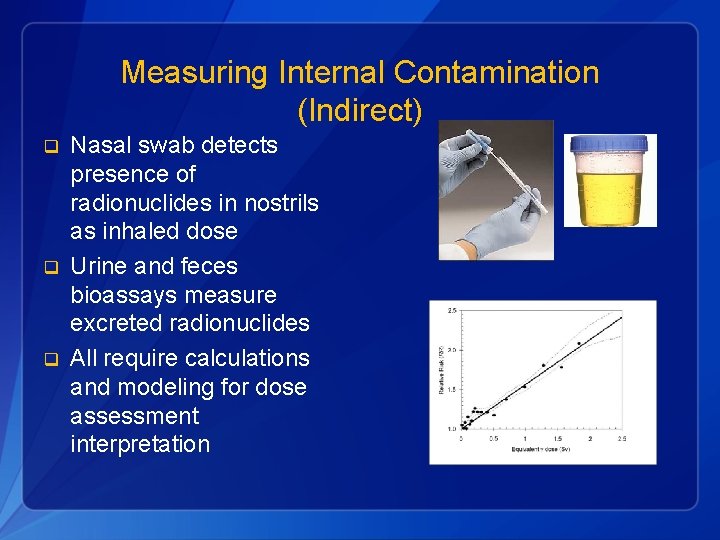
Measuring Internal Contamination (Indirect) q q q Nasal swab detects presence of radionuclides in nostrils as inhaled dose Urine and feces bioassays measure excreted radionuclides All require calculations and modeling for dose assessment interpretation
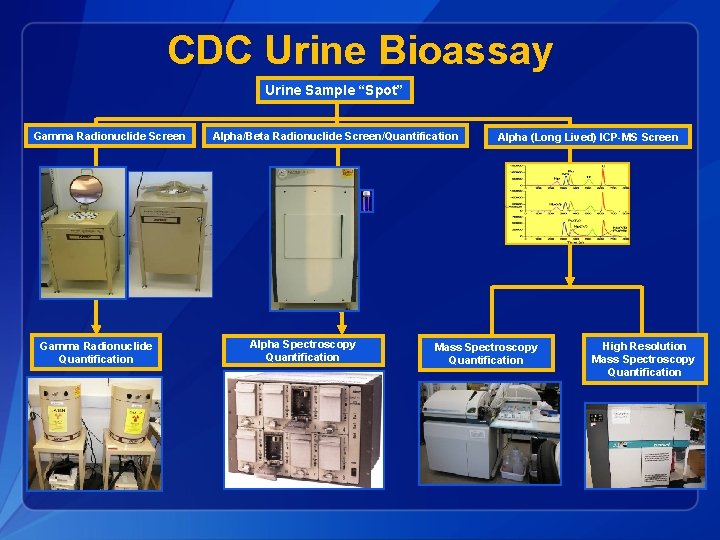
CDC Urine Bioassay Urine Sample “Spot” Gamma Radionuclide Screen Gamma Radionuclide Quantification Alpha/Beta Radionuclide Screen/Quantification Alpha Spectroscopy Quantification Alpha (Long Lived) ICP-MS Screen Mass Spectroscopy Quantification High Resolution Mass Spectroscopy Quantification
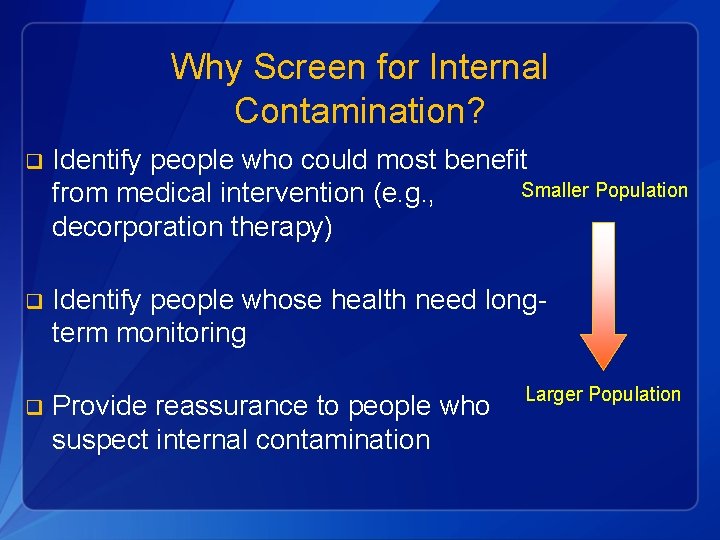
Why Screen for Internal Contamination? q Identify people who could most benefit Smaller Population from medical intervention (e. g. , decorporation therapy) q Identify people whose health need longterm monitoring q Provide reassurance to people who suspect internal contamination Larger Population
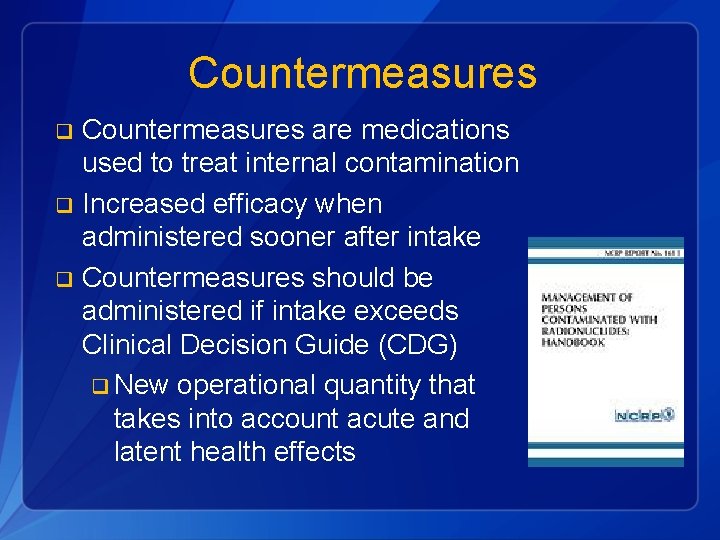
Countermeasures are medications used to treat internal contamination q Increased efficacy when administered sooner after intake q Countermeasures should be administered if intake exceeds Clinical Decision Guide (CDG) q New operational quantity that takes into account acute and latent health effects q
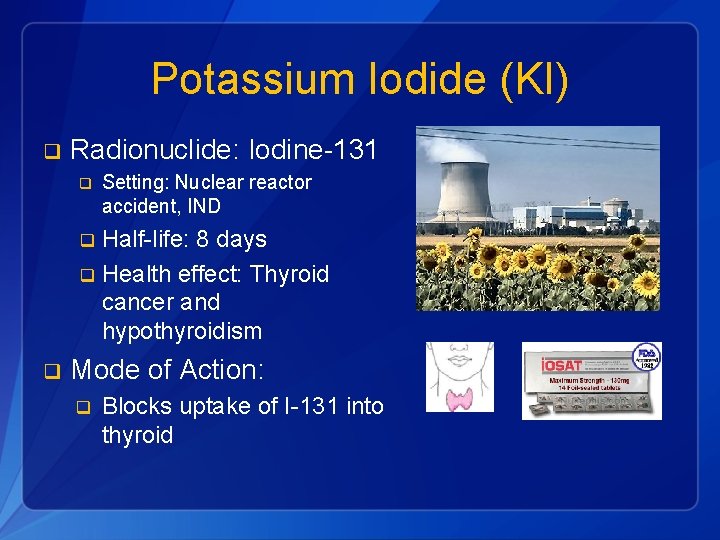
Potassium Iodide (KI) q Radionuclide: Iodine-131 q Setting: Nuclear reactor accident, IND Half-life: 8 days q Health effect: Thyroid cancer and hypothyroidism q q Mode of Action: q Blocks uptake of I-131 into thyroid
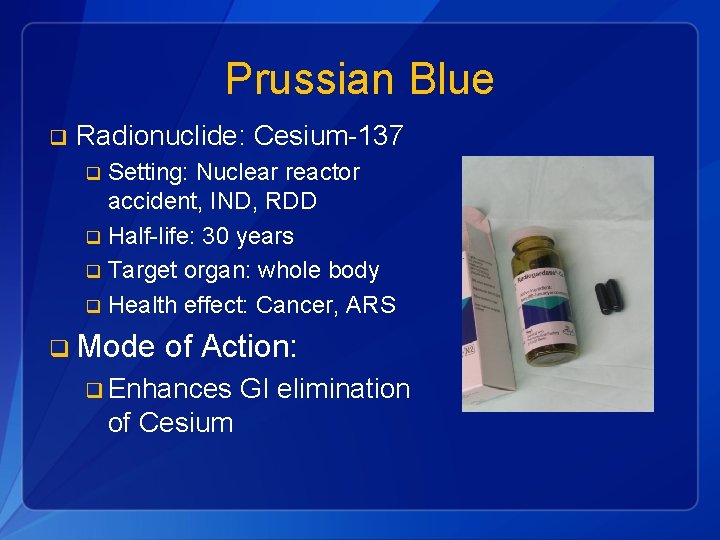
Prussian Blue q Radionuclide: Cesium-137 Setting: Nuclear reactor accident, IND, RDD q Half-life: 30 years q Target organ: whole body q Health effect: Cancer, ARS q q Mode of Action: q Enhances of Cesium GI elimination
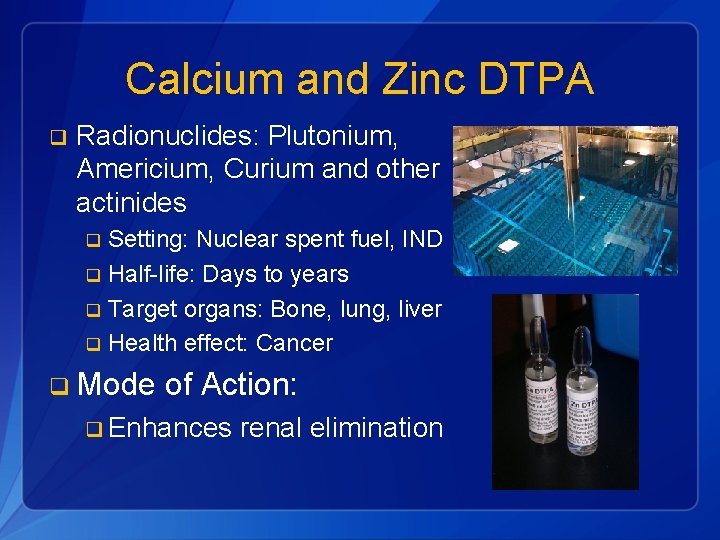
Calcium and Zinc DTPA q Radionuclides: Plutonium, Americium, Curium and other actinides Setting: Nuclear spent fuel, IND q Half-life: Days to years q Target organs: Bone, lung, liver q Health effect: Cancer q q Mode of Action: q Enhances renal elimination
Long-Term Registry q Exposed populations will require longterm follow up q Some important information to collect q Contact info, demographics, medical history q Exposure factors (distance, time, shielding) q Presence/type of contamination q Radionuclide involved and dose estimate q Countermeasures administered
Radiation Emergencies Handbooks q National Council on Radiation Protection and Measurements (NCRP) Report 161: Management of Persons Contaminated with Radionuclides § Guidance on CDG, diagnosis, medical therapy § http: //www. ncrponline. org q TMT Handbook: Triage, Monitoring and Treatment of people exposed to ionizing radiation following a malevolent act § Emergency response planning, field manual § http: //www. tmthandbook. org
Radiation Emergency Resources q CDC Radiation Emergencies Website § http: //www. bt. cdc. gov/radiation/ § Guidance/Recommendations, Resources q Radiation Emergencies Assistance/ Training Center (DOE) § http: //orise. orau. gov/reacts/ § Consultations, training requests q Radiation Emergency Medical Management (DHHS) § http: //www. remm. nlm. gov/index. html § Guidance/Recommendations, Resources
Questions? Contact Information Art Chang: ctn 7@cdc. gov or (770) 488 -1470 For more information please contact Centers for Disease Control and Prevention 1600 Clifton Road NE, Atlanta, GA 30333 Telephone, 1 -800 -CDC-INFO (232 -4636)/TTY: 1 -888 -232 -6348 E-mail: cdcinfo@cdc. gov Web: www. cdc. gov The findings and conclusions in this report are those of the authors and do not necessarily represent the official position of the Centers for Disease Control and Prevention. National Center for Environmental Health Division of Environmental Hazards and Health Effects