
Health Education communication Dr Nuha Bodaboos MD MPH
Health Education & communication Dr. Nuha Bodaboos, MD, MPH
Contents - Introduction - Definition - Objectives - Approaches to achieve health - Principles of health education - Practice of health education - Educational aids - Communication
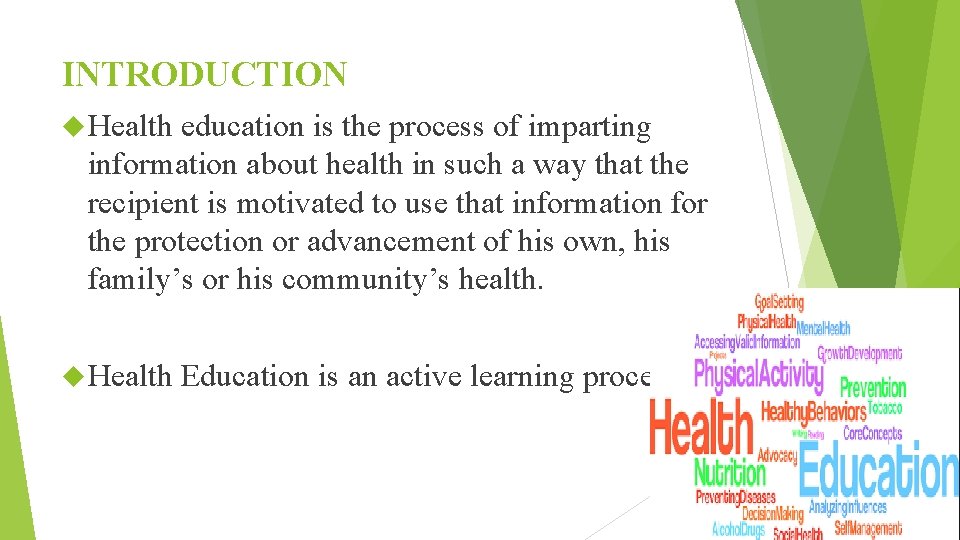
INTRODUCTION Health education is the process of imparting information about health in such a way that the recipient is motivated to use that information for the protection or advancement of his own, his family’s or his community’s health. Health Education is an active learning process.
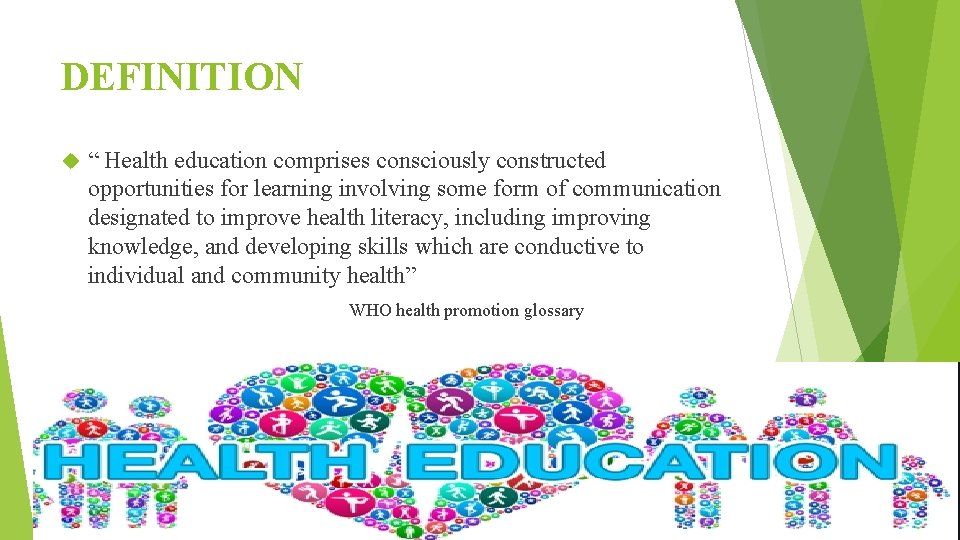
DEFINITION “ Health education comprises consciously constructed opportunities for learning involving some form of communication designated to improve health literacy, including improving knowledge, and developing skills which are conductive to individual and community health” WHO health promotion glossary
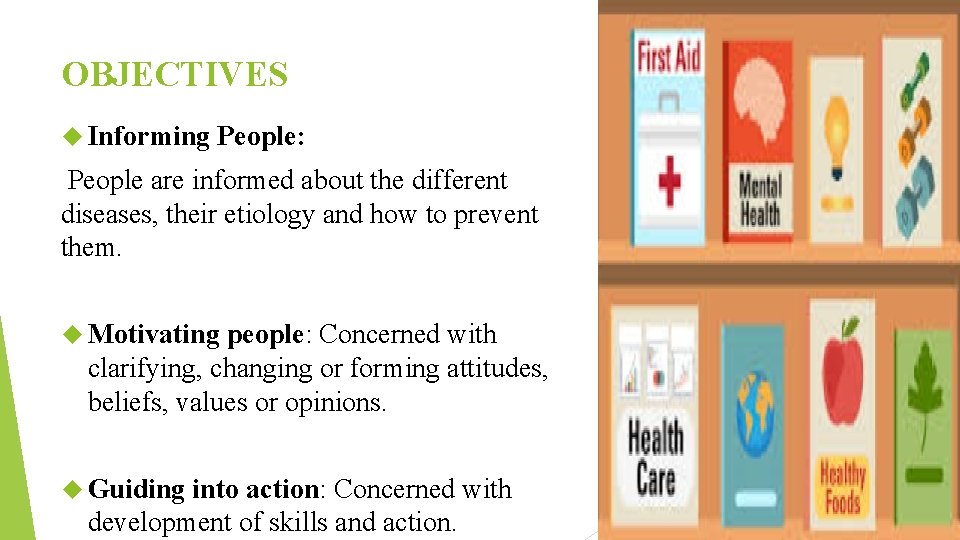
OBJECTIVES Informing People: People are informed about the different diseases, their etiology and how to prevent them. Motivating people: Concerned with clarifying, changing or forming attitudes, beliefs, values or opinions. Guiding into action: Concerned with development of skills and action.
Approaches to achieve health Legal or regulatory approach: Make use of the law to protect health of the public such as Epidemic disease act, environmental act, etc. . Administrative or service approach: Provide all health facilities to all the people with the hope that they will use it. Educational approach: Mostly be motivation, communication and decision making. The result is slow, but permanent. Primary health care approach: It is achieved by providing the guidance to help people identify their health problems and to find solutions to these problems.
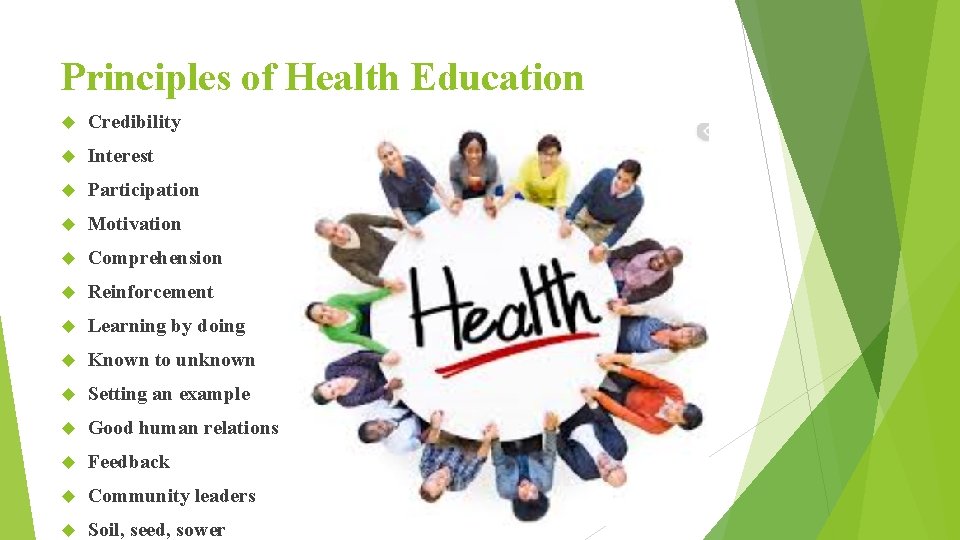
Principles of Health Education Credibility Interest Participation Motivation Comprehension Reinforcement Learning by doing Known to unknown Setting an example Good human relations Feedback Community leaders Soil, seed, sower
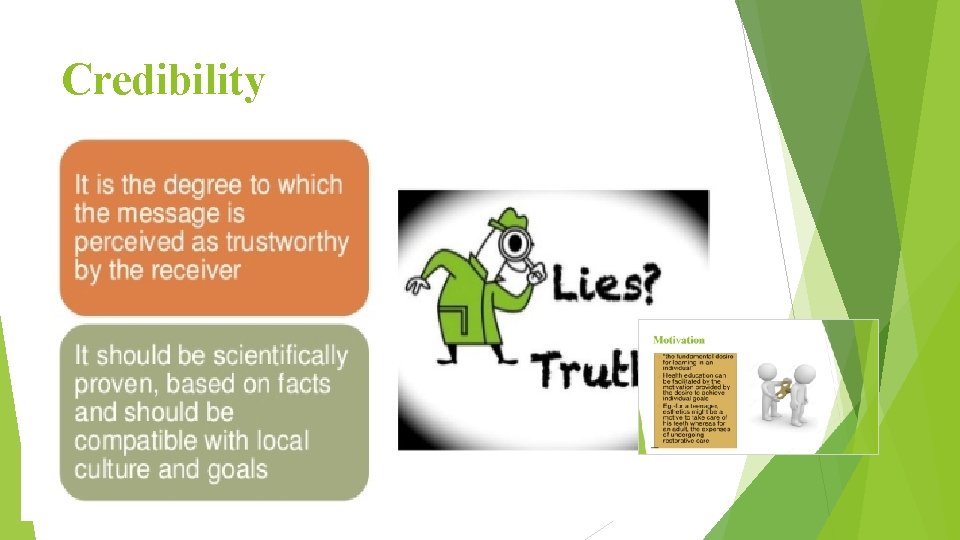
Credibility
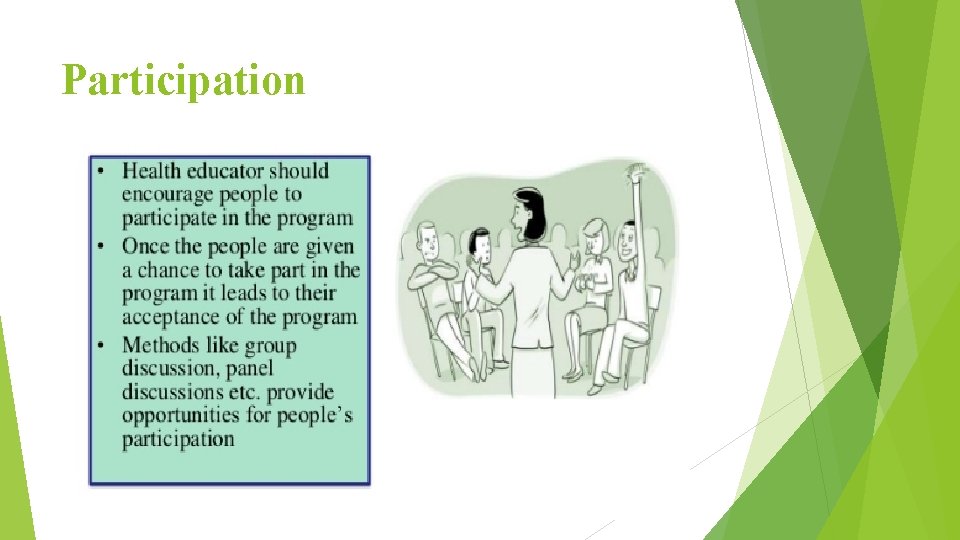
Participation

Interest
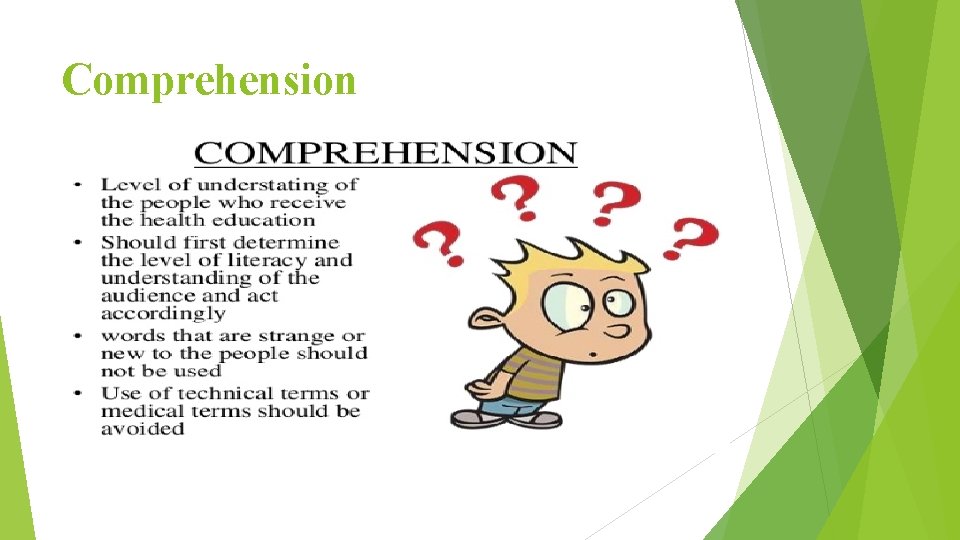
Comprehension

Motivation
Reinforcement
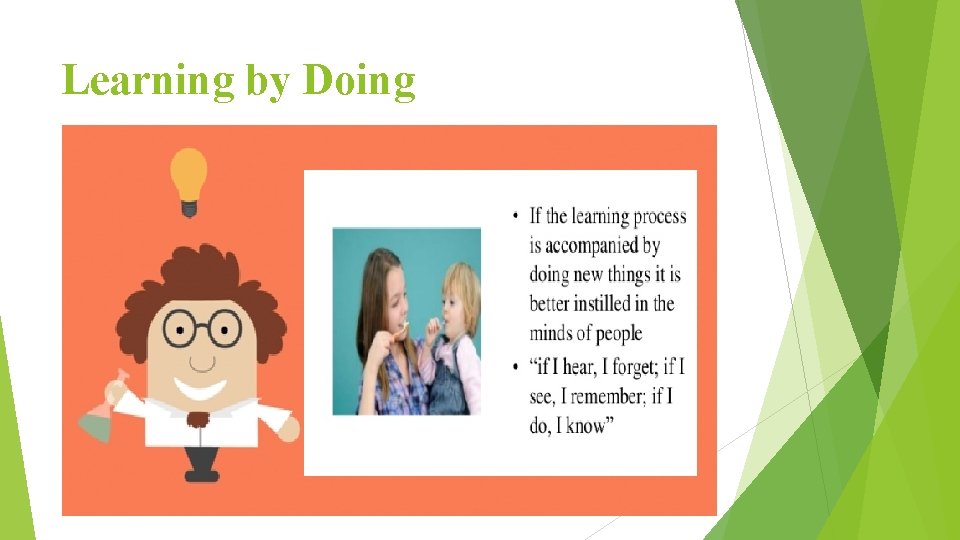
Learning by Doing
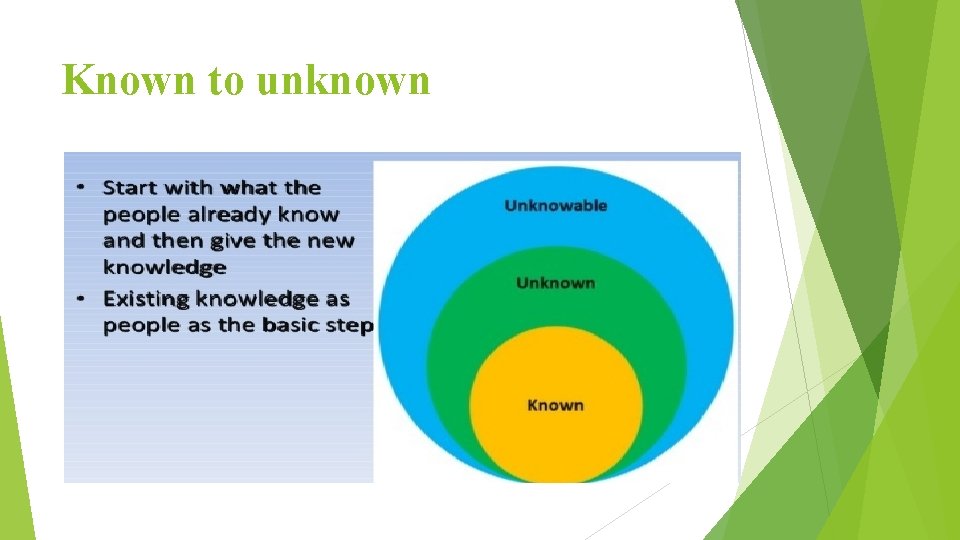
Known to unknown
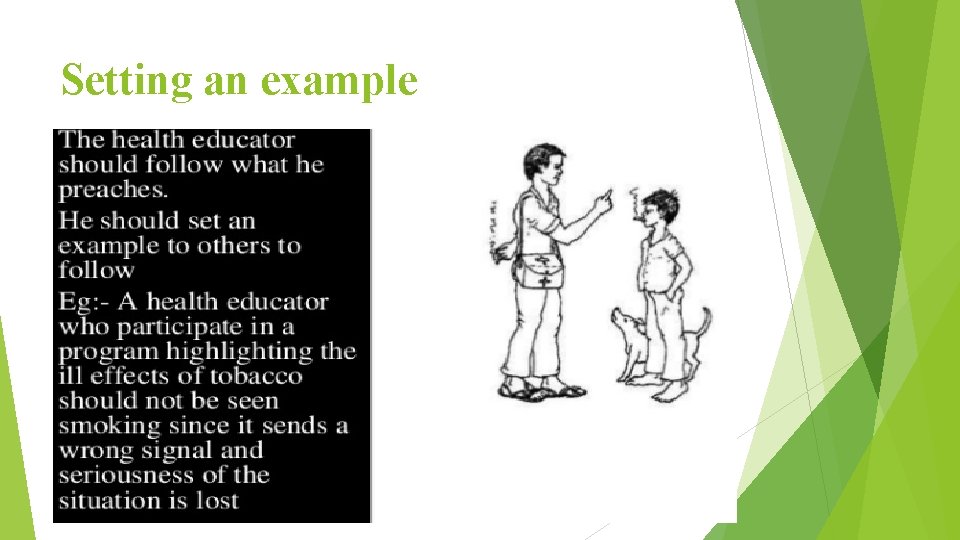
Setting an example

Good Human relations
Feedback
Community Leaders

Soil, Seed, Sower
Practice of Health Education (Methods) A single or combination of methods must be used to bring about the required effect. Methods can be classified as: 1 - Individual approach: Such as personal contact or home visits. 2 - Group approach: Lectures, discussion, conference and workshops 3 - Mass approach: Such as TV, newspaper, posters and internet
Educational Aids 1 - Auditory aids: Microphone, radios, tape records and sound amplifiers. 2 - Visual aids: Projected aids such as films or cinema Non projected aids such as pictures, flash cards and brochures 3 - Combination of Audi-visual aids: Such as televisions
Communication Health Communication is defined as a key strategy to inform the public about health concern and to maintain important health issues on the public agenda. Components of communication: 1 - Sender: The originator of the message 2 - Receiver: The audience 3 - Message: The information 4 - Channels of communication: The media used for communication 5 - Feedback: Opinion, Questionnaire survey
Doctor- Patient Relationship: 1 - Communication on an emotional plane: The doctor 2 - Communication on a cultural plane: The doctor must give a sympathetic ear to what the patient and his/her relative want to say. understand the cultural concepts of the community. 3 - Communication on an intellectual plane: The doctors usually come from well-to-do or rich families, there is a wide social gap between the doctors and their patients called “intellectual gap”. A successful doctor can win the confidence of the patient by reducing this gap and talk freely with the patient. Humor is the best ice-breaker for the patient frozen by fear and anxiety.
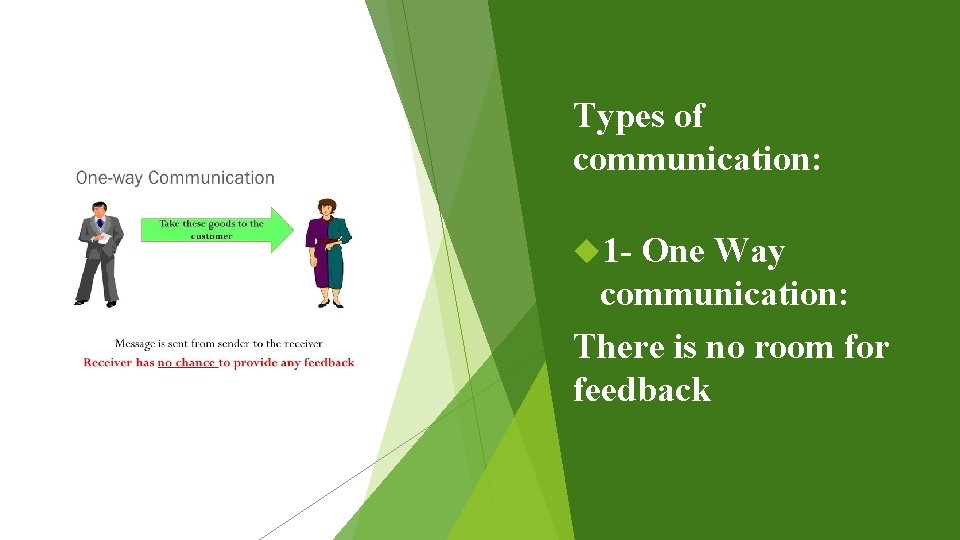
Types of communication: 1 - One Way communication: There is no room for feedback
2 - Two Way communication: The Audience may give feed back

3 - Verbal communication This is “ word of mouth”
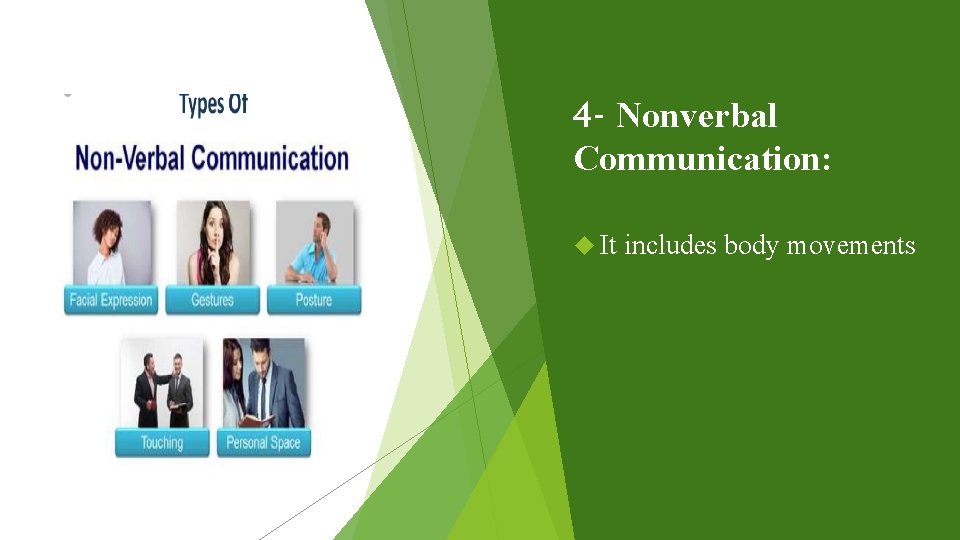
4 - Nonverbal Communication: It includes body movements
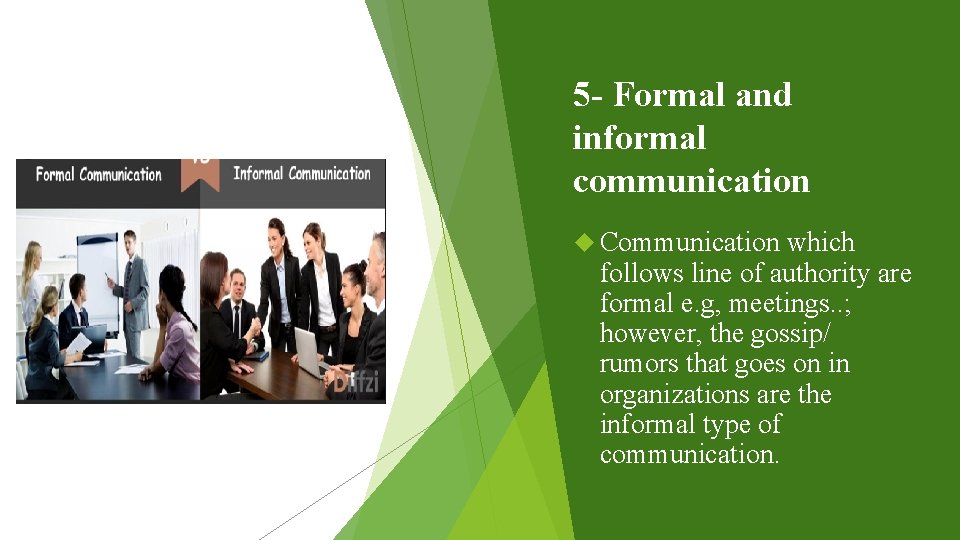
5 - Formal and informal communication Communication which follows line of authority are formal e. g, meetings. . ; however, the gossip/ rumors that goes on in organizations are the informal type of communication.

6 - Visual communication: Charts and posters
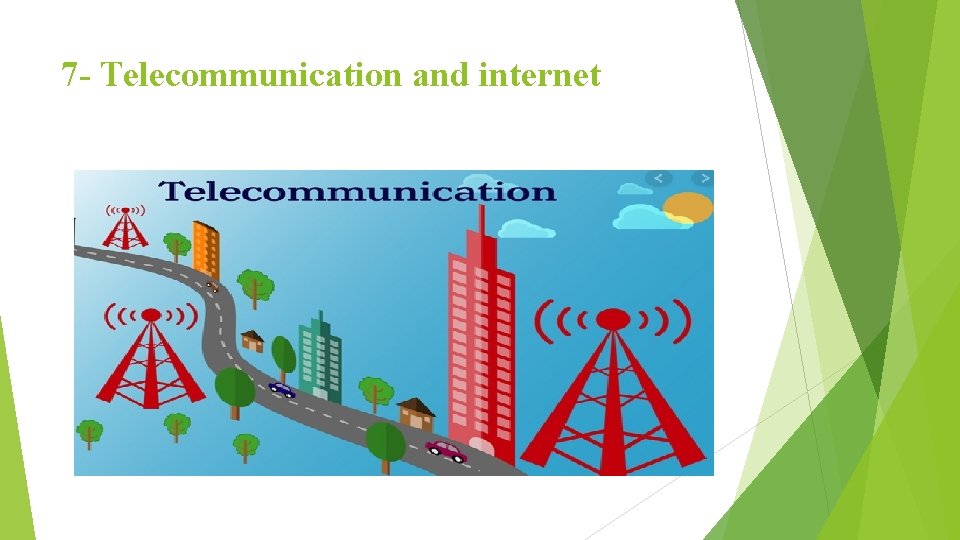
7 - Telecommunication and internet

Reference 1 - Essential of public health denistary. Soben Peter 2 - Health Education, World health organization, WWW. WHO. Org online accessed on 11/24/2019

- Slides: 33