
Health Education and Disease Prevention Objectives Participants will
Health Education and Disease Prevention
Objectives: Participants will: • Understand tooth decay and its causes. • Understand the importance of flossing and brushing as they relate to good oral hygiene. • Understand the importance of eating a variety of healthy foods from each group in the Food Guide Pyramid. • Understand appropriate serving sizes.
Health Protection and Promotion Act – 1999: Responsible for overseeing the organization and delivery of public health programs and services to prevent the spread of disease.
Types of Disease prevention • Primary • Secondary • Tertiary Information for this section taken from the following source: The Centers for Disease Control and Prevention, National Center for Infectious Diseases. http: //www. CDC. gov/ncidod/op/handwashing. htm
Primary prevention: Activities that take place before a disease or injury is present to prevent it from occurring. For example: • • Vaccination for chicken pox Education on the dangers of smoking Wearing sunscreen to prevent skin cancer Wearing a seatbelt to prevent injury
Secondary prevention: Activities that take place once the disease has already occurred to help treat, reverse, or stop the illness. For example: • Testing for certain diseases like scoliosis. • Treating diseases with medicine, like diabetes and high cholesterol.
Tertiary prevention: Rehabilitation activities that will help the patient lead a normal life once the disease has already caused illness or injury. For example: • Physical therapy after an accident • Oxygen for those with breathing problems • Asthma treatments
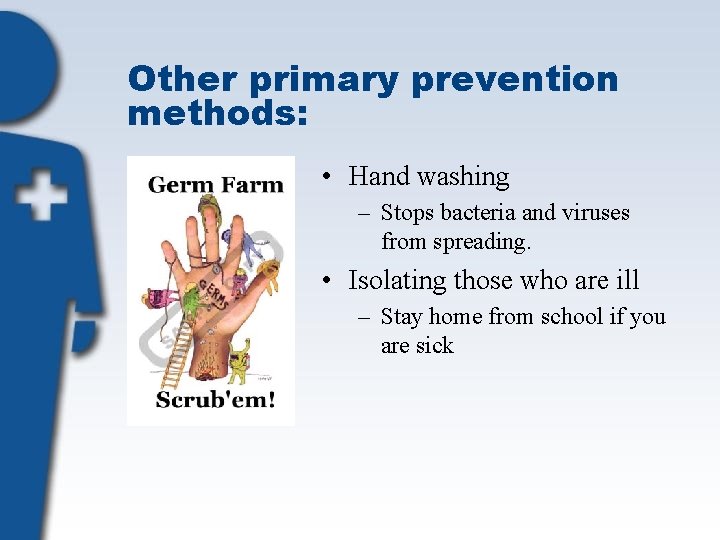
Other primary prevention methods: • Hand washing – Stops bacteria and viruses from spreading. • Isolating those who are ill – Stay home from school if you are sick
What factors affect health? • Genetics—certain diseases might run in your family • Behavior such as smoking or using drugs • Physical environment such as air or water pollution • Access to health care; for example, lack of transportation to the doctor • Income; for example, lack of health insurance • Education; for example, being unaware of the risks of certain behavior
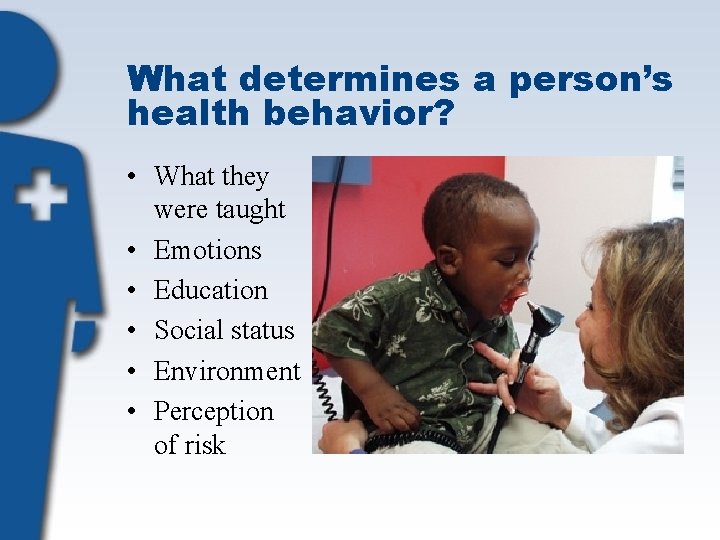
What determines a person’s health behavior? • What they were taught • Emotions • Education • Social status • Environment • Perception of risk
Chronic diseases: A disease lasting three months or more, that cannot be prevented or cured by medicine. • • • Very common Most are preventable Usually leads to a long course of illness Usually develops slowly Usually progresses over time – – Heart disease Diabetes Cancer Asthma
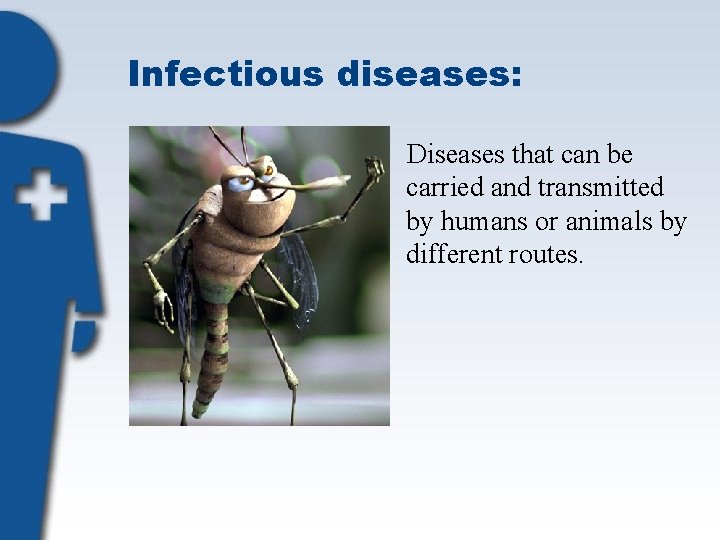
Infectious diseases: Diseases that can be carried and transmitted by humans or animals by different routes.
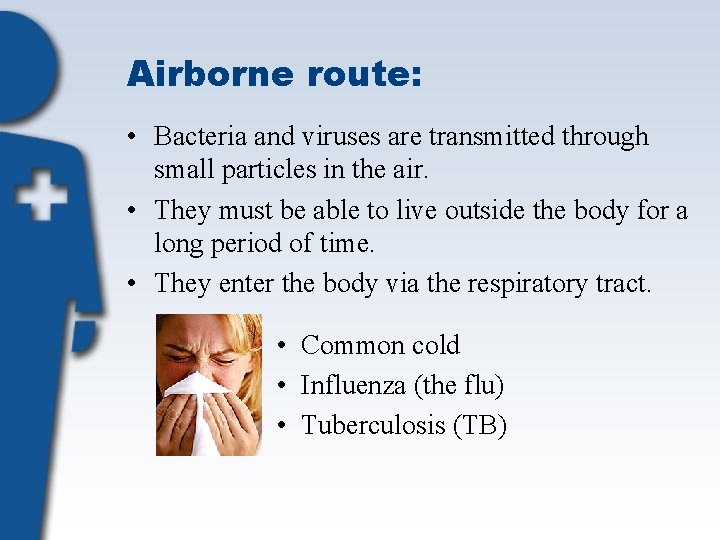
Airborne route: • Bacteria and viruses are transmitted through small particles in the air. • They must be able to live outside the body for a long period of time. • They enter the body via the respiratory tract. • Common cold • Influenza (the flu) • Tuberculosis (TB)
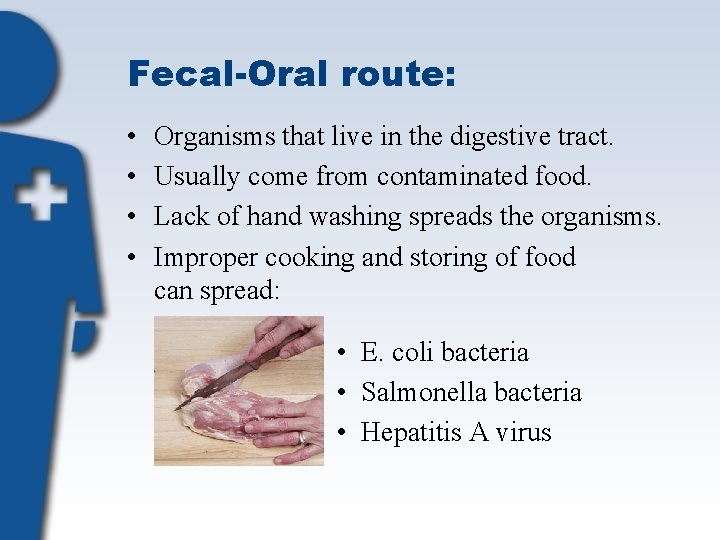
Fecal-Oral route: • • Organisms that live in the digestive tract. Usually come from contaminated food. Lack of hand washing spreads the organisms. Improper cooking and storing of food can spread: • E. coli bacteria • Salmonella bacteria • Hepatitis A virus

Direct contact: • • • Person-to-person Touching Kissing Sexual contact Body lesions (sores or open areas)
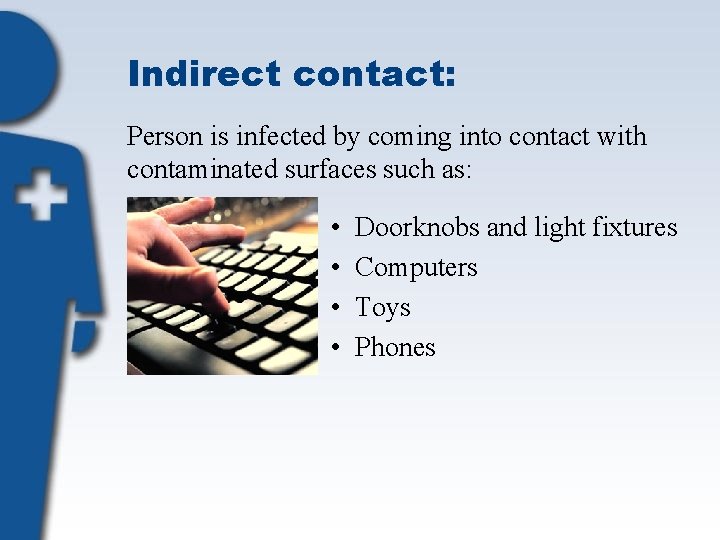
Indirect contact: Person is infected by coming into contact with contaminated surfaces such as: • • Doorknobs and light fixtures Computers Toys Phones
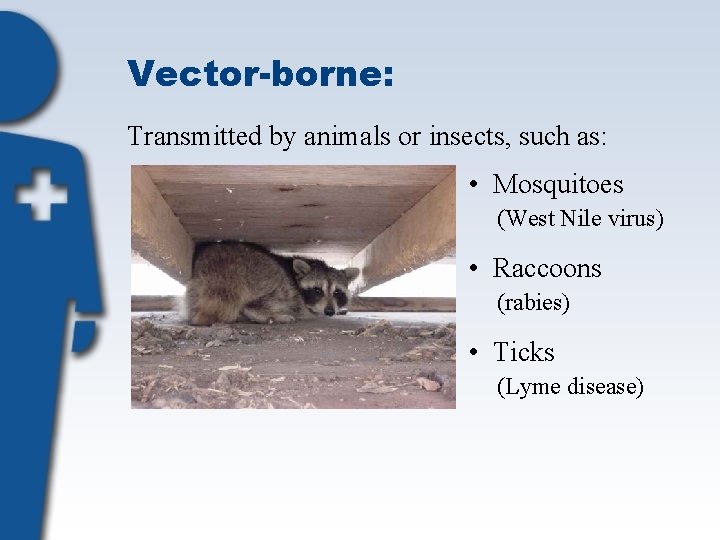
Vector-borne: Transmitted by animals or insects, such as: • Mosquitoes (West Nile virus) • Raccoons (rabies) • Ticks (Lyme disease)
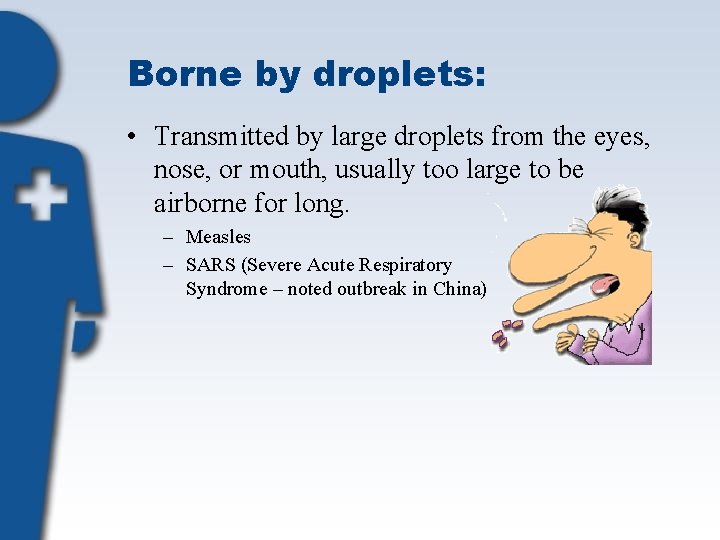
Borne by droplets: • Transmitted by large droplets from the eyes, nose, or mouth, usually too large to be airborne for long. – Measles – SARS (Severe Acute Respiratory Syndrome – noted outbreak in China)
Summary: • Health can be affected by: genetics, behavior, physical environment, access to healthcare, income, and education. • There are three types of disease prevention: primary, secondary, and tertiary disease prevention. • Disease can be spread by different types of transmission, such as airborne, vectors, direct contact, and droplets.
Oral Health
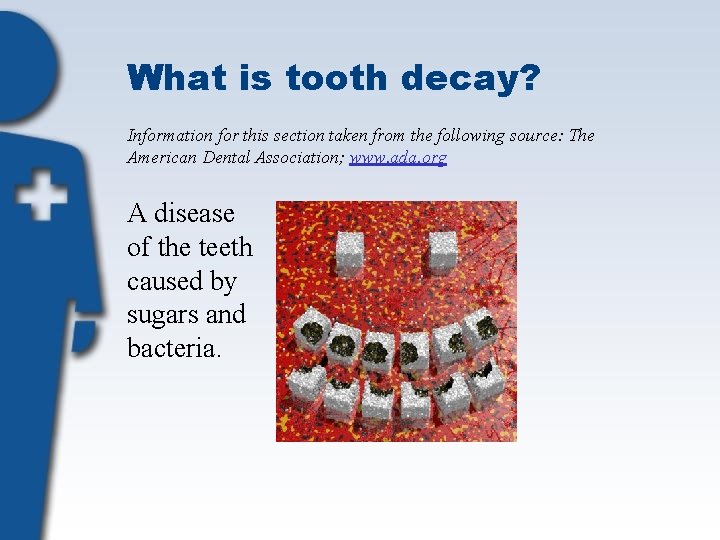
What is tooth decay? Information for this section taken from the following source: The American Dental Association; www. ada. org A disease of the teeth caused by sugars and bacteria.
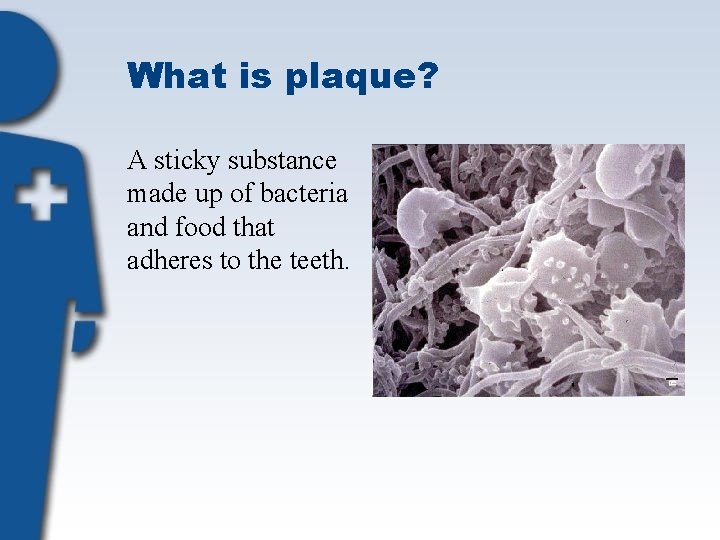
What is plaque? A sticky substance made up of bacteria and food that adheres to the teeth.

When the bacteria come into contact with foods that are high in sugars, the plaque produces acids that stick to the teeth.
Can plaque be removed? Yes, with good oral hygiene that includes: • Brushing teeth at least twice a day to remove plaque on the surface of the teeth. • Daily flossing to remove plaque between the teeth. • Rinsing with mouthwash if you cannot use a toothbrush.
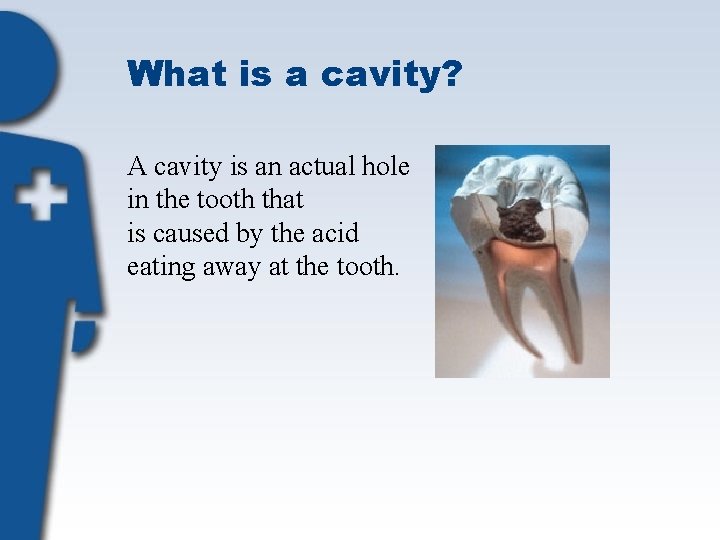
What is a cavity? A cavity is an actual hole in the tooth that is caused by the acid eating away at the tooth.
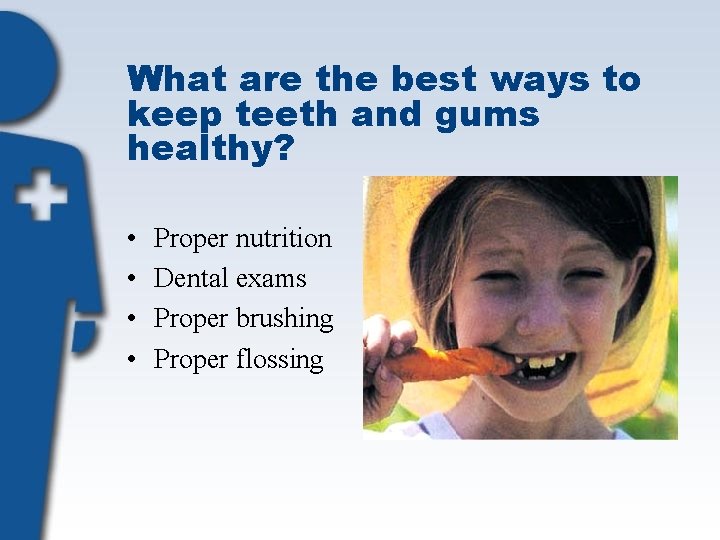
What are the best ways to keep teeth and gums healthy? • • Proper nutrition Dental exams Proper brushing Proper flossing
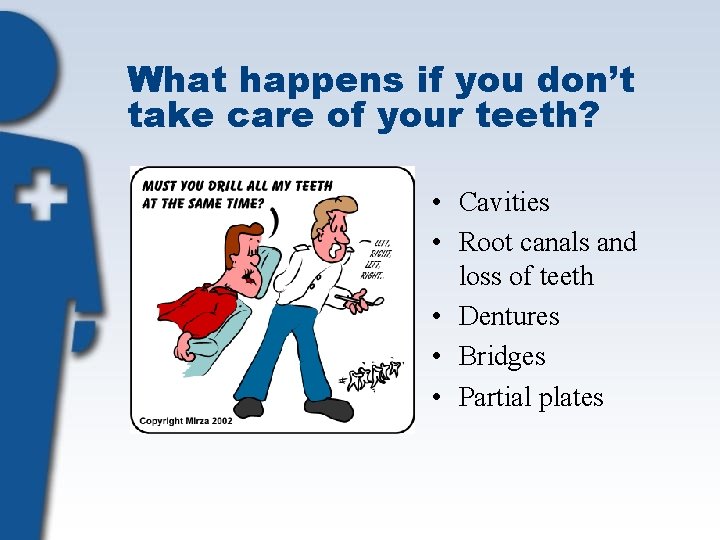
What happens if you don’t take care of your teeth? • Cavities • Root canals and loss of teeth • Dentures • Bridges • Partial plates
Halitosis • Bad breath is usually related to bacteria that live in the mouth. • Bacteria consume foods and excrete wastes. • Some of those wastes are sulfur compounds; when they are given off, it causes bad breath.
Even worse… Oral infections can become systemic (spread) to other parts of the body including the heart or bloodstream.
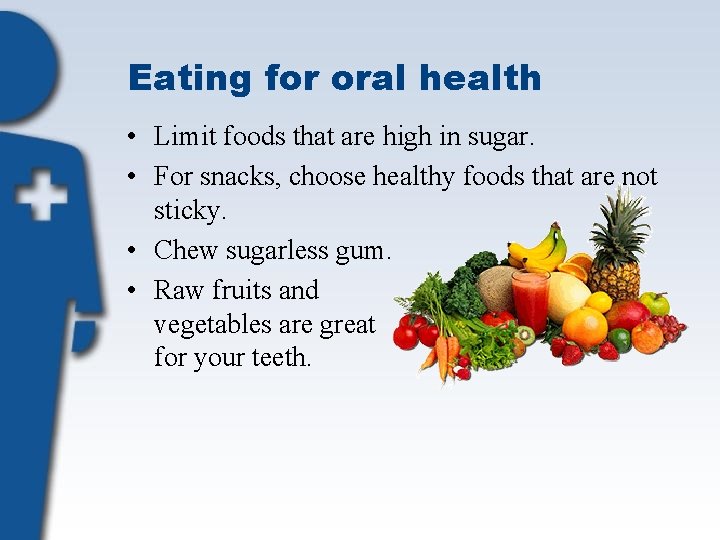
Eating for oral health • Limit foods that are high in sugar. • For snacks, choose healthy foods that are not sticky. • Chew sugarless gum. • Raw fruits and vegetables are great for your teeth.
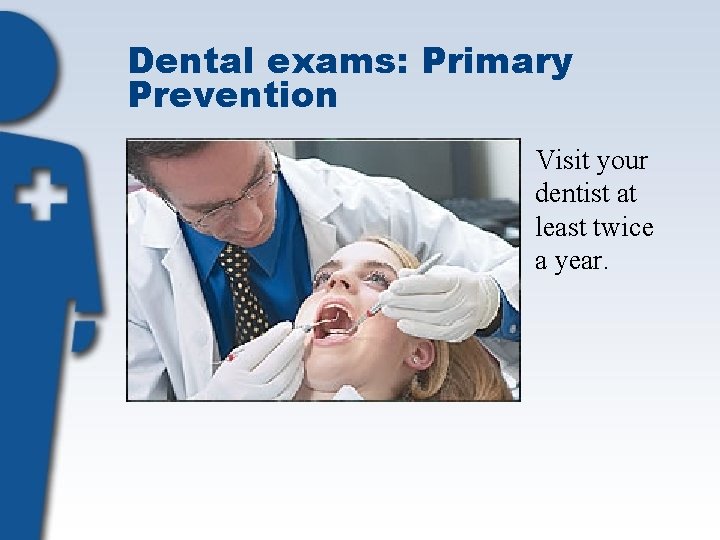
Dental exams: Primary Prevention Visit your dentist at least twice a year.
Proper brushing and flossing: • Brush teeth at least twice a day to remove the food particles and bacteria that can turn to plaque and cause decay. • Floss teeth at least once a day to remove food particles that get stuck below the gum line and can cause gum disease.
Summary: • Bad breath is caused by bacteria. • Dental disease can be prevented. • Tooth plaque is also caused by bacteria.
Nutrition The information in this section has been adapted from the USDA Center for Nutrition Policy and Promotion. Http: //www. usda. gov/fcs/cnpp. htm
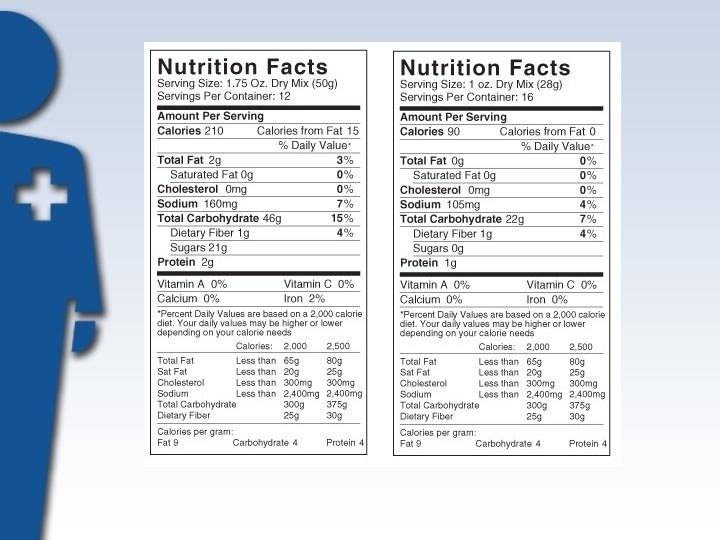
Why is good nutrition so important? • Lowers risk of many chronic diseases such as heart disease and diabetes. • Helps to maintain a healthy weight. • Provides people with more energy.
What is a “healthy diet”? Information for this section taken from the following Web site: www. mypyramid. gov The United States Department of Agriculture (USDA) Dietary Guidelines describe a healthy diet as one that: • Emphasizes fruits, vegetables, whole grains, and fat-free or low-fat milk and milk products; • Includes lean meats, poultry, fish, beans, eggs, and nuts; and • Is low in saturated fats, trans fats, cholesterol, salt (sodium), and added sugars.
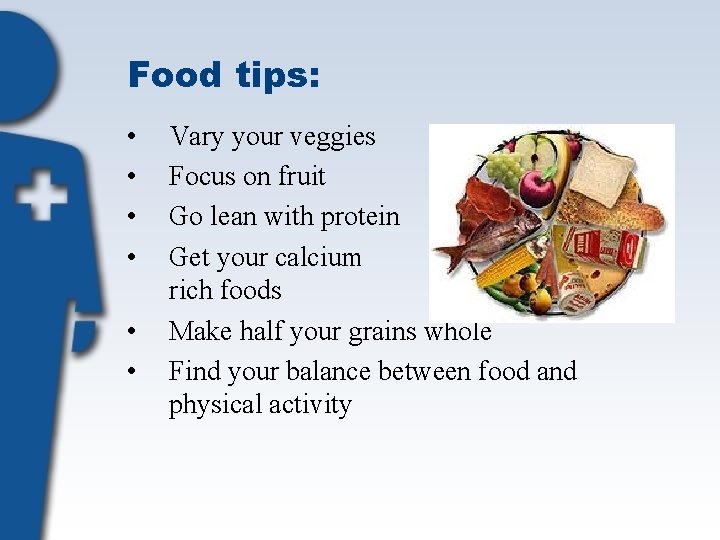
Food tips: • • • Vary your veggies Focus on fruit Go lean with protein Get your calcium rich foods Make half your grains whole Find your balance between food and physical activity
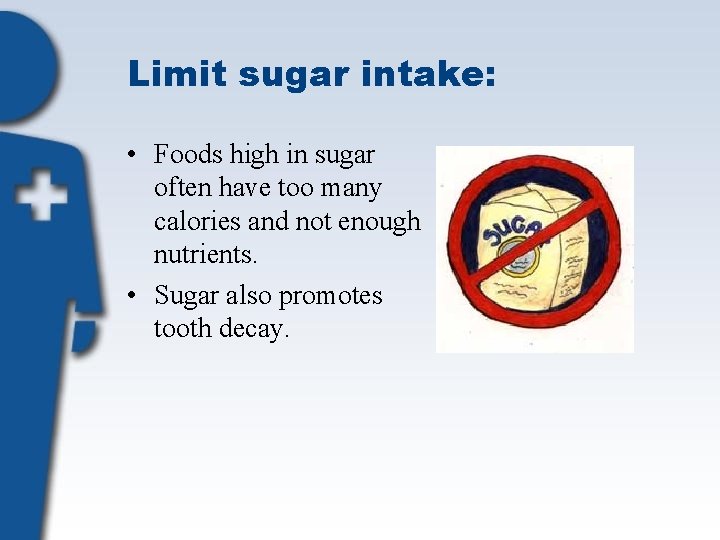
Limit sugar intake: • Foods high in sugar often have too many calories and not enough nutrients. • Sugar also promotes tooth decay.
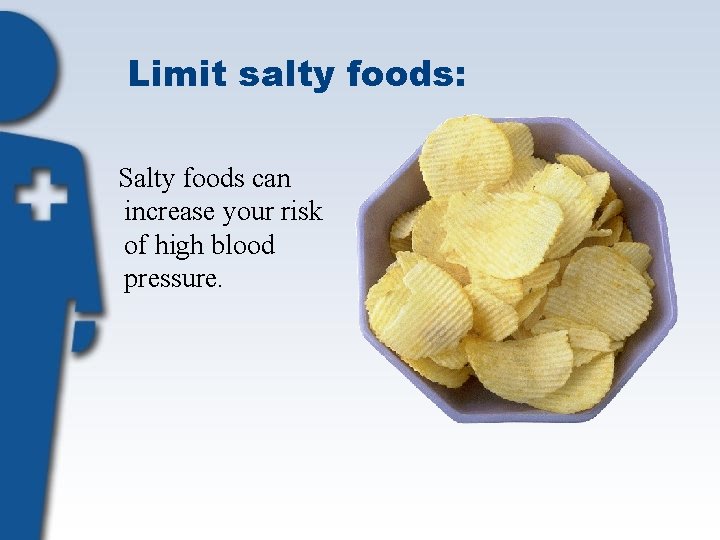
Limit salty foods: Salty foods can increase your risk of high blood pressure.
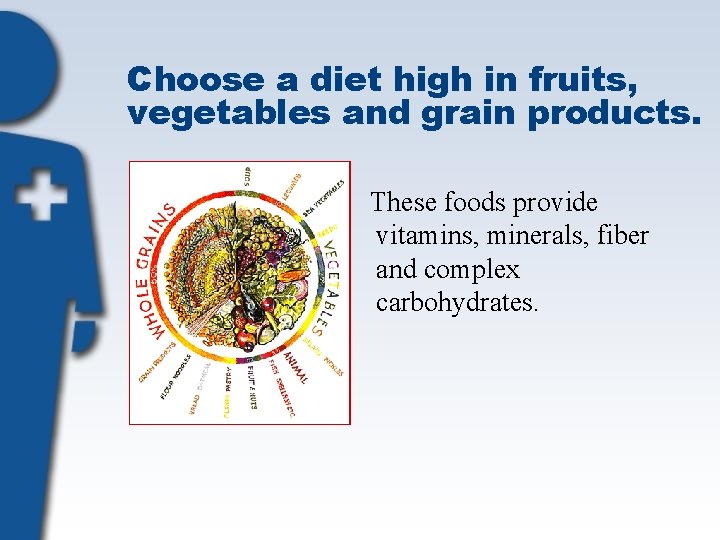
Choose a diet high in fruits, vegetables and grain products. These foods provide vitamins, minerals, fiber and complex carbohydrates.
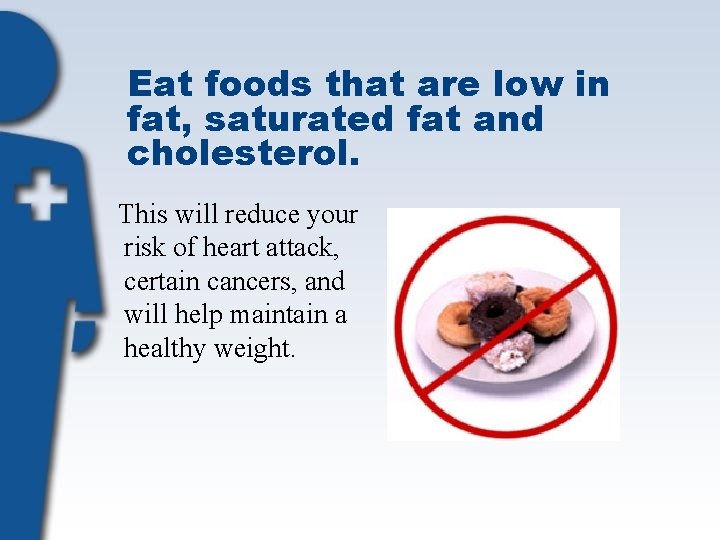
Eat foods that are low in fat, saturated fat and cholesterol. This will reduce your risk of heart attack, certain cancers, and will help maintain a healthy weight.
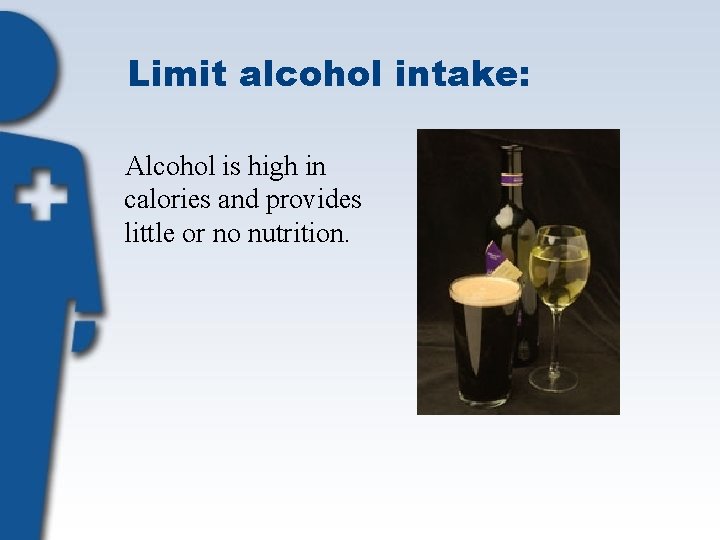
Limit alcohol intake: Alcohol is high in calories and provides little or no nutrition.
Summary: • Try to stay away from high fat, high sugar, high salt foods and alcohol. • A healthy diet includes fruits, vegetables, and grains. • A healthy diet is very important because it lowers your risk of many chronic diseases. It helps to maintain a healthy weight and provides more energy. • Exercise is important, too.
- Slides: 44