
HEALTH DISEASE The Immune System OBJECTIVES 1 To
HEALTH & DISEASE The Immune System
OBJECTIVES 1. To recognise the different parts of the immune system. 2. To identify the characteristics for different parts of the immune system. 3. To compare different types of immunity.
STARTER TASK: BROKEN DOWN TELEPHONE: 2 MIN! In your rows, each of you are going to get given an action. However the action is for the person at the end of the row. The last person needs to act out the action, no matter what they have heard. Please maintain health and safety standards, if you are unsure, ask your lecturer!
WHAT IS THE IMMUNE SYSTEM? Watch the following video and use the information given to answer the questions on your worksheet https: //www. youtube. com/watch? v=RYc. Il. If PZII
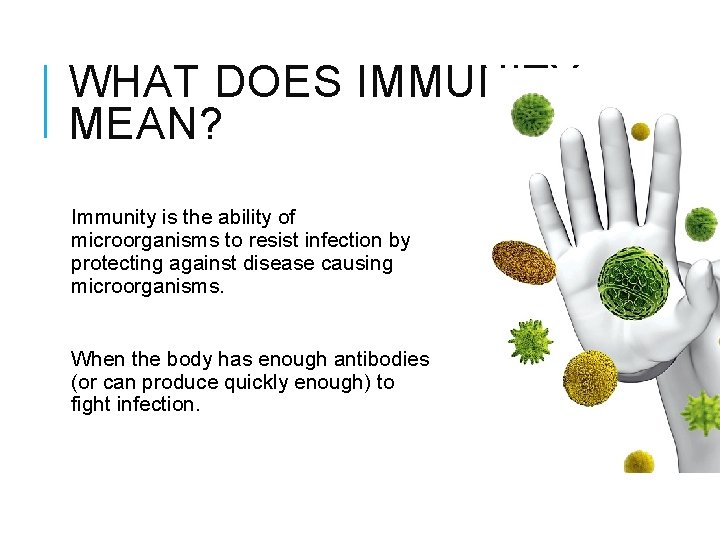
WHAT DOES IMMUNITY MEAN? Immunity is the ability of microorganisms to resist infection by protecting against disease causing microorganisms. When the body has enough antibodies (or can produce quickly enough) to fight infection.
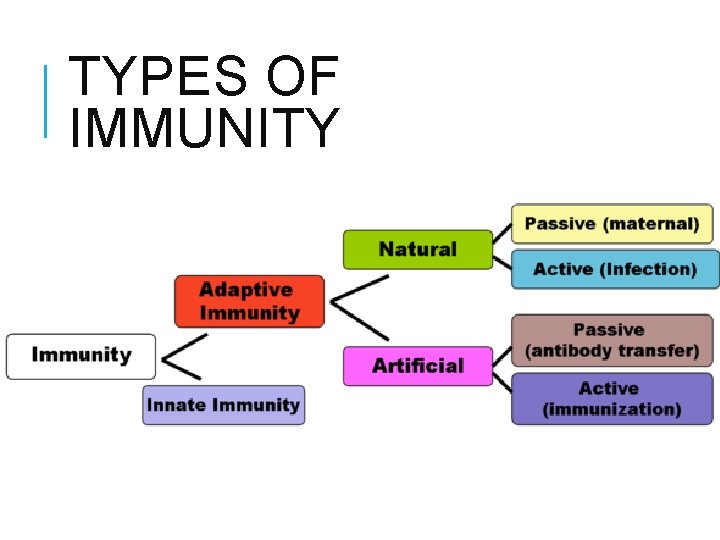
TYPES OF IMMUNITY
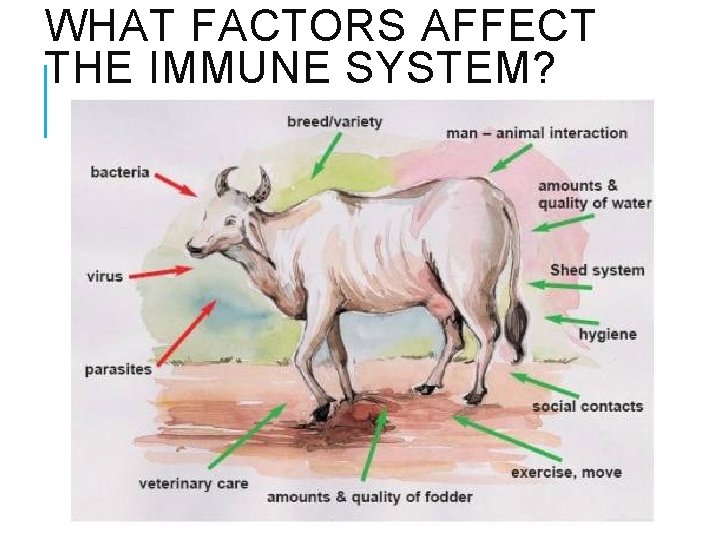
WHAT FACTORS AFFECT THE IMMUNE SYSTEM?
WE ARE GOING TO BE FOCUSING ON: 1. Innate 2. Adaptive 3. Passive
Innate immunity • 1 st line of defense • provides initial defense against infection • relatively nonspecific • Not enhanced by immunization • Necessary for the establishment and enhancement of adaptive immunity • Natural barriers to infection i. e. physical epithelium, chemical and
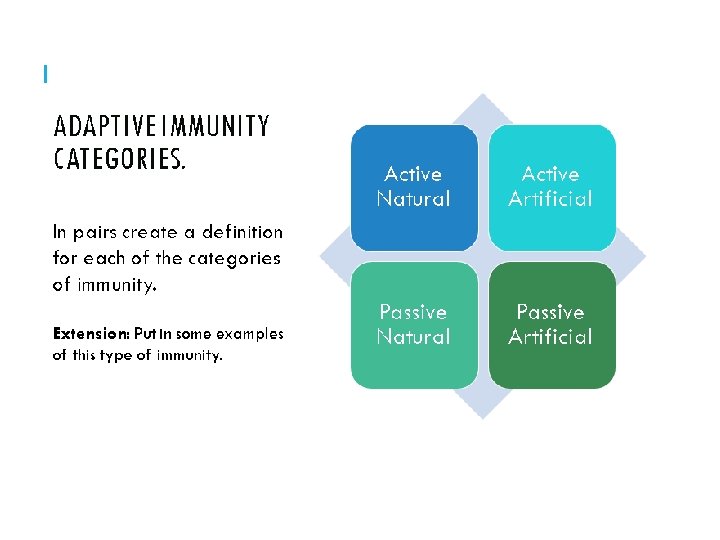
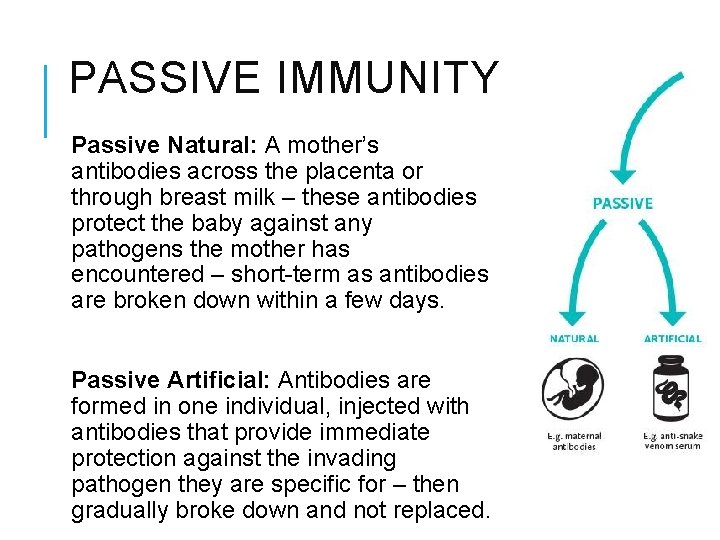
PASSIVE IMMUNITY Passive Natural: A mother’s antibodies across the placenta or through breast milk – these antibodies protect the baby against any pathogens the mother has encountered – short-term as antibodies are broken down within a few days. Passive Artificial: Antibodies are formed in one individual, injected with antibodies that provide immediate protection against the invading pathogen they are specific for – then gradually broke down and not replaced.
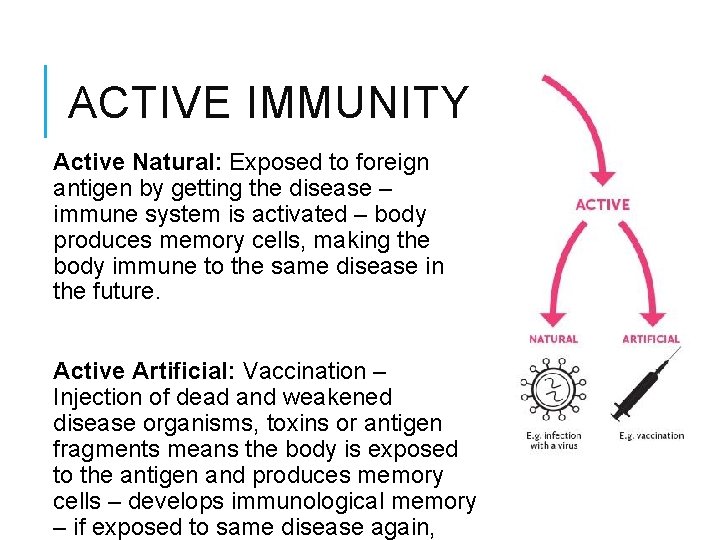
ACTIVE IMMUNITY Active Natural: Exposed to foreign antigen by getting the disease – immune system is activated – body produces memory cells, making the body immune to the same disease in the future. Active Artificial: Vaccination – Injection of dead and weakened disease organisms, toxins or antigen fragments means the body is exposed to the antigen and produces memory cells – develops immunological memory – if exposed to same disease again,
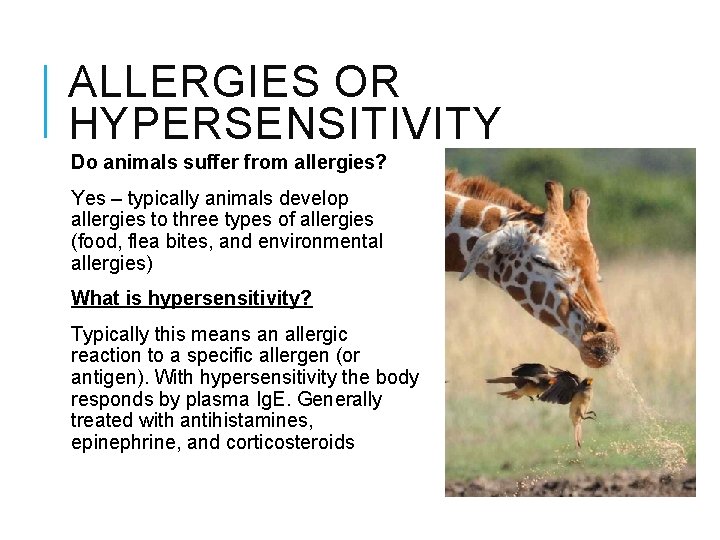
ALLERGIES OR HYPERSENSITIVITY Do animals suffer from allergies? Yes – typically animals develop allergies to three types of allergies (food, flea bites, and environmental allergies) What is hypersensitivity? Typically this means an allergic reaction to a specific allergen (or antigen). With hypersensitivity the body responds by plasma Ig. E. Generally treated with antihistamines, epinephrine, and corticosteroids
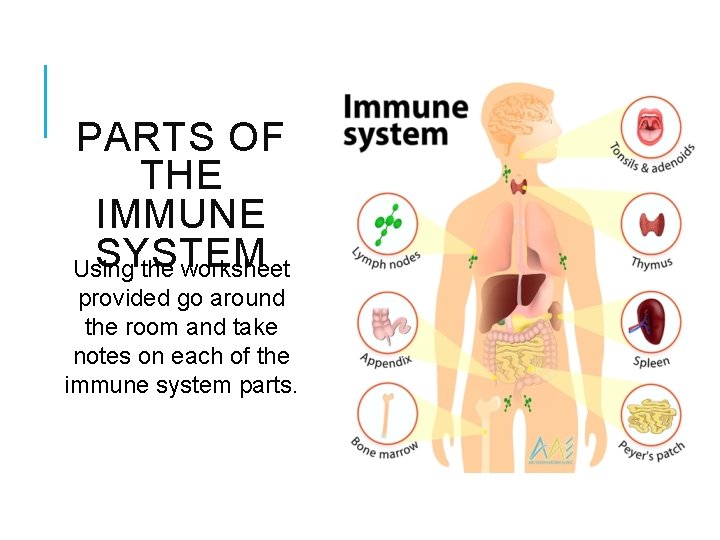
PARTS OF THE IMMUNE SYSTEM Using the worksheet provided go around the room and take notes on each of the immune system parts.
Immune System Part Description
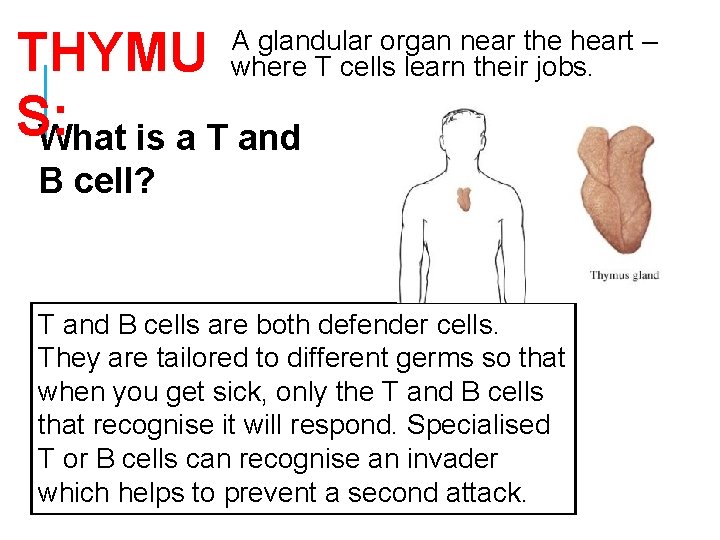
THYMU S: What is a T and A glandular organ near the heart – where T cells learn their jobs. B cell? T and B cells are both defender cells. They are tailored to different germs so that when you get sick, only the T and B cells that recognise it will respond. Specialised T or B cells can recognise an invader which helps to prevent a second attack.
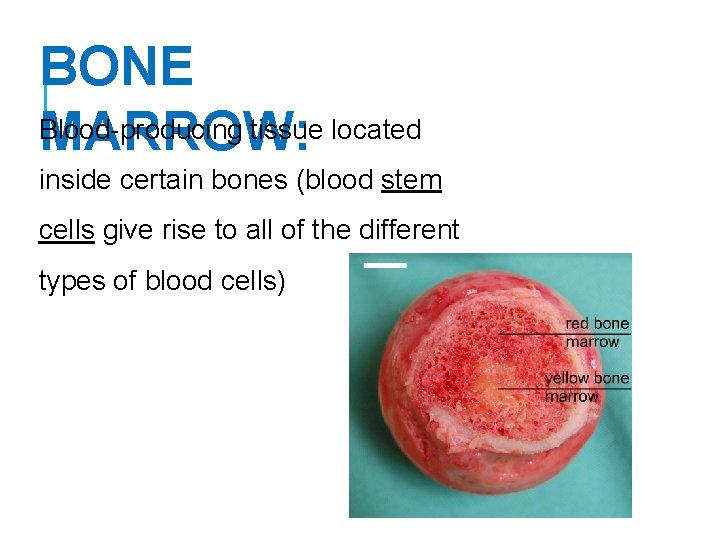
BONE Blood-producing tissue located MARROW: inside certain bones (blood stem cells give rise to all of the different types of blood cells)
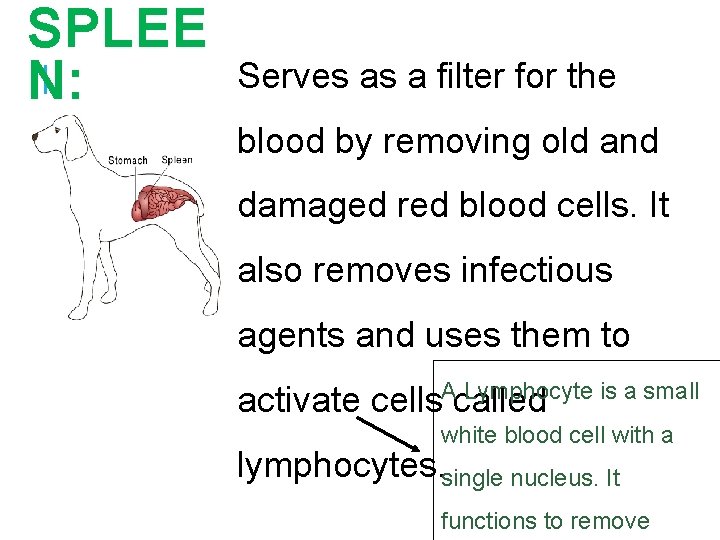
SPLEE N: Serves as a filter for the blood by removing old and damaged red blood cells. It also removes infectious agents and uses them to Lymphocyte is a small activate cells. Acalled white blood cell with a lymphocytes. single nucleus. It functions to remove
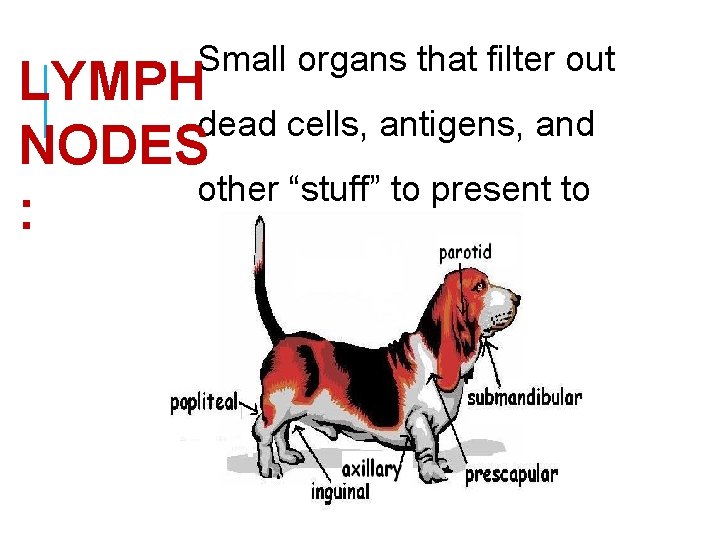
Small organs that filter out LYMPH dead cells, antigens, and NODES other “stuff” to present to : lymphocytes.
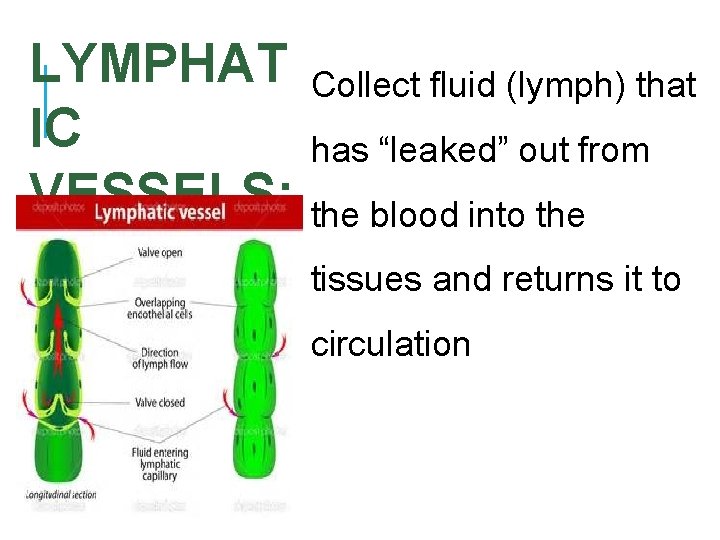
LYMPHAT Collect fluid (lymph) that IC has “leaked” out from VESSELS: the blood into the tissues and returns it to circulation
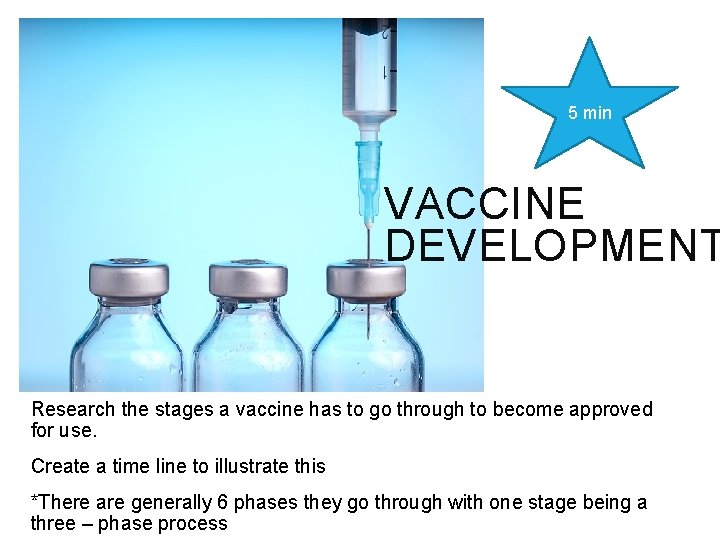
5 min VACCINE DEVELOPMENT Research the stages a vaccine has to go through to become approved for use. Create a time line to illustrate this *There are generally 6 phases they go through with one stage being a three – phase process
RECAP List 5 factors that influence an animals immunity List 2 parts of the Immune system
- Slides: 22