
Health cluster Lessons Learned Workshop Expanded Program on
- Slides: 4
Health cluster Lessons Learned Workshop Expanded Program on Immunization 21 st May 2015 2 pm WHO conference room
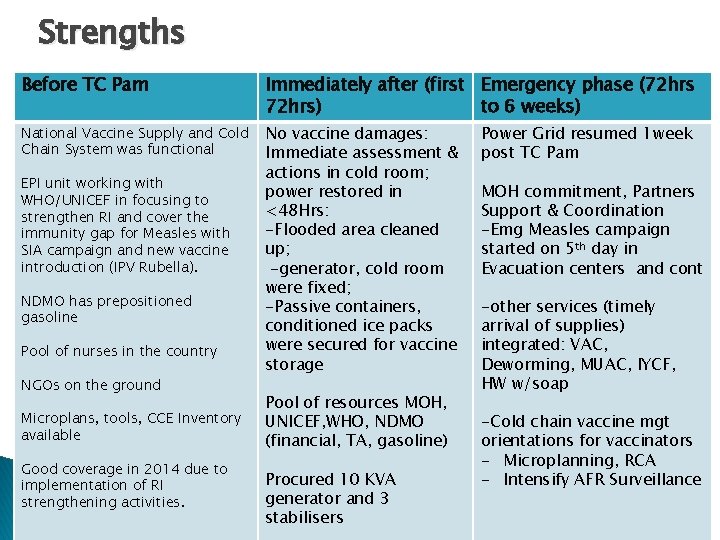
Strengths Before TC Pam Immediately after (first Emergency phase (72 hrs) to 6 weeks) National Vaccine Supply and Cold Chain System was functional No vaccine damages: Immediate assessment & actions in cold room; power restored in <48 Hrs: -Flooded area cleaned up; -generator, cold room were fixed; -Passive containers, conditioned ice packs were secured for vaccine storage EPI unit working with WHO/UNICEF in focusing to strengthen RI and cover the immunity gap for Measles with SIA campaign and new vaccine introduction (IPV Rubella). NDMO has prepositioned gasoline Pool of nurses in the country NGOs on the ground Microplans, tools, CCE Inventory available Good coverage in 2014 due to implementation of RI strengthening activities. Pool of resources MOH, UNICEF, WHO, NDMO (financial, TA, gasoline) Procured 10 KVA generator and 3 stabilisers Power Grid resumed 1 week post TC Pam MOH commitment, Partners Support & Coordination -Emg Measles campaign started on 5 th day in Evacuation centers and cont -other services (timely arrival of supplies) integrated: VAC, Deworming, MUAC, IYCF, HW w/soap -Cold chain vaccine mgt orientations for vaccinators - Microplanning, RCA - Intensify AFR Surveillance
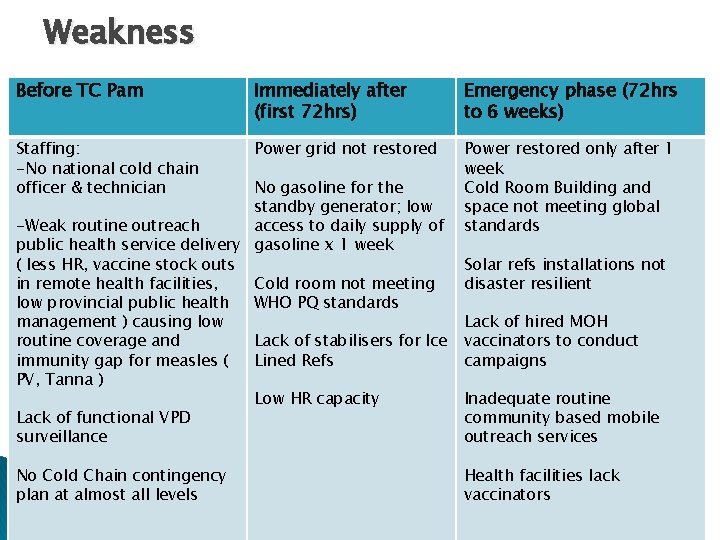
Weakness Before TC Pam Immediately after (first 72 hrs) Emergency phase (72 hrs to 6 weeks) Staffing: -No national cold chain officer & technician Power grid not restored Power restored only after 1 week Cold Room Building and space not meeting global standards No gasoline for the standby generator; low -Weak routine outreach access to daily supply of public health service delivery gasoline x 1 week ( less HR, vaccine stock outs in remote health facilities, Cold room not meeting low provincial public health WHO PQ standards management ) causing low routine coverage and Lack of stabilisers for Ice immunity gap for measles ( Lined Refs PV, Tanna ) Low HR capacity Lack of functional VPD surveillance No Cold Chain contingency plan at almost all levels Solar refs installations not disaster resilient Lack of hired MOH vaccinators to conduct campaigns Inadequate routine community based mobile outreach services Health facilities lack vaccinators
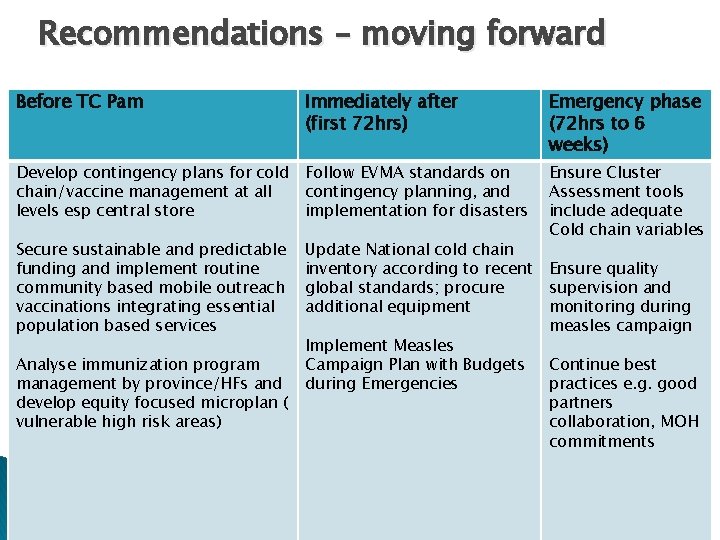
Recommendations – moving forward Before TC Pam Immediately after (first 72 hrs) Develop contingency plans for cold Follow EVMA standards on chain/vaccine management at all contingency planning, and levels esp central store implementation for disasters Secure sustainable and predictable funding and implement routine community based mobile outreach vaccinations integrating essential population based services Analyse immunization program management by province/HFs and develop equity focused microplan ( vulnerable high risk areas) Emergency phase (72 hrs to 6 weeks) Ensure Cluster Assessment tools include adequate Cold chain variables Update National cold chain inventory according to recent Ensure quality global standards; procure supervision and additional equipment monitoring during measles campaign Implement Measles Campaign Plan with Budgets Continue best during Emergencies practices e. g. good partners collaboration, MOH commitments