
Health Chapter 1 Lesson 2 LEARNING HEALTH SKILLS



- Slides: 23
Health: Chapter 1 – Lesson 2
LEARNING HEALTH SKILLS Just as you learn sports, math, reading, and other kinds of skills, you can learn skills for taking care of your health. Using these skills will improve your health and wellness.
ACCESSING INFORMATION You should find out if the health information you are getting is reliable. Reliable: Trustworthy and dependable.
ACCESSING INFORMATION Parents, guardians, or other trusted adults This should be your first source. Other trusted adults can include teachers, counselors, and school Libraries have nonfiction nurses. books on nutrition, medicine, fitness, and many other health topics.
ACCESSING INFORMATION Media sources TV and radio interviews with health professionals can give you information about current scientific studies related to health. The Internet has up-to-the-minute information from government agencies, universities, and healthcare providers.
ACCESSING INFORMATION Questions you should ask about your information source include: • Is the author an expert on the subject? • Does he or she name scientific studies or other sources for the facts? Questions you should ask about Internet source of information include: • Who owns or operates the Web site? • Is the owner or operator a reliable source?
SELF-MANAGEMENT Now that you are older, you make many decisions for yourself. Two self-management skills are: 1. Practicing healthful behaviors 2. Managing stress.
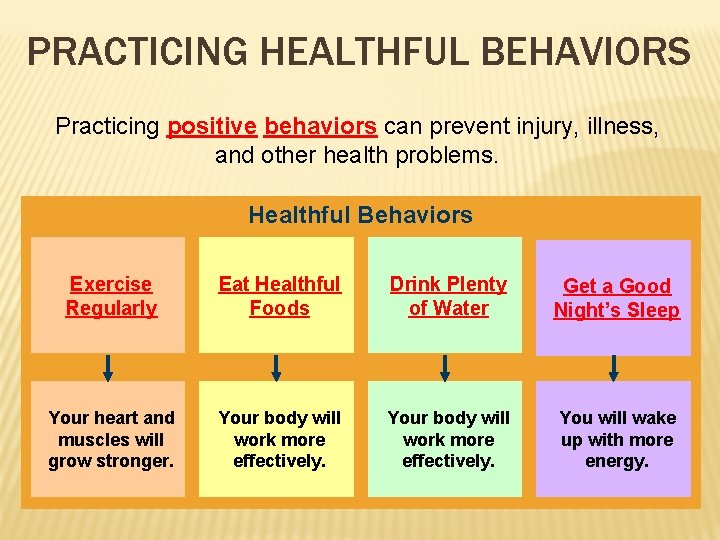
PRACTICING HEALTHFUL BEHAVIORS Practicing positive behaviors can prevent injury, illness, and other health problems. Healthful Behaviors Exercise Regularly Eat Healthful Foods Drink Plenty of Water Get a Good Night’s Sleep Your heart and muscles will grow stronger. Your body will work more effectively. You will wake up with more energy.
STRESS MANAGEMENT Stress: The body’s response to real or imagined dangers or other life events
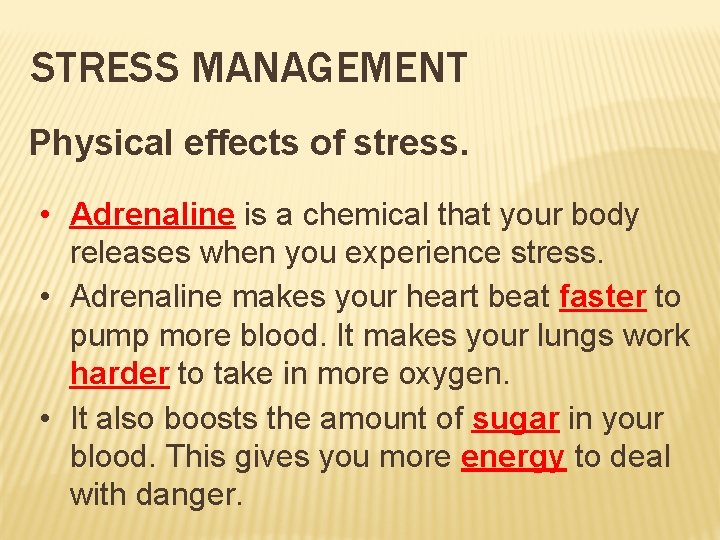
STRESS MANAGEMENT Physical effects of stress. • Adrenaline is a chemical that your body releases when you experience stress. • Adrenaline makes your heart beat faster to pump more blood. It makes your lungs work harder to take in more oxygen. • It also boosts the amount of sugar in your blood. This gives you more energy to deal with danger.
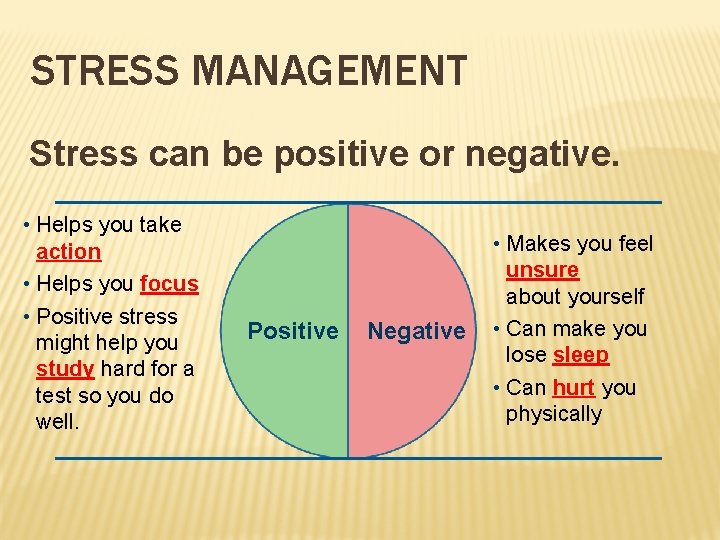
STRESS MANAGEMENT Stress can be positive or negative. • Helps you take action • Helps you focus • Positive stress might help you study hard for a test so you do well. Positive Negative • Makes you feel unsure about yourself • Can make you lose sleep • Can hurt you physically
STRESS MANAGEMENT Stress management is an important self-management skill. stress management Identifying sources of stress and learning how to handle them in ways that promote good mental/emotional health
ANALYZING INFLUENCES Understanding what influences are around you will help you make responsible choices in the future. The best choice may not be the most popular. Influences • • • Likes Dislikes Feelings Interests Opinions of others Media messages
COMMUNICATION SKILLS Interpersonal communication includes: � Speaking skills § Speaking skills help you express your ideas and feelings in healthful ways. � Listening skills § Listening skills let your understand the messages other people send you. interpersonal communication The sharing of thoughts and feelings with other people
COMMUNICATION SKILLS Two important communication skills are: � Saying no when others want you to do something unhealthy � Settling conflicts peacefully
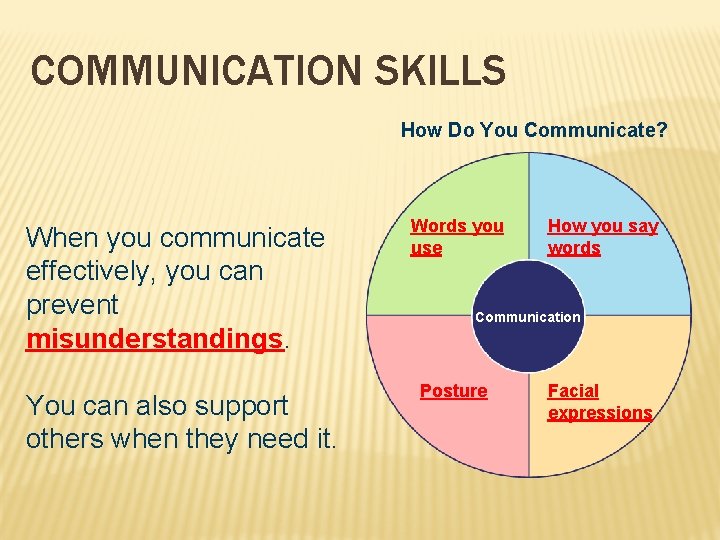
COMMUNICATION SKILLS How Do You Communicate? When you communicate effectively, you can prevent misunderstandings. You can also support others when they need it. Words you use How you say words Communication Posture Facial expressions
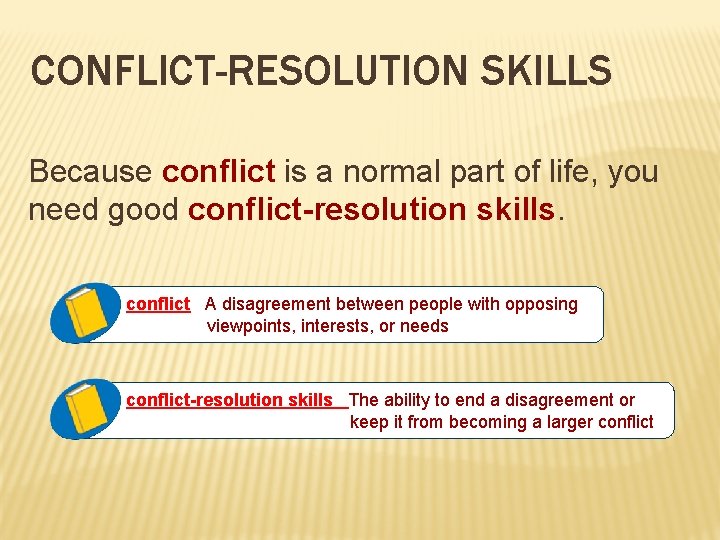
CONFLICT-RESOLUTION SKILLS Because conflict is a normal part of life, you need good conflict-resolution skills. conflict A disagreement between people with opposing viewpoints, interests, or needs conflict-resolution skills The ability to end a disagreement or keep it from becoming a larger conflict
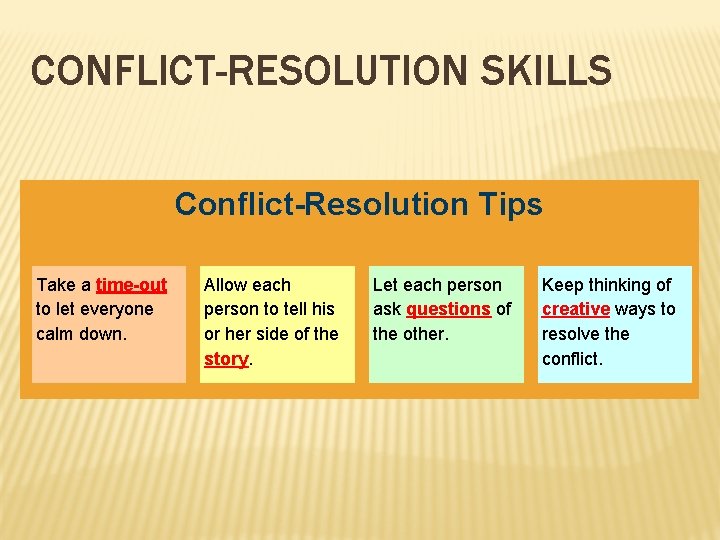
CONFLICT-RESOLUTION SKILLS Conflict-Resolution Tips Take a time-out to let everyone calm down. Allow each person to tell his or her side of the story. Let each person ask questions of the other. Keep thinking of creative ways to resolve the conflict.
REFUSAL SKILLS Use refusal skills to help you avoid behavior that is unhealthy, unsafe, or goes against your values and beliefs. refusal skills Ways to say no effectively When you stand up for a decision you make, you also need to stand up for the values and beliefs behind that decision. This is especially true when you choose to avoid potentially harmful situations.
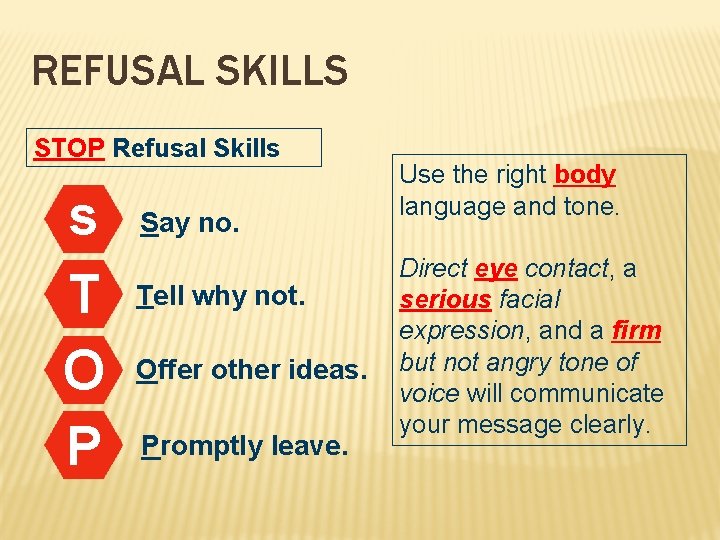
REFUSAL SKILLS STOP Refusal Skills s T O P Say no. Tell why not. Offer other ideas. Promptly leave. Use the right body language and tone. Direct eye contact, a serious facial expression, and a firm but not angry tone of voice will communicate your message clearly.
DECISION MAKING AND GOAL SETTING The path to good health begins with making healthful choices. Learning how to set realistic goals is another step toward health and wellbeing.
ADVOCACY When you care about an issue that could harm people’s health, you work to improve it. Working to bring about change involves the skill of advocacy Taking action in support of a cause
ADVOCACY � Advocates � Write may: letters to newspaper editors to call for change. � Collect signatures from people who support a cause and send signatures to local government leaders.