
Health Care Disparities The What Why and How
- Slides: 50
Health Care Disparities: The What … Why… and How USF GME Program Director Workshop January 25 -26, 2018 Cathy D. Meade, Ph. D, RN, FAAN Shirley Smith, MA Moffitt Cancer Center Director, Student Diversity and Enrichment Population Science, Health Outcomes & Behavior USF Health, College of Medicine Tampa, FL
Objectives § Highlight the value of addressing health disparities in the clinical learning environment (CLE). § Identify opportunities within the CLE for improving health care quality by reducing health disparities. § Generate listing of learning needs about health disparities to enhance GME.
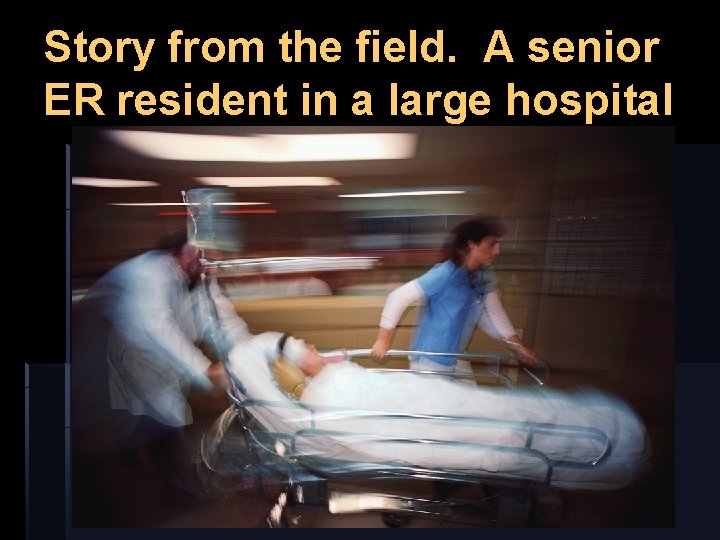
Story from the field. A senior ER resident in a large hospital
What’s the Context for Today? § ACGME established CLER (Clinical Learning Environment Review Program) to provide feedback for GME leaders and executive leadership of CLEs on areas of focus: patient safety, health care quality, care transitions, supervision, duty hours/fatigue management and mitigation, and professionalism. § Health Disparities is a key aspect of these foci. § National 2016 Report of Findings (297 site visits). § Local 2017 CLER site visit.
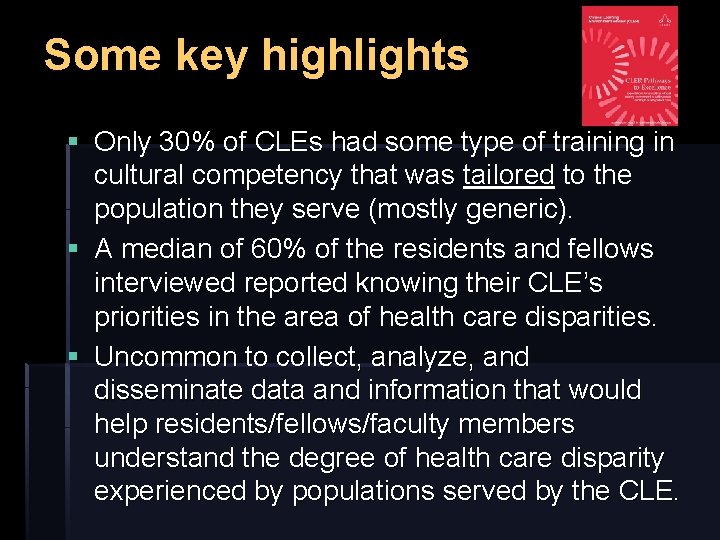
Some key highlights § Only 30% of CLEs had some type of training in cultural competency that was tailored to the population they serve (mostly generic). § A median of 60% of the residents and fellows interviewed reported knowing their CLE’s priorities in the area of health care disparities. § Uncommon to collect, analyze, and disseminate data and information that would help residents/fellows/faculty members understand the degree of health care disparity experienced by populations served by the CLE.
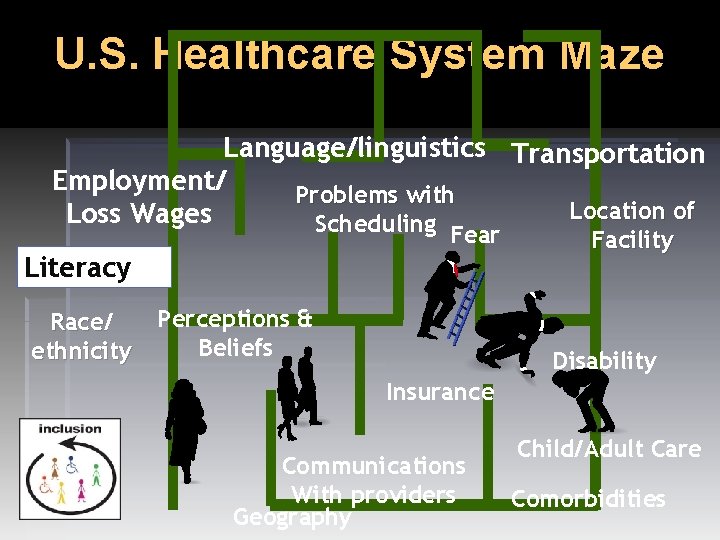
U. S. Healthcare System Maze Language/linguistics Transportation Employment/ Problems with Location of Loss Wages Scheduling Fear Literacy Race/ ethnicity Perceptions & Beliefs Facility Disability Insurance Communications With providers Geography Child/Adult Care Comorbidities
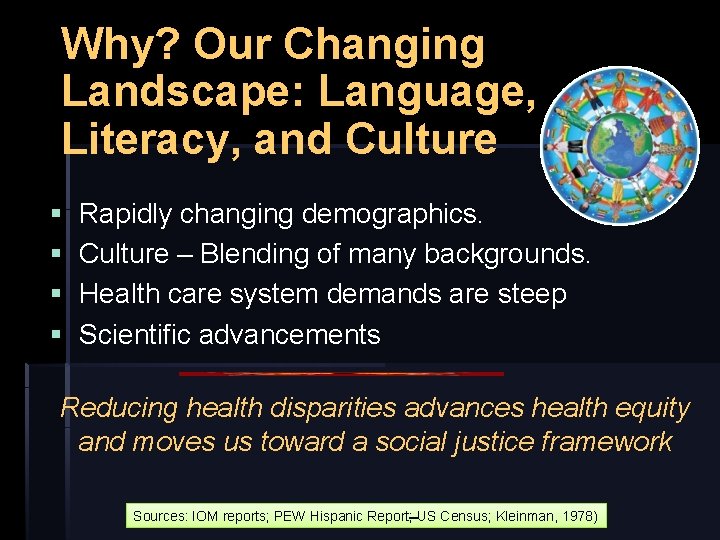
Why? Our Changing Landscape: Language, Literacy, and Culture § § Rapidly changing demographics. Culture – Blending of many backgrounds. Health care system demands are steep Scientific advancements Reducing health disparities advances health equity and moves us toward a social justice framework Sources: IOM reports; PEW Hispanic Report; US Census; Kleinman, 1978)
What is Health Equity? § Health equity is the “attainment of the highest level of health for all people. Achieving health equity requires valuing everyone equally with focused and ongoing societal efforts to address avoidable inequalities, historical and contemporary injustices, and the elimination of health and health care disparities. ” (Healthy People 2020)
What are Health Disparities? § Although the term disparities is often interpreted to mean racial or ethnic disparities, many dimensions of disparities exist, particularly in the health care arena. If a health outcome is seen to a greater or lesser extent between populations, there is disparity.
For example. . . § Geography = Rural Appalachian, diagnosed later stages = cervical cancer. § Low SES / Medically Underserved - reduced access, limited literacy, transportation factors. § African American, AIAN, Hispanic/Latino = higher cancer rates, higher mortality. § Disparities by cancer type (Asian Americans - more cancers of infectious origin, e. g. , hepatitis B virusinduced liver cancer, and stomach cancer. § Disparities by sexual orientation (HIV-infected MSM have higher rates anal cancer).
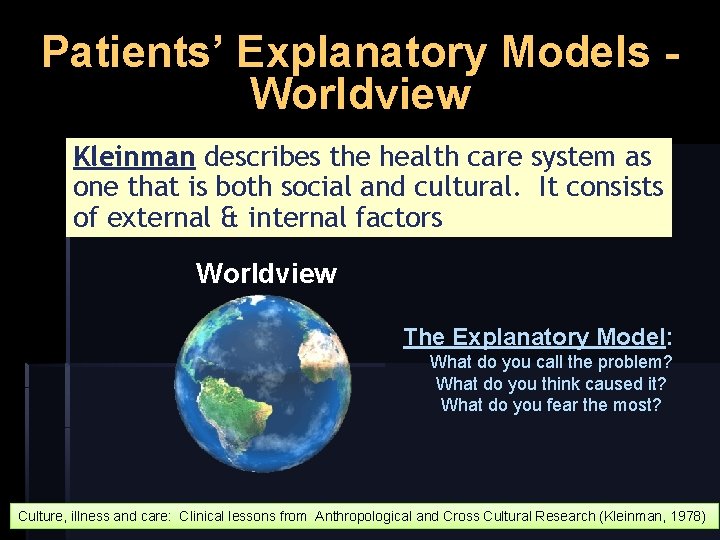
Patients’ Explanatory Models Worldview Kleinman describes the health care system as one that is both social and cultural. It consists of external & internal factors Worldview The Explanatory Model: What do you call the problem? What do you think caused it? What do you fear the most? Culture, illness and care: Clinical lessons from Anthropological and Cross Cultural Research (Kleinman, 1978)
Health Disparities No single cause. . . No single solution Many factors contribute to positive health outcomes, quality, & good use of health care systems.
Many Factors Influence Health § Social determinants (SD) are conditions in which Social determinants people are born, grow, live, work and age. These circumstances are shaped by the distribution of money, power and resources at global, national and local levels. § SD are mostly responsible for health inequities - the unfair and avoidable differences in health status seen within and between countries. http: //www. who. int/social_determinants/sdh _definition/en/
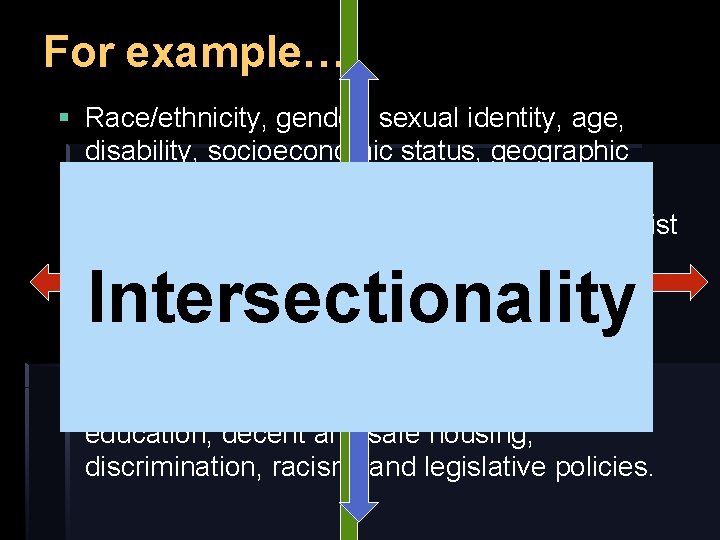
INTERSECTIONALITY § “Intersectionality is a way of understanding and analyzing the complexity in the world, in people, and in human experiences. § When it comes to social inequality, people’s lives and the organization of power in a given society are better understood as being shaped not only by a single axis of social division, be it race or gender or class, but by many axes that work synergistically together and influence each other. (Collins, P. H. , and S. Blige. 2016. Intersectionality. Malden, MA: Polity Press)
For example… § Race/ethnicity, gender, sexual identity, age, disability, socioeconomic status, geographic location ‘place’, and literacy. § Other powerful, complex relationships also exist between health and biology, genetics, and individual behavior, as well as between health and health services, the physical environment (clean air/non-polluted water, § Affordable, reliable transportation, high quality education, decent and safe housing, discrimination, racism, and legislative policies. Intersectionality
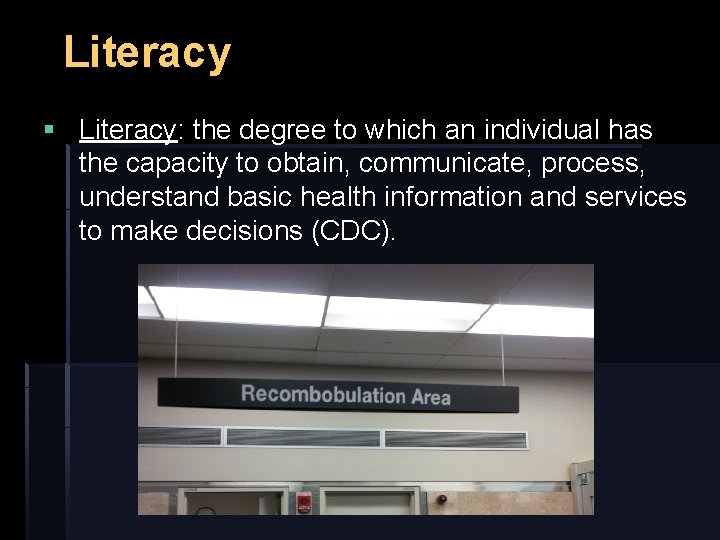
Literacy § Literacy: the degree to which an individual has the capacity to obtain, communicate, process, understand basic health information and services to make decisions (CDC).
Who is at risk for low health literacy? Anyone who enters the culture of healthcare and research!
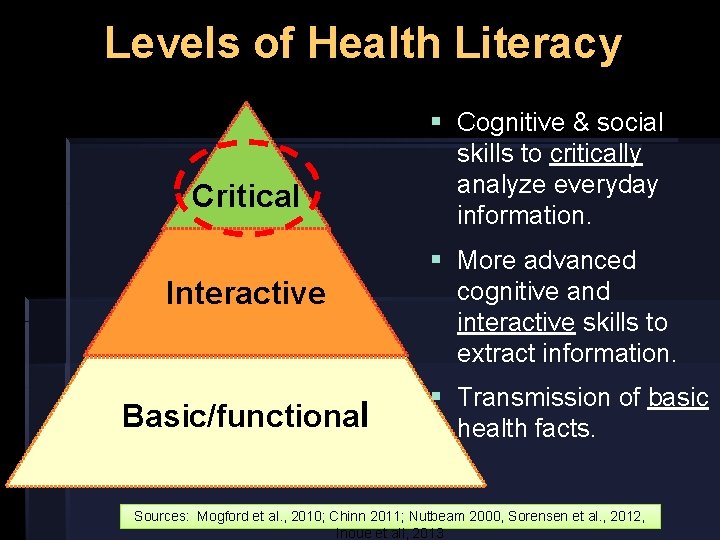
Levels of Health Literacy Critical Interactive Basic/functional § Cognitive & social skills to critically analyze everyday information. § More advanced cognitive and interactive skills to extract information. § Transmission of basic health facts. Sources: Mogford et al. , 2010; Chinn 2011; Nutbeam 2000, Sorensen et al. , 2012, Inoue et all, 2013
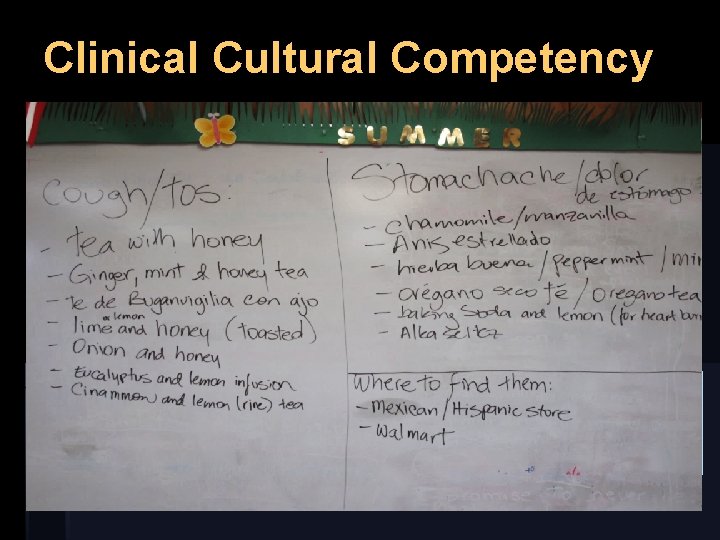
Clinical Cultural Competency § Being aware of social and cultural factors that impact health beliefs and behaviors. § Assessing how to address factors that affect patients and families. § Having tools and skills to empower patients and families. § Negotiating patients’ ethno-cultural beliefs and practices and those of the culture of biomedicine. (Betancourt, Green and Carillo et al 2002)
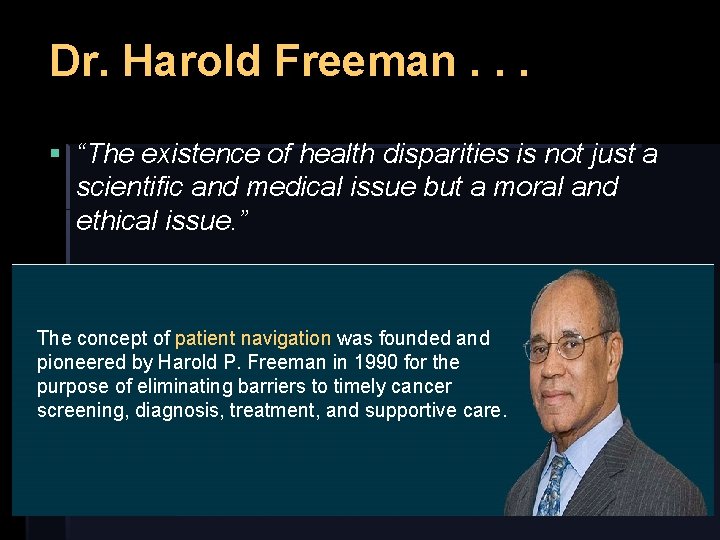
Dr. Harold Freeman. . . § “The existence of health disparities is not just a scientific and medical issue but a moral and ethical issue. ” The concept of patient navigation was founded and pioneered by Harold P. Freeman in 1990 for the purpose of eliminating barriers to timely cancer screening, diagnosis, treatment, and supportive care.
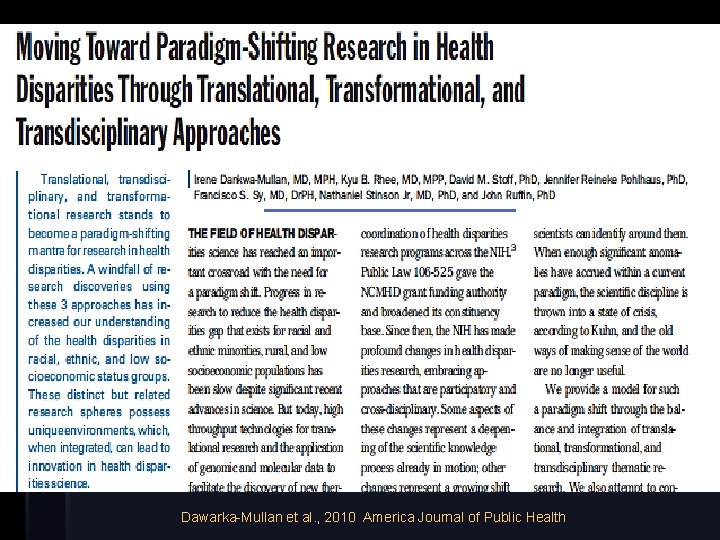
Dawarka-Mullan et al. , 2010 America Journal of Public Health
But how? § What are the clinical site’s priorities with regard to addressing HD? § How is GME integrated into an organization’s strategic planning and focus relating to HD? § How accessible and available are cultural competency training and resources? § What opportunities exist for residents/fellows to become engaged in health care quality, patient safety, and other systems-based initiatives. § How can they be supported? (time)
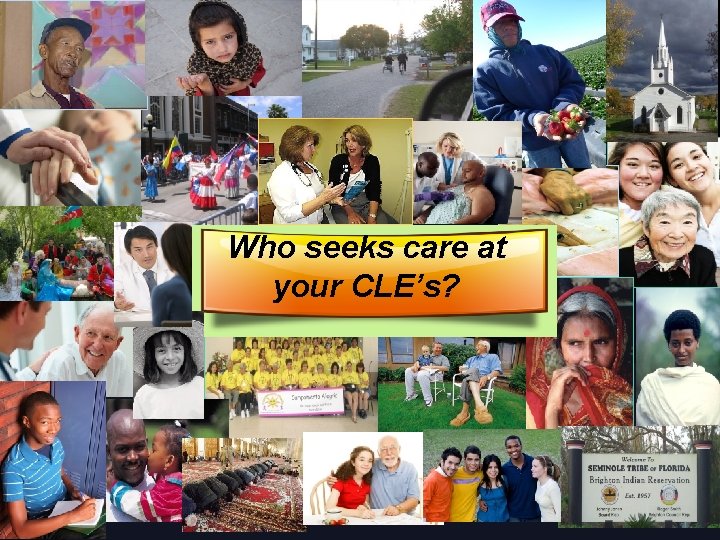
Who seeks care at your CLE’s? CDMeade 8 -17 -17
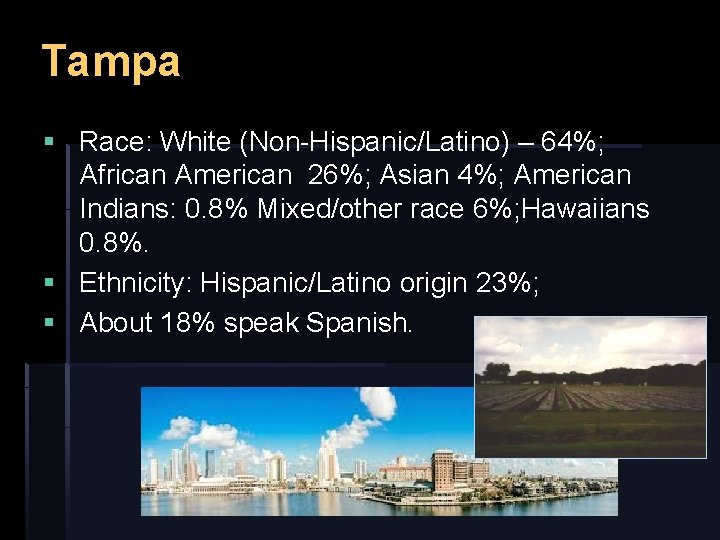
Tampa § Race: White (Non-Hispanic/Latino) – 64%; African American 26%; Asian 4%; American Indians: 0. 8% Mixed/other race 6%; Hawaiians 0. 8%. § Ethnicity: Hispanic/Latino origin 23%; § About 18% speak Spanish.
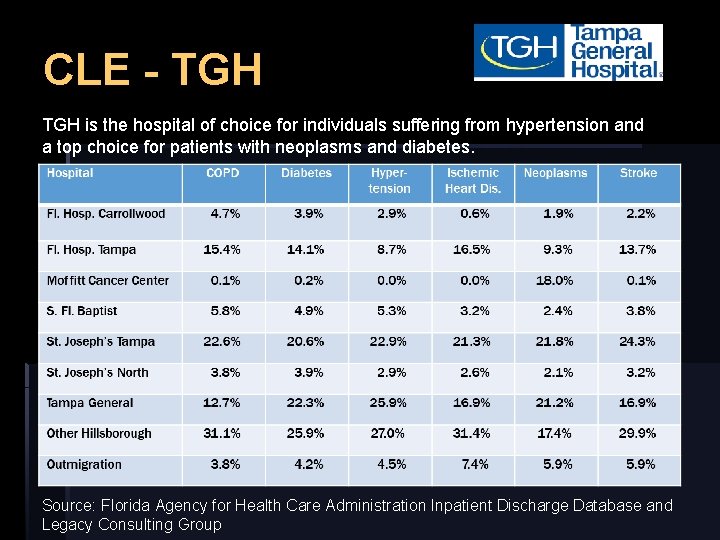
CLE - TGH is the hospital of choice for individuals suffering from hypertension and a top choice for patients with neoplasms and diabetes. Source: Florida Agency for Health Care Administration Inpatient Discharge Database and Legacy Consulting Group
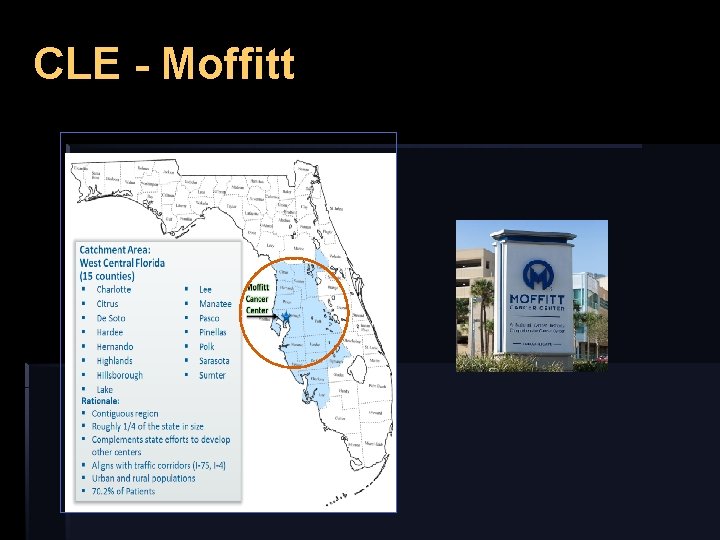
CLE - Moffitt
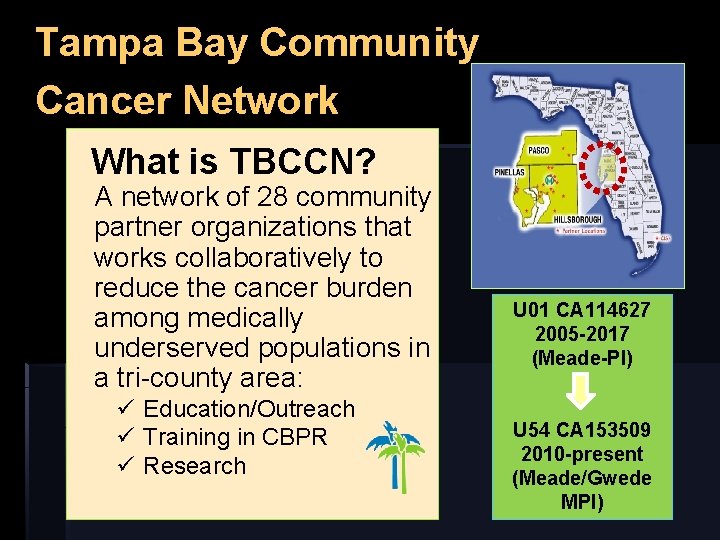
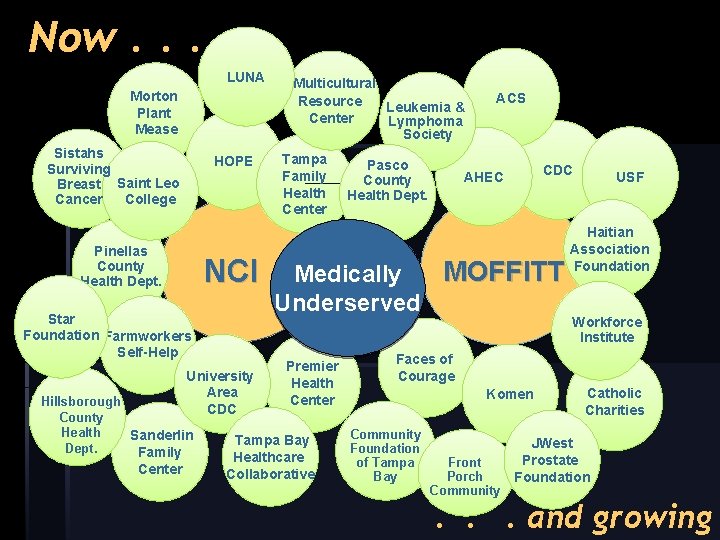
Tampa Bay Community Cancer Network What is TBCCN? A network of 28 community partner organizations that works collaboratively to reduce the cancer burden among medically underserved populations in a tri-county area: ü Education/Outreach ü Training in CBPR ü Research U 01 CA 114627 2005 -2017 (Meade-PI) U 54 CA 153509 2010 -present (Meade/Gwede MPI)
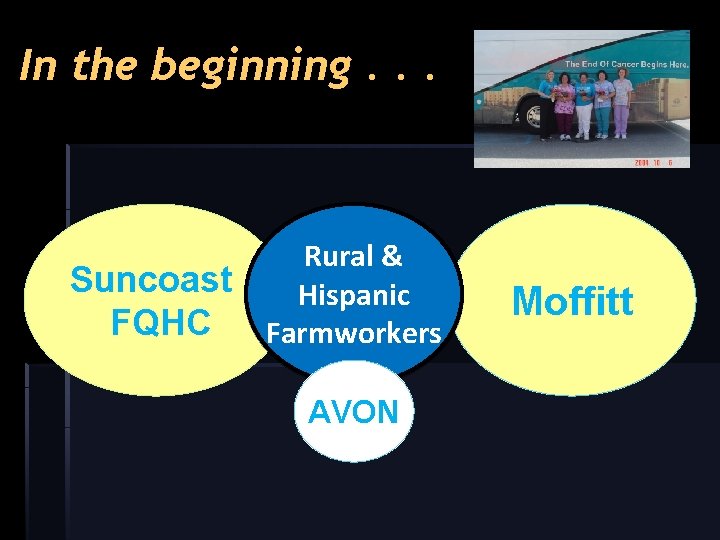
In the beginning. . . Suncoast FQHC Rural & Hispanic Farmworkers AVON Moffitt
Now. . . LUNA Morton Plant Mease Sistahs Surviving Breast Saint Leo Cancer College HOPE Pinellas County Health Dept. NCI Star Foundation Farmworkers Self-Help University Area CDC Hillsborough County Health Sanderlin Dept. Family Center Multicultural Resource Leukemia & Center Lymphoma Society Tampa Family Health Center Pasco County Health Dept. ACS CDC AHEC MOFFITT Medically Underserved Premier Health Center Tampa Bay Healthcare Collaborative USF Haitian Association Foundation Workforce Institute Faces of Courage Komen Community Foundation of Tampa Bay Front Porch Community Catholic Charities JWest Prostate Foundation . . . and growing
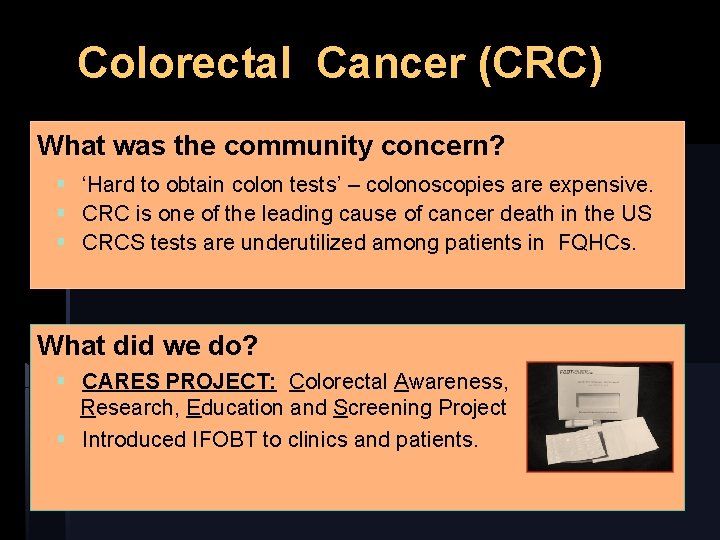
Colorectal Cancer (CRC) What was the community concern? § ‘Hard to obtain colon tests’ – colonoscopies are expensive. § CRC is one of the leading cause of cancer death in the US § CRCS tests are underutilized among patients in FQHCs. What did we do? § CARES PROJECT: Colorectal Awareness, Research, Education and Screening Project § Introduced IFOBT to clinics and patients.
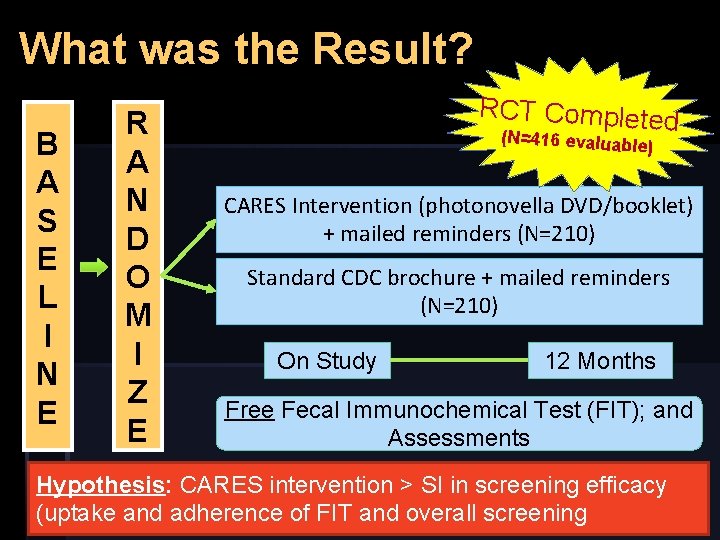
What was the Result? B A S E L I N E R A N D O M I Z E RCT Completed (N=416 evaluab le) CARES Intervention (photonovella DVD/booklet) + mailed reminders (N=210) Standard CDC brochure + mailed reminders (N=210) On Study 12 Months Free Fecal Immunochemical Test (FIT); and Assessments Hypothesis: CARES intervention > SI in screening efficacy (uptake and adherence of FIT and overall screening
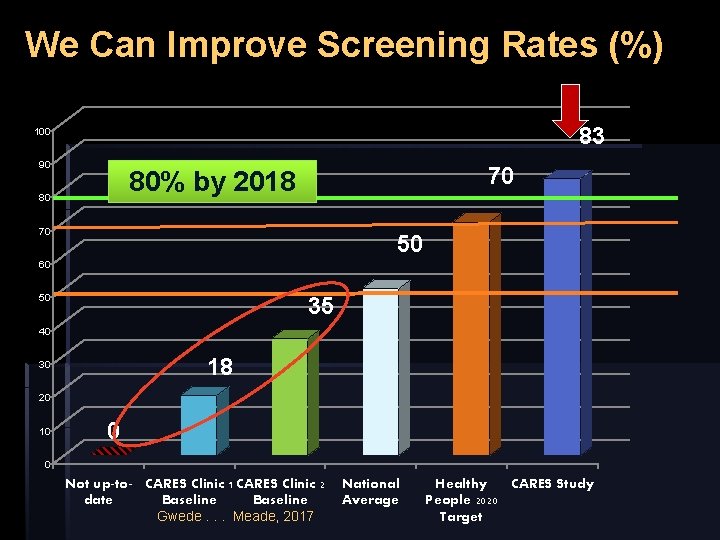
We Can Improve Screening Rates (%) 83 100 90 70 80% by 2018 80 70 50 60 50 35 40 18 30 20 10 0 0 Not up-to- CARES Clinic 1 CARES Clinic 2 date Baseline Gwede. . . Meade, 2017 National Average Healthy CARES Study People 2020 Target
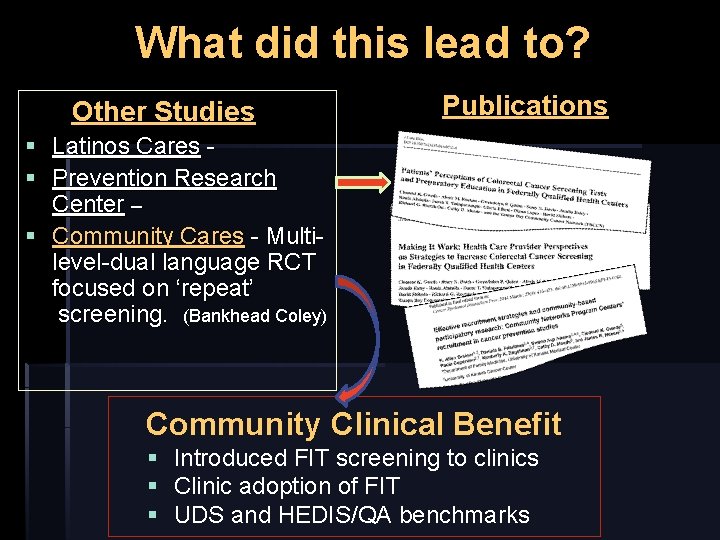
What did this lead to? Other Studies Publications § Latinos Cares § Prevention Research Center – § Community Cares - Multilevel-dual language RCT focused on ‘repeat’ screening. (Bankhead Coley) Community Clinical Benefit § Introduced FIT screening to clinics § Clinic adoption of FIT § UDS and HEDIS/QA benchmarks
IOM – Unequal Treatment Confronting Racial and Ethnic Disparities in Health Care
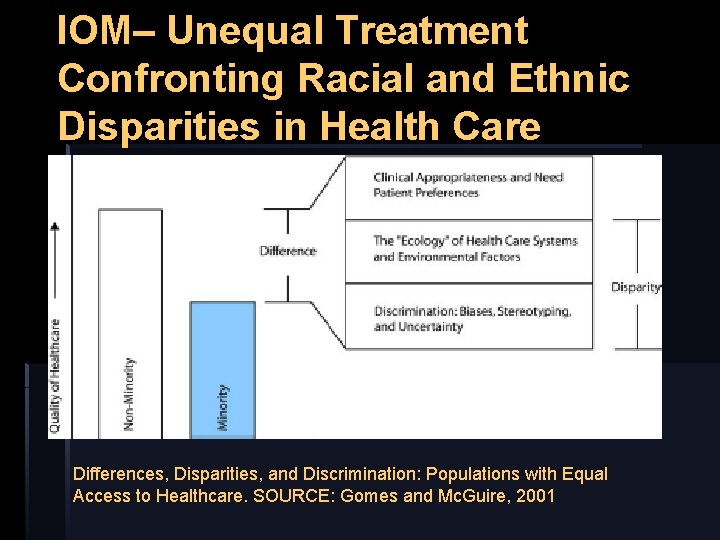
IOM– Unequal Treatment Confronting Racial and Ethnic Disparities in Health Care Differences, Disparities, and Discrimination: Populations with Equal Access to Healthcare. SOURCE: Gomes and Mc. Guire, 2001
Blindspot – Hidden Biases of Good People
Health Care Quality – HP Pathways
HQ Pathway 5: Resident/fellow and faculty member education on reducing health care disparities Formal educational activities that create a shared mental model with regard to health care qualityrelated goals, tools, and techniques are necessary for health care professionals to consistently work in a well-coordinated manner to achieve a true patient-centered approach that considers the variety of circumstances and needs of individual patients
Properties include: § Residents/fellows and faculty members receive education on identifying and reducing health care disparities relevant to the patient population served by the clinical site. § Residents/fellows and faculty members receive training in cultural competency relevant to the patient population served by the clinical site. § Residents/fellows and faculty members know the clinical site’s priorities for addressing health care disparities.
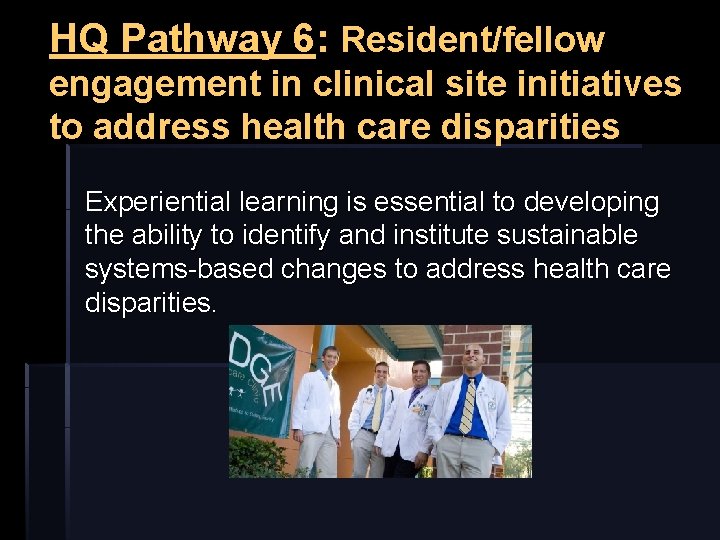
HQ Pathway 6: Resident/fellow engagement in clinical site initiatives to address health care disparities Experiential learning is essential to developing the ability to identify and institute sustainable systems-based changes to address health care disparities.
Properties include: § Residents/fellows are engaged in QI activities addressing health care disparities for the vulnerable populations served by the clinical site.
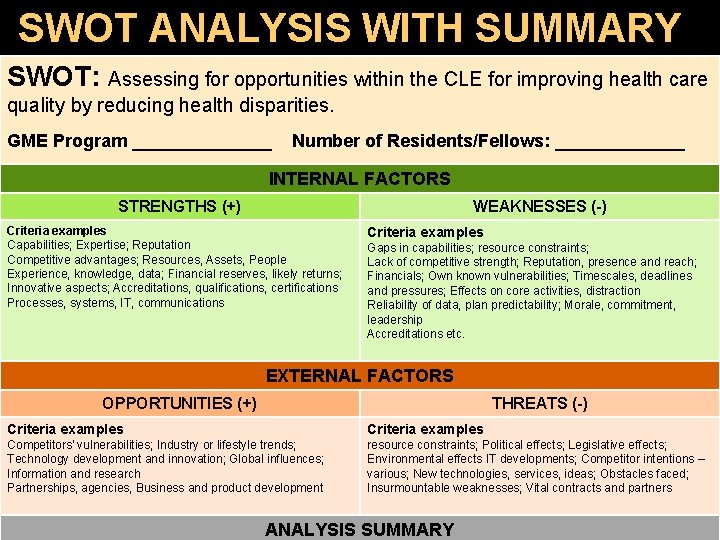
SWOT ANALYSIS WITH SUMMARY SWOT: Assessing for opportunities within the CLE for improving health care quality by reducing health disparities. GME Program _______ Number of Residents/Fellows: _______ INTERNAL FACTORS STRENGTHS (+) WEAKNESSES (-) Criteria examples Capabilities; Expertise; Reputation Competitive advantages; Resources, Assets, People Experience, knowledge, data; Financial reserves, likely returns; Innovative aspects; Accreditations, qualifications, certifications Processes, systems, IT, communications Criteria examples Gaps in capabilities; resource constraints; Lack of competitive strength; Reputation, presence and reach; Financials; Own known vulnerabilities; Timescales, deadlines and pressures; Effects on core activities, distraction Reliability of data, plan predictability; Morale, commitment, leadership Accreditations etc. EXTERNAL FACTORS OPPORTUNITIES (+) THREATS (-) Criteria examples Competitors' vulnerabilities; Industry or lifestyle trends; Technology development and innovation; Global influences; Information and research Partnerships, agencies, Business and product development resource constraints; Political effects; Legislative effects; Environmental effects IT developments; Competitor intentions – various; New technologies, services, ideas; Obstacles faced; Insurmountable weaknesses; Vital contracts and partners ANALYSIS SUMMARY
Discussion: SWOT
Expanding Cultural and Linguistic Competency § Medical Mission Trip: USF Health Nicaragua, Haiti, Dominican Republic § BRIDGE Clinic, Red Crescent Clinic, Tampa Bay Street Medicine, Mission - Dover § USF Health Service Corps https: //www. brownbearsw. com/cal/service corps § Poverty Simulation
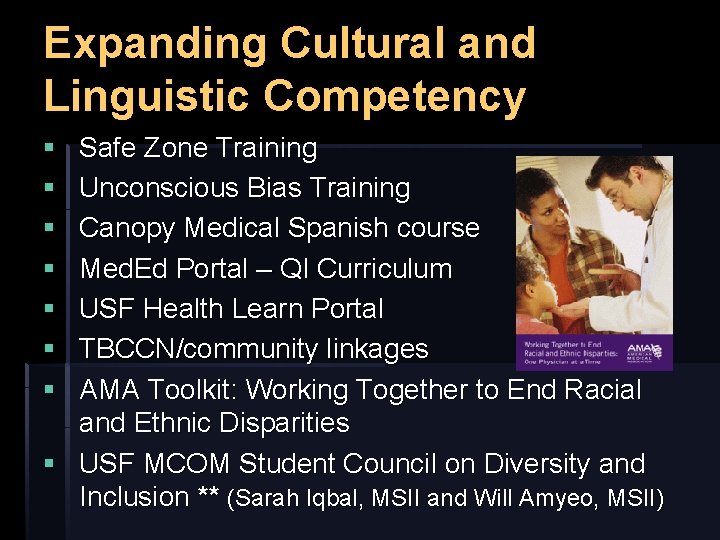
Expanding Cultural and Linguistic Competency § § § § Safe Zone Training Unconscious Bias Training Canopy Medical Spanish course Med. Ed Portal – QI Curriculum USF Health Learn Portal TBCCN/community linkages AMA Toolkit: Working Together to End Racial and Ethnic Disparities § USF MCOM Student Council on Diversity and Inclusion ** (Sarah Iqbal, MSII and Will Amyeo, MSII)
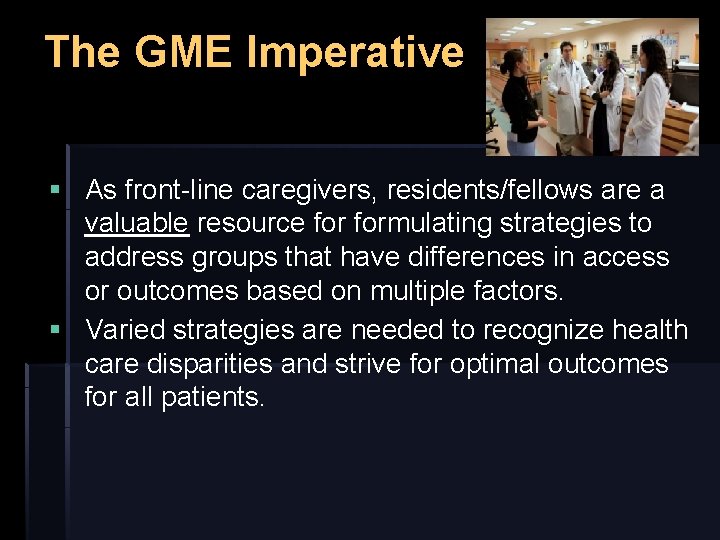
The GME Imperative § As front-line caregivers, residents/fellows are a valuable resource formulating strategies to address groups that have differences in access or outcomes based on multiple factors. § Varied strategies are needed to recognize health care disparities and strive for optimal outcomes for all patients.
LOOK FORWARD AND DREAM BIG!! What is the vision for GME?
Resources § https: //www. ama-assn. org/deliveringcare/reducing-disparities-health-care § https: //www. acgme. org/Portals/0/PDFs/CLER/ CLER_Brochure. pdf § Institute of Medicine. 2003. Unequal Treatment: Confronting Racial and Ethnic Disparities in Health Care. Washington, DC: The National Academies Press. https: //doi. org/10. 17226/10260.
Thank you