
Health assessment Respiratory system Introduction Respiratory system Exchange


- Slides: 71
Health assessment Respiratory system
Introduction Respiratory system ◦ Exchange of gases in the body ◦ Intake of oxygen and release of carbon dioxide Central nervous system ◦ Functions ◦ Maintains acid–base balance ◦ Maintains body fluids ◦ Assists with speech
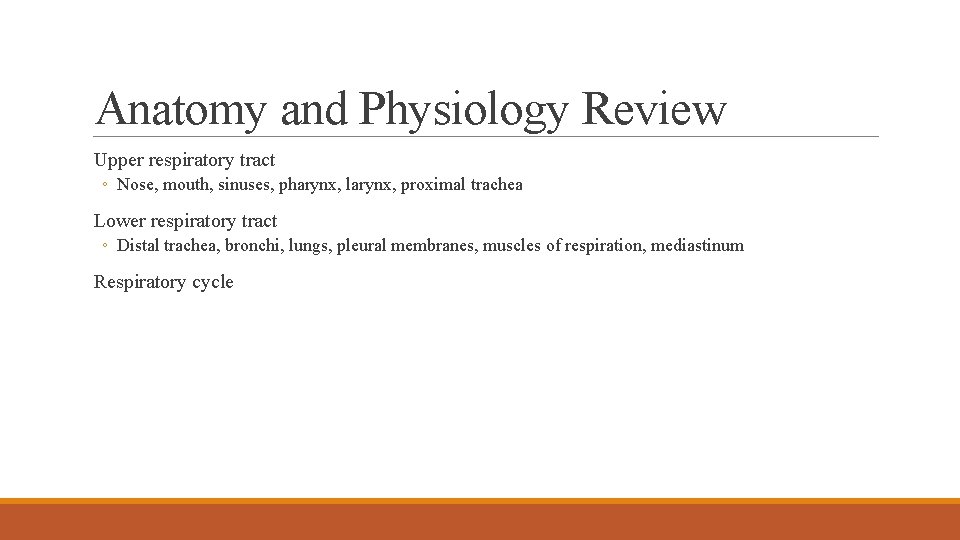
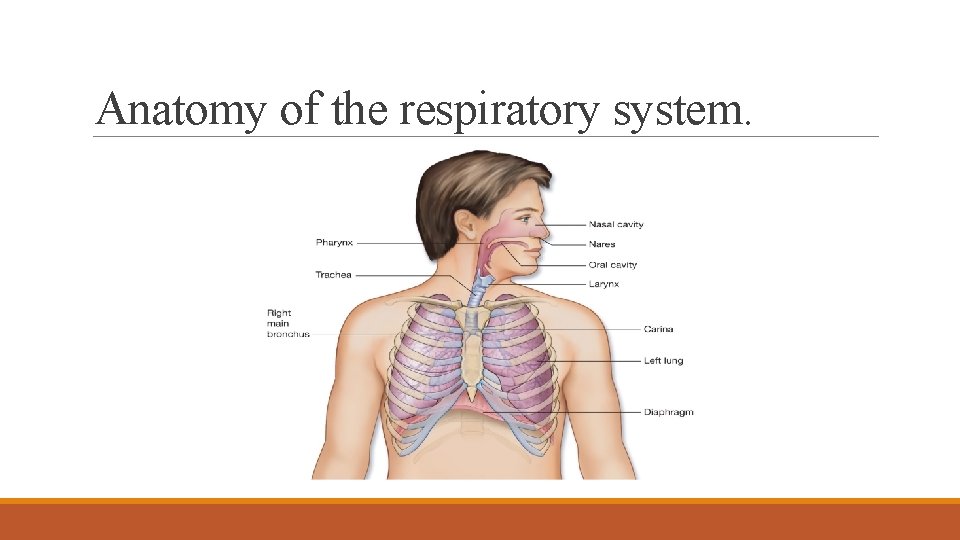
Anatomy and Physiology Review Upper respiratory tract ◦ Nose, mouth, sinuses, pharynx, larynx, proximal trachea Lower respiratory tract ◦ Distal trachea, bronchi, lungs, pleural membranes, muscles of respiration, mediastinum Respiratory cycle
Anatomy of the respiratory system.
Anatomy and Physiology Review Thorax ◦ Closed cavity containing the structures needed for respiration ◦ Mediastinum ◦ ◦ ◦ Heart Trachea Esophagus Major blood vessels Pleural cavities continued on next slide
Anatomy and Physiology Review Thorax ◦ Thoracic cage ◦ Bones ◦ Cartilage ◦ Muscles of the thorax
Lower Respiratory Tract Trachea ◦ 16– 20 rings of hyaline cartilage Bronchi ◦ Main bronchus enters each lung at the hilus. ◦ Terminal bronchioles less than 0. 5 mm in diameter
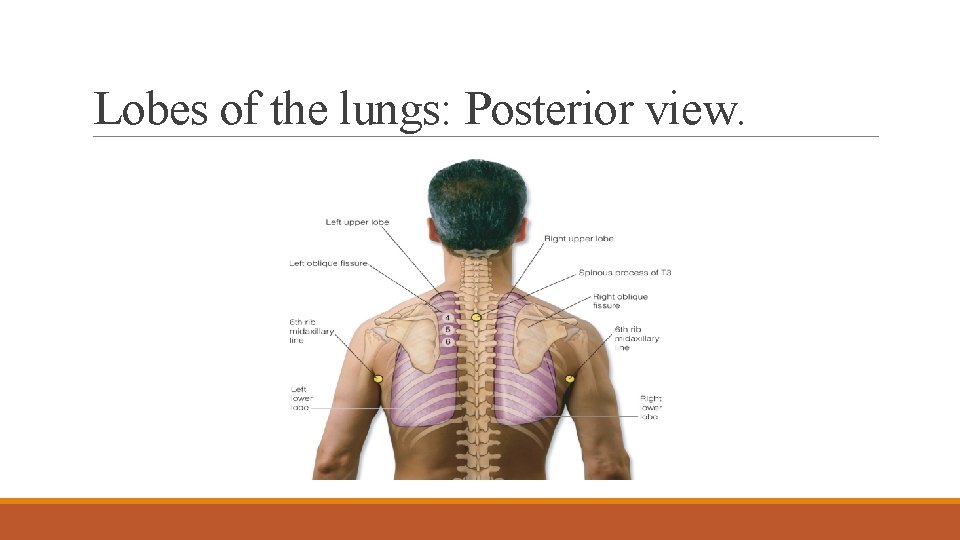
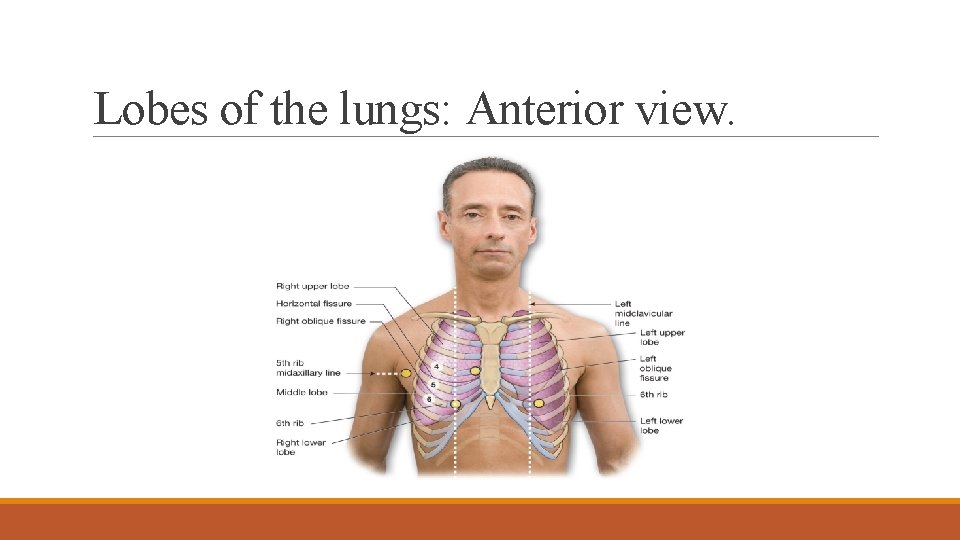
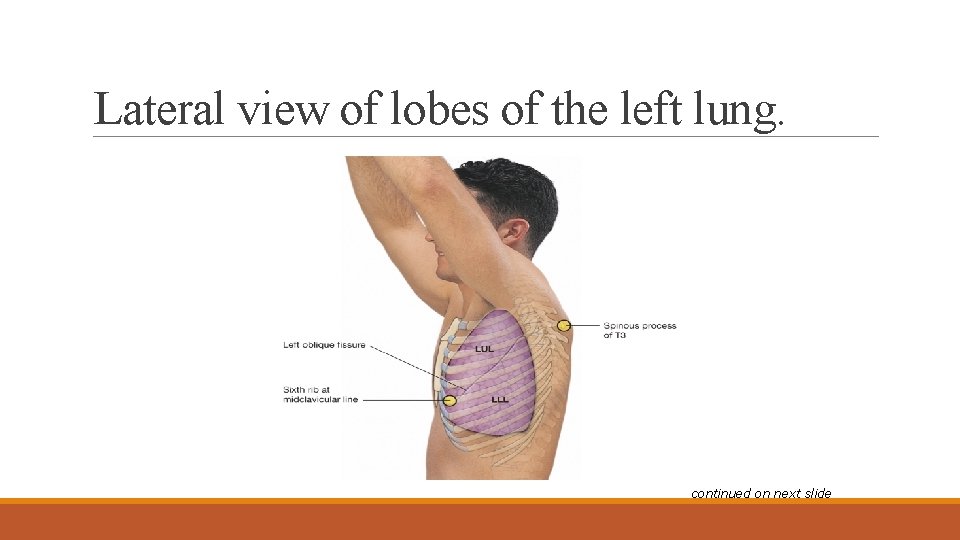
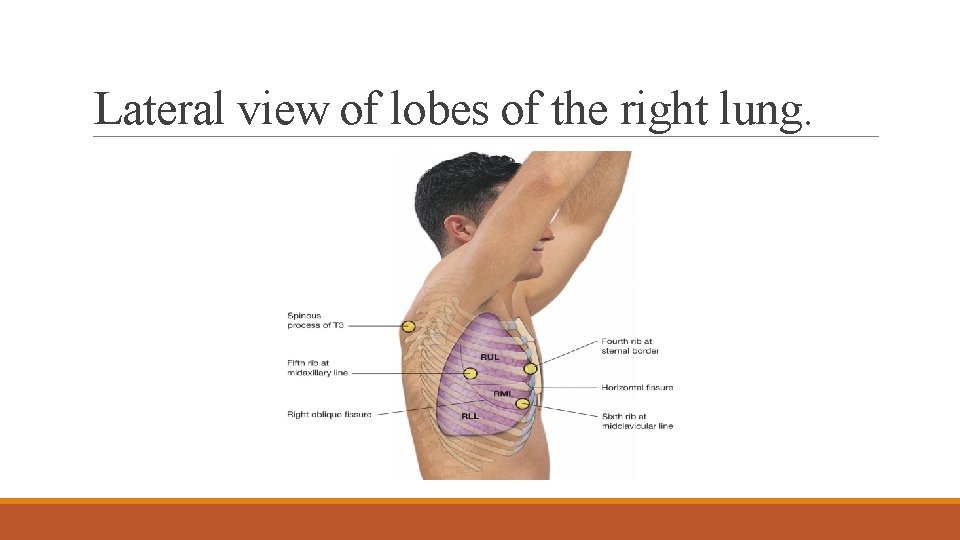
Lower Respiratory Tract Lungs ◦ Cone-shaped, elastic, spongy, air-filled structures in pleural cavities ◦ Right lung has three lobes, left lung has two.
Lower Respiratory Tract Pleural membranes ◦ Thin, double-layered serous lining ◦ Surface tension created by fluid and negative pressure between membranes keeps lungs expanded. Mediastinum ◦ Middle section of thoracic cavity ◦ Surrounded by right and left pleural cavities
Landmarks Bony structures ◦ ◦ ◦ Sternum Angle of Louis Clavicles Ribs Vertebral column
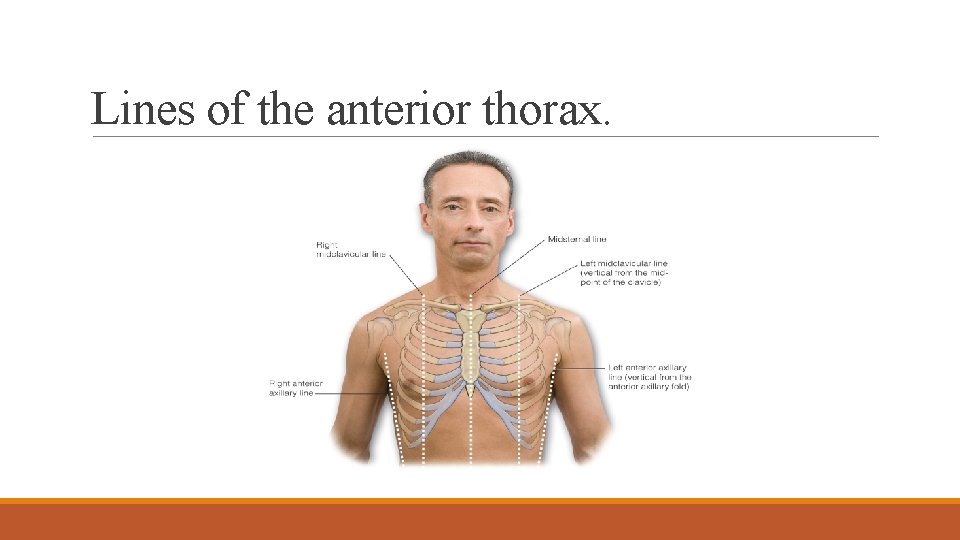
Landmarks Horizontal and vertical lines ◦ Anterior, posterior, and lateral sections Division of the thorax ◦ Anterior ◦ ◦ Imaginary vertical lines Sternal Midclavicular Anterior axillary lines
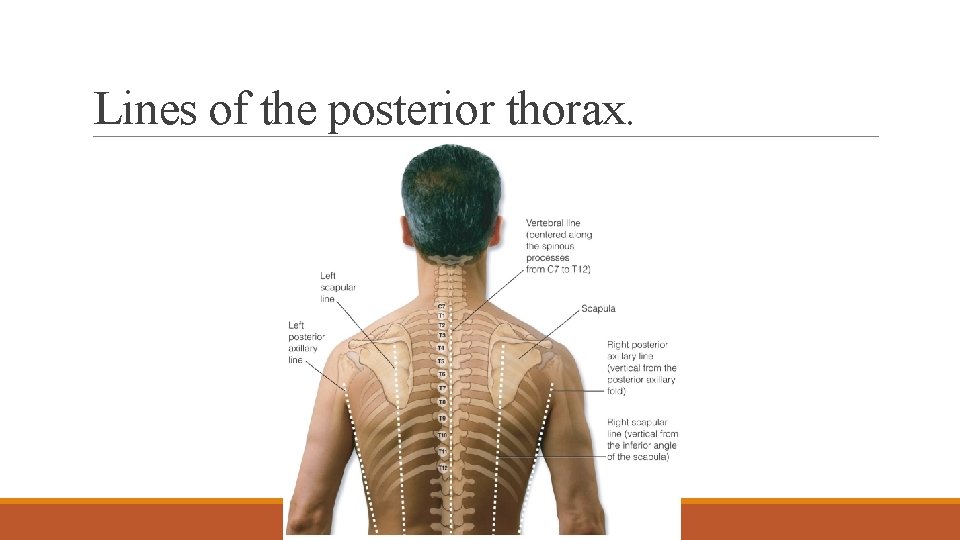
Landmarks Division of the thorax ◦ Posterior ◦ ◦ Imaginary vertical lines Vertebral Scapular Posterior axillary continued on next slide
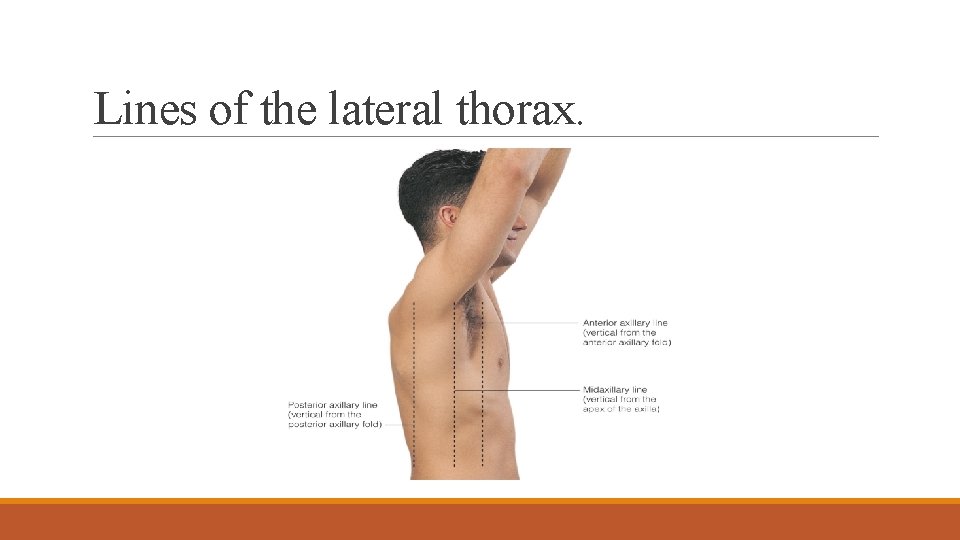
Landmarks Division of the thorax ◦ Lateral ◦ ◦ Imaginary vertical lines Anterior Posterior Midaxillary
Lines of the anterior thorax.
Lines of the posterior thorax.
Lines of the lateral thorax.
Lobes of the lungs: Posterior view.
Lobes of the lungs: Anterior view.
Lateral view of lobes of the left lung. continued on next slide
Lateral view of lobes of the right lung.
Special Considerations Age Developmental level Race Ethnicity Work history Living conditions Socioeconomic status Emotional wellness
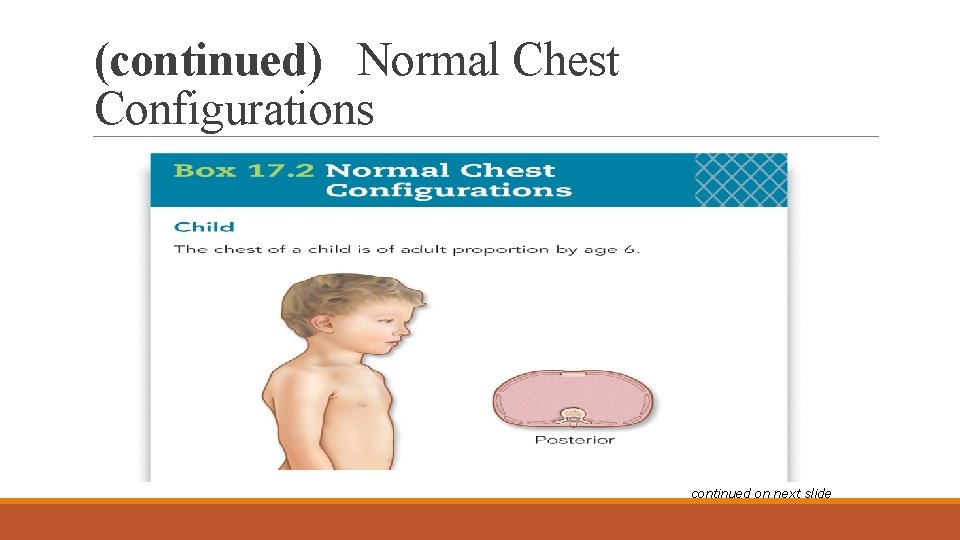
Lifespan Considerations Infants and children ◦ Change from intrauterine to extrauterine breathing ◦ Use of abdominal muscles for breathing during infancy and early childhood ◦ Costal breathing expected after age 7 ◦ Smaller airways more prone to blockage continued on next slide
Lifespan Considerations The pregnant female ◦ ◦ Muscles and cartilage of the ribs relax. Inspiratory capacity increases. Expiratory reserve volume is decreased. Total lung capacity remains the same. ◦ Oxygen consumption can increase by 20% ◦ Mild respiratory alkalosis
Lifespan Considerations The older adult ◦ ◦ ◦ Decrease in respiratory efficiency Changes in respiratory depth Decrease in cough ability Increase in respiratory rate Anxiety and physical exertion cause significant demands. Increased effect of infection
Psychosocial Considerations Exacerbation of respiratory problems ◦ ◦ Stress Anxiety Fatigue Pain Certain drugs used in the treatment of respiratory disorders may cause hands to tremble.
Cultural and Environmental Considerations Race Ethnicity Presence of allergens Socioeconomic status Incidence of respiratory diseases Geography and environment ◦ Temperature, moisture, altitude, and pollution
Focused Interview Consider patient's ability to participate ◦ If patient is experiencing dyspnea, cyanosis, difficulty with speech, or anxiety, attention must focus on relief of symptoms and restoration of oxygenation.
Focused Interview Focused interview questions ◦ ◦ General Illness or infection Symptoms, pain, behaviors Age ◦ Infants and children ◦ The pregnant female ◦ The older adult ◦ Environment
Assessment Techniques Inspection Palpation Percussion Auscultation
Assessment Techniques Observation of skin color Inspection of the anterior and posterior thorax ◦ Symmetry ◦ Configuration ◦ Respiratory rate
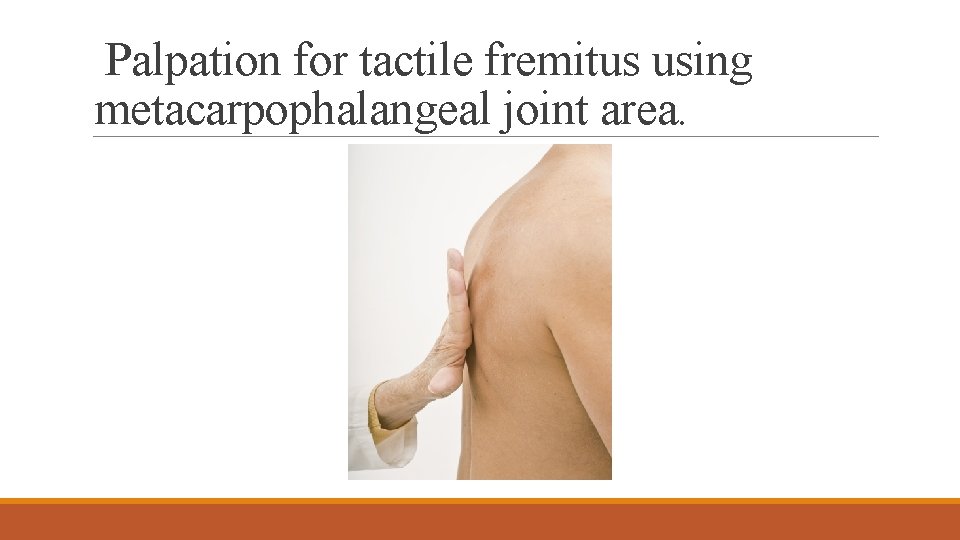
Assessment Techniques Palpation of the posterior thorax ◦ ◦ Ribs Intercostal spaces Respiratory expansion Tactile fremitus
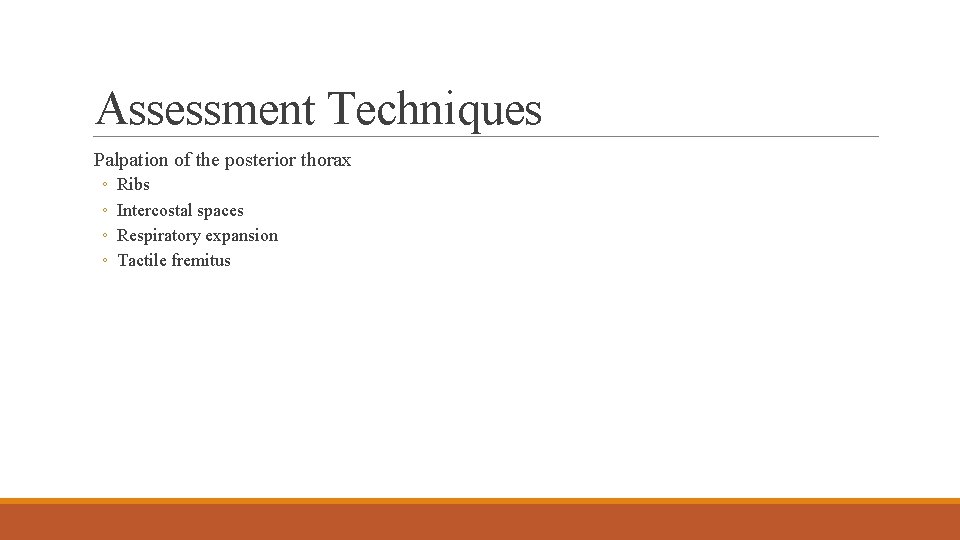
Patient positioned and gowned for assessment.
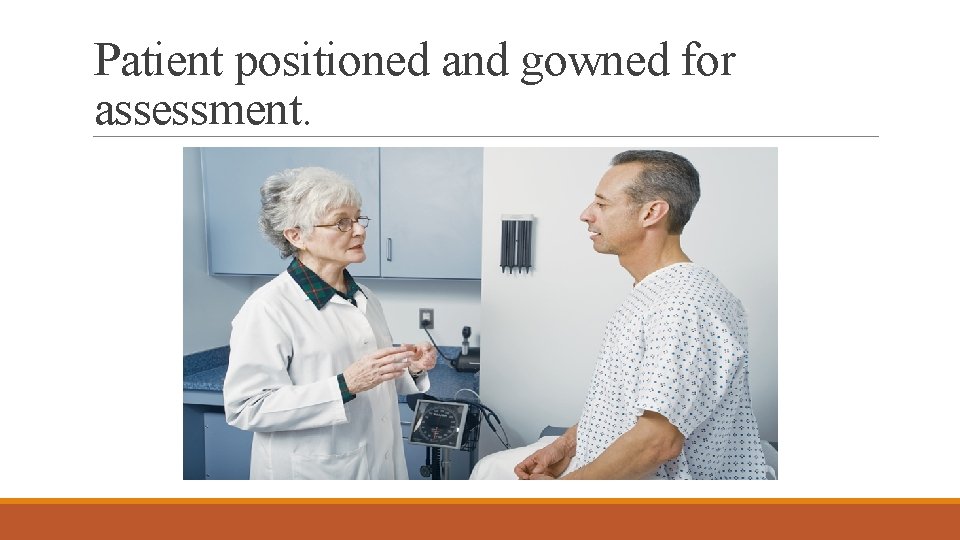
Pattern for palpating the posterior thorax.
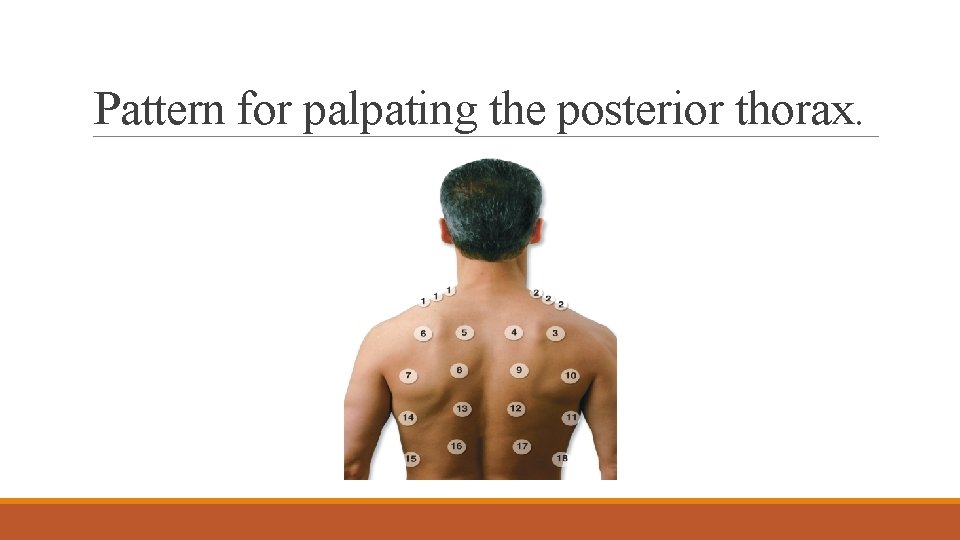
Palpation for respiratory expansion.
Palpation for tactile fremitus using metacarpophalangeal joint area.
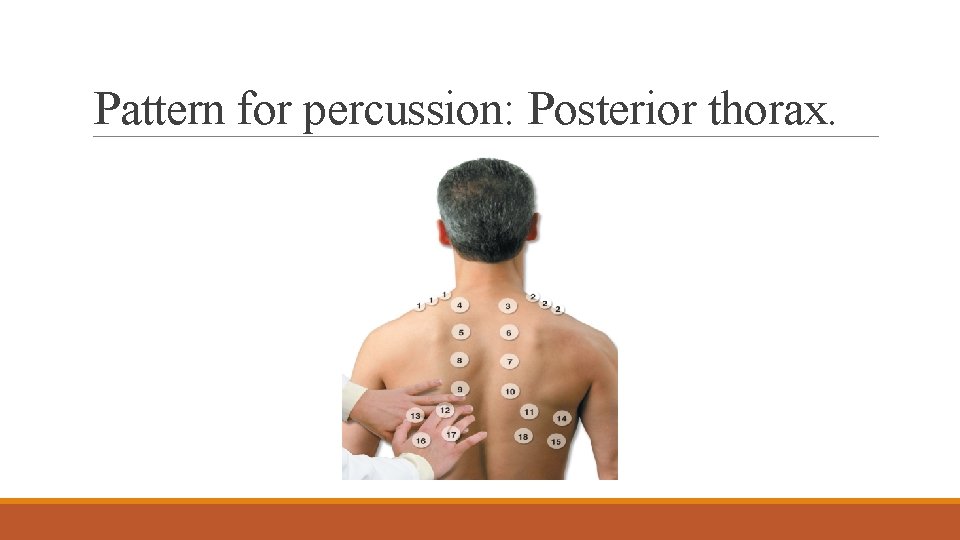
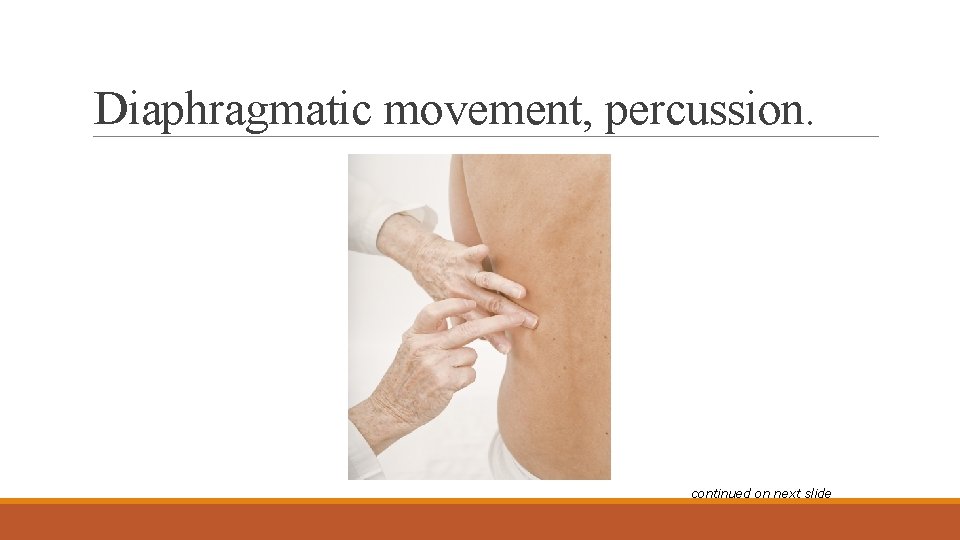
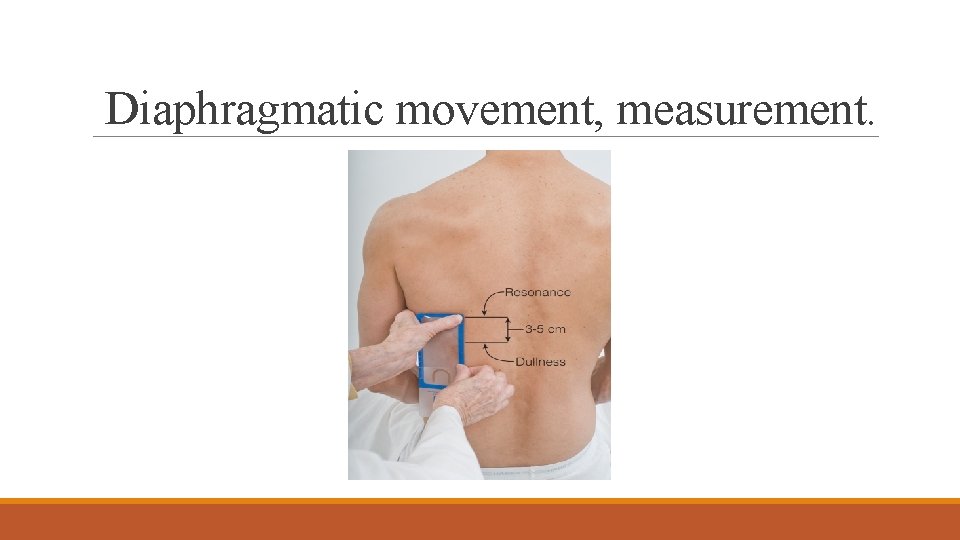
Assessment Techniques Percussion of the posterior thorax ◦ Lungs ◦ Diaphragmatic excursion
Pattern for percussion: Posterior thorax.
Diaphragmatic movement, percussion. continued on next slide
Diaphragmatic movement, measurement.
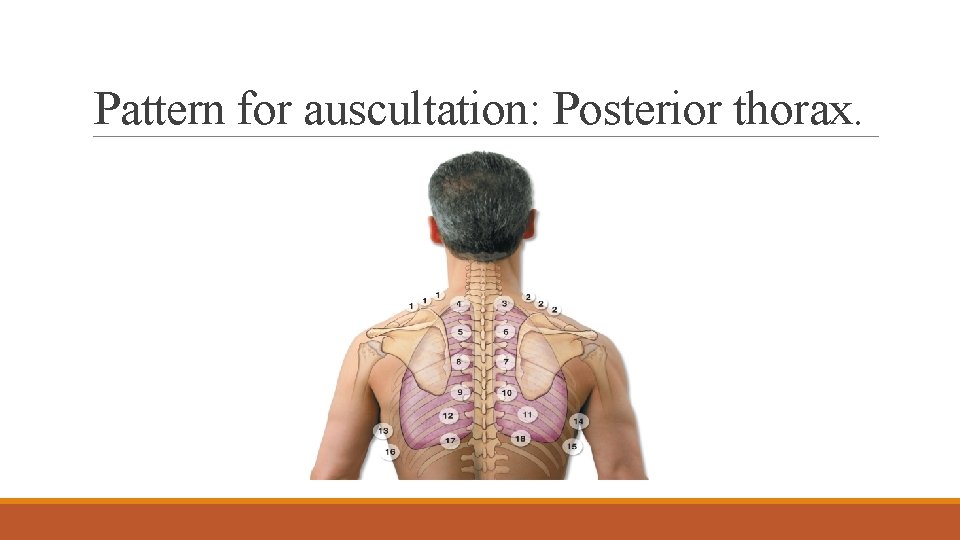
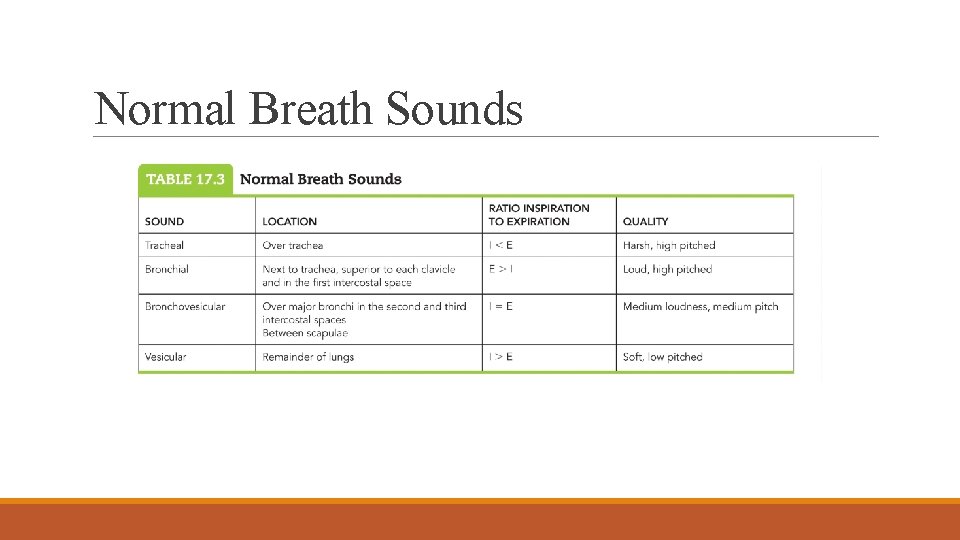
Assessment Techniques Auscultation of the posterior thorax for sounds ◦ ◦ Tracheal Bronchial Bronchovesicular Vesicular
Pattern for auscultation: Posterior thorax.
Normal Breath Sounds
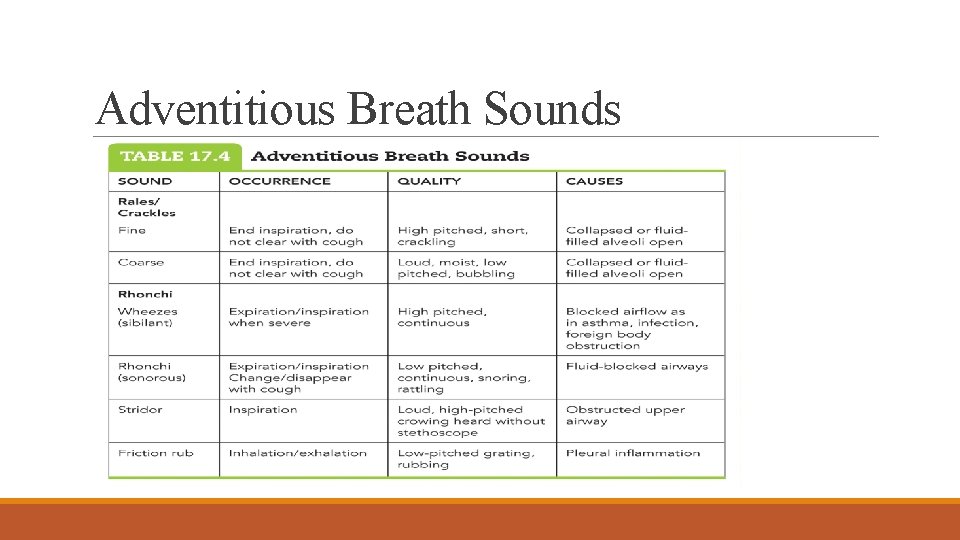
Adventitious Breath Sounds
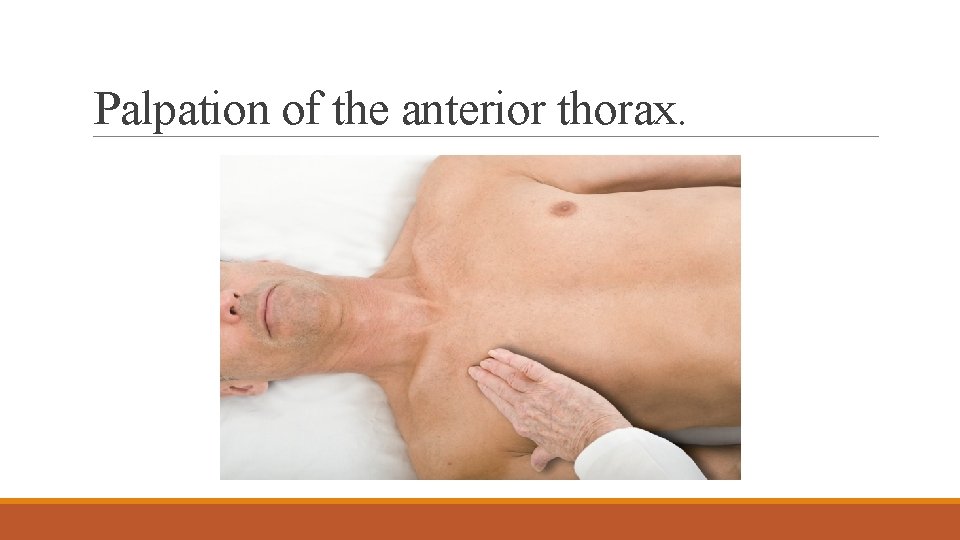
Assessment Techniques Palpation of the anterior thorax ◦ Sternum ◦ Ribs ◦ Intercostal spaces
Palpation of the anterior thorax.
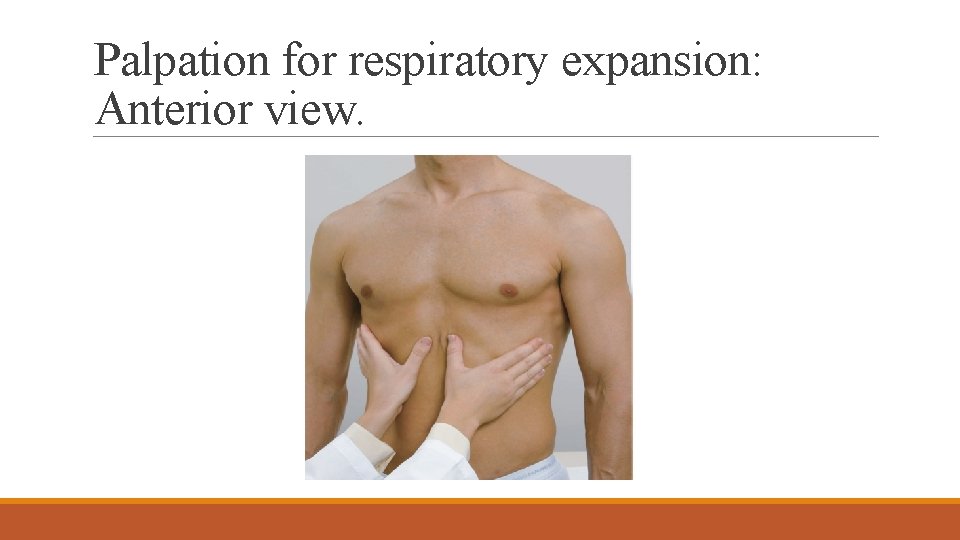
Palpation for respiratory expansion: Anterior view.
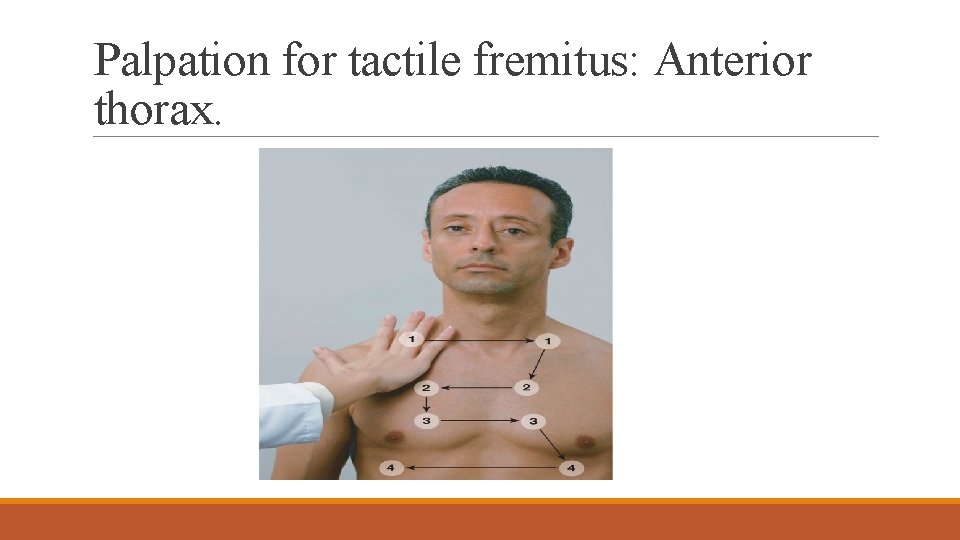
Palpation for tactile fremitus: Anterior thorax.
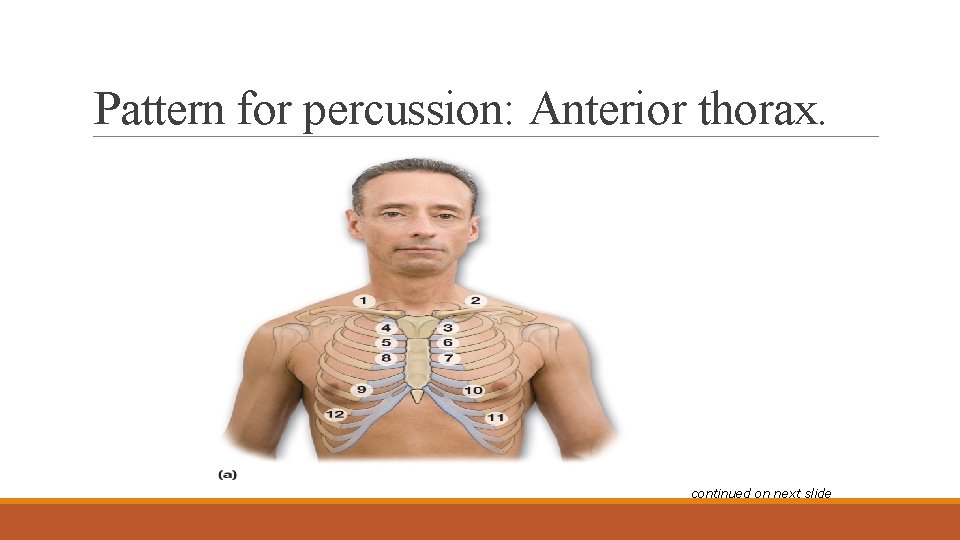
Pattern for percussion: Anterior thorax. continued on next slide
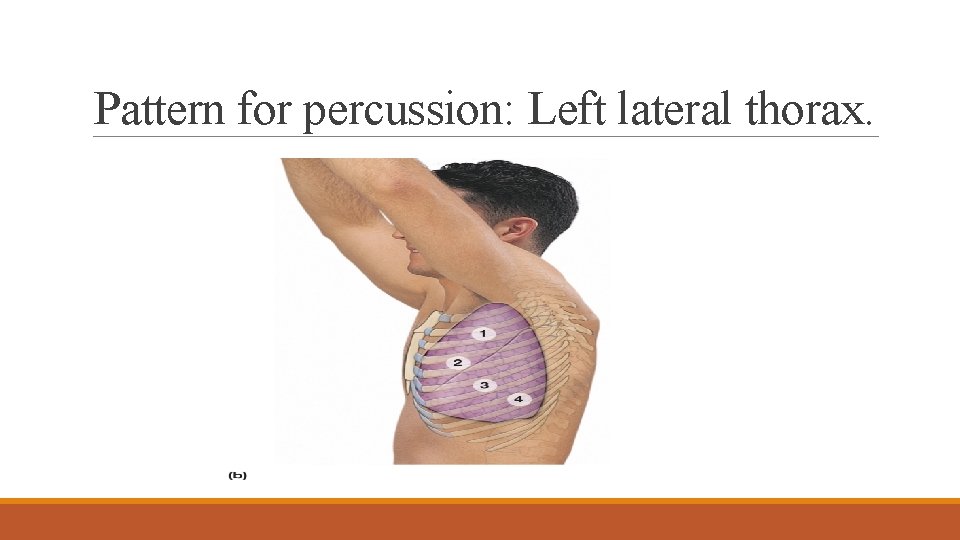
Pattern for percussion: Left lateral thorax.
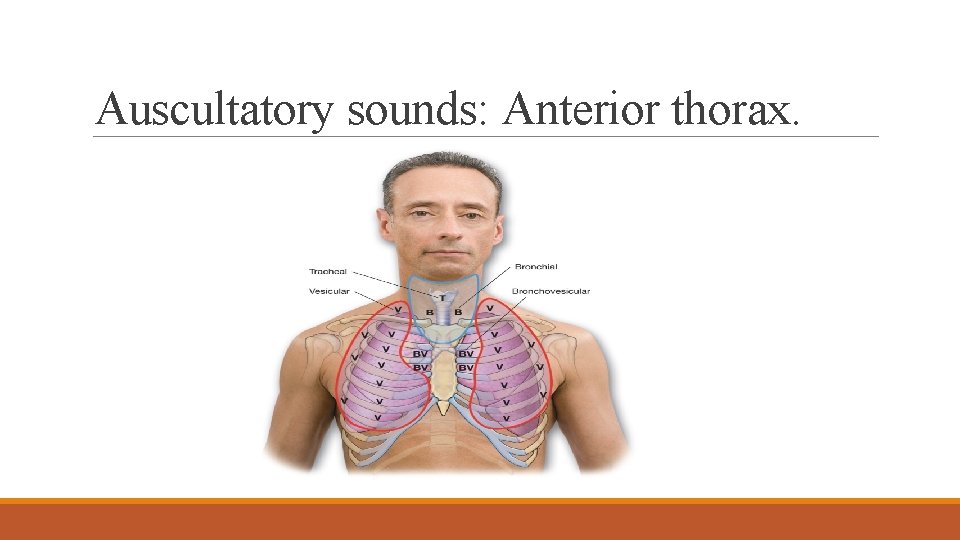
Auscultatory sounds: Anterior thorax.
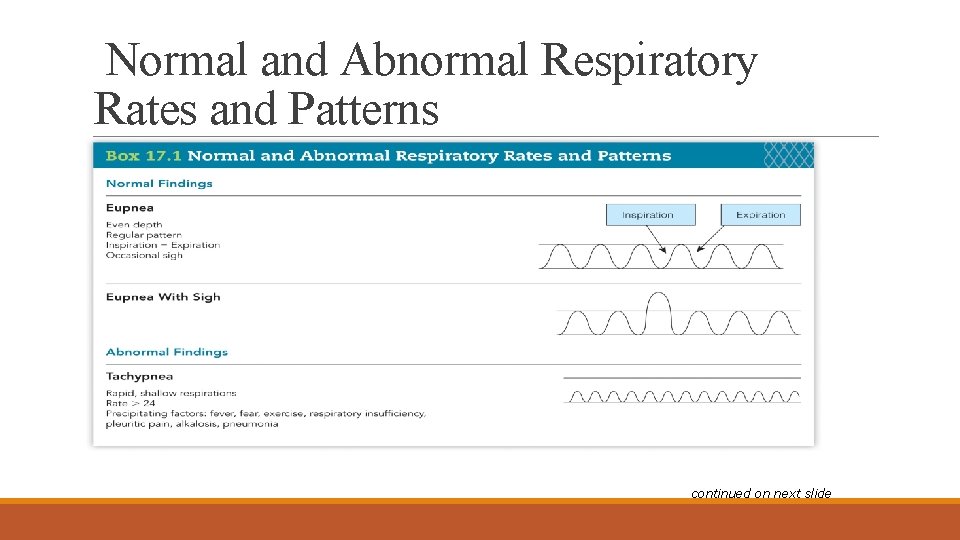
Normal and Abnormal Respiratory Rates and Patterns continued on next slide
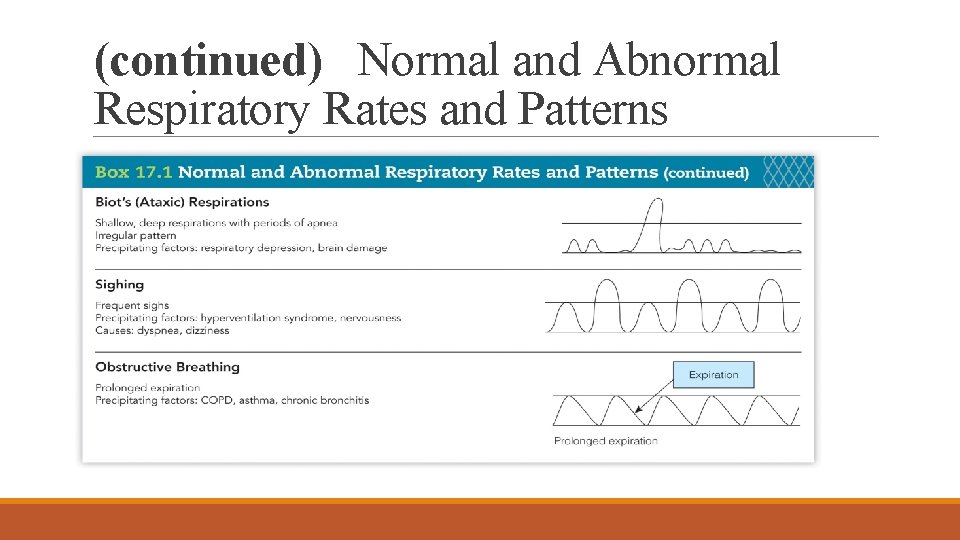
(continued) Normal and Abnormal Respiratory Rates and Patterns continued on next slide
(continued) Normal and Abnormal Respiratory Rates and Patterns
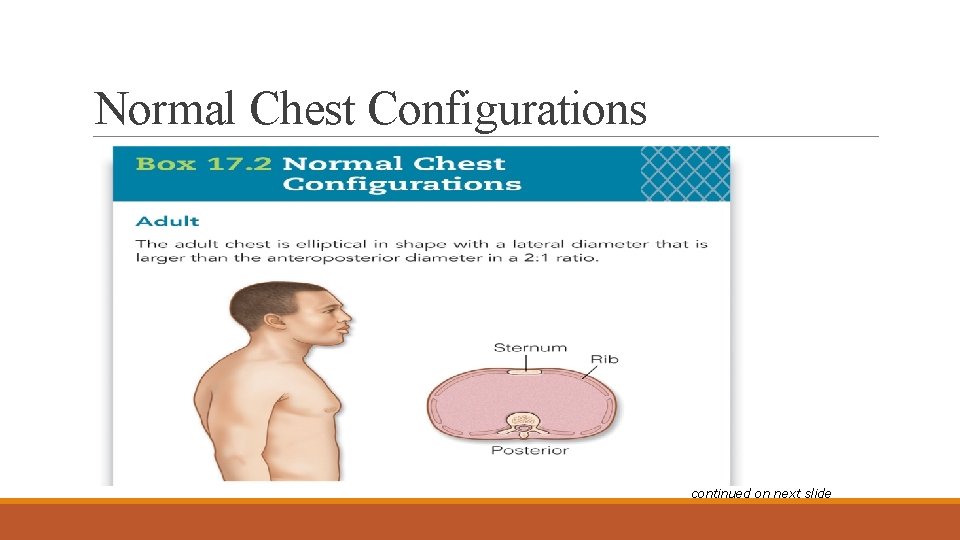
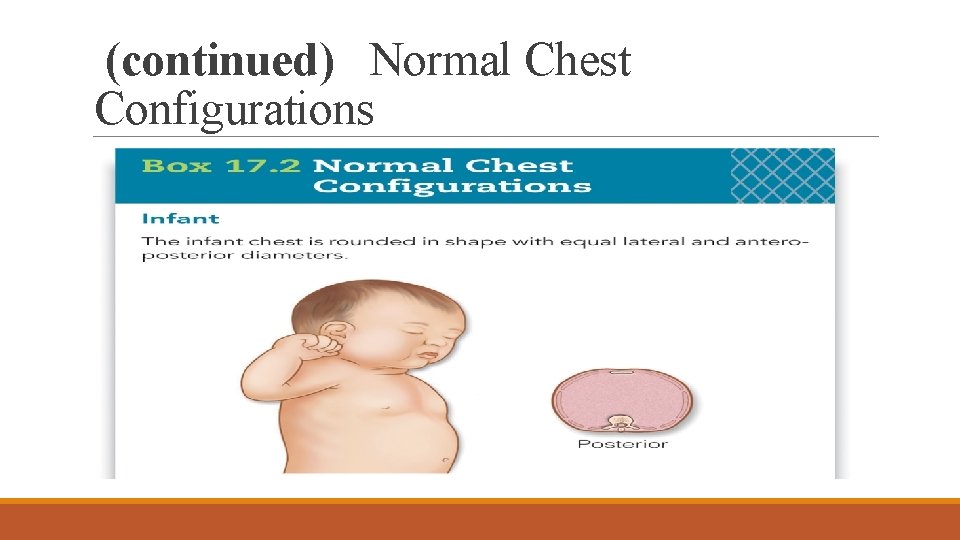
Normal Chest Configurations continued on next slide
(continued) Normal Chest Configurations continued on next slide
(continued) Normal Chest Configurations
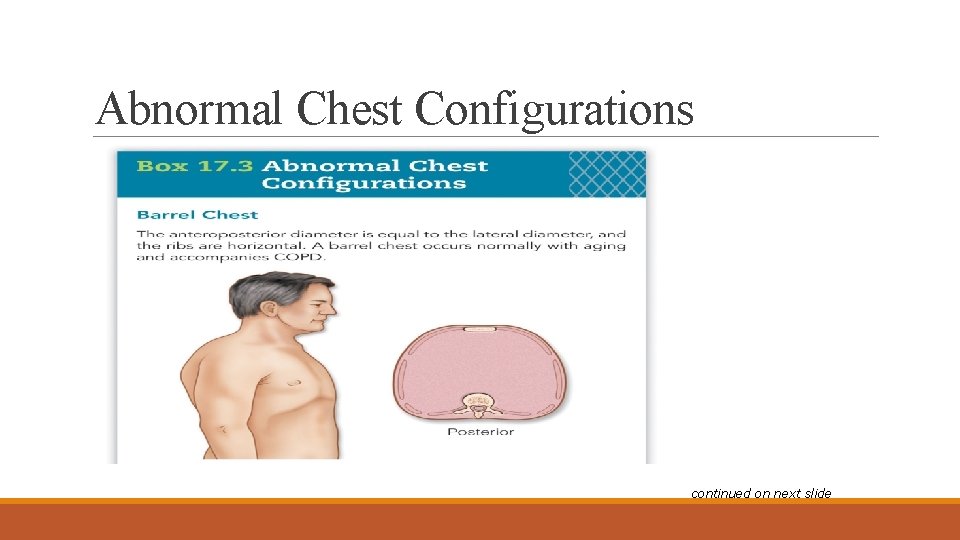
Abnormal Chest Configurations continued on next slide
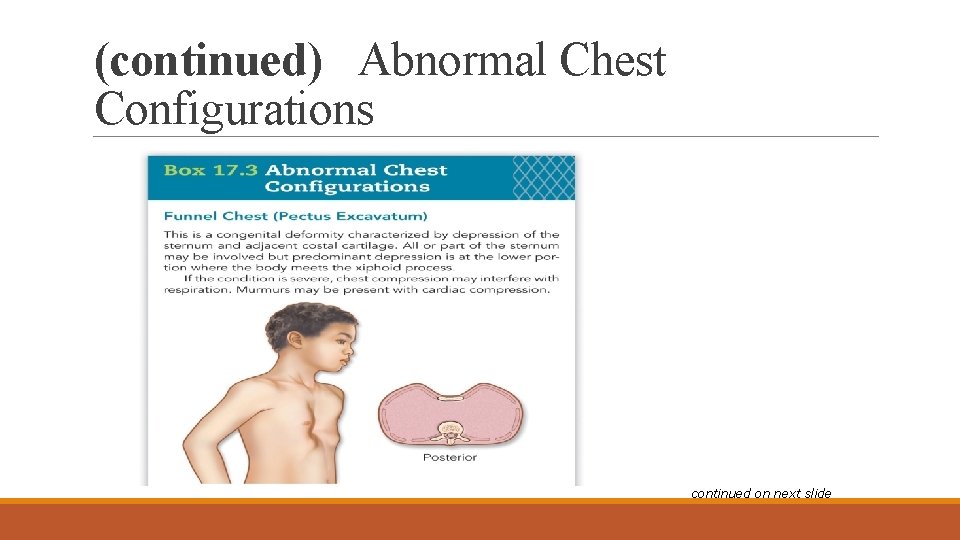
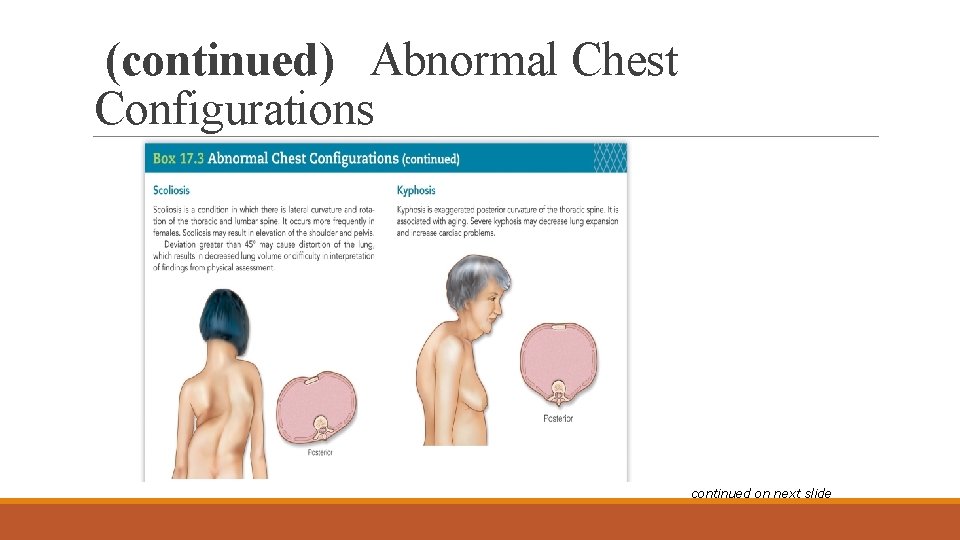
(continued) Abnormal Chest Configurations continued on next slide
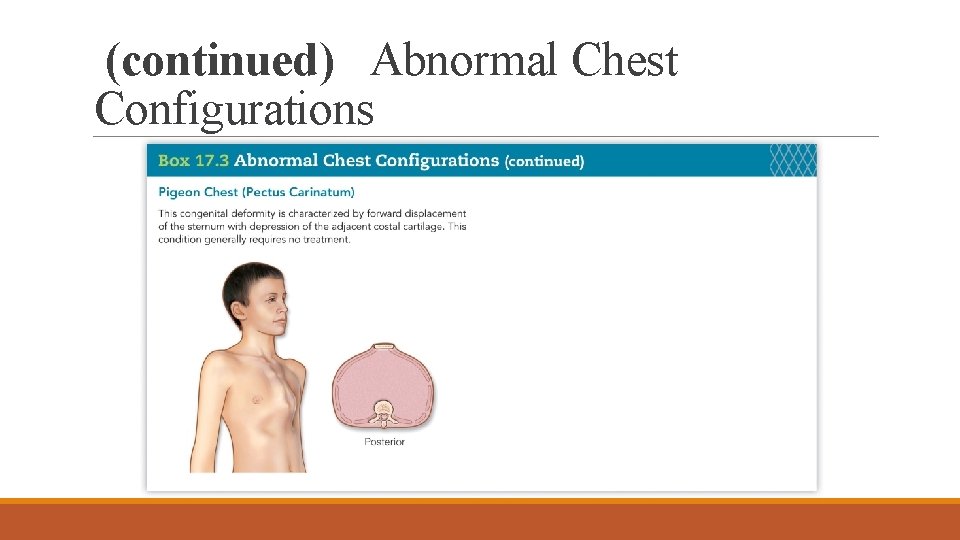
(continued) Abnormal Chest Configurations continued on next slide
(continued) Abnormal Chest Configurations
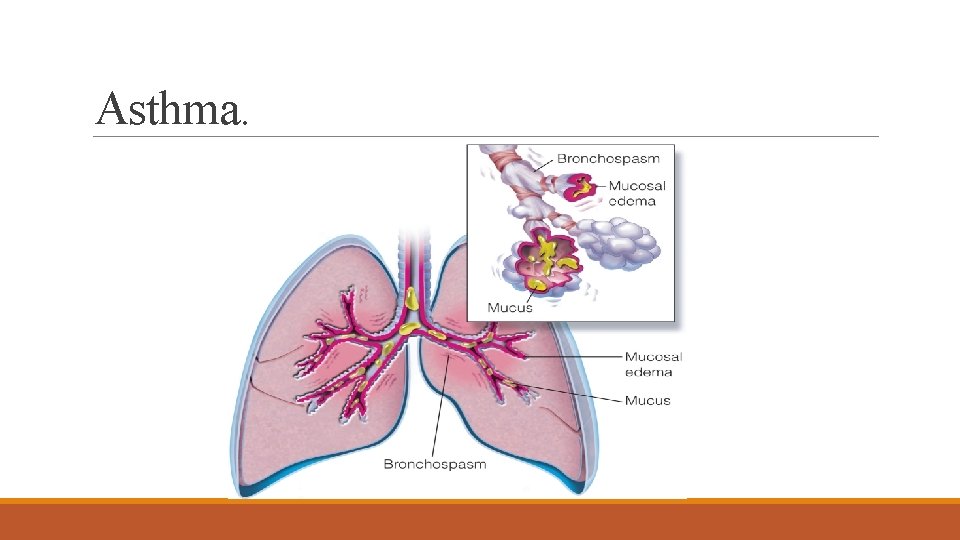
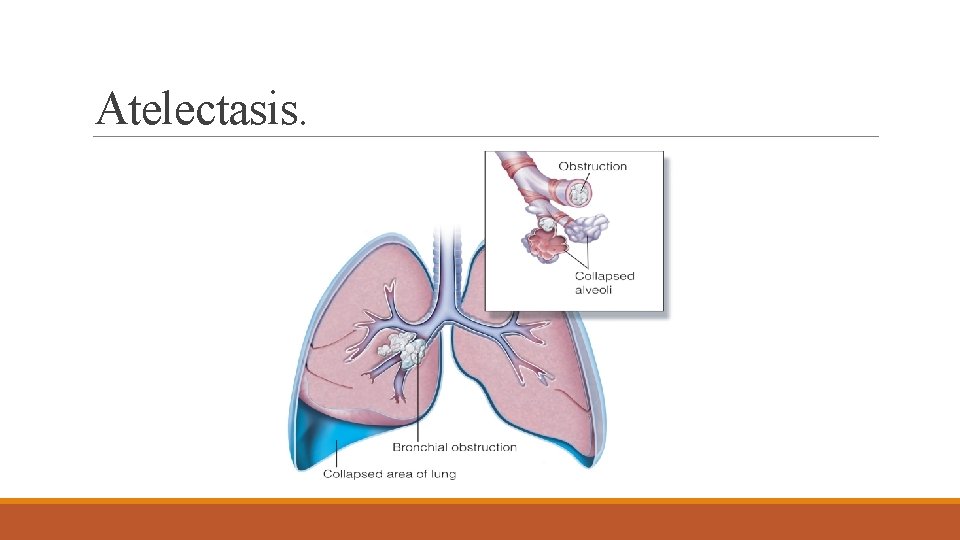
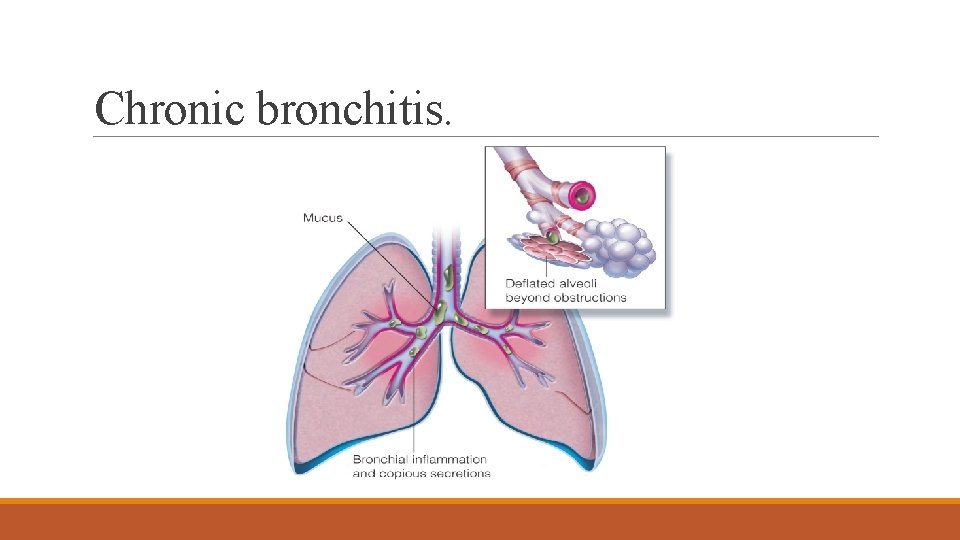
Abnormal Findings Respiratory disorders ◦ Asthma ◦ Chronic hyperreactive condition ◦ Atelectasis ◦ Obstruction of airflow ◦ Bronchitis ◦ Inflammation of the tracheobronchial tree
Asthma.
Atelectasis.
Chronic bronchitis.
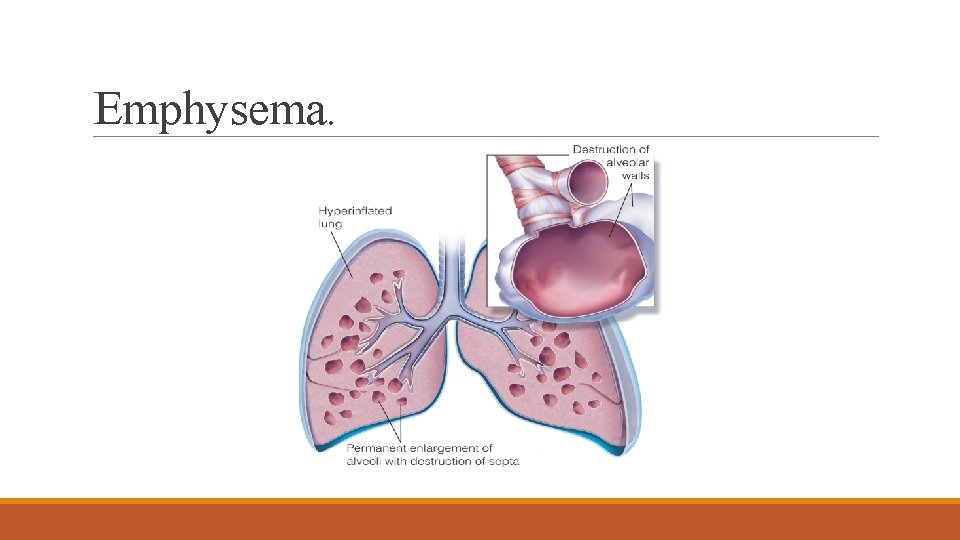
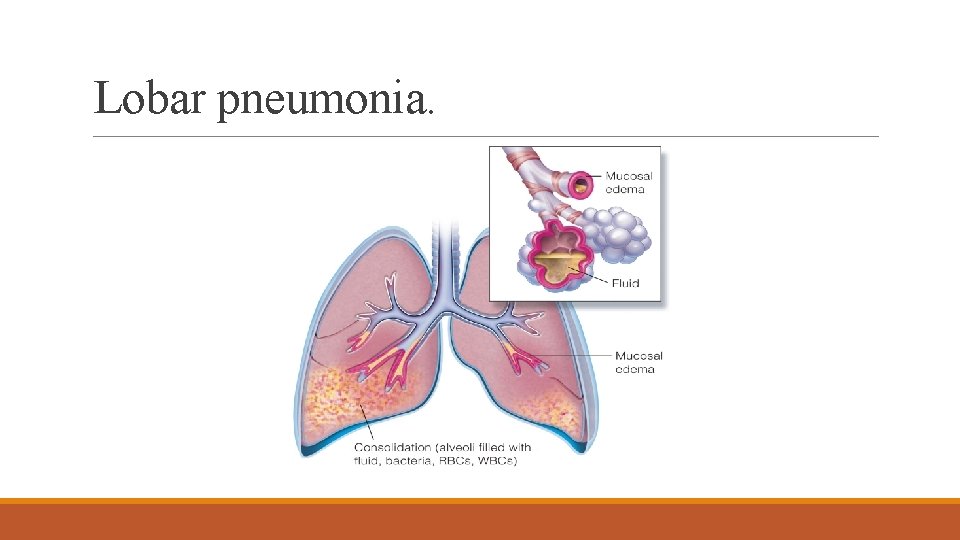
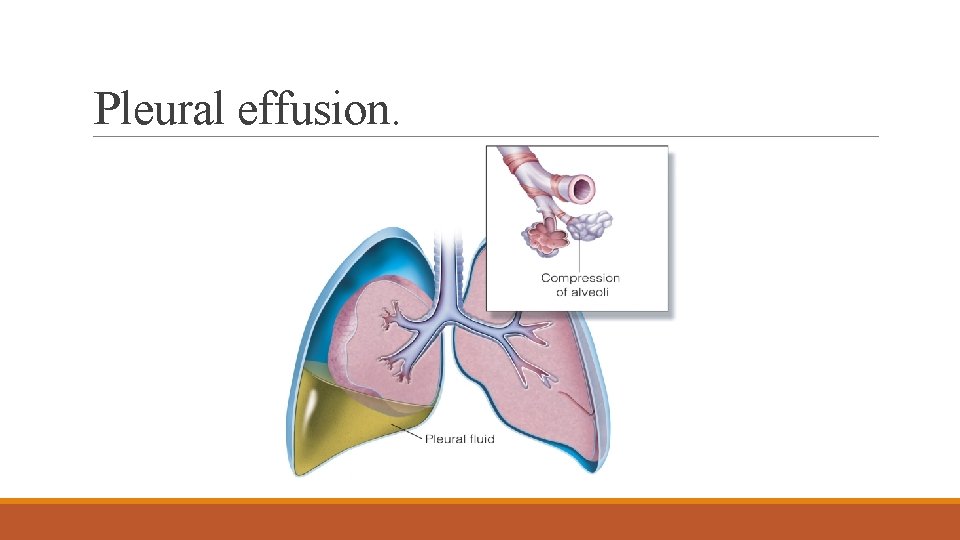
Abnormal Findings Respiratory disorders ◦ Emphysema (obstruction of the alveoli) ◦ Pneumonia (infection if the alveoli) ◦ Pleural effusion (fluid in the pleural space)
Emphysema.
Lobar pneumonia.
Pleural effusion.
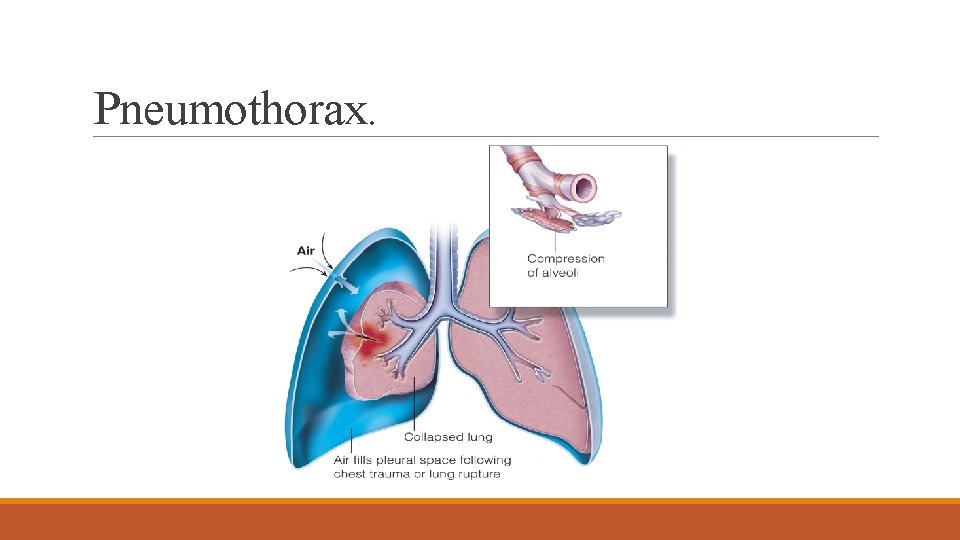
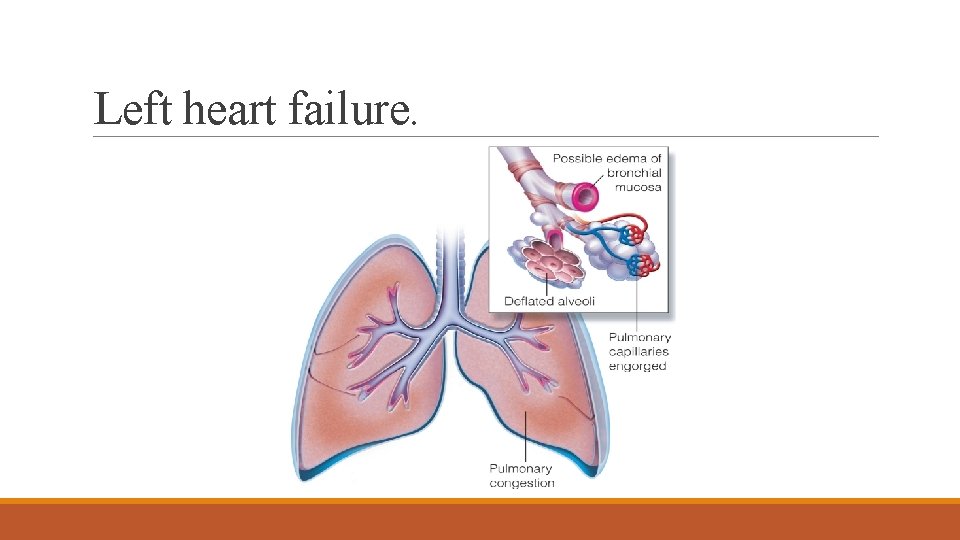
Abnormal Findings Respiratory disorders ◦ Pneumothorax (collapse of the lung) ◦ Congestive heart failure (edema around the alveoli) ◦ Valley fever
Pneumothorax.
Left heart failure.