
Health and Social Care Introduction What is health
- Slides: 14
Health and Social Care Introduction
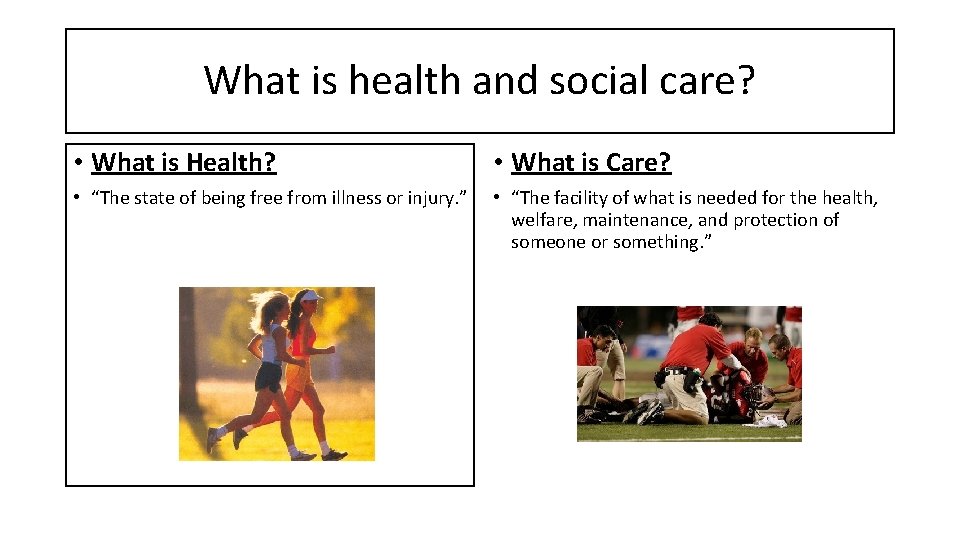
What is health and social care? • What is Health? • What is Care? • “The state of being free from illness or injury. ” • “The facility of what is needed for the health, welfare, maintenance, and protection of someone or something. ”
What is health and social care? A term that relates to services that are available from health and social care providers to meet peoples health and social care needs in society. Can you think of any examples of some health and social care providers? PRESENT NEW INFORMATION
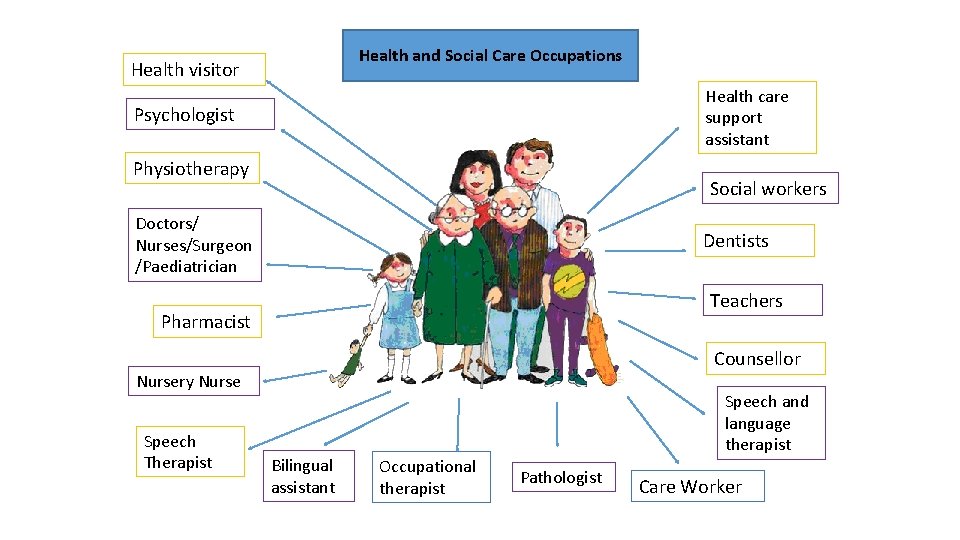
Health and Social Care Occupations Health visitor Health care support assistant Psychologist Physiotherapy Social workers Doctors/ Nurses/Surgeon /Paediatrician Dentists Teachers Pharmacist Counsellor Nursery Nurse Speech Therapist Bilingual assistant Occupational therapist Speech and language therapist Pathologist Care Worker
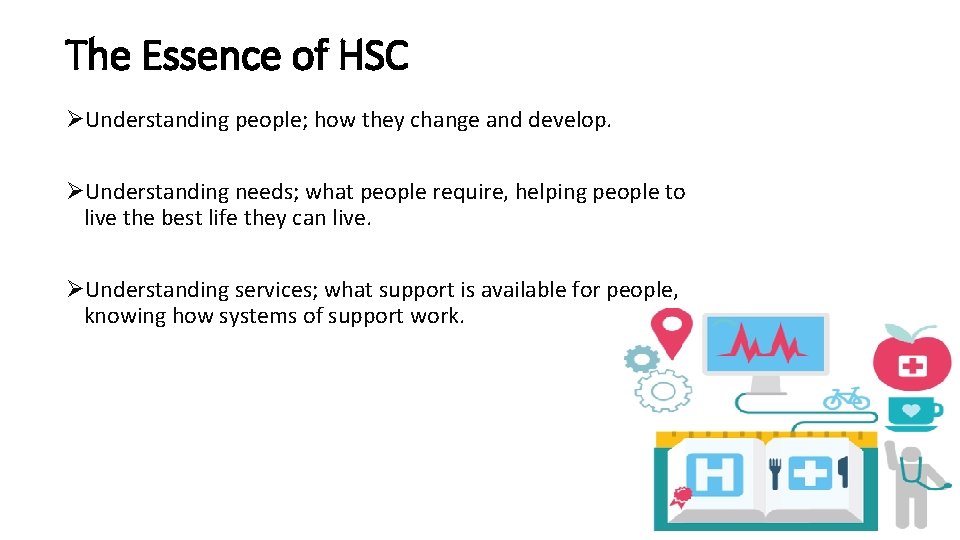
The Essence of HSC ØUnderstanding people; how they change and develop. ØUnderstanding needs; what people require, helping people to live the best life they can live. ØUnderstanding services; what support is available for people, knowing how systems of support work.
What does it mean? ØWhat does it mean to be healthy? ØHow do you know if someone is healthy? ØList some ways of staying healthy.
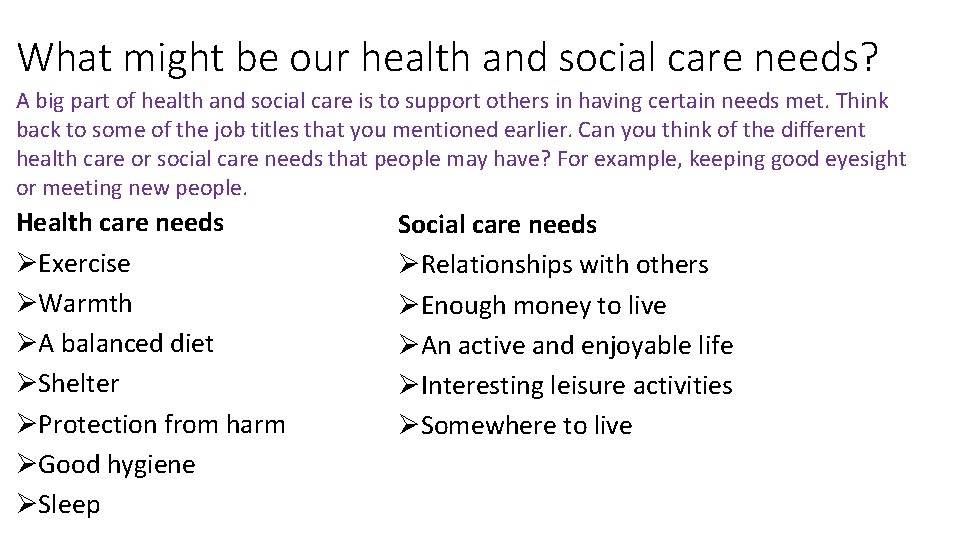
What might be our health and social care needs? A big part of health and social care is to support others in having certain needs met. Think back to some of the job titles that you mentioned earlier. Can you think of the different health care or social care needs that people may have? For example, keeping good eyesight or meeting new people. Health care needs ØExercise ØWarmth ØA balanced diet ØShelter ØProtection from harm ØGood hygiene ØSleep Social care needs ØRelationships with others ØEnough money to live ØAn active and enjoyable life ØInteresting leisure activities ØSomewhere to live
Health and Social Care Providers Ø Youth services Ø Child protection agencies Ø Residential care Ø Youth offending services Ø Social services Ø Refuge for adults at risk of violence Ø Homelessness services Ø Support services Ø Advice services Ø Residential care sheltered accommodation Ø Day care services Ø Supported community living
Think about the following research you could complete. Research the following health and social care roles and find out what they do are settings and find out what they do ØOncologist ØHealth visitor ØMidwife ØSocial worker ØAudiology department ØDementia care home ØChildren’s centre ØHospice Search tips: Ø Use Google. Ø Put the name of the role. Ø Find a brief summary. Search images – there may be some useful diagrams
What will the course look like? • Unit 1 COURSEWORK Building positive relationships. • This unit considers how we communicate in health and social care settings, how good communication improves relationships and different factors that challenge positive communications. • 2 lessons per week. • Mrs Castanheiro. • Completed by Easter of year 12. • Unit 2 EXAM Equality, diversity and rights. How and why it is important to treat service users with equality, respecting their diversity and avoiding discrimination. • 3 lessons per week. • Mr Perry • Exam taken in January of year 12. • Unit 3 EXAM- Health , safety and security. This will cover what are the potential hazards when working in a health and social care setting, what are our roles and responsibilities and how we respond to emergencies and incidents. • 3 lessons per week • Mr Perry • Exam taken in June of year 12
What will the course look like? • Unit 5 – COURSEWORK • Public Health. What is public health? What do public health do and how do they campaign to promote better health. • Mrs Castanheiro. • Completed at the end of year 12. • Unit 14 – COURSEWORK • Impact of long term physiological conditions. Looking at the impact of two conditions – usually asthma and diabetes. • Mr Perry • Completed by Easter of Year 13. • Unit 4 – Anatomy and Physiology. EXAM • The structure and functions of the body systems including cardiovascular, respiratory and digestive systems. Also organs such as the pancreas, liver and kidney. You will investigate the systems and organs involved in detecting and responding to change such as the nervous system as well as the eyes and ears. • Mrs Castenheiro and Mr Perry • Completed either January or June of year 13.
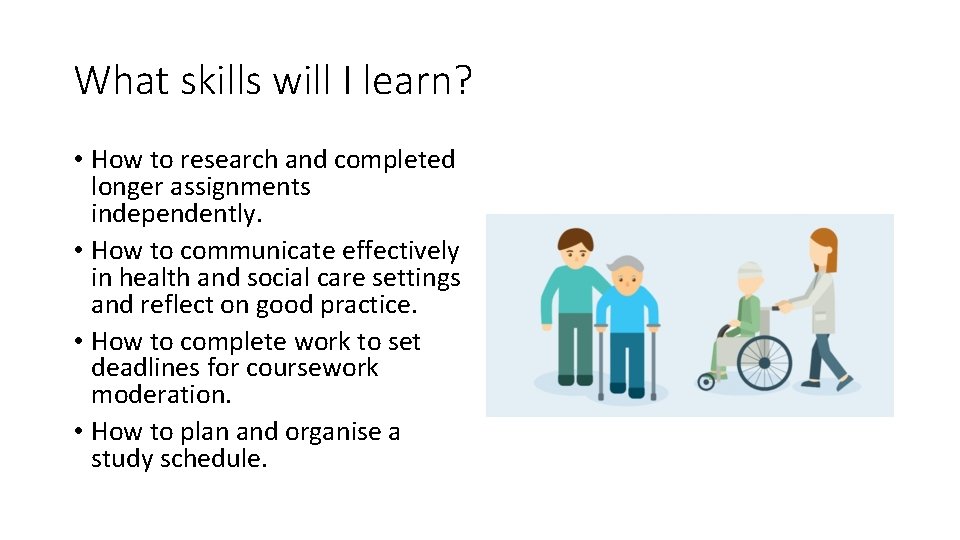
What skills will I learn? • How to research and completed longer assignments independently. • How to communicate effectively in health and social care settings and reflect on good practice. • How to complete work to set deadlines for coursework moderation. • How to plan and organise a study schedule.
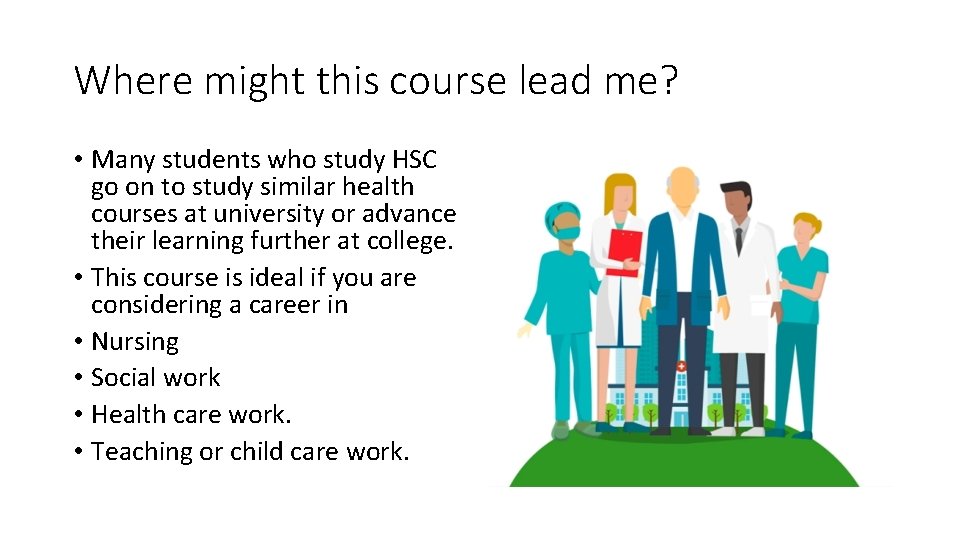
Where might this course lead me? • Many students who study HSC go on to study similar health courses at university or advance their learning further at college. • This course is ideal if you are considering a career in • Nursing • Social work • Health care work. • Teaching or child care work.
Where to ask for more information • Mr Perry • Mrs Castenheiro. • Mrs Chesters st-chesters-k@stthomasmore. walsall. sch. uk