
Health and Safety Zoonoses Risks and Prevention Zoonotic


- Slides: 15
Health and Safety Zoonoses: Risks and Prevention
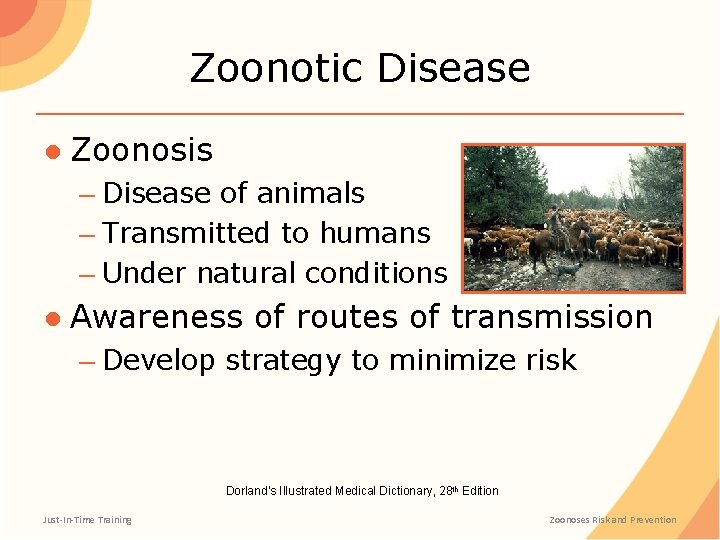
Zoonotic Disease ● Zoonosis – Disease of animals – Transmitted to humans – Under natural conditions ● Awareness of routes of transmission – Develop strategy to minimize risk Dorland’s Illustrated Medical Dictionary, 28 th Edition Just-In-Time Training Zoonoses Risk and Prevention
Disease Transmission ● Direct – Contact – Ingestion – Aerosol ● Indirect – Fomites § Inanimate objects – Vectors § Living organism (e. g. , insects) Just-In-Time Training Zoonoses Risk and Prevention
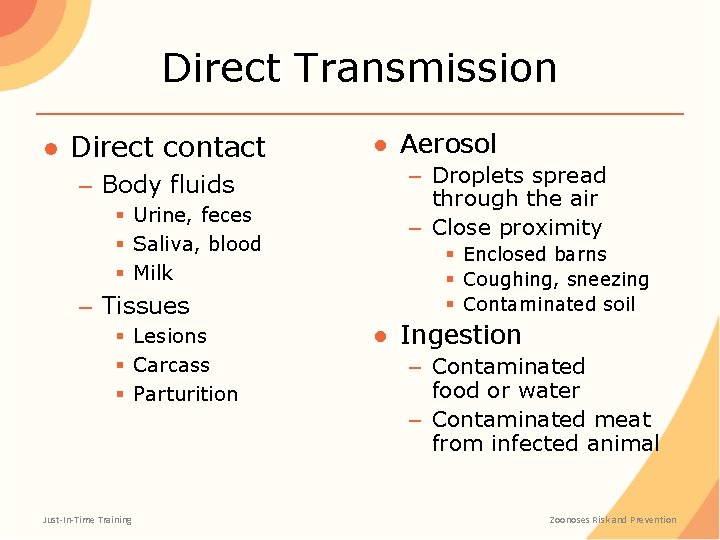
Direct Transmission ● Direct contact – Body fluids § Urine, feces § Saliva, blood § Milk – Tissues § Lesions § Carcass § Parturition Just-In-Time Training ● Aerosol – Droplets spread through the air – Close proximity § Enclosed barns § Coughing, sneezing § Contaminated soil ● Ingestion – Contaminated food or water – Contaminated meat from infected animal Zoonoses Risk and Prevention
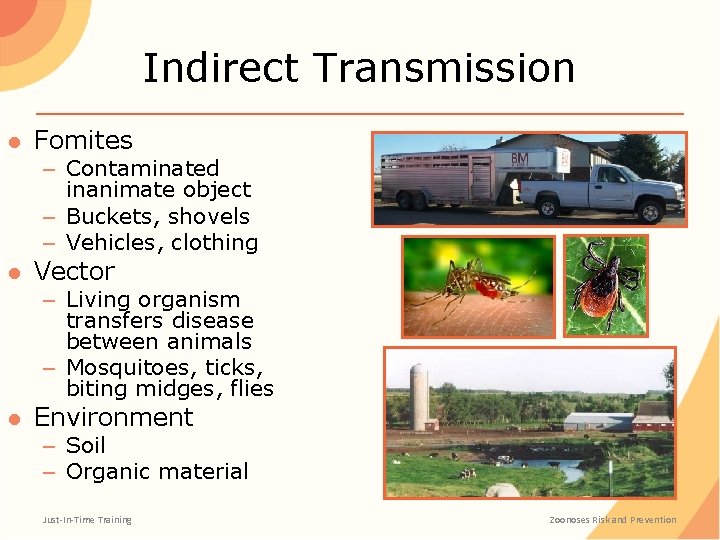
Indirect Transmission ● Fomites – Contaminated inanimate object – Buckets, shovels – Vehicles, clothing ● Vector – Living organism transfers disease between animals – Mosquitoes, ticks, biting midges, flies ● Environment – Soil – Organic material Just-In-Time Training Zoonoses Risk and Prevention
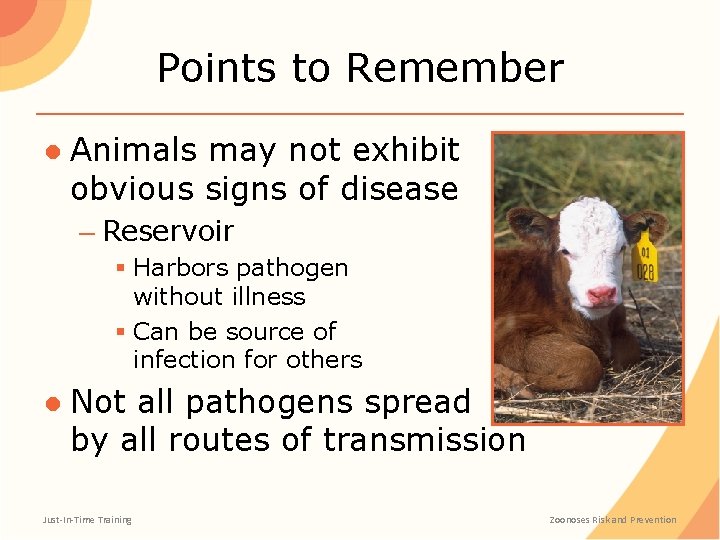
Points to Remember ● Animals may not exhibit obvious signs of disease – Reservoir § Harbors pathogen without illness § Can be source of infection for others ● Not all pathogens spread by all routes of transmission Just-In-Time Training Zoonoses Risk and Prevention
Example Zoonoses ● ● ● Anthrax Avian influenza Brucellosis Cryptosporidiosis E. coli Leptospirosis Just-In-Time Training ● ● ● Q Fever Rabies Ringworm Salmonellosis Tuberculosis Vesicular stomatitis Zoonoses Risk and Prevention
PREVENTING EXPOSURE Just-In-Time Training Zoonoses Risk and Prevention
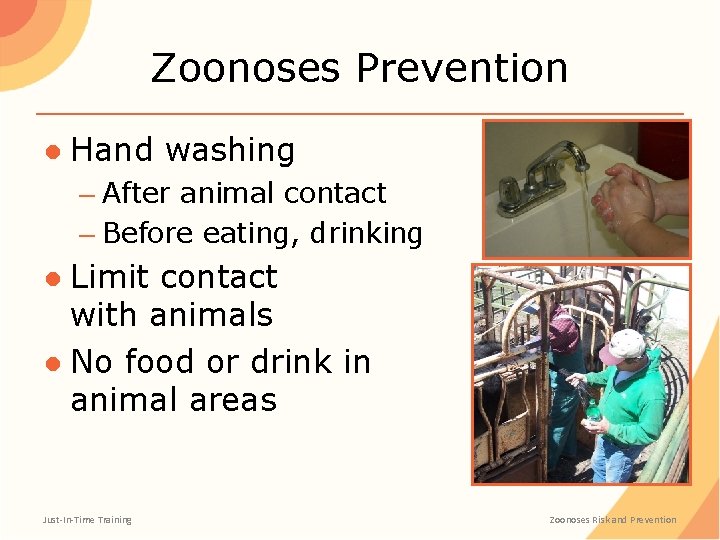
Zoonoses Prevention ● Hand washing – After animal contact – Before eating, drinking ● Limit contact with animals ● No food or drink in animal areas Just-In-Time Training Zoonoses Risk and Prevention
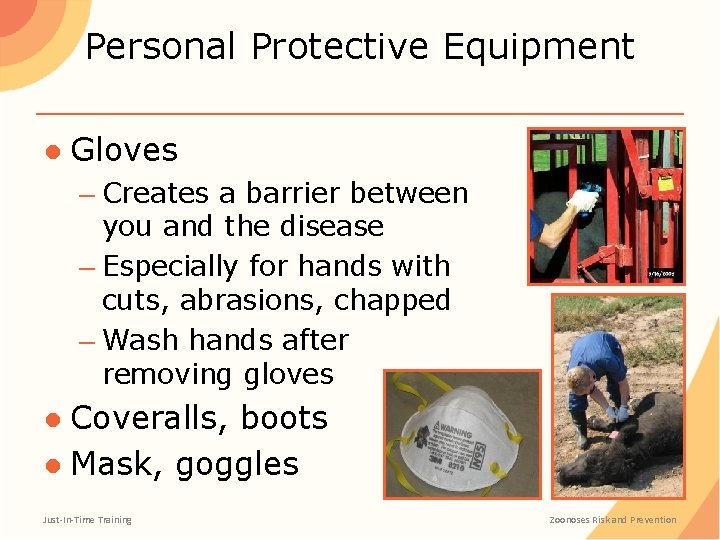
Personal Protective Equipment ● Gloves – Creates a barrier between you and the disease – Especially for hands with cuts, abrasions, chapped – Wash hands after removing gloves ● Coveralls, boots ● Mask, goggles Just-In-Time Training Zoonoses Risk and Prevention
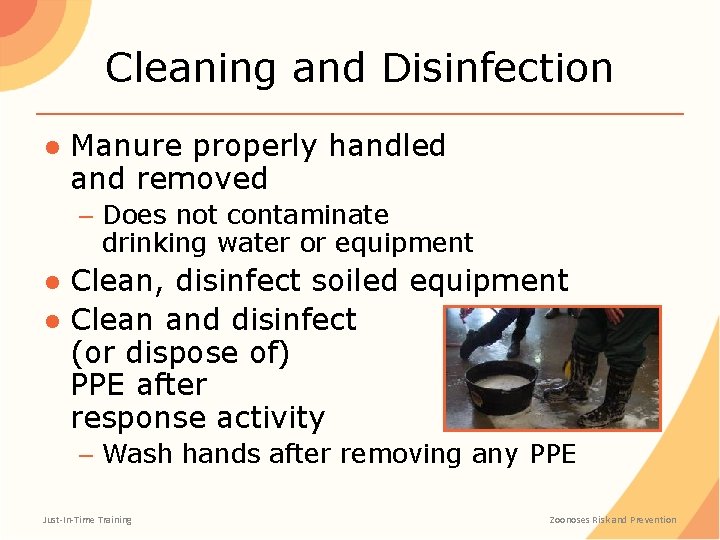
Cleaning and Disinfection ● Manure properly handled and removed – Does not contaminate drinking water or equipment ● Clean, disinfect soiled equipment ● Clean and disinfect (or dispose of) PPE after response activity – Wash hands after removing any PPE Just-In-Time Training Zoonoses Risk and Prevention
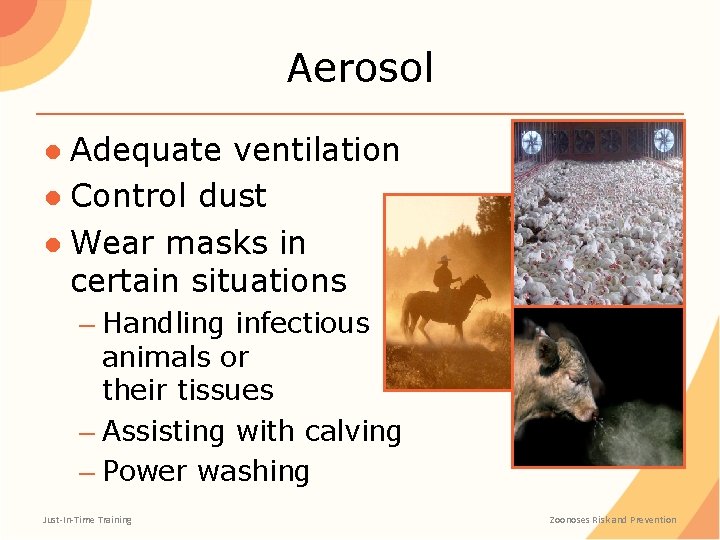
Aerosol ● Adequate ventilation ● Control dust ● Wear masks in certain situations – Handling infectious animals or their tissues – Assisting with calving – Power washing Just-In-Time Training Zoonoses Risk and Prevention
Vector Control ● Source reduction – Habitat reduction/elimination – Parasitic or predatory insects ● Control adults – Insecticides § Knockdown and residual sprays § Baits, fly traps ● Minimize interaction with insects – Personal protection Just-In-Time Training Zoonoses Risk and Prevention
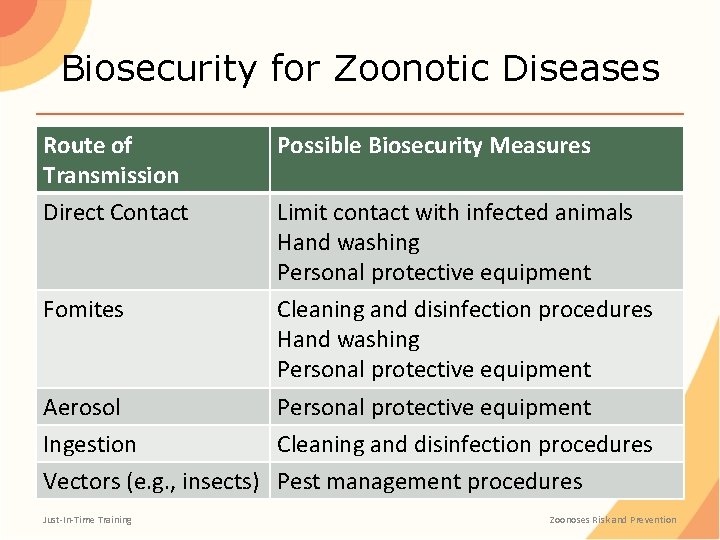
Biosecurity for Zoonotic Diseases Route of Transmission Direct Contact Possible Biosecurity Measures Limit contact with infected animals Hand washing Personal protective equipment Fomites Cleaning and disinfection procedures Hand washing Personal protective equipment Aerosol Personal protective equipment Ingestion Cleaning and disinfection procedures Vectors (e. g. , insects) Pest management procedures Just-In-Time Training Zoonoses Risk and Prevention
Acknowledgments Development of this presentation was by the Center for Food Security and Public Health at Iowa State University through funding from the Multi-State Partnership for Security in Agriculture Author: Glenda Dvorak, DVM, MPH, DACVPM